
Table of Contents
There’s a particular kind of magic that happens when you walk into a room and feel instantly at home. It’s not always the furniture or the paint color that creates this feeling—it’s the light. The way it pools in corners, glows from unexpected angles, and wrapes everything in warmth.
Your living room deserves this kind of intentional beauty. It’s where you curl up with books on rainy afternoons, where conversations stretch late into the evening, where life simply unfolds. And lighting? It’s the invisible architecture that shapes every moment within these walls.
The right lighting doesn’t just illuminate—it transforms. It carves out intimate spaces within larger rooms, highlights the textures you’ve carefully chosen, and shifts the mood from energized mornings to peaceful evenings. Think of it as designing with light itself, sculpting the very atmosphere of your home.
In this guide, we’ll explore living room lighting ideas that blend beauty with practicality, modern innovation with timeless warmth. Whether you’re starting from scratch or refreshing what you already love, these insights will help you create a space that truly glows.
Understanding the Three Layers of Light
Before we dive into specific fixtures and placements, let’s talk about the foundation of good lighting design: layering. Just as you wouldn’t decorate with only one texture or color, you shouldn’t illuminate with only one light source.
Ambient Lighting: Your Foundation
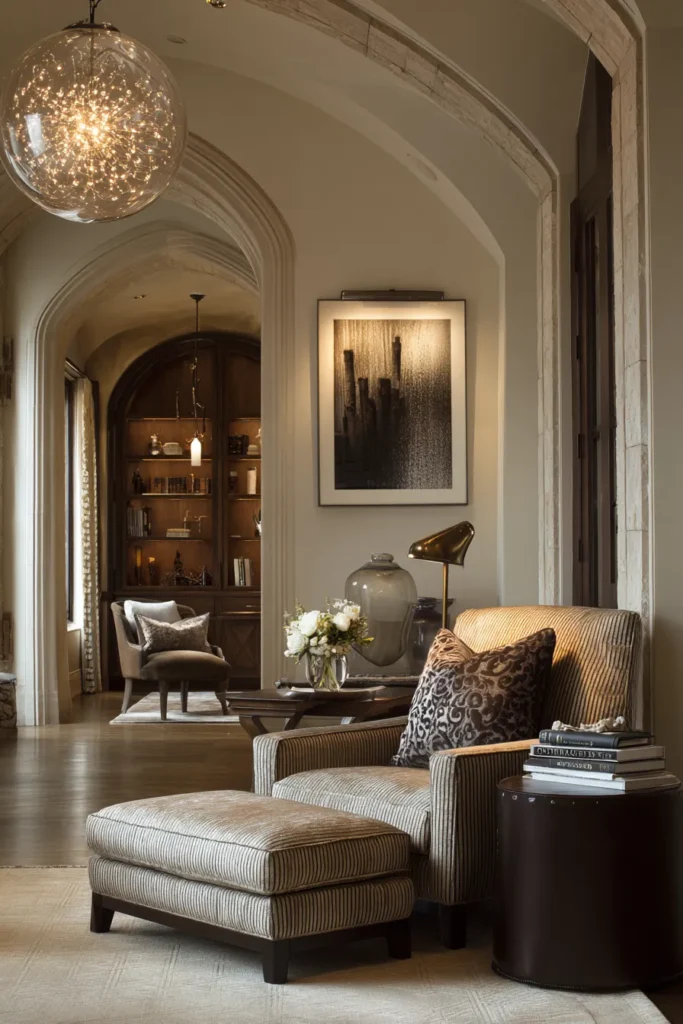
Ambient lighting is your room’s baseline—the general illumination that makes the space functional and welcoming. This might be a central ceiling fixture, recessed lights, or even a series of wall sconces that wash the walls with gentle light.
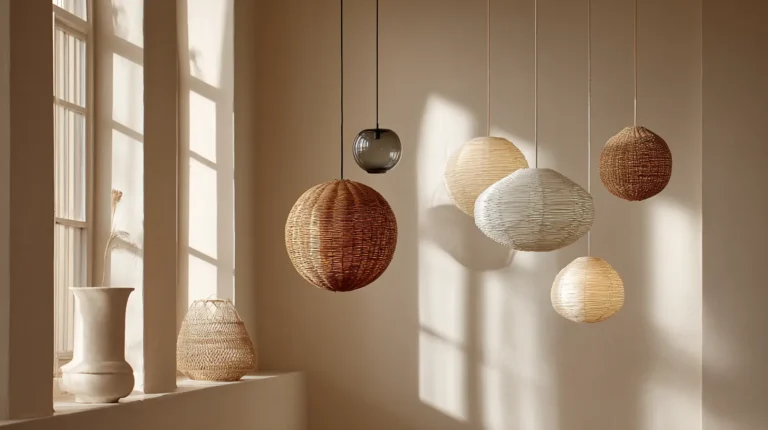
The key is creating even, comfortable brightness without harsh shadows or glaring spots. Consider dimmable overhead fixtures that can adapt from bright morning energy to soft evening calm. A statement chandelier or flush-mount fixture in a natural material like woven rattan or brushed brass can serve as both light source and focal point.
Task Lighting: Function Meets Form
Task lighting serves specific activities—reading, working on your laptop, or showcasing your record collection. These are your floor lamps beside armchairs, picture lights above artwork, or adjustable reading lights mounted near your favorite seating.
The beauty of task lighting is its flexibility. A sleek arc floor lamp can reach over a sofa without taking up side table space. Adjustable swing-arm sconces flanking a bookshelf offer direct light exactly where you need it, while adding sculptural interest to your walls.
Accent Lighting: The Poetry
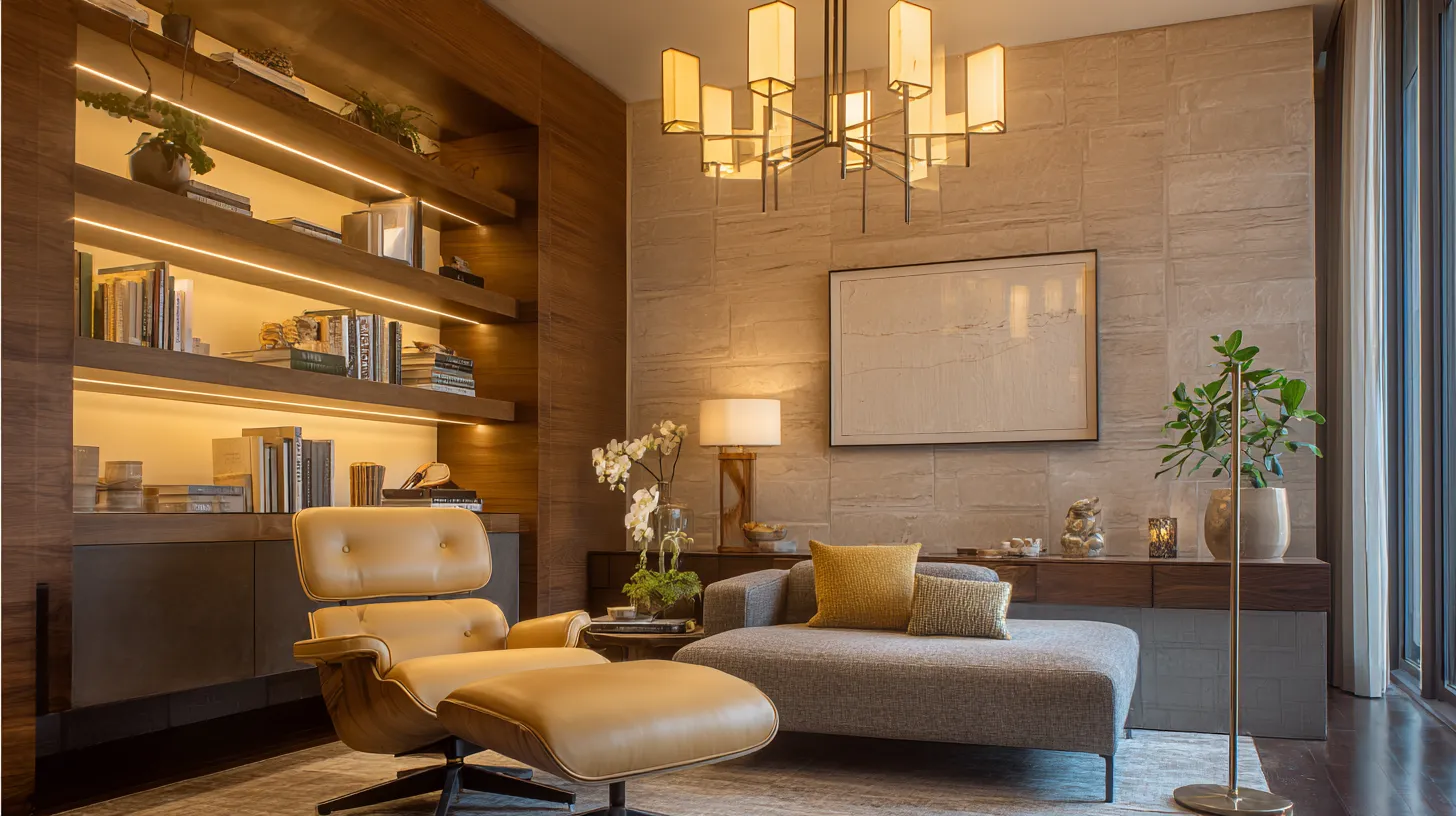
This is where lighting becomes art. Accent lighting creates drama, depth, and visual interest by highlighting architectural features, artwork, or beautiful objects. Think LED strips tucked behind floating shelves, uplights that graze textured walls, or small spotlights that make your plants cast dancing shadows.
Accent lighting works best when it’s subtle—a warm glow emanating from unexpected places, drawing the eye without demanding attention. It’s the difference between a room that’s merely lit and one that feels layered, dimensional, and alive.
Smart Lighting: Control at Your Fingertips
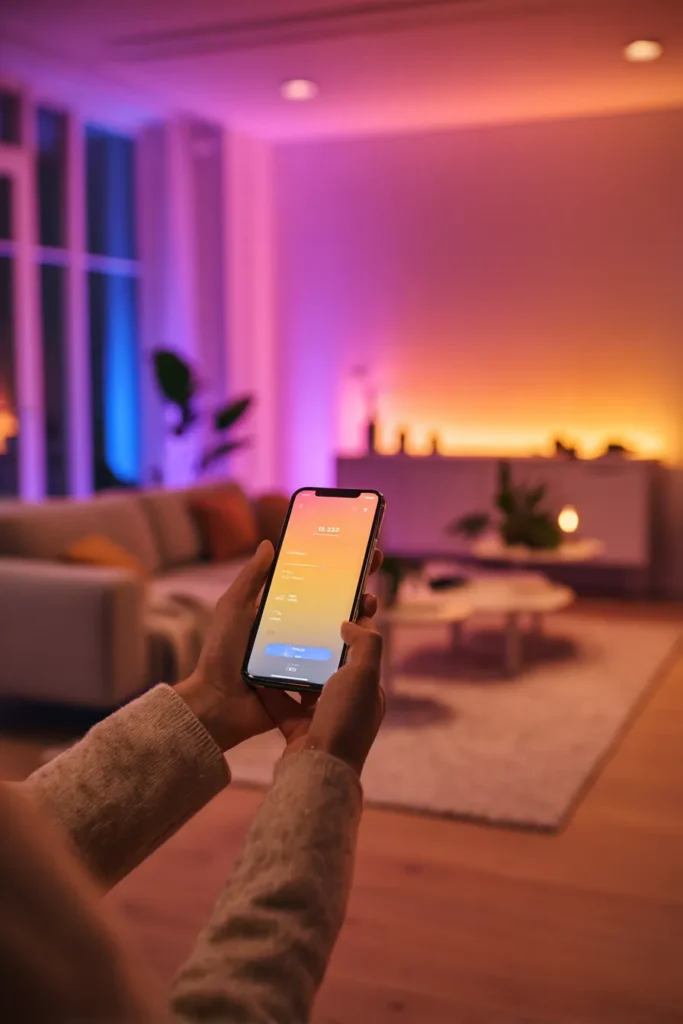
Modern technology has transformed how we interact with light in our homes. Smart lighting systems allow you to adjust brightness, color temperature, and even hue from your phone or voice commands, creating preset scenes for different moments throughout your day.
Imagine dimming all your lights to a warm amber glow for movie night with a single command, or gradually brightening them in the morning to ease you awake. Smart bulbs from brands like Philips Hue, LIFX, or Nanoleaf fit into standard fixtures, making the upgrade surprisingly simple.
Circadian Rhythm Lighting
Some smart systems offer circadian lighting that mimics natural daylight patterns—cooler, energizing light in the morning shifting to warmer, relaxing tones in the evening. This technology supports your body’s natural rhythms, potentially improving sleep quality and daytime alertness.
For your living room, this means lighting that adapts throughout the day without you lifting a finger. The space naturally transitions from an energized gathering spot to a peaceful sanctuary as evening approaches.
Statement Fixtures: When Light Becomes Art
A stunning light fixture is jewelry for your room—a piece that draws the eye upward and sets the entire tone of your space.
Chandeliers and Pendants
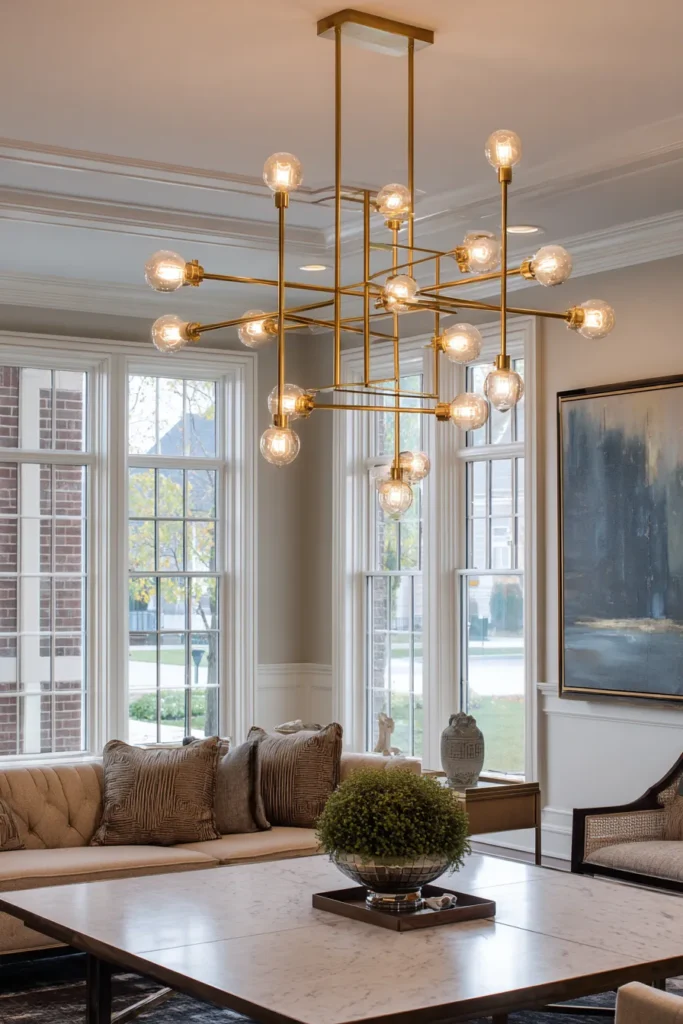
A chandelier doesn’t have to be formal or traditional. Modern interpretations in geometric brass, organic wood beads, or sculptural blown glass can anchor your living room with sophisticated flair. Hang it lower than you might think—30 to 36 inches above a coffee table creates intimate scale and dramatic impact.
Multiple pendants clustered at varying heights add visual rhythm and work beautifully in rooms with high ceilings. Choose warm-toned bulbs to enhance the cozy factor, and ensure any statement fixture is on a dimmer for maximum versatility.
Sculptural Floor Lamps
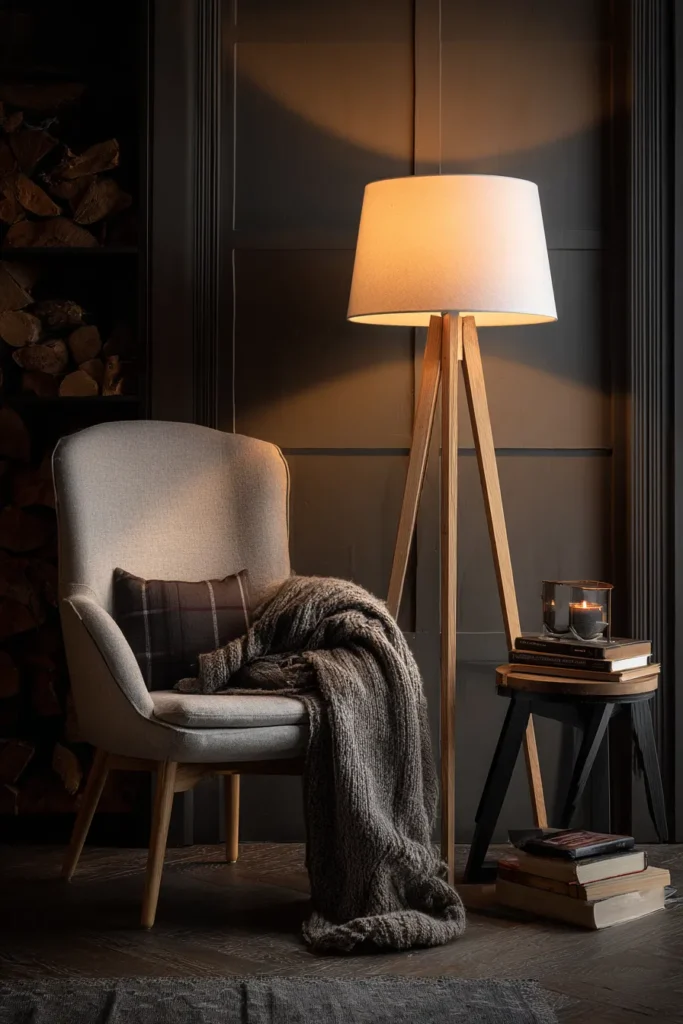
A floor lamp can be so much more than functional. Look for pieces with architectural presence—a tripod base in natural wood, an arching silhouette in matte black metal, or a minimalist cone shade that directs light with precision.
Position floor lamps in corners to activate dead space, beside seating for reading light, or behind furniture to create pools of ambient glow. The best floor lamps offer both uplighting (bouncing off the ceiling for ambient light) and downlighting (directed for tasks).
Layered Lighting Plans by Activity
Your living room isn’t just one thing—it’s a reading nook, a conversation hub, a place for solo relaxation and gatherings alike. Your lighting should support all these modes.
For Reading and Focus
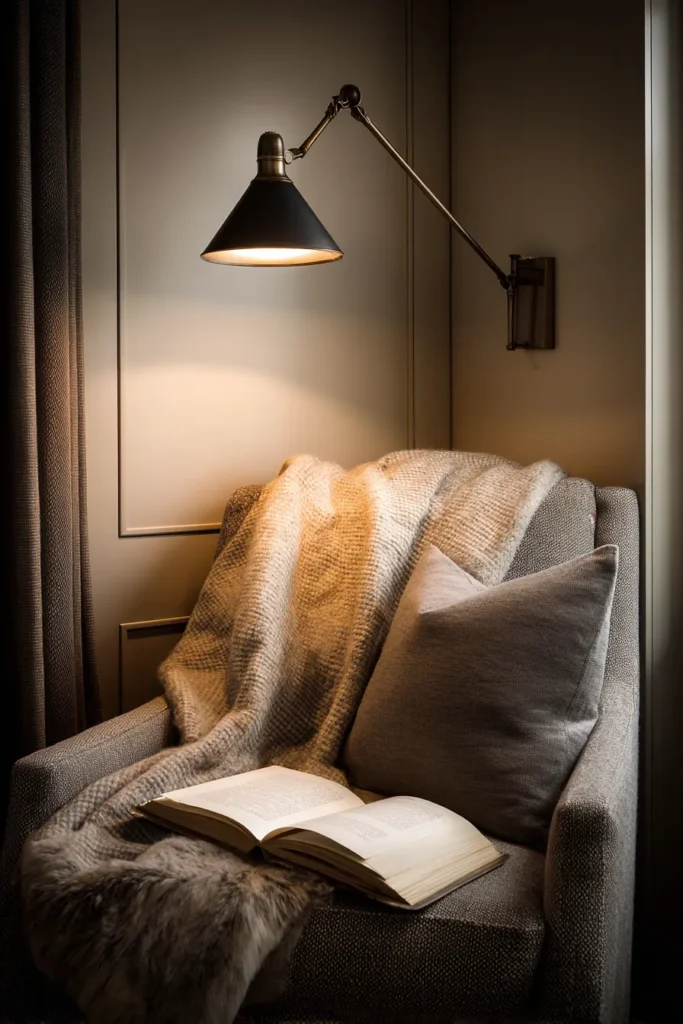
Create a dedicated reading zone with a quality adjustable lamp positioned to avoid glare on your book or screen. LED bulbs with high CRI (Color Rendering Index) above 90 show true colors and reduce eye strain. Pair task lighting with dimmed ambient light to reduce contrast fatigue.
A swing-arm wall sconce beside your reading chair keeps surfaces clear while providing directed light. Add a small table lamp on a side table for supplemental glow and layered depth.
For Entertaining and Gathering
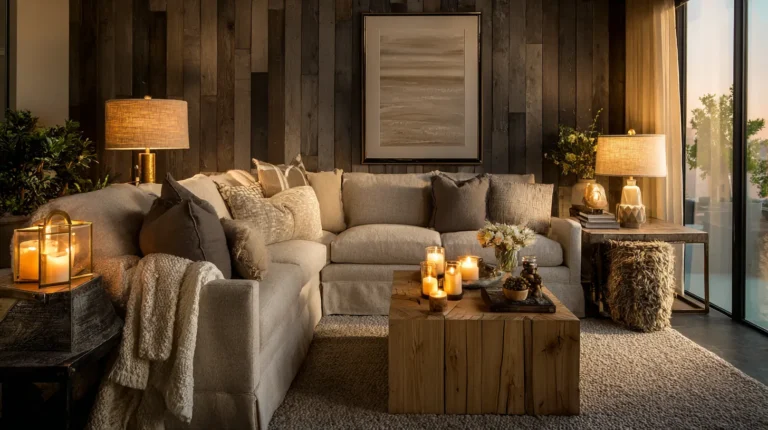
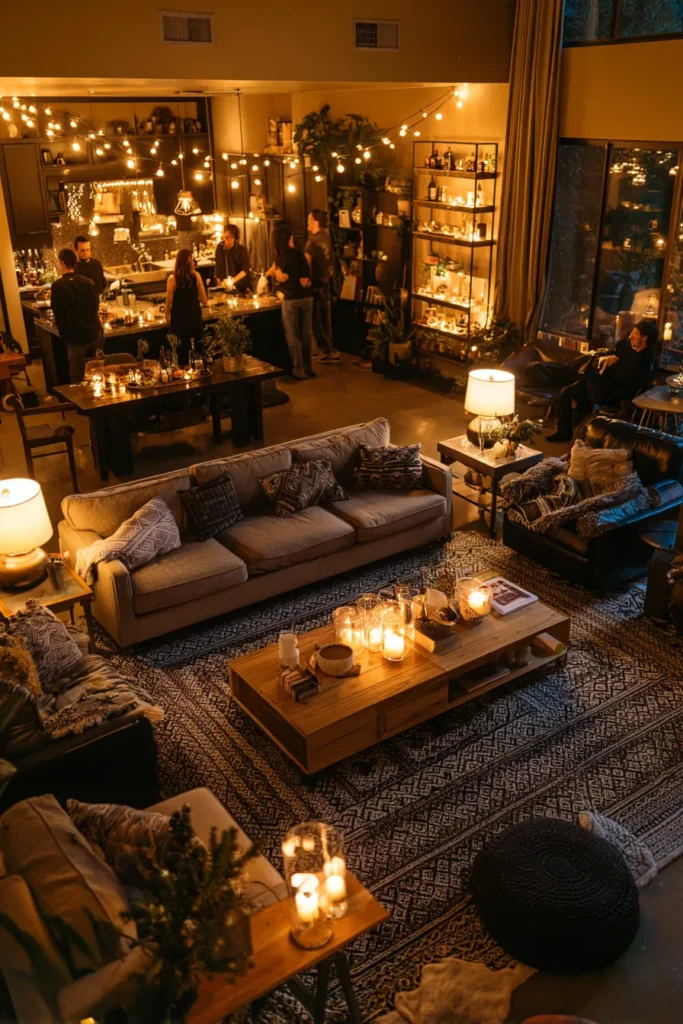
When hosting, you want lighting that feels abundant but not harsh—warm and inviting rather than bright and clinical. Use multiple medium-level sources instead of one strong overhead light. Candles (real or LED) on coffee tables and mantels add flickering warmth.
Consider string lights draped along shelves or tucked behind curtain valances for soft, festive ambiance. They’re not just for holidays—quality string lights with warm Edison-style bulbs create year-round charm.
For Relaxing and Unwinding
Evening lighting should signal to your body that it’s time to wind down. Dim overhead fixtures to 30-50% and rely on accent lighting—table lamps, LED strips behind the TV (which reduces eye strain), or wall sconces set to their lowest setting.
Color-changing smart bulbs can shift to amber or soft pink tones that encourage relaxation. Some people find that eliminating blue-spectrum light in the evening helps them sleep better.
Maximizing Light with Mirrors and Placement
Sometimes the most powerful lighting upgrade doesn’t involve new fixtures at all—it’s about amplifying the light you already have.
Strategic Mirror Placement
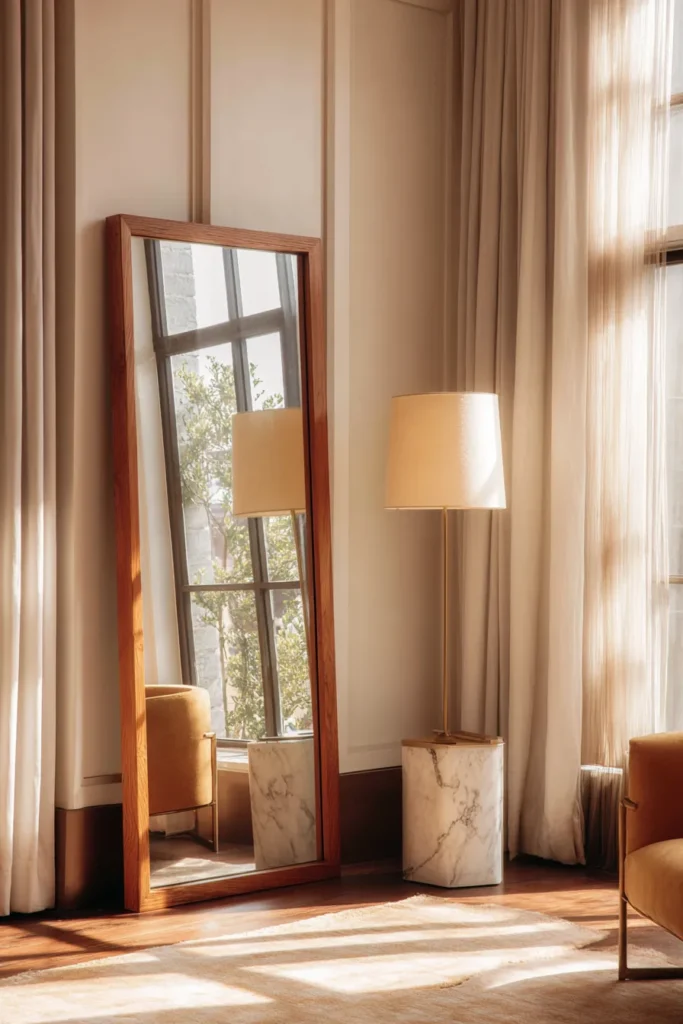
A well-placed mirror can double the perceived light in your living room by reflecting both natural and artificial sources. Position mirrors opposite windows to bounce daylight deeper into the room, or across from a beautiful lamp to multiply its glow.
Oversized mirrors with natural wood frames or antique brass detailing serve as both functional tools and statement décor. Lean a large floor mirror against a wall for casual elegance, or hang a collection of smaller mirrors in varying shapes for eclectic charm.
Reflective Surfaces and Light Colors
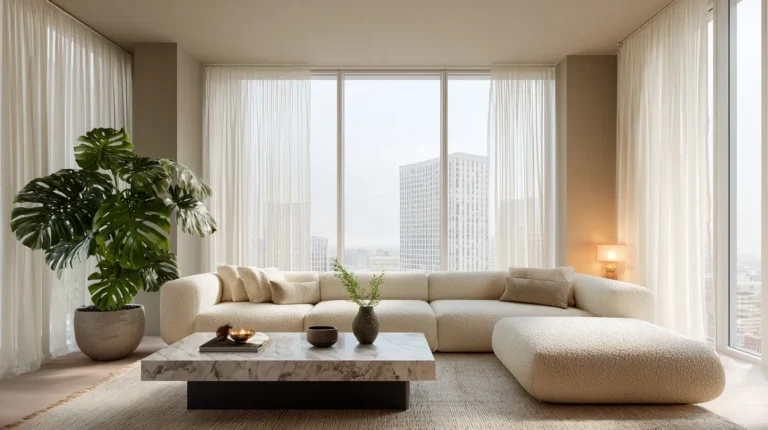
Metallic accents—brass, copper, brushed nickel—catch and reflect light beautifully. Incorporate these through lamp bases, picture frames, or decorative objects on shelves. Light-colored walls in warm whites, soft creams, or pale grays also help bounce light around the room, making it feel larger and brighter.
Glass and acrylic furniture pieces (like a lucite coffee table or glass-topped console) allow light to pass through, maintaining an open, airy feeling even in smaller spaces.
Specialized Lighting Techniques
Uplighting for Drama
Uplighting—placing light sources low to direct beams upward—creates dramatic shadows and highlights architectural details. Position floor uplights (also called torchieres) in corners to wash walls with soft light, making ceilings feel higher and rooms more spacious.
Uplighting works beautifully behind large plants, where it casts leafy shadows on walls and ceilings. The effect is organic, dynamic, and quietly mesmerizing.
LED Strip Lighting
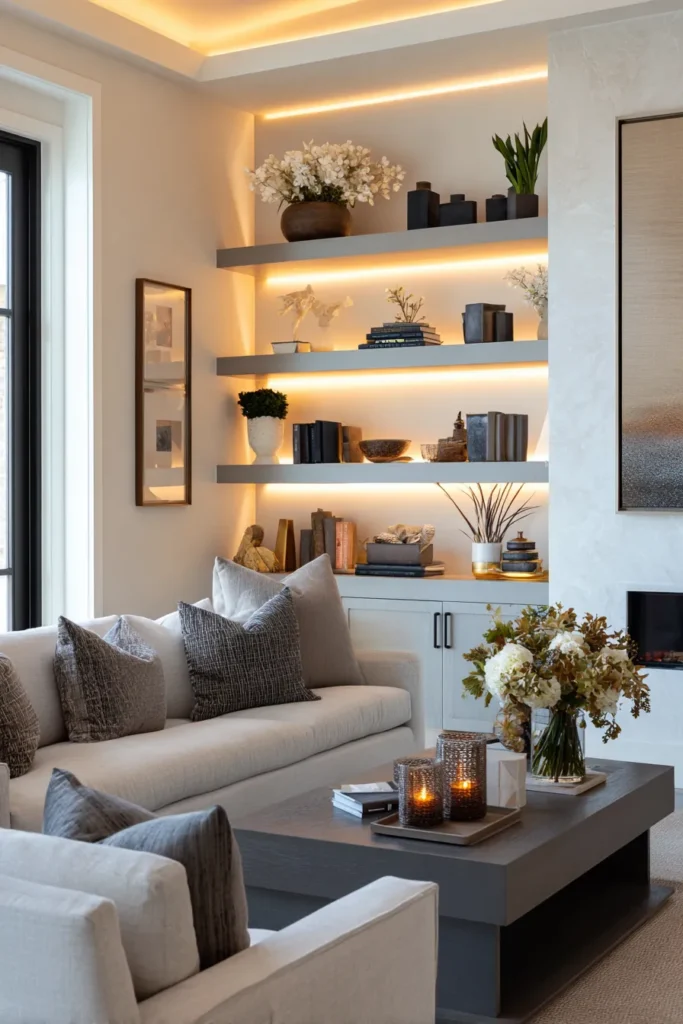
Adhesive LED strips are remarkably versatile and easy to install. Tuck them behind floating shelves to create a subtle glow that makes displayed objects appear to float. Line the back of your TV or media console to reduce eye strain during evening viewing.
Under furniture LED strips (beneath a sofa or credenza) create the illusion that pieces are hovering, adding modern sophistication. Choose warm white or amber tones for living spaces—cool whites can feel too clinical.
Cove and Recessed Lighting
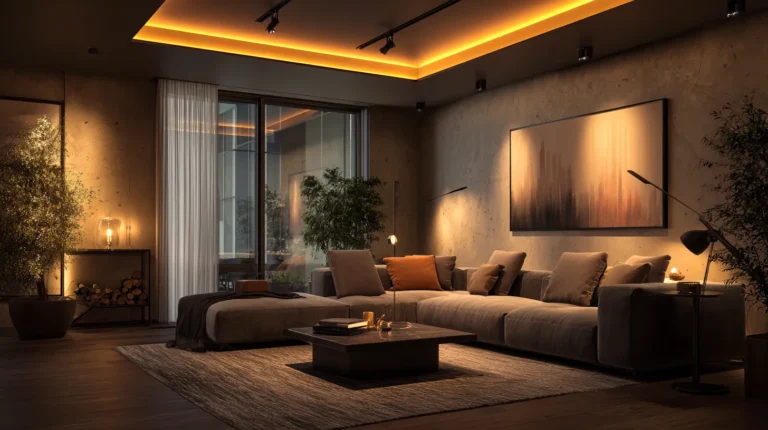
If you’re renovating or have existing architectural details, cove lighting (hidden fixtures in ceiling recesses) provides seamless ambient light that feels integrated into the architecture itself. Recessed can lights offer clean, modern illumination without visible fixtures—ideal for contemporary or minimalist spaces.
Space recessed lights 4 to 6 feet apart for even coverage, and always choose adjustable or directional trims so you can aim light where you need it most.
Lighting for Different Design Styles
Scandinavian Simplicity
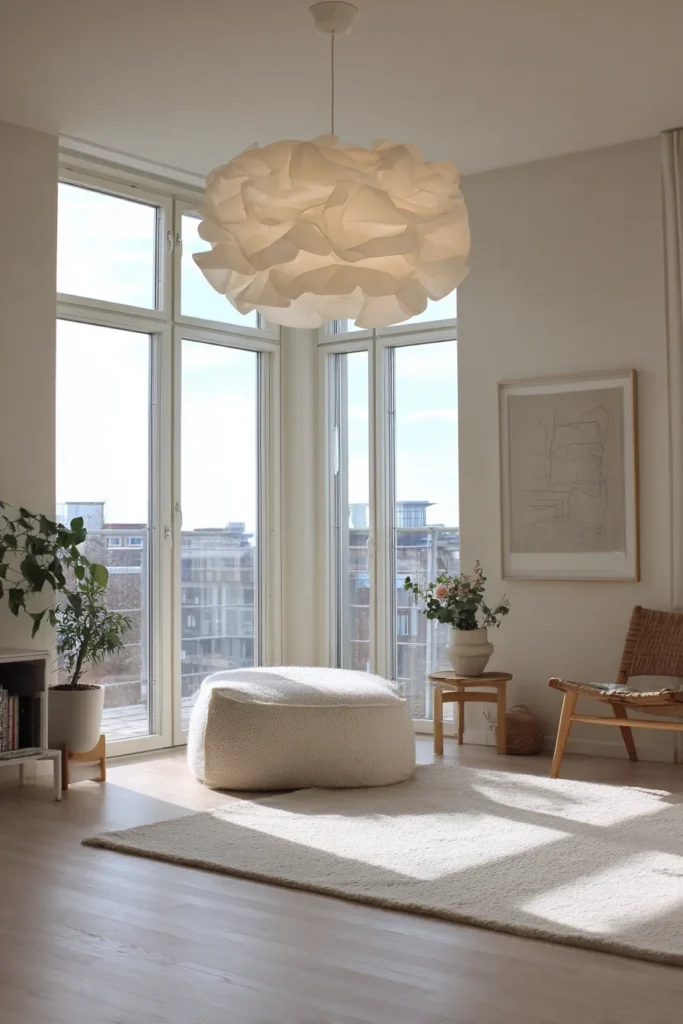
Scandinavian design celebrates natural light, minimal forms, and warm materials. Choose fixtures in light wood, matte white, or brushed metals. Paper lanterns, simple pendant globes, and functional arc lamps fit this aesthetic beautifully.
Layer in plenty of candles and keep window treatments minimal to maximize daylight. The goal is brightness that feels clean but never cold—add warmth through bulb temperature (2700-3000K) and natural textures.
Modern Industrial
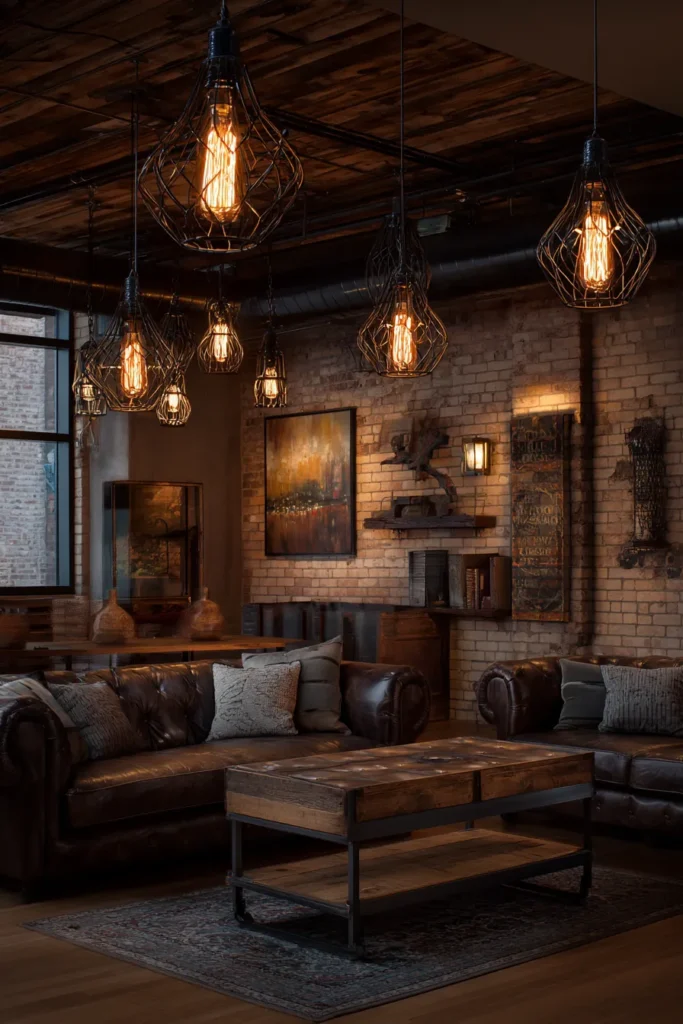
Industrial style embraces exposed elements—Edison bulbs, visible cords, metal cage fixtures, and raw materials. Oversized factory-style pendants, adjustable task lamps with articulated arms, and wall sconces with exposed bulbs all work beautifully.
Balance the harder edges with warm light temperatures and plenty of layering. The contrast between raw materials and soft light creates unexpected coziness.
Bohemian Layered
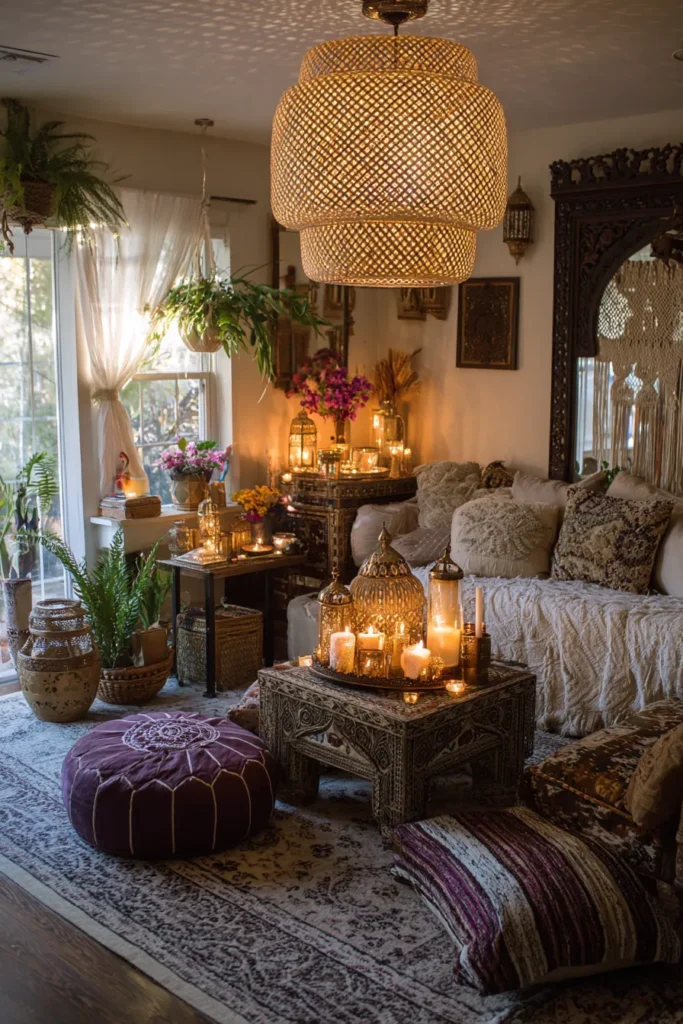
Boho style is all about abundance and global influences. Mix woven pendant lights, beaded chandeliers, Moroccan lanterns, and macramé-wrapped fixtures. Layer in string lights, floor lanterns, and clustered candles for that lived-in, collected-over-time feeling.
Don’t worry about matching—variety is the point. The lighting should feel personal, eclectic, and full of stories.
Transitional Elegance
For spaces that blend traditional and contemporary, choose fixtures with clean lines but warm materials. Drum shade chandeliers, simple table lamps with linen shades, and minimalist sconces in brass or bronze create sophisticated balance.
Keep the overall palette neutral and cohesive, and invest in quality dimmers to adjust the mood with ease.
Common Lighting Mistakes to Avoid
Even with the best intentions, certain missteps can undermine your lighting design. Here’s what to watch for:
Relying on a single overhead source. This creates harsh shadows and unflattering light. Always layer multiple sources at different heights.
Hanging fixtures too high. Statement pieces lose impact when they’re too close to the ceiling. Bring pendants and chandeliers down to create intimacy and presence.
Ignoring dimmer switches. Dimmers are inexpensive to install and transform how flexible your space can be. Put every light you can on a dimmer—you won’t regret it.
Choosing the wrong color temperature. Cool white bulbs (4000K+) feel institutional in living spaces. Stick to warm white (2700-3000K) for inviting, cozy light.
Forgetting about shadows. Strategic shadows add depth and dimension. Uplighting, accent lighting, and varied fixture heights all create interesting shadow play.
Overlooking energy efficiency. LED bulbs use a fraction of the energy of incandescent and last for years. They’re also available in every color temperature and brightness level you might need.
Sustainable and Energy-Efficient Choices
Creating a beautiful home and caring for the planet aren’t mutually exclusive goals. Modern lighting options make it easy to reduce energy consumption without sacrificing ambiance.
LED technology has come remarkably far—today’s bulbs offer warm, dimmable light that’s nearly indistinguishable from traditional incandescent. They use up to 90% less energy and last 15-25 times longer, which means fewer replacements and less waste.
Look for fixtures made from sustainable materials—reclaimed wood, recycled metal, natural fibers like jute or hemp. Many contemporary designers are creating stunning pieces with environmental responsibility at their core.
Consider solar-powered outdoor lights for patios or balconies adjacent to your living room, and use timers or motion sensors to ensure lights aren’t left on unnecessarily. Smart systems also allow you to monitor and reduce energy usage through detailed tracking.
Quick DIY Lighting Upgrades
You don’t need to rewire your entire home to dramatically improve your lighting. Here are accessible projects that make immediate impact:
Install dimmer switches. Most can be installed in under 30 minutes with basic tools. This single upgrade transforms how you use every light in the room.
Add plug-in wall sconces. No electrical work required—these simply hang on the wall and plug into existing outlets. Use them to flank artwork, define seating areas, or add ambient glow.
Update lampshades. Swap dated or dingy shades for linen, textured cotton, or natural woven materials. A fresh shade can completely transform an existing lamp.
String LED strips. These peel-and-stick lights install in minutes and can go behind shelves, under cabinets, or along architectural details for instant ambiance.
Replace bulbs mindfully. Swap all your bulbs to the same warm color temperature for cohesive light, and choose higher-wattage LEDs for areas that need more brightness.
Essential Lighting Checklist
- Layer three types: ambient, task, and accent lighting in every living room
- Install dimmers on every fixture possible for maximum flexibility
- Choose warm bulbs (2700-3000K) for inviting ambiance
- Mix fixture heights: overhead, mid-level (table/floor lamps), and low accent lights
- Consider smart controls for convenience and energy savings
- Use mirrors strategically to amplify natural and artificial light
- Add LED strips for modern accent lighting without new fixtures
- Invest in statement pieces that serve as both light and art
- Avoid single-source lighting—always use multiple light sources
- Think about activities: reading, entertaining, relaxing each need different lighting approaches
- Choose sustainable options: LED bulbs, solar power, and eco-friendly materials
- Don’t forget maintenance: keep fixtures clean and bulbs fresh for optimal light quality
Creating Your Personal Lighting Story
At the end of the day, the best lighting for your living room is the lighting that makes you feel at home. It’s about creating layers of warmth that welcome you after long days, illuminate the activities you love, and showcase the space you’ve so carefully curated.
Pay attention to how light moves through your room at different times of day. Notice where shadows fall, where glare appears, where you instinctively want to sit. Your space will tell you what it needs if you listen.
Start with the fixtures you have. Add one new layer—maybe a reading lamp or LED strips behind your bookshelf. Observe how that single change shifts the entire feeling of the room. Then build from there, gradually crafting a lighting landscape that’s uniquely yours.
The rooms we love most aren’t necessarily the grandest or most expensive. They’re the ones where the light feels right—where you can read without squinting, host without harsh glare, and settle in at day’s end feeling held by warmth and comfort.
Your living room is waiting for its transformation. And it begins with light.
Frequently Asked Questions
How many light sources should a living room have?
A well-lit living room typically includes 4-6 light sources including ambient (overhead or multiple lamps), task lighting (reading lamps, adjustable fixtures), and accent lights (LED strips, uplights). The key is variety—mixing different heights, intensities, and purposes creates depth and flexibility for different activities and moods.
What’s the best color temperature for living room lights?
For living rooms, warm white bulbs between 2700K and 3000K create the most inviting, cozy atmosphere. This temperature mimics the warm glow of traditional incandescent bulbs and complements most interior palettes. Avoid cool white (4000K+) which can feel too clinical and harsh for living spaces meant for relaxation.
Can smart lighting really save energy?
Yes, significantly. Smart LED bulbs use up to 90% less energy than incandescent bulbs, and smart controls ensure lights aren’t left on unnecessarily. Features like scheduling, motion sensors, and remote control help optimize usage. Over time, the energy savings offset the higher initial cost, especially when combined with the extended lifespan of LED technology.
How do I light a living room with low ceilings?
Focus on wall sconces, table lamps, and floor lamps rather than hanging fixtures that drop down. Use uplighting to bounce light off the ceiling, making it feel higher. Recessed lighting or flush-mount fixtures keep the ceiling plane clean. Vertical lighting (tall floor lamps, wall-mounted fixtures) draws the eye upward, creating the illusion of more height.
What’s the easiest way to update living room lighting on a budget?
Start with these affordable changes: replace all bulbs with matching warm LED bulbs for cohesive light, add inexpensive plug-in dimmer switches to existing lamps, install adhesive LED strip lights behind furniture or shelves, update old lampshades with new ones in current fabrics, and strategically place mirrors to amplify existing light sources. These simple swaps create dramatic improvement without professional installation or major investment.