
Table of Contents
There’s something about morning light spilling through linen curtains that makes a room feel alive. In Japandi design, natural light isn’t just functional—it’s the soul of the space. It reveals the grain of oak wood, softens the edges of handwoven textiles, and breathes warmth into minimalist silhouettes.
The Japandi aesthetic marries Japanese wabi-sabi with Scandinavian hygge, creating living rooms that feel both curated and comfortable. At its heart lies light—diffused, layered, and thoughtfully maximized. Whether you’re working with sun-drenched windows or modest openings, understanding how to harness natural illumination transforms your space from stark to serene.
This guide walks you through practical ways to embrace natural light in your Japandi living room. You’ll discover window treatments that filter without blocking, furniture placements that reflect radiance, and lighting layers that extend daylight’s glow into evening hours. Let’s bring more brightness—and beauty—into your home.
Understanding Japandi Style and Its Relationship with Light
Japandi living room design thrives on simplicity and warmth. The style strips away excess, leaving only what serves purpose or sparks joy. Natural light becomes the anchor—highlighting organic materials like bamboo, rattan, and unfinished wood while casting gentle shadows that add depth.
Unlike stark minimalism, Japandi celebrates soft contrasts. Think neutral palettes in warm beige, soft gray, and muted terracotta against clean white walls. When sunlight touches these earthy tones, the room glows rather than glares. The interplay between light and texture—linen, wool, paper—creates visual interest without clutter.
In tropical climates like Silang, Philippines, this approach adapts beautifully. The abundant natural light becomes an asset when filtered correctly, bringing warmth without overwhelming heat. The key is balancing brightness with the cozy, grounded feeling Japandi is known for.
How to Maximize Natural Light in a Japandi Living Room
Window Placement and Orientation
Understanding your windows’ direction changes everything. North-facing windows in the Philippines offer consistent, softer light throughout the day—ideal for Japandi’s gentle aesthetic. South-facing openings bring intense tropical sun that needs careful management.
For harsh direct sunlight, UV-protective window film preserves your furniture’s finish while maintaining brightness. These transparent films block up to 99% of harmful rays without darkening your space. Pair them with light-colored window frames in natural wood or matte white to maximize reflection.
East and west windows create beautiful moments—golden morning or evening light that warms terracotta cushions and bamboo side tables. Position your seating to catch these fleeting hours, creating intentional spaces for coffee or sunset reading.
Sheer Curtains and Natural Light Diffusion
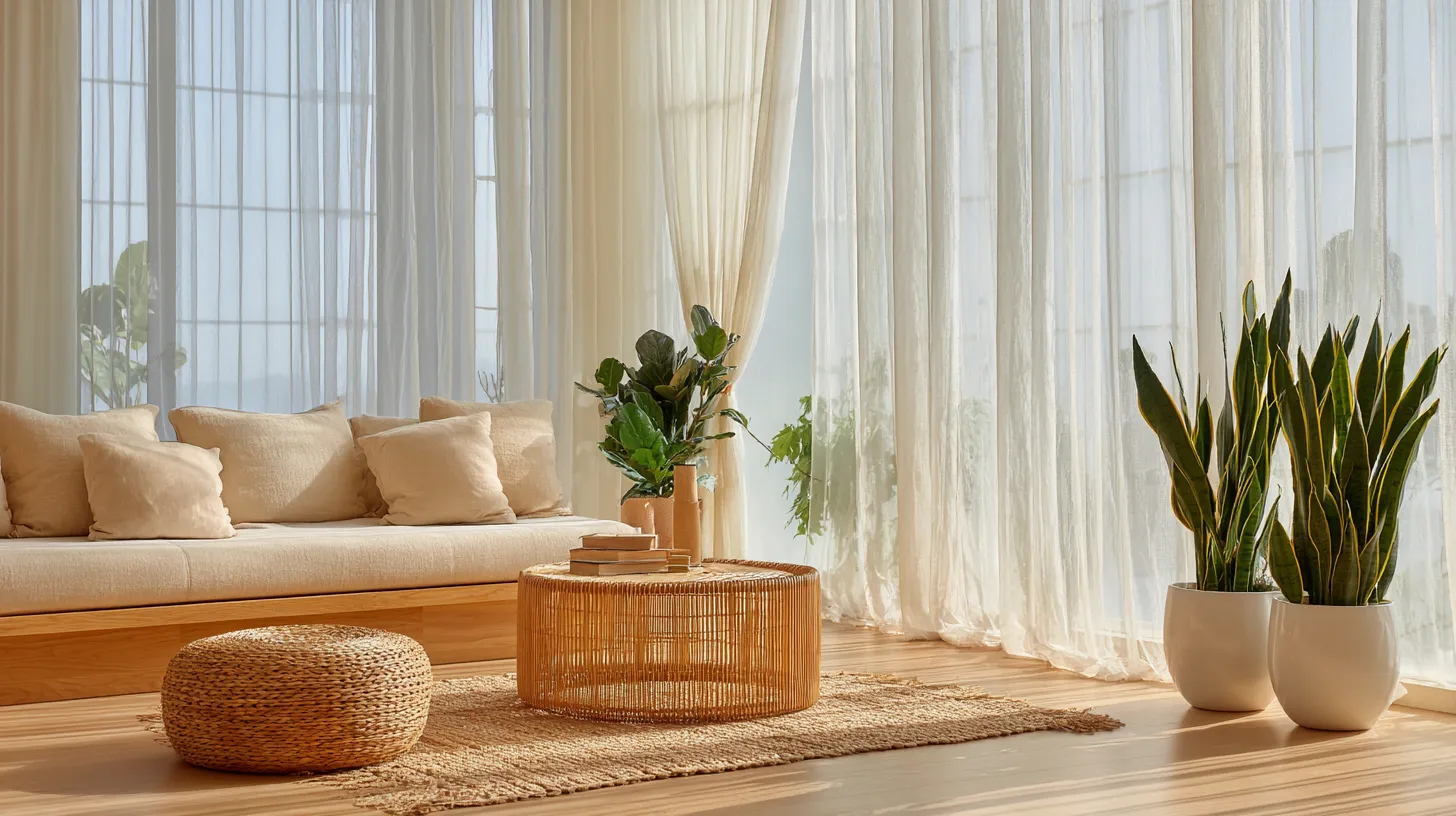
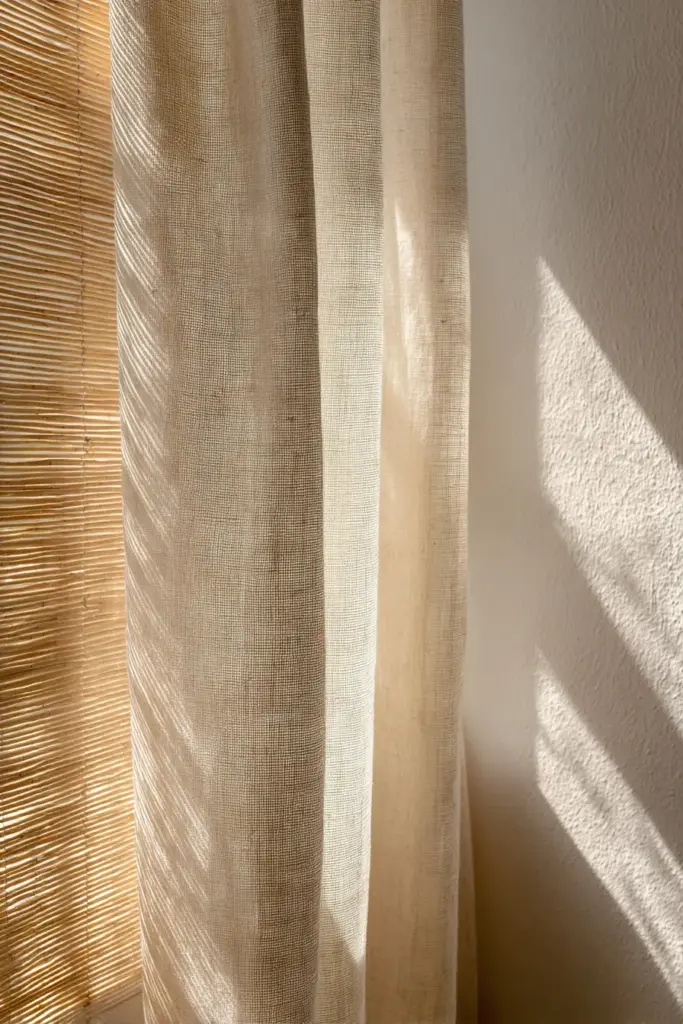
Sheer linen curtains are Japandi’s secret weapon. They filter harsh rays into soft, diffused daylight that fills the room without glare. Choose natural fibers—linen, cotton voile, or bamboo blends—in cream, warm white, or soft gray tones.
Floor-to-ceiling installation makes ceilings feel higher and maximizes light distribution. During midday, these fabrics glow from within, creating luminous walls of texture. In the evening, they provide gentle privacy while still allowing streetlights or moonlight to filter through.
For layering, combine sheers with washi paper blinds or bamboo shades. Roll the blinds up during bright mornings and lower them during peak afternoon heat. This flexibility lets you control light intensity while maintaining the airy, open feeling essential to Japandi spaces.
Strategic Furniture Placement for Light Flow
Furniture arrangement either invites light in or blocks its path. In Japandi living rooms, low-profile pieces in light oak, ash, or teak allow sunlight to travel freely across the room. Avoid placing tall bookcases or dark cabinets directly opposite windows.
Position your sofa perpendicular to windows rather than blocking them. This creates comfortable seating bathed in natural light without causing glare on faces. Glass-topped coffee tables or those with open slatted designs let light pass through to rugs and flooring below.
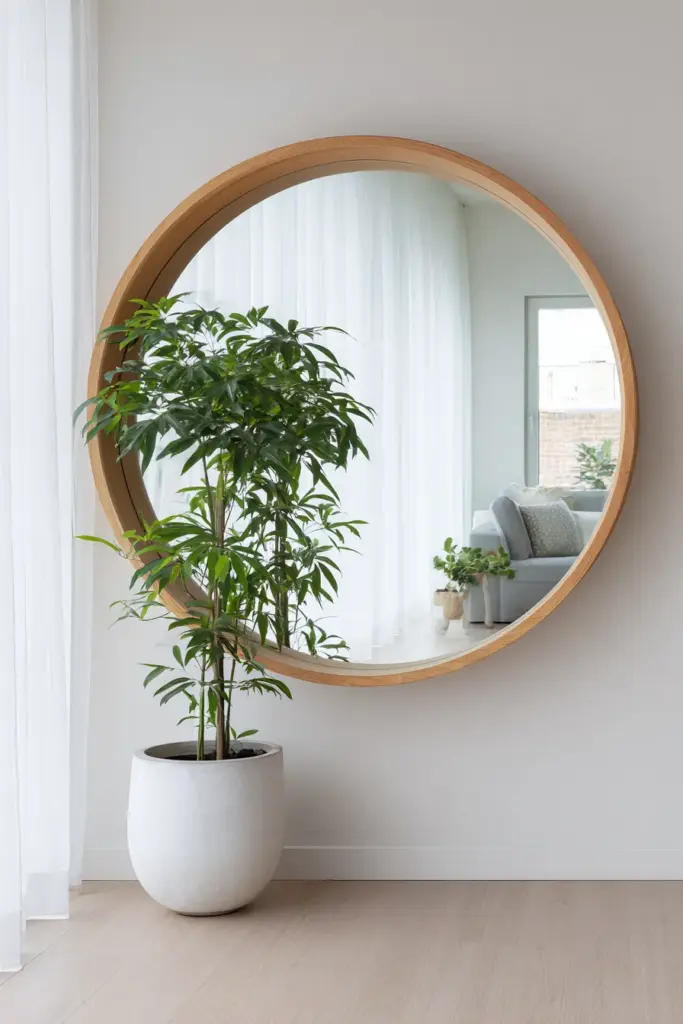
Reflective surfaces amplify brightness—consider a simple round mirror in light wood framing opposite your largest window. Avoid ornate or metallic frames; the reflection should feel subtle, almost accidental, multiplying light without drawing attention to itself.
Layered Lighting: Extending Natural Light into Evening
Ambient Lighting Foundations
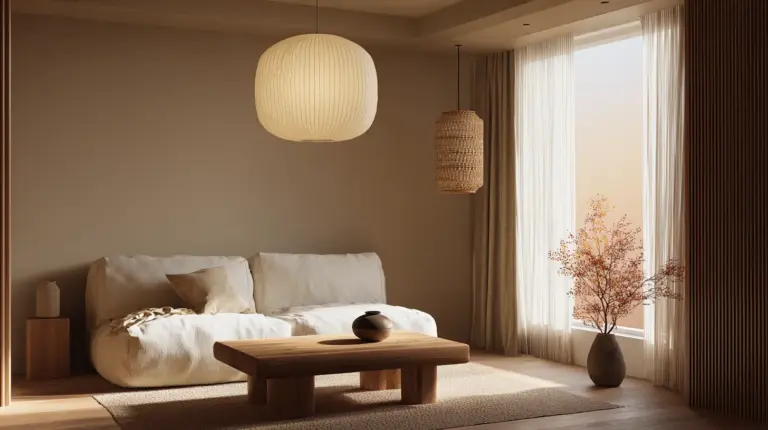
As daylight fades, Japandi living rooms transition seamlessly through layered artificial lighting. Ambient fixtures—like rice paper pendant lamps or rattan dome shades—mimic the diffused quality of natural light. Choose warm-toned bulbs (2700K-3000K) that echo afternoon sun.
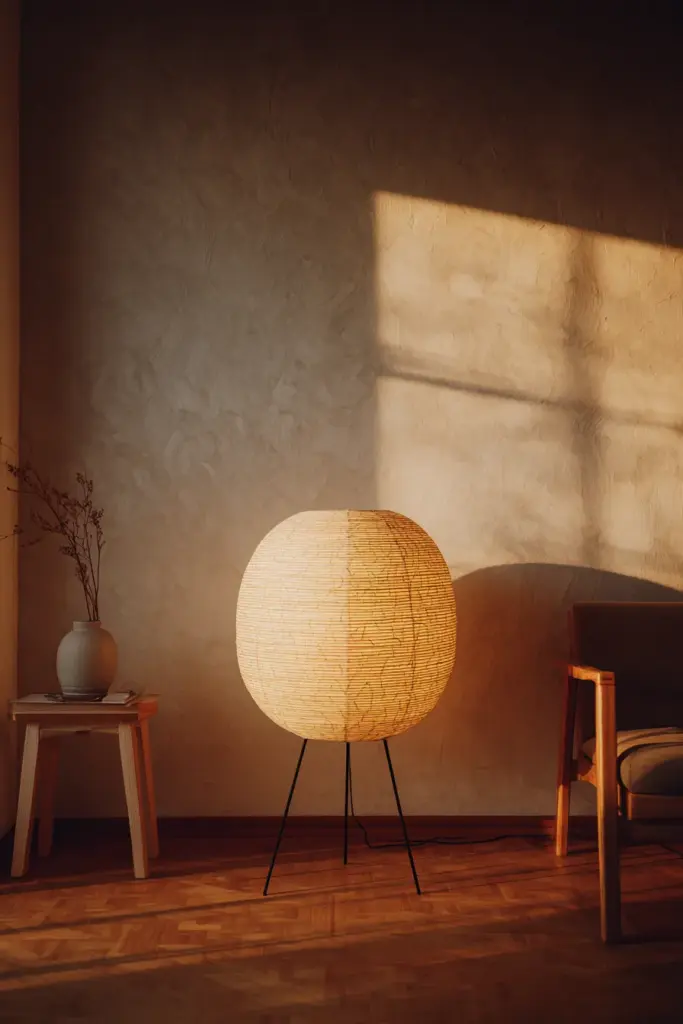
Washi paper lamps cast soft, even illumination across walls and ceilings. Their handcrafted texture adds visual interest while remaining minimal. Hang them at varying heights to create gentle pools of light rather than uniform brightness.
Dimmable LED systems let you adjust intensity as natural light changes. Smart circadian lighting apps gradually shift color temperature throughout the day, supporting natural rhythms. Solar-powered lanterns offer sustainable backup—especially practical for tropical areas with occasional power interruptions.
Task and Accent Lighting Details
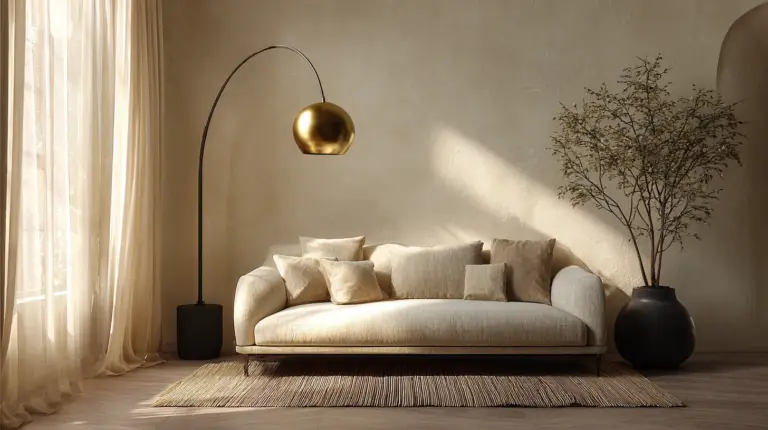
Floor lamps with bamboo or wooden tripod bases provide focused reading light without harsh overhead glare. Position them beside low seating areas, angled to illuminate pages or handwork. Choose fabric or paper shades that diffuse the bulb’s direct beam.
Wall sconces in matte black or natural wood flank artwork or textile hangings, creating subtle focal points after dark. These accent lights should whisper rather than shout—highlighting the texture of a woven wall piece or the grain of a reclaimed wood panel.
Avoid spotlights or track lighting; they contradict Japandi’s soft aesthetic. Instead, use picture lights or shelf-mounted LEDs to gently wash light across surfaces. The goal is cohesive warmth, where each light source blends into an overall glow.
Material Choices That Enhance Natural Light
Light-Reflective Natural Materials
Japandi’s material palette naturally amplifies brightness. Light wood tones—oak, ash, Japanese maple—reflect rather than absorb sunlight. Choose furniture with matte or satin finishes; high gloss feels too modern and creates distracting reflections.
Bamboo and rattan pieces add texture while maintaining lightness. A bamboo media console or rattan accent chair catches and scatters light through its woven structure. These materials also suit humid tropical climates, resisting warping better than some hardwoods.
Stone elements in pale limestone or terrazzo provide cool contrast to warm woods. A low stone planter or coffee table base grounds the space without darkening it. Pair with light-colored grout or natural edges to maintain the airy feeling.
Textile Layers for Light and Comfort
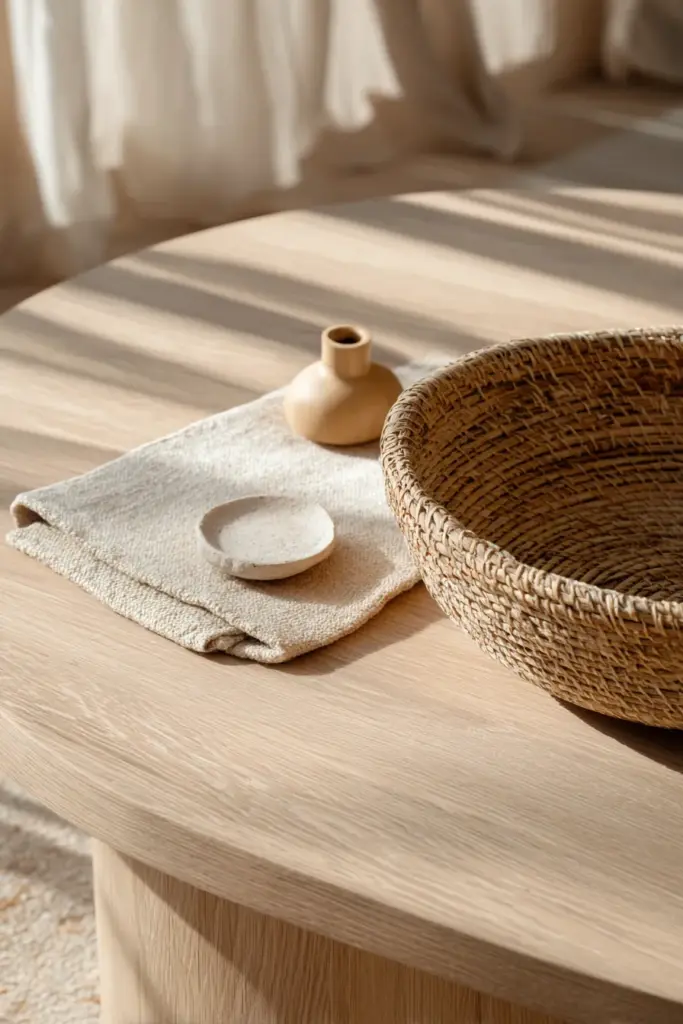
Natural fiber textiles create depth without blocking light. A jute area rug in undyed beige or cream defines the seating area while reflecting light upward. Layer with smaller sheepskin or cotton throws in neutral tones—visual interest through texture, not pattern.
Linen upholstery on sofas and chairs breathes with the room’s changing light. Choose warm neutrals—oatmeal, sand, soft taupe—that glow in sunlight and feel cozy at dusk. Avoid dark or heavy velvets that absorb rather than reflect illumination.
Window seat cushions in natural cotton or linen create light-filled reading nooks. The fabric’s slight texture catches side light beautifully, while the seat itself positions you perfectly to enjoy natural illumination throughout the day.
Color Palette for Light Maximization
Neutral Foundations
Japandi living rooms build on warm white walls—not stark white, but shades with subtle beige or gray undertones. These bases reflect maximum light while feeling soft and inviting. Benjamin Moore’s “Cloud White” or similar warm neutrals work beautifully in tropical settings.
Ceiling color matters more than many realize. A lighter ceiling than your walls bounces light downward, brightening the entire room. Keep trim and moldings in the same warm white family to avoid visual breaks that fragment light flow.
Wood flooring in light to medium tones provides warmth without darkness. If you have existing dark floors, consider whitewashing or lime-washing techniques to lighten them while preserving grain. Area rugs in cream or natural fiber shades further brighten the base plane.
Earthy Accent Integration
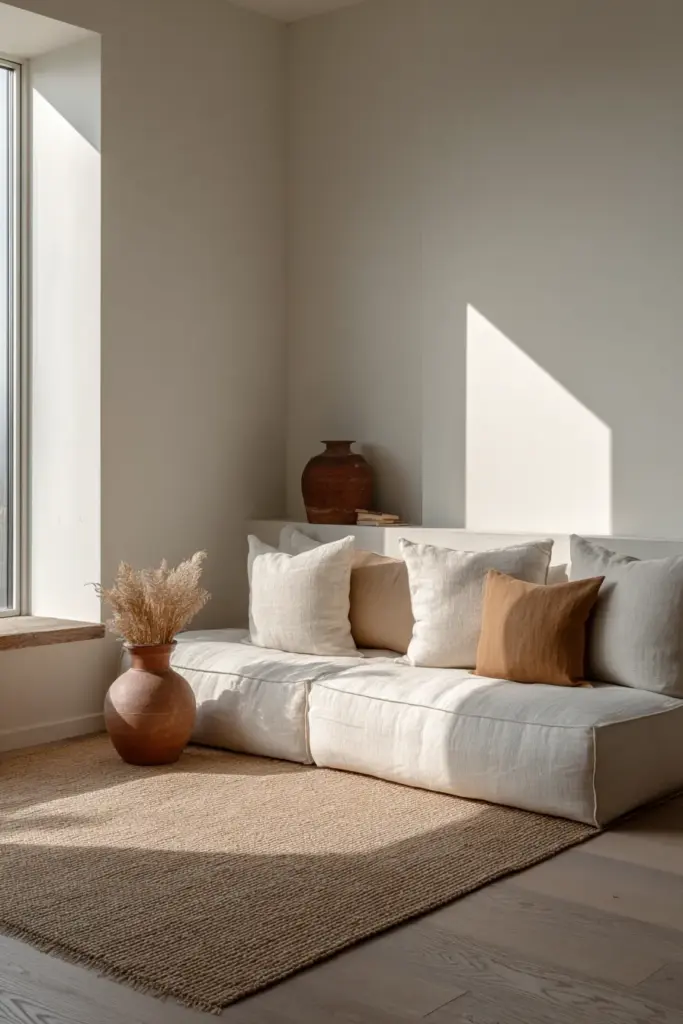
Accent colors in Japandi stay grounded—terracotta, sage green, warm charcoal, soft rust. Use these in small doses: throw pillows, ceramic vases, woven baskets. Against neutral backgrounds, they create visual anchors without competing with natural light.
Plants bring life and color while thriving in bright spaces. Sansevieria and pothos tolerate varying light levels, perfect for corners that receive less direct sun. Position reflective white pots beneath or near plants to bounce light onto lower leaves.
Avoid pure black accents; instead, choose warm charcoal or deep brown. These provide necessary contrast and definition without creating visual “holes” that absorb light. A charcoal linen cushion or dark wood picture frame adds depth while maintaining overall brightness.
Practical DIY and Budget-Friendly Light Solutions
Affordable Window Treatments
In the Philippines, budget-friendly bamboo blinds start around ₱1,000 at local markets like Divisoria. These natural shades filter light beautifully and suit humid climates. Pair with simple linen panels sewn from affordable fabric (₱300-500 per meter) for layered light control.
Upcycle white bedsheets into sheer curtains by hemming and adding curtain clips. The slightly textured weave diffuses light perfectly, and the cost is minimal. Dip-dye the bottom third in weak tea for subtle warm tones if desired.
DIY washi paper window clings provide privacy and diffusion without permanent installation—ideal for renters. Apply rice paper cutouts with water-activated paste to lower window sections, creating translucent patterns that scatter incoming light.
Upcycled Lighting Fixtures
Transform thrifted wooden trays or baskets into pendant lamp shades. Drill a center hole, thread simple pendant cord hardware (₱200-400), and add a warm LED bulb. The woven texture casts beautiful shadow patterns while diffusing light softly.
Glass jar lanterns filled with battery-powered fairy lights create ambient glow on shelves or tables. Use recycled coconut oil jars wrapped in natural twine for textural interest. Group in odd numbers for Japandi’s asymmetrical balance.
Repaint dark wood furniture in light stains or whitewash finishes. This DIY transformation costs under ₱500 for materials and dramatically increases how much light reflects around the room. Sand lightly, apply diluted white paint or light wood stain, then seal with matte varnish.
Plant Integration and Biophilic Light Optimization
Low-Light Plant Strategies
Even in Japandi’s bright aesthetic, some corners receive less direct sun. Snake plants and ZZ plants thrive in these spots while adding sculptural green elements. Their vertical lines complement minimalist furniture without creating visual clutter.
Position plants near light-colored walls where reflected light reaches their leaves. White ceramic or concrete pots amplify this effect, bouncing additional illumination onto lower foliage. Avoid crowding plants in dark corners; instead, use them to frame well-lit areas.
Hanging plants like pothos or string-of-pearls catch upper light levels often wasted in minimal spaces. Suspend them in simple macramé hangers (DIY from cotton rope for under ₱300) near windows where they receive bright, indirect light and cast gentle shadows below.
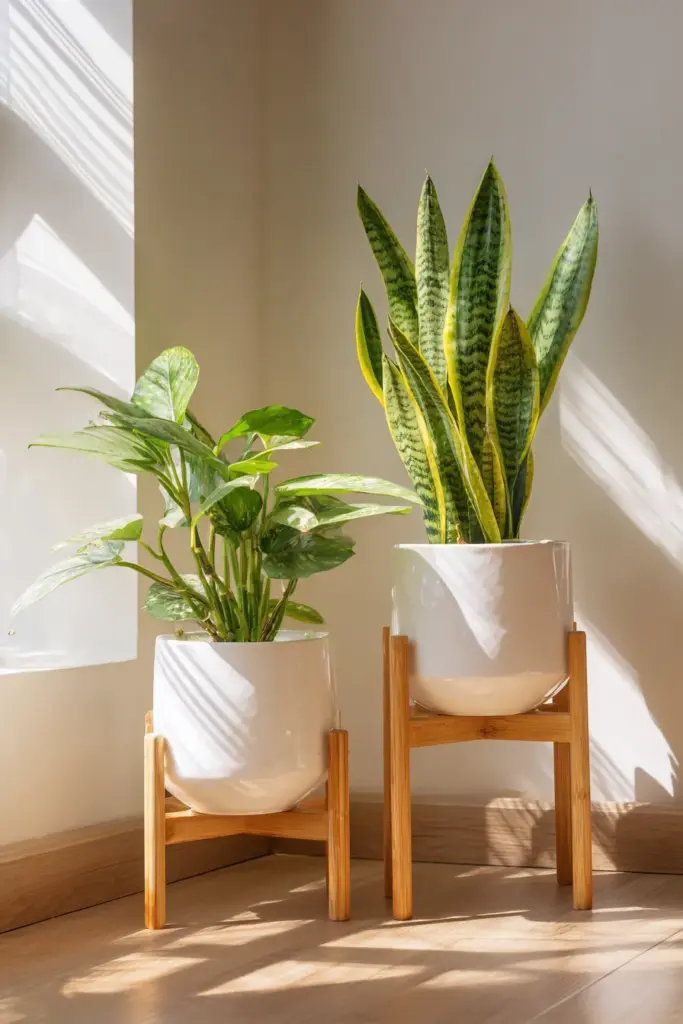
Reflective Techniques for Plant Display
Place plants on light wood stands or stools to elevate them into better light zones. A low bamboo plant stand (₱500-800) lifts greenery into window light while maintaining the room’s uncluttered sightlines.
Mirror placement behind or beside plant groupings doubles their visual presence and reflects light back onto leaves. Keep mirrors simple—frameless or light wood frames—to avoid overwhelming the minimalist aesthetic.
Group plants with varying heights to create light-catching layers. A tall fiddle leaf fig near a window, mid-height monstera on a stand, and low trailing pothos create depth while each level intercepts and scatters light differently.
Smart Lighting Technology for Modern Japandi Spaces
Circadian Rhythm Integration
Smart bulbs that adjust color temperature throughout the day support natural light patterns. Morning cool-white shifts to warm amber by evening, mimicking sunlight’s daily arc. Brands like Philips Hue offer preset “natural light” modes requiring minimal programming.
Motion sensors in low-traffic areas prevent lights from running needlessly during bright daylight hours. This sustainable approach aligns with Japandi’s mindful resource use while ensuring evening illumination automatically engages as natural light fades.
Solar-powered outdoor lanterns brought inside at night provide backup lighting without electricity. Charge them on window sills during the day, then place on tables or shelves after dark. Their soft glow extends the room’s natural-light feeling into evening hours.
Voice and App Control Benefits
Dimming lights without leaving your seat maintains the room’s peaceful atmosphere. Voice commands or smartphone apps let you adjust lighting zones independently—brightening task areas while keeping ambient light low and cozy.
Scheduling features automate the transition from natural to artificial light. Thirty minutes before sunset, warm floor lamps gradually illuminate while overhead fixtures remain off, creating seamless continuity as daylight diminishes.
Energy monitoring through smart plugs reveals which fixtures consume most power, supporting sustainable choices. This data-driven approach to lighting design feels contemporary yet aligns with Japandi’s intentional, waste-conscious philosophy.
Seasonal Light Adjustments in Tropical Climates
Managing Monsoon Season Brightness
During Philippines’ rainy months, natural light becomes scarce and gray. Increase warm artificial lighting during these periods without overwhelming the minimalist aesthetic. Add one or two extra floor lamps temporarily, removing them when bright season returns.
Lighter curtain fabrics help maximize diffused cloud light during overcast days. Swap heavier bamboo shades for sheer linen during monsoon months, then reverse when intense summer sun arrives. This seasonal rotation keeps light levels comfortable year-round.
Reflective surfaces become more critical when direct sunlight decreases. Polish light wood furniture, clean windows thoroughly, and ensure mirrors remain smudge-free to maximize whatever ambient light enters the space.
Summer Sun Management
Intense tropical summer requires careful filtering to prevent glare and heat buildup. Combine UV window film with bamboo blinds, keeping blinds partially lowered during peak afternoon hours (2-4 PM) while maintaining morning and evening openness.
Light-colored outdoor awnings or shade trees visible through windows reduce incoming heat without blocking brightness entirely. If adding exterior shading, choose natural materials—bamboo screens or canvas—that complement Japandi’s aesthetic.
Evening breezes allow you to open windows wide after sunset, pulling cooler air through sheer curtains. This natural ventilation reduces reliance on air conditioning while maintaining the light, airy feeling central to Japandi design.
Measuring and Testing Your Room’s Light Quality
Understanding Lux Levels
Optimal Japandi living room brightness ranges from 150-300 lux for ambient relaxation to 500+ lux for reading areas. Smartphone apps like “Light Meter” measure lux levels free, helping you identify dark corners needing attention.
Test different times of day to understand your room’s light patterns. Morning measurements by windows might read 1000+ lux, while evening corners drop to 50 lux. This data guides both furniture placement and supplemental lighting needs.
Target 200 lux minimum throughout the main seating area for comfortable evening activities. If natural light plus ambient fixtures don’t achieve this, add one strategic floor lamp rather than increasing overhead brightness, maintaining the warm, layered Japandi approach.
Light Color Temperature Testing
Use your smartphone camera’s white balance feature to assess whether light feels warm or cool. Japandi spaces should photograph with golden-warm tones, not blue-white institutional brightness. Adjust bulb temperatures if photos reveal overly cool lighting.
Compare how different areas photograph at the same time of day. Consistent warm tones throughout indicate successful light distribution. Patches of coolness suggest inadequate natural light filtering or mismatched bulb temperatures needing correction.
Take photos weekly at golden hour (one hour before sunset) to track seasonal changes. These reference images help you anticipate when seasonal adjustments—curtain swaps, added lamps—become necessary to maintain consistent ambiance.
Japandi Living Room Natural Light Checklist
Before finalizing your Japandi living room’s light strategy, verify these essential elements:
- Window treatments: Sheer linen or bamboo shades that filter without blocking
- Furniture placement: Low profiles that allow light flow, positioned to avoid blocking windows
- Wall colors: Warm white or soft neutrals that reflect maximum brightness
- Flooring: Light to medium wood tones or natural fiber rugs
- Mirrors: Simple frames positioned to multiply natural light sources
- Ambient lighting: Washi paper or rattan fixtures with warm-toned dimmable bulbs
- Task lighting: Floor lamps with fabric shades near reading areas
- Plants: Low-light varieties in reflective pots positioned strategically
- Seasonal flexibility: Ability to adjust curtains and supplemental lighting as sun patterns change
- Smart controls: Optional dimmers or circadian apps for seamless day-to-night transitions
Bringing Light and Soul Together
A Japandi living room bathed in natural light feels like breathing. It’s the morning sun warming your face as you cradle coffee in handmade pottery. The way afternoon rays reveal wood grain you’d never noticed. The gentle glow that makes evening conversations feel intimate without effort.
This isn’t about perfection—it’s about intention. Each choice, from sheer curtains to the placement of a single floor lamp, shapes how light moves through your space. How it touches the things you love. How it makes you feel when you walk through the door after a long day.
Start small if this feels overwhelming. Replace one heavy curtain with linen sheers. Move your sofa three feet to catch better morning light. Add a warm bulb to that shadowy corner. These quiet adjustments compound into transformation.
Your Japandi living room isn’t just a style—it’s a sanctuary where light and simplicity create space for what matters. Let the brightness in, literally and metaphorically. Your home will thank you with warmth.
Frequently Asked Questions
How do I maximize natural light in a small Japandi living room?
Use sheer white or cream curtains that filter light without blocking it, and position mirrors opposite windows to double brightness. Choose light wood furniture with low profiles and open designs. Paint walls in warm white tones and add reflective surfaces through light-colored rugs and pale ceramic accessories. Remove unnecessary items that create visual clutter and shadow.
What are the best window treatments for Japandi style?
Sheer linen curtains in natural beige or white work beautifully, often layered with bamboo blinds or washi paper shades for flexibility. Floor-to-ceiling installation maximizes the light-catching area. Choose natural materials like cotton, linen, bamboo, or rice paper that align with Japandi’s organic aesthetic while providing gentle light diffusion and privacy.
How do I layer lighting in a minimalist Japandi living room?
Start with ambient fixtures like rattan pendant lamps or paper lanterns providing overall warm glow. Add task lighting through floor lamps with fabric shades near seating areas. Include subtle accent lighting with wall sconces or picture lights. Use warm-toned dimmable bulbs (2700K-3000K) throughout, and avoid harsh overhead fixtures or bright spotlights.
What color temperature works best for Japandi lighting?
Warm white bulbs between 2700K-3000K create the cozy, natural light quality essential to Japandi aesthetics. These temperatures mimic afternoon sunlight and candlelight, supporting the style’s hygge-inspired comfort. Avoid cool white (4000K+) or daylight bulbs, which feel too clinical and contradict the warm, organic atmosphere.
Can Japandi style work in rooms with limited natural light?
Absolutely. Maximize existing light through strategic mirror placement, light-reflective paint colors, and sheer window treatments. Supplement with layered warm artificial lighting that mimics natural light’s diffused quality. Choose lighter wood tones and keep the color palette neutral. The minimalist approach actually helps limited light travel further by reducing visual clutter and dark surfaces that absorb brightness.