
Table of Contents
There’s something deeply comforting about walking into a room where light feels intentional. Not harsh. Not forced. Just… right.
In small living spaces, lighting becomes more than decoration—it’s architecture. It shapes how we move, how we breathe, how we settle into our evenings after long days navigating the city’s pulse.
Japandi design understands this intimately. Born from the marriage of Japanese minimalism and Scandinavian warmth, it teaches us that even the smallest apartment can hold profound beauty when light is chosen with care.
This is your gentle guide to transforming compact living rooms into sanctuaries of soft illumination—where every fixture serves a purpose, and every glow whispers calm.
Understanding Japandi Lighting Philosophy in Compact Spaces
The heart of Japandi lighting lies in its reverence for natural rhythms. Think of how morning light filters through shoji screens, or how Scandinavian homes glow amber against winter darkness.
In tight quarters—a studio in Makati, a one-bedroom condo in Quezon City—this philosophy becomes essential. You’re not just choosing bulbs; you’re curating an emotional landscape.
Warm color temperatures around 2700K create psychological safety, studies showing they reduce ambient anxiety by approximately 20% in confined areas. That golden hour feeling, bottled and brought indoors.
The Wabi-Sabi Principle of Imperfect Light
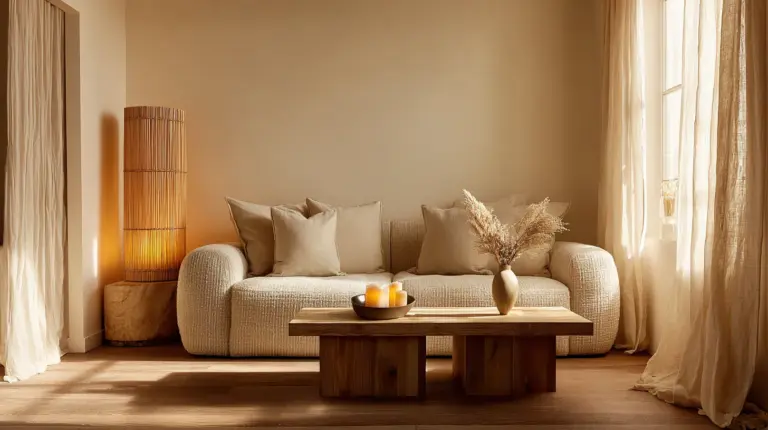
Japandi rejects sterile perfection. Instead, it celebrates organic textures that scatter light softly—handwoven rattan shades, paper lanterns with subtle irregularities, wood grain that catches illumination differently each evening.
These imperfections become features. A bamboo floor lamp casting geometric shadows. A clay pendant with matte finish diffusing light like fog.
In small spaces under 200 square feet, this textural approach prevents the clinical feel of uniform brightness, allowing corners to breathe in gentle shadow.
Layering Light: The Three-Tier Japandi Approach
Great lighting design, like great music, requires layers. In compact Japandi living rooms, you’ll orchestrate three distinct types of illumination.
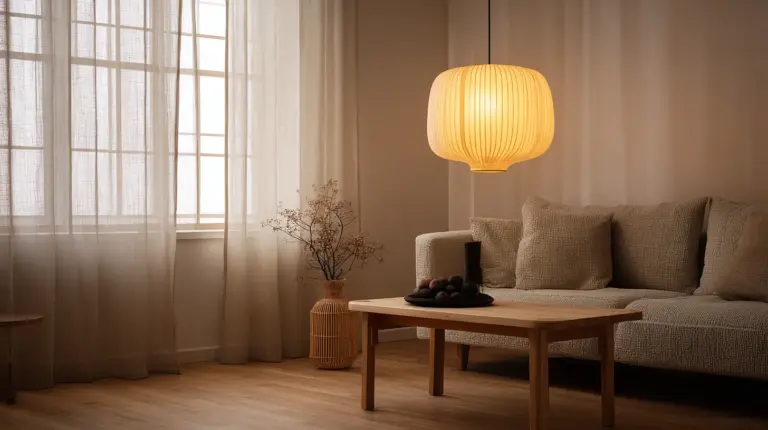
Ambient lighting forms your base—the soft overall glow that greets you at the door. Think paper globe pendants hung low over seating areas, or slim LED floor lamps tucked beside minimalist sofas.
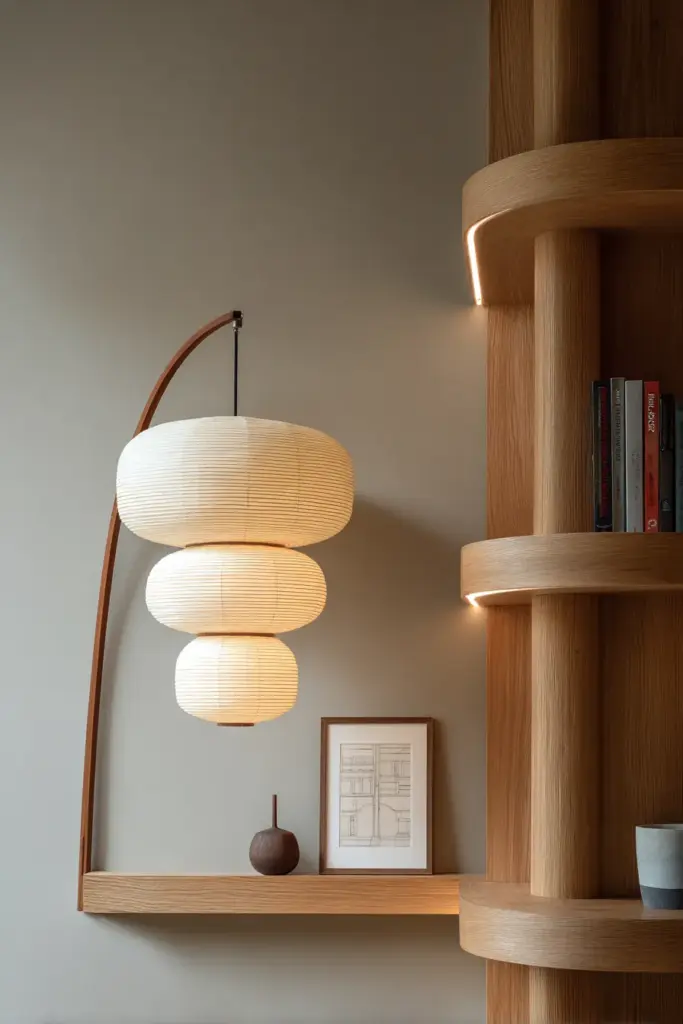
Task lighting serves function without sacrificing beauty. An arching reading lamp with walnut stem curves over your favorite chair. Adjustable wall sconces (more on renter-friendly options shortly) illuminate your laptop workspace.
Accent lighting whispers poetry—backlit floating shelves showcasing ceramics, or LED strips hidden beneath floating TV consoles that create the illusion of levitation.
Dimmer Switches: Your Secret Spatial Tool
Installing dimmers transforms fixed fixtures into responsive companions. Morning coffee requires different energy than midnight reading.
In small living rooms, dimmers also manipulate perceived space. Lower intensity in evening creates intimacy; brighter settings during gatherings expand visual boundaries.
Smart dimmer systems compatible with voice control (think Philips Hue or locally available smart plugs from Abenson) allow app-based scenes. “Movie night” dims pendants to 20%, while “cleaning mode” brings full brightness—all without multiple wall switches cluttering your limited surface area.
Best Fixture Types for Small Japandi Living Rooms
Your choice of physical fixtures determines both aesthetic and spatial efficiency. In tight quarters, every centimeter counts.
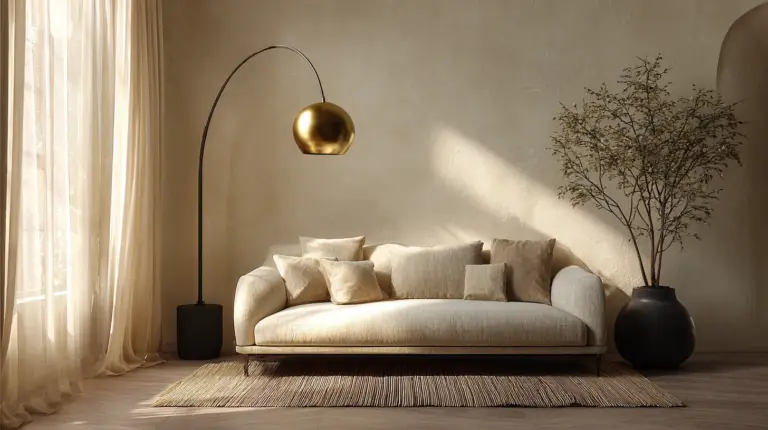
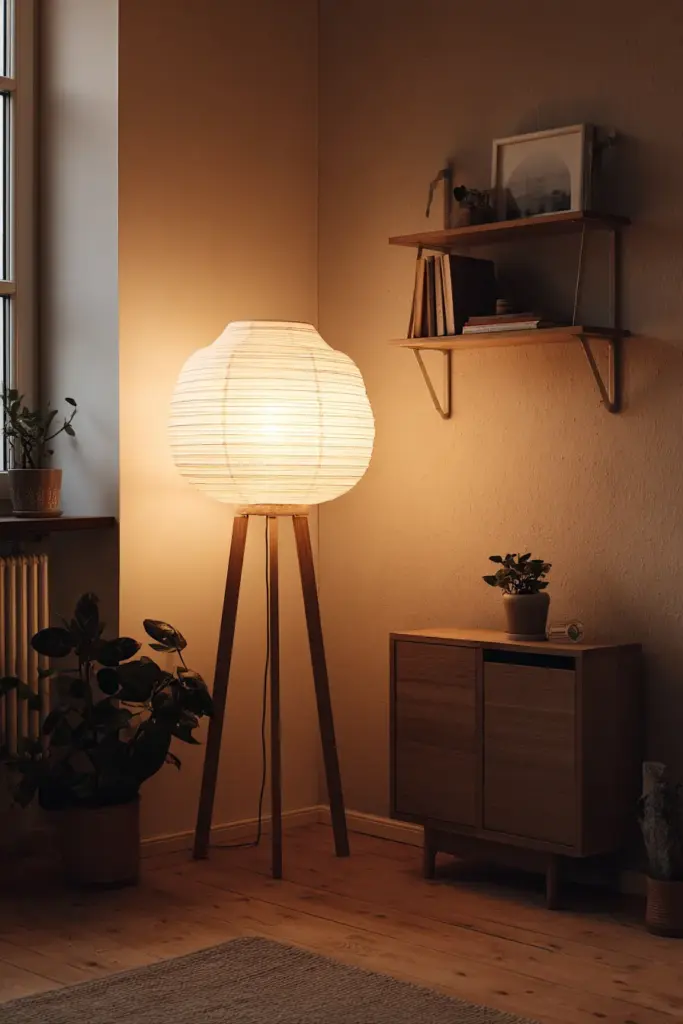
Floor lamps with slim profiles save approximately 2 square feet compared to traditional standing lamps. Look for tripod designs in light oak or bamboo, or sculptural arc lamps that extend light over seating without requiring side tables.
Ohouse-style minimal LED floor lamps in matte black or natural wood start around PHP 3,500 on Shopee, offering clean lines that disappear against walls while providing substantial ambient glow.
Pendant lights work beautifully when ceiling-mounted—provided you mind head clearance. For 8-foot ceilings common in Philippine condos, hang pendants so their lowest point sits 30 inches above seated eye level.
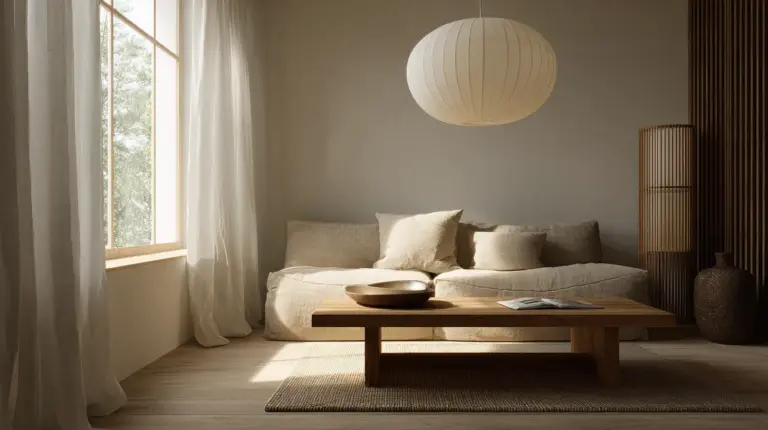
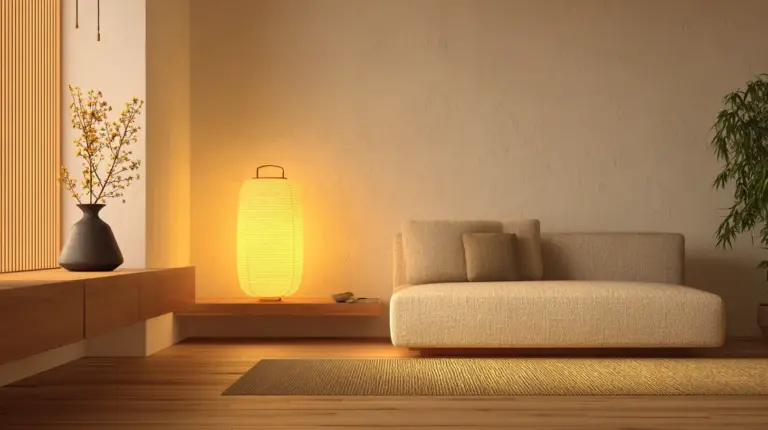
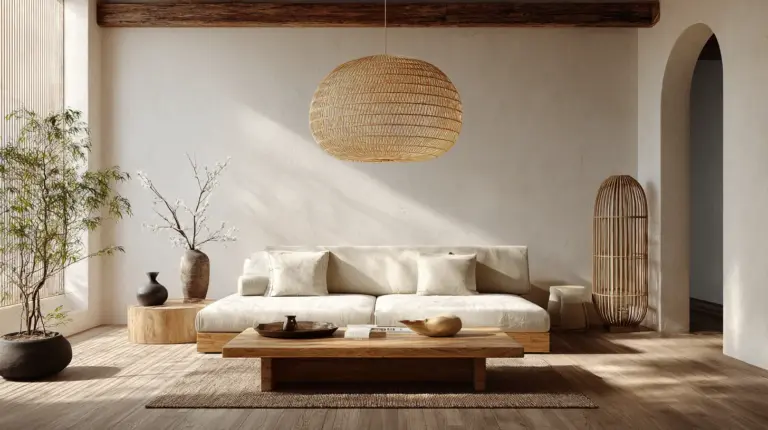
Paper lanterns channel pure Japandi spirit. Rice paper diffuses light like morning mist, while woven bamboo cages create dancing shadows. IKEA’s REGOLIT pendant (around PHP 800) becomes elevated when paired with warm LED bulbs.
Wall sconces free up precious floor and table space. The challenge? Most rentals prohibit drilling.
Renter-Friendly Lighting Solutions
Peel-and-stick LED strips have evolved beautifully. Battery-powered motion-sensor versions now last 6+ months, adhering to wall trim or behind furniture without damaging paint.
Plug-in wall sconces with decorative cord covers transform rental limitations into design features. Run fabric-wrapped cords along wall edges, secured with removable hooks, creating intentional linear patterns.
Tension rod-mounted pendant kits allow temporary ceiling fixtures—wedge the rod between walls, hang lightweight paper pendants. Dismantle when moving without a trace.
Material Choices That Enhance Small-Space Serenity
Japandi lighting’s soul lives in its materials. Natural elements don’t just look beautiful—they perform optically.
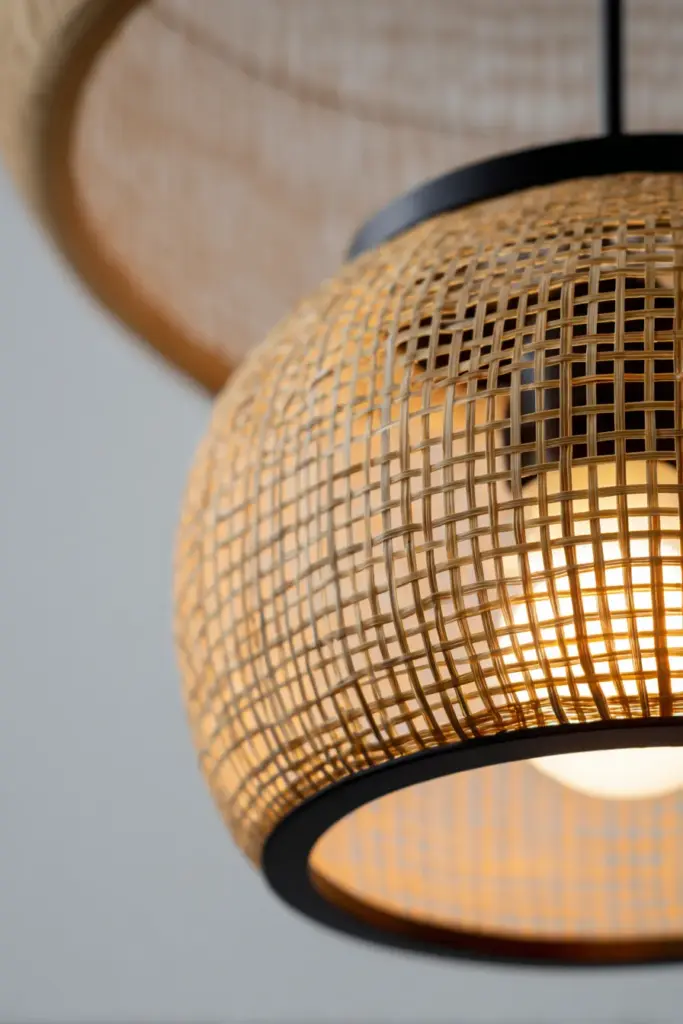
Rattan and wicker scatter light in unpredictable, organic patterns. A rattan drum pendant above your coffee table creates texture on ceiling and walls, adding visual interest without physical bulk.
Wood elements—walnut bases, teak frames, bamboo stems—ground spaces with warmth. For Manila’s humidity, look for treated finishes or naturally moisture-resistant woods like bamboo.
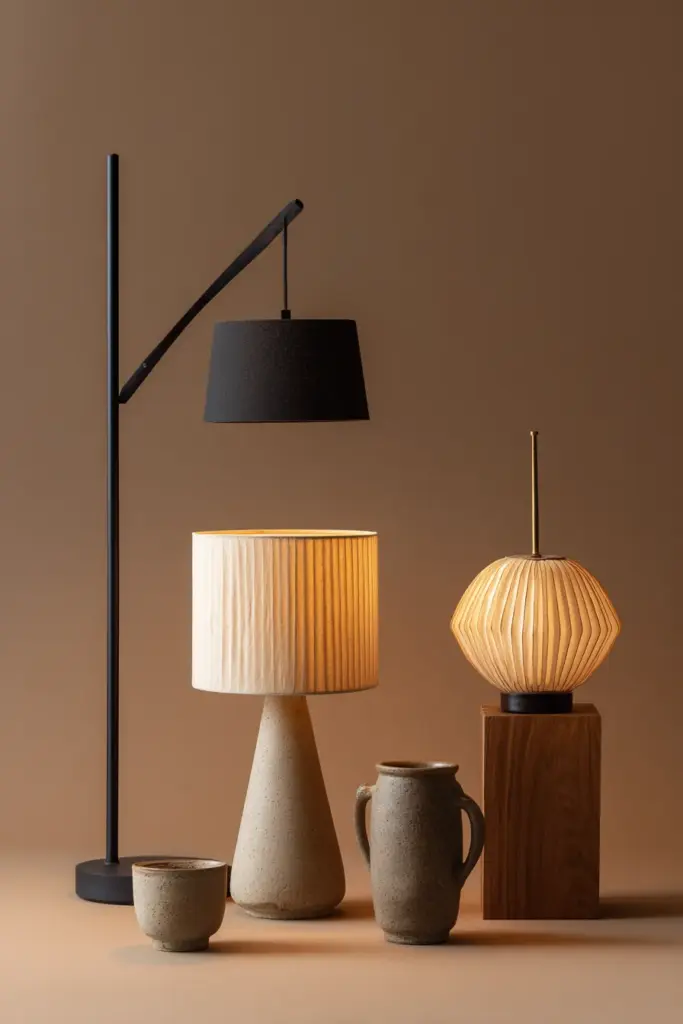
Paper and fabric shades offer the softest diffusion. White linen drum shades on table lamps create cloudlike glows. Mulberry paper pendants filter light through fibers, visible when illuminated like gentle constellations.
The Strategic Use of Matte Finishes
Glossy fixtures reflect and fragment light, creating visual noise in small rooms. Matte black metal, unglazed ceramics, and brushed brass finishes absorb and soften.
A matte charcoal pendant becomes a quiet presence rather than a focal point, allowing light itself—not the fixture—to shape the room’s mood.
Addressing Low Natural Light Challenges
Many urban apartments face interior walls or narrow light wells. Japandi lighting design offers elegant solutions.
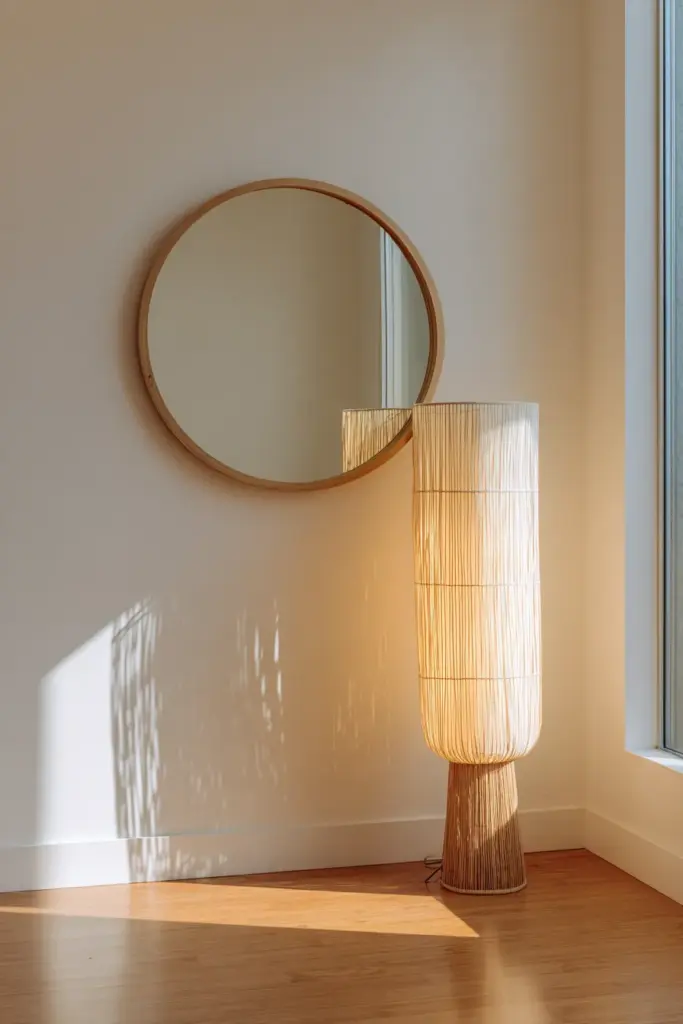
Strategic mirror placement doubles fixture output. Position a large round mirror (very Japandi) opposite your primary light source—suddenly, one floor lamp performs like two.
SAD lamps disguised as décor serve dual purpose. Full-spectrum LED panels now come in minimal wooden frames, providing therapeutic light during dreary monsoon months while maintaining aesthetic integrity.
Sculptural minimal fixtures with metallic interiors (white exterior, gold or silver inside) bounce maximum illumination from minimal wattage. These work particularly well in windowless powder rooms or dark entryways.
Plant-Integrated Lighting for Biophilic Boost
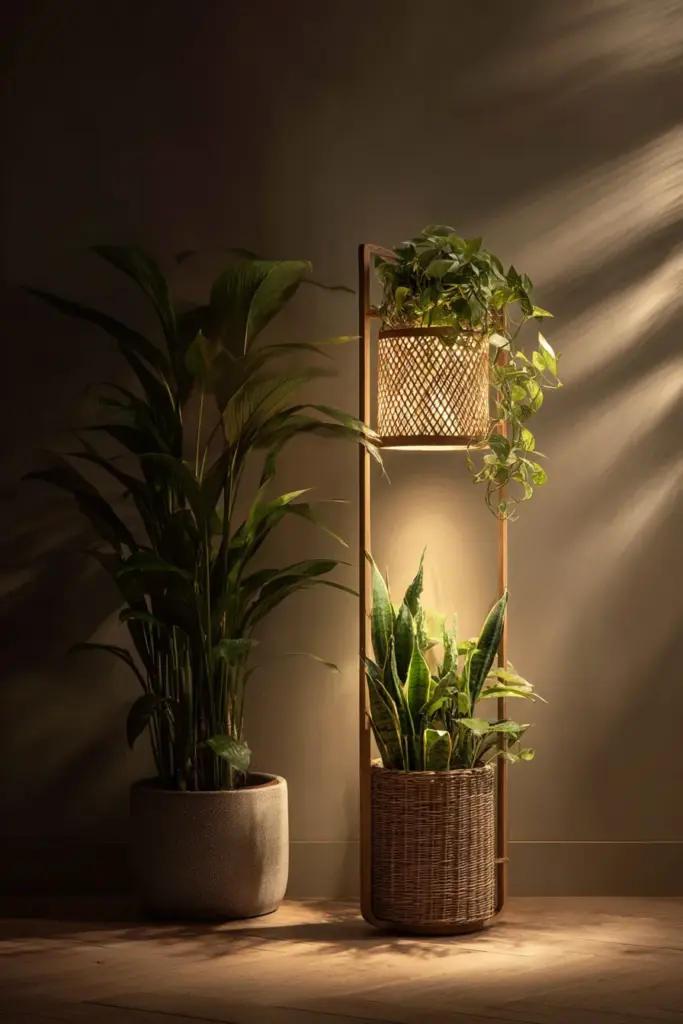
Combine your lighting with greenery for compounded calm. Floor lamps with built-in planter bases (or DIY versions using bamboo lamp stands with trailing pothos) bring nature directly into your light source.
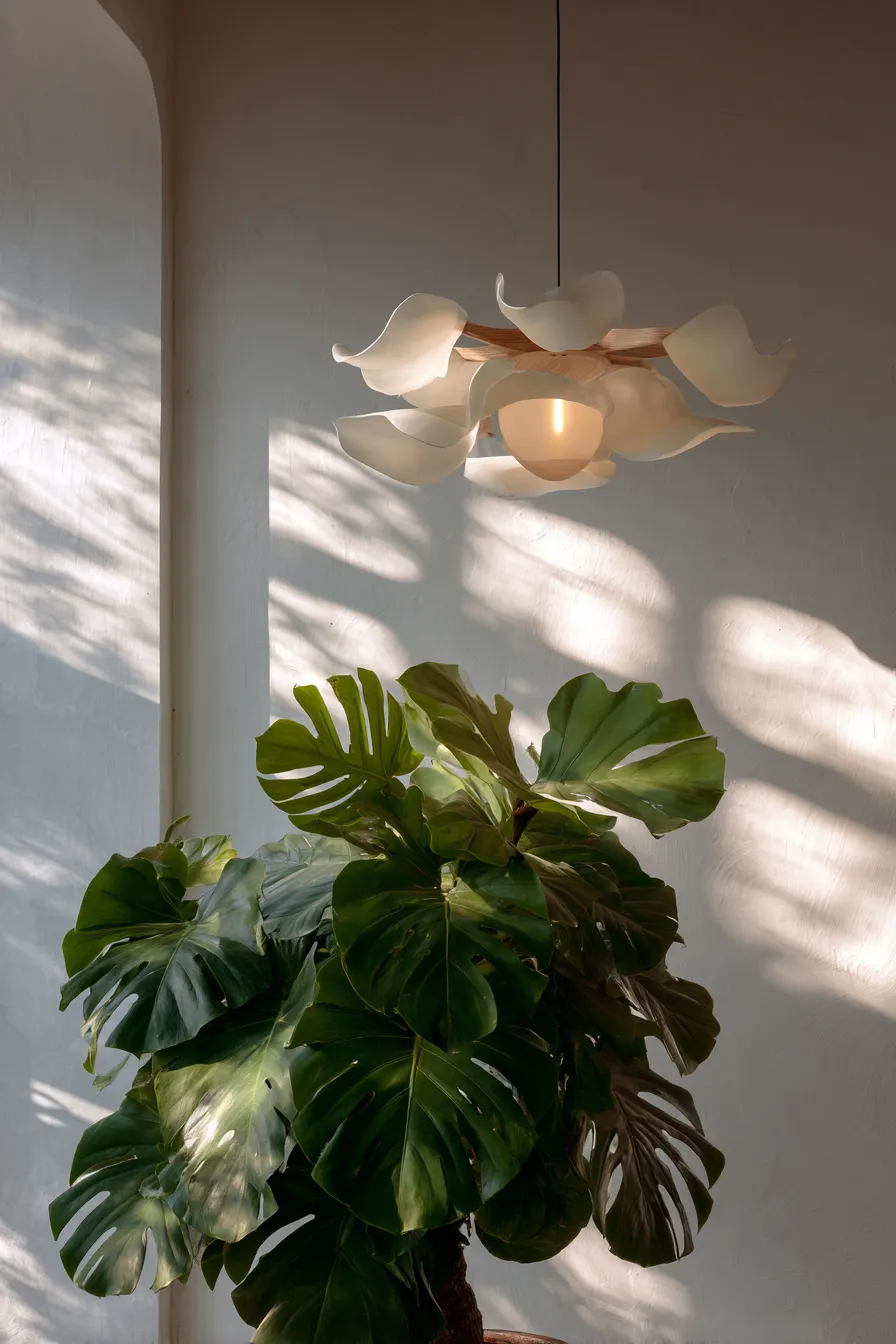
Uplighting snake plants or fiddle leaf figs creates dramatic shadows on walls, adding perceived depth. LED grow bulbs in warm tones serve both plant health and human ambiance.
Small spaces in cities often lack nature access. Lighting that incorporates or highlights plants addresses this primal need without consuming extra footage.
Budget-Conscious Japandi Lighting Under PHP 5,000
Achieving Japandi glow doesn’t require designer price tags. Strategic shopping uncovers remarkable value.
Shopee and Lazada stock convincing alternatives to high-end pieces. Search “minimalist wood pendant,” “Japanese paper lantern,” or “Scandinavian floor lamp” filtering for 4+ star ratings and local sellers for faster shipping.
Quality LED bulbs matter more than expensive fixtures. Invest PHP 200-300 per bulb in warm-tone (2700-3000K) high-CRI LEDs from Firefly or Omni—they’ll transform even basic fixtures into Japandi-worthy sources.
Thrift and upcycle for authentic wabi-sabi. Second-hand stores often carry outdated brass or wood-base lamps needing only rewiring and paper shades. DIY tutorials abound for creating arc lamps from reclaimed teak branches and basic hardware store components.
Sample Budget Breakdown for 300 sq ft Living Room
- One statement floor lamp (bamboo tripod, Shopee): PHP 2,800
- Two paper pendant lights (DIY kit with bulbs): PHP 1,200
- LED strip lighting (3m warm white, peel-and-stick): PHP 600
- Smart plug dimmer (voice compatible): PHP 800
- Total: PHP 5,400 for complete three-layer system
Swap the smart dimmer for manual switches, and you’re under budget with room for specialty bulbs.
Smart Home Integration for Modern Small Spaces
Tech-savvy urbanites appreciate how smart lighting maximizes small-space functionality without physical clutter.
Voice-controlled systems (Google Home, Alexa compatible) eliminate wall switches. Say “dim living room to 30%” while your hands are full with groceries or yoga mat.
App-based scenes create instant transformations. “Work mode” brings task lighting to 100% brightness at 9 AM. “Wind down” gradually dims all fixtures to 20% between 9-11 PM, supporting circadian rhythms.
Energy monitoring through smart plugs reveals consumption patterns. Most quality LED setups cost under PHP 50 monthly to run continuously—a fraction of older incandescent systems while contributing to sustainable living.
Motion Sensors for Effortless Efficiency
Battery-powered motion-sensor LED strips under shelving or along baseboards provide automatic pathway lighting at night. No fumbling for switches when you wake thirsty at 2 AM.
In multi-functional small spaces (studio apartments where bedroom becomes office becomes dining room), motion-activated task lights ensure you only illuminate active zones, saving energy while reducing visual overwhelm.
Quick Reference: Japandi Small-Space Lighting Checklist
- Choose warm 2700-3000K LED bulbs for all fixtures
- Layer ambient, task, and accent lighting across three levels
- Install dimmers or smart controls for mood flexibility
- Select natural materials: bamboo, rattan, wood, paper, linen
- Prioritize matte finishes over glossy to reduce visual noise
- Use vertical space with wall sconces and ceiling pendants
- Incorporate mirrors to multiply limited light sources
- Explore renter-friendly solutions: peel-and-stick LEDs, plug-in sconces
- Budget PHP 3,500-5,500 for complete small living room setup
- Integrate plants with lighting for biophilic depth
Bringing It All Together with Heart
Lighting small Japandi living spaces is intimate work. You’re not decorating a room; you’re composing the quality of light that will hold your quiet moments.
The floor lamp you choose becomes the glow that greets you after rush-hour traffic. The pendant over your reading chair witnesses your weekend novels. The soft accent light along your shelf cradles the ceramics you’ve collected, the books you love.
This is design as care. Light as language. Small spaces as canvases for intentional beauty.
May your home glow with the same warmth you carry within.
Frequently Asked Questions
What’s the ideal light temperature for small Japandi living rooms?
Warm tones between 2700K and 3000K create the cozy, serene atmosphere central to Japandi design while making compact spaces feel more intimate rather than clinical.
Can I achieve Japandi lighting on a rental budget?
Absolutely. Focus on quality warm LED bulbs (PHP 200-300 each), use peel-and-stick LED strips, plug-in sconces, and shop Shopee/Lazada for minimalist fixtures under PHP 3,000 per piece.
How many light sources do I need in a 200 sq ft living room?
Aim for 3-5 sources across three layers: one ambient (ceiling or tall floor lamp), one task (reading light or wall sconce), and 1-3 accent lights (LED strips, small table lamp, or uplighting).
Which materials best diffuse light in tight spaces?
Paper, rattan, and linen shades create soft, flattering diffusion. Avoid clear glass or exposed bulbs which create harsh shadows and glare in compact rooms.
How do I make a dark apartment feel brighter without harsh lighting?
Layer multiple low-wattage warm sources rather than one bright fixture, add mirrors opposite light sources, use uplighting on walls, and choose matte white or light wood surfaces that reflect gently.