
Table of Contents
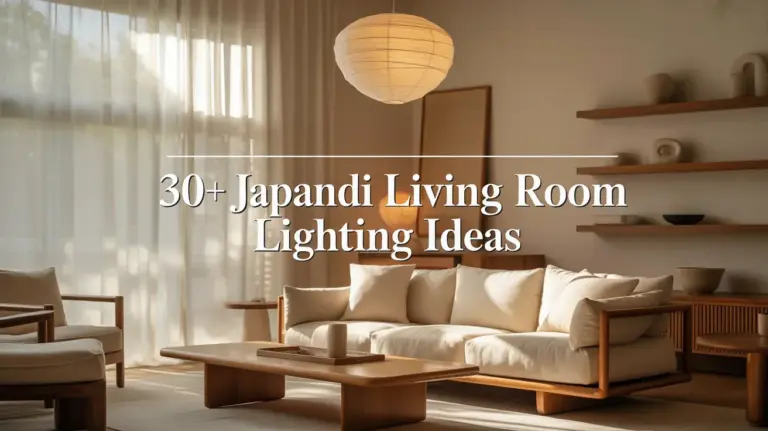
There’s something quietly transformative about light that feels intentional. Not the harsh overhead glare that flattens a room, but the kind of glow that pools in soft corners, that follows the grain of natural wood, that makes you want to linger a little longer with your tea.
In Japandi living rooms, lighting isn’t just functional—it’s the quiet pulse of the space. It breathes warmth into minimalism. It honors both the Danish concept of hygge and the Japanese principle of wabi-sabi, creating a sanctuary that feels grounded, calm, and deeply sustainable.
But sustainability in lighting goes beyond swapping one bulb for another. It’s about choosing materials that return to the earth, about energy that doesn’t exhaust our resources, about creating beauty that doesn’t cost the planet. It’s lighting with a conscience, wrapped in elegance.
Let’s walk through how to illuminate your living room the Japandi way—where every fixture tells a story of craft, care, and conscious design.
Why Sustainability Matters in Japandi Lighting Design
Japandi isn’t a trend you’ll tire of next season. It’s a philosophy that celebrates longevity, quality, and respect for natural resources. Both Japanese and Scandinavian design traditions have always understood that true luxury lies in simplicity and sustainability.
When you choose eco-friendly lighting solutions for your Japandi living room, you’re honoring centuries of craftsmanship. You’re saying no to disposable décor and yes to pieces that age beautifully, that use less energy, that were made by hands that care.
Sustainable lighting also directly impacts your wellbeing. Natural materials regulate indoor air quality better than synthetic alternatives. Energy-efficient LEDs reduce your carbon footprint while lowering electricity bills—a win that feels good in every sense.
Understanding the Japandi Lighting Philosophy
The Art of Soft, Diffused Light
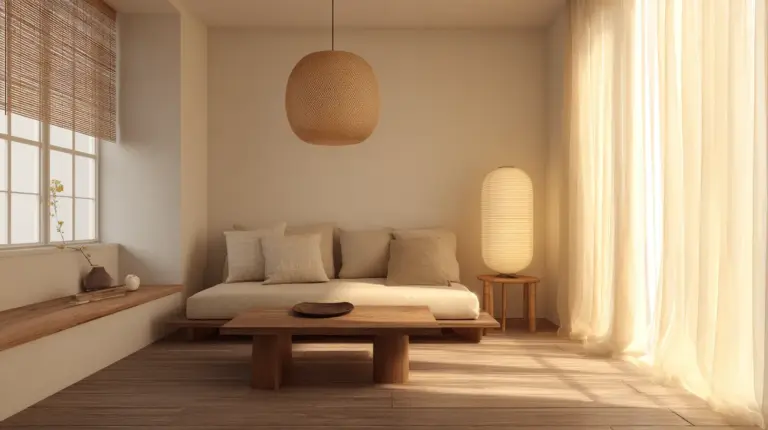
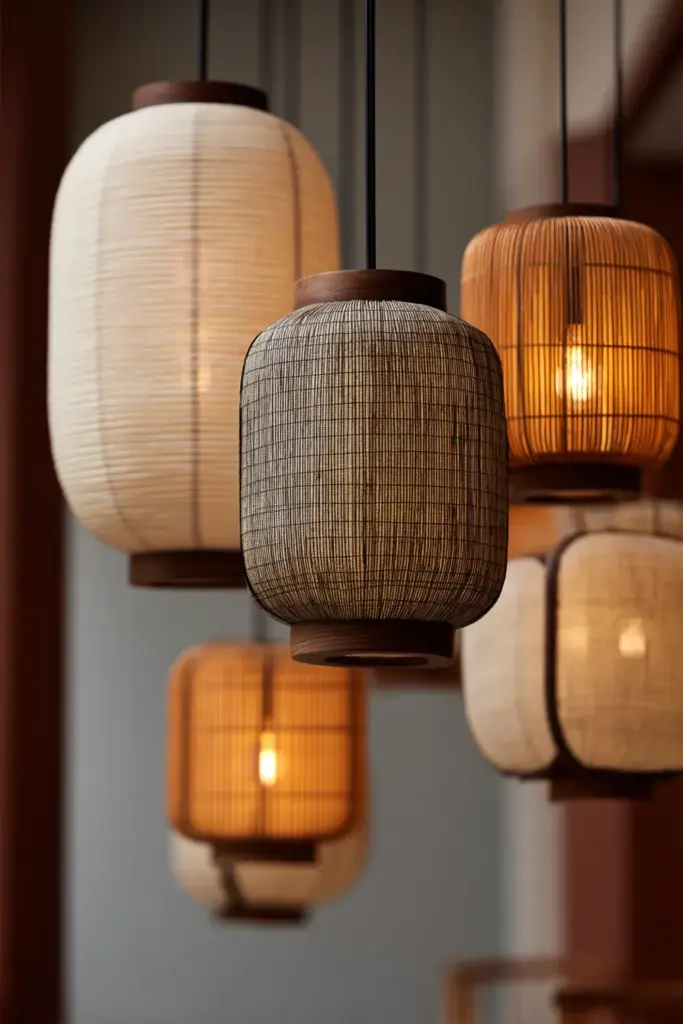
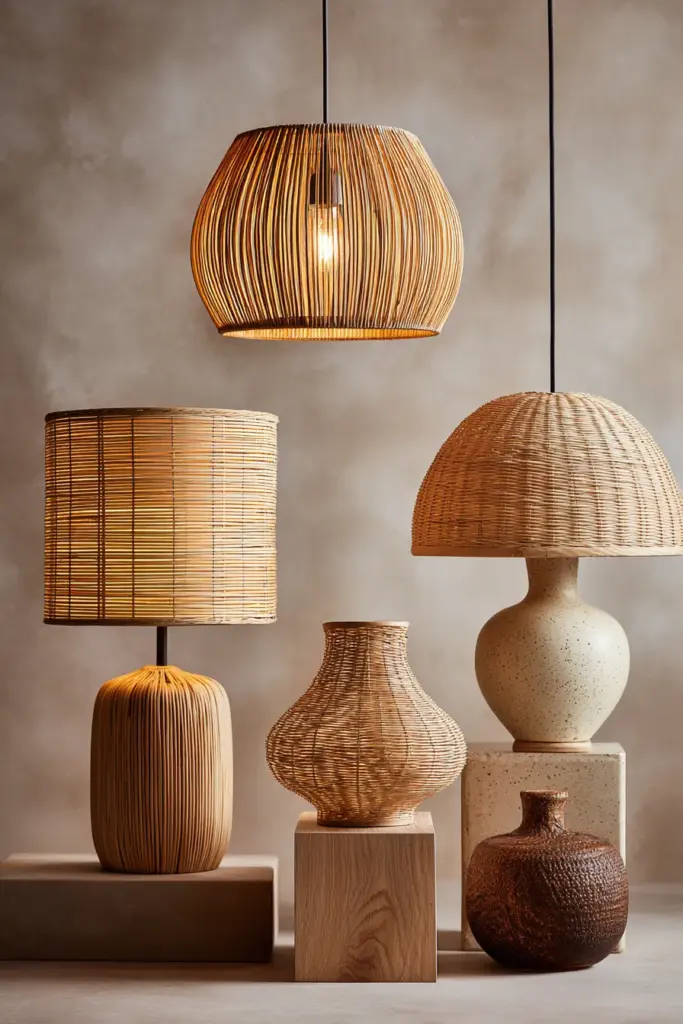
Japandi spaces reject harsh illumination. Instead, they embrace organic materials that soften and scatter light—think washi paper that glows like morning fog, or bamboo pendant lights that cast gentle shadows across plaster walls.
This diffused glow creates the serene ambiance central to both hygge and wabi-sabi. It doesn’t announce itself. It simply is, like filtered sunlight through shoji screens or candlelight on worn wooden tables.
Warm White for Emotional Comfort
Color temperature matters more than most people realize. Japandi lighting typically uses warm white LEDs between 2700K and 3000K—the range that mimics natural sunset light and promotes calm.
Cooler temperatures above 4000K can feel clinical and disrupt your body’s circadian rhythm, especially in evening hours. Warm tones, by contrast, signal to your nervous system that it’s time to unwind. They reduce blue light exposure, supporting better sleep quality while creating that coveted cozy atmosphere.
Look for bulbs with a CRI (Color Rendering Index) above 90. This ensures colors appear true and natural, so the honey tones in your rattan furniture and the subtle greens in your potted monstera look as they should under artificial light.
The Best Sustainable Materials for Japandi Lighting
Bamboo: Fast-Growing and Versatile
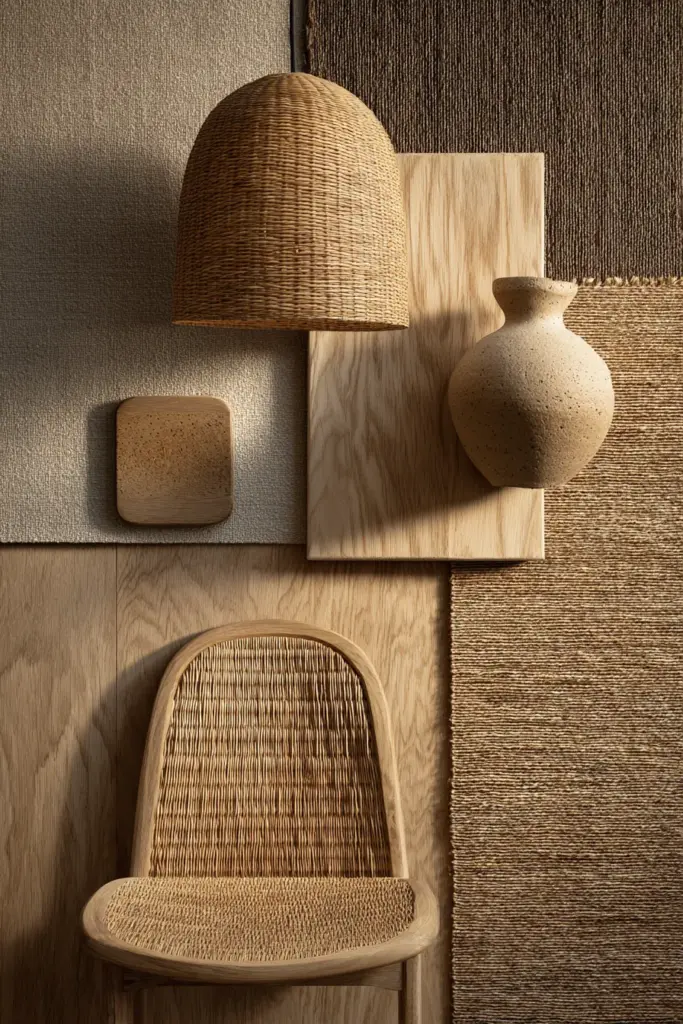
Bamboo is the hero of sustainable Japandi design. It grows rapidly without pesticides, regenerates from its roots, and sequesters more carbon than many hardwoods. Bamboo pendant lights bring textural warmth to living rooms while maintaining that essential minimalist silhouette.
In the Philippines, local bamboo is readily available and supports regional artisans. Look for kawayan crafted into lanterns or dome pendants—pieces that celebrate Filipino craftsmanship while staying true to Japandi aesthetics.
Washi Paper and Natural Fibers
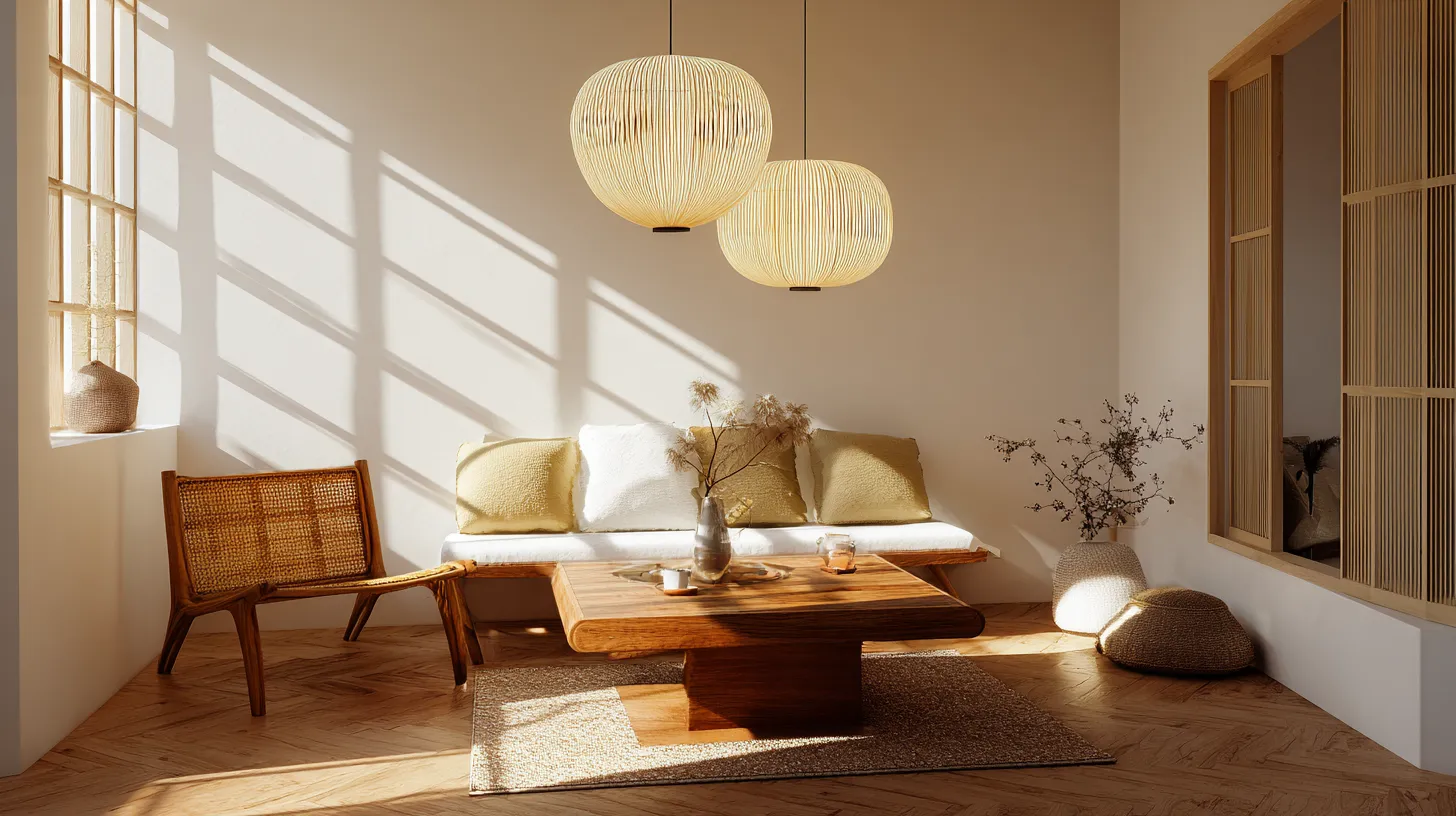
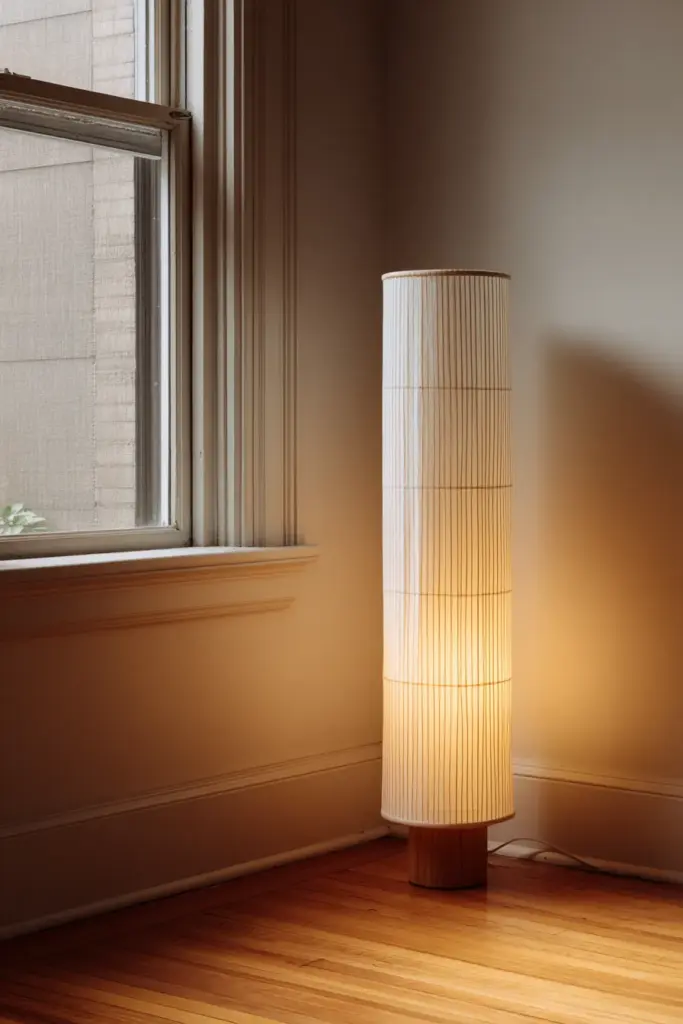
Japanese paper lamps made from washi or mulberry bark create the most ethereal light. These handcrafted fixtures filter brightness into a warm glow that feels almost alive, shifting subtly as you move through the room.
Rattan, jute, and abaca fibers also work beautifully. They’re renewable, biodegradable, and bring organic texture that synthetic materials can’t replicate. A rattan floor lamp in a reading corner becomes both sculpture and light source.
Reclaimed and Recycled Materials
Sustainability shines brightest when we reimagine what already exists. Recycled glass fixtures refract light beautifully while diverting waste from landfills. Reclaimed wood bases add character and history to your lighting design.
Consider upcycling vintage finds—a thrifted ceramic vase can become a table lamp base, or salvaged metal can be transformed into minimalist sconces. Each piece carries a story that mass-produced fixtures never will.
Choosing Energy-Efficient Lighting for Japandi Spaces
The LED Advantage
LEDs aren’t just trendy—they’re transformative. They use 80% less energy than halogen bulbs and last up to 25 times longer. For a typical 15-20 square meter living room, switching to LEDs can cut your lighting energy consumption dramatically.
Calculate your savings: If your living room runs five bulbs for four hours daily, LED efficiency could save you approximately ₱3,000-₱5,000 annually in electricity costs. That’s money back in your pocket and fewer resources pulled from the grid.
Choose dimmable LEDs so you can adjust brightness to match the moment. Morning coffee might need brighter task lighting, while evening conversations call for ambient warmth.
Solar-Powered and Smart Options
For the Philippines’ abundant sunshine, solar-powered lanterns make practical sense. Use them on side tables near windows where they can charge during the day and glow softly at night—no wiring, no electricity draw.
Smart bulbs with scheduling features help you optimize energy use. Program them to dim gradually as evening deepens, mimicking natural sunset rhythms. In Silang’s humid climate, pair smart lights with ceiling fans for year-round comfort without air conditioning waste.
Layering Your Japandi Living Room Lighting
Layering creates depth and flexibility. Think of it as composing with light—ambient, task, and accent working together like instruments in a quiet symphony.
Ambient Lighting: The Foundation
This is your room’s overall illumination. A central bamboo pendant light or recessed LEDs provide the base layer without dominating the space. Aim for soft, even coverage that eliminates harsh shadows.
For a 15m² living room, calculate approximately 150-200 lumens per square meter for comfortable ambient light. That’s roughly 2,250-3,000 total lumens, which translates to LED bulbs totaling about 25-35 watts.
Task Lighting: Function Meets Beauty
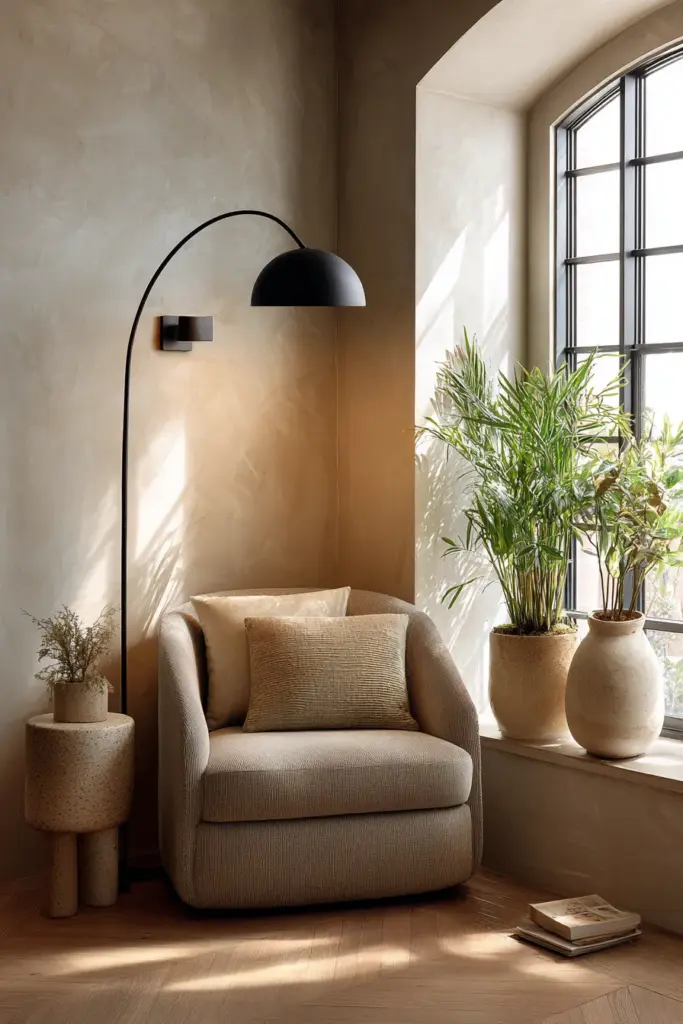
Reading nooks need focused light. A slender floor lamp with an adjustable arm, crafted from sustainable wood and linen shade, brings both utility and elegance. Position it beside your favorite chair where natural light fades in the afternoon.
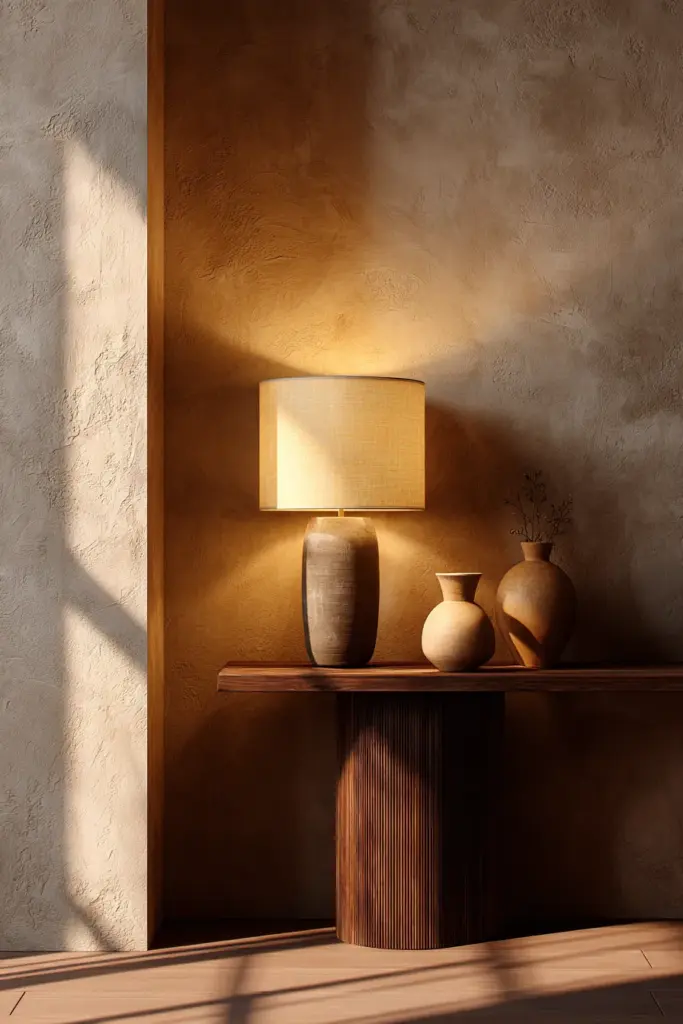
Table lamps with ceramic or stone bases offer task lighting for small work surfaces. Choose designs with clean lines and neutral tones—cream, charcoal, warm taupe—that disappear into your palette while serving their purpose.
Accent Lighting: Highlighting What Matters
Accent lighting draws the eye to meaningful details. LED strip lighting behind floating shelves can showcase your ceramics collection or beloved books. Use warm-toned strips to maintain the Japandi color harmony.
Small spotlights tucked into ceiling corners can wash textured walls with indirect lighting, creating visual interest without clutter. The goal is subtle drama—light that reveals, not overwhelms.
Practical Implementation for Philippine Homes
Sourcing Local and Sustainable
Support Filipino artisans creating bamboo and rattan lighting. Local bamboo sourcing reduces transportation emissions and keeps money within communities. Markets in Manila, Cebu, and even Silang increasingly offer handcrafted pieces that align with Japandi principles.
Budget-conscious? You can achieve sustainable Japandi lighting for under ₱5,000 by mixing one statement pendant (₱2,000-₱3,000 locally sourced bamboo) with thrifted lamps you’ve upcycled and energy-efficient LED bulbs (₱200-₱500 for quality options).
Weather and Climate Considerations
The Philippines’ humidity and occasional typhoons require practical adjustments. Choose fixtures with moisture-resistant components for longevity. Sealed LED units prevent corrosion better than exposed filament designs.
For typhoon season, ensure ceiling fixtures are securely mounted and avoid overly delicate paper lanterns in high-wind zones. Weighted floor lamps with broad bases offer stability without sacrificing style.
DIY Upcycling Projects
Transform a thrift store lamp by covering its shade with washi paper or natural linen fabric. Cost: approximately ₱300 for materials. The result? A custom piece with sustainable credentials and personal meaning.
Solar LED kits (available for ₱800-₱1,500) can be installed in glass jars or bamboo containers for pathway lighting or side table accents. The investment pays back in about six months through eliminated electricity costs.
The Environmental and Wellbeing ROI
Quantifiable Impact
Switching your living room to LED lighting saves approximately 200-300 kWh annually for average use. That’s roughly 120-180 kg of CO₂ emissions prevented each year—equivalent to planting 5-8 trees.
The financial return is equally compelling. Quality LED bulbs cost more upfront but last 15,000-25,000 hours compared to 1,000 hours for incandescents. Over five years, you’ll replace bulbs less frequently and see dramatically lower energy bills.
Mood and Health Benefits
Studies suggest that warm, diffused lighting can improve mood by up to 30% compared to harsh fluorescent alternatives. The psychological comfort of natural materials and intentional light placement creates spaces where stress naturally dissolves.
Reducing blue light exposure in the evening supports your circadian rhythm. Your body produces melatonin more effectively, leading to deeper sleep. Better rest means better energy, creativity, and emotional resilience—benefits that ripple through every aspect of life.
2026 Trends in Sustainable Japandi Lighting
Biophilic and Circadian Design
The next evolution integrates lighting with natural rhythms. Circadian LED systems adjust color temperature throughout the day—cooler and brighter in morning, warmer and dimmer by evening—mimicking the sun’s natural arc.
Pair this with biophilic design elements: fixtures that incorporate living plants, or lighting positioned to enhance your indoor greenery. The combination deepens your connection to natural cycles even within urban homes.
Smart Integration Without Complexity
Technology serves the space, not the other way around. Voice-controlled dimmers, motion sensors for efficiency, and app-based scheduling offer convenience while reducing waste. The key is choosing systems that feel intuitive, not overwhelming.
Look for energy monitoring features that show real-time consumption. Awareness drives better choices, and seeing your reduced usage reinforces sustainable habits.
Japandi Lighting Sustainability Checklist
Before purchasing or installing lighting in your Japandi living room, consider:
- Materials: Is it bamboo, wood, rattan, recycled glass, or other renewable/recycled materials?
- Energy efficiency: Are you using LED bulbs rated for at least 15,000 hours?
- Color temperature: Is it warm white (2700K-3000K) with CRI >90?
- Layering: Have you planned for ambient, task, and accent lighting?
- Dimmers: Can you adjust brightness to match activities and time of day?
- Local sourcing: Are you supporting regional artisans and reducing shipping emissions?
- Longevity: Is this a quality piece you’ll cherish for years, not seasons?
- Climate appropriate: Will it withstand your local humidity and weather patterns?
- Upcycling potential: Could existing fixtures be transformed rather than replaced?
- ROI calculation: Have you estimated energy savings and payback period?
Creating Your Sustainable Light Story
Your living room lighting should feel like an extension of yourself—quiet, intentional, and deeply rooted in values that matter. Each fixture you choose is a small act of care: for the planet, for the artisans who made it, for your own wellbeing.
Start with one beautiful, sustainable piece. Perhaps a handwoven bamboo pendant that casts patterns like dappled shade. Notice how it changes the room’s energy. How it makes you feel when you come home to its glow.
Then build from there. Add a thrifted lamp you’ve given new life. Invest in LEDs that will serve you for years. Layer light the way you’d layer a favorite outfit—with thought, with balance, with an eye for what truly works.
Sustainability in Japandi lighting isn’t about perfection. It’s about progress, about making choices that align with the calm, beautiful life you’re creating. It’s about light that doesn’t just illuminate—it elevates.
Frequently Asked Questions
What type of lighting is best for a Japandi living room?
Soft, diffused lighting using warm white LEDs (2700K-3000K) works best for Japandi spaces. Choose fixtures made from natural materials like bamboo, washi paper, or rattan that scatter light gently rather than creating harsh glare. Layer ambient, task, and accent lighting for flexibility and depth.
How do I choose sustainable Japandi light fixtures?
Prioritize natural or recycled materials (bamboo, reclaimed wood, recycled glass), energy-efficient LED bulbs, and pieces from local artisans to reduce transportation emissions. Look for quality craftsmanship that ensures longevity—sustainable lighting lasts for years, not just seasons.
Is Japandi design truly sustainable?
Yes, when practiced authentically. Japandi emphasizes quality over quantity, timeless design over trends, and natural materials that age gracefully. Both Japanese wabi-sabi and Scandinavian traditions value resourcefulness, durability, and respect for materials—all core sustainability principles.
What color temperature should I use for Japandi lighting?
Stick with warm white LEDs between 2700K and 3000K. This range mimics natural sunset light, promotes relaxation, and supports healthy circadian rhythms by reducing blue light exposure in evening hours. Choose bulbs with a CRI above 90 for the most natural color rendering.
How much does sustainable Japandi lighting cost in the Philippines?
You can create beautiful, sustainable lighting for under ₱5,000 by sourcing locally made bamboo pendants (₱2,000-₱3,000), upcycling thrifted lamps (₱300-₱500 in materials), and investing in quality LED bulbs (₱200-₱500 each). The energy savings—approximately ₱3,000-₱5,000 annually—often pay back your investment within the first year.