
Table of Contents
There’s a particular kind of peace that settles over a room when the lighting is just right. Not too bright, not too dim — just a gentle embrace of warmth that makes you want to sink into the sofa with a book and stay awhile.
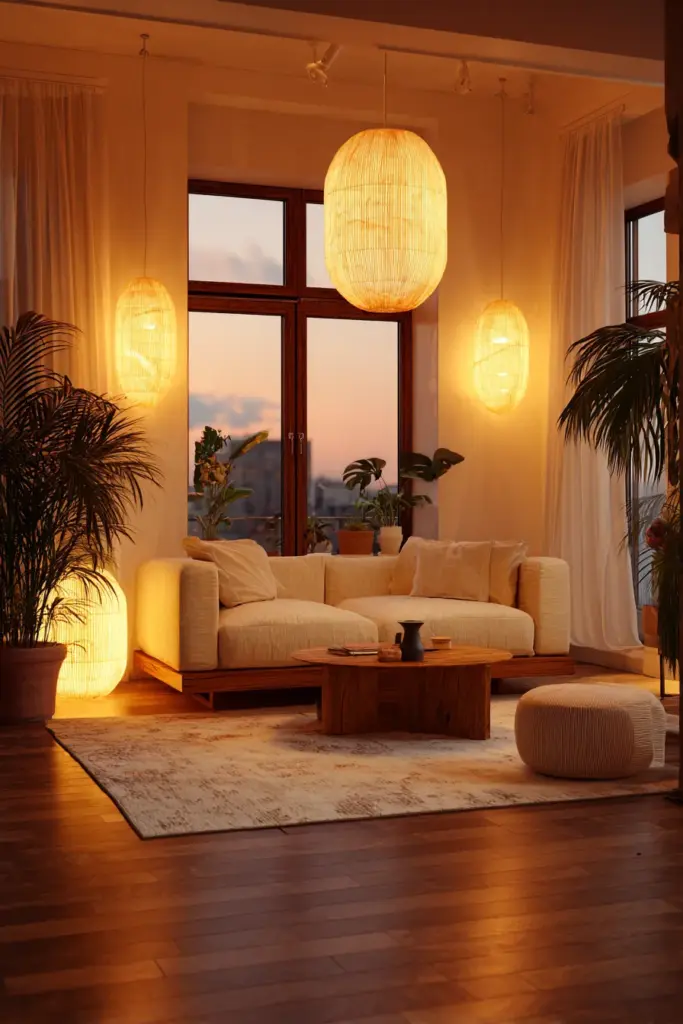
Japandi living rooms master this quiet magic through accent lighting that honors both Japanese minimalism and Scandinavian hygge. It’s about creating pools of soft light that guide the eye, highlight natural textures, and wrap your space in comfort.
In this guide, we’ll explore how to layer accent lighting in your Japandi living room — from choosing the right fixtures and bulbs to understanding the psychology of warm illumination. Whether you’re working with a spacious sala or a cozy apartment corner, these principles will help you craft a sanctuary of calm.
Let’s bring your space to life, one thoughtful light at a time.
Understanding Japandi Accent Lighting
Accent lighting in Japandi design isn’t about drama or showiness. It’s about intention — using light to whisper rather than shout, to reveal rather than overpower.
Think of accent lights as gentle spotlights for the things you love: the grain of a wooden console, the shadow play of a bonsai tree, the subtle texture of a linen curtain. These fixtures add depth and dimension, transforming flat spaces into layered experiences.
The beauty lies in restraint. A single washi paper sconce casting soft shadows, a bamboo floor lamp pooling warm light in a reading nook, or LED strips tucked beneath floating shelves — each element serves both function and feeling.
The Three-Layer Lighting Foundation
Ambient, Task, and Accent: The Holy Trinity
Every well-lit Japandi living room begins with three distinct layers working in harmony. Your ambient lighting — typically overhead pendants or ceiling fixtures — provides the baseline glow. Task lighting serves specific activities like reading or working.
But accent lighting? That’s where personality blooms. It’s the layer that makes a room feel curated, lived-in, and deeply personal.
Why Accent Lighting Matters Most
In neutral Japandi palettes of beige, cream, oak, and charcoal, accent lights create visual interest without color. They draw the eye to architectural details, artisan pieces, and natural materials. A well-placed spotlight can make a ceramic vase sing, or transform a simple bamboo screen into a sculptural moment.
Research shows that warm accent lighting at 2700K can reduce stress by up to 30% when used on neutral backgrounds — your nervous system literally relaxes in these golden tones.
Best Accent Light Fixtures for Japandi Spaces
Paper Lanterns and Washi Shades
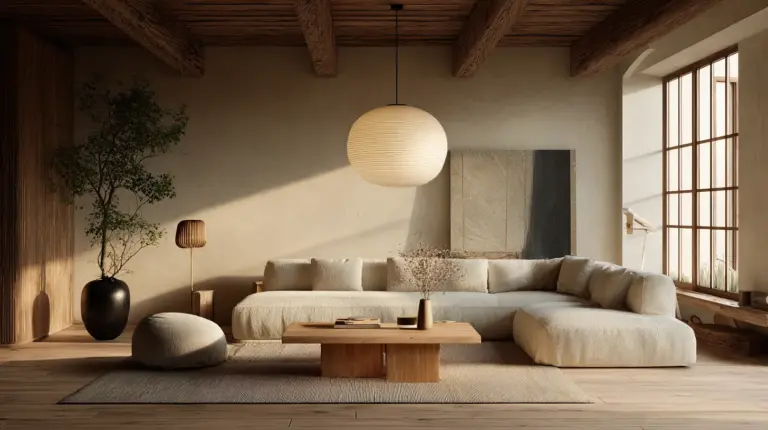
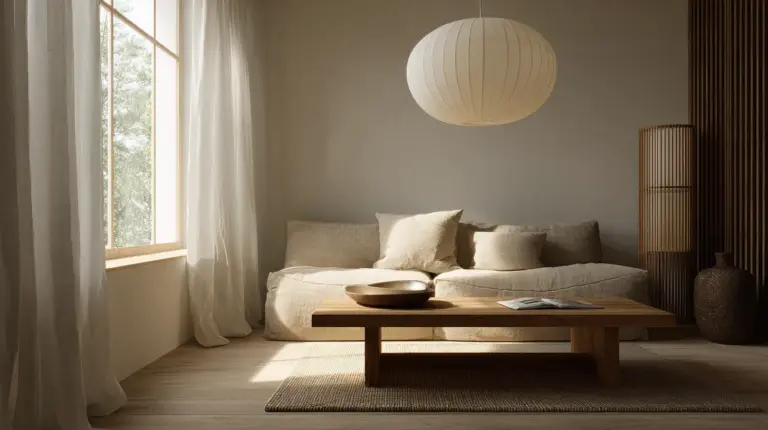
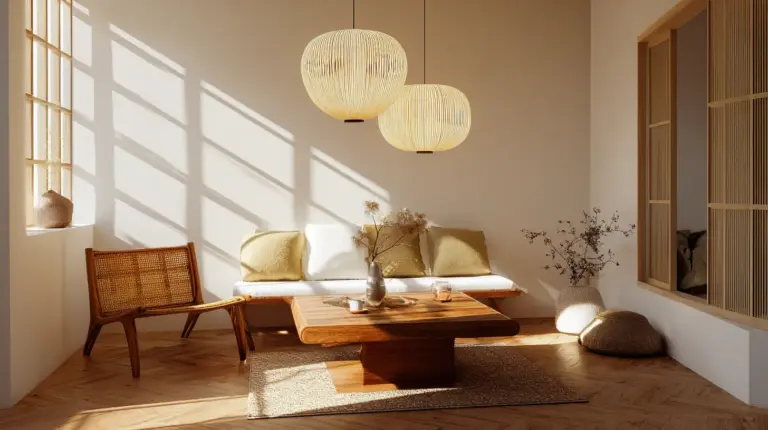
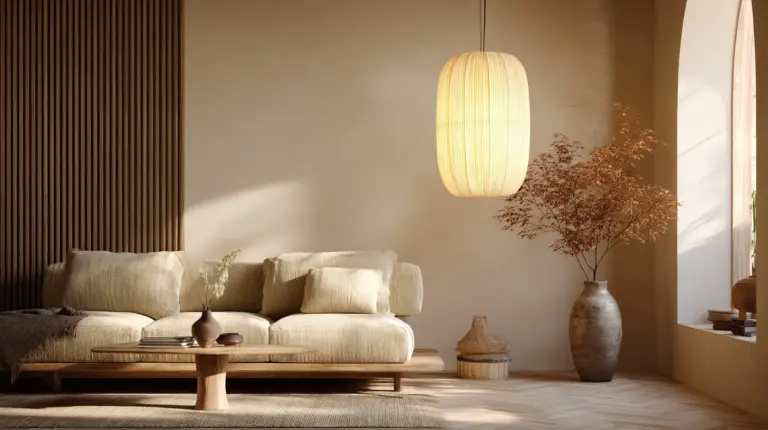
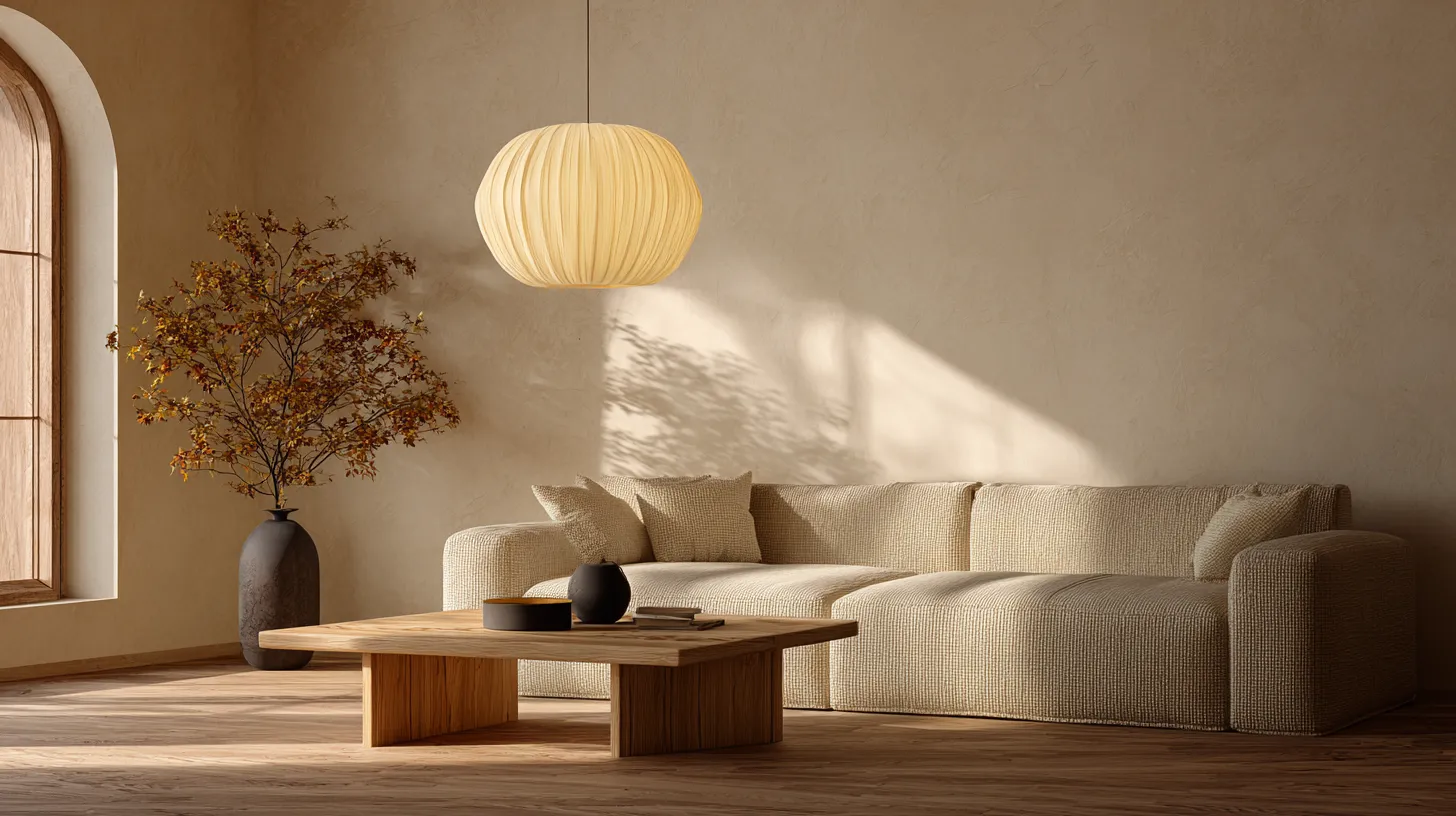
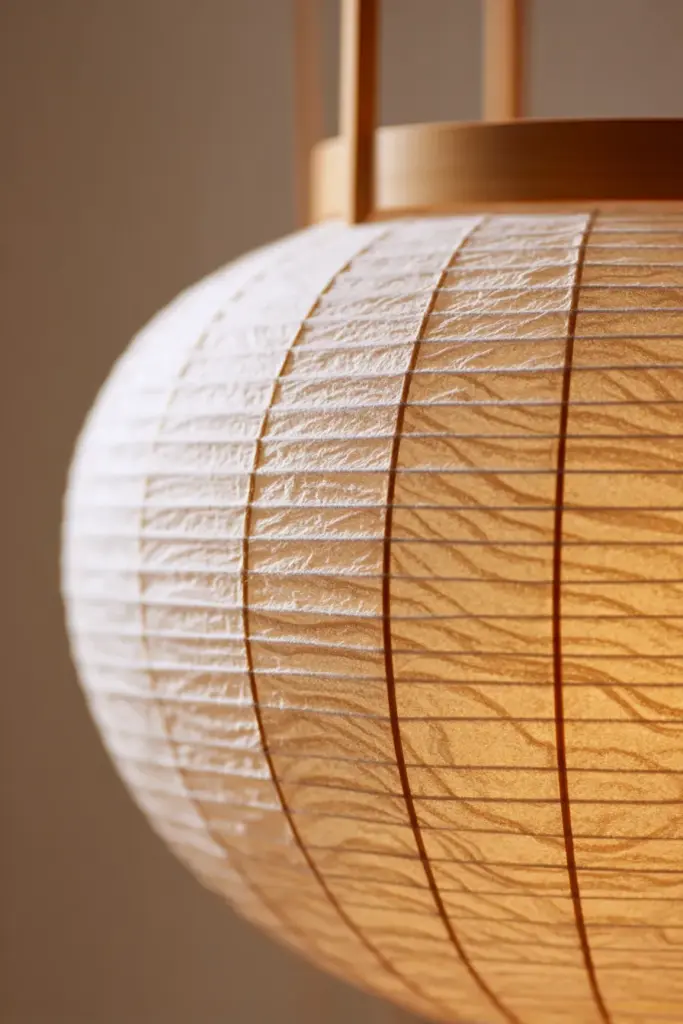
Japanese washi paper lamps are the soul of Japandi accent lighting. Their translucent quality diffuses light into a soft, cloud-like glow that fills corners without harshness. Hang an akari-style pendant over a side table, or place a small paper lamp on your console to create ambient warmth.
The beauty of washi is its imperfection — the subtle texture of handmade paper, the gentle variations in thickness that create organic shadow patterns. In humid climates like Calabarzon, look for moisture-resistant treatments or sealed versions that withstand tropical conditions.
Bamboo and Rattan Floor Lamps
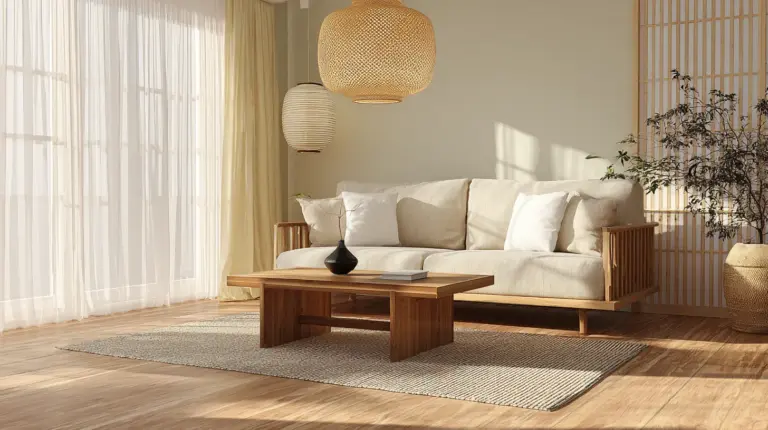
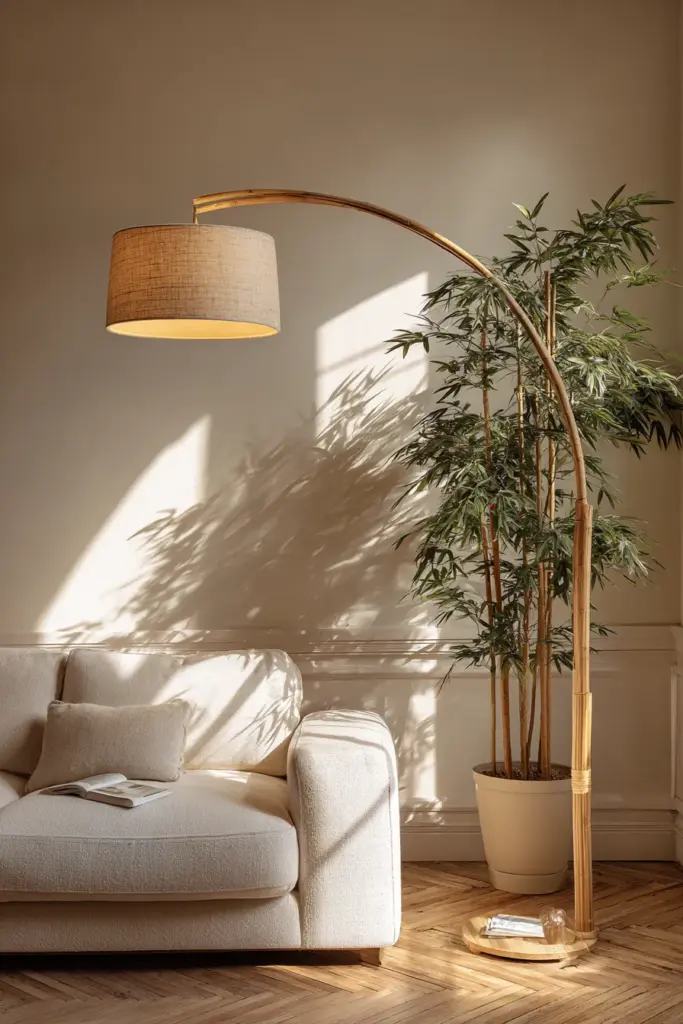
Nothing grounds a Japandi space quite like a bamboo arc lamp or rattan tripod light. These natural materials bring biophilic warmth while maintaining clean lines. Position one beside your sofa to create an intimate reading pool, or angle it toward a wall for dramatic uplighting.
Local bamboo sourcing is surprisingly accessible — markets in Divisoria offer quality materials that skilled artisans can transform into custom fixtures for under ₱3,000. The patina of natural bamboo deepens over time, aging beautifully alongside your space.
Wall Sconces and Minimalist Spotlights
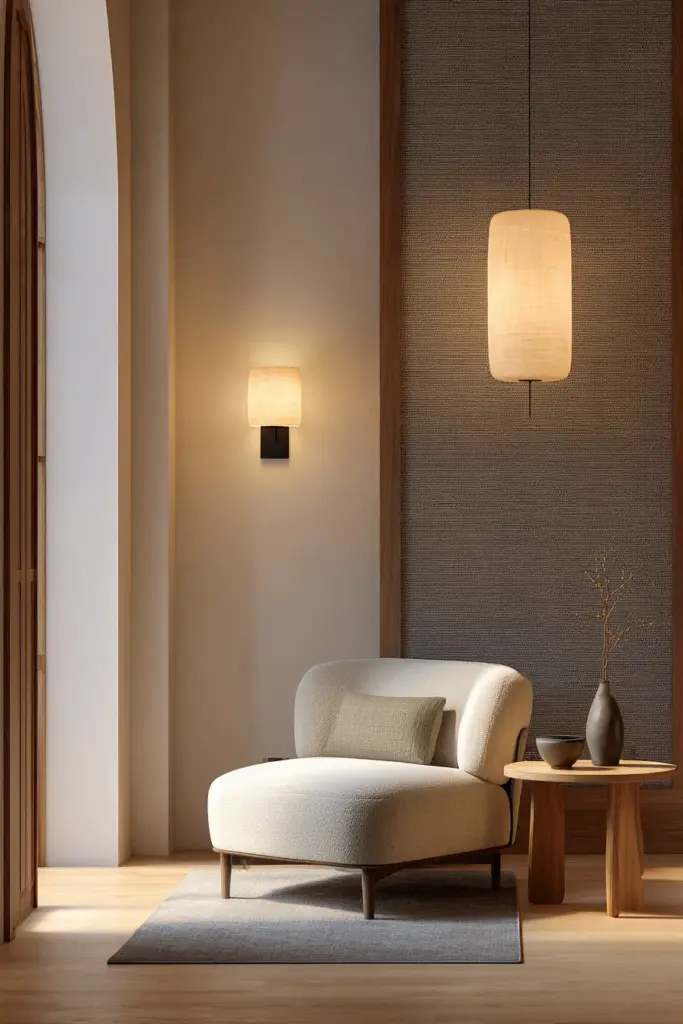
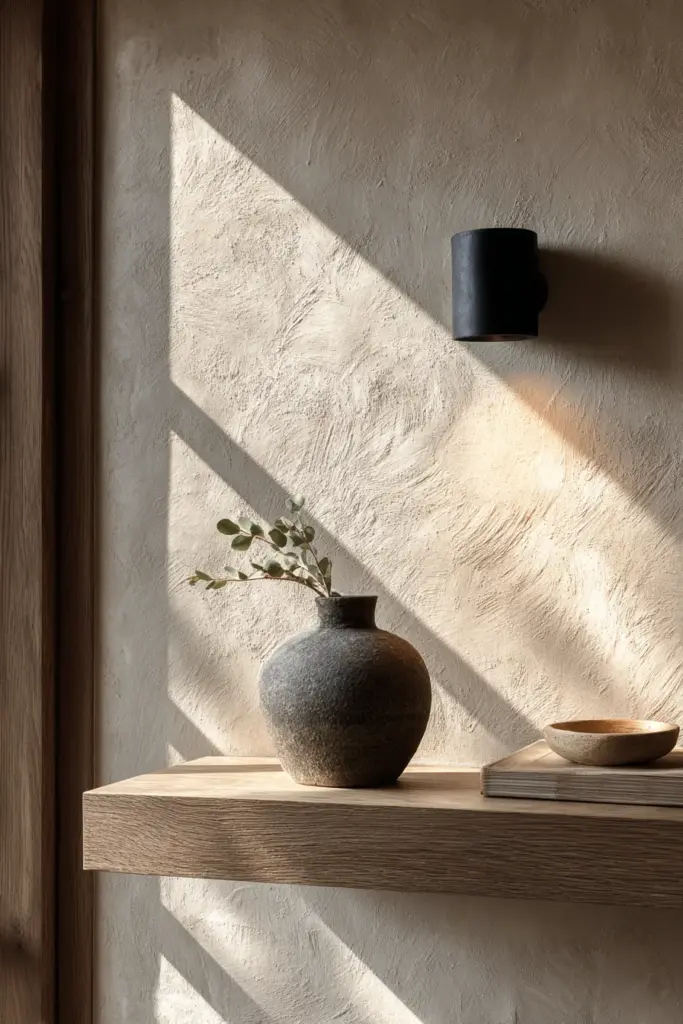
Wall sconces in Japandi rooms should feel like gentle exhales of light. Choose fixtures with downward or sideways diffusion to create soft washes rather than direct beams. Black matte or natural wood sconces paired with frosted glass add sculptural interest to bare walls.
Adjustable spotlights work beautifully for highlighting artwork or plants, but keep them subtle. A CRI (Color Rendering Index) of 90+ ensures your oak furniture and linen textiles show their true, warm tones.
Kumiko Lanterns and Artisan Pieces
Kumiko — the traditional Japanese woodworking technique of intricate geometric patterns — creates stunning accent lights that double as art. When backlit, these wooden lattice pieces cast mesmerizing shadows that dance across walls and ceilings.
These artisan fixtures tell stories. Each joint is hand-cut, each pattern holds meaning. Placing a kumiko lamp on a floating shelf or credenza adds both light and cultural depth to your space.
Choosing the Right Bulbs: Temperature and Quality
The 2700K-3000K Sweet Spot
Color temperature transforms everything. For Japandi accent lighting, stay within the 2700K to 3000K range — what lighting designers call “warm white.” This is the golden hour indoors, the color of candlelight and sunset.
At 2700K, light feels soft and hygge-infused, perfect for evenings. At 3000K, it’s slightly crisper while still avoiding the harsh blue tones of cooler temperatures. Never venture above 4000K in Japandi spaces — the cool white will clash with your warm wood tones and neutrals.
CRI Matters More Than You Think
CRI (Color Rendering Index) measures how accurately a light source reveals true colors. Standard bulbs hover around 80 CRI, but for Japandi interiors rich in natural materials, aim for 90+ CRI.
The difference is remarkable: oak appears honey-gold rather than muddy brown, your cream textiles show their warm undertones, and even your skin tone looks healthier. It’s a small upgrade that makes a profound visual impact.
Dimmable LEDs for Flexibility
Invest in quality dimmable LED bulbs that allow you to adjust intensity throughout the day. Morning might call for brighter accents as you move through your space, while evening benefits from a low, amber glow.
Smart bulbs compatible with systems like Philips Hue take this further — program circadian rhythms that automatically dim toward sleep time, potentially boosting your hygge comfort by 25% through natural light-dark cycles.
Layering Techniques for Maximum Impact
Creating Pools of Light
The Japandi approach rejects uniform brightness. Instead, create distinct pools of light that invite movement and discovery. A floor lamp here, a sconce there, LED strips beneath shelving — each pool serves a micro-moment within your room.
This technique also makes small spaces feel larger. By leaving some areas slightly shadowed, you create depth and dimension that tricks the eye into perceiving more square footage.
The Shadow Dance: Wabi-Sabi Illumination
Embrace shadows as part of your lighting design. Wabi-sabi philosophy celebrates imperfection and transience — the shadow of a bamboo lamp shifting across a wall throughout the day embodies this beautifully.
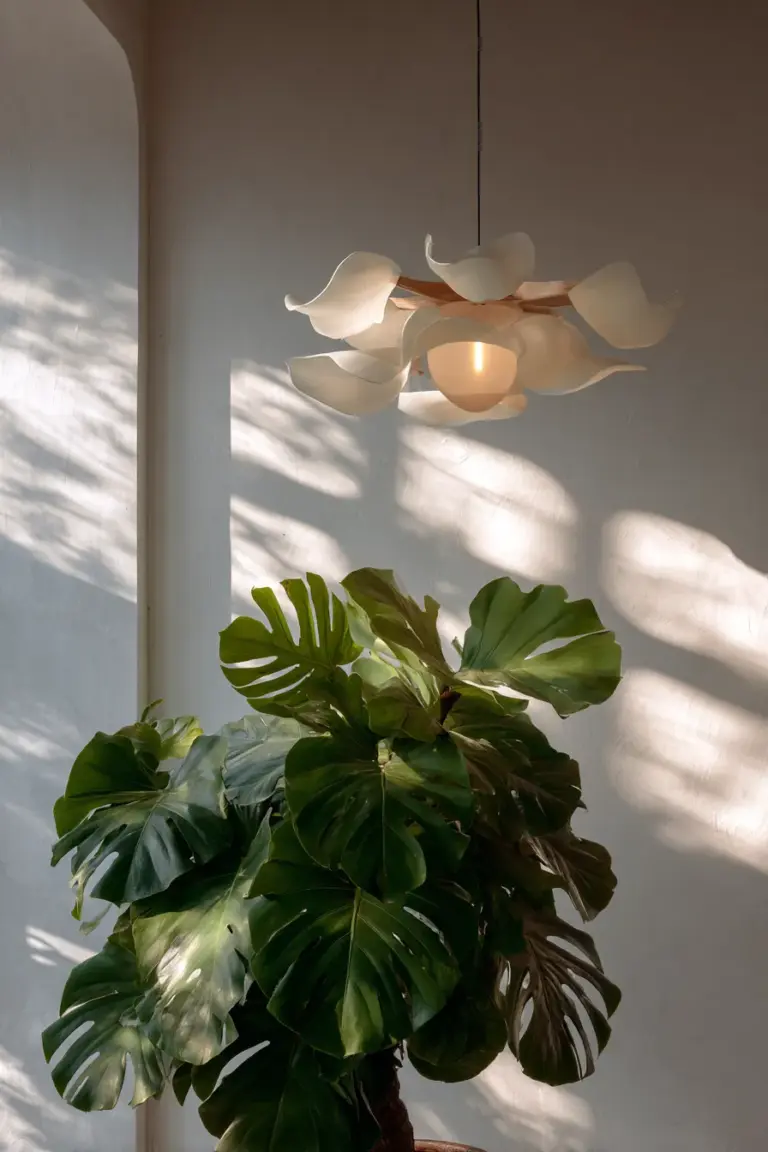
Position accent lights to create interesting shadow play: a plant between light source and wall, geometric fixtures that project patterns, or uplighting that emphasizes ceiling texture. These shadows add life and movement to minimalist spaces.
Strategic Placement by Room Function
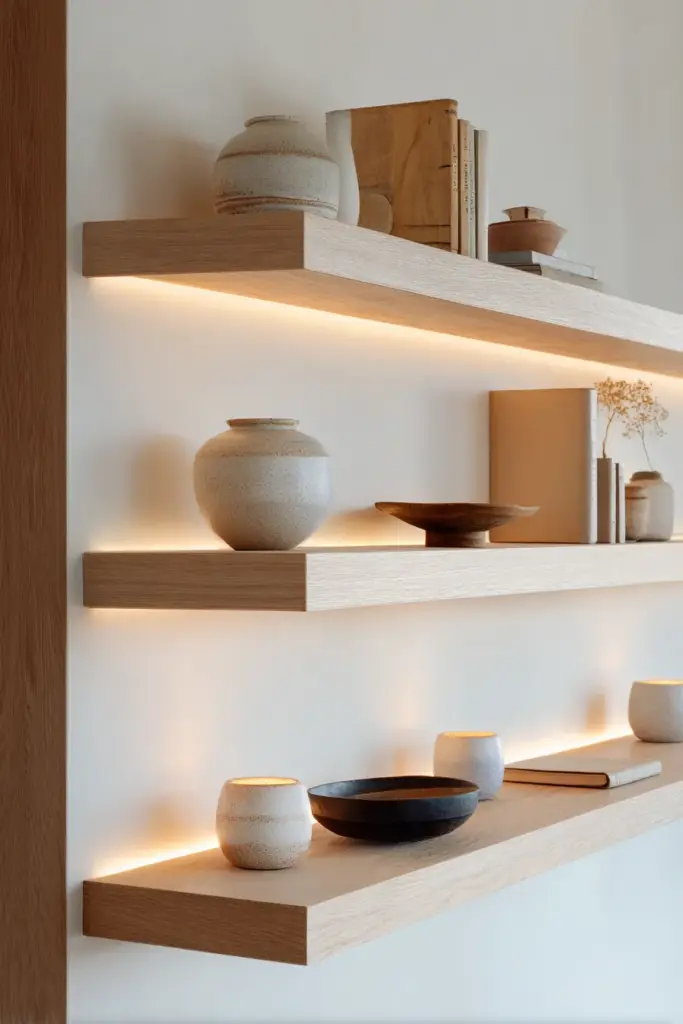
Consider how you actually use your living room. If one corner is for reading, place a focused floor lamp there. If you display ceramics on floating shelves, add LED strip lighting underneath to showcase them.
For small Japandi living rooms, mirror placement multiplies your accent lighting impact. A wall sconce near a mirror creates the illusion of two light sources while amplifying the glow throughout the space.
Material-by-Material Comparison
| Material | Light Quality | Best For | Maintenance | PH Price Range |
|---|---|---|---|---|
| Washi Paper | Soft, diffused, cloud-like | Ambient accents, pendants | Dust gently; humidity-sensitive | ₱1,500–₱8,000 |
| Bamboo | Warm, filtered through gaps | Floor lamps, large fixtures | Wipe with damp cloth | ₱2,000–₱12,000 |
| Rattan | Textured, organic shadows | Statement pieces | Vacuum occasionally | ₱2,500–₱10,000 |
| Wood (Oak/Walnut) | Rich, directional | Sconces, task accents | Polish annually | ₱3,000–₱15,000 |
| Black Matte Metal | Clean, focused beams | Minimalist spots, tracks | Easy wipe-clean | ₱1,800–₱9,000 |
Budget-Friendly DIY Accent Lighting Ideas
Thrift Store Transformations
Scout secondhand shops for wooden tripods, ceramic bowls, or bamboo baskets. With a simple socket kit (₱300–₱500), you can convert these finds into one-of-a-kind accent lamps. Sand down worn wood, apply natural oil finishes, and pair with warm LED bulbs.
The character of aged materials aligns perfectly with Japandi’s appreciation for patina and history.
No-Drill Renter Solutions
For those who can’t install hardwired fixtures, battery-operated LED strip lights offer surprising versatility. Stick them under shelves, behind headboards, or along baseboards for subtle accent glow. Modern versions offer remote control and timer functions.
Adhesive wall sconces with rechargeable batteries eliminate drilling while providing the same visual impact. Look for designs with 8+ hour battery life for practical daily use.
Local Material Sourcing
In the Philippines, abaca fiber, bamboo, and locally-woven textiles offer authentic materials at accessible prices. Partner with local artisans who can craft custom lamp shades using these indigenous materials — you’ll get unique pieces while supporting traditional crafts.
Humidity-proof bamboo treatments are readily available in most hardware stores, extending the life of your DIY fixtures in tropical climates.
Smart Lighting and Tech Integration
Circadian Rhythm Programming
Smart accent lighting can mimic natural daylight patterns, gradually shifting from cool-toned mornings (though still within the warm spectrum) to amber evenings. Set Alexa or Google Home routines that automatically adjust your accent lights throughout the day.
This biophilic approach to lighting connects your indoor space to natural rhythms, potentially improving sleep quality and reducing evening stress.
Energy Efficiency and ROI
LED accent lights consume 75% less energy than traditional halogen bulbs. For a typical living room with 5–7 accent fixtures running 4 hours daily, you’ll save approximately ₱1,200–₱1,800 annually on electricity.
Quality LED bulbs last 15,000–25,000 hours — that’s 10–15 years of use. The upfront investment pays for itself within two years while reducing your environmental footprint.
Climate Considerations for Philippine Homes
Humidity-Resistant Fixtures
Calabarzon’s tropical climate demands special attention. Choose accent lights with sealed electrical components and rust-resistant finishes. Stainless steel, powder-coated metals, and treated bamboo withstand moisture better than untreated materials.
Paper lamps should have protective coatings or be reserved for air-conditioned rooms. Alternatively, opt for synthetic washi-style materials that mimic the aesthetic while resisting humidity damage.
Typhoon-Proof Installation
Secure all accent fixtures properly, especially floor lamps and hanging pendants. Use museum putty for tabletop lamps, earthquake-proof ceiling hooks for pendants, and ensure wall sconces are mounted into studs rather than hollow drywall.
After severe weather, inspect electrical connections and replace any moisture-exposed bulbs promptly to prevent short circuits.
Color Psychology and Emotional Impact
The Science of Warm Light on Neutral Palettes
Research in environmental psychology shows that 2700K lighting on neutral backgrounds activates the parasympathetic nervous system — your body’s rest-and-digest mode. This is why Japandi spaces feel inherently calming.
The combination of warm light and natural wood tones triggers associations with sunset, firelight, and safety — primal comforts hardwired into human biology.
Biophilic Lighting for Plant Corners
Accent lights that spotlight your indoor plants create layered biophilic benefits. The visual interest of illuminated greenery plus the psychological comfort of warm light compounds the stress-reducing effects of both elements.
Use adjustable spotlights with warm LEDs (2700K) to avoid washing out your plants’ natural colors. Position lights to create gentle uplighting or sidelighting that emphasizes leaf structure and texture.
Common Mistakes to Avoid
Over-lighting. More fixtures don’t equal better ambiance. Three to five well-placed accent lights typically suffice for an average living room.
Mismatched color temperatures. Mixing 2700K and 4000K bulbs creates visual discord. Stick to one temperature range throughout your accent lighting layer.
Ignoring CRI. Cheap bulbs with low CRI make your beautiful natural materials look flat and lifeless. It’s worth the extra ₱100–₱200 per bulb for quality.
Direct glare. Japandi accent lights should never shine directly into eyes. Always diffuse, angle, or shield light sources.
Forgetting dimmers. Fixed-intensity accent lights limit your space’s versatility. Dimmable options cost minimally more but multiply your lighting possibilities.
Your Japandi Accent Lighting Checklist
- Layer intentionally: Combine ambient, task, and accent lighting for depth
- Choose warm bulbs: Stay within 2700K–3000K for hygge glow
- Prioritize CRI 90+: Let natural materials show their true beauty
- Select natural fixtures: Washi paper, bamboo, rattan, and wood align with Japandi aesthetics
- Create shadow play: Embrace wabi-sabi imperfection through strategic positioning
- Consider humidity: Choose moisture-resistant options for tropical climates
- Install dimmers: Add flexibility for different moods and times of day
- Think sustainably: LED bulbs save energy and reduce long-term costs
- Start small: Add 2–3 accent lights first, assess, then expand
- Measure your space: Small rooms need fewer, subtler accents to avoid overwhelm
Bringing It All Together
The most beautiful Japandi living rooms don’t announce their lighting design — they simply feel right. You walk in, exhale, and settle into comfort without quite knowing why.
That’s the power of thoughtful accent lighting. It works quietly behind the scenes, highlighting what matters, softening what doesn’t, and wrapping your entire space in warmth. Each fixture you choose becomes part of a larger conversation between light and shadow, function and beauty, intention and ease.
As you layer your own accent lighting, trust your instincts. Let the light guide you toward moments you want to enhance, corners that need embracing, textures worth celebrating. Your living room will thank you with that particular kind of peace — the kind that makes coming home feel like the very best part of your day.
May your space glow softly and your evenings unfold in comfort.
Frequently Asked Questions
What type of lighting is best for a Japandi living room?
A layered approach works best: ambient lighting from ceiling pendants, task lighting for specific activities, and accent lighting to highlight textures and create warmth. Focus on soft, diffused fixtures like paper lanterns, bamboo floor lamps, and wall sconces with warm 2700K–3000K LED bulbs. The key is avoiding harsh overhead brightness in favor of multiple gentle light sources.
How do I layer lighting in Japandi style?
Start with your ambient base layer, then add task lighting where needed for reading or working. Finally, incorporate accent lights — wall sconces that wash textured walls, floor lamps that pool light in corners, or LED strips beneath shelving. Create distinct u0022poolsu0022 of light rather than uniform brightness, leaving some areas softly shadowed for depth and wabi-sabi character.
What color temperature should I use for Japandi lighting?
Stick to 2700K–3000K warm white LEDs. At 2700K, you’ll get a soft, hygge-infused glow perfect for evenings. At 3000K, the light is slightly crisper while remaining warm. Avoid cool temperatures above 4000K, which create harsh blue tones that clash with Japandi’s warm wood and neutral palette.
What are the best accent lights for small Japandi living rooms?
Choose slim wall sconces that don’t protrude far from walls, compact kumiko lanterns with intricate shadow patterns, and strategically placed mirrors that amplify existing light. LED strip lighting under floating shelves adds glow without consuming floor space. Avoid oversized floor lamps; instead opt for sleek tripod designs or corner-hugging arc lamps.
Which materials work best for Japandi accent lighting fixtures?
Natural materials like washi paper, bamboo, rattan, oak, and walnut align perfectly with Japandi aesthetics. Washi paper creates cloud-like diffusion, bamboo adds organic warmth, and wood brings rich directional light. Choose fixtures with CRI 90+ bulbs to accurately render these natural material tones. In humid climates, select treated bamboo or sealed fixtures to resist moisture damage.