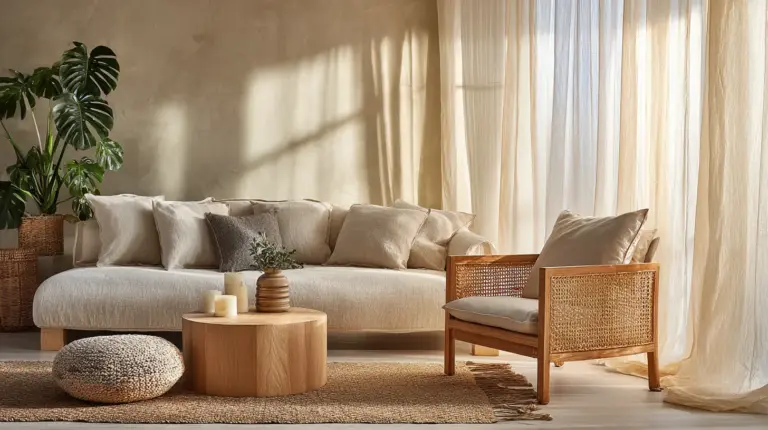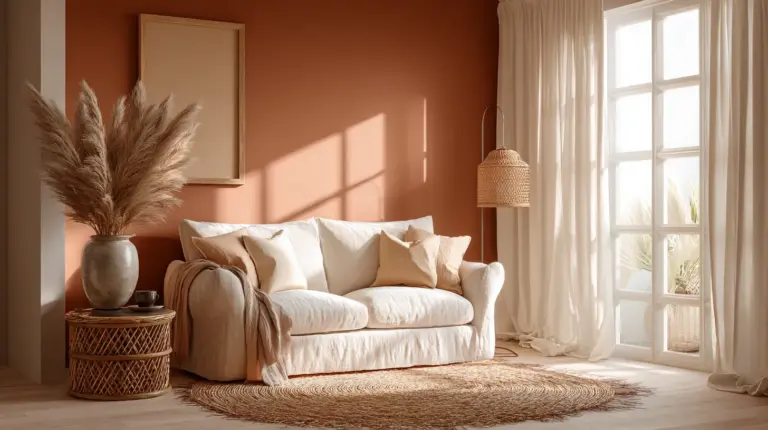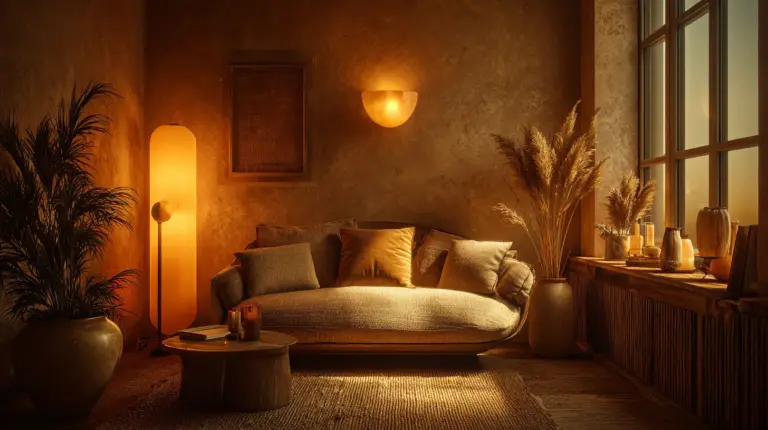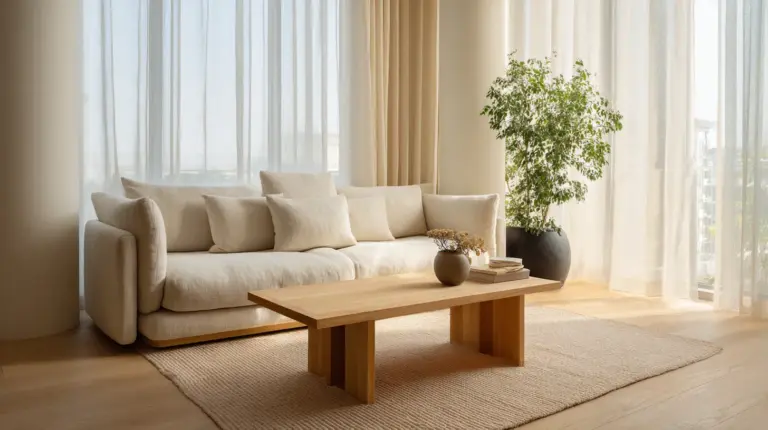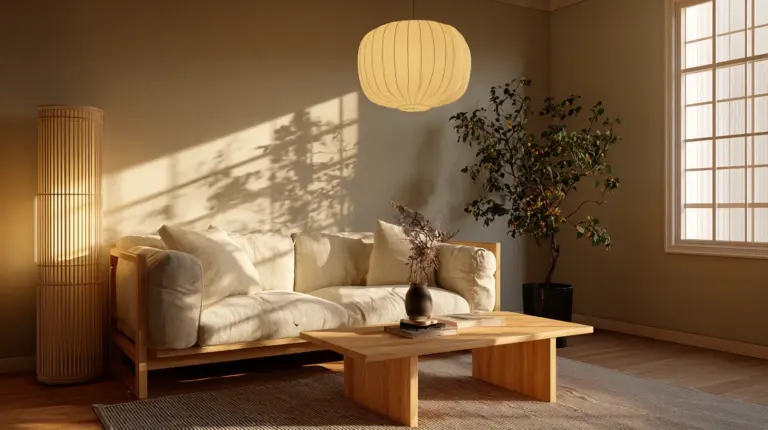

There’s a quietness to a well-organized room. A stillness that invites you to sit, breathe, and simply be.
In small living spaces, that sense of calm can feel hard to find—especially when clutter creeps in. But Japandi design, with its blend of Japanese minimalism and Scandinavian warmth, offers a graceful solution. It’s not about owning less for the sake of restriction. It’s about choosing better, storing smarter, and creating space that feels open and intentional.
Small Japandi living room storage isn’t just about hiding things away. It’s about weaving functionality into beauty—using natural materials, clean lines, and thoughtful placement to make every inch work quietly in your favor. Whether you’re in a 15-square-meter apartment or a cozy rental with no room for drilling, there’s a way to bring order without sacrificing softness.
Let’s explore how to create storage that feels like part of the design itself.
Why Japandi Storage Works So Well in Small Spaces
Japandi thrives on restraint. It asks you to keep only what matters, then store it with care.
In small living rooms, this philosophy becomes practical magic. Every basket, shelf, and drawer does double duty—holding your belongings while adding texture, warmth, and visual interest. Oak shelves glow against white walls. Rattan bins soften hard corners. Black metal frames add just enough contrast to ground the room.
The result is a space that feels larger than it is, because nothing competes for attention. Everything has a place, and that place is purposeful.
Core Principles: What Makes Storage Feel Japandi
Natural Materials Are Non-Negotiable
Japandi storage lives in the tactile world. Think oak, walnut, bamboo, rattan, and seagrass—materials that age with grace and bring the outdoors in.
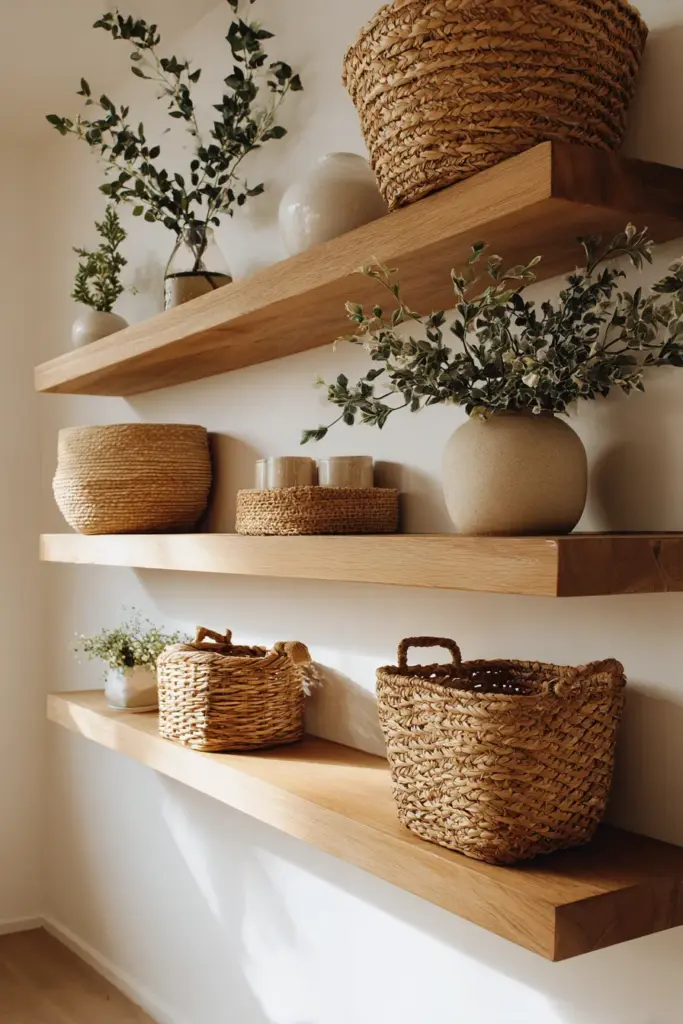
A woven basket on a floating shelf doesn’t just hold blankets. It adds warmth, invites touch, and softens the geometry of the room. Bamboo trays on a coffee table corral remotes and candles without feeling cluttered. These aren’t just storage tools—they’re design elements.
Avoid plastic bins or overly glossy finishes. Japandi asks for honesty in material, where wood grain shows and weave patterns stay visible.
Neutral Tones with Subtle Depth
Color in Japandi storage is quiet but never flat. Beige oak, charcoal linen, soft black accents, and creamy whites create a palette that feels cohesive and calm.
When choosing storage pieces, lean into tonal layering. A light oak console paired with a darker walnut tray. Seagrass baskets next to matte black shelving brackets. This subtle contrast keeps the eye moving without overwhelming the senses.
In a small room, this restraint prevents visual clutter—even when storage is fully visible.
Multifunctional Furniture Is Your Best Friend
In Japandi design, furniture rarely does just one thing. A bench lifts to reveal hidden storage. A coffee table has drawers. An ottoman opens to hold throws.
This approach is essential in small living rooms, where every piece must earn its place. Look for low-profile silhouettes—furniture that sits close to the ground creates an illusion of height and openness. A minimalist wooden bench with under-seat storage can hold books, linens, or toys while doubling as extra seating.
The key is choosing pieces that don’t announce their storage function. The design remains sleek, the utility stays hidden.
Smart Storage Solutions for Every Corner
Vertical Shelving: Use the Walls
When floor space is limited, look up. Vertical storage transforms empty walls into functional beauty.
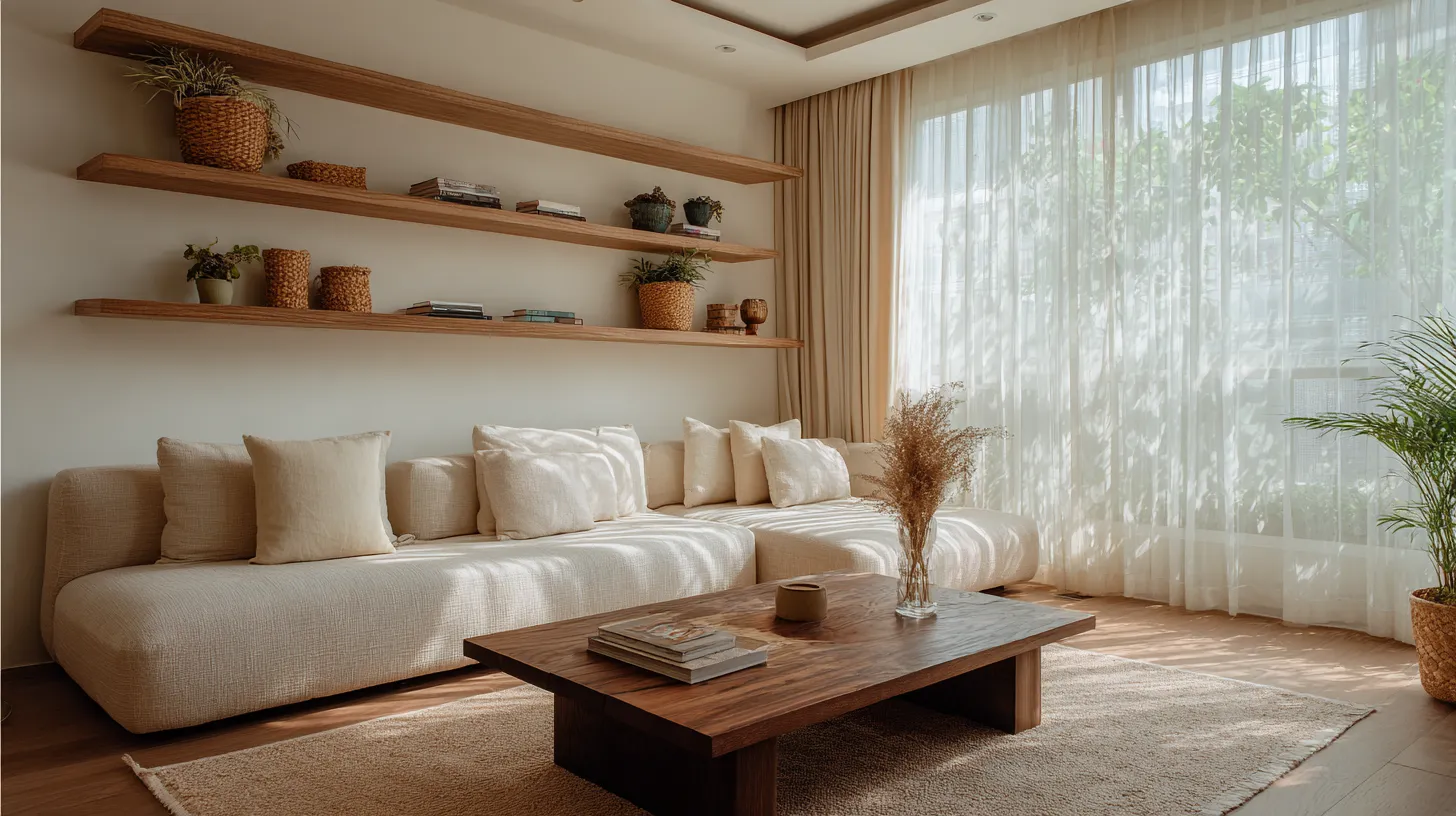
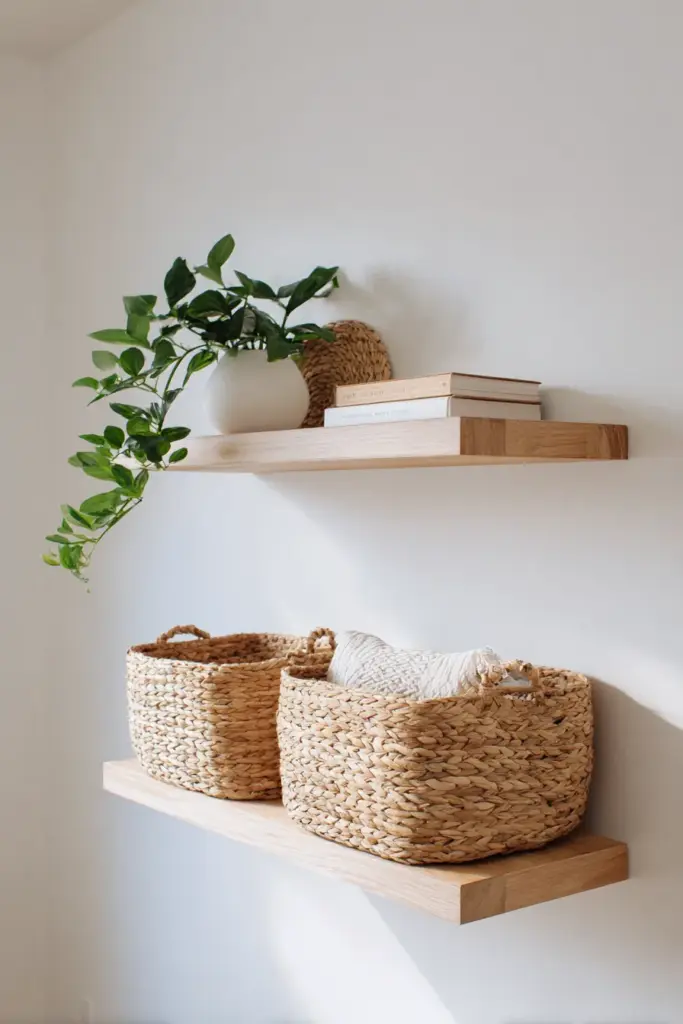
Floating oak shelves in staggered arrangements create visual interest while holding books, plants, and decorative objects. Keep styling minimal—a ceramic vase here, a small succulent there. The shelves themselves, with their natural grain and clean lines, become part of the room’s texture.
Wall-mounted cabinets with sliding doors keep clutter hidden while maintaining clean sightlines. Choose light wood tones to reflect natural light and make the room feel airier.
Built-In and Modular Solutions
If you own your space, consider built-in shelving around seating areas or flanking doorways. These custom solutions maximize every inch while blending seamlessly into the architecture.
For renters, modular shelving systems offer flexibility without permanent installation. Look for freestanding units in oak or ash that can be reconfigured as your needs change. Tension rod shelves—held in place by pressure, not screws—are a renter’s secret weapon for adding storage without damaging walls.
Baskets, Bins, and Beautiful Containment
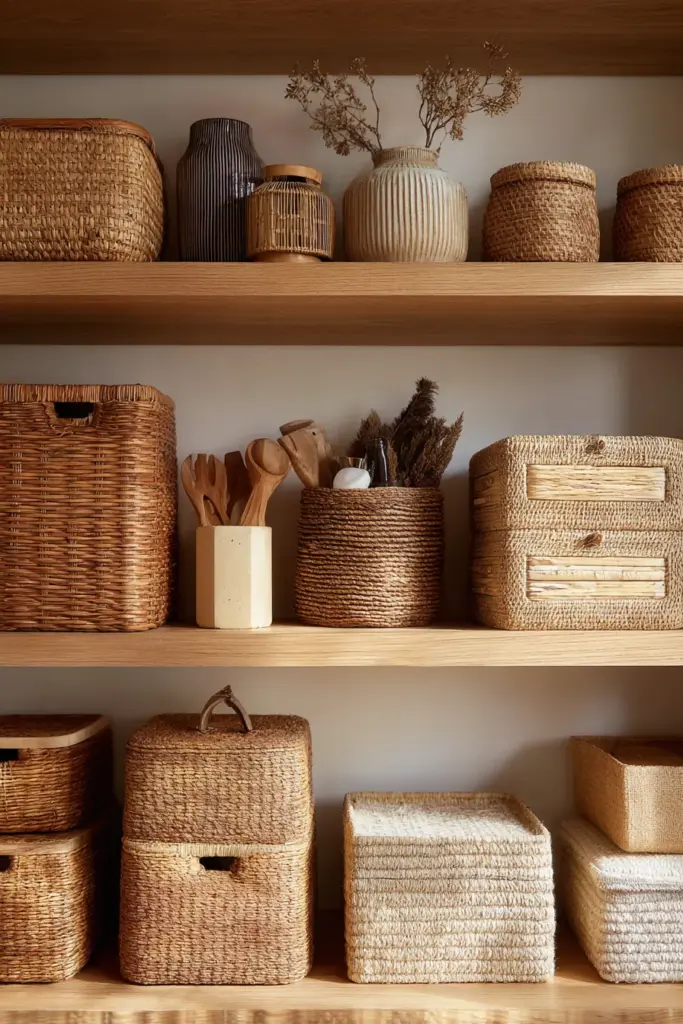
Open shelving looks elegant when paired with natural woven storage. Rattan baskets, bamboo bins, and seagrass lidded boxes bring texture while hiding everyday chaos.
Group baskets of varying heights on lower shelves or under console tables. Fill them with throws, magazines, or children’s toys. The beauty of natural weaves is that even when visible, they enhance rather than detract.
For a cohesive look, stick to two or three material types. Rattan and seagrass, for example, share warmth without competing.
Hidden Storage in Plain Sight
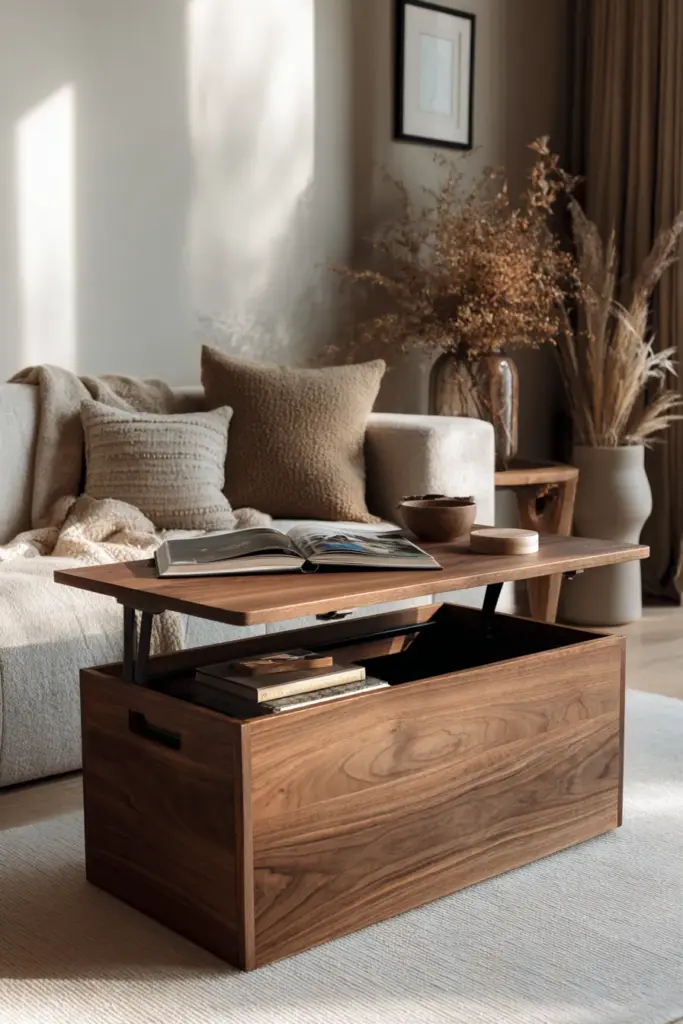
The most Japandi solution is the one you don’t see. Look for furniture with concealed compartments—hollow benches, lift-top coffee tables, storage ottomans.
TV consoles with sliding or push-to-open doors keep cables, remotes, and devices tucked away. Choose designs with clean facades in light wood, so the piece reads as sculpture rather than storage.
Cable management is crucial in small spaces. Use adhesive cord organizers behind furniture to keep technology from disrupting the room’s calm.
Layout Strategies for 10–20 Square Meter Rooms
The 15sqm Floor Plan Challenge
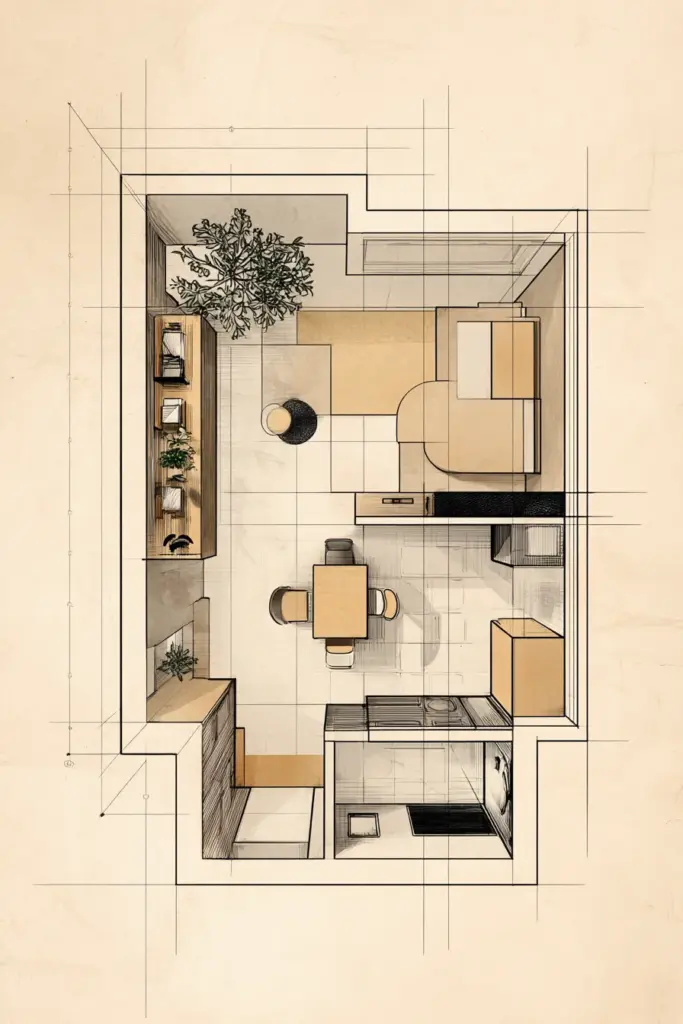
In ultra-compact living rooms, every choice compounds. Here’s a sample layout that prioritizes storage without cramping style:
| Zone | Furniture/Storage | Function | Material |
|---|---|---|---|
| Seating Area | Low-profile sofa with under-cushion storage | Main seating + hidden storage | Linen, oak legs |
| Wall Behind Sofa | Floating shelves (3-tier) | Books, décor, small baskets | Oak |
| Coffee Table | Lift-top or drawer style | Surface + concealed storage | Walnut |
| Corner | Floor lamp + tall rattan basket | Lighting + blanket storage | Rattan, black metal |
| TV Wall | Minimalist console with sliding doors | Media equipment + cables | Light oak, matte black handles |
This arrangement keeps sightlines clear while maximizing vertical and hidden storage. The room breathes.
Color and Material Pairing for Visual Expansion
In small spaces, material harmony creates the illusion of more room. Pair beige oak shelves with black metal brackets and off-white walls for contrast without clutter. Add charcoal linen cushions and natural jute rugs to ground the palette.
Avoid too many wood tones in one space. Stick to one or two—like oak and walnut—and let them repeat across furniture and storage pieces.
Budget-Friendly Storage Under ₱10,000–₱15,000
You don’t need a luxury budget to create Japandi storage. Many solutions are accessible, especially in the Philippines.
Local and Online Options
- Bamboo and rattan baskets from local markets: ₱200–₱800 each
- Floating shelves (oak-look laminate) from Shopee/Lazada: ₱500–₱1,500 per shelf
- Modular storage cubes (IKEA hacks or local alternatives): ₱3,000–₱5,000 for a set
- Storage benches (foam + fabric DIY or ready-made): ₱2,500–₱4,500
- Tension rod shelving for renters: ₱800–₱1,200
Total Budget Breakdown (Sample):
- 3 floating oak shelves: ₱3,000
- 4 rattan baskets (varied sizes): ₱2,000
- 1 storage coffee table: ₱5,000
- 1 tall basket for corner: ₱800
- Cable organizers and adhesive hooks: ₱500
Grand Total: ₱11,300 — well within reach, with room for a plant or two.
DIY and Upcycling Ideas
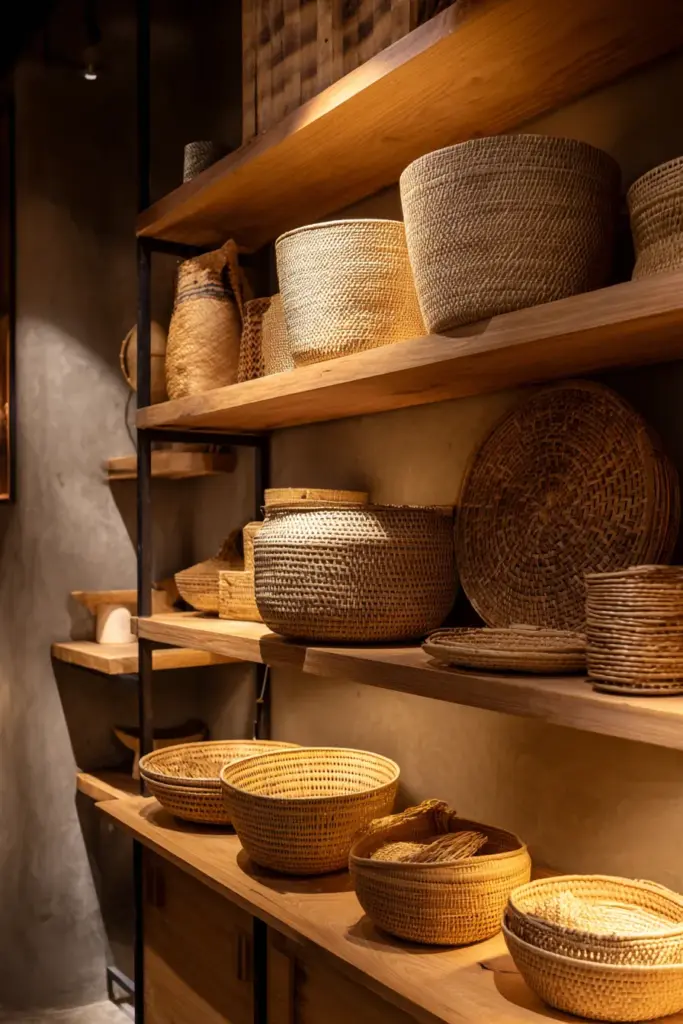
Pallet wood can become beautiful floating shelves with sanding, staining, and simple brackets. Thrifted wooden crates, painted in matte white or left natural, stack into modular storage. Even old suitcases can be repurposed as stylish under-bench storage with a vintage Japandi twist.
The key is keeping finishes natural and lines clean.
Renter-Friendly and No-Drill Options
Not everyone can drill into walls. Thankfully, Japandi storage adapts beautifully to temporary setups.
Damage-Free Installation
- Adhesive hooks (Command strips) for hanging lightweight baskets or fabric organizers
- Tension rods between walls for instant shelving
- Freestanding ladder shelves in oak or bamboo—lean them against the wall, no hardware needed
- Over-the-door organizers in neutral linen for extra vertical storage
These solutions maintain the minimalist aesthetic while respecting your lease.
Maintenance and Care for Natural Materials
Japandi storage is meant to age gracefully, but a little care goes a long way.
Caring for Wood and Weave
- Dust regularly with a soft cloth to prevent buildup on rattan and bamboo
- Oil wooden shelves and furniture every 6–12 months with natural wood oil to maintain luster
- Vacuum woven baskets occasionally to remove dust from crevices
- Avoid direct sunlight on natural materials to prevent fading
These small rituals keep your storage looking warm and intentional.
Family and Pet-Proofing Your Japandi Storage
Japandi doesn’t have to sacrifice practicality for aesthetics—even with kids or pets.
Smart Adjustments
- Choose lidded seagrass bins to keep toys hidden and pets out
- Opt for scratch-resistant finishes on wood (matte polyurethane or wax)
- Use lower open shelves for children’s books, so storage is accessible and safe
- Add soft-close hinges on cabinets to prevent slammed doors
With thoughtful choices, storage stays beautiful and livable.
Seasonal Swaps: Keeping Storage Fresh
One of Japandi’s quiet joys is seasonal rotation. Swapping a few items keeps the room feeling current without major overhauls.
In cooler months, store extra throws in lidded baskets. When summer comes, swap them for lightweight linen cushions. Rotate décor on open shelves—dried florals in autumn, fresh greenery in spring.
These small shifts honor the seasons while maintaining order.
Quick Checklist: Small Japandi Living Room Storage Essentials
- Floating shelves in light wood (oak or ash)
- Woven baskets in varying sizes (rattan, bamboo, seagrass)
- Multifunctional coffee table with hidden storage
- Low-profile storage bench or ottoman
- Wall-mounted or freestanding modular shelving
- Cable organizers and adhesive hooks (for renters)
- Neutral-toned bins for concealed clutter
- Minimal décor on open shelves (plants, ceramics, one or two books)
Final Thoughts: Storage as an Act of Care
Creating storage in a small Japandi living room isn’t about controlling chaos. It’s about making space for calm.
When you choose a bamboo basket because it feels right in your hand, when you arrange shelves so light catches the wood grain—you’re not just organizing. You’re curating a life that feels intentional. You’re saying: this small space deserves beauty, too.
Let your storage be part of that story. Let it be functional, yes—but also warm, textured, and quietly yours.
FAQs
What are the best Japandi storage ideas for small living rooms?
Focus on vertical shelving, multifunctional furniture like storage ottomans and lift-top coffee tables, and natural woven baskets in rattan or seagrass. Keep materials light (oak, bamboo) and colors neutral to maximize openness.
How do I maximize storage in a small Japandi space?
Use wall-mounted solutions (floating shelves, cabinets), opt for furniture with hidden compartments, and embrace vertical storage. Modular systems and tension rod shelves work especially well for renters.
What’s the difference between Japandi and Scandinavian storage?
Japandi blends Japanese minimalism (deeper restraint, natural materials, low furniture) with Scandinavian warmth (lighter tones, cozy textiles). Japandi storage tends to be more concealed and material-focused, while Scandi leans into open, airy display.
Can I achieve Japandi storage on a budget under ₱10,000?
Absolutely. Source bamboo and rattan baskets locally (₱200–₱800 each), use laminate oak-look shelves from Shopee/Lazada (₱500–₱1,500), and DIY with pallet wood or thrifted crates. Prioritize natural materials and clean lines over brand names.
How do I make Japandi storage work for renters with no-drill rules?
Use adhesive hooks (Command strips), freestanding ladder shelves, tension rod shelving, and over-the-door organizers. Modular units and furniture-based storage (benches, ottomans) require no wall mounting and maintain the aesthetic beautifully.