
Table of Contents
There’s a quiet magic that happens when you step into a room that feels both grounded and light. A space where every piece has purpose, where textures whisper stories of craftsmanship, and where the air itself seems to breathe a little slower. This is the essence of Japandi design — and yes, it’s entirely possible to create it in your rental living room, even when landlord rules and tight budgets feel like barriers.
If you’re renting a small space, you already know the constraints: no painting without permission, no drilling into walls, no permanent changes that might cost you your deposit. But here’s what most design advice misses: limitations can actually sharpen your creativity. The Japandi philosophy thrives on mindful restraint, on choosing less but choosing better. Your rental restrictions? They’re practically asking you to embrace wabi-sabi.
This guide will walk you through creating a small Japandi living room that honors both Scandinavian warmth and Japanese minimalism — without a single nail hole or paint swatch your landlord might frown upon. We’ll explore renter-friendly solutions, budget breakdowns that won’t make you wince, and specific sourcing tips for those of us navigating humid Manila climates and local marketplaces.
Let your small living room become a sanctuary. Let’s begin where intention meets beauty.
What Makes a Living Room Truly Japandi?
Japandi isn’t just an aesthetic trend — it’s a breathing philosophy that marries Scandinavian hygge (cozy contentment) with Japanese wabi-sabi (finding beauty in imperfection). The result feels like morning light filtered through linen curtains, like the smooth grain of oak beneath your fingertips, like a room that exhales calm.
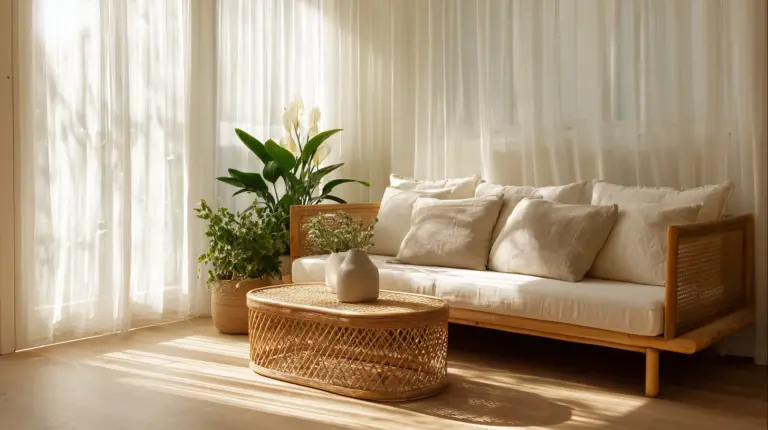
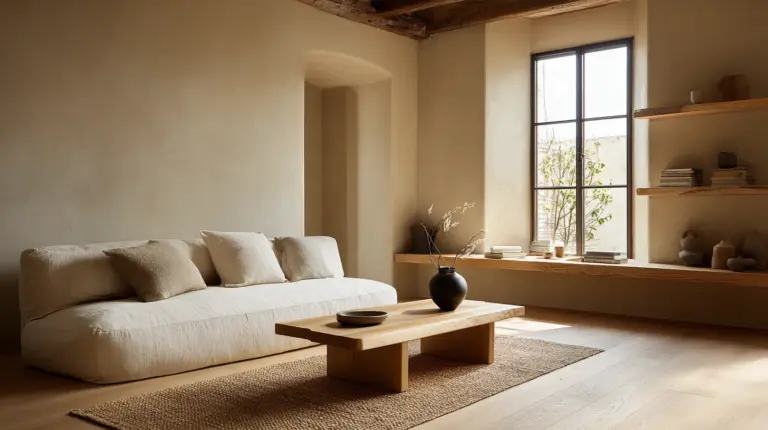
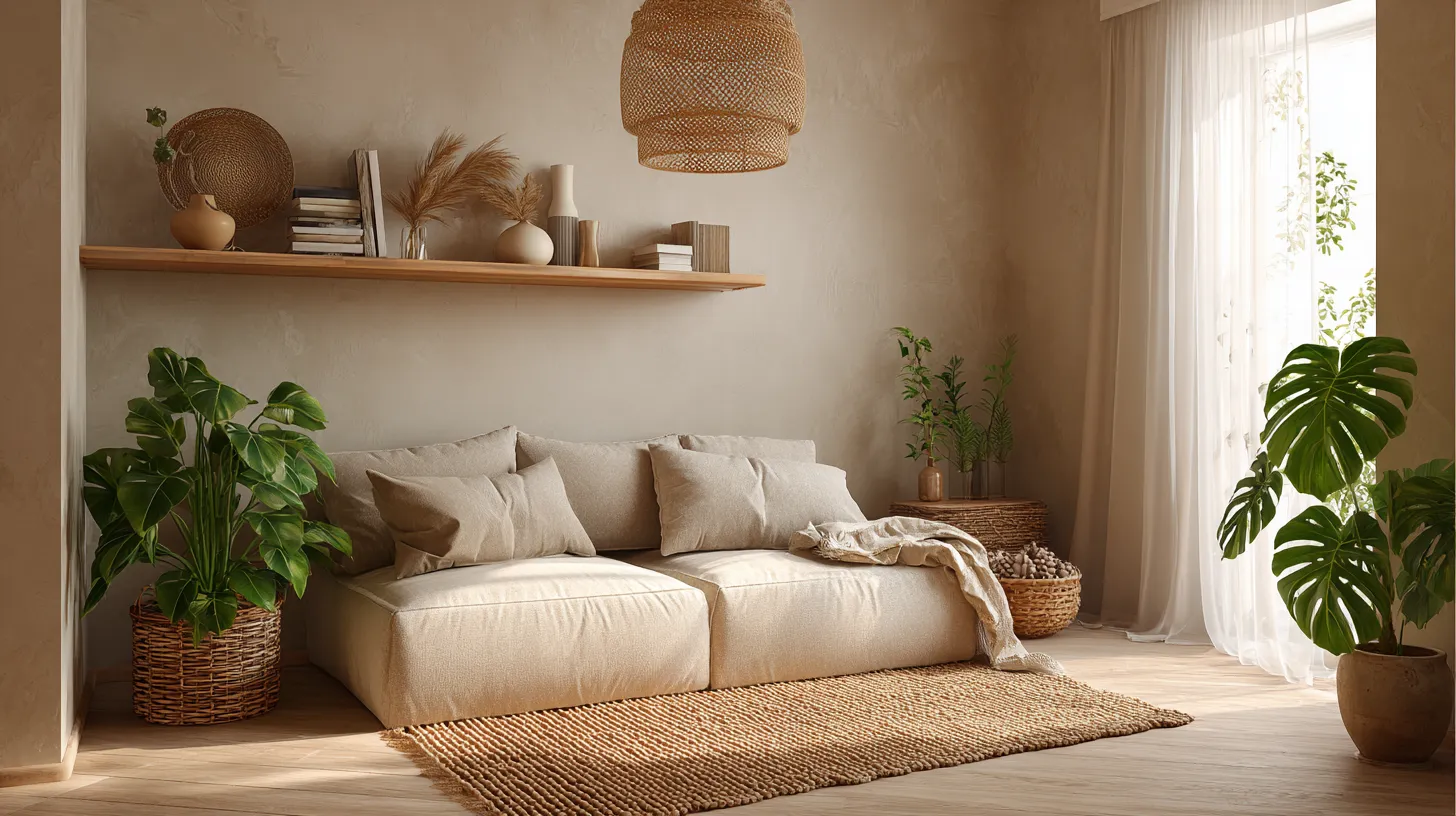
At its core, Japandi celebrates natural materials, neutral palettes, and low-profile furniture that keeps sightlines open and energy flowing. Think beige linen sofas anchored by woven jute rugs, teak wood shelving holding ceramic vessels in earthy clay tones, and indoor plants that soften every corner with life.
For small apartments, this design philosophy is particularly forgiving. By eliminating visual clutter and embracing multifunctional pieces, your compact living room can feel surprisingly spacious. The key is intentionality — every item should earn its place through both function and quiet beauty.
Renter-Friendly Japandi Transformations: No Damage, All Impact
The Command Strip Revolution
Forget everything you thought you knew about renter limitations. Command strips and adhesive hooks have evolved into legitimate design tools that can hold everything from floating shelves to woven wall hangings.
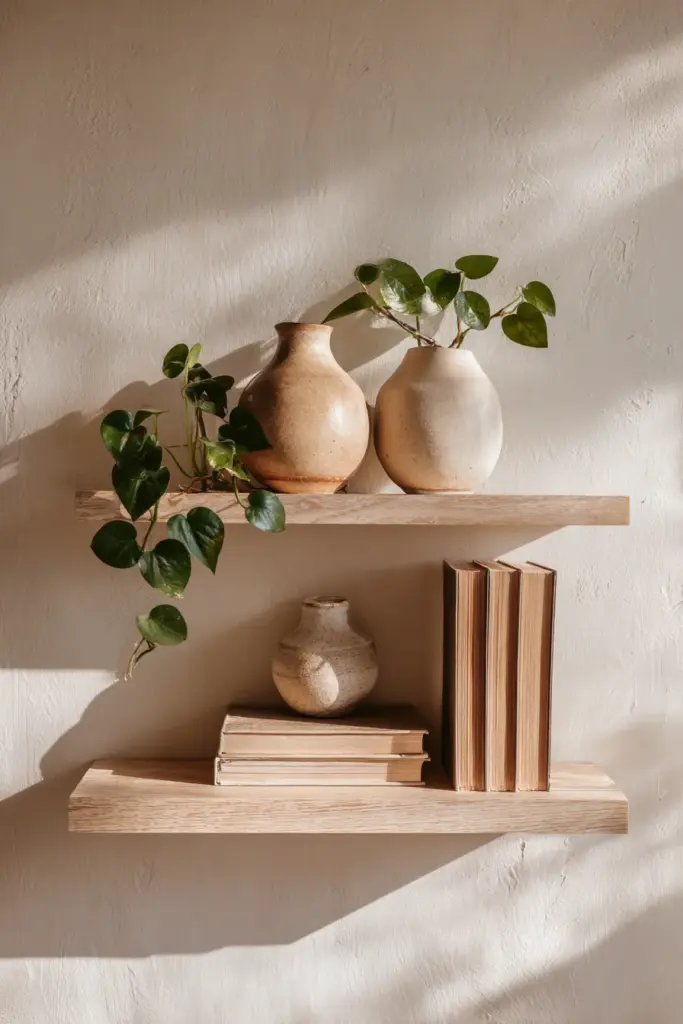
Install floating shelves in light ash or bamboo to display your curated collection of ceramic planters and linen-bound books. Choose command strips rated for 5-7 pounds per pair, and mount them on smooth, clean walls for maximum hold. These shelves create vertical storage without sacrificing floor space — essential in small Japandi living rooms.
Hang lightweight shoji-inspired screens using tension rods positioned between walls or as room dividers. These create visual zones in studio apartments while allowing natural light to filter through translucent rice paper or linen panels.
Peel-and-Stick Magic
Removable wallpaper in soft beiges, warm grays, or subtle grasscloth textures can transform a bland rental wall into a sophisticated backdrop. Apply it to one accent wall behind your sofa to ground the space without overwhelming it.
For flooring, consider peel-and-stick vinyl planks that mimic tatami mats or light oak. These work especially well in Manila’s humidity, as they’re water-resistant and easy to remove when your lease ends. The installation takes a weekend, the transformation lasts years, and your deposit stays intact.
Washi tape in neutral tones can frame doorways or create geometric patterns on plain walls — a subtle nod to Japanese shoji screens without any permanent commitment.
Space-Saving Furniture That Serves Double Duty
The Low-Profile Sofa Strategy
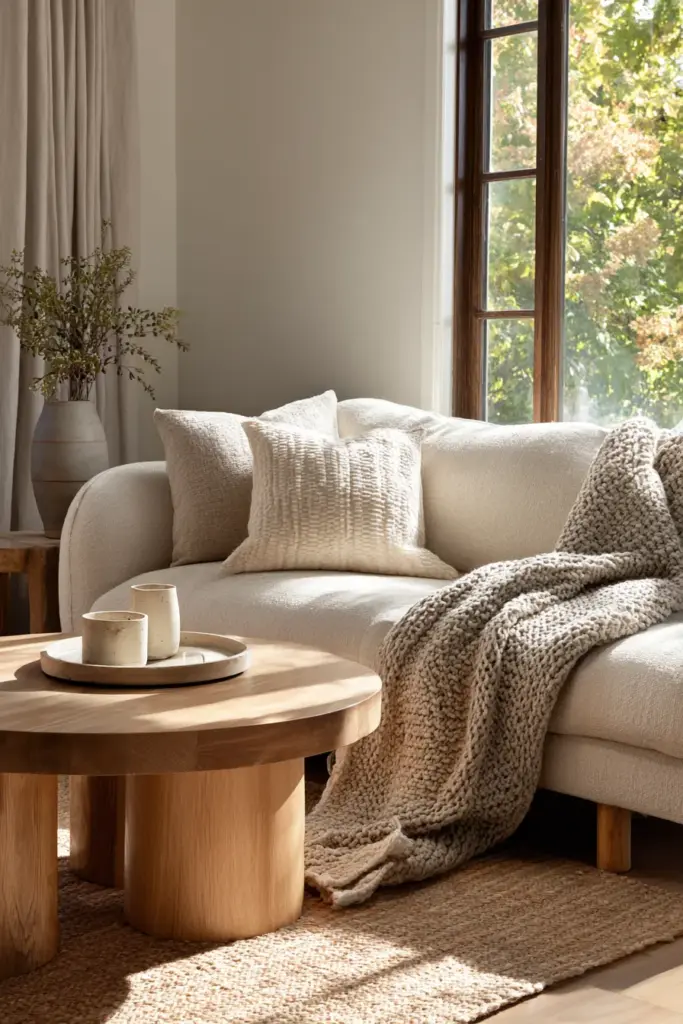
Japandi living rooms favor furniture that sits close to the ground, creating an illusion of higher ceilings and more breathing room. Look for sofas with clean lines, wooden legs, and cushions in oatmeal linen or warm gray cotton.
A loveseat measuring 60-70 inches works beautifully in small rentals. Choose one with hidden storage beneath the seat cushions — perfect for stashing throws, magazines, or out-of-season textiles. Pair it with a lightweight ottoman that doubles as both footrest and coffee table when topped with a wooden tray.
Multifunctional Pieces Worth Every Peso
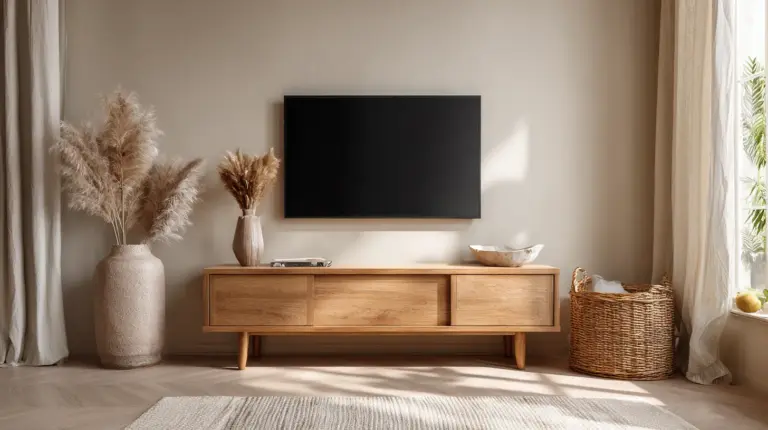
IKEA’s KALLAX shelving unit becomes a stunning TV console when turned horizontally and fitted with woven linen bins. At roughly PHP 2,500-3,500, it offers both display space for ceramic vessels and hidden storage for electronics and clutter. Top it with a slim wood plank (teak or mango wood from local markets) to create warmth and visual weight.
Nesting tables in light wood or matte black metal can be tucked away when not needed, then pulled out when guests arrive. They’re the definition of flexible living — exactly what small Japandi spaces require.
Floor cushions in natural fabrics stack neatly in corners but provide extra seating when needed. Look for ones filled with buckwheat hulls or cotton batting, covered in linen or hemp blends that age beautifully.
Color Palettes That Open Up Small Spaces
The Neutral Foundation
Start with walls in soft whites, warm beiges, or pale grays — most rentals already offer these, which saves you the headache of requesting paint approval. These neutral backdrops allow natural materials to become your color story.
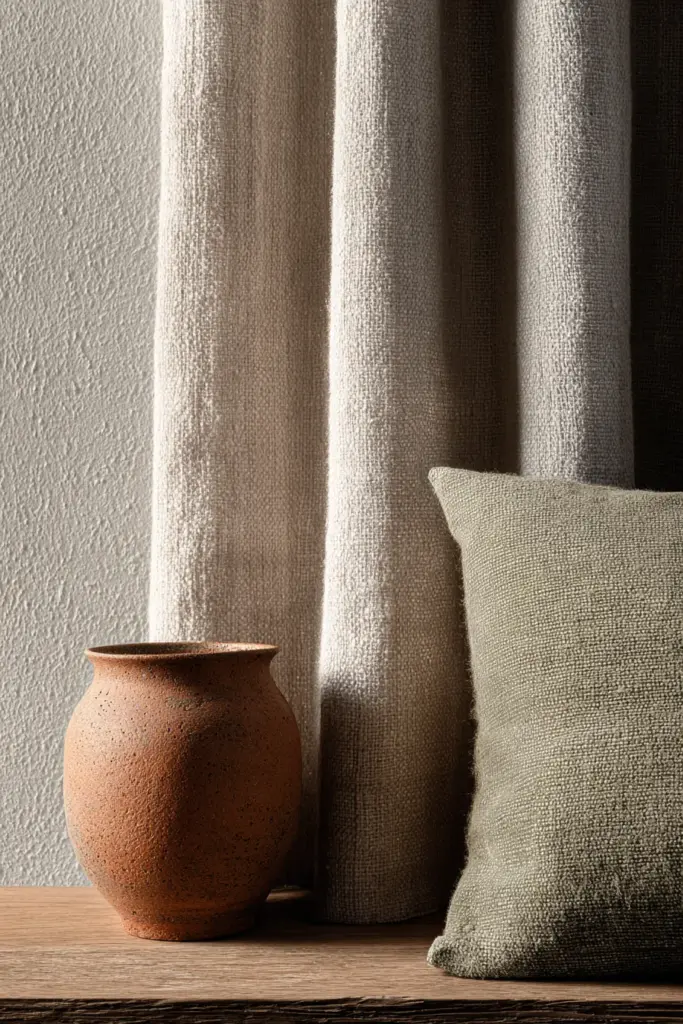
Layer in earth tones through textiles: a jute rug in honey tones, linen curtains in oatmeal, cotton throw pillows in terracotta or sage green. This creates depth without visual noise, allowing your small living room to feel cohesive and calm.
Strategic Accent Colors
Japandi embraces restraint, but that doesn’t mean sterility. Introduce muted accent colors through carefully chosen pieces: a ceramic vase in charcoal black, a wool throw in dusty rose, or monstera leaves providing organic green punctuation.
Black accents in particular — through picture frames, plant pots, or metal shelf brackets — provide grounding contrast against lighter tones. Use them sparingly, like punctuation marks in a well-written sentence.
Lighting Layers: Creating Hygge-Zen Ambiance
Understanding Lighting Psychology
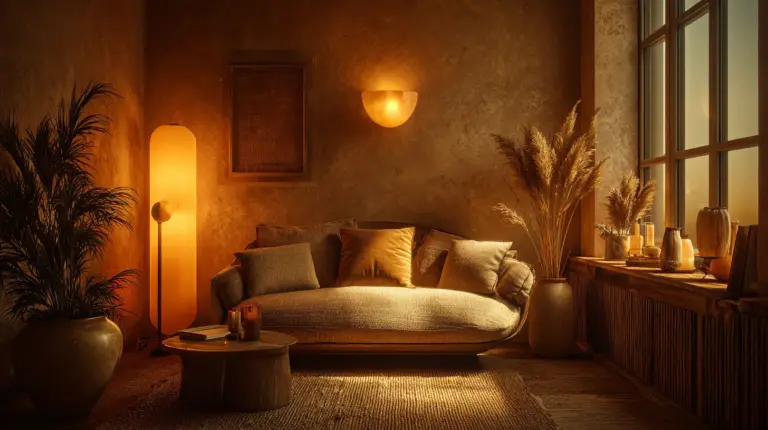
Light shapes mood more powerfully than any furniture arrangement. In Japandi spaces, lighting should feel warm, layered, and adjustable — never harsh or clinical.
Warm LED bulbs (2700-3000K) create the cozy, golden glow that makes evenings feel like exhaling after a long day. Install them in every light source, from overhead fixtures to table lamps.
The Three-Layer Approach
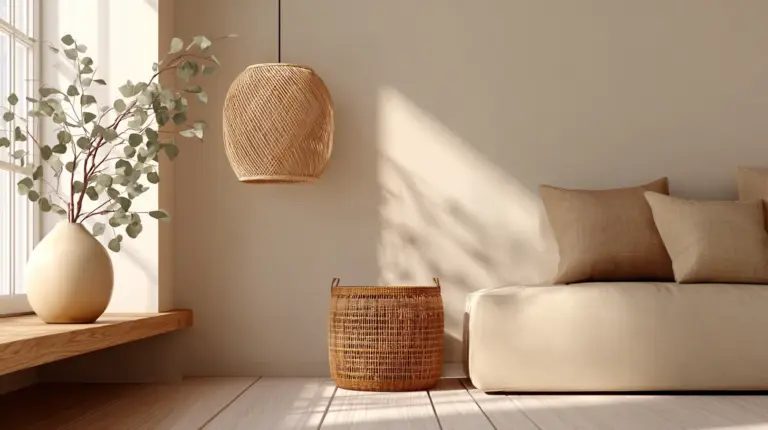
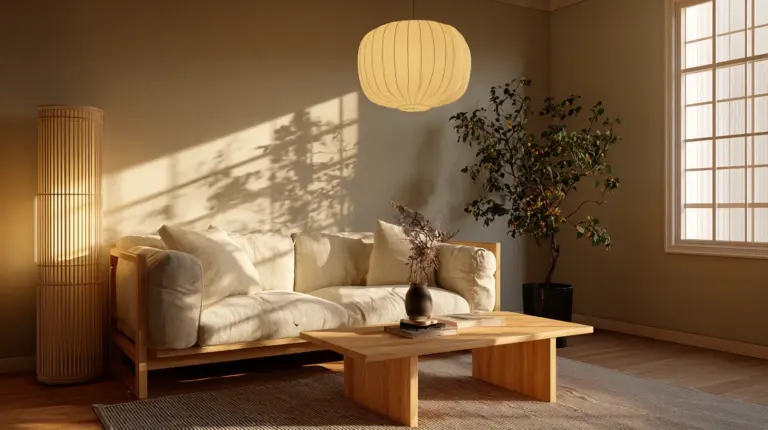
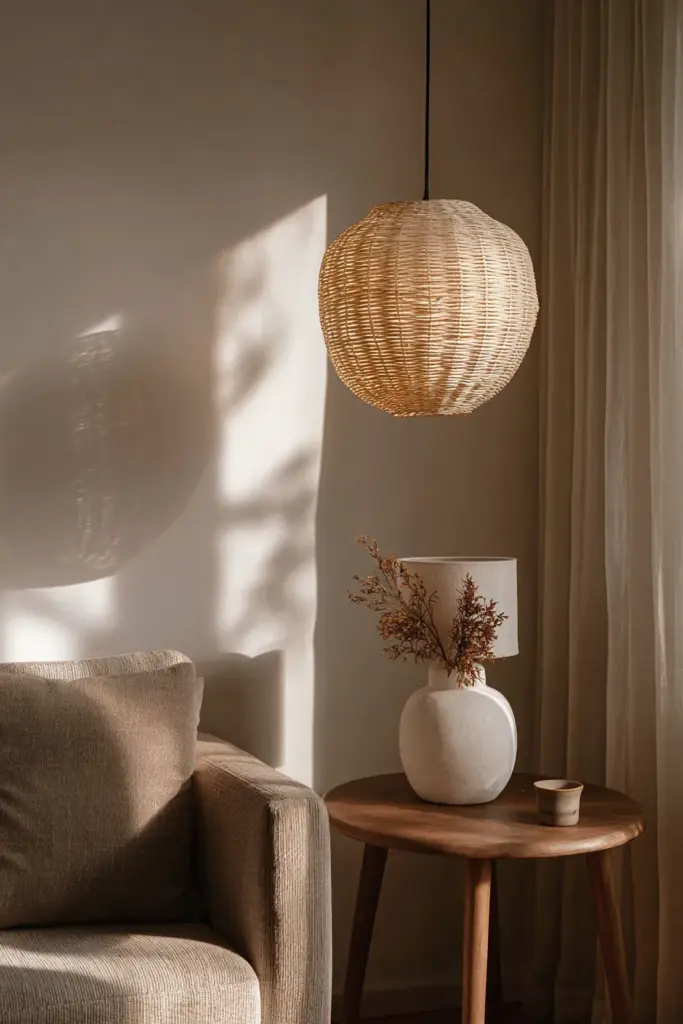
Ambient lighting comes from your main source — likely a ceiling fixture in rentals. Replace standard bulbs with warm LEDs, and if your landlord allows, swap the fixture itself for a woven pendant light in rattan or bamboo. These cast beautiful shadows while diffusing light softly.
Task lighting belongs beside your sofa or reading nook. A slim arc floor lamp with a linen shade or a ceramic table lamp on your side table provides focused light for reading without dominating the room visually.
Accent lighting might be a string of warm fairy lights draped casually in a glass jar, or a small LED strip behind your floating shelf creating a gentle glow. These add magic without requiring any electrical work.
| Lighting Layer | Renter-Friendly Option | Estimated Cost (PHP) |
|---|---|---|
| Ambient | Woven pendant light (plug-in swag kit) | 1,500-3,000 |
| Task | Ceramic table lamp with linen shade | 800-2,000 |
| Accent | Battery LED strip or fairy lights | 200-500 |
Plants That Thrive in Manila’s Humid Rental Spaces
Low-Light Champions
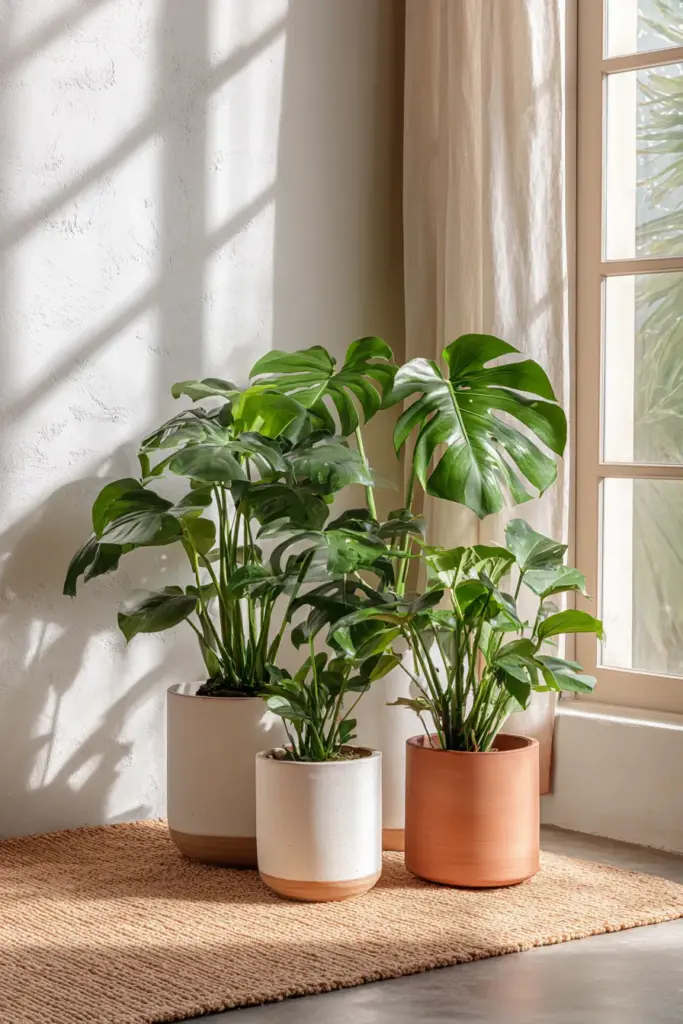
Most rental living rooms don’t have floor-to-ceiling windows, which means choosing plants that tolerate lower light conditions. Monstera deliciosa and philodendrons are your allies here — both thrive in Manila’s humidity and forgive occasional neglect.
Snake plants (sansevieria) add vertical interest with their architectural leaves, while pothos vines can trail from high shelves, softening hard edges with cascading green.
Styling Your Indoor Jungle
Group plants in odd numbers (three or five) at varying heights to create visual rhythm. Use ceramic pots in matte white, terracotta, or charcoal — avoid anything too glossy or colorful that might compete with your neutral palette.
Place a tall fiddle leaf fig in a woven basket planter beside your sofa to anchor the corner. Add smaller succulents or air plants on floating shelves for layered greenery that doesn’t crowd your limited floor space.
For renters nervous about water damage, use plant saucers beneath every pot, and consider self-watering planters that reduce the risk of overflow onto wooden floors.
Budget Breakdown: PHP 10,000 Japandi Living Room Makeover
Creating a Japandi living room doesn’t require designer price tags. Here’s how to transform your space for under PHP 10,000, sourcing smart from Lazada, Shopee, and local markets:
- Neutral-toned rug (jute or cotton): PHP 1,500-2,500
- Linen throw pillows (set of 3): PHP 1,200
- Floating shelf with command strips: PHP 800
- Ceramic planters and plants: PHP 1,500
- Warm LED bulbs (set of 4): PHP 400
- Woven storage baskets: PHP 600
- Secondhand wood coffee table (thrifted/upcycled): PHP 2,000
- Cotton throw blanket: PHP 800
- Picture frames for wall art (3 pieces): PHP 600
- Small rattan tray or decor accents: PHP 600
Total: Approximately PHP 10,000
This leaves room for one statement piece if you find a gorgeous vintage chair at a weekend market, or for additional plants to build your indoor garden.
DIY Upcycling: Thrift Finds to Japandi Treasures
The Weekend Wood Project
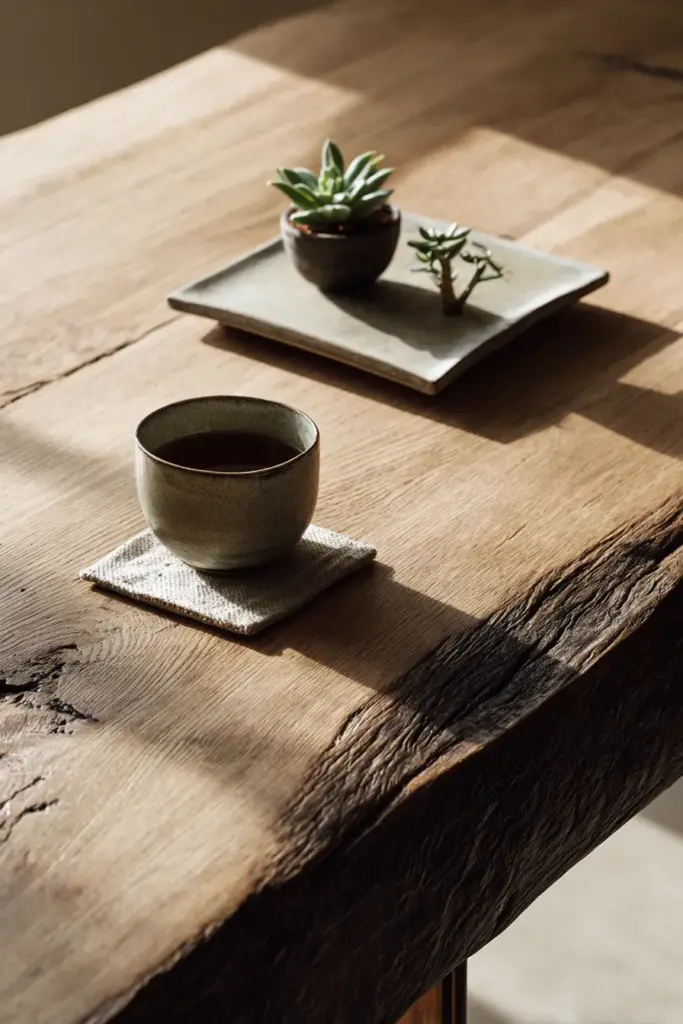
Visit your local thrift stores or Facebook Marketplace for solid wood pieces that need love. A scratched coffee table becomes Japandi-worthy with light sanding and a coat of natural wood oil (linseed or tung oil work beautifully).
Look for pieces in teak, mango wood, or oak — common in Philippine furniture markets. Strip away dark varnish to reveal the natural grain beneath, then seal it with matte finish. The imperfections you leave behind? That’s wabi-sabi embodied.
Textile Transformations
Old linen curtains can become pillow covers with basic sewing skills (or fabric glue for the no-sew crowd). Vintage rattan baskets spray-painted in matte white or left in their natural state become chic storage solutions.
Even cardboard boxes wrapped in natural jute rope or linen fabric can organize shelves while maintaining your aesthetic. The key is choosing natural materials and neutral tones that complement rather than clash.
Renter’s Checklist: Lease-Safe Quick Refresh
Before starting your Japandi transformation, protect yourself and your deposit:
- Check your lease for specific prohibitions on adhesives, nails, or alterations
- Photograph everything before making changes (walls, floors, fixtures)
- Test adhesives on inconspicuous spots to ensure clean removal
- Keep all original fixtures (switch plates, curtain rods) for reinstallation when moving
- Document your purchases with receipts for any improvements
- Use furniture pads beneath all pieces to prevent floor scratches
- Avoid permanent installations like built-in shelving or hardwired lighting
Most landlords appreciate tenants who maintain and beautify spaces, especially when changes are non-permanent and increase the property’s appeal. Communication is key — consider sharing your plans before implementing them.
Quick Refresh Timeline for Busy Renters
Weekend 1: Declutter ruthlessly. Remove anything that doesn’t serve function or beauty. Deep clean all surfaces.
Weekend 2: Install floating shelves, hang artwork with command strips, add peel-and-stick elements if desired.
Weekend 3: Bring in plants, arrange furniture for optimal flow, layer textiles (rug, pillows, throws).
Weekend 4: Adjust lighting, add final decorative touches, style shelves with intention.
The beauty of renter-friendly Japandi is that you can implement changes gradually, living with each adjustment before adding the next layer.
Key Takeaways: Your Small Japandi Living Room Essentials
- Choose low-profile furniture that creates visual space and serves multiple functions
- Embrace neutral palettes in warm beiges, soft grays, and natural wood tones
- Use natural materials like linen, jute, rattan, and ceramic for texture and warmth
- Layer warm lighting (2700-3000K LEDs) for hygge-zen ambiance
- Add humidity-loving plants like monstera, philodendrons, and snake plants
- Implement no-damage solutions through command strips, peel-and-stick elements, and tension rods
- Source budget-friendly pieces from Lazada, Shopee, thrift stores, and local markets
- Practice wabi-sabi by embracing imperfections in secondhand and DIY pieces
- Maintain visual calm through intentional editing and hidden storage solutions
- Document everything to protect your rental deposit
Conclusion: The Room That Breathes With You
Your small rental living room can hold more peace than you imagined. Not through expensive renovations or permanent changes, but through thoughtful choices that honor both the space you inhabit and the life you’re building within it.
Japandi design reminds us that beauty doesn’t demand excess. That a single ceramic vase holding one branch can speak more eloquently than a wall of mass-produced art. That the grain of wood beneath your hand, the weight of linen against your skin, and the way afternoon light pools on your jute rug — these sensory moments are the ones that transform a rental into a home.
Create your space with intention. Let it evolve as you do. And remember that the most beautiful rooms are the ones where you can finally, deeply, exhale.
Frequently Asked Questions
How do I create a Japandi living room in a rental without damaging walls?
Use command strips for floating shelves and artwork, tension rods for shoji-inspired screens, and peel-and-stick wallpaper or vinyl flooring for temporary transformations. Focus on freestanding furniture and multifunctional pieces that don’t require installation. Keep all original fixtures to reinstall when moving out.
What furniture works best for small Japandi living room renters?
Low-profile sofas with hidden storage, nesting tables, ottomans that double as coffee tables, and modular shelving like IKEA’s KALLAX create flexibility in small spaces. Choose pieces in natural wood tones with clean lines and avoid anything bulky or visually heavy that might crowd your room.
Can I create Japandi style on a tight budget in the Philippines?
Absolutely. Source from Lazada and Shopee for affordable linen textiles, jute rugs, and ceramic planters (budget PHP 10,000 total). Thrift or upcycle wood furniture from Facebook Marketplace, and DIY elements like command strip shelves and fabric-wrapped storage boxes. Natural materials like rattan are abundant and affordable locally.
What plants are best for Japandi living rooms with low natural light?
Monstera deliciosa, philodendrons, snake plants (sansevieria), and pothos all thrive in Manila’s humidity and tolerate lower light conditions common in rental apartments. These require minimal maintenance and add organic texture to your Japandi aesthetic without demanding constant care.
How do I make my rental living room feel bigger with Japandi design?
Keep furniture low to the ground to create the illusion of higher ceilings, use neutral color palettes that don’t visually fragment the space, and maximize vertical storage with floating shelves. Remove visual clutter, let natural light flow freely, and use mirrors strategically to reflect light and create depth.