
Table of Contents
The air in your living room tells a story. It whispers through bamboo blinds on humid afternoons, settles into linen cushions after a monsoon, and carries the quiet warmth of evening light across pale wood floors. In small Japandi spaces, climate isn’t just about temperature—it’s about crafting an atmosphere where breath comes easy and comfort feels effortless.
When you’re working with limited square footage, every decision matters twice over. The cushion you choose affects airflow. The plant in the corner shifts humidity. Your lighting changes how warm or cool a room feels against your skin.
This is especially true in tropical and subtropical climates, where the challenge isn’t just aesthetic—it’s practical. How do you maintain that serene Japandi calm when the air outside is thick and the sun relentless?
Let’s explore how to build a small Japandi living room that breathes, adapts, and remains a sanctuary regardless of what the weather brings.
Understanding Japandi Climate Design
Japandi style marries Japanese minimalism with Scandinavian functionality, but its climate wisdom runs deeper than aesthetics. Both design traditions emerged from necessity—Japan’s humid summers and cold winters, Scandinavia’s dark, frigid months. They learned to work with their environments, not against them.
In a small living room, this philosophy becomes essential. You’re not just decorating—you’re orchestrating airflow, managing moisture, and calibrating comfort within perhaps 150-300 square feet.
The Japandi approach to climate centers on three principles: natural materials that regulate humidity, strategic openness that encourages air movement, and intentional warmth that doesn’t overwhelm. Think bamboo that wicks moisture, low-profile furniture that doesn’t block ventilation, and lighting that feels like filtered sunlight rather than artificial heat.
The Forgotten Element: Humidity Control
Most design guides focus on visual minimalism. They miss the invisible half—relative humidity. In tropical climates like Manila or Singapore, indoor humidity can soar past 70%, making even the most beautiful room feel oppressive.
Your target? 40-60% relative humidity. This sweet spot prevents mold, protects wooden furniture, and makes the air feel lighter against your skin. Below 40%, fabrics dry out and sinuses ache. Above 60%, everything feels damp and sluggish.
A simple hygrometer (many are available free through home monitoring apps) gives you real numbers to work with. Check morning and evening readings for a week. You’ll quickly see patterns—how cooking affects moisture, where air stagnates, when you need intervention.
Material Choices for Climate Resilience
Materials aren’t decoration in Japandi spaces—they’re climate tools. Each surface either helps regulate temperature and humidity, or it works against you.
Wood remains the foundation, but species matters. Bamboo naturally resists humidity and releases absorbed moisture slowly, making it ideal for tropical climates. Teak and oak hold up well in humid conditions. Pine and lighter woods may warp without proper ventilation.
Opt for oil-finished rather than high-gloss lacquer. Oil lets wood breathe, adapting to seasonal changes. Lacquer traps moisture underneath, leading to warping and clouding over time.
Linen and cotton beat synthetic textiles for climate comfort. Natural fibers wick perspiration and allow air circulation. A linen sofa stays cooler to the touch on hot days than faux leather or polyester. Cotton throw pillows absorb excess moisture instead of trapping it against your back.
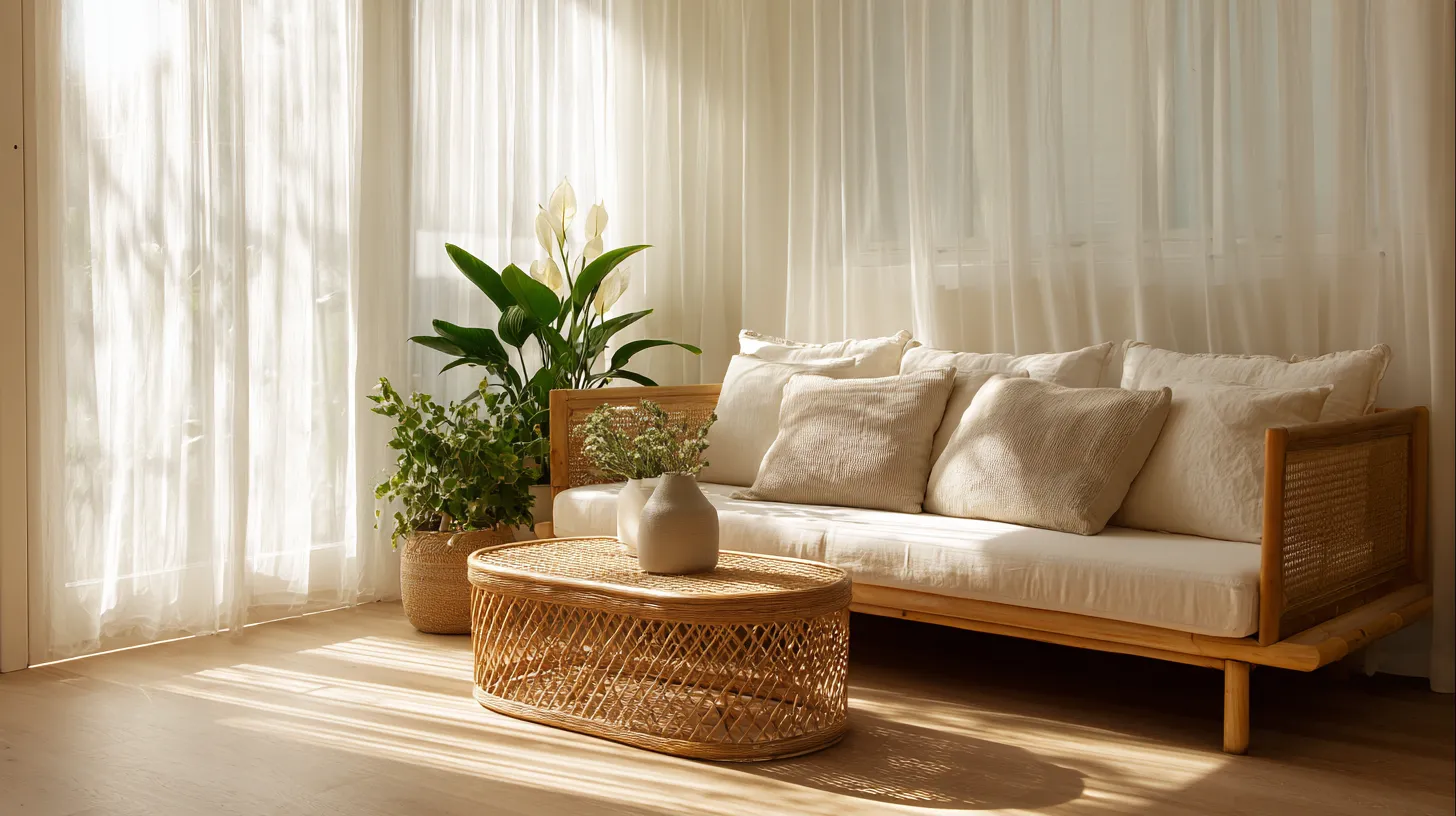
Rattan and cane serve double duty—they’re aesthetically Japandi and naturally ventilated. Use rattan side tables or cane-back chairs to maintain that low-profile look while preventing heat buildup. Air moves through the weave, unlike solid surfaces that block circulation.
Avoid heavy velvet, solid plastic furniture, and sealed particleboard. These materials trap heat, block airflow, and contribute to that stuffy feeling in small rooms.
Strategic Textile Layers
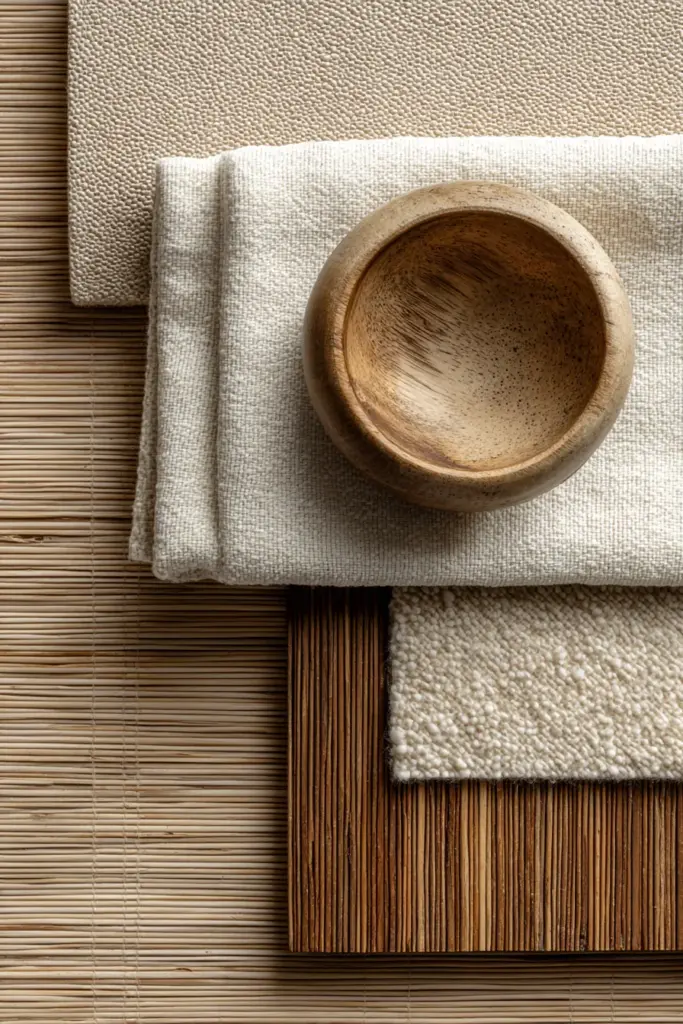
Textiles manage microclimates. A wool throw seems counterintuitive in tropical heat, but merino wool actually regulates temperature—warm when you need it, breathable when you don’t. It also absorbs up to 30% of its weight in moisture without feeling damp.
Layer strategically: linen curtains for daily use, a lightweight cotton throw for cool evenings, a single wool accent for unexpected temperature drops. In small spaces, each textile should serve multiple seasons rather than requiring storage changes.
Position absorbent textiles near humidity sources. A jute or cotton rug near the entrance catches moisture from shoes. Linen curtains by windows absorb condensation on humid mornings.
Furniture Selection and Spatial Flow
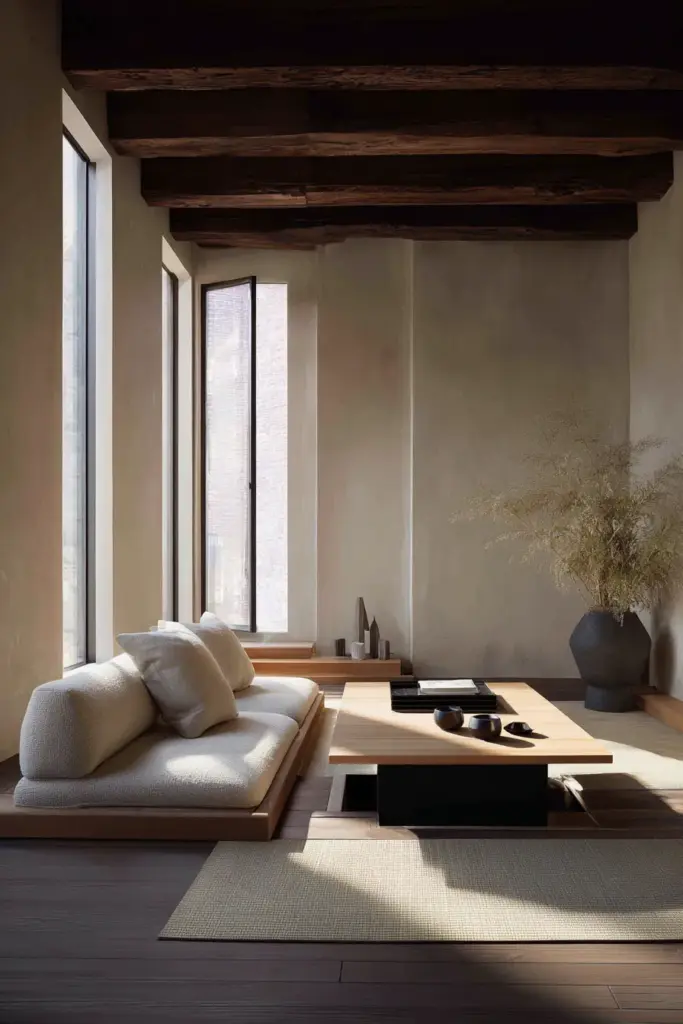
Low-profile furniture isn’t just a Japandi aesthetic choice—it’s a climate strategy. When furniture sits close to the floor, heat rises above it and cool air circulates underneath.
A low platform sofa (15-18 inches high) versus a standard 25-inch sofa changes room dynamics significantly. The lower piece doesn’t block airflow from windows or fans. It creates visual breathing room that makes the space feel cooler psychologically.
Cross-ventilation becomes easier with thoughtful placement. Position your sofa perpendicular to, not blocking, the main airflow path between windows or between a window and door. Even 6 inches of clearance from the wall helps air circulate behind furniture, preventing moisture buildup and musty odors.
The Art of Negative Space
In a small Japandi living room, what you don’t include matters as much as what you do. Each piece of furniture alters airflow patterns.
Aim for 30-40% negative space—areas free of furniture or objects. This isn’t wasted space; it’s climate infrastructure. Air needs paths to move. Your eye needs places to rest. The room needs to breathe.
Choose multi-functional furniture with open designs. A bamboo coffee table with slatted shelving instead of solid wood. A console with legs rather than a floor-to-ceiling storage unit. A daybed frame with visible underneath space.
Test your layout on sweltering afternoons. Walk through. Where does air feel trapped? Where do you instinctively avoid sitting because it’s too warm? Adjust accordingly.
Smart Climate Control Solutions
Modern technology can enhance Japandi spaces without disrupting their calm. The key is integration—making climate control invisible.
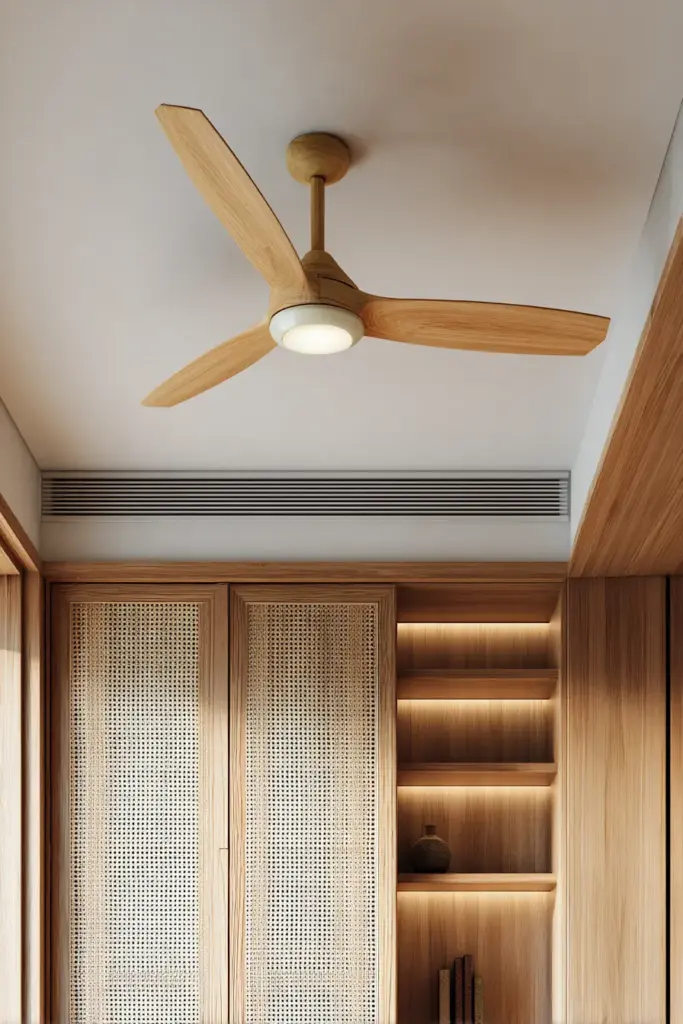
Strategic fan placement beats air conditioning for everyday comfort. A ceiling fan with wooden blades (40-44 inches for small rooms) circulates air without the visual or auditory harshness of floor fans. Run it counterclockwise in summer to push air downward, creating a breeze effect.
Mount the fan off-center if your room layout allows, directing airflow toward your primary seating area. Pair it with cross-ventilation from windows for natural cooling that can drop perceived temperature by 5-8°F.
Smart thermostats and humidity monitors can hide in minimalist panels. Program subtle adjustments—target 75°F during the day, 72°F at night. Maintain 45-55% humidity year-round. Automation means you never think about it consciously, but your body responds to the consistency.
Dehumidifiers with Dignity
In high-humidity climates, dehumidifiers become essential. The challenge is aesthetics—most look clinical and industrial.
Hide compact dehumidifiers inside bamboo cabinets with ventilated doors. Drill 1-inch holes in a grid pattern on the back panel for airflow. Use woven rattan drawer fronts that allow air passage while concealing the machine.
Position the unit centrally if possible, not tucked in corners where humid air pools. Run it during peak humidity hours (typically early morning and evening) rather than constantly, reducing energy costs and noise.
Alternative solutions: Silica gel packets in small muslin bags tucked into rattan baskets. Activated charcoal in ceramic vessels. These passive dehumidifiers handle minor moisture without electricity, though they need refreshing (baking silica gel) or replacing (charcoal) every few months.
Lighting as Climate Element
Light affects perceived temperature more than most people realize. Harsh overhead lighting makes rooms feel 3-5°F warmer than they actually are. Warm-toned, layered lighting creates psychological coolness.
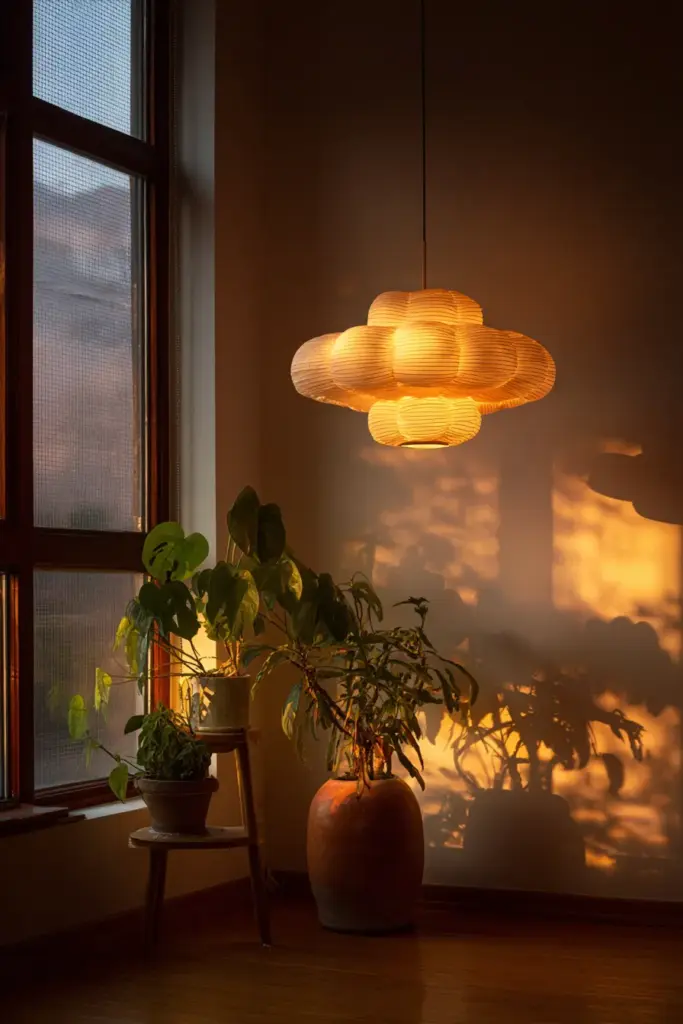
2700-3000K LED bulbs produce that filtered-sunlight quality central to Japandi design. They feel warm without generating heat like incandescent bulbs. Install dimmer switches to adjust intensity throughout the day.
Layer three lighting types: ambient (ceiling fixture or recessed lights), task (reading lamp by your chair), and accent (small light highlighting a plant or art piece). This mirrors natural light patterns—bright where you need it, gentle everywhere else.
Circadian Lighting
Smart bulbs can shift color temperature throughout the day—bright and slightly cool (3500K) in the morning to energize you, warming to 2700K by evening to encourage relaxation.
This automatic adjustment costs almost nothing in energy but significantly impacts how your body perceives comfort. Morning coolness feels refreshing. Evening warmth feels cozy without raising actual temperature.
Avoid: Fluorescent lighting, cool-white LEDs above 4000K, and direct overhead lights without diffusers. These create visual harshness that tricks your brain into feeling too warm.
Plant-Based Climate Solutions
Plants aren’t just decoration—they’re living climate systems. In small spaces, choose species strategically.
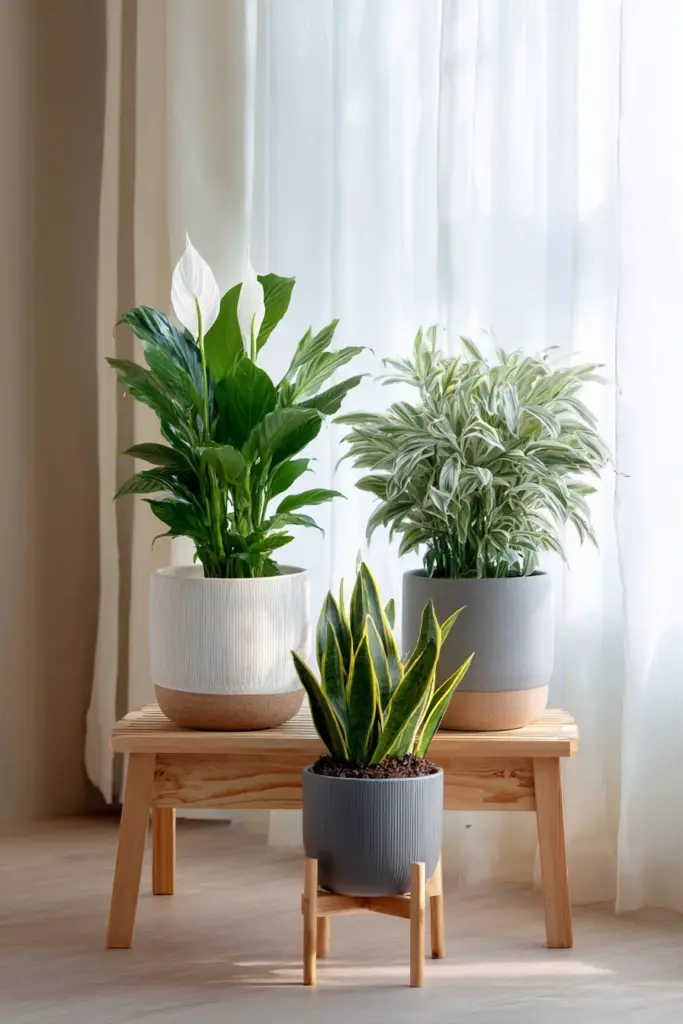
Peace lilies absorb humidity through their leaves and release moisture at night when air tends to dry. Position them near seating areas for localized comfort. They thrive in indirect light, perfect for Japandi spaces that avoid bright overhead lighting.
Snake plants release oxygen at night (most plants release it during the day), improving air quality while you sleep. They also tolerate low light and irregular watering—essential in low-maintenance Japandi rooms.
Rubber plants handle fluctuating humidity well and grow vertically, maximizing impact without consuming floor space. Their broad leaves filter dust and toxins from the air.
The Three-Plant Minimum
For a small living room (150-250 sq ft), aim for three medium-sized plants or five small ones. This provides measurable air purification without overcrowding.
Placement matters: one near a window for maximum photosynthesis, one central to the room, one in a typically humid corner (near the entrance, by a bathroom door).
Use Japandi-appropriate containers—ceramic pots in cream, grey, or charcoal; bamboo planters; woven jute baskets with plastic liners. Avoid plastic pots visible from eye level; they break the natural material aesthetic.
Pro tip: Group plants on a low bamboo plant stand. This creates a green focal point, elevates plants for better light exposure, and keeps them off the floor for improved air circulation underneath.
Tropical Climate Adaptations
If you’re in Manila, Bangkok, Singapore, or similar humid subtropical zones, standard Japandi advice needs adjustments.
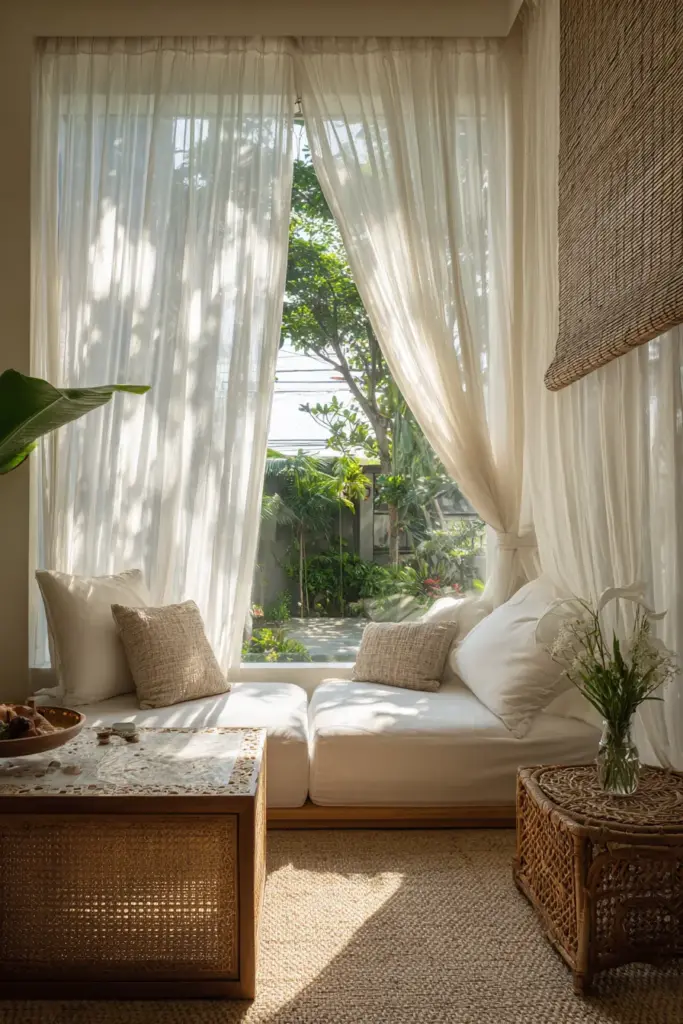
Cross-ventilation becomes non-negotiable. Open windows across from each other during cooler morning and evening hours. Use sheer linen curtains to maintain privacy while allowing airflow. Solid curtains in tropical climates trap heat; choose semi-transparent weaves instead.
Monsoon-proofing your low-profile furniture means treating textiles with fabric protector spray. Natural linen and cotton absorb moisture quickly during heavy rain seasons. A light silicone-based spray adds water resistance without changing texture or appearance. Reapply every 6 months.
Capiz shell elements—a Philippine specialty—can double as ventilation screens. Modern capiz panels diffuse light beautifully while allowing air passage. Mount them on a pivot hinge in window frames for adjustable ventilation that maintains Japandi aesthetics.
Budget-Friendly DIY Solutions
Upcycled ventilation: Salvage wooden pallets (sand and oil-finish them) as room dividers. The natural gaps between slats encourage airflow while defining spaces—perfect for studio apartments blending living and sleeping areas.
Homemade cooling: Fill ceramic bowls with water and add essential oils (eucalyptus, peppermint). Position near fans. The evaporating water cools and humidifies, while the scent freshens without artificial fragrance.
Thermal curtains: Sew blackout material between two layers of linen. Hang with the blackout facing out during peak sun hours. This blocks heat without the industrial look of metallic thermal curtains.
Color Temperature and Perceived Coolness
Japandi color palettes—whites, greys, warm beiges, muted blacks—aren’t arbitrary. They’re psychologically cooling.
Cool whites (paint in shades like Swiss Coffee, Cloud White, or Linen) reflect light and heat rather than absorbing it. They make rooms feel 3-5°F cooler than warm yellows or creams, even at identical temperatures.
Mid-tone greys ground spaces without visual heaviness. Use them on accent walls or furniture pieces. Grey absorbs less heat than dark brown but provides more visual weight than pure white, creating balance.
Introduce sage green or dusty blue through textiles—a throw pillow, a ceramic vase, a small wall art piece. These colors register as cool to the eye, reinforcing the temperature you’re trying to achieve physically.
Accent Colors That Cool
When adding color pops (always sparingly in Japandi design), choose wisely:
- Terracotta: Feels warm visually but actually performs well thermally, staying cool to touch even in heat
- Slate blue: Psychologically cooling, works with both modern and rustic Japandi leanings
- Charcoal: Sophisticated, hides dust in humid climates, doesn’t show water marks
Avoid: bright reds, oranges, or deep purples. These colors visually “warm” a space, fighting against your climate goals.
Climate-Conscious Maintenance Routines
Maintaining ideal climate in a small Japandi space requires consistency, not intensity.
Weekly: Wipe down wooden furniture with a barely damp cloth and dry immediately. Humidity causes water rings and spotting on natural wood. Dust ceiling fan blades—accumulated dust reduces efficiency by up to 30%.
Monthly: Check under furniture for moisture buildup. Lift rugs to ensure airflow underneath. Wash or air-dry throw pillows and cushion covers; trapped moisture breeds mildew even if invisible.
Seasonally: Rotate textiles based on humidity levels. Switch to lighter cotton weaves during peak humid months. Deep-clean upholstery to remove absorbed moisture and odors. Treat wood pieces with appropriate oil to maintain moisture resistance.
The Smell Test
Your nose detects climate problems before your eyes. If your living room smells musty, stuffy, or generally “off,” something in your climate system isn’t working.
Check: Is air circulating? Has humidity crept above 65%? Are textiles storing moisture? Address the root cause, not symptoms. Scented candles mask problems; better ventilation solves them.
Quantifiable Climate Targets
Aim for these measurable goals in your small Japandi living room:
| Metric | Target Range | How to Achieve |
|---|---|---|
| Relative Humidity | 40-60% | Dehumidifier, cross-ventilation, absorbent textiles |
| Temperature | 72-76°F | Ceiling fan, strategic window opening, minimal direct sun |
| Air Changes/Hour | 3-5 complete exchanges | Open windows twice daily, run fans, unblock vents |
| Light Temperature | 2700-3000K | LED bulbs, dimmer switches, layered lighting |
| Plant Coverage | 1 plant per 50 sq ft | Mix of air-purifying and humidity-regulating species |
Test these monthly with simple tools: a $15 hygrometer for humidity, a thermometer, and your own observations about comfort. Adjust as seasons change.
Small Space Climate Checklist
Create your ideal Japandi living room climate by addressing these key elements:
Air Circulation
- Position furniture to allow cross-ventilation from windows/doors
- Install ceiling fan with wooden blades (40-44″ for rooms under 250 sq ft)
- Leave 4-6 inches between furniture and walls for airflow
- Keep air conditioning vents unblocked
Humidity Management
- Target 40-60% RH (get a simple hygrometer)
- Use dehumidifier during peak humidity hours (5-9 AM, 6-10 PM)
- Place silica gel packets in closed storage areas
- Choose natural fiber textiles that breathe (linen, cotton, wool)
Material Selection
- Bamboo, teak, or oak for wooden pieces (humidity-resistant)
- Oil finish instead of lacquer (allows breathing)
- Rattan or cane for chairs, tables, storage
- Avoid sealed particleboard and plastic furniture
Plant Strategy
- Minimum 3 medium plants or 5 small plants for air quality
- Choose peace lily, snake plant, or rubber plant for best humidity regulation
- Position one near window, one central, one in humid corner
- Use natural material containers (ceramic, bamboo, jute)
Lighting for Comfort
- 2700-3000K warm LED bulbs throughout
- Layer ambient, task, and accent lighting
- Install dimmers for time-of-day adjustment
- Avoid cool white (4000K+) or fluorescent lights
Tropical Adaptations
- Treat fabric with water-resistant spray before monsoon season
- Use sheer rather than solid curtains for ventilation with privacy
- Open windows during cooler morning/evening hours
- Consider capiz panels or slatted screens for adjustable airflow
Color Choices
- Cool whites for walls (reflects heat and light)
- Mid-tone greys for grounding without absorbing heat
- Accent with sage, dusty blue, or charcoal (visually cooling)
- Avoid warm yellows, reds, oranges in tropical climates
Maintenance
- Wipe wooden surfaces weekly (damp cloth + immediate drying)
- Check under furniture monthly for moisture
- Wash cushion covers monthly during high humidity
- Apply wood oil treatment seasonally
Creating Your Personal Microclimate
Every small Japandi living room develops its own climate personality. The way afternoon light filters through your window differs from someone else’s. Your building’s ventilation system, your floor level, your proximity to water—all these variables make your space unique.
Experiment for two weeks. Try different furniture arrangements. Open windows at varying times. Adjust lighting throughout the day. Note what makes you naturally gravitate to the room versus avoid it.
The goal isn’t perfection—it’s creating a space where you instinctively want to be. Where you can sit with a book on humid afternoons without feeling oppressed. Where evening light settles into wood grain and linen folds with that particular quality of calm.
Conclusion: Climate as Foundation
Climate isn’t decoration. It’s the invisible architecture that makes your small Japandi living room livable, not just lookable.
You can have perfect aesthetic lines—the low sofa, the bamboo accents, the muted palette—but if the air feels wrong, if humidity makes everything slightly damp, if temperature swings leave you uncomfortable, the beauty becomes irrelevant.
Build climate first. Choose materials that breathe. Position furniture for flow. Manage humidity intentionally. Layer lighting thoughtfully. Add plants strategically.
Then the aesthetics fall into place naturally, because you’ve created a space that works before you made it beautiful. And in small spaces, where every choice has double impact, that working foundation becomes your greatest luxury.
Your living room should feel like exhaling—easy, natural, exactly right.
Frequently Asked Questions
How do I keep my Japandi living room cool in hot, humid climates without constant air conditioning?
Focus on cross-ventilation and heat prevention rather than active cooling. Open windows across from each other during cooler morning (6-9 AM) and evening (6-9 PM) hours to flush out hot air. Use sheer linen curtains to maintain airflow while blocking direct sun during peak heat. Install a ceiling fan with wooden blades—it can make a room feel 5-8°F cooler while using 90% less energy than AC. Position your low-profile furniture perpendicular to airflow paths, not blocking them. Choose natural materials (bamboo, cotton, linen) that don’t trap heat like synthetic fabrics. Target 40-60% humidity with a small dehumidifier; dry air feels cooler even at the same temperature. Consider running AC only during peak heat (2-5 PM) rather than constantly, using fans and ventilation the rest of the day to reduce energy costs while maintaining Japandi aesthetics.
What are the best air-purifying plants for small Japandi living rooms?
Peace lilies excel in low-light Japandi spaces while actively removing toxins and regulating humidity—they absorb excess moisture through their leaves and release it when air gets too dry. Snake plants release oxygen at night (improving air while you sleep) and tolerate neglect, perfect for low-maintenance Japandi philosophy. Rubber plants grow vertically to maximize air purification without consuming valuable floor space, and their broad leaves actively filter dust. For maximum effectiveness in rooms under 250 square feet, use three medium plants or five small ones—one positioned near a window for optimal photosynthesis, one central to the seating area, one in a typically humid spot like near the entrance. Display them in natural material containers (ceramic in grey or cream, bamboo planters, jute baskets) that complement Japandi aesthetics. Avoid overcrowding; the plants need air circulation around them to function effectively. Water when soil is dry 1-2 inches down, typically once weekly, adjusting for your specific humidity levels.
How can I control humidity in a small space without industrial-looking dehumidifiers?
Conceal compact dehumidifiers inside bamboo cabinets or rattan storage units with ventilated panels—drill a 1-inch hole grid pattern on the back for airflow while the woven front hides the machine. Position them centrally rather than in corners where humid air pools. For passive humidity control that requires no electricity, use silica gel packets in muslin bags hidden in decorative baskets throughout the room (refresh by baking at 250°F for 2 hours every 2-3 months). Activated charcoal in ceramic vessels absorbs both moisture and odors—replace every 3-4 months. Merino wool throws actually absorb up to 30% of their weight in moisture without feeling damp, naturally regulating room humidity. Ensure cross-ventilation by opening windows on opposite walls for 20-30 minutes twice daily—this simple habit can reduce humidity by 10-15% without mechanical intervention. Monitor with a small hygrometer (many are minimalist enough to display openly) and adjust your methods to maintain 40-60% relative humidity year-round.
What lighting choices help make a small Japandi room feel cooler?
Choose 2700-3000K warm LED bulbs throughout—they provide that filtered-sunlight quality central to Japandi design while producing virtually no heat unlike incandescent bulbs. Avoid anything above 4000K (cool white or fluorescent), which creates harsh light that tricks your brain into perceiving higher temperatures. Layer three types of lighting: soft ambient (recessed ceiling lights or a paper pendant), task (adjustable reading lamp by your chair), accent (small light highlighting a plant or art). This mimics natural light patterns and feels psychologically cooler than single overhead sources. Install dimmer switches to adjust intensity—bright light generates a sense of warmth even when temperature hasn’t changed. Consider smart bulbs that automatically shift cooler (3500K) in morning for energy, warming to 2700K by evening for relaxation. This circadian lighting pattern helps your body temperature regulate naturally. Position lighting to bounce off walls rather than pointing directly downward; indirect lighting feels 3-5°F cooler perceptually while creating the soft shadows essential to Japandi atmosphere.
How do I choose furniture that helps with climate control in tight spaces?
Select low-profile pieces (15-18 inches high) that allow heat to rise above and cool air to circulate underneath—this single choice can improve perceived comfort by several degrees. Choose designs with built-in ventilation: rattan chairs with cane backs, bamboo tables with slatted shelving rather than solid panels, platform beds with visible underneath space. Position furniture 4-6 inches from walls to prevent moisture buildup and encourage airflow behind pieces. Opt for multi-functional items with open construction—a console table with legs instead of floor-to-ceiling storage that blocks air. Natural materials (solid wood, bamboo, rattan) regulate humidity better than sealed particleboard or plastic, which trap moisture and heat. Upholster in natural fibers only—linen stays 5-10°F cooler to touch than faux leather or polyester. Test your arrangement during the hottest part of the day; walk through and note where air feels trapped. Adjust furniture placement to create clear paths for cross-ventilation from windows to doors. In small Japandi rooms, aim for 30-40% negative space (areas without furniture)—this isn’t wasted space, it’s climate infrastructure that allows air to move freely and prevents that oppressive, overcrowded feeling.