
Table of Contents
There is a particular feeling that washes over you when you step into a space that finally feels right. The air seems lighter. The light lands softly. Your shoulders drop without you even realizing it.
That feeling is what Japandi before and after transformations are really about. Not just a fresh coat of paint or a new sofa — but a complete shift in how a room breathes, how it holds you, and how it begins each morning.
At ERYLIN, we believe your home should feel like an exhale. And the Japandi aesthetic — that quiet, soulful blend of Japanese minimalism and Scandinavian hygge — is one of the most beautiful languages a home can speak.
If you’ve been scrolling through before and after Japandi makeovers and feeling that ache of I want that, this guide is your gentle starting point.
What Is Japandi Style, and Why Does It Transform Spaces So Deeply?
Japandi is not a trend. It is a philosophy made visible.
It marries the Japanese concept of wabi-sabi — finding beauty in imperfection and impermanence — with the Scandinavian love of cozy functionality, or hygge. The result is a space that feels both serene and lived-in, both curated and deeply personal.
The Core Principles
The design language of Japandi rests on a few quiet but powerful ideas:
- Neutral, nature-drawn palettes — warm taupes, soft grays, creamy whites, muted sage green, and earthy ochre
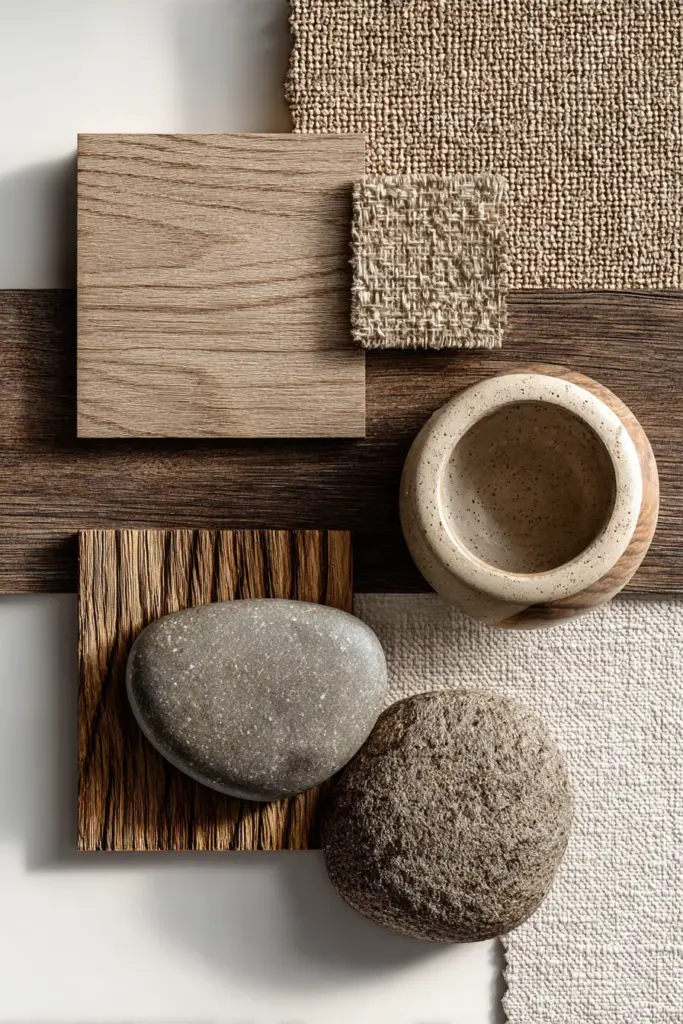
- Natural materials — raw oak, walnut, rattan, linen, jute, stone, and unglazed ceramic
- Intentional minimalism — every object earns its place; clutter is released, not just hidden
- Layered, warm lighting — no harsh overhead fluorescents; instead, paper pendants, low lamps, and candlelight
- Biophilic connection — plants, wood grain, natural fiber textures that anchor you to the living world
When these principles work together, they don’t just change how a room looks. They change how it feels to be inside it.
Before and After: What Actually Changes in a Japandi Transformation?
Most before photos share a familiar energy: too much furniture, too many competing colors, lighting that flattens everything, and a general feeling of visual noise.
After a Japandi makeover, the same space seems to expand. There is breath between things. Light moves rather than sits. Every material feels chosen, not accumulated.
The Living Room: From Cluttered to Calm
The living room is often where Japandi transformations are most dramatic — and most instructive.
Before: A sectional sofa in a cool gray-blue, glossy laminate coffee table, mismatched throw pillows, recessed lighting on full brightness, shelves crowded with objects that have no relationship to each other.
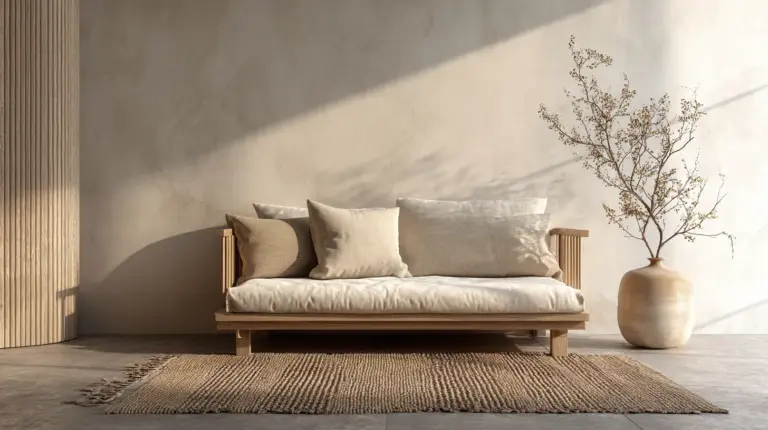
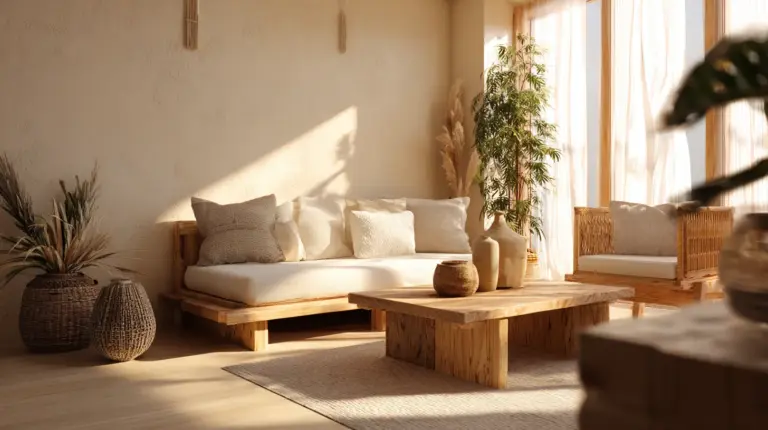
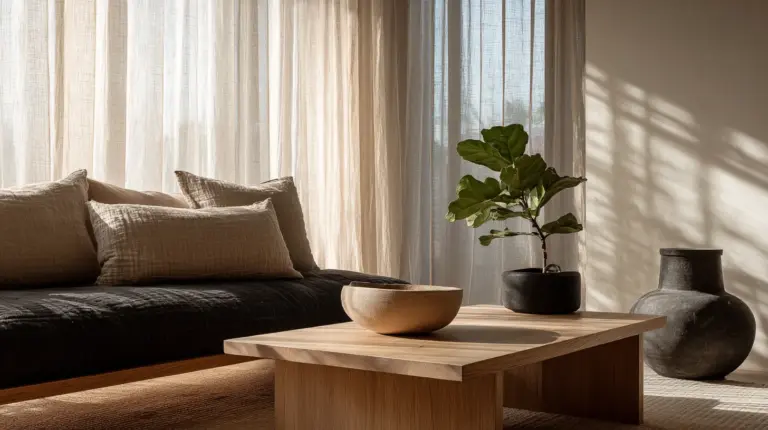
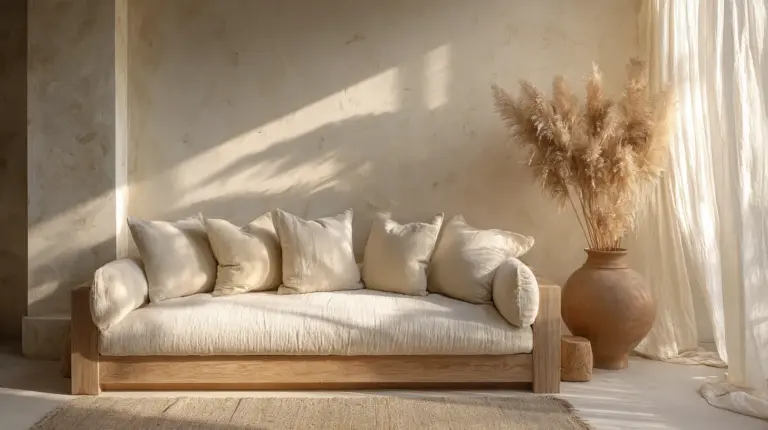
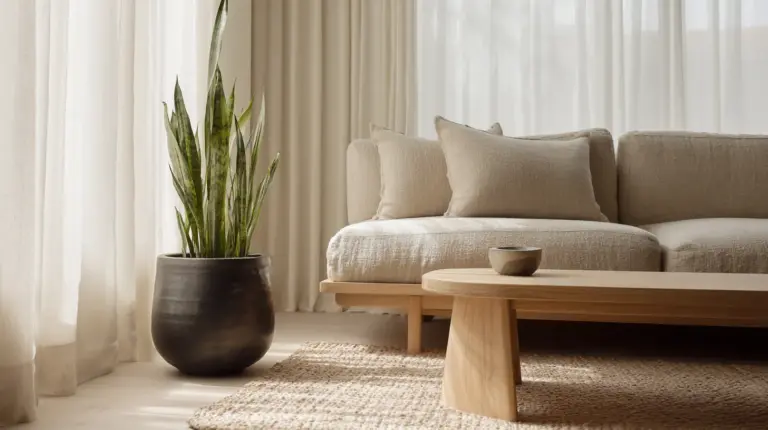
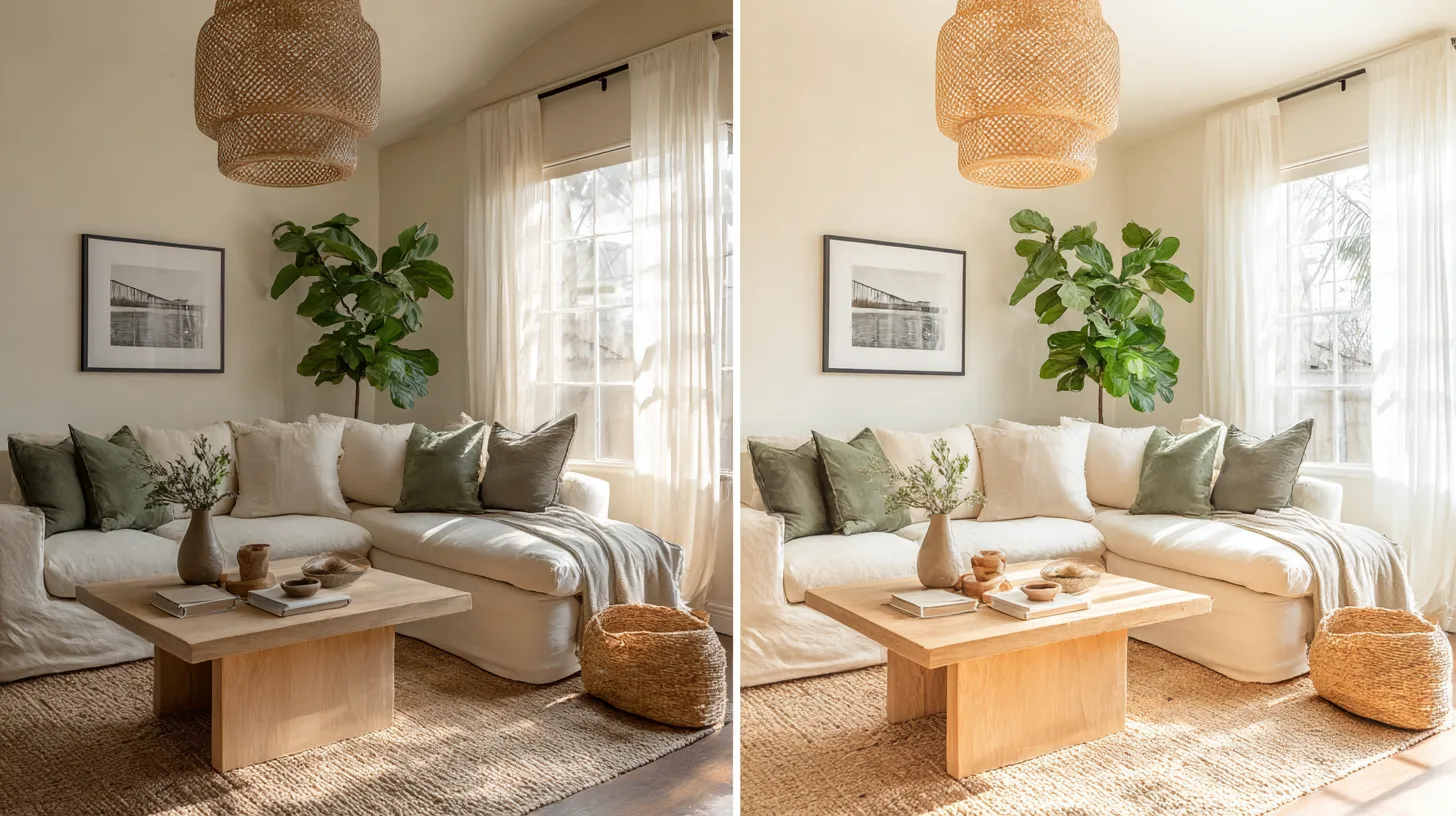
After: A low-profile sofa in warm oatmeal linen, a solid oak coffee table with visible wood grain, two or three textured cushions in terracotta and natural linen, a woven jute rug underfoot, a single rattan pendant light casting a honey-warm glow, and a small cluster of plants — perhaps a fiddle-leaf fig, a trailing pothos, and a concrete planter of succulents. The shelves hold three objects: a handmade ceramic bowl, a stack of books with their spines facing out, a small piece of driftwood.
The room hasn’t shrunk. It has opened.
The Bedroom: Rest as an Intention
In a Japandi bedroom before and after, the transformation is often described as going from “sleeping in a room” to “sleeping in a sanctuary.”
Before: A high, ornate headboard, synthetic duvet in a bold pattern, nightstands covered in phone chargers and half-read books, overhead light too bright, no cohesion in materials.
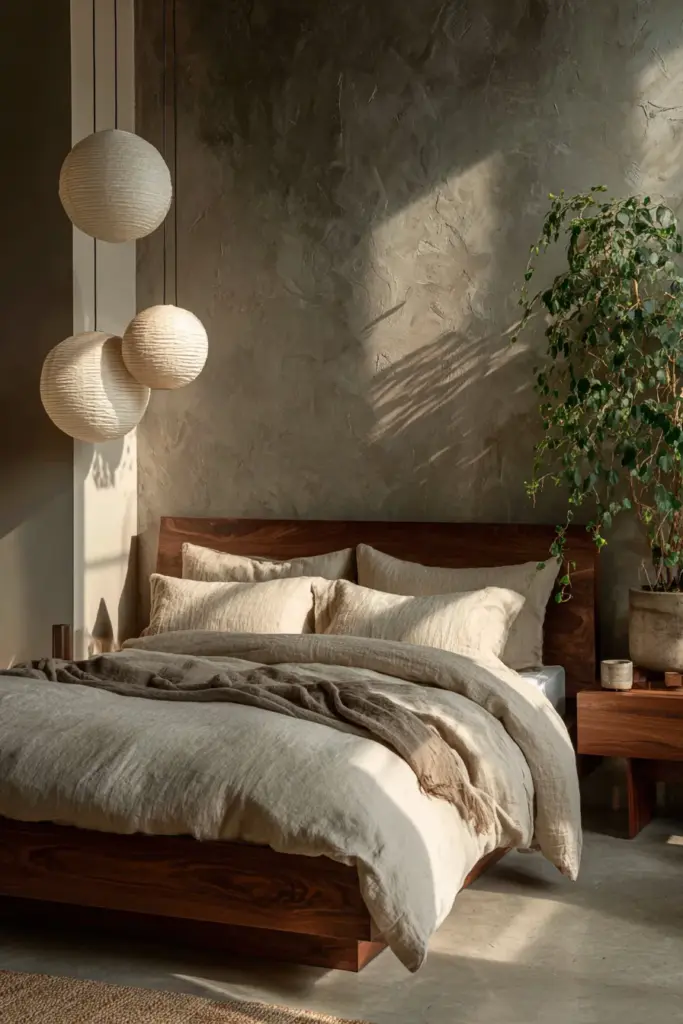
After: A platform bed close to the ground — in natural walnut or whitewashed ash — dressed in layered linen bedding in off-white and warm stone. Nightstands are simple, raw-edged oak shelves mounted to the wall. The lighting is a pair of small washi paper pendants flanking the bed, casting a gold-warm glow. A single leafy plant in a matte ceramic pot sits in the corner. The room smells faintly of cypress and clean cotton.
You walk in and your body already knows: this is where rest lives.
The Home Office: Focus Without Sterility
This is one of the most underserved rooms in Japandi content — and one of the most powerful transformations.
Before: A particle-board desk, harsh task lighting, cable chaos, motivational posters, a plastic chair.
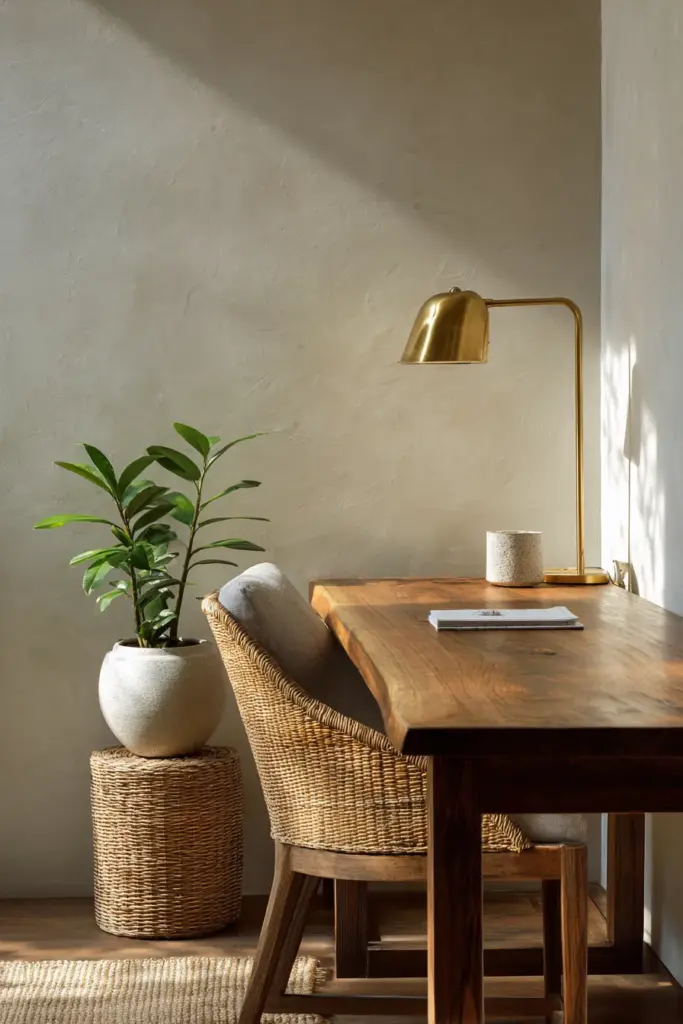
After: A solid timber desk with a live edge, a warm-toned task lamp in matte brass, a simple rattan pen holder, a small ceramic tray for essentials, one framed botanical print, and a low shelf with only the books you actually use. The chair is upholstered in a textured natural fabric. The floor has a simple jute runner.
You sit down and feel ready to think clearly — not because the room is empty, but because everything in it supports you.
The Japandi Transformation Process: A Step-by-Step Guide
If you’re wondering how to achieve the Japandi look before and after in your own home, here is a grounded, room-by-room approach.
Step 1: Edit Before You Add
Begin by removing, not buying. Walk through your space with new eyes and ask: does this object serve a function, or bring genuine beauty? If neither, release it.
This step alone creates a visible shift. Surfaces breathe. The room’s proportions reveal themselves.
Step 2: Establish Your Palette
Choose a warm neutral as your base — a creamy linen white, a soft warm gray, or a muted taupe. Then select one or two accent tones: sage green and ochre work beautifully together in 2026. Keep walls and large furniture within the neutral base.
Step 3: Invest in Natural Materials
| Material | Where It Works Best | Approx. Budget |
|---|---|---|
| Solid oak or walnut furniture | Bed frame, coffee table, shelving | $200–$800 |
| Linen upholstery or cushion covers | Sofa, bed, chairs | $30–$150 |
| Jute or wool rug | Living room, bedroom | $80–$300 |
| Rattan pendant light | Living room, dining room | $60–$200 |
| Ceramic or stoneware vessels | Shelves, bedside, entryway | $15–$80 |
| Washi paper or linen lampshade | Bedroom, reading corner | $25–$90 |
You don’t need to do everything at once. Start with one room, one layer.
Step 4: Rethink Your Lighting
This is the single most underestimated step in a Japandi transformation. Ditch overhead brightness. Layer in:
- A warm-toned pendant (2700K or lower)
- A small floor lamp for a reading corner
- Candles or flameless alternatives for evening warmth
- Dimmer switches wherever possible
The shift in lighting alone can make a room feel like an entirely different space.
Step 5: Bring in Living Elements
Japandi spaces breathe because they include the living world. Low-light plants are your friends here — pothos, snake plants, peace lilies, and ZZ plants all thrive with minimal care and add that essential note of organic life.
Place them at different heights: one on the floor in a large matte pot, one on a shelf, one on a windowsill. Let them trail, reach, and grow imperfectly.
Step 6: Add Texture Through Layers
A Japandi room is never flat. It is layered with:
- A chunky knit or waffle-weave throw over the sofa arm
- A textured linen pillowcase against a smooth oak headboard
- A raw-edged timber shelf against a matte-painted wall
- A handmade ceramic mug on a smooth stone coaster
This interplay of textures is what makes the space feel alive rather than merely styled.
Is Japandi Still Popular in 2026?
Not only is it popular — it has deepened.
The Japandi aesthetic has moved from trend to lifestyle in 2026, absorbing new influences around sustainability, multifunctionality, and quiet luxury. The elements making waves this year include:
- Upcycled and reclaimed wood pieces given a second life with simple finishing
- Smart lighting integration — warm-spectrum bulbs on app-controlled dimmers
- Multifunctional furniture — storage ottomans in natural linen, bed frames with built-in shelving, expandable dining tables in solid timber
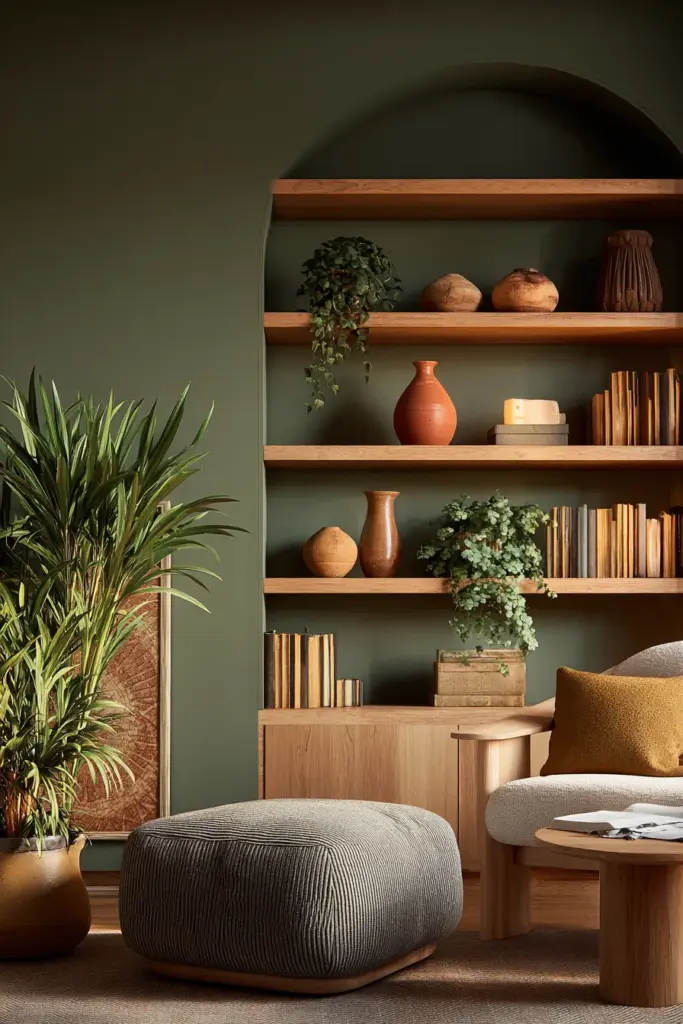
- Deeper earthy tones — forest greens, terracotta, and clay alongside the classic neutrals
Japandi is not going anywhere. It is, quietly, becoming the dominant visual language of the considered home.
Your Japandi Transformation Checklist
Before you begin, bookmark this list. Return to it room by room.
Declutter and Edit
- Remove objects that serve no function and bring no beauty
- Clear all horizontal surfaces
- Reduce art to one or two intentional pieces per room
Palette and Paint
- Choose a warm neutral base (creamy white, warm gray, muted taupe)
- Select one or two accent tones (sage, ochre, terracotta, forest green)
- Paint walls in a matte finish
Furniture and Materials
- Invest in one quality natural-wood piece per room
- Swap synthetic textiles for linen, cotton, or wool
- Choose low-profile, simple silhouettes where possible
- Add at least one rattan or woven element
Lighting
- Install or add warm-toned bulbs (2700K or lower)
- Layer with a pendant, floor lamp, and candles
- Add a dimmer switch if possible
Living Elements
- Place two to three low-maintenance plants at varying heights
- Use matte ceramic, stone, or woven planters
Texture and Detail
- Layer a natural fiber rug
- Add a chunky throw and textured cushion covers
- Display one handmade ceramic object per surface
The Quiet Magic of a Changed Space
There is a moment, after a Japandi transformation is complete, when you walk into a room and pause.
Not because something is missing. But because something has arrived — a quality of stillness that wasn’t there before. The light rests on the wood grain. The linen breathes. The plant in the corner is doing its slow, living thing.
This is what we’re really after when we talk about Japandi before and after. Not just beautiful photographs, but a different way of coming home.
At ERYLIN, we design for that feeling — the exhale, the pause, the room that holds you. Start wherever you are, with whatever you have. The transformation begins with one quiet choice.
Frequently Asked Questions
What is Japandi style?
Japandi is a design philosophy that blends Japanese minimalism — rooted in wabi-sabi and the beauty of imperfection — with Scandinavian hygge, the art of cozy, functional living. The result is a space that is calm, warm, and deeply intentional: neutral palettes, natural materials, layered textures, and a deliberate lightness in how objects are arranged.
How do I achieve the Japandi look before and after in my home?
Start by editing rather than adding — remove anything that doesn’t serve a purpose or bring genuine beauty. Then layer in natural materials (oak, linen, rattan, ceramic), shift your lighting to warm and layered, bring in a few low-maintenance plants, and limit your palette to warm neutrals with one or two earthy accents. Take it one room at a time; the transformation builds naturally.
What are the best Japandi living room before and after ideas?
The most impactful changes in a Japandi living room makeover are: replacing a bulky sofa with a low-profile linen piece, swapping a glass coffee table for a solid timber one, layering a jute or wool rug, rethinking lighting with a rattan pendant and warm floor lamp, and editing shelves to hold only meaningful objects. These five changes alone can make a dramatic before-and-after difference.
What are the key Japandi design principles?
The pillars of Japandi design are: intentional minimalism (less, but better), natural materials (wood, linen, rattan, stone, ceramic), a warm neutral palette with earthy accents, layered and warm lighting, biophilic elements (plants, organic shapes), and the wabi-sabi embrace of texture, imperfection, and honest materials.
Is Japandi still popular in 2026?
Absolutely — and it has evolved beautifully. In 2026, Japandi incorporates sustainable and upcycled furniture, smart warm lighting systems, multifunctional pieces for smaller living spaces, and a slightly richer color palette with deeper greens and terracottas. It has moved from a design trend to a quiet lifestyle philosophy for people who want homes that genuinely restore them.