
Table of Contents
By ERYLIN — Home Décor & Interior Styling
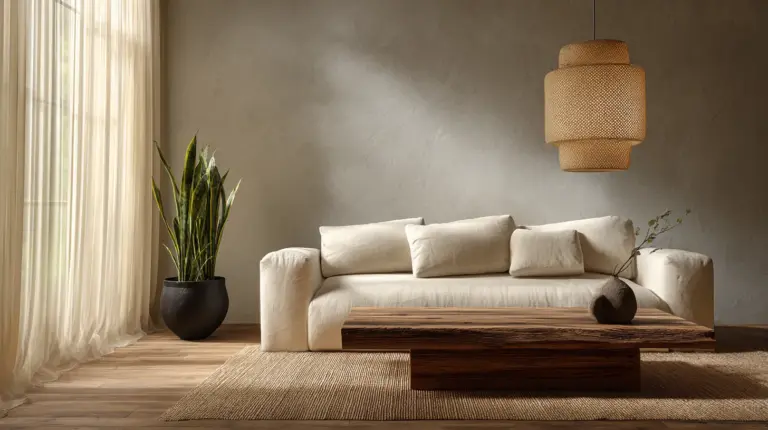
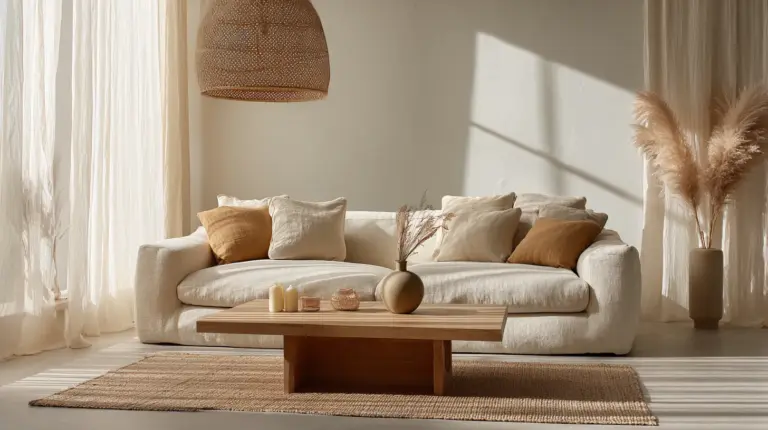
There is a kind of stillness that the best rooms carry — a hush you feel before you even sit down. That is the promise of the Japandi living room: a space where nothing shouts, everything belongs, and the air itself feels lighter.
Japandi is the quiet marriage of Japanese minimalism and Scandinavian warmth. It keeps only what matters. It chooses wood over marble, linen over velvet, candlelight over fluorescence. And when it is done right, it does not feel designed — it feels found.
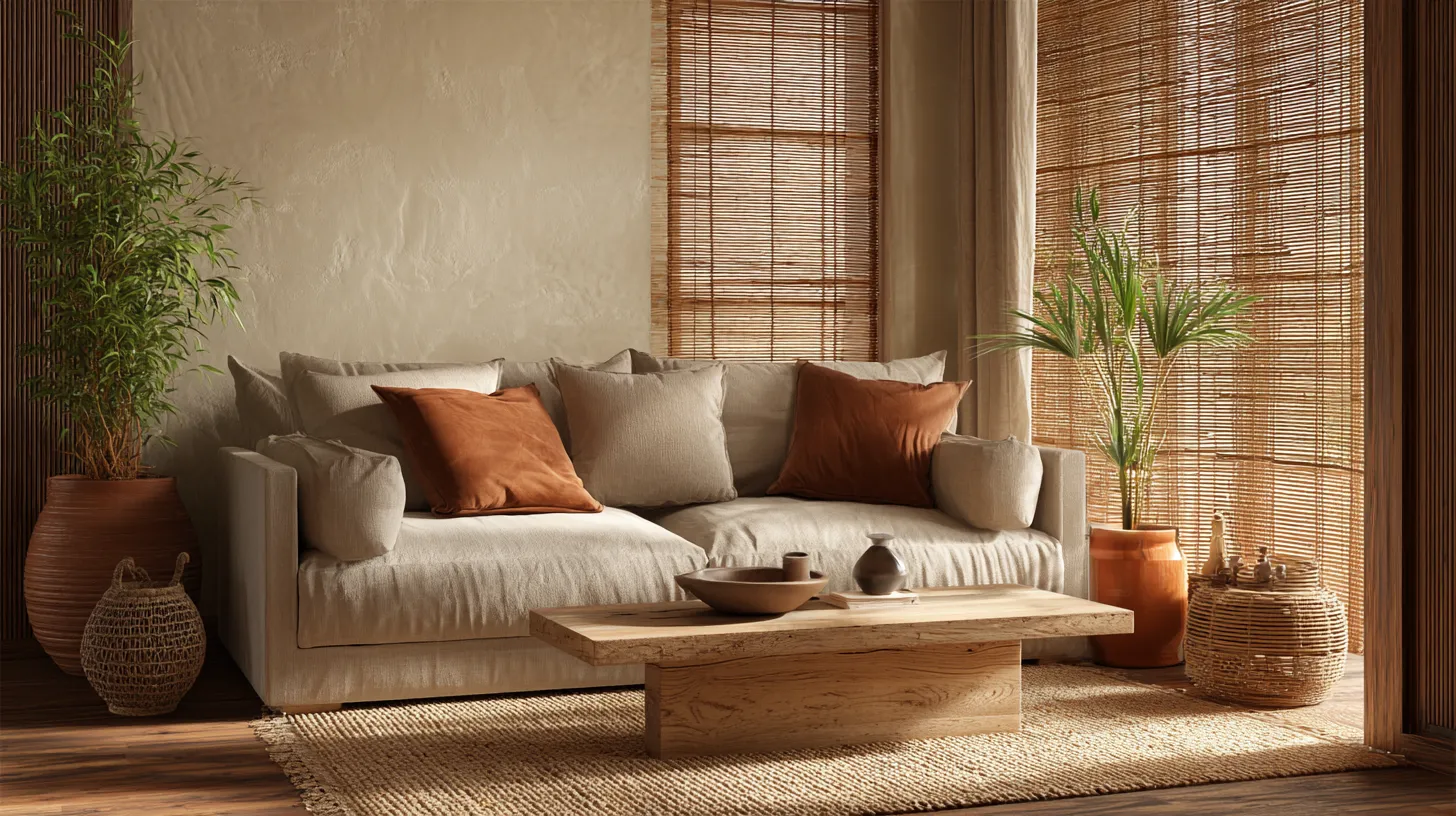
In the Philippines, where heat and humidity shape how we live, this aesthetic translates beautifully. Our love of open windows, natural weaves, and indoor greenery already speaks Japandi’s language. All it takes is a little editing — and the courage to let a room breathe.
This guide will walk you through every layer of a cozy Japandi living room: color, furniture, lighting, texture, and the small details that make a space feel truly yours.
What Is Japandi Style in a Living Room?
Japandi draws equally from two philosophies. The Japanese concept of wabi-sabi finds beauty in imperfection — a rough ceramic bowl, a weathered wood grain, a linen cushion that softens with age. The Scandinavian idea of hygge wraps everything in coziness — candlelight, thick throws, the feeling of being held by your own home.
Together, they create a living room that is calm without being cold, minimal without being bare. The result is a space built around human comfort and natural beauty — not trends.
| Design Element | Japanese Influence | Scandinavian Influence |
|---|---|---|
| Aesthetic philosophy | Wabi-sabi (beauty in imperfection) | Hygge (warmth, coziness) |
| Color palette | Earthy neutrals, muted greens | Warm whites, soft grays |
| Materials | Bamboo, rice paper, lacquered wood | Pine, wool, linen |
| Furniture style | Low-profile, floor-seated | Clean lines, functional |
| Lighting | Natural, diffused | Layered, warm-toned |
| Greenery | Bonsai, moss, indoor bamboo | Potted plants, dried stems |
What Colors Work Best for a Japandi Living Room?
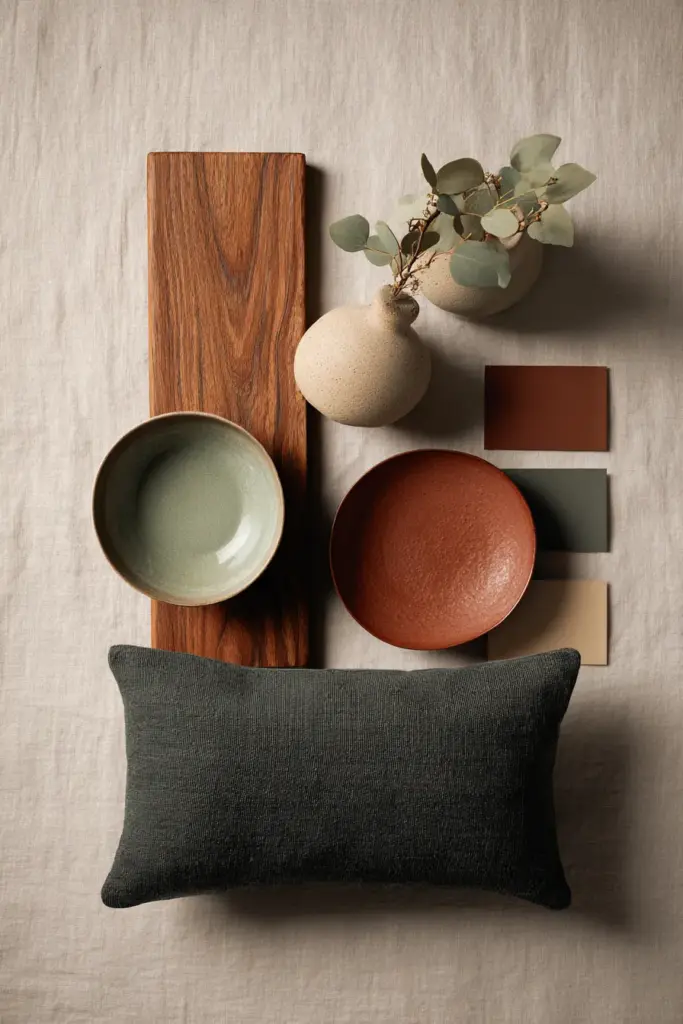
The Japandi palette is rooted in the earth. Think of it as the colors you find just before sunset on a quiet afternoon — warm, unhurried, and deeply reassuring.
Your Core Neutral Foundation
Start with a base of warm beige, soft taupe, or creamy off-white on your walls. These tones reflect natural light gently, making a room feel open without feeling stark. Avoid cool grays — they read as modern and sharp, which pulls against Japandi’s warmth.
For a tropical home in places like Cavite or Laguna, where natural light pours in generously, slightly deeper tones like clay, sand, or warm stone anchor the space without absorbing the brightness.
Accent Colors That Add Soul
Layer in muted sage green, dusty terracotta, or soft charcoal as accents. A terracotta pot in the corner, a sage-green cushion on the sofa, a charcoal throw draped loosely over an armchair — these small touches create visual rhythm without competition.
The rule: no color should shout. Every shade should feel like it belongs to the same quiet conversation.
Furniture for a Cozy Japandi Living Room
Low-Profile Pieces That Ground the Room
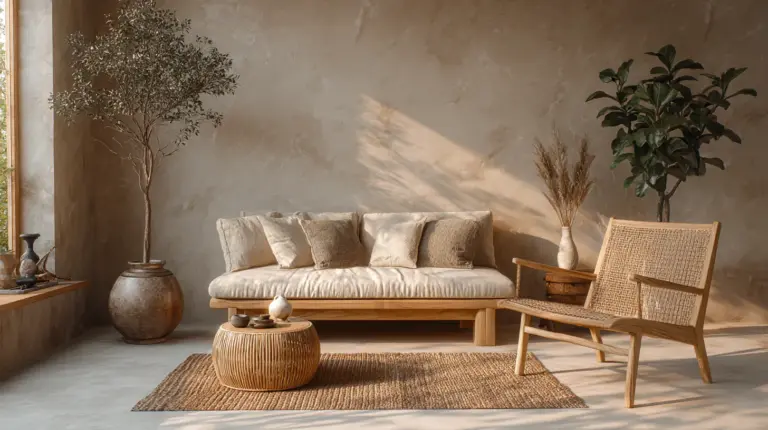
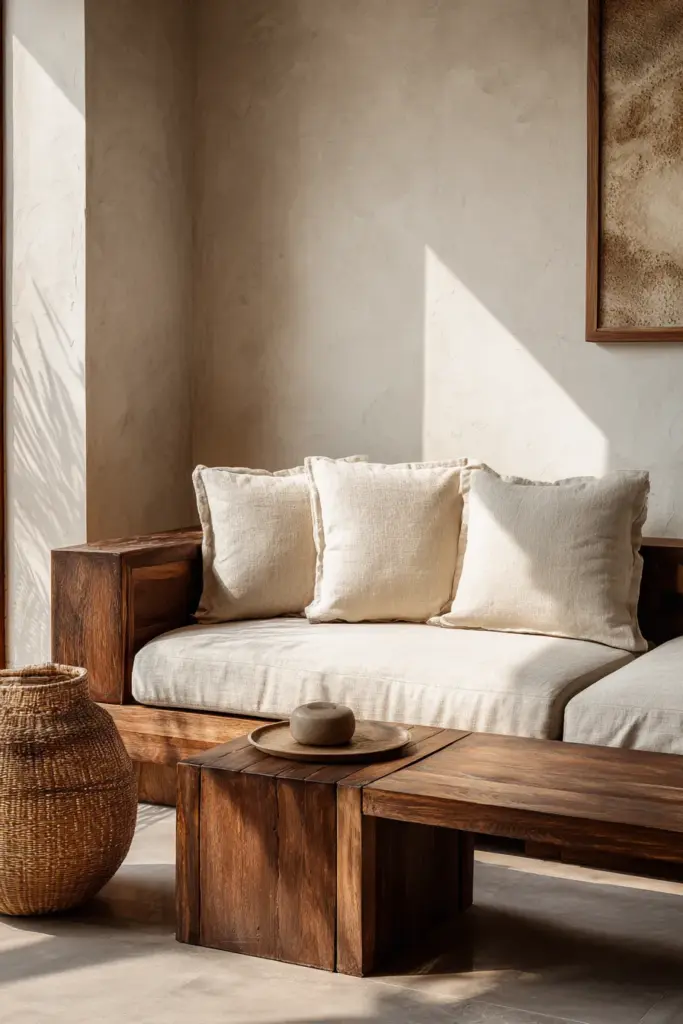
The defining feature of Japandi furniture is its relationship with the floor. Low sofas, platform beds, and coffee tables set close to the ground create a sense of stability and calm. The eye travels lower, the room feels wider, and the ceiling seems to lift.
Look for sofas with clean, straight lines in natural linen or muted bouclé. Avoid ornate legs and heavy silhouettes. A simple three-seater with tapered wooden legs in walnut or ash reads as perfectly Japandi.
Natural Materials: Wood, Rattan, and Woven Textures
Wood is the soul of the Japandi living room. Choose pieces in oak, walnut, bamboo, or reclaimed wood — each brings warmth and a sense of story. A solid wood coffee table with a live edge, a rattan side table, or woven shelving adds organic texture that no painted surface can replicate.
In the Philippines, locally sourced narra, acacia, or bamboo pieces are not just beautiful — they are also sustainable choices with significantly lower carbon footprints than imported hardwoods. Bamboo, for example, regenerates in three to five years versus decades for oak.
Multifunctional Furniture for Small Spaces
For living rooms under 20 square meters — common in many Philippine condos and townhouses — Japandi’s respect for negative space becomes your greatest ally.
- A storage ottoman replaces a coffee table while hiding blankets and books
- Floating shelves in pale wood keep the floor clear and the eye moving upward
- A slim console table behind the sofa doubles as a display shelf and room divider
- Nesting tables tuck away when not in use, freeing the center of the room
The goal is furniture that earns its place twice over.
Lighting a Japandi Living Room: Layers, Warmth, and the Right Kelvin
Why Lighting Is Everything
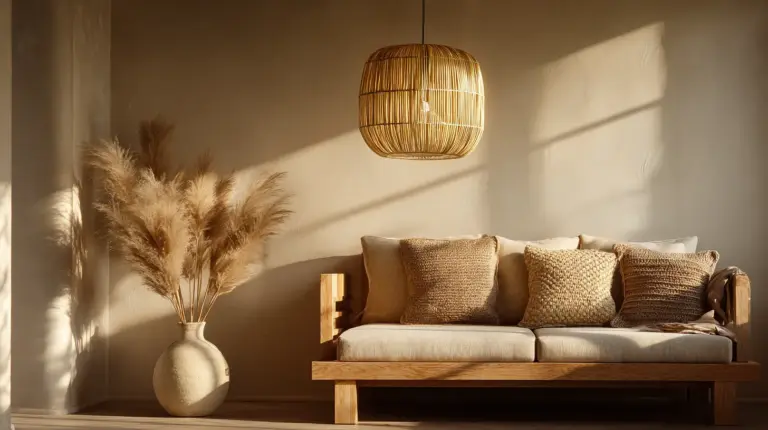
Lighting is the invisible furnishing most people forget to design. In a Japandi living room, light is not just functional — it is atmospheric. The right light makes wood glow, makes linen shimmer, and makes every corner feel like it was meant to be sat in.
The Three-Layer Lighting Approach
A cozy Japandi living room uses three types of light working together:
- Ambient light — the base layer. Dimmable ceiling fixtures or recessed lighting at 300–500 lux create a soft overall glow.
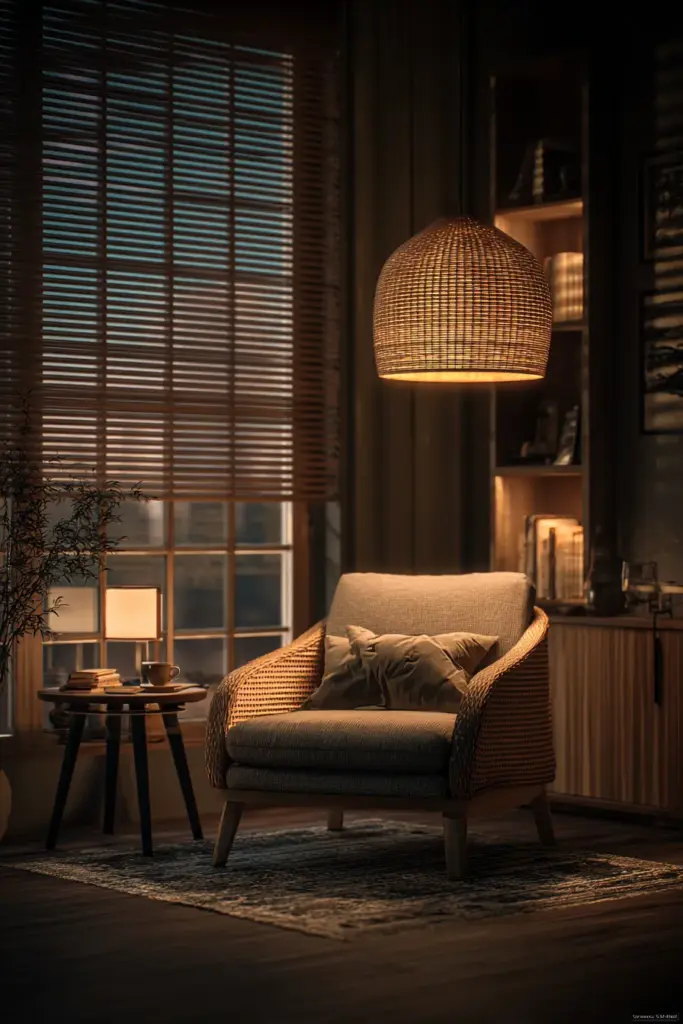
- Task light — focused illumination. A reading lamp beside a chair or a warm pendant over a side table adds purpose and pools of coziness.
- Accent light — the mood layer. Small LED strips beneath shelves, a candle on the coffee table, or a paper lantern in the corner create depth and warmth.
The Kelvin Guide for Cozy Light
The color temperature of your bulbs matters more than their brightness. For Japandi warmth, always choose 2700K to 3000K bulbs — this range produces the golden, honey-toned light that makes a room feel like an embrace.
| Kelvin Range | Light Quality | Best For |
|---|---|---|
| 2700K | Warm amber | Living areas, reading nooks |
| 3000K | Soft warm white | General ambient lighting |
| 3500K | Neutral white | Kitchens, bathrooms |
| 5000K+ | Cool daylight | Workspaces, not living rooms |
Use dimmable LEDs throughout. The ability to lower the light in the evening is the single most impactful upgrade you can make to any living room.
Textures That Make a Japandi Space Feel Alive
Layering Tactile Materials
A room without texture is a room without character. In Japandi design, texture replaces color as the primary design tool. You are building richness through touch, not tone.
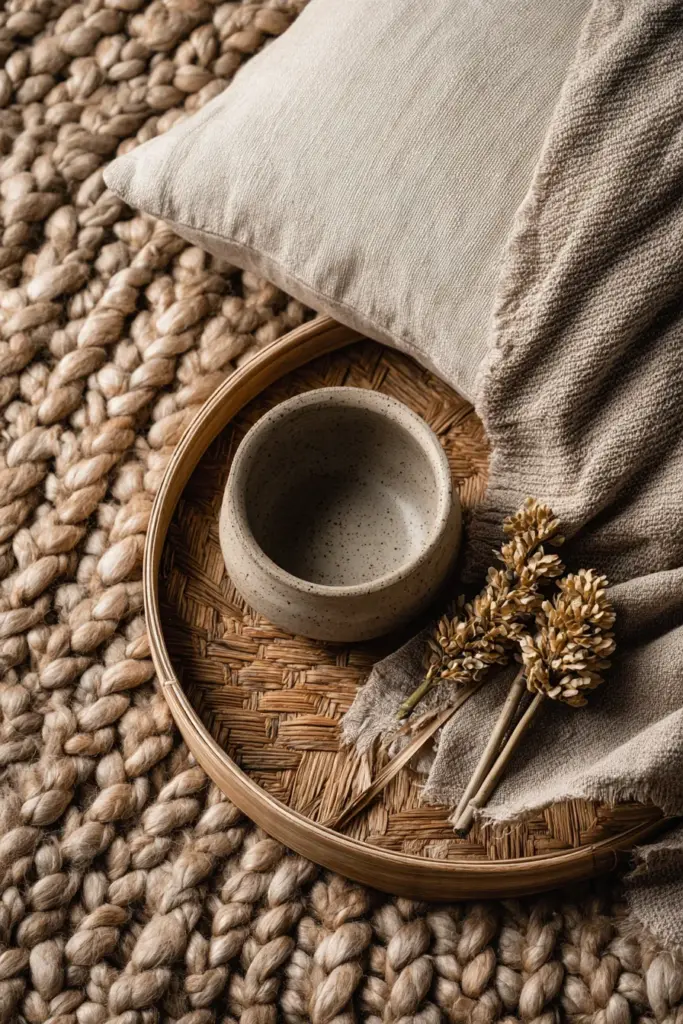
Start with a chunky woven jute or seagrass rug underfoot — it anchors the space, softens sound, and immediately signals comfort. Layer a wool or cotton throw over your sofa in a contrasting neutral. Add linen cushions in different shapes and sizes. Finish with a ceramic lamp base or a bamboo tray on the coffee table.
Textiles That Work in the Philippine Climate
In a tropical home, heavy fabrics can feel oppressive. Choose breathable, lightweight textures that still read as warm:
- Linen — drapes beautifully, breathes well, softens with every wash
- Cotton canvas — durable, washable, and unpretentious
- Rattan and woven abaca — locally available, naturally textured, perfect for Japandi
- Bamboo blinds — filter the harsh midday light while keeping the room cool and grounded
Avoid synthetics. They hold heat, look flat, and miss the organic spirit Japandi requires.
Plants in a Japandi Living Room
Choosing the Right Greenery
Plants are not decoration in Japandi — they are presence. A single, well-placed plant carries more weight than a gallery wall of prints. The key is choosing species that suit your space and your lifestyle.
For homes in Cavite, Laguna, or other areas with warm, humid climates, the following plants thrive with minimal intervention:
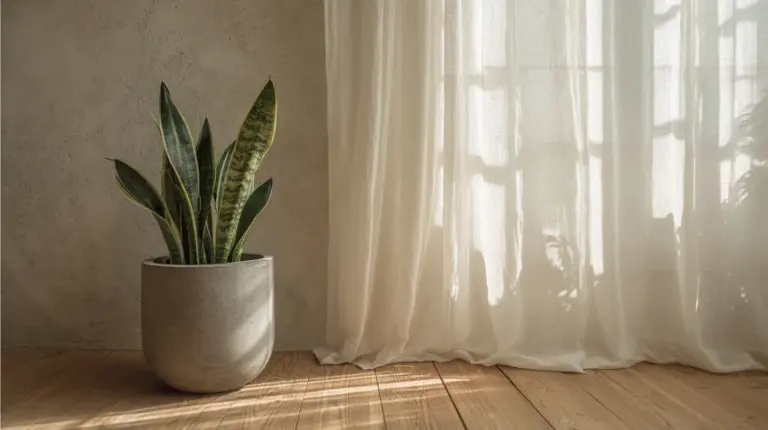
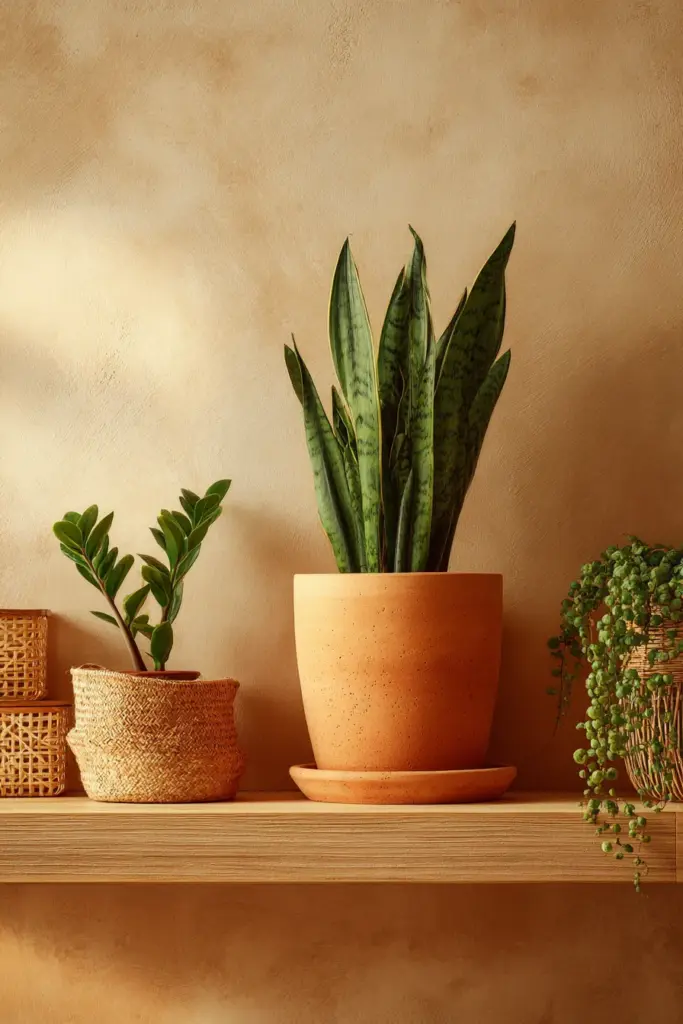
- Snake plant (Sansevieria) — thrives in indirect light, tolerates humidity, nearly indestructible
- ZZ plant (Zamioculcas zamiifolia) — glossy, sculptural, and forgiving of irregular watering
- Peace lily — blooms quietly in low light, loves moisture
- Pothos — trails elegantly from shelves, propagates easily in water
- Indoor bamboo — slender, architectural, and deeply Japandi in spirit
Caring for Plants in Humid Climates
In high-humidity areas, overwatering is the most common mistake. Most of the plants above prefer to dry out slightly between waterings. Place them in terracotta pots — their porous walls allow roots to breathe and prevent water retention that leads to root rot.
Propagate your pothos or snake plant cuttings in small glass vessels for a free, beautiful addition to shelves and windowsills.
DIY Japandi on a Budget: Philippine Sourcing Guide
You do not need to spend a fortune to create a cozy Japandi living room. In the Philippines, incredible materials are available affordably — you just need to know where to look.
Budget-Friendly Japandi Upgrades
| Item | Japandi Swap | Where to Source (PH) | Estimated Cost |
|---|---|---|---|
| Mass-market sofa | Neutral linen slipcover | Divisoria fabric stalls | ₱500–₱1,500 |
| Dark wood shelf | Pale wood floating shelves | Hardware stores, Shopee | ₱800–₱2,000 |
| Plastic plant pots | Terracotta or woven baskets | Farmer’s markets, Lazada | ₱150–₱600 |
| Overhead fluorescent | Warm 2700K LED bulb | ACE Hardware, SM | ₱200–₱500 |
| Patterned rug | Woven jute or abaca rug | Ukay-ukay, Greenhills | ₱800–₱3,000 |
| Clutter on shelves | Three curated objects | Items you already own | ₱0 |
The most transformative Japandi changes are often the subtractive ones: removing a busy rug, clearing a cluttered shelf, replacing harsh lighting with something warmer. Start there before you buy anything new.
Your Cozy Japandi Living Room Checklist
Use this as your room audit guide. Check off each element as you add or refine it:
- Neutral wall color in warm beige, taupe, or soft clay
- Low-profile sofa in linen, bouclé, or cotton canvas
- Natural wood coffee table or rattan accent table
- Woven jute, seagrass, or abaca area rug
- Layered lighting: ambient + task + accent at 2700K
- Dimmable switches or smart bulbs installed
- At least one large indoor plant (snake plant, ZZ, or pothos)
- Terracotta, ceramic, or bamboo plant vessels
- Linen or cotton cushions in neutral tones
- One cozy throw blanket on the sofa
- Shelves with three curated items maximum per shelf
- Clutter cleared from all visible surfaces
- Bamboo blinds or sheer curtains for filtered natural light
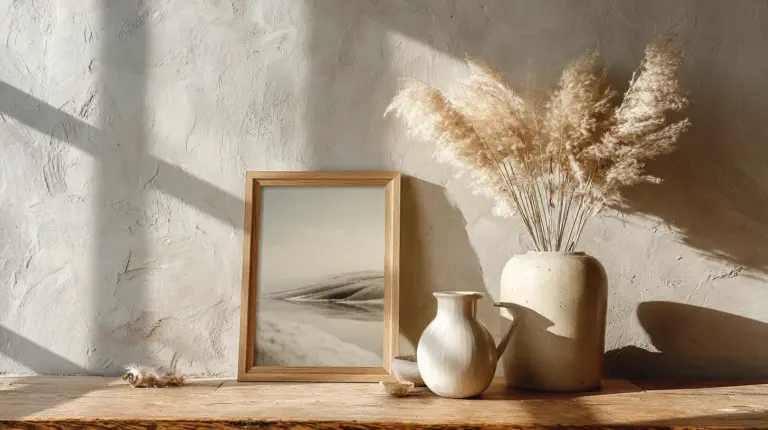
- One piece of simple, unframed or minimally framed wall art
The Feeling You Are Really Designing For
A cozy Japandi living room is not a mood board. It is a practice. It asks you to choose less, and choose better. To let a room rest instead of perform.
When you sit in a Japandi space that is truly working, you feel it before you see it — the quietness of it, the way the light falls, the softness underfoot. It is the room equivalent of a slow exhale.
That is what ERYLIN believes good design should always give you: not just a beautiful room, but a room that gives you back to yourself.
Start with one corner. Edit one shelf. Change one bulb. The stillness you are after is closer than you think.
Frequently Asked Questions
What is the difference between Japandi and minimalist design?
Minimalism prioritizes empty space and stark simplicity, sometimes at the expense of warmth. Japandi takes minimalism’s restraint and softens it with natural textures, warm lighting, and organic materials that invite you to stay. It is minimalism with a heartbeat.
How do I make my Japandi living room feel cozy and not cold?
Warmth in a Japandi room comes from layering: a woven rug underfoot, linen cushions on the sofa, plants in terracotta pots, and bulbs set to 2700K. These sensory layers replace color as the source of coziness. If your room feels cold, it usually needs more texture — not more furniture.
Can I create a Japandi living room on a budget in the Philippines?
Absolutely. Start with what you already own — clear surfaces, rearrange furniture lower to the ground, and swap one overhead bulb for a warm-toned LED. Source rattan, abaca, and local wood pieces from markets in Divisoria, Greenhills, or online through Lazada and Shopee. The most important Japandi moves cost nothing: editing clutter and embracing negative space.
What plants are best for a Japandi living room in a tropical climate?
Snake plants, ZZ plants, pothos, peace lilies, and indoor bamboo all thrive in warm, humid Philippine conditions. They require minimal care and add sculptural beauty without demanding attention. Plant them in terracotta pots to prevent overwatering, which is the most common issue in humid climates.
What size rug works best in a Japandi living room?
Choose a rug large enough that at least the front legs of your sofa and main chairs rest on it. In a small living room under 20 square meters, a 160cm x 230cm rug typically anchors the seating area well. In a larger space, go bigger — a rug that is too small makes a room feel ungrounded and disconnected.