
Table of Contents
There is a certain kind of quiet that the best homes hold — the kind you feel the moment you step inside. Light filters through linen curtains. The air smells faintly of cedar. Every surface is clear, every piece purposeful. That is Japandi, and it is more within reach than you think.
The Japandi aesthetic draws from two of the world’s most beloved design philosophies: Japan’s wabi-sabi, which finds beauty in imperfection and simplicity, and Scandinavia’s hygge, which wraps a home in warmth and ease. Together, they create something rare — a home that is both minimal and deeply cozy.
For families, this style is not just beautiful. It is practical. It rewards clean lines over clutter, durable materials over fast furniture, and thoughtful storage over excess. The challenge is simply knowing where to start — and how much to spend.
This guide is built for real households. Whether you are furnishing a first home, refreshing a living room with growing kids, or slowly building a calmer, more intentional space, this is your room-by-room Japandi family budget plan.
What Japandi Really Costs: Budget Ranges by Family Size
One of the most common questions families ask is simply: how much does this actually cost? The honest answer is that Japandi is flexible — and that is part of its beauty.
Budget Tiers at a Glance
| Family Size | Starter Budget | Mid-Range | Full Refresh |
|---|---|---|---|
| 2-person household | ₱15,000 – ₱30,000 | ₱30,000 – ₱60,000 | ₱60,000 – ₱120,000 |
| Family of 4 | ₱25,000 – ₱50,000 | ₱50,000 – ₱100,000 | ₱100,000 – ₱200,000 |
| Multi-generational home | ₱40,000 – ₱80,000 | ₱80,000 – ₱150,000 | ₱150,000 – ₱300,000+ |
Note: These ranges reflect a combination of new, secondhand, and DIY sourcing. Going full thrift or IKEA can bring costs down significantly.
The Japandi approach actually rewards a family budget mindset. You are not chasing trends or filling every corner. You are choosing fewer, better things — and that saves money over time.
Room-by-Room Budget Plan for Families
Living Room: Where Everyone Lands
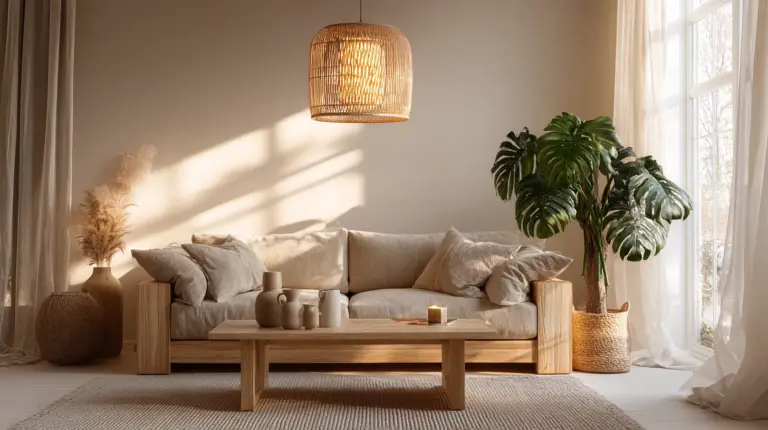
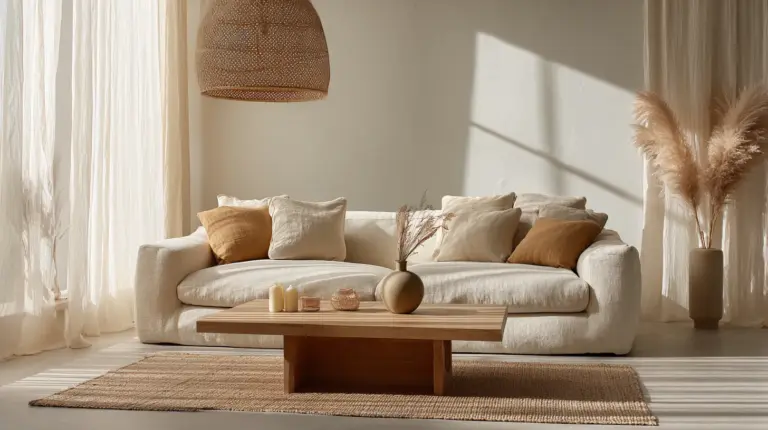
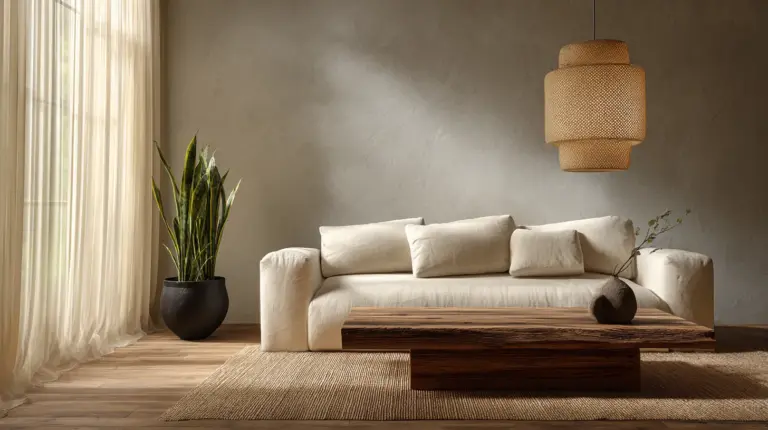
The living room is the heart of family life. It absorbs school bags, board games, Sunday mornings, and movie nights. In Japandi, this space earns its calm through neutral tones, natural textures, and furniture that can take daily life.
What to Prioritize
A low-profile sofa in oatmeal, warm grey, or sage linen anchors the space. Look for machine-washable slipcovers — a non-negotiable with children. A light wood coffee table with rounded edges adds warmth without the hazard of sharp corners.
Starter budget: ₱8,000 – ₱20,000
Mid-range:₱20,000 – ₱50,000
- Sofa: Secondhand or IKEA KIVIK with a linen cover — ₱6,000 – ₱18,000
- Coffee table: Thrifted solid wood or MUJI-inspired flat pack — ₱1,500 – ₱5,000
- Floor cushions: Natural cotton or jute, layered for extra seating — ₱500 – ₱2,000
- Lighting: A warm-toned pendant or rattan floor lamp — ₱800 – ₱3,000
- Rug: Natural jute or low-pile wool blend — ₱1,500 – ₱6,000
For lighting ideas, warm-toned bulbs (2700K–3000K) do more to set a Japandi mood than any decor piece. They are also one of the cheapest upgrades in any room.
Dining Area: Gather, Daily
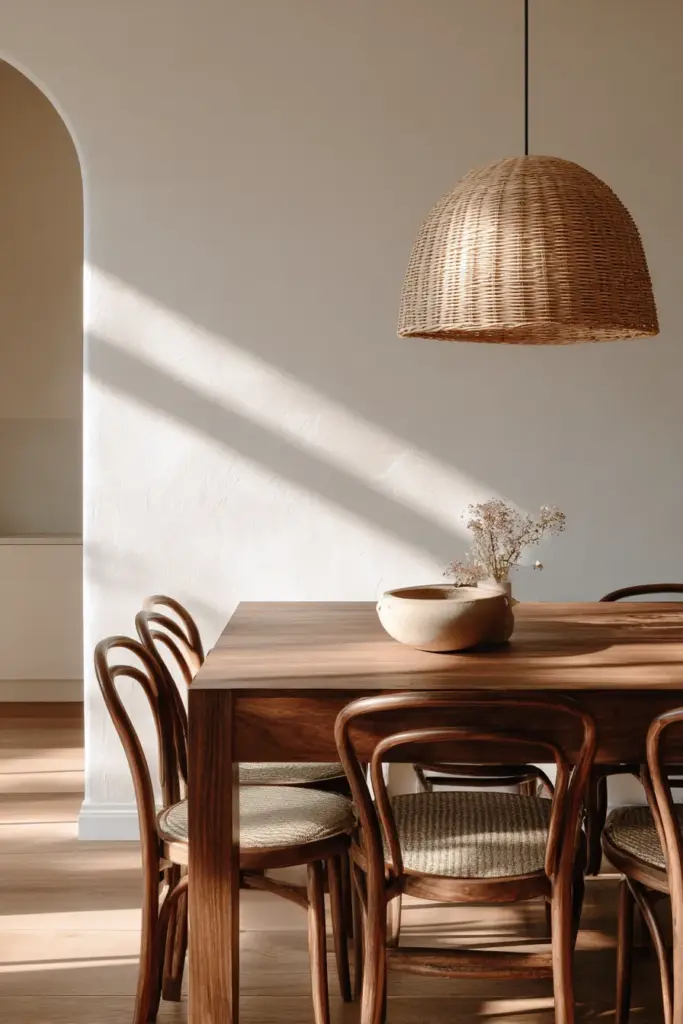
The dining table in a Japandi family home is meant for more than meals. It hosts homework, puzzles, morning coffee, and long weekend conversations. Choose a table in solid wood or rubberwood — materials that age beautifully instead of chipping.
Starter budget: ₱5,000 – ₱12,000
Mid-range: ₱12,000 – ₱30,000
- Dining table: IKEA MÖRBYLÅNGA dupe or secondhand solid wood — ₱3,000 – ₱12,000
- Chairs: Mix of bentwood and upholstered seats in neutral tones — ₱600 – ₱2,500 per chair
- Table runner: Raw linen or undyed cotton — ₱200 – ₱600
- Pendant light above table: Rattan or bamboo shade — ₱1,000 – ₱4,000
A Japandi dining space does not need matching chairs. A subtle mix of two complementary styles — perhaps one bentwood and one upholstered — adds quiet character while keeping costs flexible.
Kids’ Corner: Calm Chaos
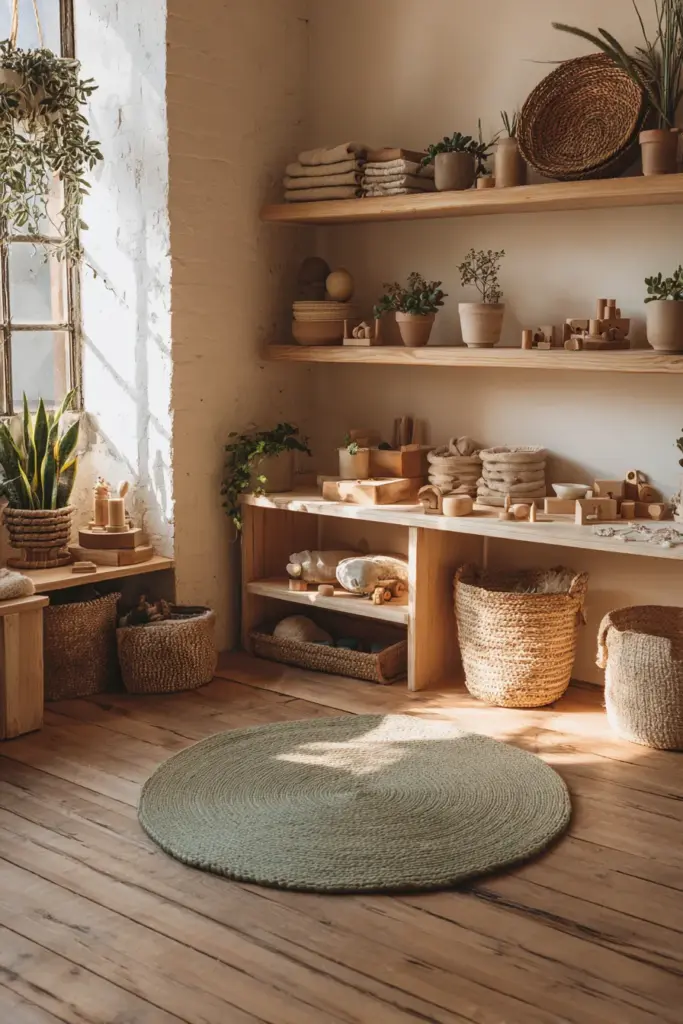
Designing for children within a Japandi aesthetic is entirely possible. The key is intentional storage, easy-clean surfaces, and a restrained color palette with just one or two natural accent tones — dusty clay, soft sage, or warm sand.
Starter budget: ₱4,000 – ₱10,000
Mid-range: ₱10,000 – ₱25,000
- Low open shelving (toy display + storage): IKEA KALLAX, painted or left natural — ₱2,500 – ₱6,000
- Woven baskets for toy storage: ₱300 – ₱800 each
- Soft play mat in neutral tones: ₱800 – ₱3,000
- Small table and stools in light wood: ₱1,500 – ₱4,000
The Japandi approach to kids’ spaces is about visible order — toys that are stored beautifully become part of the decor rather than the clutter.
Entryway: The First Breath
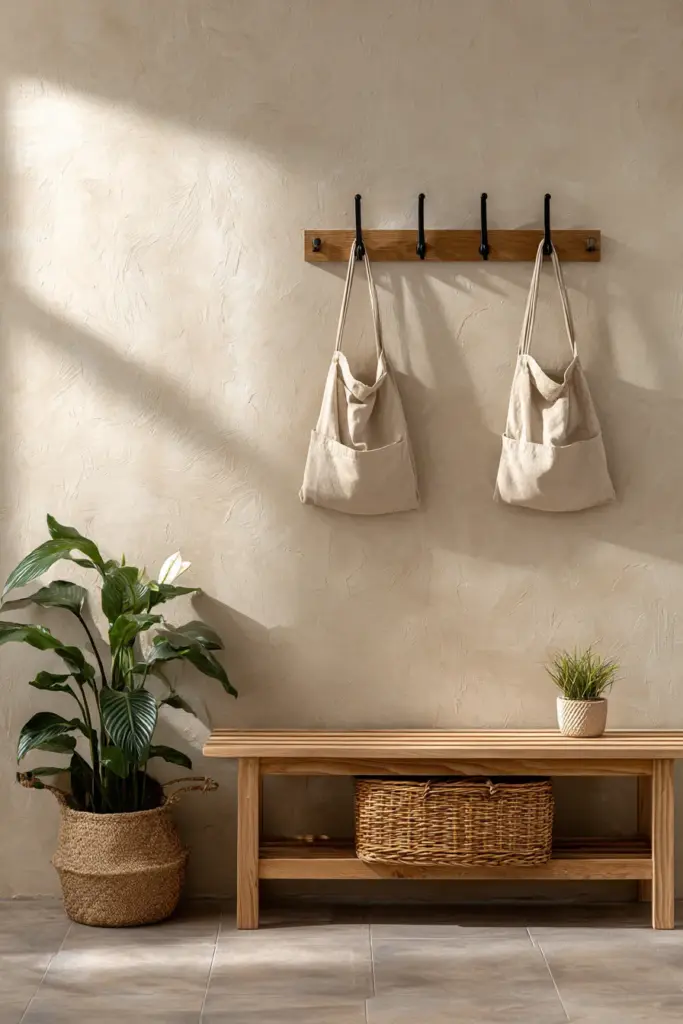
The entryway sets the tone for everything that follows. In Japandi, this means clean hooks, a slim bench, and a place for shoes that does not look chaotic by 8am. Even a tiny entryway can feel intentional with the right pieces.
Starter budget: ₱1,500 – ₱5,000
- Wall hooks in matte black or natural wood: ₱300 – ₱900
- Slim wooden bench: thrifted or DIY from a scaffold plank — ₱800 – ₱3,000
- Woven basket for shoes or bags: ₱400 – ₱1,200
- Small potted plant (snake plant or peace lily): ₱200 – ₱600
Family-Friendly Materials: What to Choose and Why
Easy-Clean Surfaces
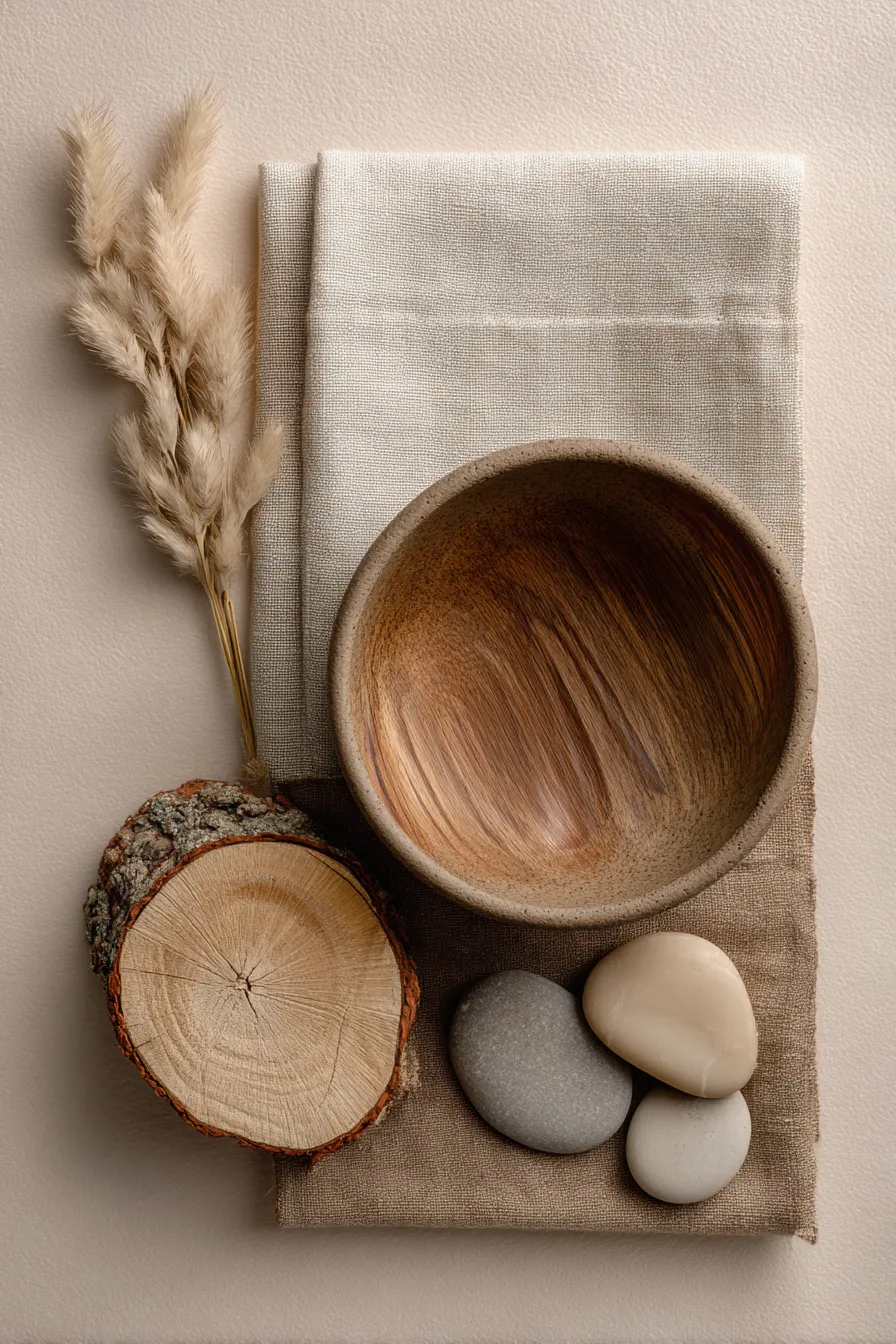
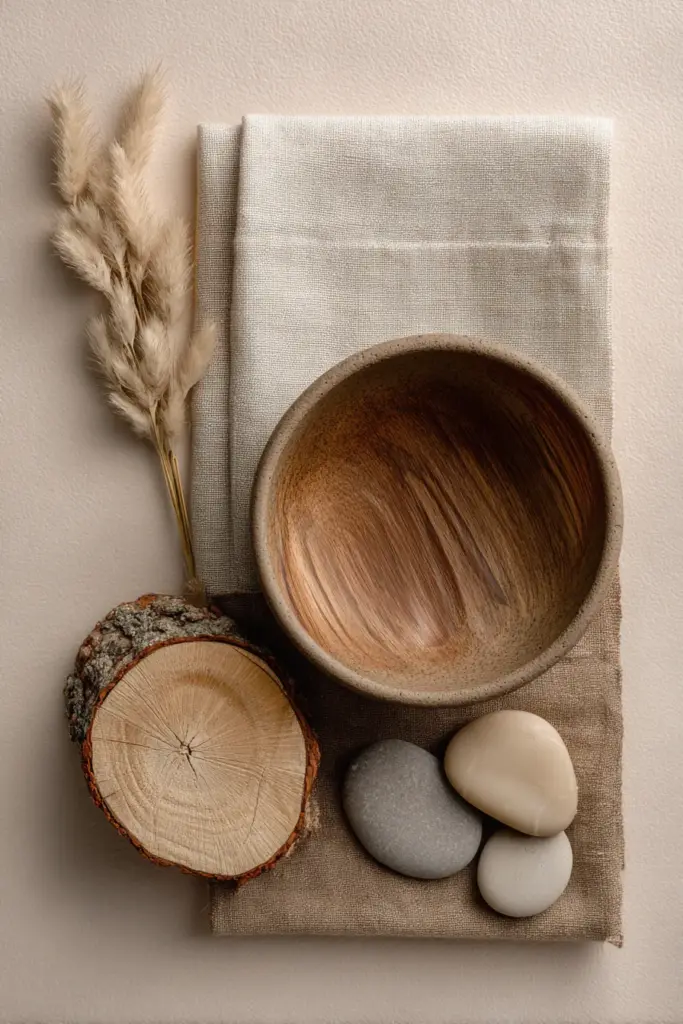
Japandi materials are naturally low-maintenance — which is exactly what families need. Solid wood surfaces wipe clean. Linen fabrics, especially pre-washed varieties, resist pilling and launder well. Matte ceramic and stoneware do not show fingerprints the way glossy finishes do.
Best picks for family homes:
- Flooring: Vinyl plank or light-toned bamboo — durable, warm underfoot, water-resistant
- Upholstery: Performance linen blends or cotton canvas with washable covers
- Rugs: Flatweave cotton or low-pile wool — easy to vacuum, machine-washable in smaller sizes
- Counters and tables: Solid wood with an oil finish (re-oilable, ages gracefully) or matte laminate in warm white
Kid-Safe Choices
Low furniture with rounded edges, non-toxic finishes, and stable bases matter in family Japandi homes. Look for GREENGUARD-certified paints if you are refreshing furniture with chalk paint at home.
Avoid heavy decorative ceramics within reach of small children — instead, use earthenware and stoneware on higher shelving, and place durable woven pieces lower.
Thrift, IKEA, and DIY: Where to Save
The best Japandi family budget mixes three sources: new basics from accessible brands, secondhand finds for character pieces, and simple DIY for custom touches.
Where to Thrift
- Facebook Marketplace and local ukay-ukay shops carry solid wood furniture at a fraction of retail
- Look for: wooden benches, rattan chairs, ceramic vases, linen curtains, woven baskets
- Sand and re-oil secondhand wood furniture for a fresh, cohesive look
IKEA and MUJI Picks
| Item | Product | Approximate Cost |
|---|---|---|
| Sofa | KIVIK with slipcover | ₱12,000 – ₱18,000 |
| Dining table | MÖRBYLÅNGA | ₱14,000 – ₱18,000 |
| Storage | KALLAX shelf unit | ₱3,000 – ₱5,000 |
| Bed frame | MALM or HEMNES in white | ₱8,000 – ₱14,000 |
| Lighting | RANARP pendant | ₱1,500 – ₱2,500 |
Simple DIY Ideas
- Sand and whitewash secondhand wood furniture for a Japandi finish
- Wrap plain pots in natural twine for a wabi-sabi look
- Sew simple linen curtain panels from raw fabric (no sewing machine needed — iron-on hem tape works)
- Build a low wood platform base for a floor mattress or sofa
Storage Strategy: Clutter-Free Family Living
In a Japandi home, storage is not an afterthought — it is the foundation. Hidden storage keeps the visual calm intact even when life is full and busy.
Best storage strategies for families:
- Multi-purpose furniture: Ottoman with hidden storage, bed frames with drawers, dining benches with lids
- Open shelving with baskets: Display what is beautiful, conceal what is not
- Entryway systems: One hook per person, one basket per child — named, consistent, simple
- Under-bed storage: Flat wooden drawers or canvas bins in matching tones
The rule in a Japandi family home: everything has a home, and homes are beautiful enough to leave visible. Cozy furniture that doubles as storage makes this effortless.
What to Buy First: A Priority Roadmap
When you are starting from scratch or on a tight budget, the order of purchases matters more than the pieces themselves.
Month 1 — Foundation:
- A comfortable sofa or floor seating (the piece the family uses most)
- A dining table and chairs
- Basic lighting in warm tones
Month 2 — Softness and Storage:
- Curtains or blinds in linen or cotton
- A rug to ground the space
- Storage baskets and hooks for the entryway
Month 3 — Character and Calm:
- One or two ceramic or stoneware pieces
- A low shelf or console for the living room
- Plants — snake plants, peace lilies, or pothos for low-maintenance greenery
Resist the urge to fill the space quickly. Japandi is comfortable with empty space. The pause between pieces is part of the design.
Mistakes to Avoid in a Japandi Family Budget
- Buying matching sets — Japandi thrives on subtle variation, not showroom uniformity
- Choosing light-colored upholstery without checking washability — beautiful beige linen should be machine-washable or slipcovered
- Skipping storage planning — clutter is the biggest threat to the Japandi aesthetic in a family home
- Overspending on decor before furniture — accessories do not save a room with uncomfortable, impractical furniture
- Ignoring scale — low, wide furniture looks intentional in Japandi; tall, narrow pieces often feel wrong
Your Japandi Family Budget Checklist
Before you shop:
- Set a total budget and divide it by room
- Identify which room the family spends the most time in (start there)
- List secondhand or thrift options in your area
Materials to prioritize:
- Washable or slipcover upholstery
- Solid wood or bamboo over particleboard
- Natural fiber rugs and textiles
- Warm-toned lighting (2700K–3000K bulbs)
Storage essentials:
- One multi-purpose furniture piece per room
- Woven baskets for visible storage
- Hooks and bins in the entryway
What to thrift:
- Wooden benches and side tables
- Ceramic vases and bowls
- Rattan or wicker accents
A Final Note from ERYLIN
A Japandi home is not built in a weekend. It grows slowly, thoughtfully — like a friendship you trust.
The most beautiful family homes we know are not the ones with the biggest budgets. They are the ones where every piece feels chosen, where light moves softly through the afternoon, where children know which basket is theirs, and where coming home feels like exhaling.
That home is yours to build. Start with one room, one piece, one quiet morning of intentional choosing. And know that the calm you are after is not expensive — it is simply clear.
At ERYLIN, we believe your home should work as beautifully as it looks. Browse our collections of natural textiles, warm lighting, and cozy furniture to start building your Japandi family home — one gentle piece at a time.
Frequently Asked Questions
How much does a Japandi family room cost?
A starter Japandi living room for a family of four can be furnished for ₱15,000 to ₱30,000 using a mix of IKEA basics, thrifted wood pieces, and secondhand finds. A mid-range refresh with higher-quality materials typically runs ₱30,000 to ₱80,000. The key is prioritizing comfort and durability over decor.
How do I decorate a family home in Japandi style on a budget?
Start with a neutral base — warm white walls, light wood flooring or a natural rug — then layer in washable linen textiles, low-profile furniture, and warm lighting. Shop secondhand for character pieces like wooden benches and ceramic bowls, and use IKEA for structural basics like shelving and dining tables.
What is the cheapest way to create a Japandi look for a family?
The most budget-friendly path is to thrift solid wood furniture, paint walls in a warm off-white, add woven baskets for storage, and switch bulbs to warm-toned LEDs. These changes cost very little but shift the feel of a room dramatically. Decluttering is free and often the most powerful Japandi move.
What should I buy first for a budget Japandi home?
Start with the piece your family uses most — usually the sofa or dining table. Get the foundation right before adding accessories. Once seating and storage are in place, layer in textiles, lighting, and plants in subsequent months.
Can I create Japandi style with IKEA or secondhand items?
Absolutely. IKEA’s KIVIK sofa with a linen slipcover, KALLAX shelving in natural oak, and MÖRBYLÅNGA dining tables are Japandi-ready out of the box. Secondhand wooden furniture, rattan chairs, and ceramic pieces add the wabi-sabi imperfection that makes the style feel lived-in and warm rather than showroom-perfect.