
Table of Contents
By ERYLIN — Your home, beautifully lived in.
There is something quietly radical about carving out a corner just for yourself. A place where the world slows down, the light falls just right, and a good book feels like a reward you’ve already earned.
A modern living room reading nook doesn’t demand a grand renovation or a sprawling floor plan. It asks only for intention — a chair that holds you well, a lamp that flatters the page, and a few thoughtful layers that say this space was made with love.
At ERYLIN, we believe that beauty and practicality are never at odds. The most soul-filling rooms are the ones designed for real life — for rainy afternoons, slow mornings, and the small rituals that ground us.
This guide will walk you through everything: from finding the right corner in your living room to choosing textures, lighting, plants, and storage that make your reading nook feel like the coziest square footage in your home.
Finding Your Nook: Where to Begin
Choosing the Right Spot
Before anything else, observe your living room at different times of day. Notice where the natural light lands in the morning, where shadows pool at dusk, and which corners feel naturally calm.
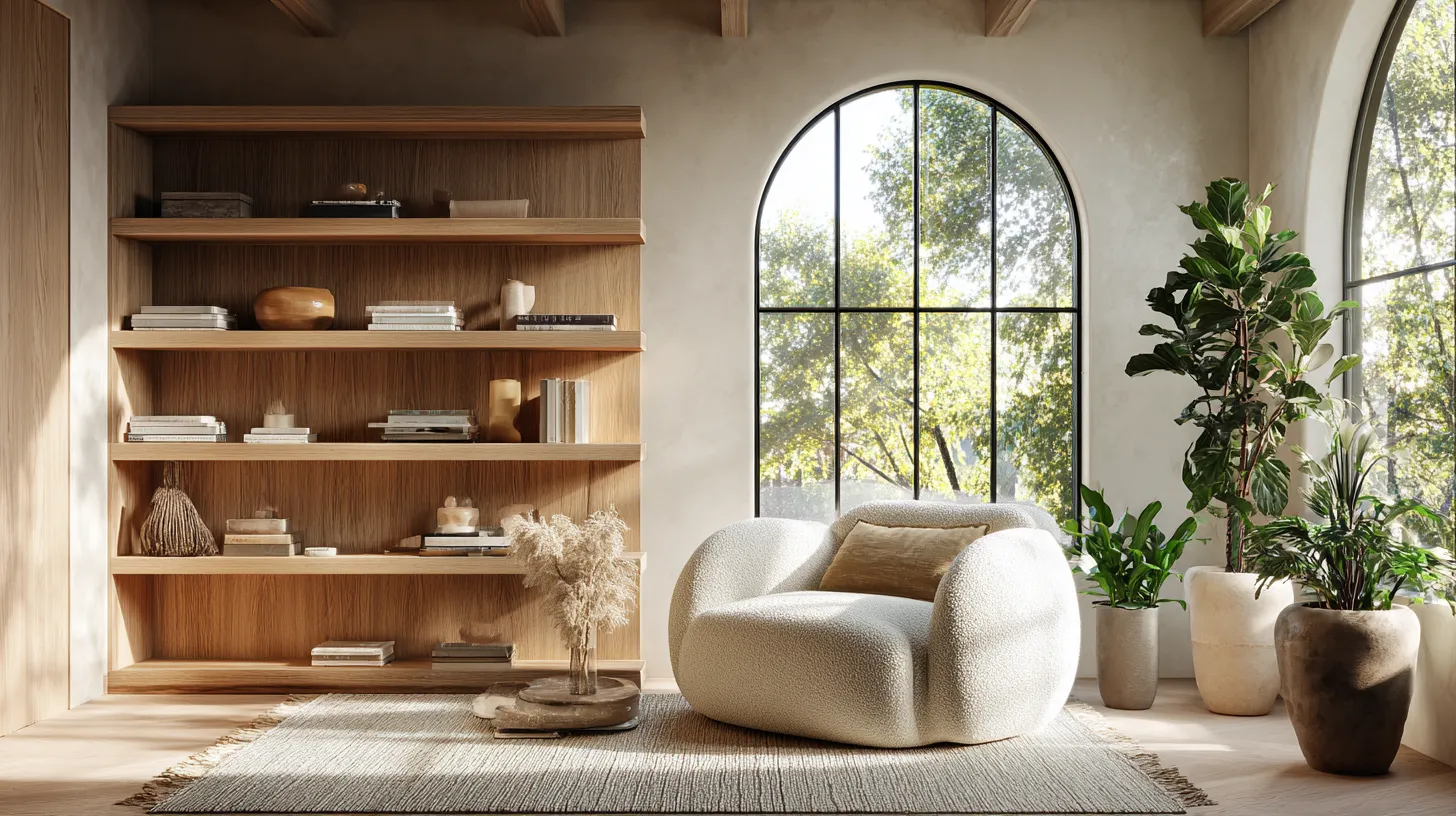
The best reading nook locations include an underused corner beside a window, the space flanking a bookshelf, or even a recessed wall alcove. You need a minimum of 3 feet by 4 feet — enough for a generous armchair, a small side table, and a lamp.
Small Living Room? You Still Qualify
A compact apartment or a shared living space is no barrier to a reading nook. In fact, small spaces often produce the coziest nooks — intimate by nature, intentional by design.
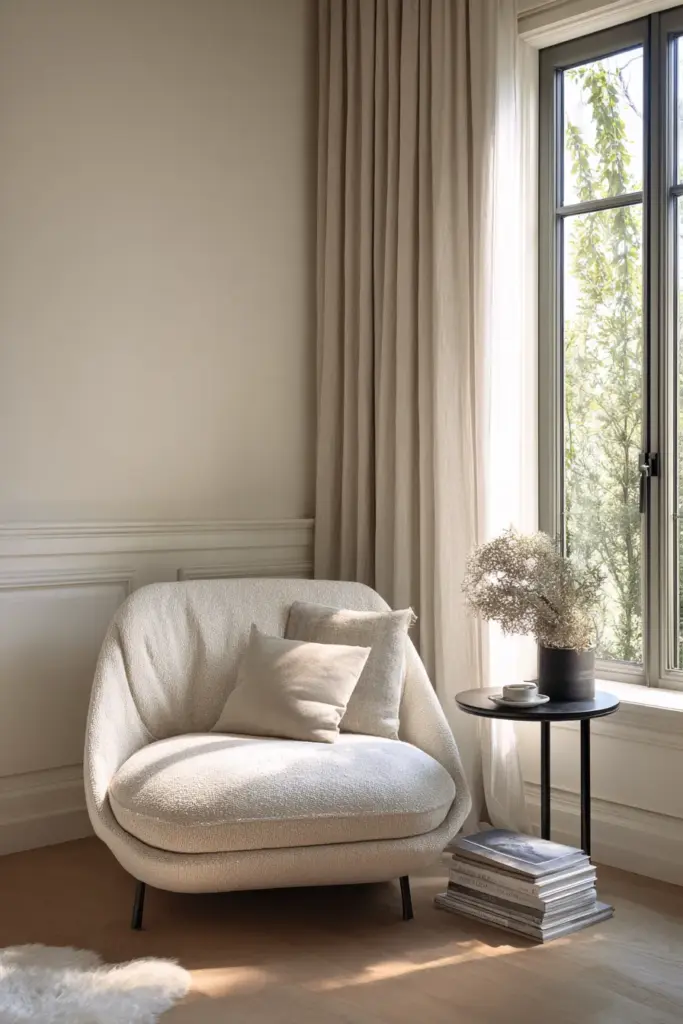
Consider a slim slipper chair tucked beside a curtained window, or a window seat bench with storage drawers underneath. A reading nook under a window in a small living room is one of the most-searched setups for good reason: it layers natural light, vertical storage, and snug seating into one tight, beautiful package.
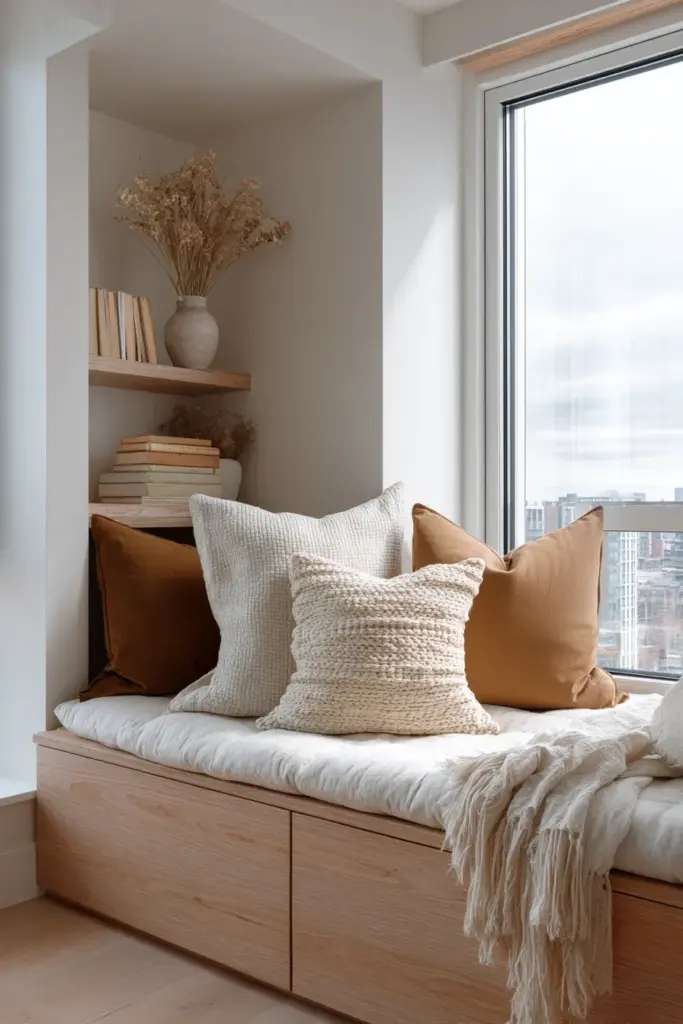
Rental-Friendly Solutions
Renters can absolutely create a reading nook without drilling a single hole. Use freestanding bookshelves to define the space, a clip-on or arc floor lamp for light, and a removable jute or wool rug to anchor the corner visually.
Peel-and-stick wall panels or removable wallpaper can add warmth and definition without any damage. Your landlord never needs to know how beautiful it looks.
The Right Chair: Your Nook’s Heart
What to Look for in a Reading Chair
The chair is the soul of your reading nook. It needs to support your lower back during long sessions, offer enough depth for tucking your legs up, and feel like something you’d genuinely choose to sit in every single day.
Look for chairs with high backs for neck support, wide armrests for propping your book or tea, and a seat depth of 20–22 inches that invites a true sink-in. An ottoman or footrest elevates comfort from pleasant to transformative.
Best Chair Styles for a Modern Reading Nook
| Chair Style | Best For | Material Options | Approx. Price Range |
|---|---|---|---|
| Wingback armchair | Classic, structured look | Velvet, boucle, linen | ₱8,000–₱25,000 |
| Slipper chair | Small spaces | Cotton, microfiber | ₱4,000–₱12,000 |
| Papasan / bowl chair | Relaxed, bohemian | Cotton cushion, rattan | ₱3,500–₱9,000 |
| Chaise lounge | Stretching out | Linen, velvet | ₱12,000–₱35,000 |
| Floor cushion + back pillow | Ultra-minimal, budget | Canvas, cotton | ₱800–₱3,000 |
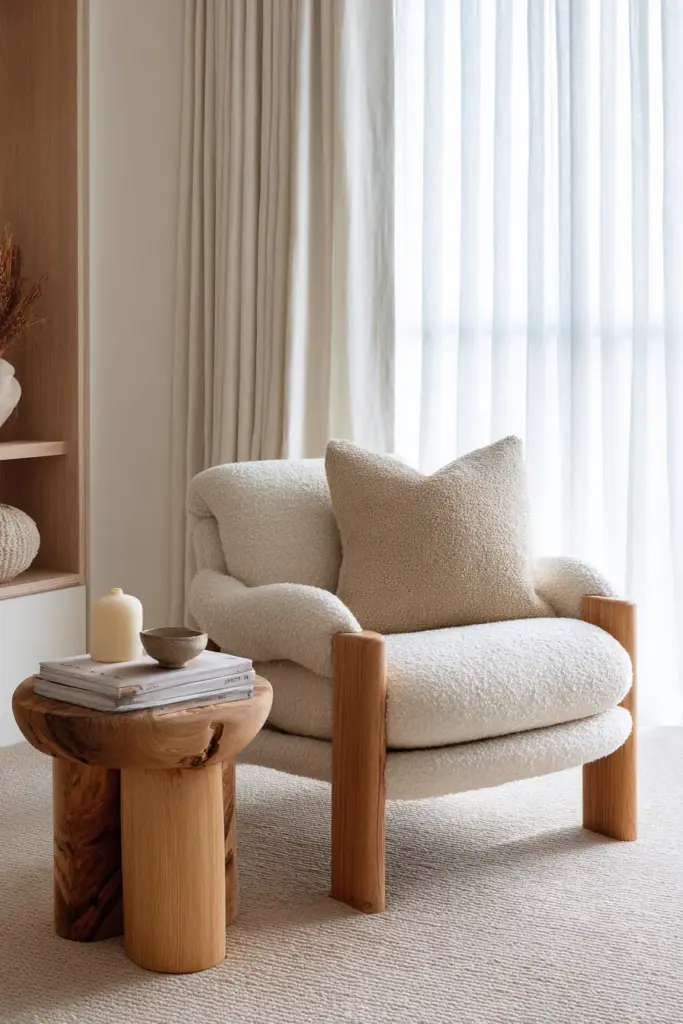
For a Japandi-inspired nook — one of ERYLIN’s signature aesthetics — choose a low-profile armchair in oatmeal linen or warm grey boucle. Clean lines, natural material, quiet confidence.
Lighting Your Reading Nook
Why Lighting Makes or Breaks a Nook
Harsh overhead lighting turns reading into a task. Warm, layered lighting turns it into a ritual.
The goal is to combine three types of light: ambient (the room’s general glow), task (direct, focused reading light), and accent (gentle mood lighting that makes the nook feel like its own world).
The Science of Warm Light
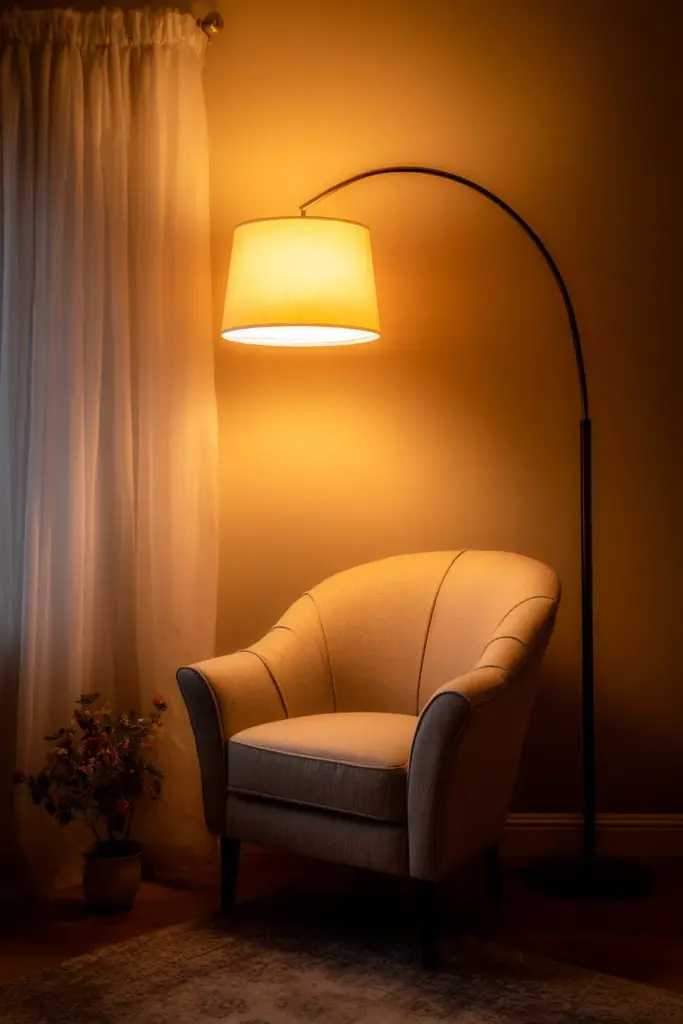
For reading without eye strain, choose bulbs in the 2700K–3000K range — this warm amber glow mimics golden hour and reduces the fatigue of cooler, blue-toned light. Avoid anything above 4000K in your nook; it reads as clinical, not cozy.
A dimmable floor lamp positioned just over your shoulder at around 60–65 inches tall is the gold standard for reading posture. Pair it with a small table lamp or a battery-powered LED candle on your side table for that layered, editorial glow.
Smart Lighting Options
Smart bulbs like Philips Hue or affordable alternatives allow you to dial in your exact color temperature with a voice command or a tap. Set a “reading mode” scene at 2800K, 60% brightness — and let the nook do the rest.
A USB charging outlet or a smart plug near your chair keeps your devices topped up without breaking the atmosphere. Small detail. Big difference.
Textures and Materials: The Sensory Layer
Building a Tactile Palette
A reading nook lives and breathes through texture. The materials you choose determine whether the space feels cold or warm, spare or abundant, forgettable or magnetic.
Start with a chunky knit or linen throw draped over the armrest. Add a plush area rug — wool, jute, or a Moroccan-style flatweave — to ground the chair and soften hard floors. A sheepskin or boucle cushion on the seat adds that final layer of softness that makes staying put feel inevitable.
Seasonal Swaps
- Summer: Breathable linen cushions, lightweight cotton throws, natural rattan accents, and crisp white or sage tones
- Winter: Weighted blankets, velvet or chunky-knit throws, warm amber textiles in terracotta, rust, and deep forest green
Swapping out a few textiles is the most effortful-yet-effortless way to refresh your nook with each season.
Storage That Works Hard and Looks Good
Shelving Options for Every Budget
A reading nook without storage eventually becomes a reading corner with piles. Build in a home for your books, reading glasses, and current-read stack before the chaos begins.
| Storage Solution | Best For | Approx. Cost |
|---|---|---|
| Floating wall shelves | Minimal look, small spaces | ₱500–₱2,500 |
| Freestanding bookshelf | Renters, flexibility | ₱2,000–₱8,000 |
| Built-in window seat with drawers | Permanent homes, maximum storage | ₱15,000+ |
| Side table with shelf | Bedside-style, accessible | ₱1,200–₱4,000 |
| Magazine basket / floor caddy | Casual, portable | ₱400–₱1,500 |
A single floating shelf at eye level — holding a small plant, a candle, and your current stack — is often all you need. Keep it curated. A nook cluttered with twenty books feels anxious, not cozy.
The Side Table Rule
Every reading nook needs one surface within arm’s reach. It holds your tea, your bookmark, your reading glasses, and the small ceremony of settling in. A wooden drum stool, a bamboo tray table, or a simple rattan side table all work beautifully without overwhelming the space.
Bringing Nature In: Plants for Your Reading Nook
The Case for Biophilic Design
Research consistently shows that the presence of living plants reduces stress and sharpens focus — two things every reader appreciates. A reading nook is one of the easiest places to integrate biophilic design because even a single plant transforms a corner from decorated to alive.
Best Low-Light Plants for a Reading Nook
- ZZ Plant — thrives on neglect, dramatic dark green leaves, nearly indestructible
- Snake Plant (Sansevieria) — architectural, air-purifying, tolerates low light beautifully
- Pothos — cascading, lush, grows happily in indirect light; place on a high shelf for a trailing effect
- Peace Lily — soft white blooms, tolerates shade, adds a quiet elegance
- Heartleaf Philodendron — fast-growing, heart-shaped leaves, brings warmth to any corner
Place a plant on your shelf, on the floor beside your chair, or on a slim plant stand at lamp height. Even a single pot of pothos changes everything.
Color and Atmosphere: Setting the Tone
Colors That Calm and Inspire
The right color palette makes your reading nook feel like a destination, not just a corner. For a modern rustic elegance palette — ERYLIN’s signature — reach for:
- Warm neutrals: oatmeal, linen, warm white, sand
- Earthy anchors: terracotta, clay, muted sage, dusty olive
- Depth accents: deep navy, forest green, warm charcoal
Avoid high-contrast, cool-toned palettes in your nook. They stimulate rather than settle. The goal is a space that tells your nervous system: you can relax here.
Defining the Nook Visually
Even without walls, you can define your reading nook as its own space. Use a large area rug to anchor it, a canopy or sheer curtain panel to create a soft boundary, or a tall bookshelf positioned as a room divider. These techniques work beautifully in open-plan living rooms where the nook might otherwise dissolve into the main seating area.
Budget Tiers: Build Your Nook at Every Price Point
Budget Level 1: Under ₱3,000 (DIY & Thrifted)
Start with what you have. Repurpose a dining chair with a new cushion, hang a second-hand shelf from no-drill hooks, and add a floor lamp sourced from a ukay-ukay or Shopee. A jute rug, a thrifted throw, and a pothos cutting complete the picture.
The magic is in the curation, not the price tag.
Budget Level 2: ₱5,000–₱15,000 (Mid-Range)
Invest in one good armchair — the single piece that will define the nook. Add a proper reading lamp, a small floating shelf, a quality rug, and a side table. At this tier, your nook looks intentional, warm, and deeply liveable.
Budget Level 3: ₱20,000 and above (Premium)
A bespoke window seat with built-in storage, a statement armchair in bouclé or velvet, layered smart lighting, curated shelving, and premium textiles. This tier is about craftsmanship and longevity — pieces that improve with age.
7-Day Reading Nook Transformation Checklist
- Day 1 — Identify your corner. Measure the space (minimum 3×4 feet). Clear the area.
- Day 2 — Choose and order (or source) your chair. This is your anchor decision.
- Day 3 — Assess your lighting. Order or reposition a floor lamp.
- Day 4 — Source your rug and textiles — throw, cushion covers, a sheepskin.
- Day 5 — Install one shelf or position a bookshelf. Edit your book collection to 10–15 favorites.
- Day 6 — Add your side table, a plant, a candle, and your personal touches.
- Day 7 — Make yourself a cup of tea. Sit down. Read for an hour. Adjust what doesn’t feel right.
Key Takeaways
- Location: Any corner with 3×4 feet of clearance can become a reading nook — near a window is ideal.
- Chair: Prioritize back support, seat depth, and armrests. High-back chairs are best for long sessions.
- Lighting: Layer ambient, task, and accent light. Use 2700K–3000K bulbs for warm, eye-friendly reading light.
- Texture: A rug, throw, and cushion form the essential sensory trio.
- Storage: One floating shelf or a curated side table is often enough.
- Plants: A ZZ plant, snake plant, or pothos adds life and calm without demanding much maintenance.
- Color: Warm neutrals and earthy tones create the most soothing reading environments.
- Budget: A beautiful nook is achievable at every price point — clarity of intention matters more than spend.
- Rentals: No-drill shelves, freestanding lamps, and removable rugs make nooks entirely renter-friendly.
- Seasonality: Swap textiles with the seasons to keep the space feeling fresh and alive year-round.
Conclusion
A reading nook is one of the smallest investments you can make in your living room — and one of the most transformative. It doesn’t ask for much space. It doesn’t demand a large budget. It simply asks you to be deliberate: to choose a chair that holds you, a light that sees you, and a corner that knows your name.
At ERYLIN, we believe that the rooms we love most are the rooms that love us back. Your reading nook is exactly that — a small, quiet act of self-respect dressed in warm light and soft linen.
Start with one corner. Let it grow into a ritual.
Frequently Asked Questions
How do I create a reading nook in my living room?
Identify an underused corner of at least 3×4 feet — ideally near a window. Add a supportive armchair or loveseat, a floor or table lamp at the correct height for reading, a rug to anchor the space, and one surface for your tea and current book. Define the nook with a curtain panel or bookshelf if needed, and layer in textiles for warmth.
What is the best lighting for a reading nook?
The ideal reading light is warm (2700K–3000K), dimmable, and positioned just over your shoulder to illuminate the page without creating glare. A floor lamp at 60–65 inches placed slightly behind and beside your chair is the classic choice. Layer it with a smaller table lamp or LED candle for atmosphere.
How much space do you need for a reading nook?
The minimum functional footprint is 3 feet wide by 4 feet deep — enough for a standard armchair (typically 28–32 inches wide), a side table, and a lamp. A window seat nook can work in as little as 24 inches of depth. Even in a small apartment, a well-chosen corner can become a genuinely cozy destination.
What chair is best for a reading nook?
Look for a chair with a high back for neck support, wide armrests, and a seat depth of at least 20 inches so you can tuck your legs up comfortably. Wingback armchairs and oversized slipper chairs are top choices. If you read for more than 30 minutes at a time, also invest in a footrest or matching ottoman.
Can I make a reading nook on a budget?
Absolutely. A thrifted armchair reupholstered with a new cushion cover, a Shopee floor lamp, a no-drill floating shelf, and a jute rug can create a complete reading nook for under ₱3,000. The secret is curation — one good chair, one warm lamp, one soft rug — rather than quantity.