
Table of Contents
There’s a reason you exhale the moment you walk into a room that feels right. It isn’t magic — it’s design working quietly on your mind, your body, and your nervous system. Your living room isn’t just a place to sit. It’s the emotional center of your home.
At ERYLIN, we believe that beautiful spaces are intentional spaces. Every texture you choose, every lamp you angle, every arrangement you settle on — these are small decisions with a surprisingly deep psychological reach. And once you understand the science behind the comfort, you’ll never look at a throw pillow the same way again.
This guide walks you through the invisible forces shaping your living room experience: color, light, sound, warmth, scent, and the quiet power of natural materials. Think of it as the design-savvy friend who finally explains why some rooms make you feel instantly at home — and how to make yours one of them.
Let’s create something that feels as good as it looks.
How Color Psychology Shapes Your Living Room Mood
Color is one of the fastest ways your brain processes a room. Before you’ve noticed the furniture or the art on the walls, your nervous system has already registered the palette — and responded.
Warm Colors vs. Cool Colors: What the Research Says
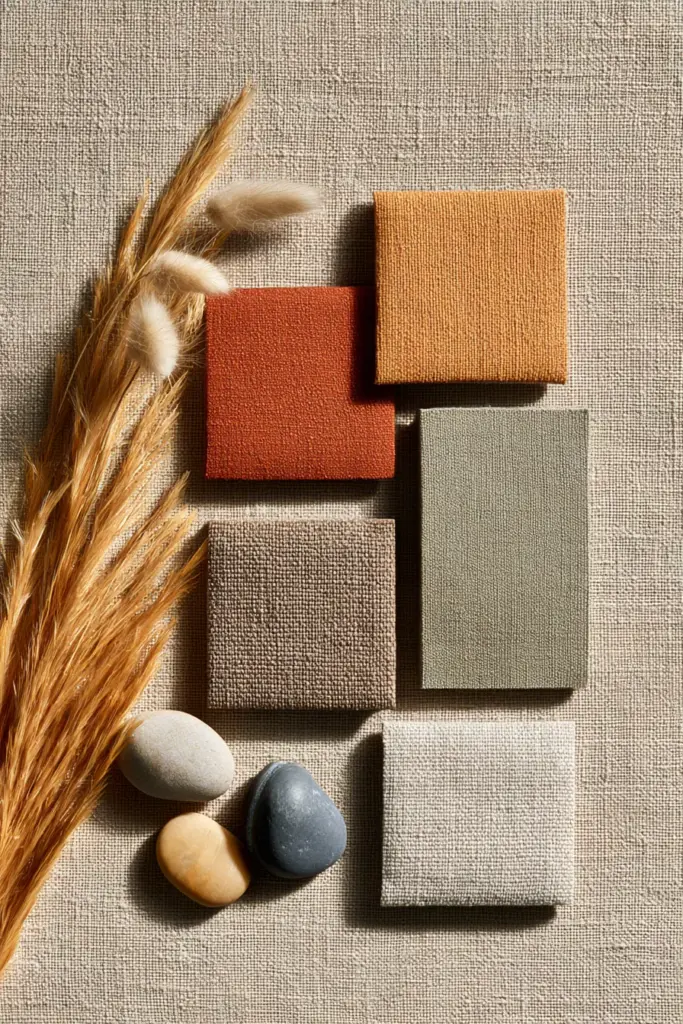
Warm tones — terracotta, honey, blush, amber — activate feelings of coziness, energy, and sociability. They’re the visual equivalent of a fire crackling in the corner. Cool tones — sage, slate, dusty blue, soft white — lower the heart rate and encourage calm, focus, and introspection.
Neither is better. The question is what you need from your living room.
| Color Tone | Psychological Effect | Best For |
|---|---|---|
| Warm (terracotta, amber, rust) | Energizing, inviting, social | Entertaining, family gathering |
| Neutral (linen, warm white, taupe) | Grounding, flexible, calm | Everyday living, multifunctional rooms |
| Cool (sage, slate, dusty blue) | Calming, focused, restorative | Reading nooks, quiet retreat spaces |
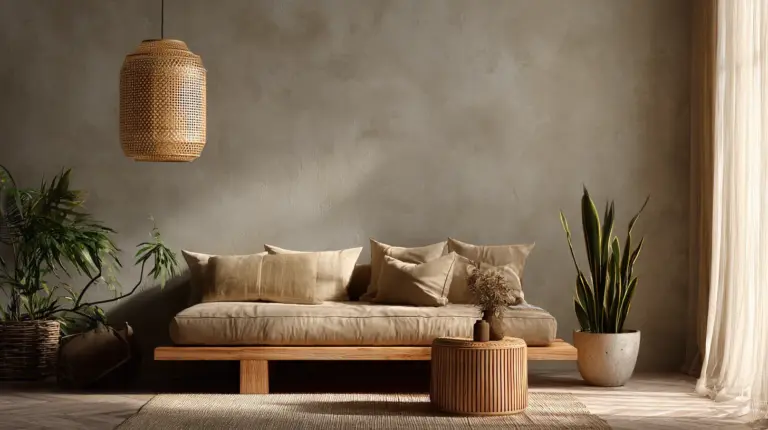
| Earthy (clay, walnut, moss) | Stabilizing, organic, connected | Biophilic and Japandi-inspired rooms |
Research published in environmental psychology journals consistently shows that color temperature influences both perceived stress levels and cognitive focus. Warm neutrals with earthy accents — the ERYLIN signature palette — occupy a sweet spot: grounding without being heavy, warm without being overwhelming.
The 60-30-10 Rule for Small Living Rooms
If your living room feels chaotic or cluttered, your color ratio may be off. The 60-30-10 formula brings instant visual calm: 60% dominant color (walls, large furniture), 30% secondary color (rugs, curtains, accent chairs), 10% accent color (cushions, vases, art). In small or Japandi-inspired rooms, this rule is especially effective — it creates depth and visual breathing room without requiring more physical space.
The Psychology of Light: Circadian Rhythms and Layered Atmosphere
Lighting is the single most underrated element in residential design. It doesn’t just illuminate — it communicates. It tells your brain what time it is, what mood to settle into, and how safe you are.
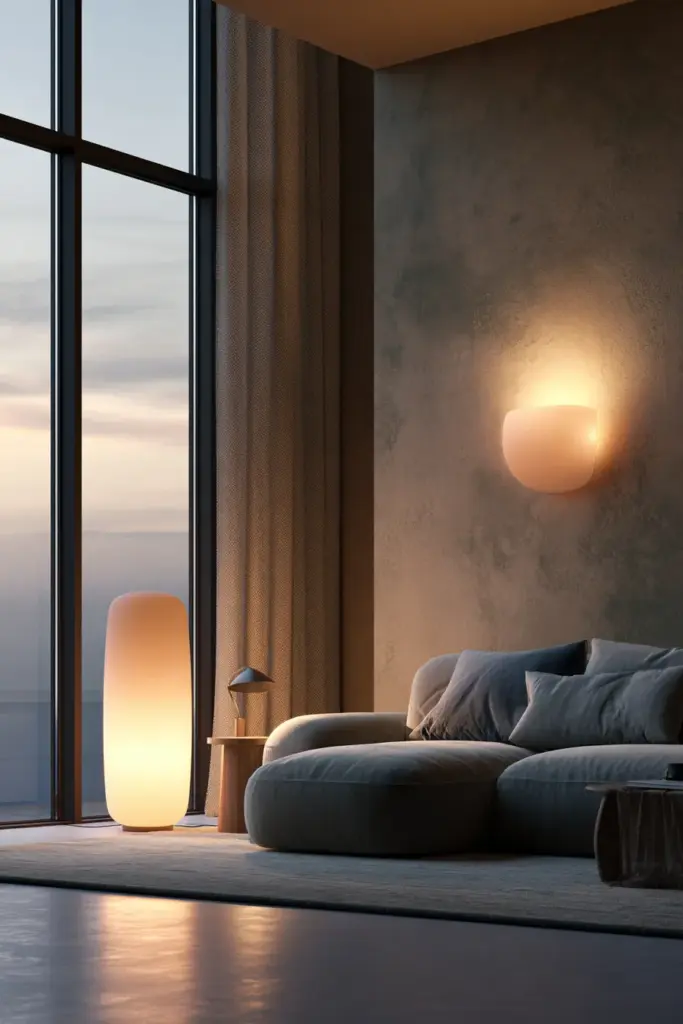
Warm vs. Cool Light: Choosing the Right Color Temperature
| Light Temperature | Kelvin Range | Psychological Effect | Best Use |
|---|---|---|---|
| Warm white | 2700K–3000K | Relaxing, cozy, intimate | Evening living, entertaining |
| Neutral white | 3500K–4000K | Balanced, focused | Reading, working from home |
| Cool white | 4000K+ | Alert, energizing | Task-heavy environments |
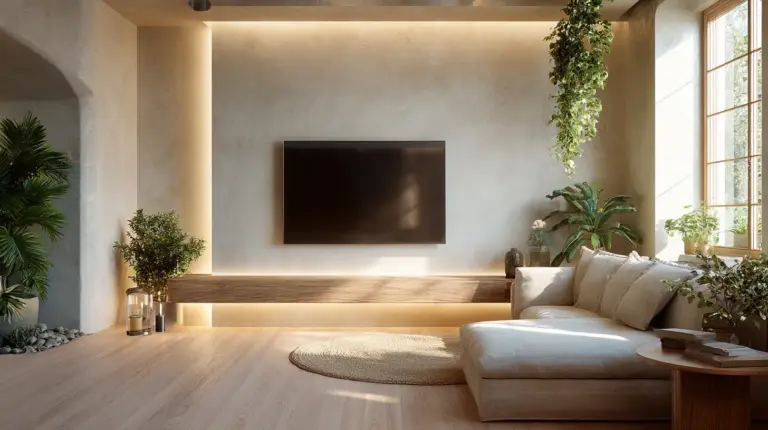
For living rooms, 2700K warm lighting is the designer’s secret for instant coziness. It mimics the golden quality of late afternoon sunlight — the light your body is biologically wired to associate with rest and safety.
Circadian Lighting: Syncing Your Space to Your Biology
Your body runs on a circadian rhythm — a 24-hour internal clock that responds directly to light. Modern living room psychology increasingly recognizes that lighting should change throughout the day to support this natural cycle. Bright, cooler light in the morning and afternoon supports alertness. Warm, dimmed light in the evening signals the brain to wind down.
Smart lighting systems now make this effortless. A simple programmable setup — bright neutral light at noon, warm amber by 7pm — can meaningfully improve sleep quality, mood regulation, and evening relaxation. Even without smart technology, a dimmer switch and a collection of warm-toned lamps can achieve a similar effect.
The Three Layers of Living Room Lighting
A well-lit room uses three layers working together:
- Ambient lighting — the base layer; soft, even illumination (overhead fixtures, recessed lights)
- Task lighting — focused light for specific activities (reading lamps, desk lights)
- Accent lighting — dramatic, directional light that adds depth (wall sconces, picture lights, candles)
The living room that relies only on a single ceiling fixture feels flat and institutional. Layer your light sources, and the room transforms — even on a budget, even in a rental.
Living Room Layout and the Psychology of Connection
How furniture is arranged tells everyone in the room — including you — what this space is for. A sofa pointed at a television sends one message. A circular conversation grouping sends another entirely.
Conversation Areas and Social Psychology
Research on social behavior in residential spaces shows that face-to-face or angled seating dramatically increases the quality and frequency of conversation. The most psychologically connected living rooms position seating within 2.5 to 3.5 meters of each other — close enough to make eye contact and speak comfortably without raising your voice.
If your room feels disconnected or lonely even when people are in it, the layout may be to blame. Pull your seating inward. Add an ottoman in the center. Give the space a focal point that isn’t a screen.
Circular Flow and Open Layouts
Rooms with clear, circular traffic flow — where movement feels natural and unobstructed — reduce unconscious stress. When we have to navigate around furniture awkwardly, our nervous system registers it as mild friction, every time.
For small living rooms, floating furniture away from walls (rather than pushing everything to the perimeter) creates a sense of depth and openness that feels counterintuitive but consistently works. A sofa 6–8 inches from the wall makes the room feel larger, not smaller.
The Forgotten Factors: Acoustics, Temperature, and Touch
Most design conversations stop at color and furniture. But your nervous system is processing far more than what you can see.
Living Room Acoustics: The Psychology of Sound
Sound is one of the most neglected elements of residential design — and one of the most powerful. Hard surfaces (concrete, tile, glass) create reverberation. In a living room, reverberation time above 0.8 seconds causes speech to blur, making conversation feel effortful, even exhausting.
The fix isn’t complicated. Soft surface coverage of 20–35% of a room’s total surface area significantly reduces echo without making the space feel muffled. In practice, this means:
- A large wool or cotton area rug (40–60 oz weight for maximum mid-frequency absorption)
- Upholstered sofas and chairs
- Curtains or linen drapes
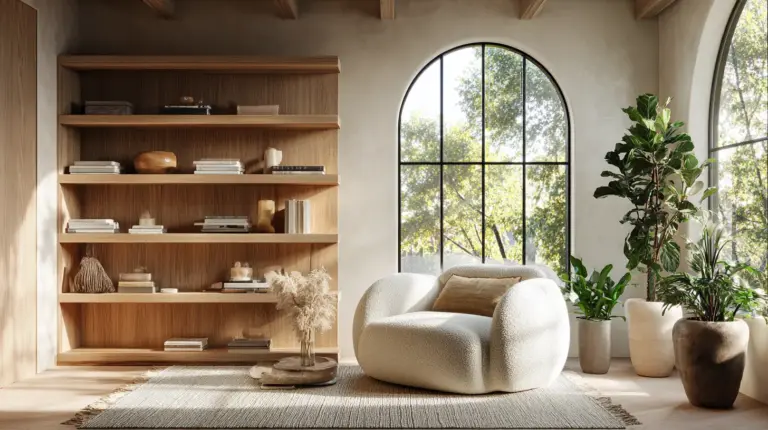
- A bookshelf filled with books (which absorb sound across different frequencies)
- Felt underlay beneath rugs for an added acoustic layer
Positioning sofas 10–15° angled to walls can also disrupt flutter echoes that bounce between parallel surfaces. Wood slat panels serve double duty — they’re acoustically effective and visually beautiful, especially in Japandi or modern rustic interiors.
An interesting intersection: darker colors are psychologically perceived as “quieter,” even when acoustic properties are identical. Deep olive, charcoal, and warm brown tones can make a reverberant space feel more contained to the eye — a useful trick for high-ceilinged rooms.
Thermal Comfort: The Psychology of Warmth
Temperature affects mood in measurable ways. Cooler environments (around 68–70°F / 20–21°C) tend to support focus and alertness. Warmer environments (72–74°F / 22–23°C) encourage relaxation and social ease.
But thermal comfort isn’t just about the thermostat. Material thermal properties matter enormously. A wool rug underfoot on a cold morning communicates warmth to your nervous system before your brain consciously registers it. Linen cushions feel cool and breathable in summer. Chunky knit throws invite you to slow down.
Radiant heating — underfloor systems or heated panels — creates a fundamentally different psychological experience from forced air. The warmth rises from below, the room stays quiet, and the body settles in a way that forced air simply doesn’t achieve.
Haptic Psychology: What Your Living Room Feels Like
Touch is processed by the oldest parts of our brain. The textures in your living room communicate safety, comfort, and care — or their absence — before you’ve consciously noticed them.
Layer tactile elements deliberately:
- Smooth and rough — a stone tray beside a linen cushion
- Warm and cool — a wool throw over a leather seat
- Heavy and light — a solid wood coffee table with a delicate ceramic vase
Research in sensory design shows that tactile variety in a space increases the perception of comfort — not just physically, but emotionally. A room that invites touch invites the body to relax.

Biophilic Design: The Living Room as a Living Ecosystem
Biophilic design — the intentional integration of natural elements into built environments — is no longer a niche concept. It’s one of the most well-supported ideas in environmental psychology.
Studies published in peer-reviewed journals including Frontiers in Psychology and PMC confirm that exposure to natural materials, plants, and organic forms reduces cortisol levels, lowers heart rate, and improves mood. Residential biophilic design has been shown to support recovery and wellbeing even for individuals managing chronic health conditions.
In the living room, biophilia looks like:
- Natural wood — walnut, oak, or bamboo in furniture and flooring
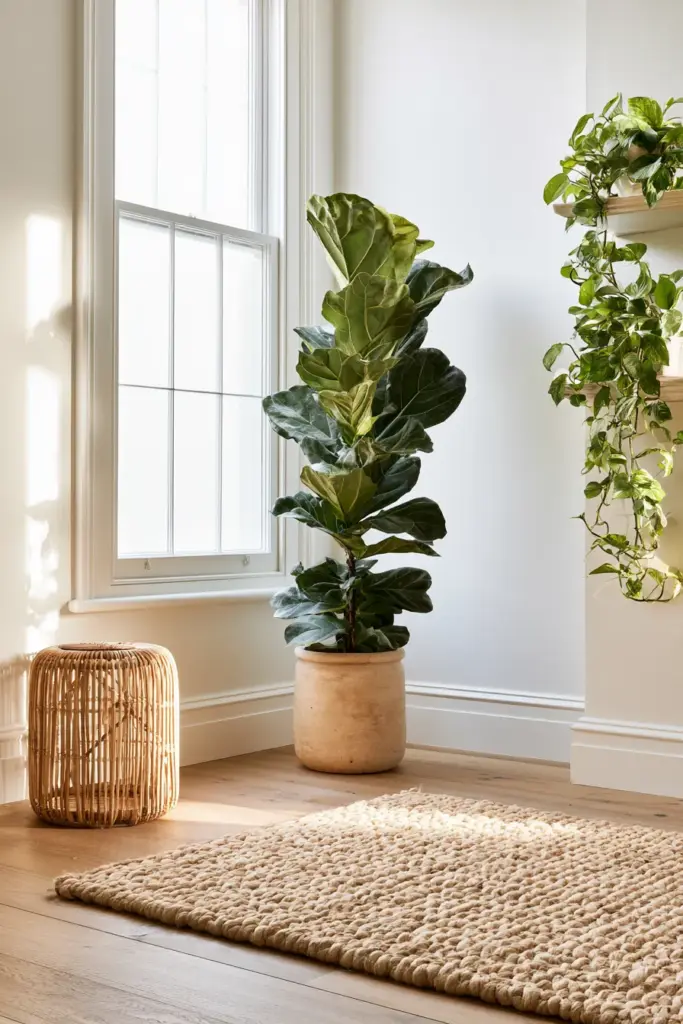
- Living plants — a fiddle-leaf fig, trailing pothos, or a cluster of smaller plants near natural light
- Natural textiles — wool, cotton, linen, jute
- Organic shapes — curved sofas, rounded coffee tables, arched lamps
- Natural light — sheer curtains that diffuse rather than block daylight
Even virtual exposure to natural imagery — a large landscape print, a nature-themed wallpaper mural — has been shown to reduce stress in residential settings. The brain responds to the suggestion of nature as well as its presence.
Japandi Principles for Small Living Room Psychology
Japandi — the quiet fusion of Japanese minimalism and Scandinavian warmth — has become one of the most psychologically resonant design philosophies for modern living rooms, particularly small ones.
Its core principle is that calm is achieved through restraint, not emptiness. Every object earns its place. Every material is chosen deliberately. The room breathes because it isn’t asked to hold more than it can.
Key Japandi Principles for Psychological Comfort
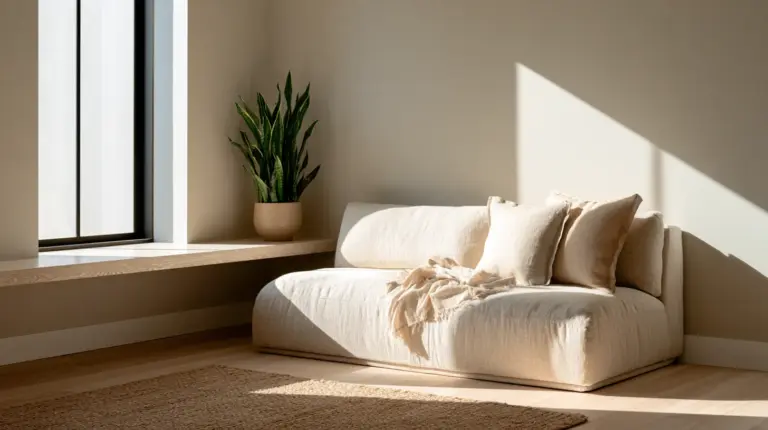
- Warm wood tones + soft neutrals + natural textures = the sensory foundation of a calm small space
- Floating furniture creates visual depth in cramped layouts
- The 60-30-10 color rule applied in muted, earthy tones prevents visual overwhelm
- Negative space — areas deliberately left empty — gives the eye a place to rest
- Functional beauty — every piece does something, and does it beautifully
Your Modern Living Room Psychology Checklist
Use this as a practical guide when assessing or refreshing your space:
Color & Palette
- Apply the 60-30-10 rule for visual balance
- Choose warm neutrals for everyday calm; add earthy accents for depth
- Use cool tones in areas where focus or quiet restoration is needed
Lighting
- Layer ambient, task, and accent lighting in every room
- Set warm bulbs (2700K–3000K) for evening use
- Consider a smart lighting schedule or dimmer switches for circadian support
Layout
- Position seating within 3.5 meters for natural conversation flow
- Float furniture 6–8 inches from walls in small rooms
- Angle sofas slightly to disrupt flutter echoes and improve acoustics
Acoustics
- Achieve 20–35% soft surface coverage (rugs, curtains, upholstery, books)
- Use wool rugs with felt underlay for maximum mid-frequency absorption
- Add a bookshelf or wood slat panel for layered acoustic variety
Touch & Texture
- Layer smooth with rough, warm with cool, heavy with light
- Choose natural textiles: wool, linen, cotton, jute
- Add a wool rug underfoot for thermal comfort and acoustic softness
Biophilia
- Include at least one living plant in natural light
- Choose wood furniture or accents in warm natural tones
- Use organic shapes and natural materials wherever possible
Temperature
- Set thermostat to 72–74°F (22–23°C) for relaxation-focused living rooms
- Use material warmth — wool, wood, woven textiles — to support perceived comfort
Conclusion
Your living room is a conversation between you and your environment — one that happens every day, quietly, beneath the surface of conscious thought. It shapes how you rest, how you connect, how you feel when you finally come home.
The most beautiful rooms aren’t the ones with the most expensive furniture. They’re the ones that know what they’re for — rooms that hold warmth in the wood grain, softness in the textiles, calm in the light. Rooms that feel, even on hard days, like a gentle exhale.
At ERYLIN, we design for that feeling. Not just for what looks good in photographs, but for what feels true when you live inside it.
Start with one thing. A warmer bulb. A wool rug. A plant on the windowsill. The room will begin to respond — and so will you.
Frequently Asked Questions
How does color psychology affect living room mood?
Color directly influences your nervous system’s stress and relaxation responses. Warm tones like terracotta and amber create feelings of social warmth and coziness, while cool tones like sage and slate promote calm and focus. Choosing a palette based on how you want to feel in the space — not just how it looks — is the foundation of psychologically effective design.
What makes a living room feel psychologically comfortable?
Comfort is multi-sensory: it involves soft textures underfoot and at hand, warm lighting at an appropriate color temperature (2700K–3000K in the evening), good acoustic balance (soft surfaces absorbing echo), and a furniture layout that supports natural conversation. A living room feels psychologically safe when the nervous system isn’t asked to process friction — visual clutter, harsh lighting, poor acoustics, or awkward circulation.
How does living room layout affect social connection?
Seating positioned to face or angle toward other seats — within 2.5 to 3.5 meters — significantly increases the quality of conversation and connection. Rooms organized around a central focal point (a coffee table, a fireplace, a rug) rather than around a television tend to foster more meaningful social interaction.
What is circadian lighting and why does it matter in a living room?
Circadian lighting refers to adjusting your light’s color temperature throughout the day to match your body’s natural rhythm. Cooler, brighter light in the morning and afternoon supports alertness; warm, dimmed light (2700K) in the evening signals the brain to begin winding down. Even simple changes — a dimmer switch, warm-toned lamps for evening use — can meaningfully improve sleep quality and mood.
How can I improve the acoustics of my living room?
Aim for 20–35% soft surface coverage: a large wool rug, upholstered seating, curtains, and a bookshelf all absorb sound at different frequencies. Felt underlay beneath rugs adds an extra acoustic layer. Avoid positioning all seating along parallel walls — angling a sofa slightly disrupts the flutter echoes that make speech feel muddy and conversation feel tiring.