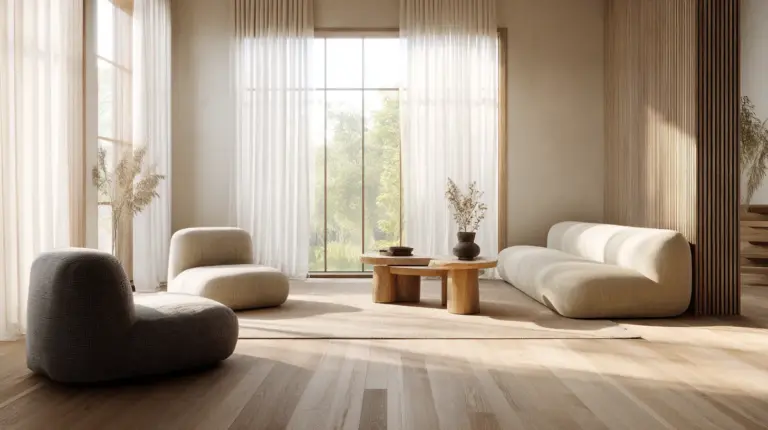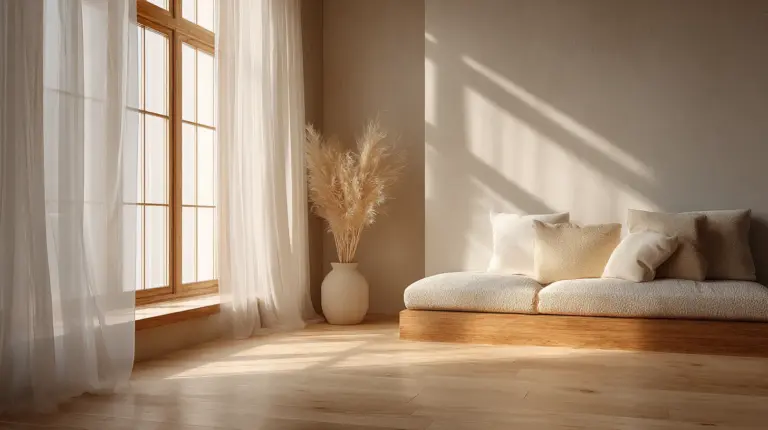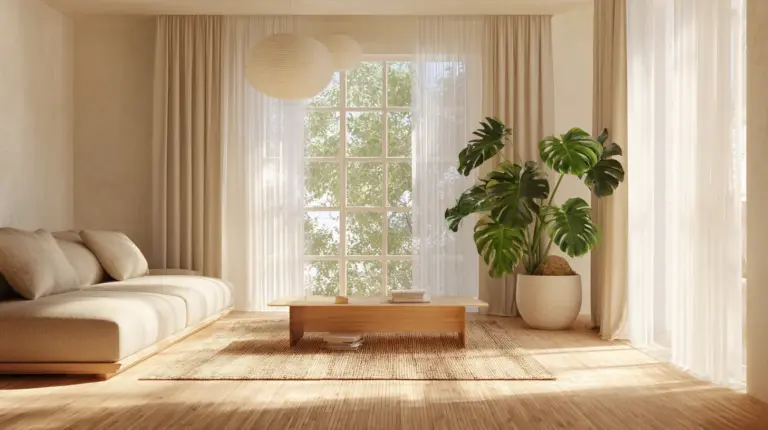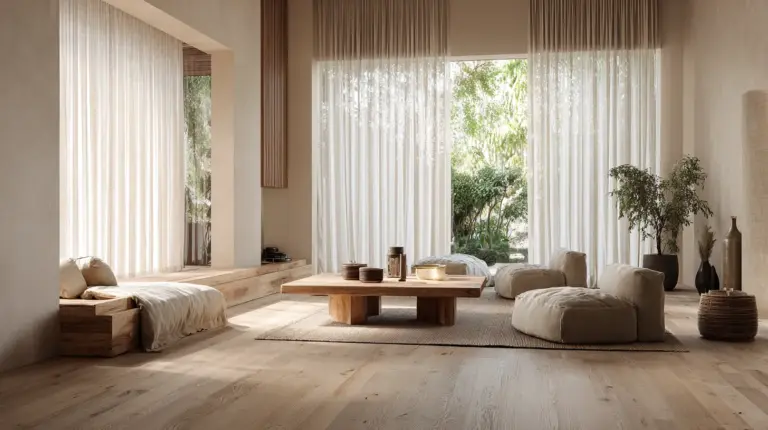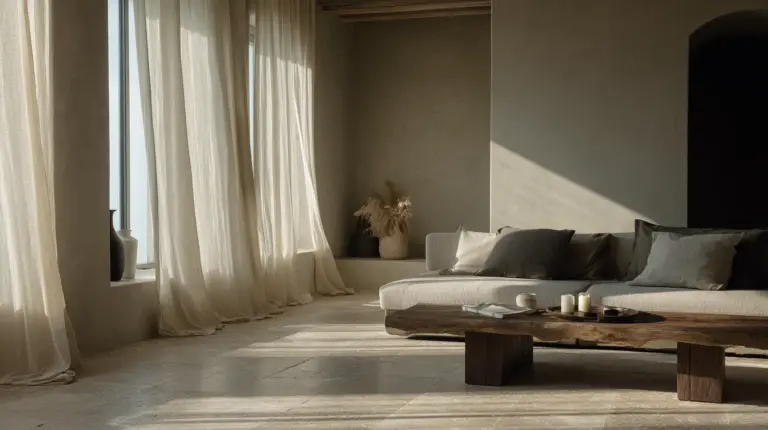

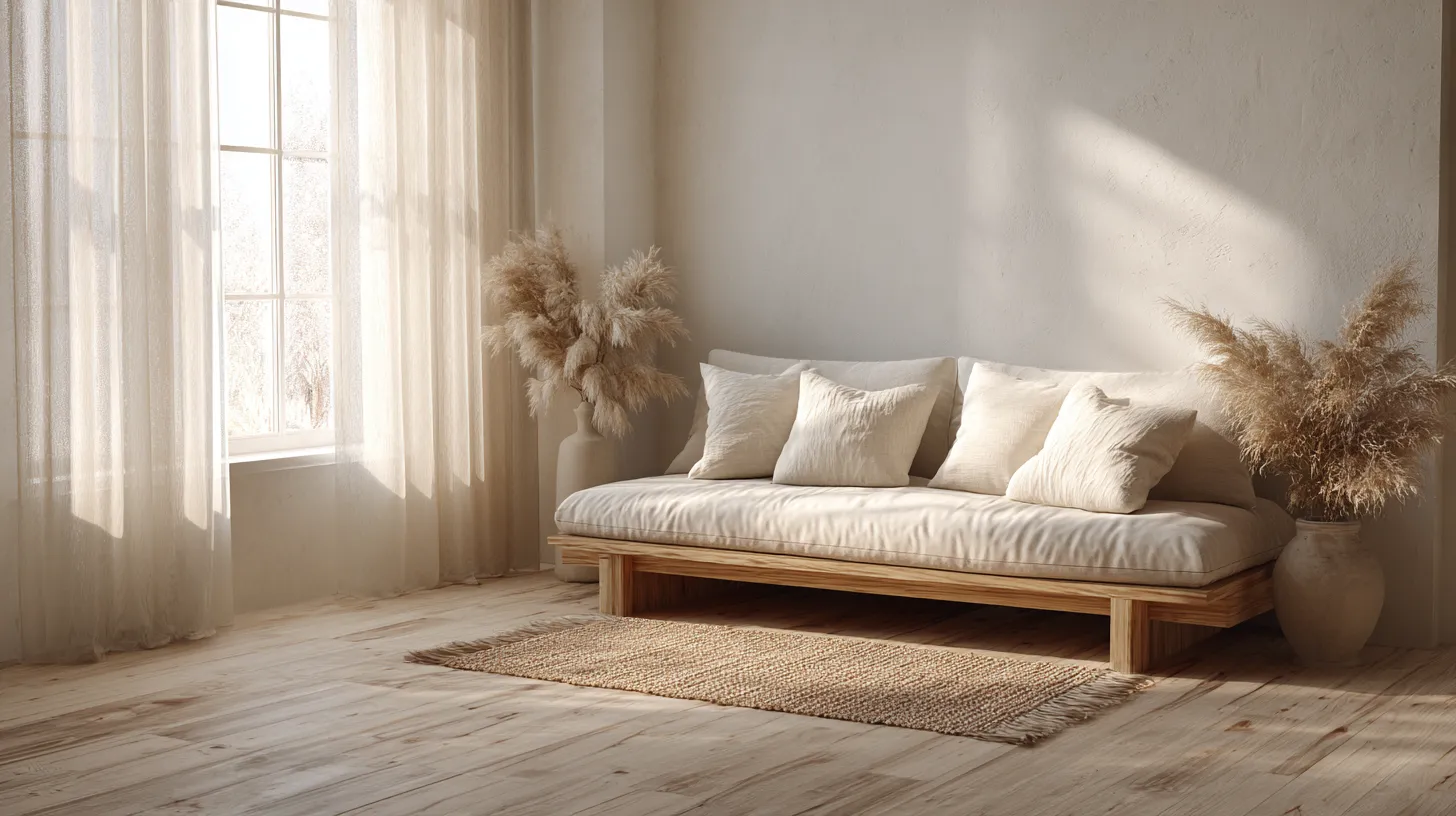
There is something quietly magical about a small living room that feels exactly right. No excess. No noise. Just warm wood underfoot, filtered light, and the kind of calm that settles in your chest the moment you step inside.
That feeling has a name — or rather, two names woven into one: Japandi. It is the marriage of Japanese wabi-sabi and Scandinavian hygge, a design philosophy that finds beauty in imperfection and comfort in simplicity. And nowhere does it speak more clearly than through the floor.
If you are working with a compact living space — a Manila condo, a studio apartment, a beloved small sala — the right Japandi flooring can do extraordinary things. It can make a room breathe. It can draw the eye outward, create warmth without weight, and ground a space with quiet elegance.
Let us walk you through it, one careful step at a time.
What Makes a Floor Truly Japandi?
The Philosophy Beneath Your Feet
Japandi flooring is not just an aesthetic choice — it is a mood. Think of the texture of unfinished oak against bare feet on a slow Sunday morning. Think of grain that runs long and low across a narrow room, pulling the walls apart with nothing more than direction and tone.
The core qualities of Japandi flooring are natural materials, muted tones, matte or satin finishes, and an honest simplicity that never shouts. Nothing lacquered to a mirror shine. Nothing cold or clinical. Every plank, every tile should feel like it belongs to the earth.
The Wabi-Sabi and Hygge Balance
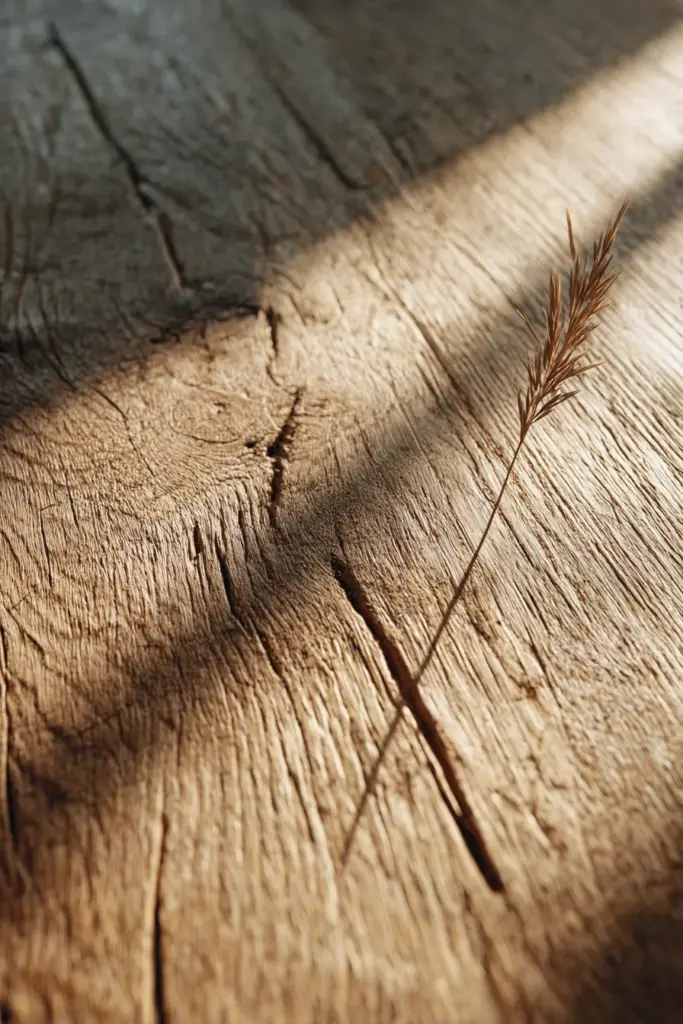
Wabi-sabi embraces the beauty of the imperfect and the impermanent — a knot in the wood, a slight variation in tone, the way grain shifts in different light. Hygge asks for warmth, softness, and a space that invites you to stay.
Together, they create flooring that is tactile and alive. It ages gracefully. It tells a story. It makes a small room feel curated, not cramped.
The Best Flooring Options for Small Japandi Living Rooms
Engineered Oak and Ash Planks
Light wood tones are the cornerstone of the Japandi palette.
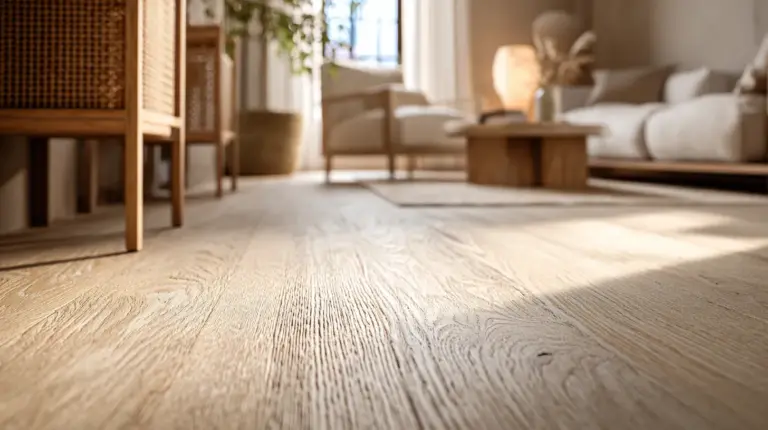
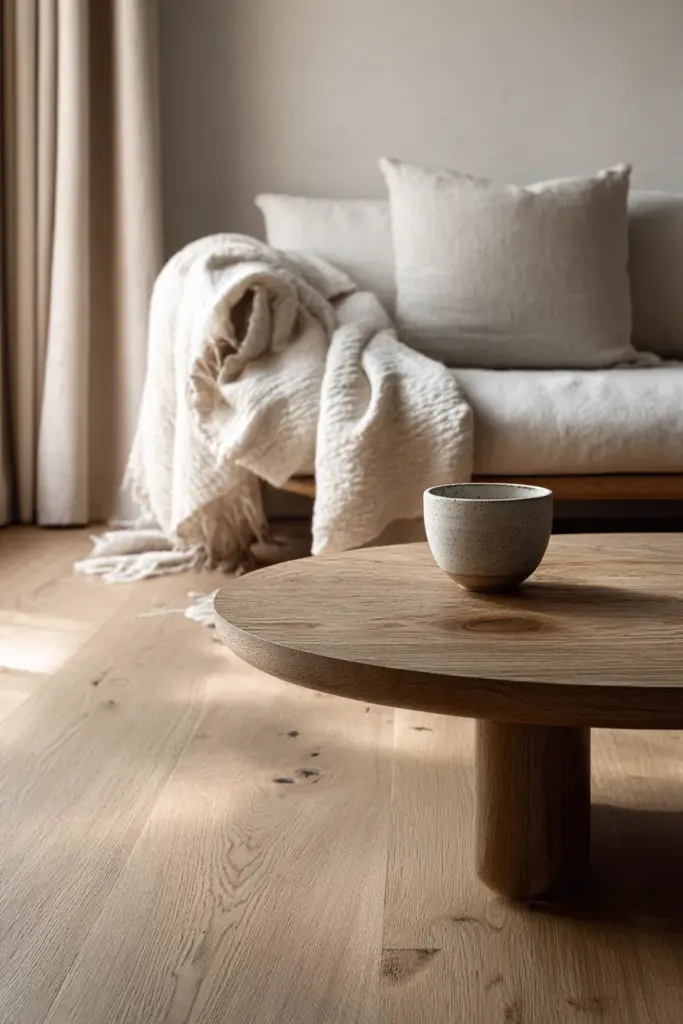
Engineered oak — with its subtle grain and warm honey or cool greige tones — is perhaps the most beloved Japandi floor material. It reflects natural light beautifully without creating glare, and its long plank format draws the eye across the room, making the space feel wider than it is.
Ash offers a slightly cooler, more silvery tone with a fine, even grain. Both woods carry that essential Japandi quality: organic warmth without ornamentation.
For small spaces, choose wide planks in a pale, natural tone. Avoid dark stains, which absorb light and shrink a room visually. A matte or satin finish keeps things grounded and authentic — and hides everyday wear gracefully.
Bamboo Flooring
Bamboo is sustainability made beautiful.
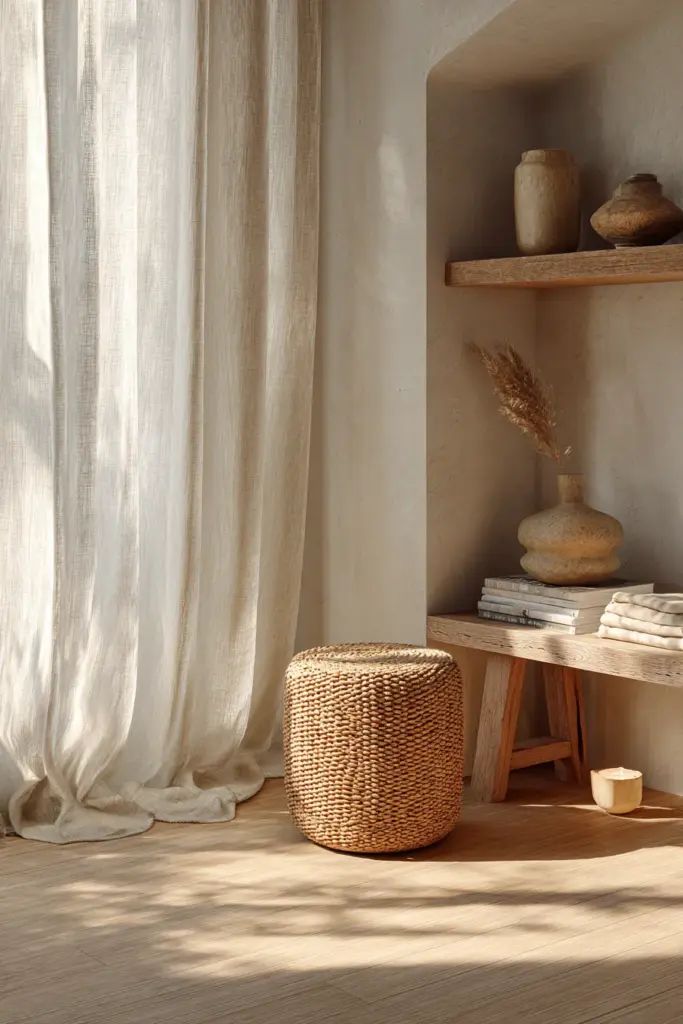
Bamboo flooring brings a distinctly Japanese sensibility to the floor — fine-grained, clean-lined, and extraordinarily durable. It grows quickly, regenerates easily, and in the Philippines, it resonates with local material culture in a way that feels genuinely meaningful.
Strand-woven bamboo is particularly hardwearing and handles humidity better than many solid wood options. For Manila homes and condos dealing with tropical moisture, this is a worthy consideration.
Its pale, almost luminous tone opens up a small room naturally. Pair it with natural linen curtains and low furniture, and the room will feel twice its size.
Luxury Vinyl Plank (LVP) — The Practical Japandi Choice
Not every beautiful floor needs to come at a premium.
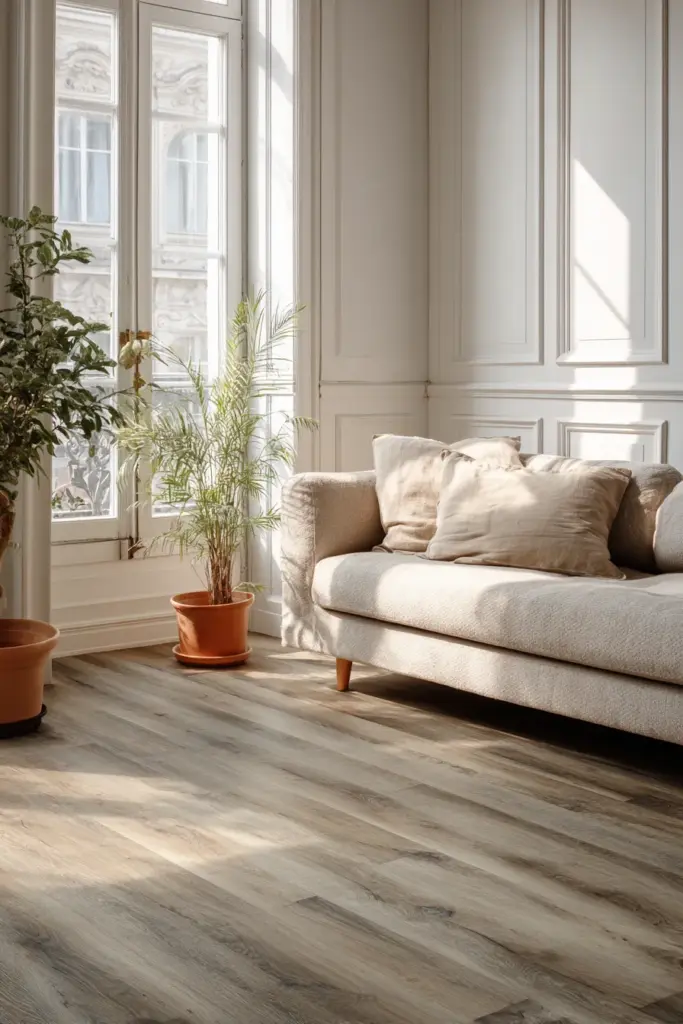
In warm, humid climates like the Philippines, LVP is not a compromise — it is a smart, design-forward decision. Modern luxury vinyl plank flooring has evolved dramatically. Today’s options offer realistic wood grain textures, matte finishes, and pale natural tones that are genuinely indistinguishable from engineered wood at a glance.
LVP is 100% waterproof, easy to maintain, and available at accessible price points — often under PHP 2,000 per sqm, making it ideal for renters and condo dwellers. Peel-and-stick vinyl options make DIY installation possible without voiding HOA agreements or requiring permanent modifications.
For renters especially, this is the Japandi floor that travels with you.
Cork Flooring
Soft underfoot, warm to the eye, quiet to the ear.
Cork is an underappreciated gem in the Japandi world. Its natural, slightly textured surface has a gentle warmth that feels almost meditative to walk on. It absorbs sound beautifully — a significant advantage in open condos where noise travels — and provides light insulation against both heat and cold.
In small living rooms, cork’s muted amber and sand tones blend effortlessly with the Japandi palette. Seal it properly for humidity resistance, and it will serve you with quiet reliability for years.
Flooring Comparison: Materials at a Glance
| Material | Tone | Finish | Small-Space Suitability | Humidity Resistance | Approx. Cost (PHP/sqm) |
|---|---|---|---|---|---|
| Engineered Oak | Warm honey / greige | Matte / satin | ★★★★★ | Moderate | 3,500–7,000 |
| Bamboo | Pale / neutral | Matte | ★★★★☆ | Good | 2,500–5,000 |
| Luxury Vinyl Plank | Any tone | Matte | ★★★★★ | Excellent | 800–2,000 |
| Cork | Amber / sand | Sealed matte | ★★★★☆ | Moderate | 2,000–4,000 |
| Concrete-Look Tile | Cool grey | Matte | ★★★☆☆ | Excellent | 1,500–3,500 |
Small-Space Flooring Strategies That Actually Work
Go Long and Light
Direction matters more than you think.
Install planks horizontally — running parallel to the longest wall of the room. This simple choice elongates the visual field and makes a narrow living room feel more balanced. Avoid diagonal or herringbone patterns in very small rooms; they can feel busy and visually contract the space.
Pale tones do the heavy lifting here. Light floors reflect natural light back into the room, creating a gentle luminosity that no amount of clever furniture arrangement can replicate.
Avoid High Gloss
One of the most common small-space mistakes is choosing a high-gloss finish in the hope that it will “reflect light and make the room bigger.” In practice, high gloss creates harsh reflections, shows every scratch and footprint, and gives a clinical quality that is entirely at odds with the Japandi spirit.
Choose matte or low-sheen satin finishes instead. They absorb light softly, enhance the natural texture of the material, and keep the room feeling grounded and serene.
Add an Underlayment for Sound and Comfort
In condos and apartments, sound transmission is a real concern. A quality underlayment beneath your flooring provides acoustic insulation, gentle cushioning underfoot, and a layer of moisture protection — all without changing the appearance of the floor at all.
This is especially important for LVP and engineered wood installations. It is a small investment that makes a meaningful difference to how the room feels and sounds.
Use Rugs Thoughtfully
A rug is not just decoration — it is a design tool.
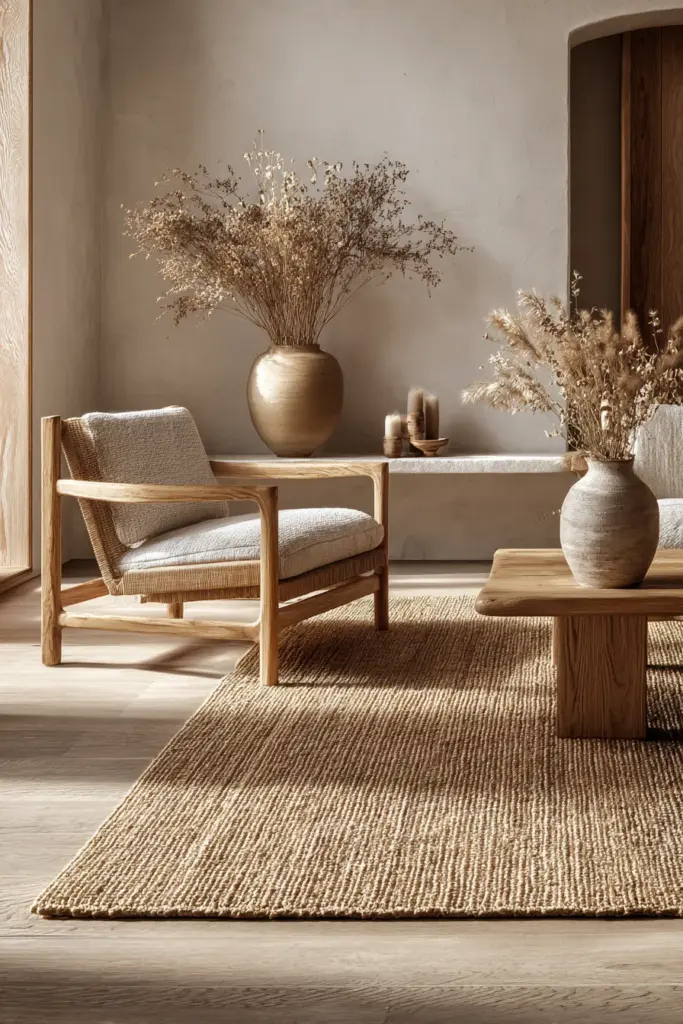
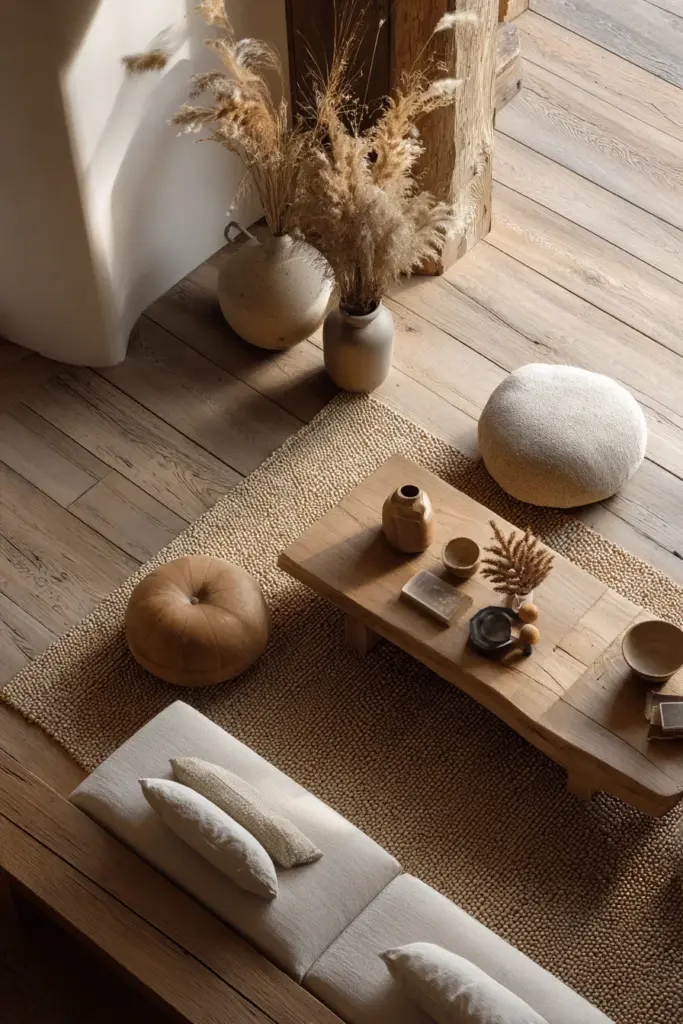
A single, well-chosen rug placed over your Japandi floor can define a seating area, add warmth, layer texture, and create the impression of a larger, more intentional space. Choose natural fibres — jute, wool, or cotton — in muted neutrals or gentle organic patterns.
Size matters enormously. A rug that is too small will float awkwardly in the room. Aim for a size that allows all front legs of your furniture to rest on it — this grounds the arrangement and gives the room a sense of cohesion.
Your Japandi Flooring Checklist for Small Spaces
- Choose pale, natural tones — warm honey, soft greige, muted ash
- Select a matte or satin finish — avoid high gloss entirely
- Install planks parallel to the longest wall for visual length
- Use wide planks (12–20cm) to reduce visual “busyness” underfoot
- Add a quality underlayment for sound absorption and comfort
- Consider LVP or bamboo for humidity-prone climates like Manila
- Layer a natural fibre rug to define zones and add warmth
- Keep grout lines thin and tone-matched if using tile
- Maintain a consistent floor tone throughout connected spaces to avoid visual breaks
Conclusion
A floor is where a home begins.
When you choose Japandi flooring for a small living room, you are not simply selecting a material. You are choosing a feeling — the quiet pleasure of bare feet on warm wood, the calm that settles when a space is free from noise and excess, the particular kind of beauty that asks nothing of you except to be present.
ERYLIN believes that small spaces deserve the same intention and care as grand ones. Perhaps more so. Because when you have less room to work with, every choice carries more weight — and the floor, the very ground you stand on, sets the tone for everything that rises from it.
Begin there. Begin with something natural, honest, and quietly beautiful. The rest will follow.
Frequently Asked Questions
What is the best flooring for a Japandi living room?
Engineered oak, bamboo, and luxury vinyl plank are the top choices for Japandi living rooms. Each offers natural tones, matte finishes, and organic texture that align with the Japandi philosophy. For humid climates, LVP or strand-woven bamboo are particularly practical.
Does Japandi work in small living rooms?
Absolutely — in fact, Japandi principles are ideally suited to small spaces. The emphasis on minimalism, light neutrals, and natural materials creates an open, uncluttered environment that makes compact rooms feel calmer and more spacious.
Which floor tone matches a Japandi interior best?
Pale, warm neutrals work best: light honey oak, soft greige, natural ash, and muted sand tones. These reflect light gently, complement the Japandi palette of warm whites and earthy accents, and keep the space feeling open rather than heavy.
What are the best Japandi flooring ideas for small spaces in the Philippines?
For Philippine homes and condos, luxury vinyl plank is a strong choice due to its waterproof properties, humidity resistance, and affordability (often under PHP 2,000/sqm). Bamboo — including locally sourced Philippine varieties — is another excellent option that connects authentically with the regional material culture.
Can renters achieve a Japandi floor without permanent installation?
Yes. Peel-and-stick vinyl tiles and click-lock LVP can be installed without adhesive or nailing, making them ideal for renters who cannot make permanent modifications. They are available in Japandi-appropriate tones and textures, and can be removed cleanly when you move.