
Table of Contents
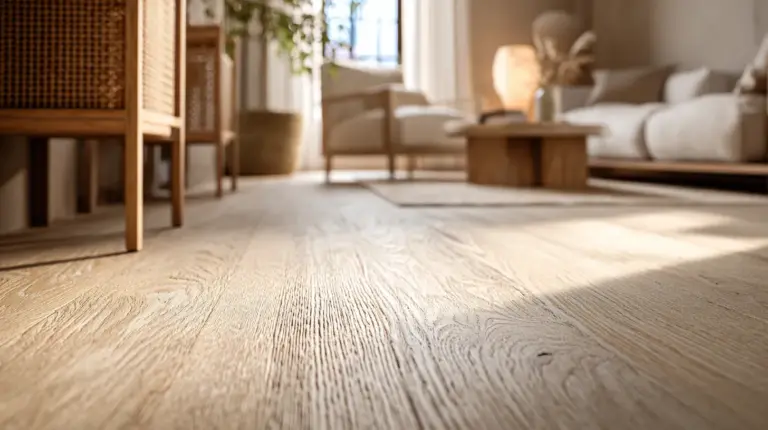
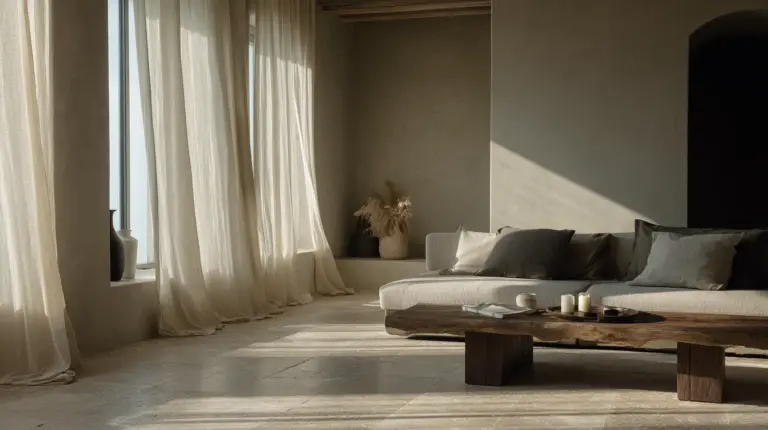
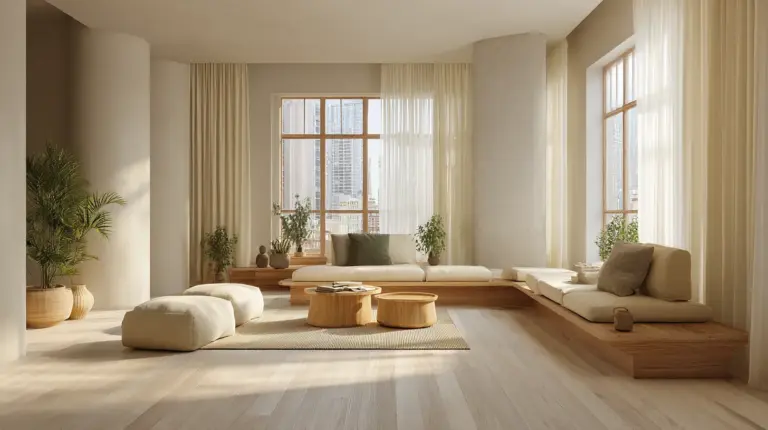
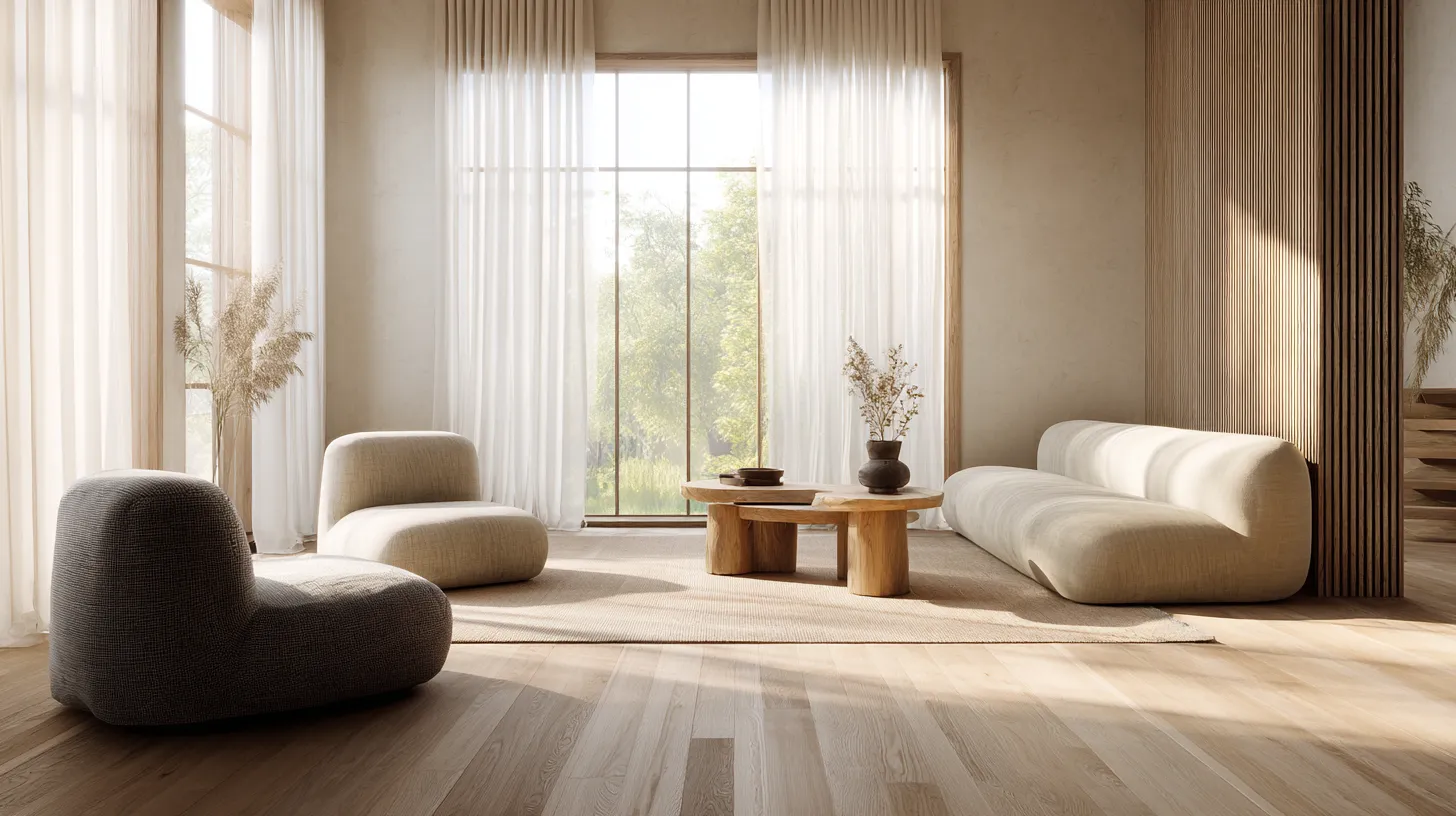
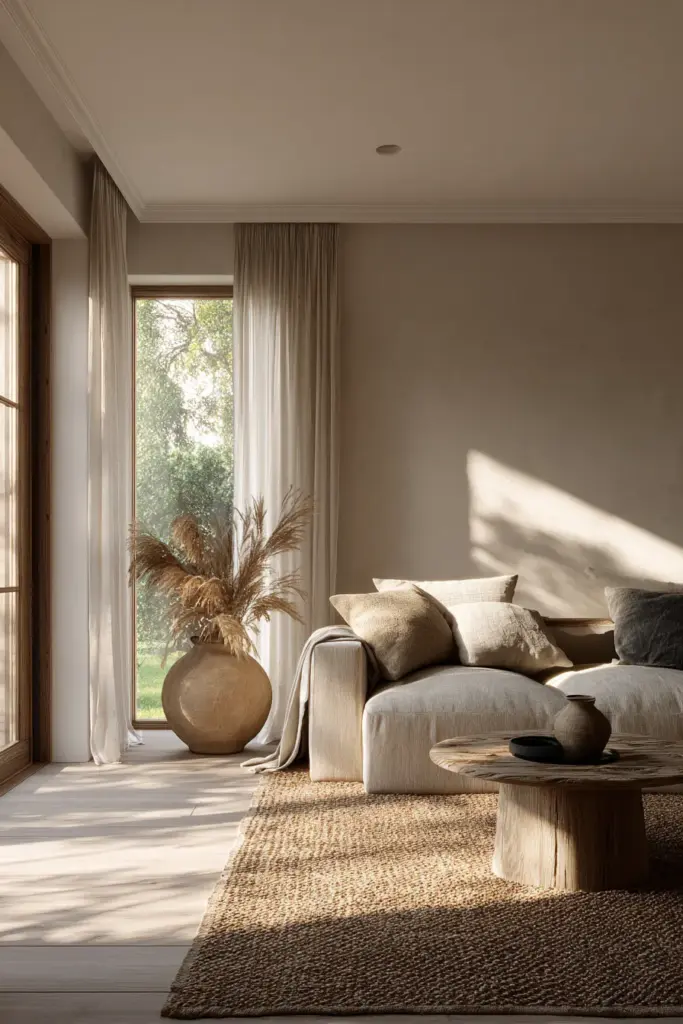
There is a particular kind of morning that Japandi living rooms seem to hold onto. The light arrives softly, pooling across pale wood grain, and for a moment everything feels unhurried and whole. That feeling is not accidental. It is the result of one quiet decision: choosing the right floor for the way your light actually moves.
Most flooring guides will tell you to “choose light woods for a minimal look.” But your living room deserves more than a general suggestion. The way your floor interacts with natural light — how it bounces, absorbs, glows at noon, cools at dusk — shapes every moment you spend in that space.
At ERYLIN, we believe flooring is the silent partner to light. Get that relationship right, and your Japandi living room will feel effortlessly alive. Get it wrong, and even the most beautiful furniture will look flat.
This guide is your practical companion to flooring that works with your natural light — not against it.
Understanding How Flooring and Natural Light Actually Interact
Before choosing a plank or tile, it helps to understand what light does when it meets a floor.
Tone determines brightness. Pale floors reflect more light back into the room, making spaces feel open and airy. Darker floors absorb light, which creates depth and intimacy — beautiful in the right room, draining in the wrong one.
Finish controls glare. A glossy floor acts like a mirror: it amplifies bright light beautifully in low-light rooms but creates harsh, distracting reflections in sun-drenched spaces. A matte finish diffuses light gently, reducing glare while still letting the room feel warm and luminous.
Undertone shifts with the sun. Floors with warm undertones (honey, amber, golden) will look richer and more golden as afternoon light deepens. Floors with cool undertones (ash grey, pale beige) come alive in crisp morning light but can feel flat and cold on overcast days.
Choosing Flooring Based on Your Room’s Orientation
This is the section almost no guide addresses — and it changes everything.
North-Facing Living Rooms
North-facing rooms receive cool, indirect light all day. Without thoughtful flooring, they can feel grey and slightly cold even in summer.
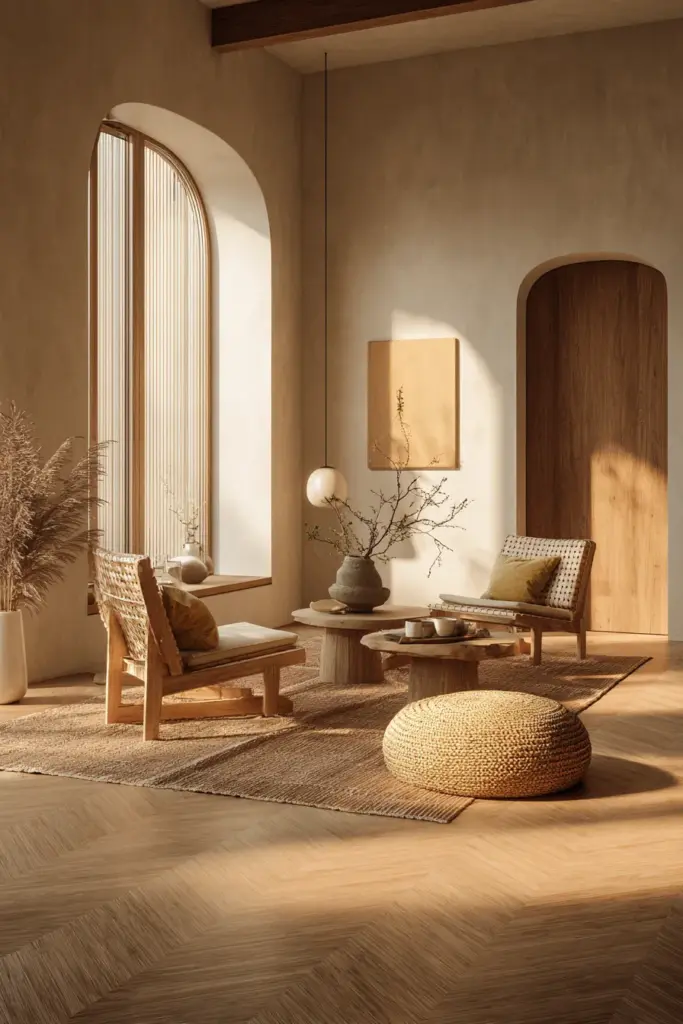
Best approach: Choose warm-toned floors — honey bamboo, light ash with amber undertones, or natural cork. These tones compensate for the coolness of indirect light and keep the room feeling cozy rather than clinical.
Finish: A satin finish works beautifully here. It bounces soft light without the harsh reflections of high gloss, helping the room feel brighter without visual noise.
Avoid: Cool grey concrete or pale stone with blue undertones. Under northern light, these will read as flat and slightly sad.
Rug strategy: Layer a natural jute or warm-oatmeal wool rug to add texture and warmth. A textured rug catches the soft northern light and gives it somewhere interesting to land.
South-Facing Living Rooms
South-facing rooms are bathed in direct, warm light for much of the day. The challenge here is not darkness — it is controlling brightness and avoiding glare.
Best approach: Choose mid-tone Japandi floors — light oak, natural bamboo, or pale stone — rather than the very palest options. Ultra-pale floors in south-facing rooms can wash out under strong midday sun, losing all their grain detail.
Finish: Matte is essential in south-facing spaces. A satin or gloss floor opposite large south windows will create blinding reflections on sunny afternoons and make TV viewing nearly impossible.
Avoid: High-gloss finishes entirely. Also avoid very dark floors here — the contrast between bright sunlit patches and shadowed areas will look “stripey” and visually restless.
Rug strategy: Place a mid-toned rug in the central seating zone to absorb some of the reflected light and anchor the space visually.
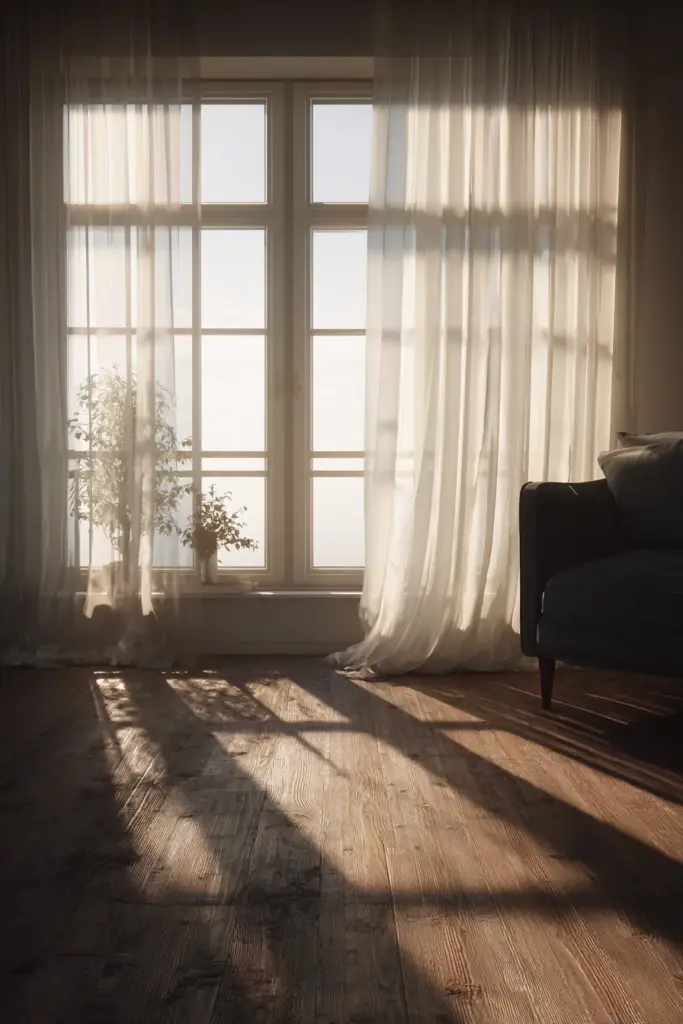
East-Facing Living Rooms
East-facing rooms glow with warm, golden light in the morning and become cooler and dimmer by afternoon. They are perfect for morning rituals.
Best approach: Lean into the morning warmth with pale oak or light ash flooring. These materials look stunning in golden morning light and hold their tone reasonably well as light cools through the day.
Finish: A soft matte or low-sheen satin finish will make the most of morning light without becoming glary.
Avoid: Very cool-toned floors — they can look beautiful in the morning but feel washed out and grey in the afternoon hours when the warm light has left.
West-Facing Living Rooms
West-facing rooms have their magical moment in late afternoon and evening, when warm amber light sweeps across the floor. Morning light here is cool and indirect.
Best approach: Choose floors with a slightly warmer, deeper tone — think pale walnut, mid-honey bamboo, or warm cork. These will look understated in the cool morning and absolutely luminous in the afternoon sun.
Finish: Matte or satin. West-facing rooms get low, raking afternoon light that will catch every reflection in a glossy floor.
Orientation vs. Flooring Cheat Sheet
| Room Orientation | Recommended Floor Tone | Best Finish | Avoid |
|---|---|---|---|
| North-facing | Warm: honey bamboo, amber ash, cork | Satin | Cool grey stone, pale blue-toned floors |
| South-facing | Mid-tone: light oak, natural bamboo | Matte | High gloss, very pale floors |
| East-facing | Pale warm: light ash, pale oak | Matte or satin | Cool-toned pale floors |
| West-facing | Warm mid-tone: honey bamboo, warm cork | Matte or satin | Glossy finishes |
| North + small room | Warm pale: light ash with warm undertone | Satin | Dark floors, cool tones |
| South + large room | Mid-tone natural materials | Matte | Ultra-pale, high gloss |
Japandi Flooring Materials and How They Behave in Natural Light
Light Oak
Light oak is the quintessential Japandi floor. Its subtle grain and warm, creamy tone catch morning light beautifully and hold a gentle glow throughout the day.
In bright rooms: Choose a matte finish to prevent wash-out. The grain detail — that quiet, natural texture — is what makes oak feel Japandi rather than just Scandinavian.
In dim rooms: A very light oak with a satin finish will reflect what little light there is and keep the space feeling open.
Best for: Most orientations. Works especially well in east and north-facing rooms.
Avoid if: You have heavy direct south sun and a glossy finish — it will glare.
Honey Bamboo
Bamboo floors have a luminous, almost glowing quality in natural light. Honey bamboo in particular has warm amber undertones that deepen beautifully as afternoon light shifts.
In bright rooms: The natural sheen of bamboo can become reflective — choose a matte-finished bamboo plank rather than the high-gloss varieties.
In dim rooms: Honey bamboo is one of the best choices for north-facing rooms. Its warmth compensates for cool, indirect light.
Best for: North and west-facing rooms, small apartments needing warmth.
Avoid if: You want a very cool, restrained palette — bamboo reads warm.
Natural Cork
Cork is an underrated Japandi material. Its soft, slightly mottled surface absorbs and diffuses light rather than reflecting it, creating a room that feels calm and even-toned throughout the day.
In bright rooms: Cork handles direct sun beautifully — no harsh reflections, just a quiet, consistent warmth.
In dim rooms: Choose a mid-honey cork rather than very pale varieties, which can look washed out in low light.
Best for: South-facing rooms, families with children, anyone who wants sensory warmth underfoot.
Avoid if: You want the crisp, architectural feel of pale oak or stone — cork has a softer, earthier character.
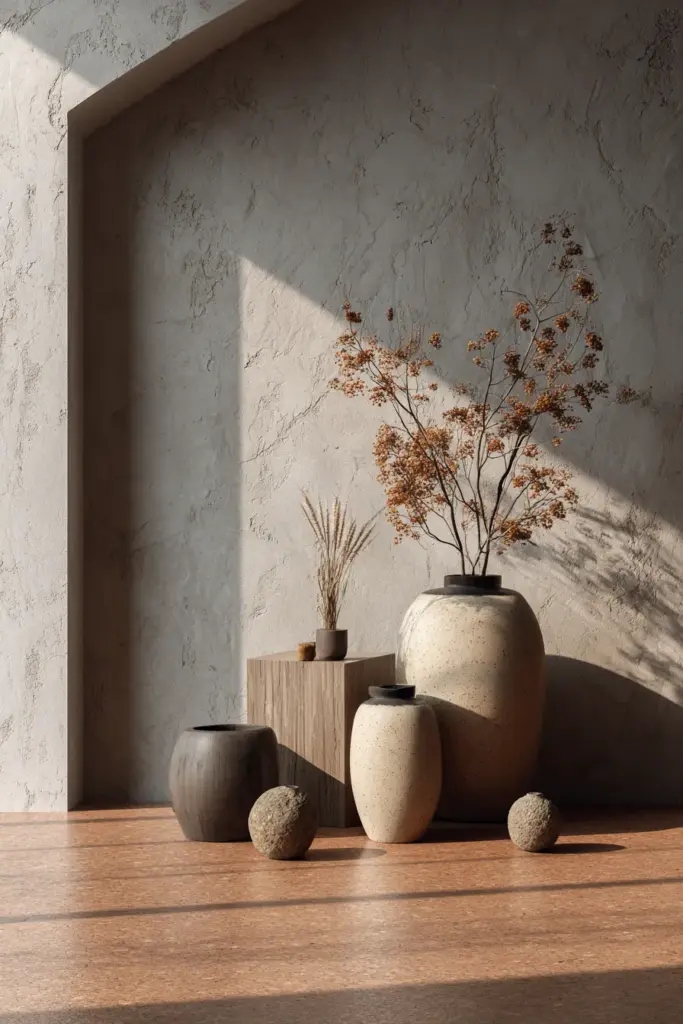
Polished Concrete
Concrete floors have a quiet, minimal beauty that reads as deeply Japandi. Their cool grey tones work beautifully with morning light and look almost sculptural under strong sun.
In bright rooms: Concrete is stunning — its smooth surface reflects light gently, making bright rooms feel serene and spacious.
In dim rooms: Be careful. Cool grey concrete in a north-facing room can feel cold and institutional. Warm it up with a large wool or jute rug and plenty of warm-toned soft furnishings.
Best for: South-facing rooms, large open-plan spaces, warm climates.
Avoid if: Your room is north-facing or small — without enough natural light, concrete can drain the warmth from a space.
Natural Stone
Stone — pale limestone, travertine, or honed marble — brings a quiet luxury to Japandi interiors. Each slab has its own variation in tone and veining, making it deeply natural and never uniform.
In bright rooms: Pale stone is breathtaking in strong natural light. Its matte, honed finish diffuses light softly across its surface.
In dim rooms: Stone can feel cold without sufficient warmth from light and furnishings. Pair with warm-toned rugs and soft linen window treatments.
Best for: South-facing rooms, larger spaces, warm climates.
Avoid if: You are working with a very tight budget or a room that receives little natural light.
How to Test Your Floor Sample with Natural Light (One-Day Process
Never commit to a floor without this step.
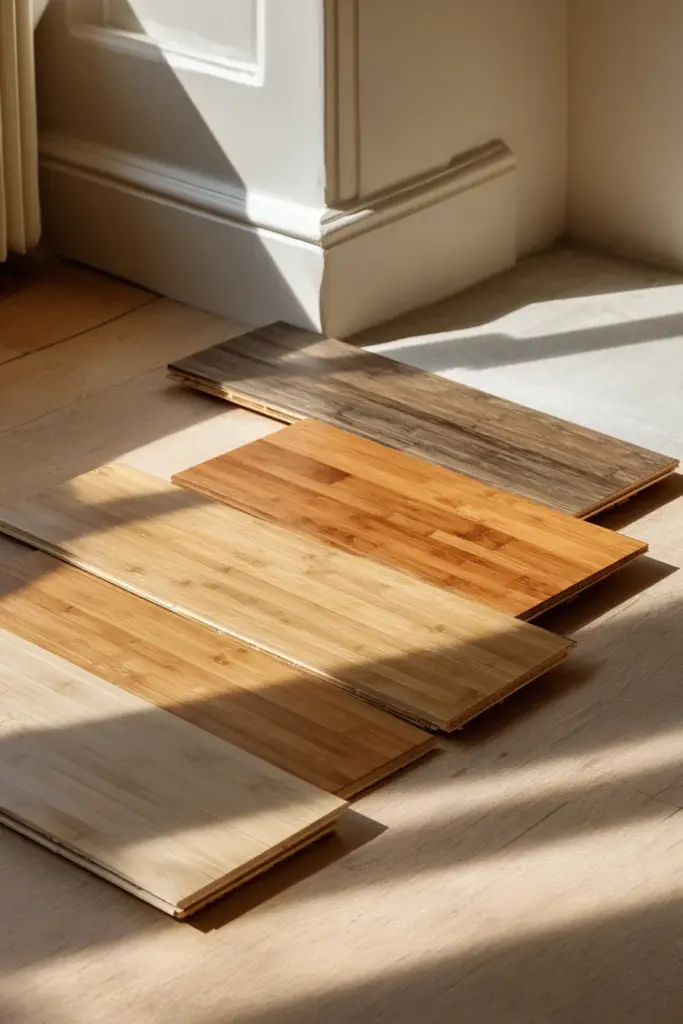
Bring your sample boards home and place them flat on the floor — not propped against the wall — in the exact spot where the floor will be installed.
Photograph them at four points in the day: early morning, midday, late afternoon, and in the evening with your artificial lighting on. Notice how the tone, warmth, and reflectiveness change across these four moments. The floor you are living with is all four of these — not just the one that looked beautiful in the showroom at noon.
Pay particular attention to any glare hotspots: places where direct sun hits the sample and creates a bright, distracting reflection. If the sample glares at 2pm on a sunny afternoon, the installed floor will too.
What To Do When You Cannot Change the Floor
Renting? Working with an existing floor? Here is how to fake Japandi-friendly light.
If your floor is too dark, too cool, or too reflective for your ideal Japandi palette, you have three tools: rugs, wall paint, and curtains.
A large, pale natural-fibre rug — jute, wool, or woven cotton — placed in the central seating area will visually replace a significant portion of the floor. In a small room, a rug that covers 60–70% of the floor area can transform the feel of the space entirely.
Wall paint should work with your floor, not against it. If your floor is cool grey, choose walls in warm white or soft linen — the contrast will balance the room. If your floor is dark, go lighter on the walls to avoid a cave-like atmosphere.
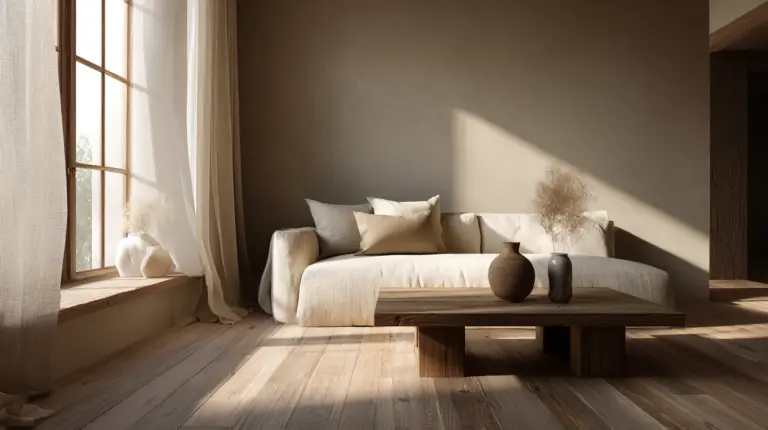
Sheer linen curtains are your secret weapon. They filter harsh direct sun into soft, diffused daylight, reducing glare on difficult floors and wrapping the room in even, flattering light.
Protecting Your Japandi Floor from Sunlight Over Time
UV exposure is the slow enemy of beautiful flooring. Here is what to expect from each material and how to protect it.
Oak and bamboo will mellow and deepen in tone with UV exposure — often beautifully, though the change is irreversible. Rotate rugs and furniture every 12–18 months to prevent uneven fading that leaves “shadows” in your floor.
Cork is UV-sensitive and can lighten or yellow under strong direct sunlight. Use sheer UV-filtering window treatments in south or west-facing rooms.
Vinyl plank (quality Japandi-appropriate varieties) is generally the most UV-stable option and fades slowly, making it a practical choice for very bright rooms.
Concrete and stone are the most stable under UV but can develop surface hairline marks over time. Annual sealing maintains their appearance and protects against UV-induced surface changes.
Choose cleaning products designed for matte finishes — some floor cleaners leave a slight sheen over time, gradually turning a matte floor into an unintentional semi-gloss.
Styling Tip: Using Shadow as a Design Element
This is the Japandi touch that most guides overlook.
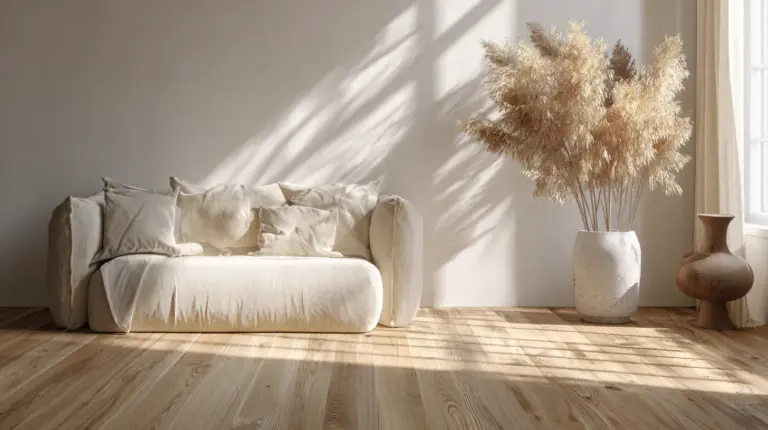
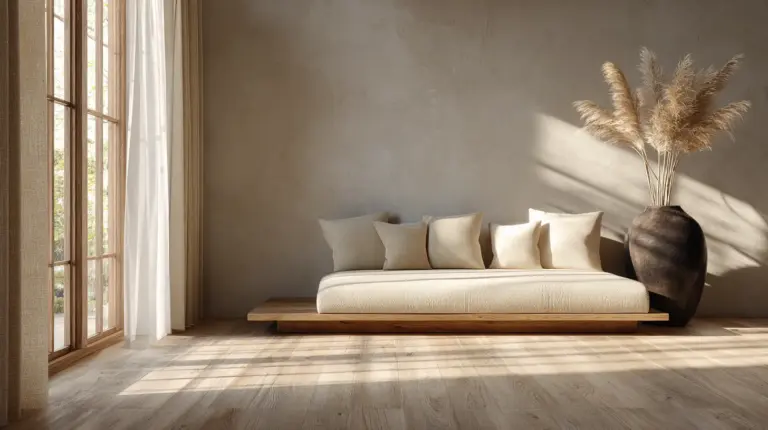
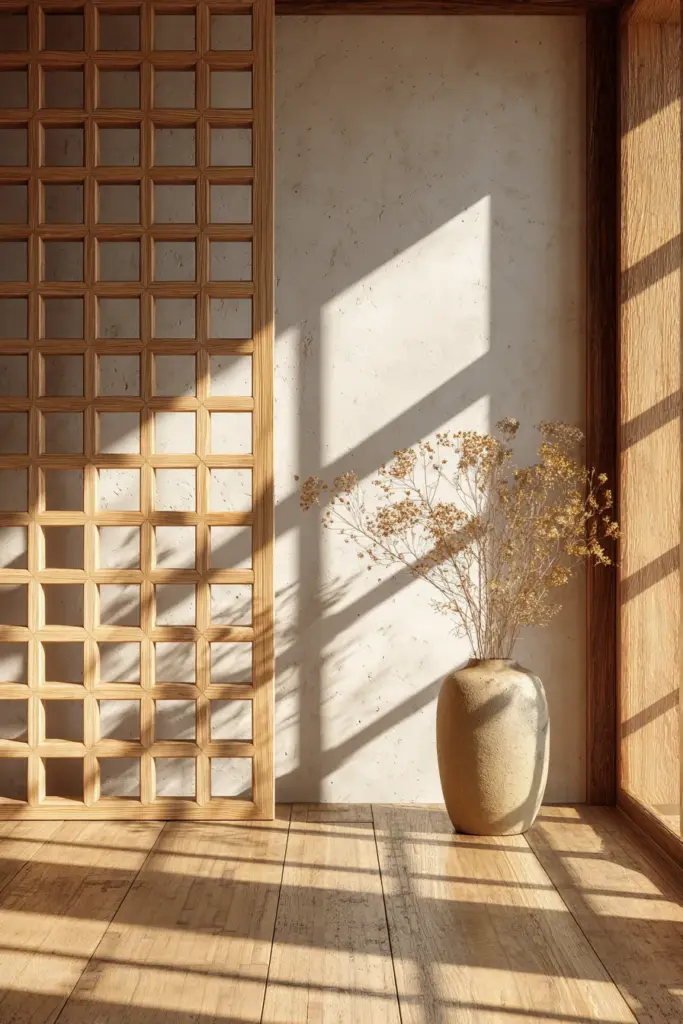
Strong natural light does not just illuminate — it casts. Slatted wooden blinds, shoji-style screen panels, and even the shadows of outdoor plants filtering through windows will project patterns onto a pale floor.
These shadow patterns are a design element. A pale oak floor with dappled shadows from a window-side plant is a living installation — one that changes through the day.
Lean into this. Position plants near east or south-facing windows. Use slatted screens on west windows to cast warm evening geometry across your floor. Let the light tell its story.
Quick Checklist: Japandi Flooring for Natural Light
- Identify your room’s orientation before choosing floor tone or finish
- Use warm tones (honey, amber, ash) for north-facing and dim rooms
- Use mid-tones with matte finish for south-facing and bright rooms
- Choose matte or low-sheen satin in almost every Japandi context — gloss rarely serves the aesthetic
- Test floor samples on the floor at four times of day before committing
- Layer a natural-fibre rug in the central seating zone to anchor the space
- Pair sheer linen curtains with any floor to soften and diffuse direct sunlight
- Rotate rugs and furniture every 12–18 months to prevent UV shadow lines
- If you cannot change the floor, use pale rugs, warm wall paint, and sheer curtains to rebalance
A Final Thought
A Japandi living room is not decorated — it is composed. And the floor is the first note of that composition.
When your floor works with your natural light, the whole room seems to breathe. The morning feels gentle. The afternoon feels golden. The evening, with a warm lamp casting its circle of light, feels like the best kind of homecoming.
Choose slowly. Test patiently. And trust that the right floor, in the right light, will make everything else fall quietly into place.
With warmth and intention — ERYLIN.
Frequently Asked Questions
What flooring maximizes natural light in a Japandi living room?
Pale oak, light ash, and honey bamboo are the strongest choices for maximizing natural light. Their warm, light tones reflect soft light back into the room rather than absorbing it. Crucially, choose a matte or low-sheen satin finish — this diffuses light evenly across the floor’s surface, brightening the room without harsh glare. In small rooms with limited windows, combine pale flooring with a warm white wall paint and sheer linen curtains for maximum light amplification.
How do I choose Japandi flooring for a bright room versus a dark room?
For bright, south-facing rooms, choose mid-tone floors with a matte finish — ultra-pale floors wash out under strong sun, and glossy finishes create distracting glare. For dark, north-facing rooms, choose warm-toned pale floors (honey bamboo, light ash with amber undertones) with a satin finish. The warmth compensates for the cool, indirect light, while the satin finish helps bounce what light there is back into the room.
What are the best Japandi floor colors for a north-facing living room?
Honey bamboo and warm light ash are the top choices for north-facing rooms. Their amber undertones add visual warmth that pure grey or cool-toned floors cannot provide under indirect light. Pair them with warm-white walls, a jute or oatmeal wool rug, and warm-spectrum artificial lighting for evenings. Avoid cool grey concrete or pale stone with blue undertones — under northern light, these will make the room feel flat and cold.
Does flooring really affect how natural light feels in a small Japandi apartment?
Significantly, yes. In a small apartment with one or two windows, the floor is the largest surface that light touches. A pale, matte floor can make a room feel considerably larger and brighter by diffusing incoming light outward and upward. A dark floor absorbs that light, creating a cozier but smaller-feeling space. For most small Japandi apartments, pale warm-toned flooring combined with sheer window treatments and a carefully placed rug will dramatically stretch the sense of light and space.
What window treatments work best with Japandi flooring to maximize light?
Sheer linen curtains are the Japandi standard — they filter harsh direct sunlight into soft, diffused daylight while maintaining connection to the outdoors. For south or west-facing rooms with light wood floors, sheer curtains prevent glare and UV fading while keeping the room bright. Shoji-style paper or fabric screens are a beautiful alternative that casts gentle, patterned light onto pale floors. Avoid heavy drapes that block natural light entirely — in Japandi interiors, the light itself is part of the design.