
Table of Contents
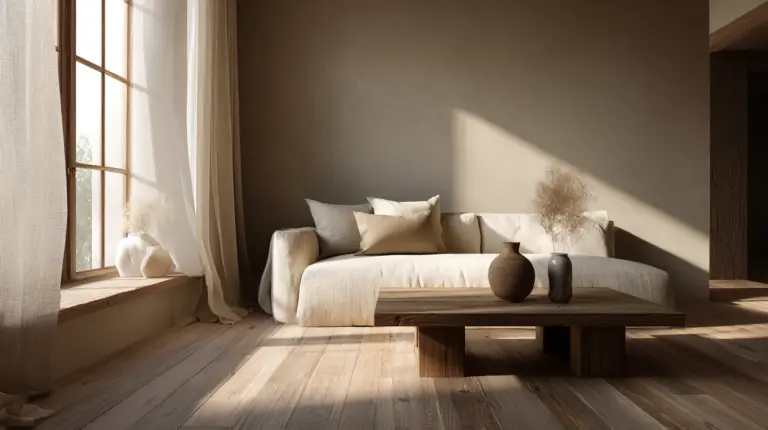
Before you notice the sofa, the light streaming through the curtains, or the arrangement of objects on a shelf — you feel the floor. It sets the tone before your eyes even have a chance to settle. In Japandi design, that first impression is everything.
Japandi — the serene marriage of Japanese wabi-sabi and Scandinavian hygge — understands that a home is not just a collection of beautiful things. It is an emotional environment. And flooring, more than almost any other element, anchors that emotional experience. It is the canvas beneath the life you live.
At ERYLIN, we believe that beautiful spaces begin with intention. So let’s walk — slowly, mindfully — through the psychology of Japandi living room flooring, and explore how the material under your feet shapes not just your décor, but your mental well-being.
What Is the Psychology Behind Japandi Flooring Choices?
The Ground as an Emotional Anchor
Flooring is the largest uninterrupted surface in any room. It communicates before you consciously register it. Warm, natural tones whisper calm here. Cool, hard surfaces say efficiency. In a Japandi living room, the floor is not decorative — it is psychological architecture.
Research in biophilic design — the science of our innate connection to nature — shows that natural textures like wood grain can measurably reduce cortisol, the stress hormone. Studies suggest that warm oak tones, in particular, can lower cortisol response by as much as 12–15% compared to synthetic flooring. Your nervous system, it turns out, knows the difference.
In Japandi philosophy, the floor is not separate from the emotional experience of the room. It is the foundation of ma — the Japanese concept of meaningful empty space — and of friluftsliv, the Scandinavian embrace of natural living. Together, they ask us to come home and exhale.
How Does Japandi Flooring Promote Mental Well-Being?
The Science of Calm Underfoot
The psychological benefits of Japandi flooring are not accidental. They are the result of deliberate material choices rooted in centuries of design wisdom, now supported by modern environmental psychology.
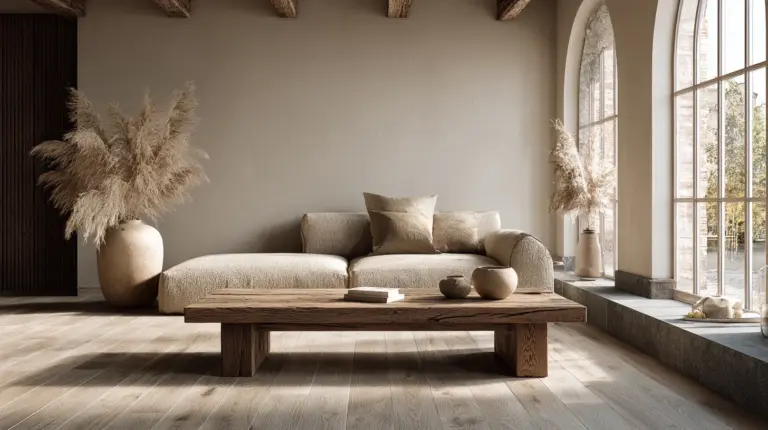
Natural wood floors engage the brain’s reward pathways. The subtle variation in grain, the warmth of tone, the slight give underfoot — these sensory cues signal safety and belonging. In a world of visual noise, a pale ash or muted oak floor acts as a visual resting place, allowing the eye — and the mind — to settle.
Minimalist flooring also reduces the phenomenon known as decision fatigue. When a floor is clean, simple, and visually quiet, the brain spends less energy processing the environment. That leftover mental energy becomes calm. It becomes presence.
Wabi-Sabi and the Comfort of Imperfection
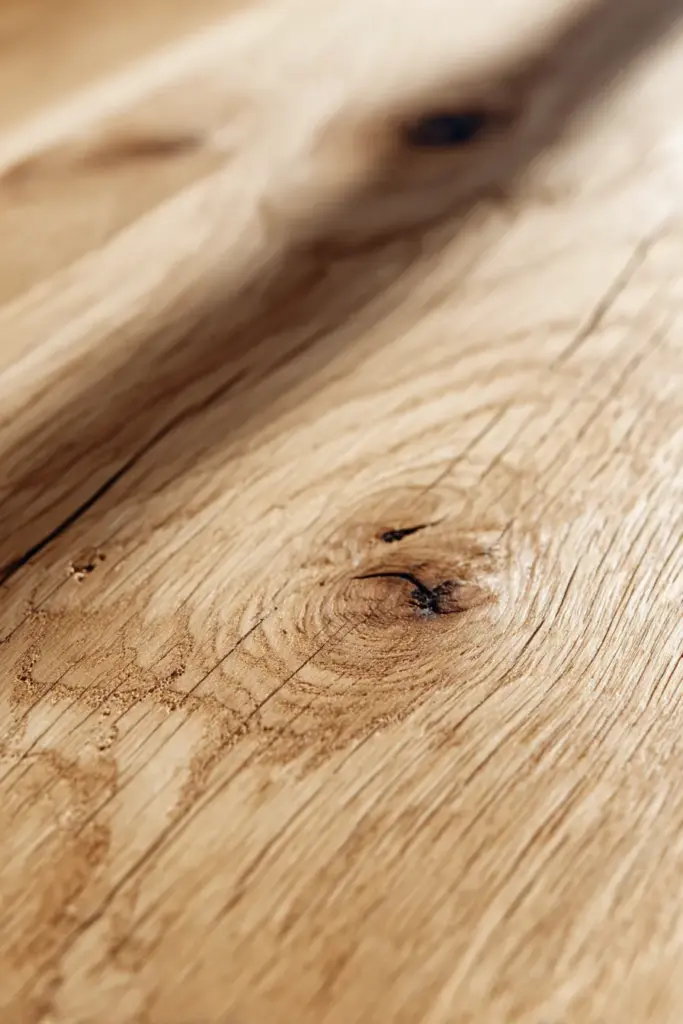
One of the most powerful psychological gifts of Japandi flooring is the embrace of wabi-sabi — the Japanese aesthetic of finding beauty in imperfection and impermanence.
A floor with a natural knot, a subtle variation in grain, or the gentle silver of aged wood does something quietly profound: it gives you permission to be imperfect too. It says this space does not demand perfection. It welcomes the lived-in, the worn, the real.
This is not just poetic. Studies in environmental psychology show that spaces that feel authentically aged reduce social anxiety and performance pressure. When a home feels curated but not sterile, people feel at ease. They exhale. They stay.
Best Flooring Materials for Japandi Style and Their Mood Impact
Different materials carry different emotional frequencies. Here is how the most popular Japandi flooring choices interact with your psychology.
| Flooring Material | Psychological Effect | Best For |
|---|---|---|
| Pale Oak | Calm, airy, focus-enhancing | Small living rooms, mindful spaces |
| Walnut | Grounded, warm, secure | Cozy evening rooms, meditation corners |
| Bamboo (Engineered) | Energizing, fresh, balanced | Humid climates, tropical homes |
| Ash | Neutral, expansive, restful | Anxiety-prone environments, ADHD-friendly rooms |
| Narra (Local Wood) | Rich, culturally grounding, luxurious | Heritage-inspired Japandi, Filipino modern interiors |
| Concrete-Look Tile | Quiet, meditative, cool | Minimalist Japandi, hot-climate homes |
Pale Oak: The Serenity Floor
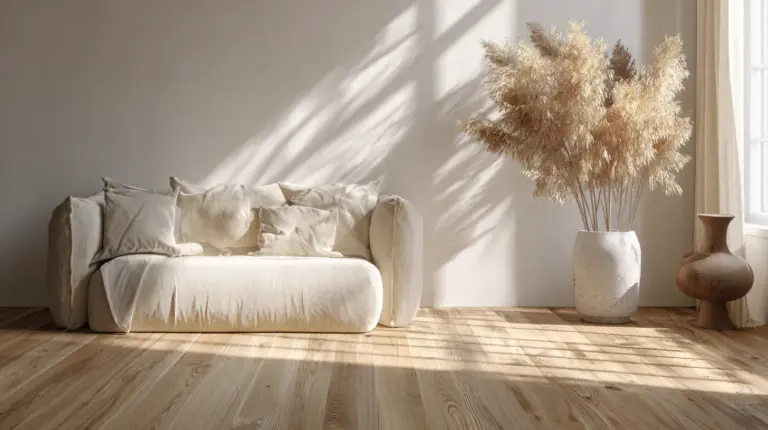
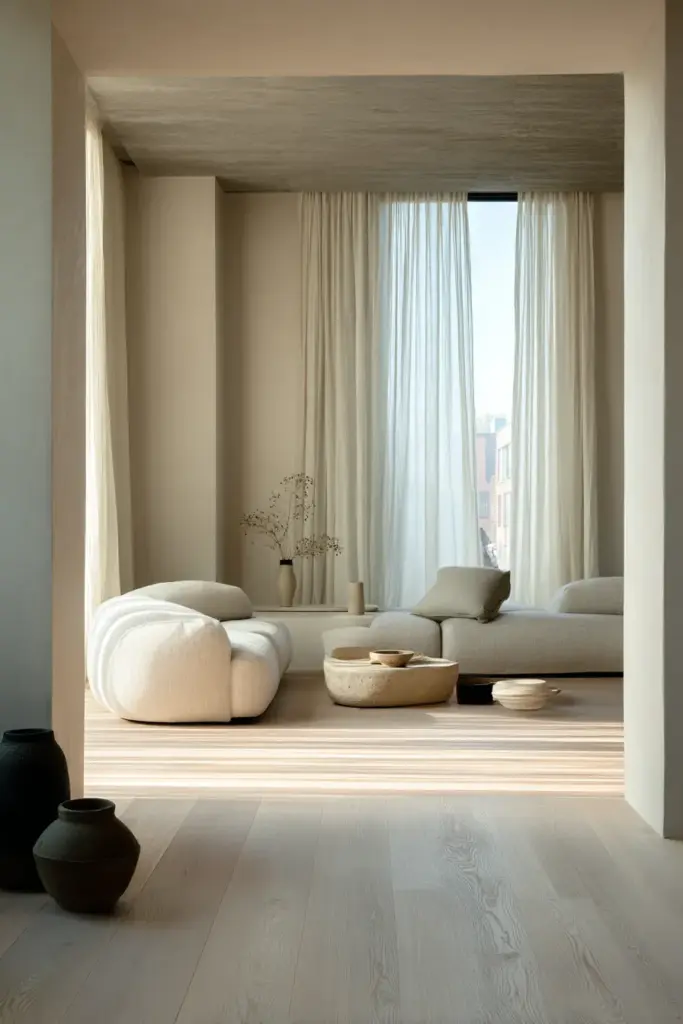
Of all Japandi flooring choices, pale oak carries the lightest psychological touch. Its cool warmth — that impossible combination of brightness and depth — expands a room visually while wrapping it in softness.
In small living rooms especially, pale oak flooring creates an illusion of space that has a genuine psychological effect: it reduces the mild anxiety that cramped environments trigger. Light reflects off the grain in shifting patterns throughout the day, making the room feel alive without feeling busy.
Walnut: The Grounding Floor
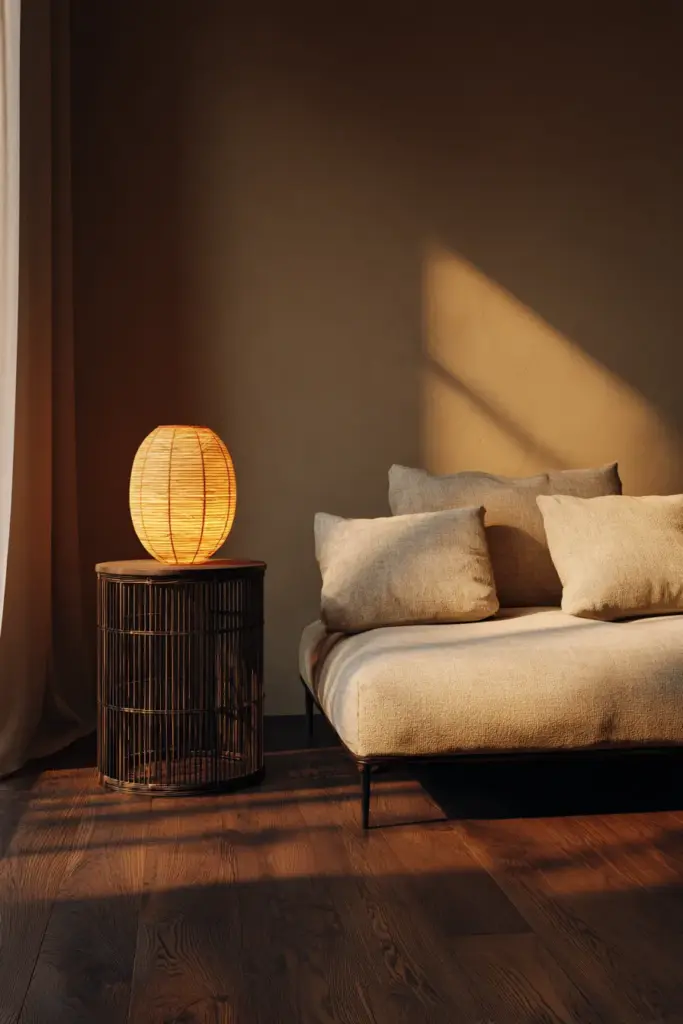
Walnut is darker, richer, more intimate. It draws a room inward, creating a sense of shelter and warmth. In Japandi design, walnut flooring pairs beautifully with linen sofas, rattan accents, and the low amber glow of paper lanterns.
Psychologically, walnut speaks to the part of us that wants to feel held. It is the floor you choose when you want a room that feels like an embrace at the end of a long day.
Bamboo: The Humid-Climate Choice
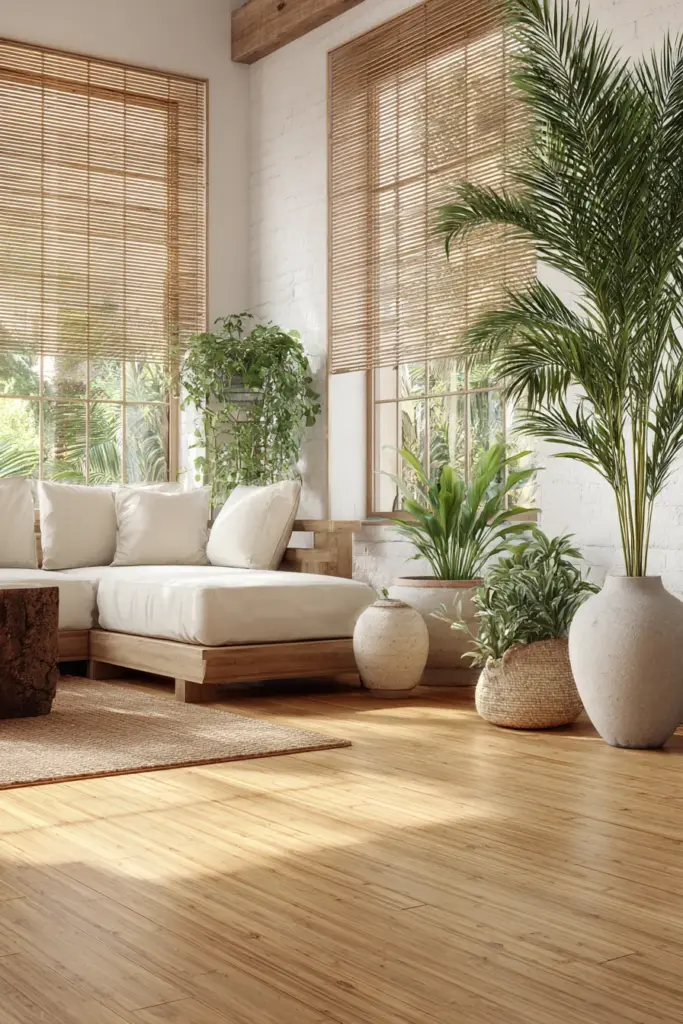
For homes in tropical climates — like those in Cavite or Silang — engineered bamboo offers something standard hardwood cannot: resilience against humidity without sacrificing warmth.
Bamboo carries a lightness and freshness that connects the indoors to the outdoor world. Its psychological effect is subtle but real: the slight visual lift of its grain, its association with nature, and its tactile smoothness underfoot all contribute to a sense of ease. And when a material performs well without demanding maintenance, the absence of worry is itself a form of calm.
Why Choose Natural Wood Floors for Japandi Living Rooms?
Biophilia, Beauty, and the Brain
The answer is simpler — and deeper — than aesthetics. Humans evolved in natural environments. Our nervous systems are calibrated to find safety and ease in natural materials: wood, stone, water, fiber. When your living room floor is made of real wood, your brain recognizes it as right.
This is biophilia in action. Research shows that nature connection — even in small, material doses like a wooden floor — can reduce anxiety levels by approximately 15%. That is not a negligible number. That is the difference between a home that drains you and one that restores you.
Natural wood also ages beautifully, which matters in Japandi design. The slight patina that develops over years of living tells a story of time, of presence, of a life well-inhabited. That story — visible in the grain beneath your feet — grounds you in the present moment.
Does Japandi Flooring Help with Anxiety in Small Spaces?
The Calm Power of Visual Simplicity
Yes — and the mechanism is specific. Anxiety in small spaces often stems from visual clutter, which overloads the brain’s attentional resources and triggers a low-grade stress response. A Japandi floor addresses this directly.
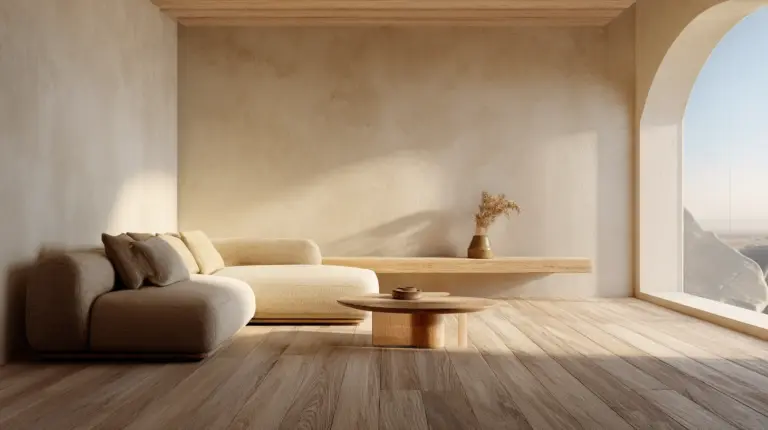
When flooring is light in tone, uninterrupted in pattern, and clean in finish, the brain processes the space as open rather than confined. This is why pale ash or natural bamboo works so powerfully in compact Filipino living rooms: the floor visually expands what the walls cannot.
Minimalist flooring also removes what designers call “visual noise at the ground plane” — the lowest field of vision as you move through a room. When that field is calm, the entire room feels calmer.
ADHD-Friendly Japandi Flooring
For those who live with ADHD or heightened sensory sensitivity, Japandi flooring offers something particularly valuable: predictability. A quiet, natural floor in a muted warm tone — pale ash, matte bamboo, soft concrete tile — gives the visual system a place to rest.
Avoid highly patterned tiles or busy wood grains in these contexts. Instead, choose floors that are gentle, consistent, and soft in color temperature. Pair them with warm LED lighting at floor level for a hygge effect that further quiets the nervous system.
How Light and Flooring Interact in Japandi Rooms
The Lighting-Flooring Relationship
Your floor does not exist in isolation. The way light falls across it — the warmth of its color temperature, the hour of day, the layering of natural and artificial sources — fundamentally changes its psychological effect.
In Japandi design, low-level LED lighting paired with pale wood flooring creates the hygge effect: a sense of enclosure, warmth, and golden safety. Think of a candle casting honey-colored light across an oak floor. That image alone slows the breath.
During the day, position your living room to catch eastern or northern light if possible. These cooler, more diffuse light sources work beautifully with Japandi floors — they illuminate the grain without glare, they shift gently throughout the day, they keep the space feeling alive without ever feeling harsh.
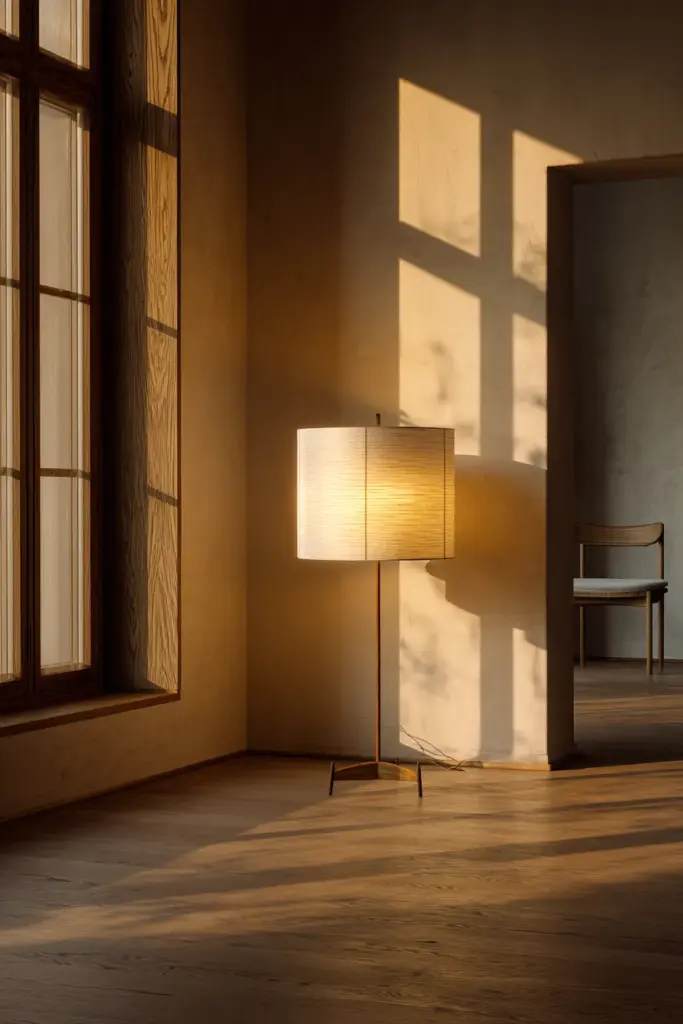
At evening, layer your sources. A floor lamp beside the sofa, a pendant above the center of the room, and perhaps a small candle or paper lantern at ground level. Let the light fall down onto the floor. Let the floor glow back.
Budget-Friendly Japandi Flooring: The DIY Wabi-Sabi Approach
Local Materials, Global Calm
You do not need to import Scandinavian oak to create a Japandi living room. In the Philippines, narra wood — treated with a neutral, matte stain — offers a stunning and culturally rooted Japandi aesthetic. Its grain is rich and alive. Its story is local.
Research in environmental psychology suggests that perceived luxury in a home environment can elevate mood by as much as 20% — and perceived luxury is not always about cost. A beautifully oiled narra floor, simply finished and thoughtfully maintained, reads as elevated and intentional. The calm it creates is real, regardless of the price tag.
DIY upcycling tips for a wabi-sabi Japandi floor:
- Sand an existing wooden floor and apply a pale, matte stain in ash grey or driftwood white
- Use a natural oil finish (like tung oil) instead of high-gloss lacquer — it preserves the sensory warmth of real wood
- Embrace small imperfections in the grain; fill large gaps with natural wood putty in a slightly lighter shade for visual interest
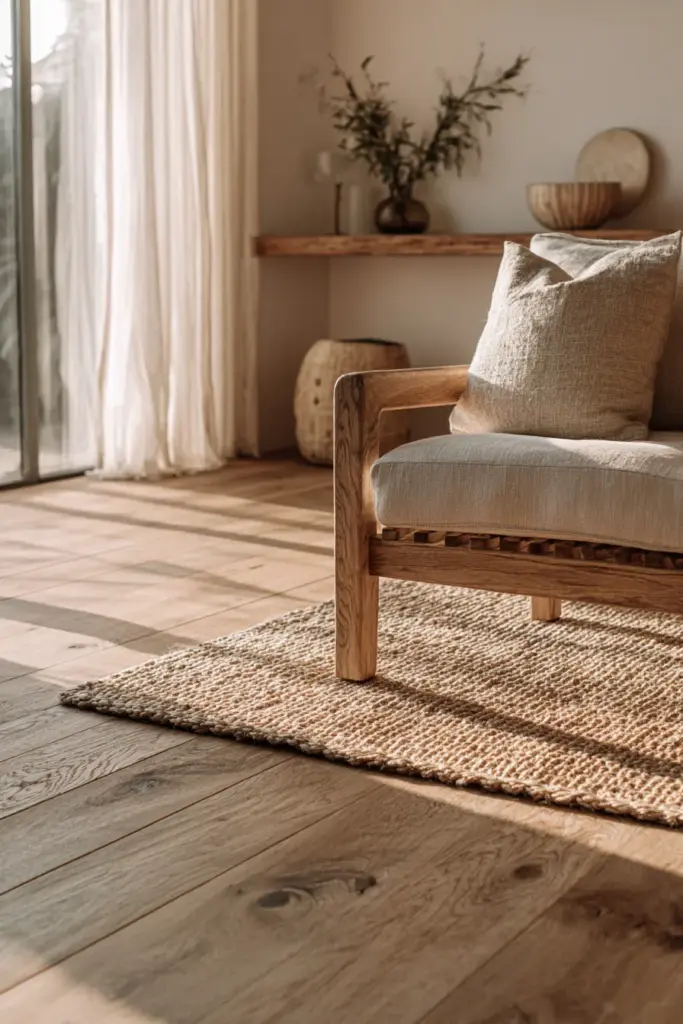
- Layer a simple hand-woven jute or wool rug at the center — this adds tactile contrast and defines the seating area with warmth
Japandi Flooring: A Sustainability Story
The Psychology of Doing Good
There is one more dimension to Japandi flooring psychology that deserves its own space: the emotional effect of sustainability.
When a material has a low environmental footprint — when it is sourced responsibly, processed simply, and designed to last — something shifts in how we relate to it. We feel less guilt, more gratitude. We care for it more thoughtfully. And that care, in turn, deepens our sense of connection to our home.
Engineered bamboo, FSC-certified oak, and reclaimed local timber all carry this quality. Their carbon footprint is measurably lower than synthetic alternatives. And the research is clear: nature connection reduces anxiety by approximately 15%, and knowing that your home is part of a sustainable story extends that effect beyond the visual and tactile.
Japandi Flooring Psychology: Key Takeaways
- Natural wood floors reduce cortisol — pale oak and ash are especially effective due to their light tone and subtle grain
- Wabi-sabi imperfection in flooring reduces performance anxiety and creates emotional permission to be human
- Minimalist flooring reduces decision fatigue and visual noise, promoting presence and calm
- Biophilia matters — even small doses of natural material connect the nervous system to safety and ease
- Light and flooring work together — warm LED layering amplifies the hygge effect of natural wood floors
- Small spaces benefit most from light, uninterrupted Japandi floors that expand the visual field
- Local materials like narra wood offer sustainable, mood-elevating Japandi aesthetics without the import cost
- Engineered bamboo is the ideal choice for tropical, high-humidity homes seeking Japandi serenity
Conclusion
The floor is the first thing a room gives you.
Before you sit down, before you light a candle, before you arrange a single object on a shelf — the floor speaks. It tells your body whether this is a place to rest or a place to perform. In Japandi design, the answer is always the same: you are safe here. Slow down.
Choosing a Japandi floor is not just an aesthetic decision. It is an act of care — for yourself, for the people who will live and gather in that space, and for the quiet ritual of coming home.
At ERYLIN, we believe that every design choice is a small philosophy. And a pale oak floor, oiled and imperfect and warm in the afternoon light, is one of the most honest philosophies we know.
Choose floors that restore you. Your nervous system will thank you.
Frequently Asked Questions
What is the best Japandi flooring for a small living room?
Pale oak or light ash flooring works best in small Japandi living rooms. Their cool warmth expands the visual field, reducing the psychological sense of confinement. Pair with minimal furniture and soft, warm lighting for maximum effect.
Does Japandi flooring really reduce anxiety?
Yes — through several psychological mechanisms. Natural wood grain activates biophilic responses in the brain, reducing cortisol. Minimalist flooring reduces visual clutter, which lowers cognitive load. And wabi-sabi imperfection in materials creates emotional ease by removing the pressure of perfection.
What flooring works best for Japandi style in humid tropical climates?
Engineered bamboo is the top choice for humid climates like those in Cavite and Silang. It resists moisture without sacrificing warmth, and its natural grain delivers the biophilic calm that defines Japandi flooring psychology.
How does lighting affect Japandi flooring psychology?
Warm, low-level LED lighting amplifies the hygge effect of natural wood floors. Light falling across grain creates a sense of warmth and enclosure that calms the nervous system. Avoid cool, overhead-only lighting — it flattens the floor’s texture and removes its emotional warmth.
Can I achieve Japandi flooring on a budget?
Absolutely. Local narra wood with a neutral matte stain delivers stunning Japandi aesthetics at a fraction of imported hardwood costs. Upcycling an existing floor with light sanding, natural oil finish, and thoughtful rug layering can transform a room’s psychological atmosphere without a full replacement.