
Table of Contents
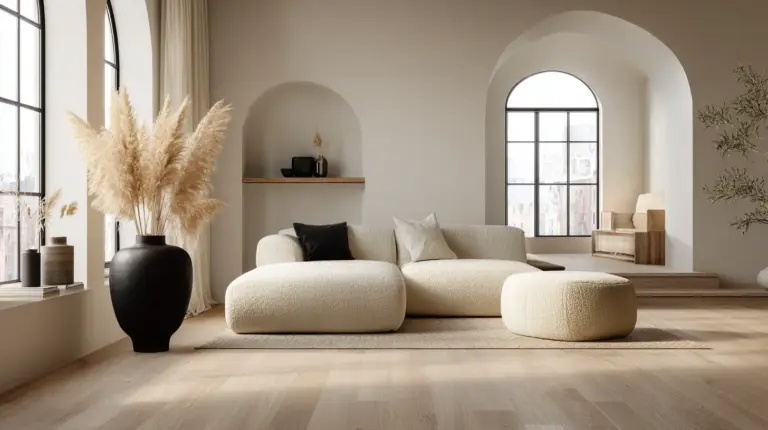
There’s a particular kind of stillness that settles into a room when the floor beneath your feet feels intentional. Not loud. Not performative. Just right. That’s the quiet promise of Japandi design — a philosophy that draws from Japanese wabi-sabi and Scandinavian hygge to create spaces that breathe, rest, and endure.
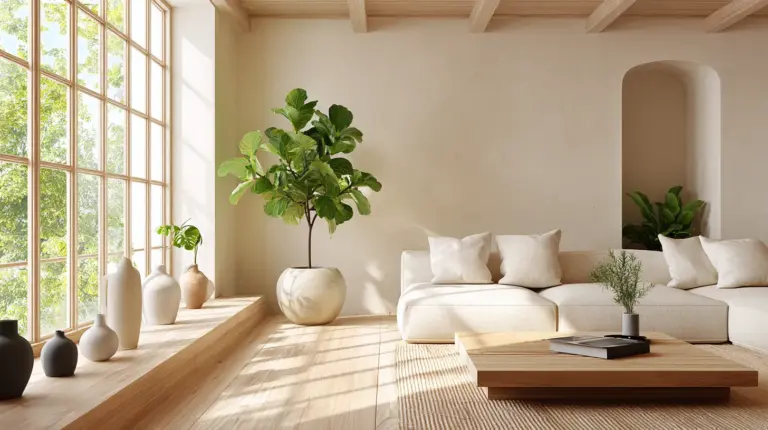
Flooring is the canvas of every living room. It grounds furniture, softens light, and tells the story of how a home is lived in. In Japandi interiors, the floor isn’t just practical — it’s emotional.
What makes Japandi flooring truly distinctive isn’t one single material. It’s the art of combining them. A warm-toned wood meeting a cool slab of stone. Soft cork layering beneath bamboo. Concrete anchoring the entryway while oak herringbone cradles the seating zone. When done thoughtfully, combining materials creates depth, visual rhythm, and a sense of deliberate beauty.
In this guide, we’ll walk you through everything you need to know about Japandi living room flooring combining materials — from the best pairings, to zoning techniques, transition solutions, and even budget-friendly ideas for smaller Philippine living rooms.
What Makes Japandi Flooring Different?
The Philosophy Behind the Floor
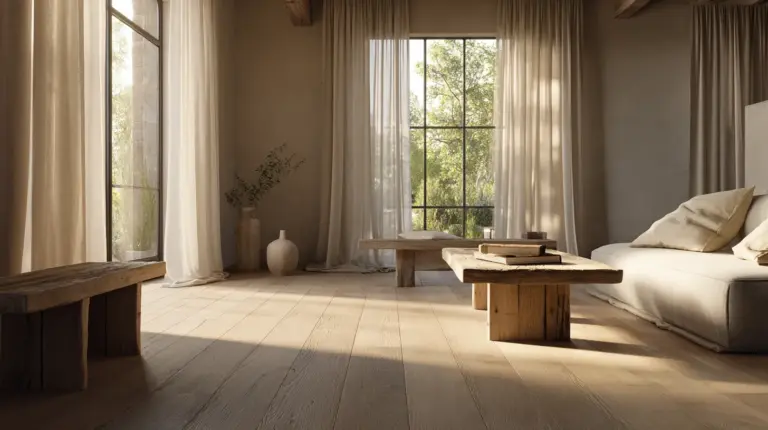
Japandi flooring isn’t about perfection. It celebrates the imperfect, the organic, and the quietly enduring. Natural grain variations in wood, the cool weight of stone, the warmth of cork — each material carries a story.
The palette stays neutral and warm: think ash, sand, warm taupe, and pale stone. Matte finishes are preferred over glossy ones, keeping the atmosphere grounded rather than reflective.
Key Principles to Follow
When layering materials in a Japandi living room, three principles guide every decision:
- Harmony over contrast — materials should feel like they belong to the same family, even when different.
- Sustainability first — eco-friendly options like bamboo, cork, and responsibly sourced timber align with Japandi’s respect for nature.
- Simplicity in transition — where two materials meet, the seam should be almost invisible or purposefully minimal.
The Best Materials for Japandi Living Room Flooring
Natural Wood: The Heart of the Floor
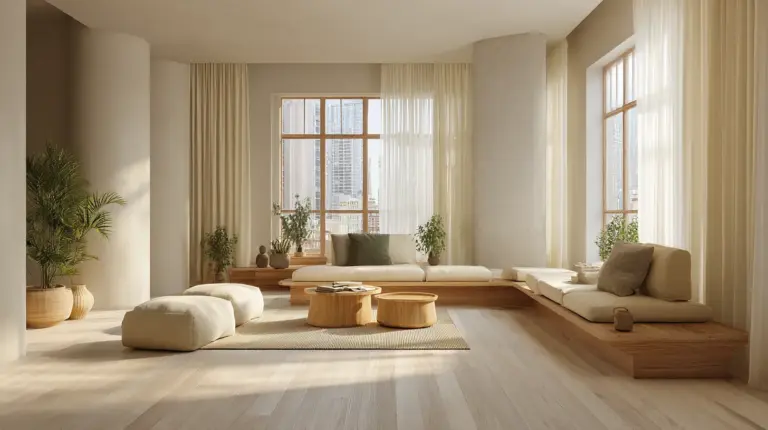
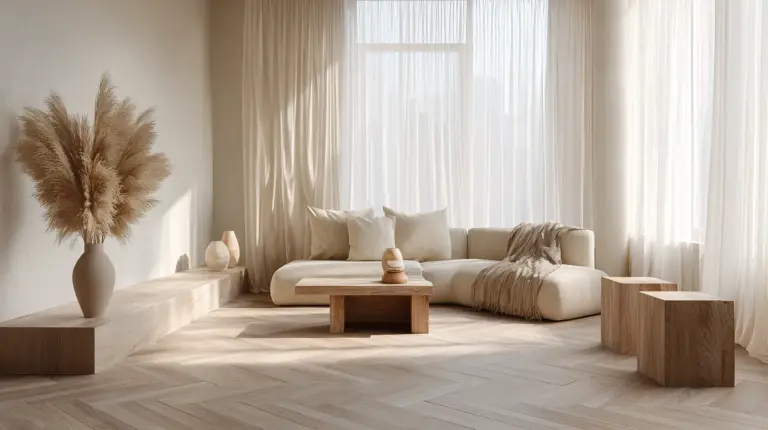
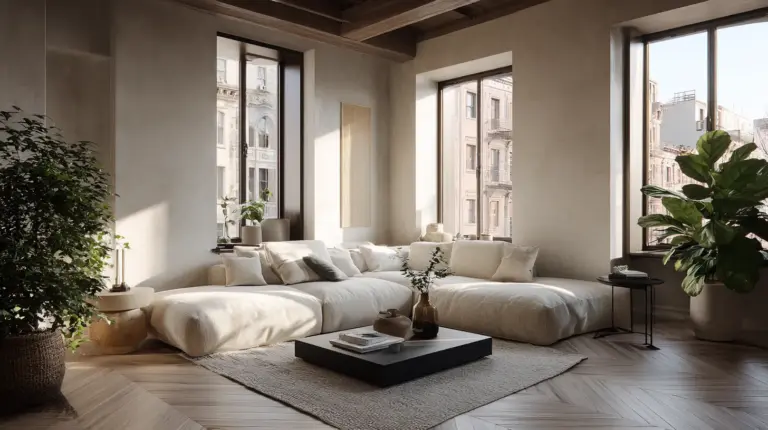
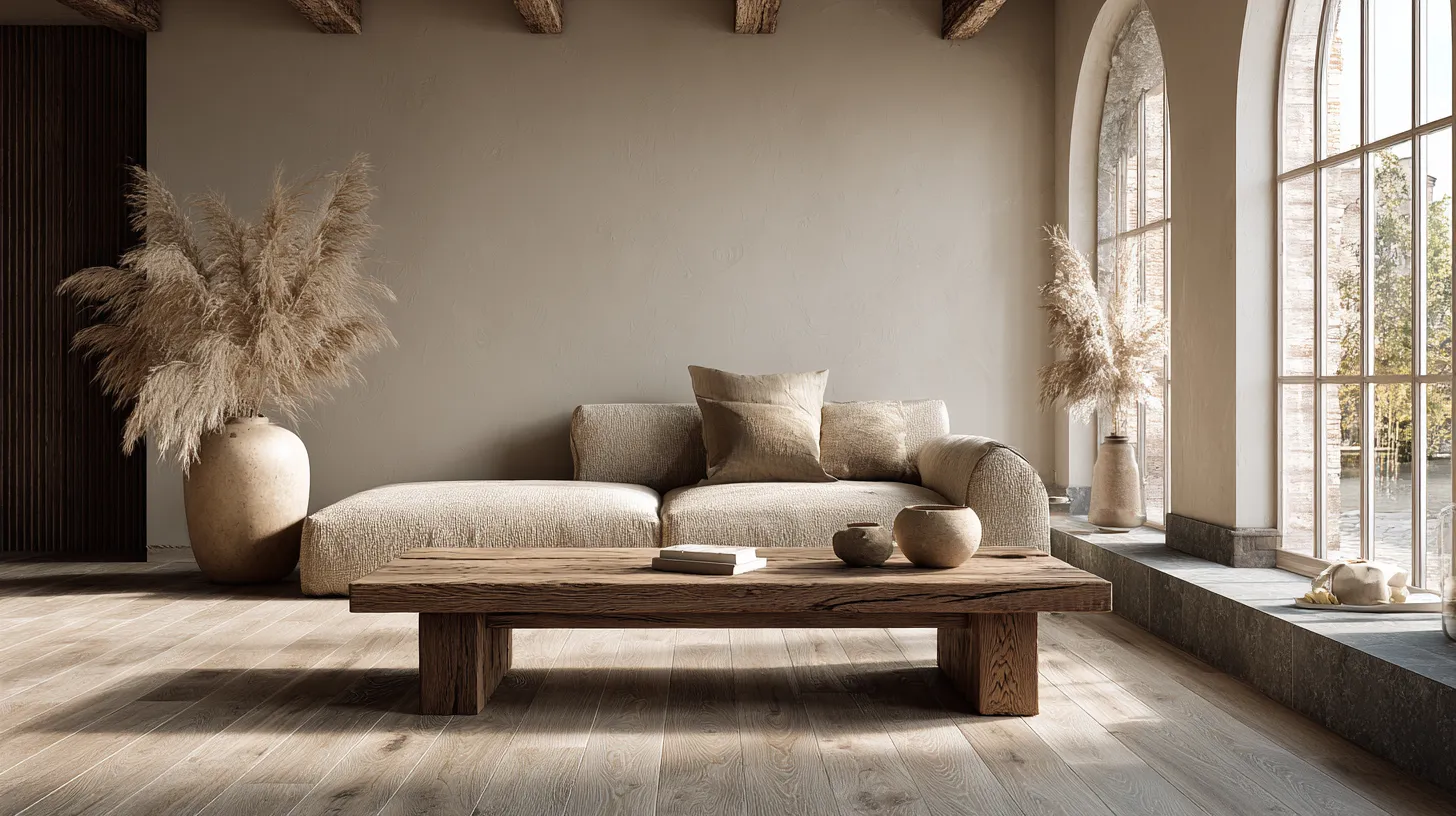
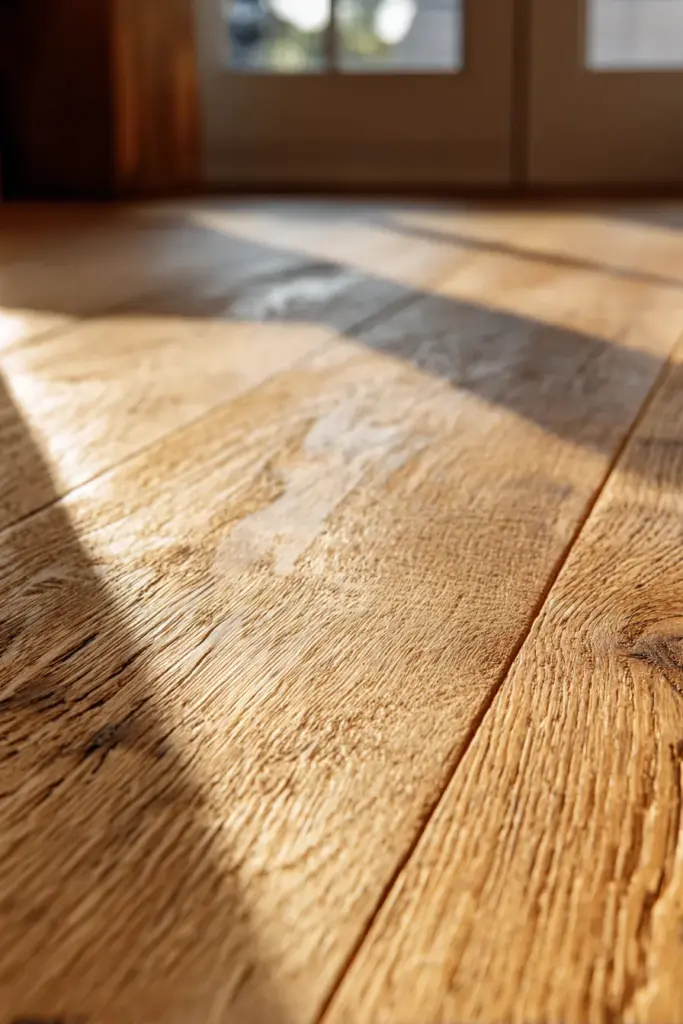
Nothing speaks Japandi more fluently than natural wood. Light oak, ash, and maple in matte finishes carry that warm-cool duality that the aesthetic demands. Wide planks feel spacious; herringbone patterns add quiet texture without chaos.
For Philippine homes, locally sourced hardwoods or engineered wood with a natural veneer work beautifully, offering durability in humid climates while keeping the look authentic.
Bamboo: The Eco-Conscious Alternative
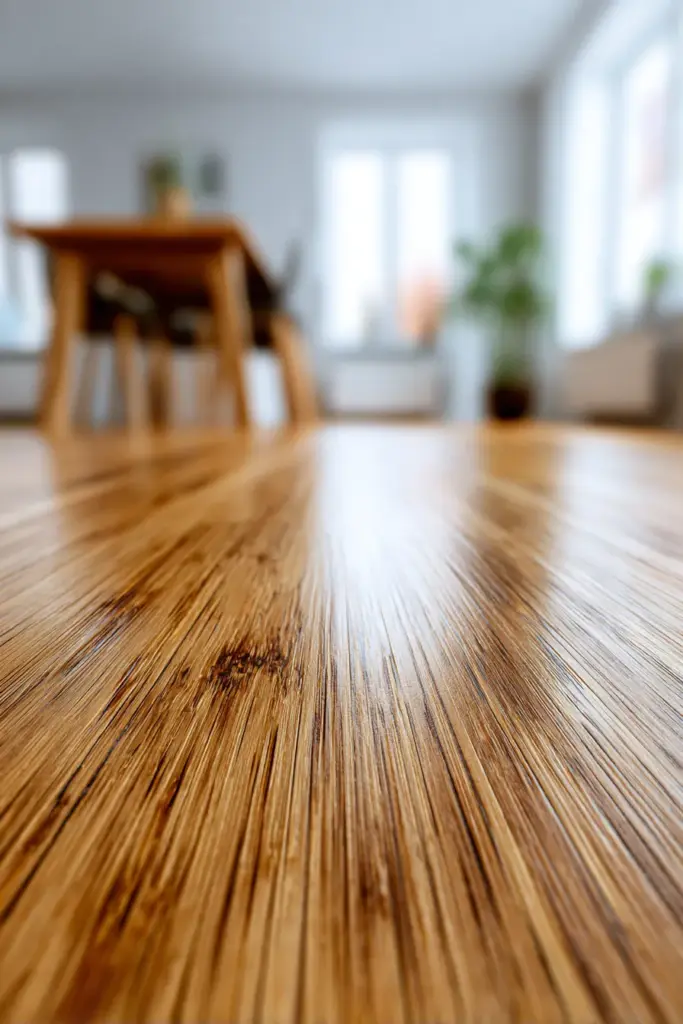
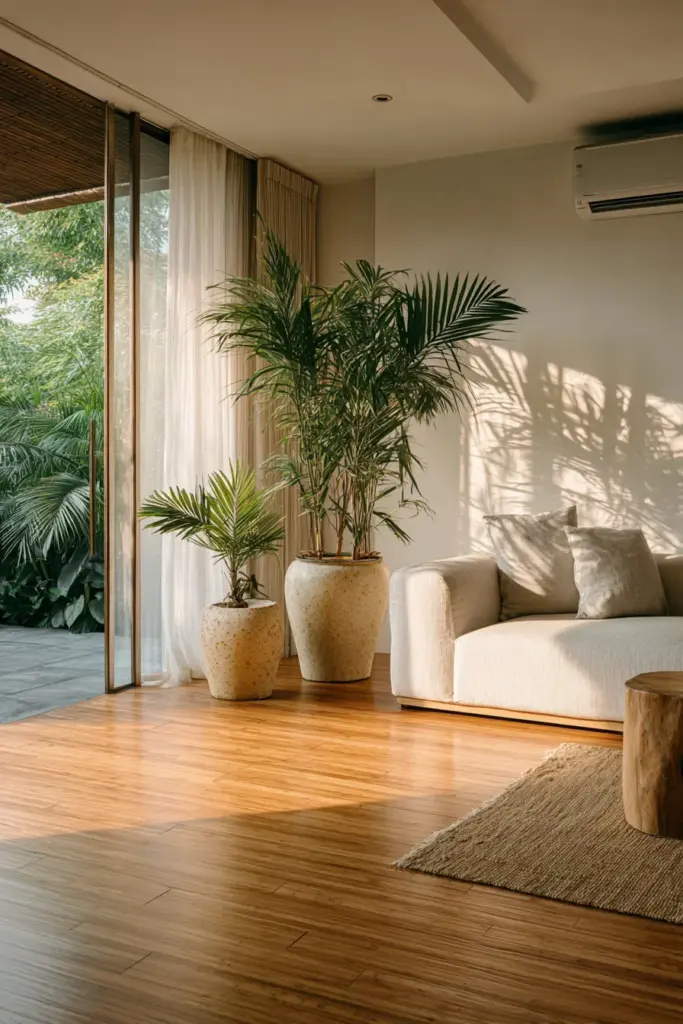
Bamboo is having a well-deserved moment. It’s harder than most hardwoods, grows rapidly, and carries an inherent warmth that slots perfectly into a Japandi palette. Strand-woven bamboo in honey or carbonized tones pairs effortlessly with stone and concrete.
Sourcing bamboo locally — especially from Calabarzon suppliers in the Philippines — keeps costs low while supporting sustainable practices. The material handles tropical humidity well when properly sealed.
Concrete: The Quiet Anchor
Polished or microtopped concrete is the sophisticated counterpart to wood’s warmth. It reads cool and industrial, but in a Japandi context, its matte surface and subtle texture make it meditative rather than cold.
Concrete works best near entryways, under dining areas, or in transitional zones — places where practical durability matters. Paired with a natural wood seating area, the contrast feels purposeful and beautiful.
Cork: The Underrated Layerer
Cork is soft underfoot, naturally insulating, and acoustically generous — it absorbs sound in a way no other flooring material does. For living rooms that double as reading nooks or meditation corners, a cork-and-wood combination creates an almost sensory sanctuary.
Its warm amber tones sit comfortably beside bamboo or pale stone, making it a natural team player in a multi-material floor plan.
Stone and Tile: Grounding the Space
Natural stone — slate, limestone, or even large-format ceramic that mimics stone — adds gravitas to a Japandi floor. Its cool surface against the warmth of wood creates the classic Japandi tension: stillness meeting softness.
Use stone near entryways, around fireplaces, or as an anchor for a low seating arrangement. The contrast with wood underfoot draws the eye through the room naturally.
How to Combine Flooring Materials in a Japandi Living Room
Zoning: The Art of Intentional Boundaries
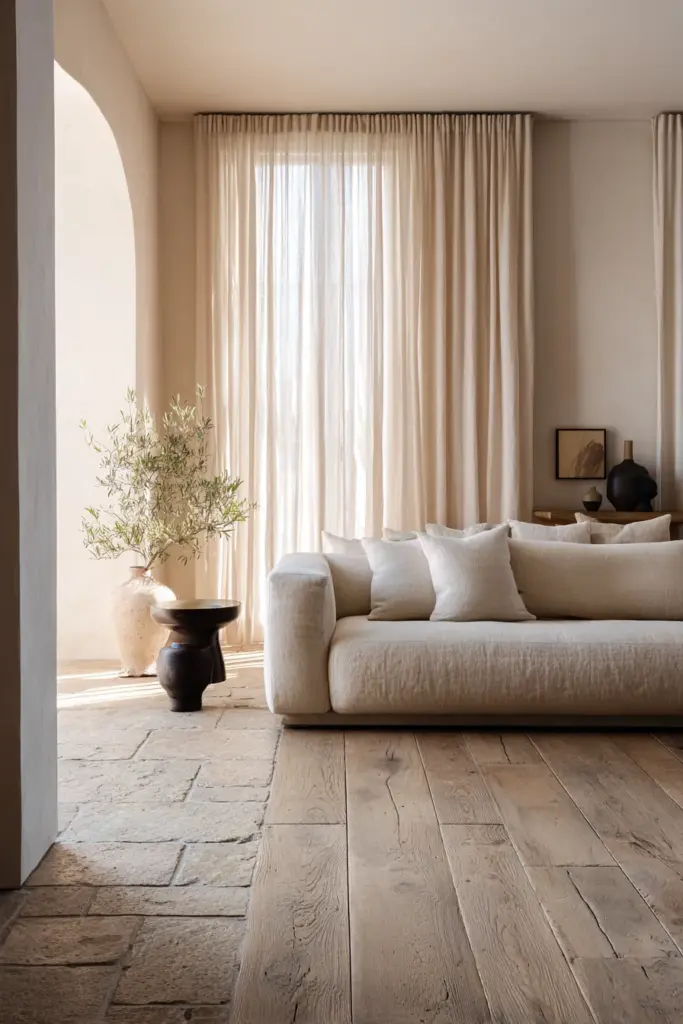
The most elegant way to combine materials is through functional zoning — using different flooring to define different areas of the room. Natural wood marks the seating area, where softness and warmth matter most. Concrete or stone flows near the entrance and any transition to outdoor spaces.
This approach removes the need for rugs to define zones (though a low-profile natural fiber rug adds another layer of warmth). The floor itself does the design work.
Zoning in Small Spaces
In a 20sqm living room — common in Metro Manila and surrounding provinces — material zoning needs to be even more deliberate. A single plank line running parallel to the longest wall, with wood on one side and a stone-look tile on the other, elongates the room visually. Keep the transition subtle and the tones close in value.
Vertical zoning can also work in compact spaces: use a lighter wood on the main floor area and a slightly darker bamboo or tile in a small entryway nook to create definition without overwhelming the space.
Transition Strips and Seamless Joints
Where two flooring materials meet, the transition must be handled with care. In Japandi interiors, the goal is either invisible or intentional — never accidental.
Options for transitions:
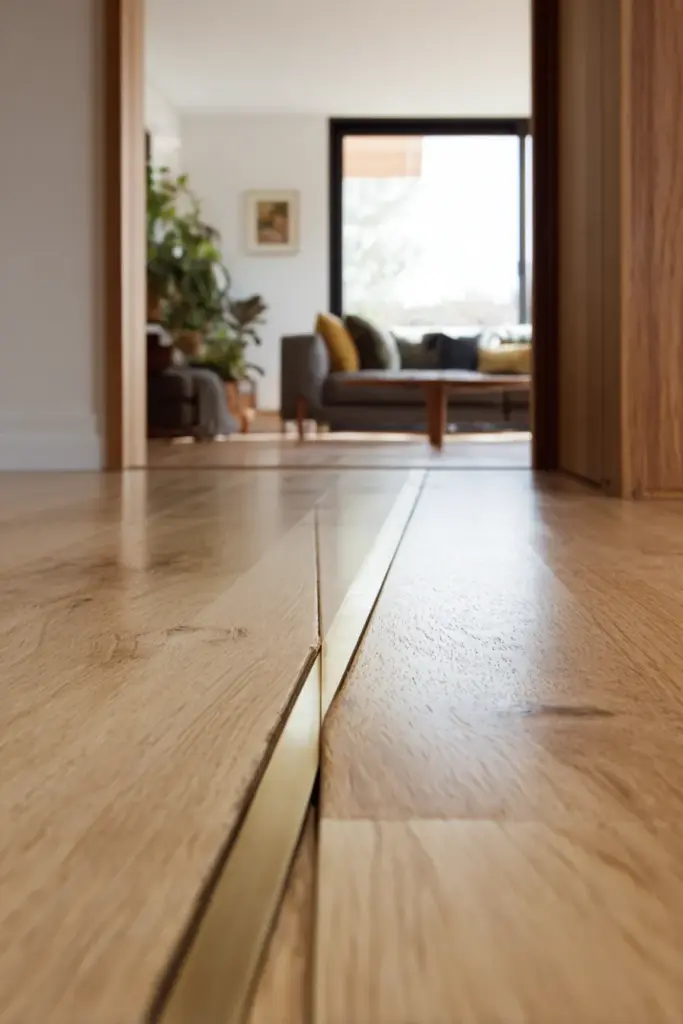
- Flush T-bar strips in brushed brass or matte black create a clean, modern line between wood and tile.
- Epoxy grout lines can be used to create near-seamless transitions between concrete and stone, especially in similar-toned materials.
- Natural wood threshold strips blend wood-to-cork or wood-to-bamboo transitions almost completely, maintaining the organic flow.
- Recessed metal channels give a refined architectural finish when transitioning from hardwood to stone or polished concrete.
The rule of thumb: the transition strip should complement, not compete. Choose finishes that echo the hardware or furniture details already in the space.
Material Pairing Guide
| Zone | Primary Material | Accent/Secondary | Transition Finish |
|---|---|---|---|
| Seating area | Light oak or ash | Cork underlayer | None visible |
| Entryway | Polished concrete | Stone tile | Matte brass T-bar |
| Reading nook | Bamboo | Cork panel | Natural wood strip |
| Open plan to dining | Wide-plank wood | Large stone tile | Recessed metal channel |
| Balcony transition | Stone tile | Weathered wood | Flush epoxy line |
Colour and Tone: Getting the Palette Right
Warm Neutrals Always Win
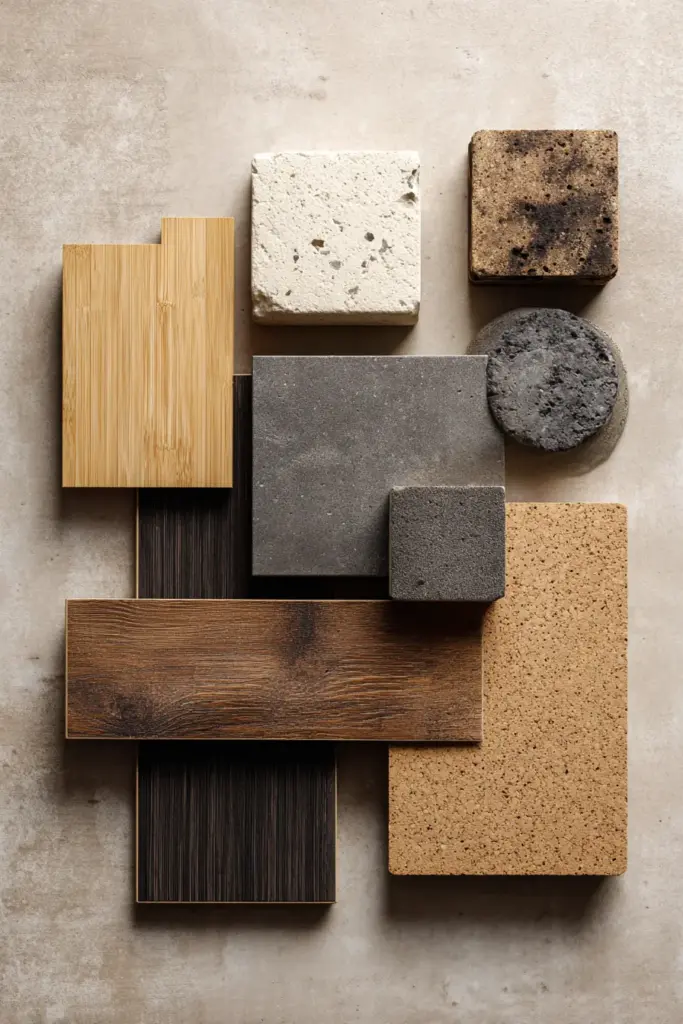
Japandi flooring lives in a palette of warm whites, driftwood grays, honey beiges, and deep earthy browns. The key is tonal harmony — all materials in a combined floor should sit within two to three tones of each other.
A pale oak beside a warm limestone reads as cohesive. A cool gray slate beside a golden bamboo creates just enough contrast to feel intentional. But a dark ebony wood beside a bright white tile creates tension that pulls the Japandi calm apart.
What Colours Work for Japandi Floors?
Stick to these tones across all your materials:
- Warm white and cream (for light stone or ceramic)
- Honey and amber (for bamboo and oak)
- Driftwood and ash (for matte-finish hardwoods)
- Warm sand and taupe (for concrete and limestone)
- Soft charcoal (for an accent tile near the entryway)
Avoid cool grays, high-gloss whites, or anything with a blue or green undertone — they push the palette into a Nordic-only direction and lose the Japanese warmth that defines Japandi.
Sustainable and Climate-Smart Choices
Flooring for Philippine Homes
Tropical climates demand flooring that handles humidity without warping, cupping, or growing mould. Engineered hardwood — a real wood veneer over a stable core — performs far better than solid wood in humid conditions. Bamboo with proper sealing is equally reliable.
Concrete and stone are naturally immune to humidity, making them excellent choices for ground-floor living rooms and areas close to exterior walls. For cork, ensure a sealed surface and good ventilation to keep it in its best condition.
Eco-Friendly Options Worth Prioritising
Japandi’s reverence for nature extends to how materials are sourced. When shopping for flooring in the Philippines:
- Look for bamboo from local Calabarzon suppliers — it grows fast, sequesters carbon, and travels a shorter distance to your door.
- Choose FSC-certified hardwood if going with solid or engineered wood.
- Consider reclaimed wood for the seating area — its imperfections are exactly what wabi-sabi celebrates.
- Explore cork sourced from sustainable bark harvests, which don’t harm the tree.
2026 Japandi Flooring Trends
The design world is moving toward material honesty — floors that look and feel like exactly what they are, with no artificial finishes trying to mimic something else. A bamboo floor that celebrates its grain. A concrete surface that shows its texture. A stone tile that wears its veining proudly.
Smart underfloor heating is gaining quiet traction in Japandi homes — especially under stone and tile zones. It removes the need for visible heaters, keeps the aesthetic clean, and makes concrete and stone feel as warm as wood underfoot.
Wider planks, longer boards, and minimal grout lines dominate the material conversation for 2026. The floor should read as one continuous, calm surface — even when it’s made from three different things.
Quick Checklist: Japandi Flooring Combining Materials
- Choose materials within two to three tones of each other for visual harmony.
- Use natural wood in the seating zone for warmth and comfort underfoot.
- Anchor entryways and transition areas with stone, tile, or concrete.
- Layer cork beneath wood or bamboo zones for acoustic softness and insulation.
- Select matte finishes across all materials — avoid gloss at every stage.
- Plan transition strips before installation; choose flush or recessed options for a seamless look.
- Prioritise sustainable and humidity-resistant materials for Philippine climates.
- Keep the colour palette warm and neutral — honey, ash, sand, taupe, and warm stone.
- Use zoning (not rugs) as your first tool for defining areas in compact living rooms.
- Incorporate reclaimed or locally sourced materials to honour the Japandi philosophy of conscious living.
A Closing Thought
The most beautiful Japandi living rooms don’t announce themselves. They settle around you like a quiet afternoon — light falling softly across a warm wood floor, the cool edge of stone near the door, the faint sound of silence made possible by cork beneath your feet.
Combining materials isn’t about making things complicated. It’s about understanding what each surface offers — its warmth, its weight, its texture — and letting them tell a story together. One that feels like home the moment you step inside.
At ERYLIN, we believe every floor should be a foundation for the life you actually want to live. Calm. Considered. Deeply yours.
Frequently Asked Questions
What is the best flooring for a Japandi living room?
Natural wood — particularly light oak, ash, or bamboo — is the most popular choice for Japandi living rooms. These materials offer warmth, sustainability, and a matte finish that suits the aesthetic beautifully. For best results, combine wood in the seating area with stone or concrete near entrances for a layered, intentional look.
Can you mix wood and tile in a Japandi design?
Absolutely. Wood and tile is one of the most harmonious combinations in Japandi flooring. The key is choosing tile in a warm neutral tone — limestone-look, warm concrete, or natural slate — and using a subtle transition strip to connect the two surfaces. The contrast should feel calm and purposeful, not jarring.
How do you choose Japandi flooring materials?
Start with your colour palette: warm whites, honey tones, driftwood grays, and sandy beiges. Then consider your climate and lifestyle. For humid environments like the Philippines, engineered wood, bamboo, and stone outperform solid hardwood. Prioritise matte finishes, sustainable sourcing, and materials that feel good underfoot.
What colours work best for Japandi floors?
Warm neutrals are the foundation of any Japandi floor palette. Look for materials in honey amber, warm ash, pale limestone, sand, and soft taupe. Avoid cool grays or stark whites — these shift the palette toward purely Scandinavian and lose the Japanese warmth that makes Japandi special.
Is bamboo a good choice for Japandi living rooms?
Yes — bamboo is one of the most Japandi-aligned flooring options available. It’s eco-friendly, harder than most hardwoods, and carries a natural warmth that fits the aesthetic perfectly. Strand-woven bamboo in honey or carbonized tones pairs well with stone, concrete, and cork. In the Philippines, locally sourced bamboo is also an affordable and sustainable option.