
Table of Contents
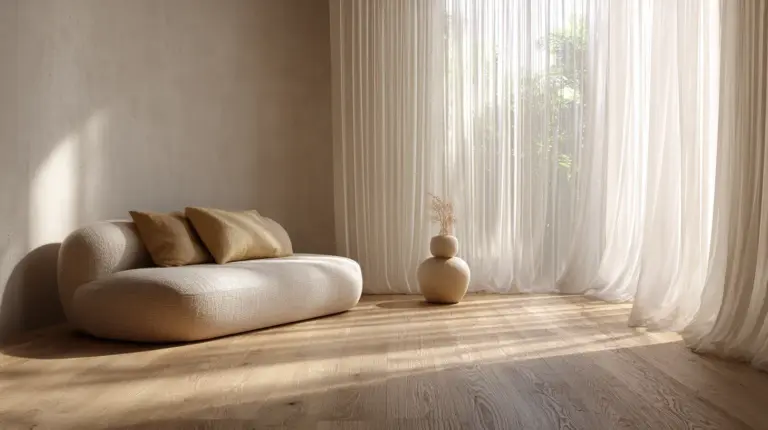
There is something quietly magical about stepping onto a floor that feels like it belongs to the earth. Smooth, cool, honest. A surface that asks nothing of you but presence. That is the soul of Japandi — and it begins, quite literally, beneath your feet.
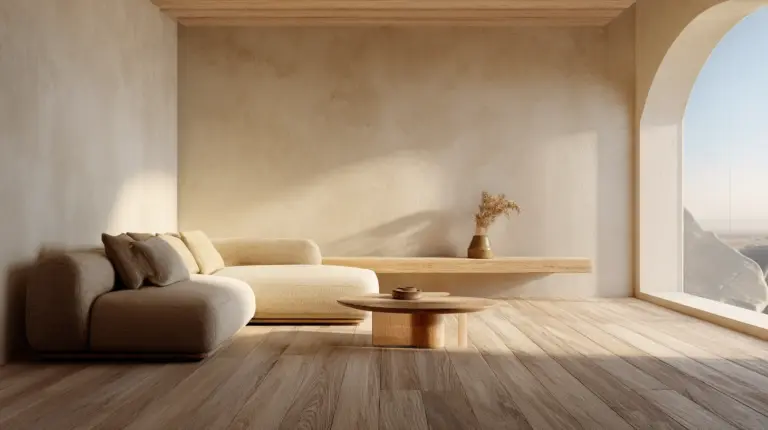
Japandi is the meeting of two philosophies: Japanese wabi-sabi, which finds beauty in imperfection and impermanence, and Scandinavian hygge, which wraps you in warmth and ease. Together, they create spaces that feel both refined and deeply human. And in no room does this harmony speak more clearly than the living room.
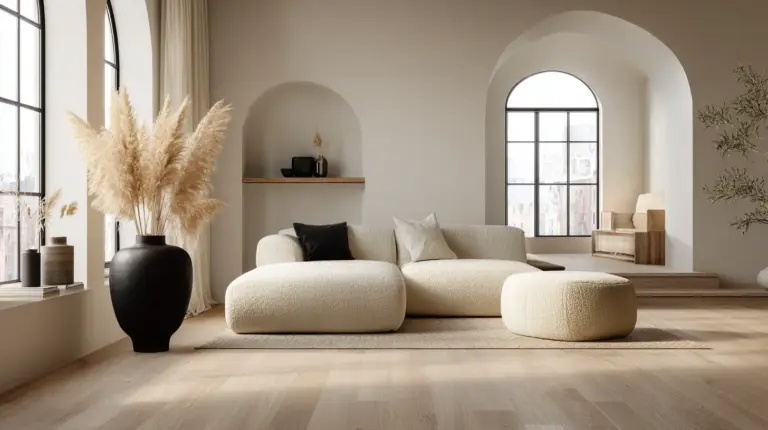
Your floor is the foundation of that story. It sets the palette, the mood, the texture. It is what your bare feet feel in the morning and what catches the soft glow of a paper lantern at dusk. Choosing the right Japandi living room flooring — one that honors Japanese elements — is one of the most transformative decisions you can make for your home.
Let us walk through it together.
What Is the Best Flooring for a Japandi Living Room?
The best Japandi flooring feels natural, quiet, and grounded. It should carry the memory of the material it came from — the knot in a bamboo stalk, the cool stillness of stone, the soft give of cork underfoot.
Japanese design philosophy prizes connection to nature above all else. So your floor should look like it was found, not manufactured. Light tones, subtle grain, matte finishes, and honest textures are the hallmarks of a truly Japandi-inspired floor.
The Core Principles to Look For
- Natural materials — bamboo, wood, cork, stone, or concrete
- Matte or low-sheen finishes — avoid high-gloss surfaces, which feel cold and commercial
- Neutral tones — warm whites, ash grays, honey beiges, and soft tawny browns
- Subtle imperfection — look for visible grain, natural knots, or slight color variation
- Sustainability — FSC-certified wood or locally sourced bamboo aligns with both Japanese and Scandinavian values
Japandi Flooring Ideas: Materials That Honor Japanese Elements
1. Bamboo Flooring — The Japanese Soul of Sustainability
Bamboo is perhaps the most symbolically resonant material you can choose for a Japandi living room. In Japanese culture, bamboo represents resilience, flexibility, and quiet strength. And practically speaking, it is one of the most sustainable flooring materials in the world — growing to full height in just a few years.
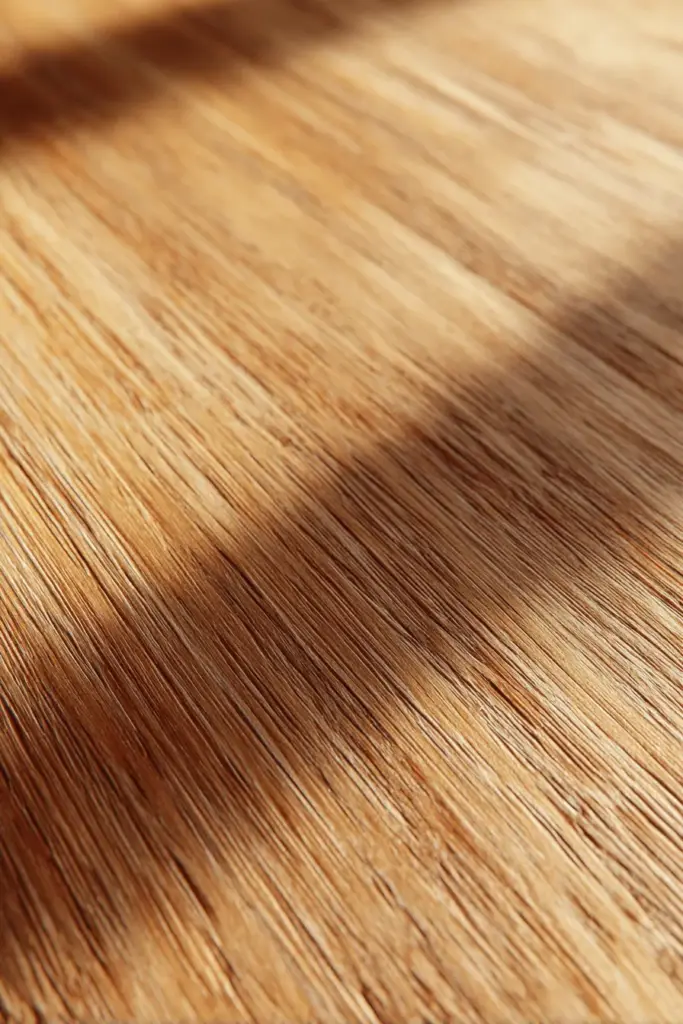
Strand-woven bamboo is particularly beautiful for Japandi spaces. It is dense, durable, and carries a fine, linear grain that reads as both modern and organic. Choose a natural or carbonized tone — pale gold or warm caramel — and finish it with a matte sealer.
For homes in tropical climates like the Philippines, look for bamboo specifically sealed for humidity resistance. FSC-certified bamboo from Philippine plantations is an excellent locally sourced option, offering both eco-credentials and natural beauty. Approximate cost: PHP 2,000–2,800 per sqm installed.
2. Natural Hardwood — Warmth You Can Feel
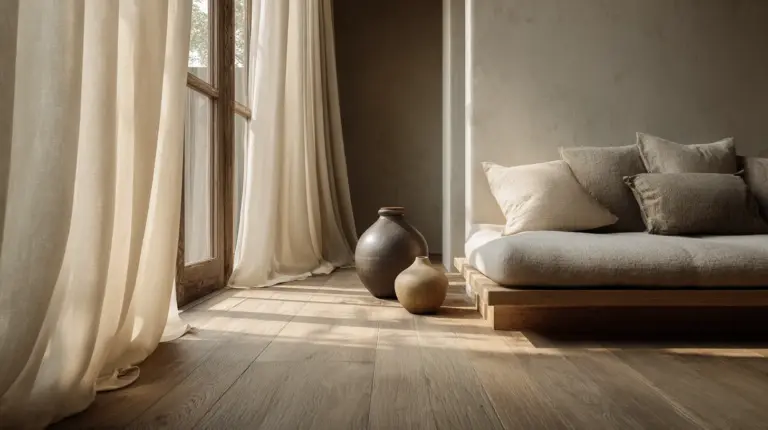
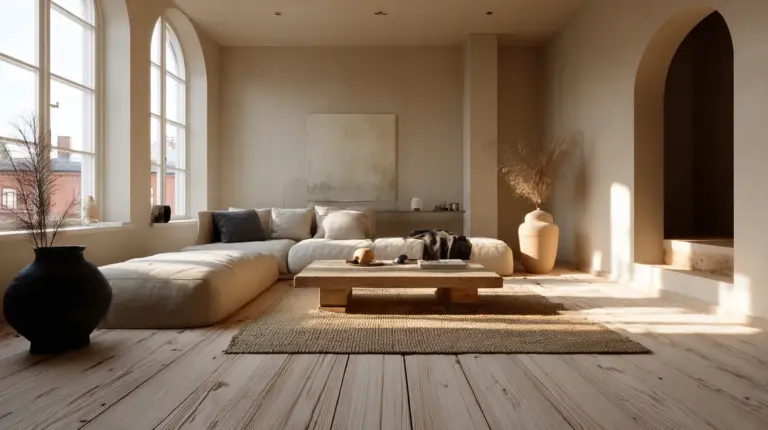
There is no substitute for the warmth of real wood underfoot. Light-toned hardwoods — oak, ash, maple, and hickory — are the most popular choices for Japandi living rooms. Their pale, grain-forward surfaces reflect morning light beautifully and age with grace.
Japanese design celebrates wabi-sabi imperfections, so don’t shy away from floors with visible knots, slight color variation, or natural character marks. These are not flaws — they are the floor’s story.
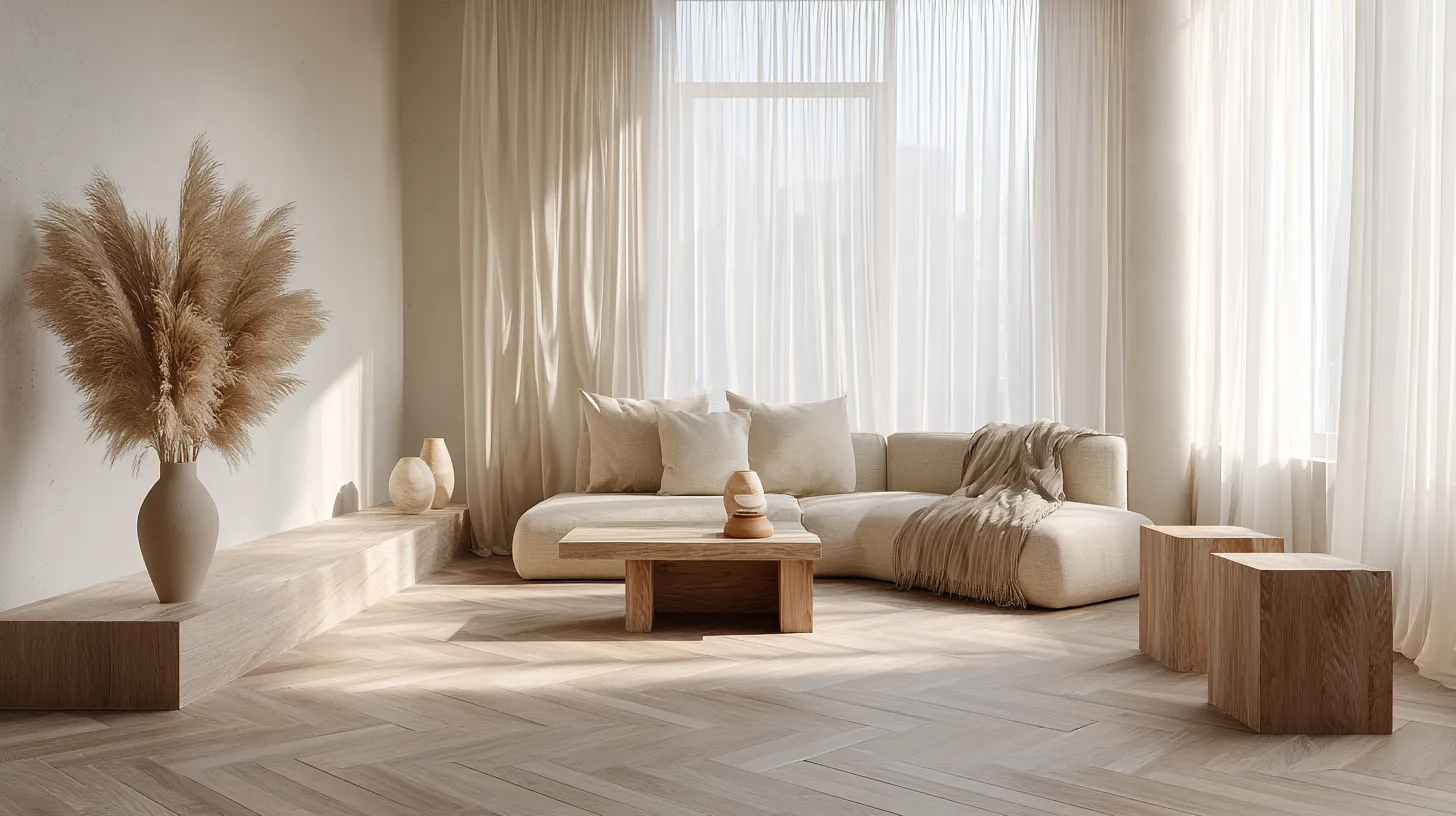
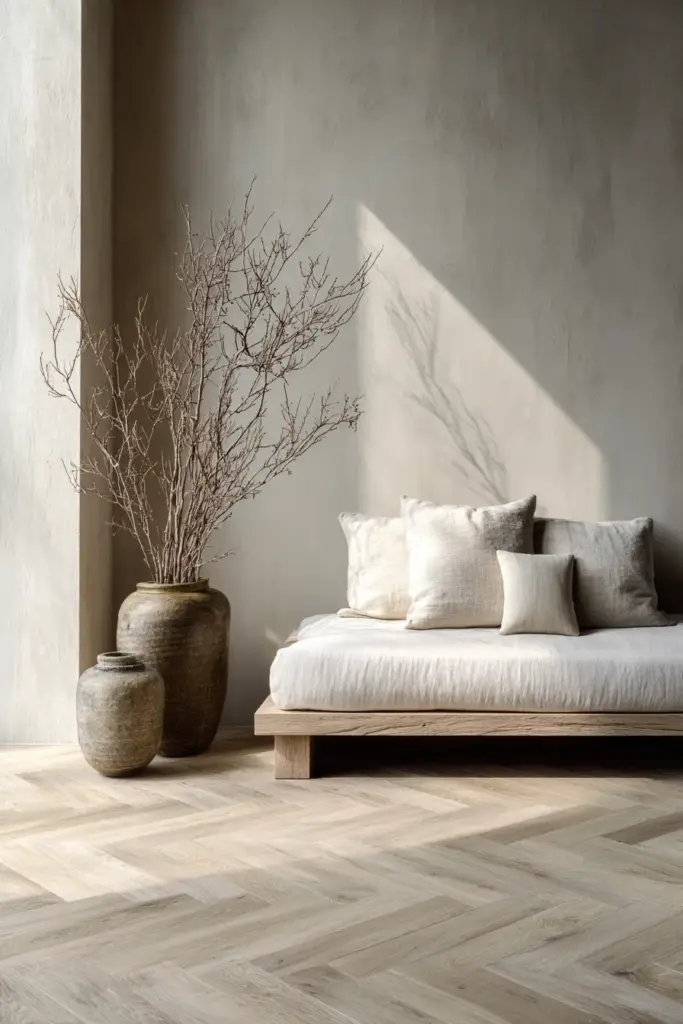
Pro tip: Lay your hardwood planks in a simple straight pattern or a subtle herringbone for a touch of artisanal detail. Herringbone is a favorite in Japandi interiors for the way it adds rhythm without noise.
For humid environments, opt for engineered hardwood over solid wood — it offers the same surface warmth with greater dimensional stability.
3. Tatami-Inspired Flooring — Authentic Japanese Character
No Japanese design article would be complete without honoring the tatami. Traditional tatami mats — woven from igusa (rush grass) over a rice straw core — define the aesthetic of Japanese interiors. They are soft, aromatic, and deeply tied to a sense of home.
In a contemporary Japandi living room, full tatami installation may not be practical, but the spirit can be honored beautifully:
- Tatami-inspired area rugs woven from natural rush, jute, or seagrass create the same soft, earthy texture underfoot
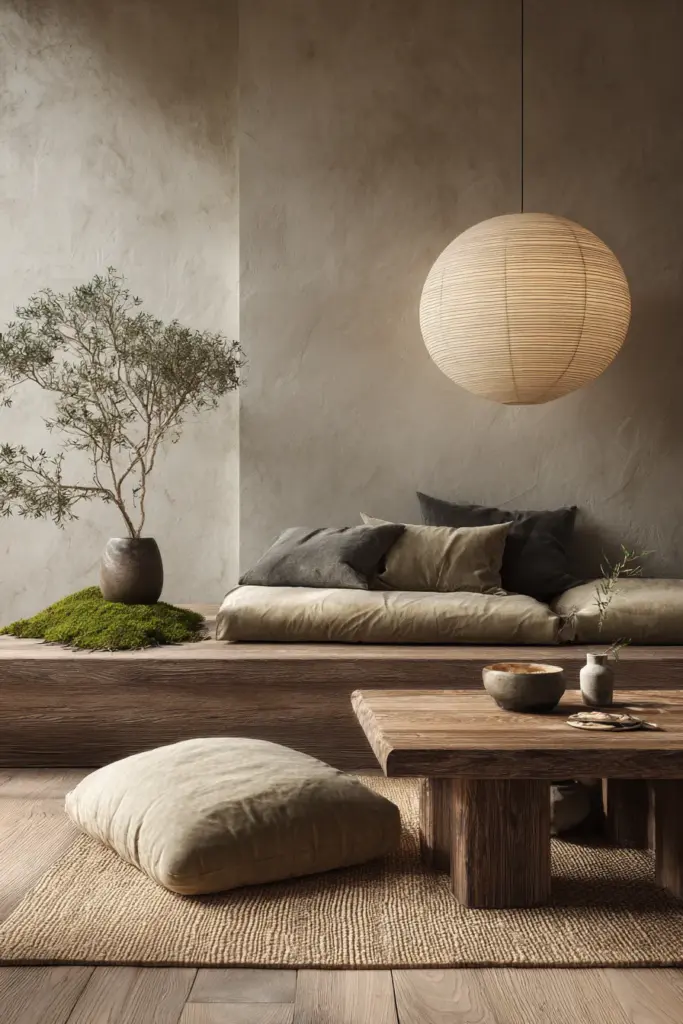
- A tatami zone in one corner — delineated with a low platform and natural fiber mat — introduces authentic Japanese character into a modern space
- Tatami tile panels are increasingly available as modular flooring options, allowing you to incorporate the real material in a flexible format
The gentle grassy scent of real rush matting, especially in a warm, sunlit room, is one of the most distinctly Japanese sensory experiences you can bring into your home.
4. Cork Flooring — Soft, Silent, Sustainable
Cork is an undersung hero of Japandi design. Harvested from the bark of cork oak trees without cutting them down, it is one of the most sustainable flooring options available. It is also naturally antimicrobial, moisture-resistant, and extraordinarily soft underfoot.
In a Japandi living room, cork’s warm tan tones and subtle cell-like texture echo the natural, organic materials that both Japanese and Scandinavian design traditions celebrate. It absorbs sound beautifully — making it ideal for the quiet, contemplative atmosphere that Japandi spaces aspire to.
Choose unfaced cork tiles in their natural color for an authentic look, or opt for cork planks with a light matte finish.
5. Stone and Concrete — Cool, Grounded, Elemental
Natural stone — slate, limestone, sandstone — brings the outside in with an almost meditative gravity. In Japanese design, stone is sacred. It appears in karesansui (Zen rock gardens), entry paths, and bathing spaces for a reason: it roots you.
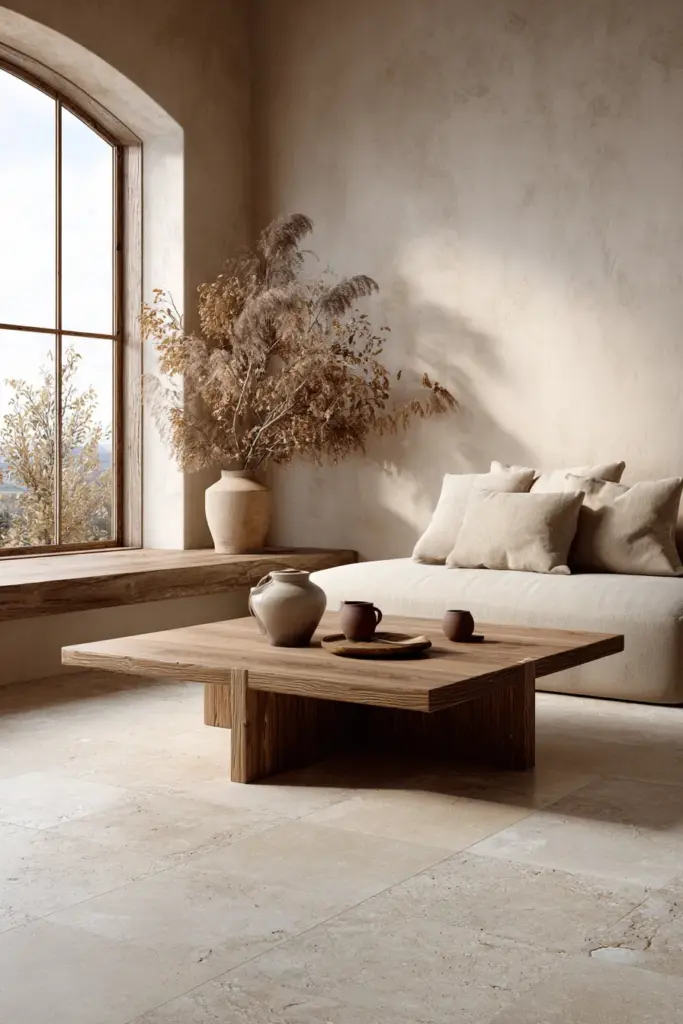
In a Japandi living room, light limestone or pale sandstone tiles create a floor that feels ancient and fresh at once. Their cool touch in warm weather and their subtle color variation make them genuinely beautiful.
For those who love the aesthetic but need a budget-friendly alternative, concrete-look porcelain tiles have come a long way. Modern options are nearly indistinguishable from real concrete, with matte finishes and organic color variation. They are also highly durable and moisture resistant — ideal for tropical climates.
Approximate cost comparison:
| Flooring Material | Approximate Cost (PH) | Durability | Humidity Resistance |
|---|---|---|---|
| Bamboo (strand-woven) | PHP 2,000–2,800/sqm | High | Medium–High (sealed) |
| Engineered Hardwood | PHP 3,000–5,000/sqm | High | Medium (engineered) |
| Natural Stone | PHP 2,500–6,000/sqm | Very High | High |
| Concrete-Look Tile | PHP 1,500–2,500/sqm | Very High | Very High |
| Cork | PHP 1,800–3,000/sqm | Medium | Medium (sealed) |
| Tatami (natural rush) | PHP 800–1,500/mat | Medium | Low–Medium |
Japanese Flooring Techniques for the Living Room
The Genkan Zone — A Japanese Entry Ritual
One of the most meaningful Japanese flooring traditions is the genkan — the entryway transition zone where you remove your shoes before entering the home. In Japanese culture, this act of removal is both practical and symbolic: you leave the outside world at the door.
In a small Manila apartment or studio, you can create a beautiful genkan-inspired zone by:
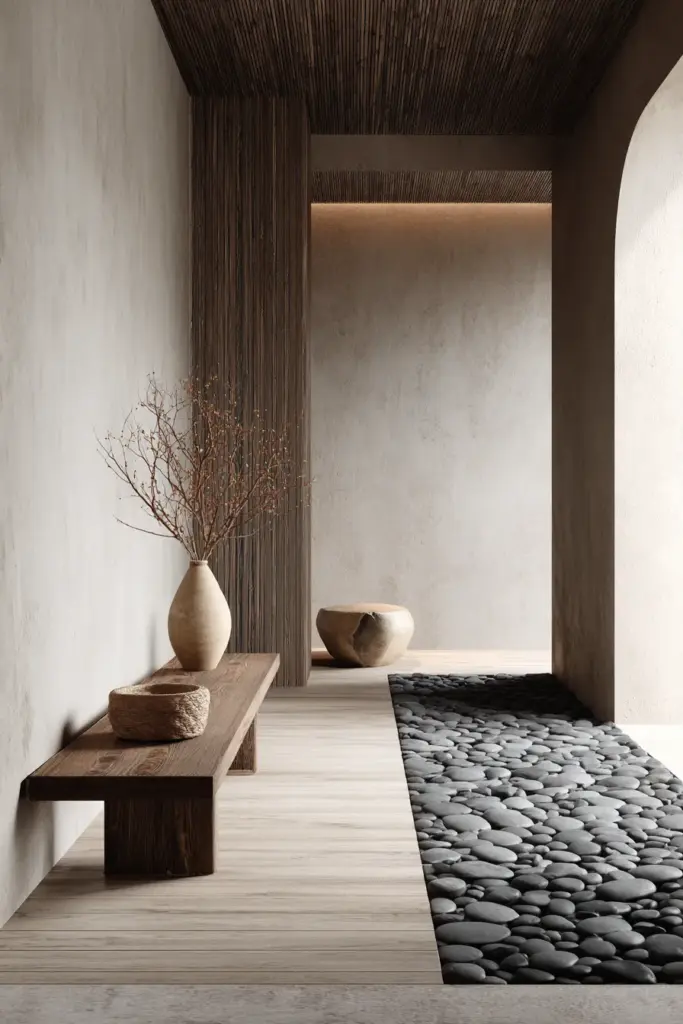
- Lowering the entry floor slightly (if structurally possible) or using a contrasting tile or stone to mark the transition
- Placing a smooth river pebble mat or dark slate tile at the entry point
- Adding a low wooden bench and a simple ceramic vessel for storage
This small design move carries enormous atmosphere. It signals, quietly, that this is a place of calm.
Wabi-Sabi Wood Imperfections — Embrace the Grain
In Japanese aesthetics, wabi-sabi celebrates the beauty of imperfection. When choosing your Japandi floor, this means actively seeking out wood with visible grain, small knots, natural color shifts, and even the occasional character mark.
Resist the urge to sand everything to uniformity. A floor that tells its own story — that shows the rings of the tree it came from, the seasons it lived through — is infinitely more beautiful in a Japandi space than a perfectly homogenous surface.
Pairing Your Floor with Japanese-Inspired Elements
The floor does not exist alone. It is part of a conversation with everything above it.
With lighting: Place washi paper lanterns or low wooden pendant lights to cast a warm, diffused glow across natural wood or bamboo. The grain comes alive in soft light. See our guide to [Japandi lighting ideas] for more inspiration.
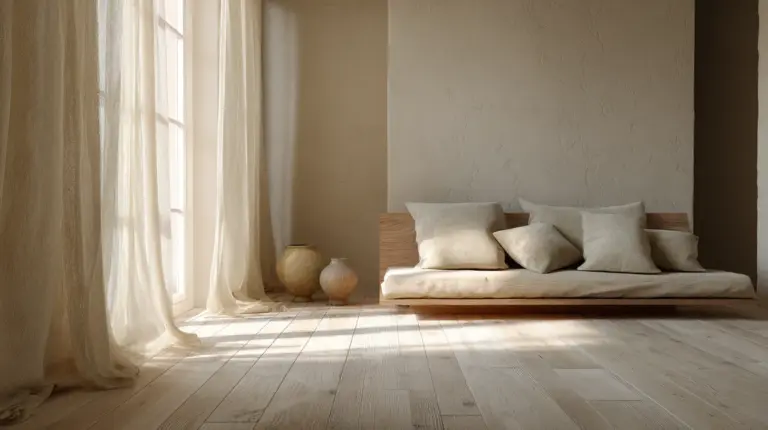
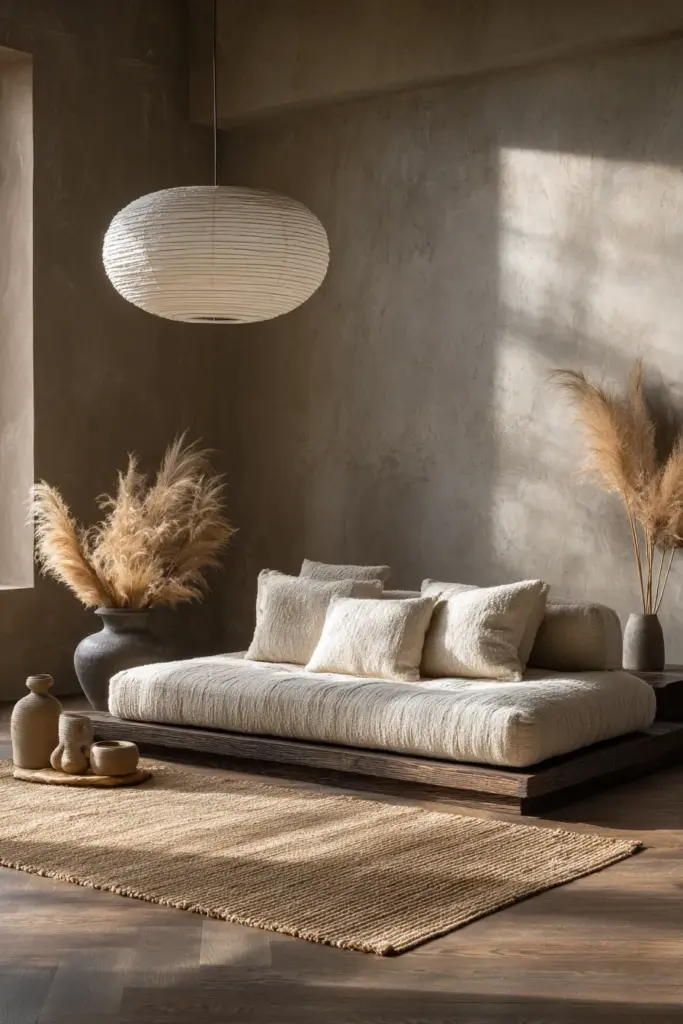
With furniture: Japanese-influenced [Japandi furniture] sits low to the ground — platform sofas, floor cushions, low coffee tables. This closeness to the floor makes the flooring itself a design feature, not a background. Choose furniture legs in natural wood tones that echo your flooring material.
With textiles: Layer a tatami-inspired rug or a natural linen throw rug over your main floor surface to soften the space and add texture contrast. The layering of natural materials is deeply Japanese in spirit.
Maintenance Tips for Japandi Floors in Tropical Climates
Humidity is the great challenge for natural flooring materials in tropical regions like the Philippines. Here is how to protect your investment:
- Bamboo and wood: Apply a penetrating matte sealant annually to protect against moisture absorption. Avoid polyurethane — it creates a plastic-like sheen that conflicts with the Japandi aesthetic. Look for natural oil or hardwax oil finishes instead.
- Cork: Seal with a water-based matte finish every 2–3 years. Wipe spills immediately — cork is absorbent if unsealed.
- Stone and concrete tile: Seal natural stone with a penetrating sealer to prevent staining. Concrete-look porcelain requires no sealing.
- Tatami and rush matting: Keep out of direct sunlight to prevent fading. In very humid climates, ensure adequate airflow beneath the mat to prevent mold. Air out periodically in dry weather.
- General: Keep indoor humidity between 40–60% with a dehumidifier if necessary, especially for solid wood and cork.
Quick Checklist: Choosing Your Japandi Living Room Floor
- Opt for natural, matte-finish materials (bamboo, wood, cork, stone, concrete tile)
- Choose light to mid tones — ash, honey, warm gray, pale stone
- Embrace visible grain and natural imperfection — wabi-sabi is your guide
- Consider a tatami zone or genkan transition for authentic Japanese character
- Seal natural materials for humidity resistance in tropical climates
- Pair with low furniture, layered textiles, and soft lighting to complete the composition
- Look for FSC-certified or locally sourced materials for eco-conscious choices
- Compare costs: concrete tile (from PHP 1,500/sqm) vs. engineered wood (from PHP 3,000/sqm) for budget planning
Conclusion
A Japandi floor is not just a surface. It is a feeling.
It is the cool smoothness of stone on a warm afternoon. The quiet give of cork beneath bare feet on a slow Sunday morning. The soft, grassy whisper of tatami in the corner of a sunlit room. These are not small details — they are the heart of how a home feels to live in.
When you choose flooring that honors Japanese elements — the reverence for natural materials, the beauty of imperfection, the ritual of the genkan — you are not just decorating. You are building an environment that asks you to slow down, breathe, and be present.
At ERYLIN, we believe that the most beautiful spaces are the ones that feel like they were made with care. Your floor is where that care begins.
Start there. Let the rest follow.
FAQs
What is the best flooring for a Japandi living room?
Natural bamboo, light-toned engineered hardwood (oak or ash), and stone or concrete-look tiles are the top choices. All share the matte finish, neutral palette, and connection to nature that define Japandi style. For humid climates, bamboo or concrete-look porcelain offer the best combination of beauty and moisture resistance.
What are Japandi flooring ideas beyond basic wood?
Beyond wood, consider cork tiles for their soft texture and sustainability, natural stone for a meditative, elemental quality, or tatami-inspired rush rugs layered over a clean base floor. A genkan-style entry zone with pebble or slate tile is a uniquely Japanese touch that adds enormous character.
What flooring goes with Japandi style?
Light, warm-toned floors in natural materials work best. Pale oak, natural bamboo, honey-toned cork, and soft limestone all complement the neutral, earthy Japandi color palette. Pair with low wooden furniture and washi-paper lanterns for a cohesive look.
Is Japandi flooring hardwood or engineered?
Both work beautifully, but in humid or tropical climates, engineered hardwood is often the wiser choice. It offers the same natural wood surface with greater dimensional stability, reducing the risk of warping or gapping. Strand-woven bamboo is an excellent alternative that behaves similarly.
How do I maintain Japandi flooring in a tropical climate?
Seal wood and bamboo with a natural matte oil finish annually to protect against humidity. Use concrete-look porcelain or stone tiles in areas prone to moisture. Keep indoor humidity regulated if possible, and ensure tatami mats have adequate airflow to prevent mold. Regular gentle cleaning with a barely damp cloth is all most natural floors need.