
Table of Contents
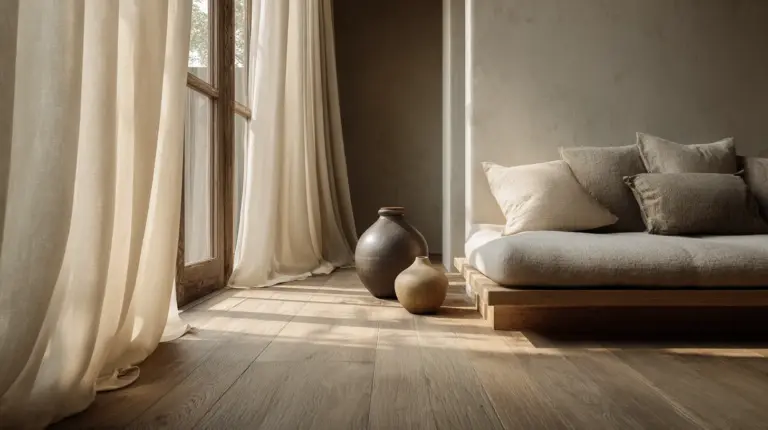
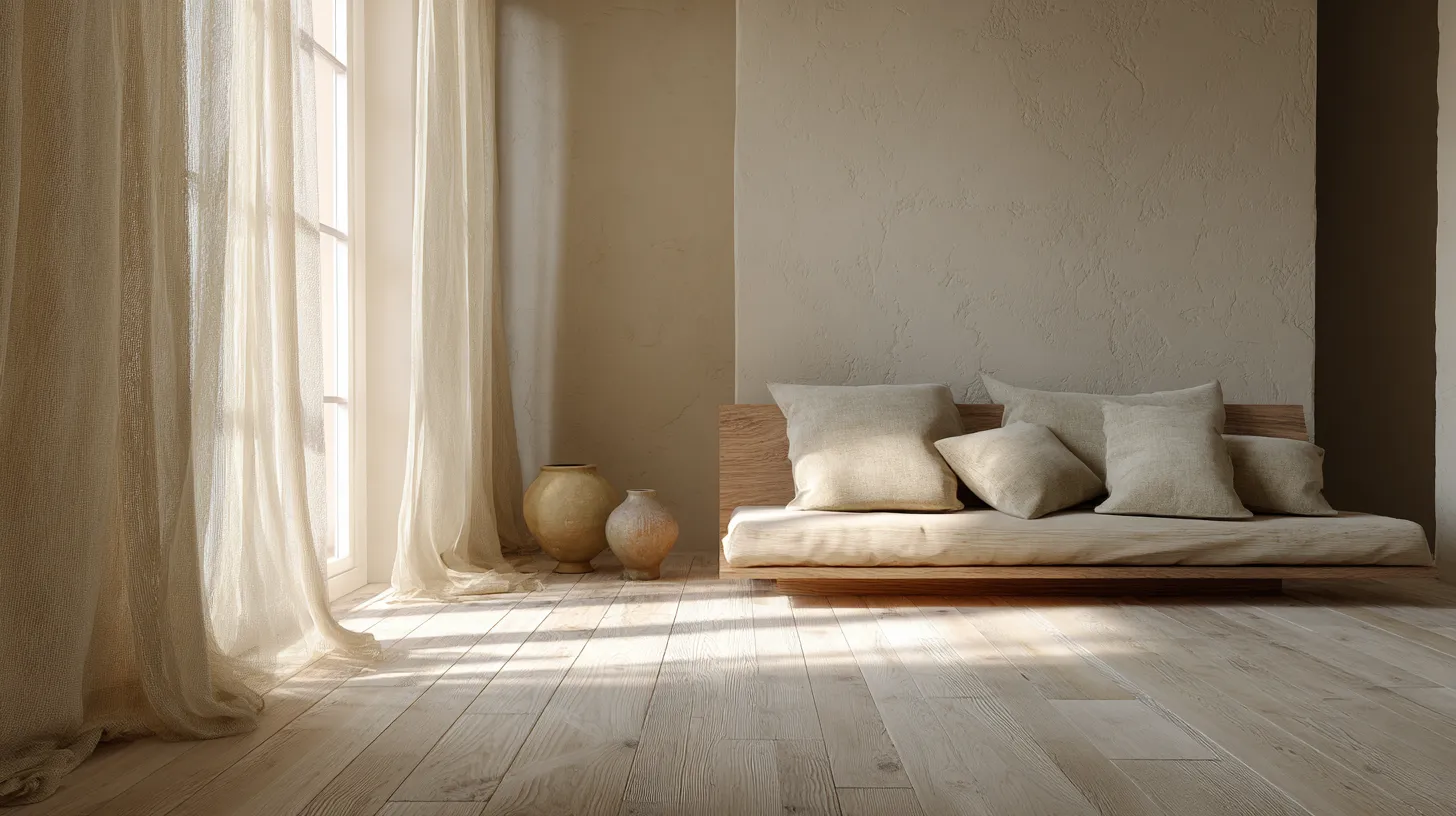
There is something deeply satisfying about a Japandi living room floor done right. The way pale oak planks catch late afternoon light. The soft, woven texture of tatami underfoot. The cool stillness of sealed concrete on a warm morning. These floors don’t just ground a room — they define it.
But Japandi interiors demand more than good taste. They ask for good stewardship. The philosophy behind the style — rooted in Japanese wabi-sabi and Scandinavian hygge — values materials that age with intention, not neglect. A scratched bamboo panel or a mold-spotted tatami mat quietly unravels everything you’ve built.
This guide is your unhurried companion through the world of Japandi living room flooring maintenance. Whether you’re caring for wide-plank oak, woven rush grass tatami, strand-woven bamboo, cork, or even polished concrete, we’ll walk you through what each surface needs — and what it rewards you with in return.
Think of it as a ritual, not a chore.
Understanding Your Japandi Floor: The Five Core Materials
Japandi spaces are rarely built around one single flooring type. Each material carries its own sensory story — and its own maintenance language. Before reaching for a mop or a sealant, it helps to know exactly what’s beneath your feet.
1. Wide-Plank Light Oak & Hardwood
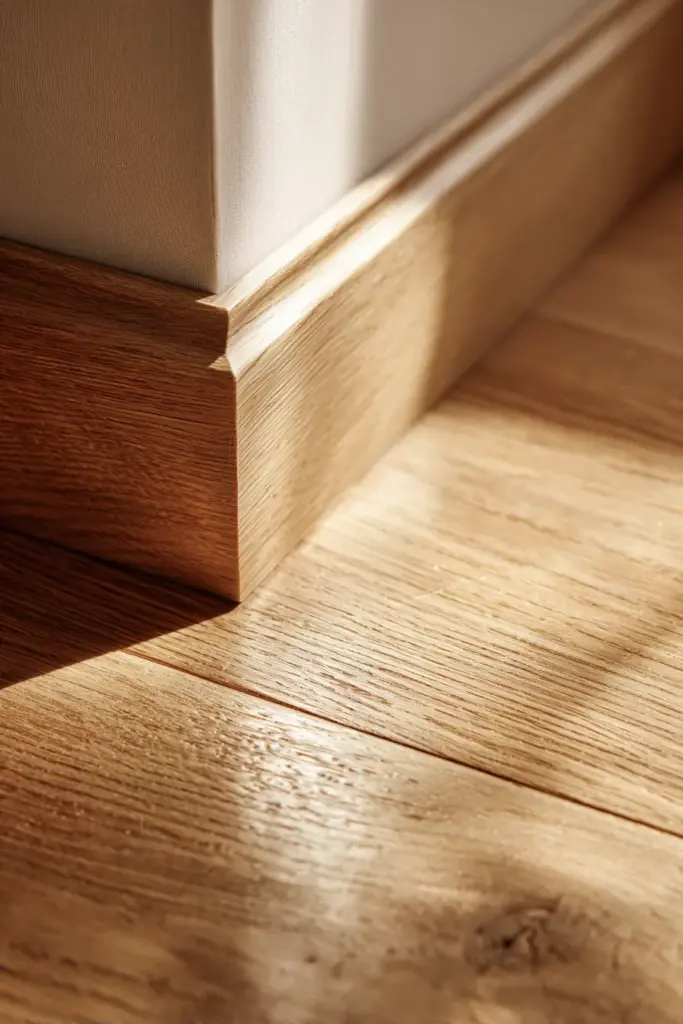
Light oak is perhaps the most recognizable Japandi flooring choice. Its pale, open grain brings warmth without weight, and its wide planks create a sense of uninterrupted calm — like a stretch of beach sand running wall to wall.
Most Japandi hardwood floors use a matte oil or hard-wax oil finish, which gives the wood that natural, barely-there quality so central to the aesthetic. Unlike polyurethane finishes, these oil treatments sink into the grain rather than sitting on top, which means they breathe beautifully — but also require regular re-nourishment.
2. Tatami Mats
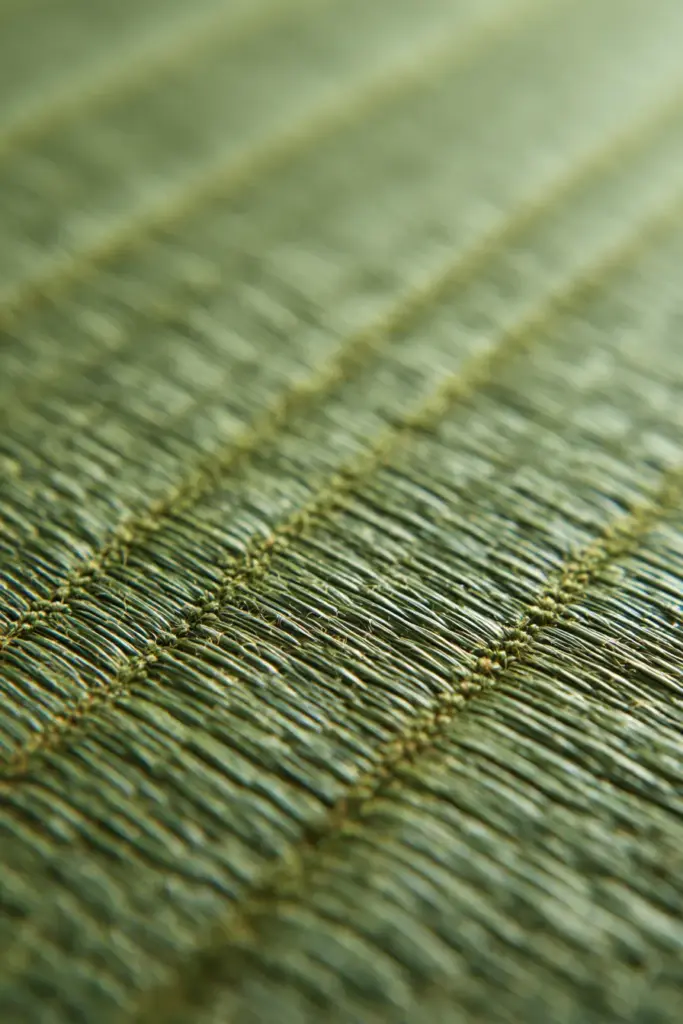
Tatami is the soul of Japanese interior design. Woven from igusa (rush grass) and laid over a rice-straw or compressed wood core, it has a faintly sweet, grassy scent when new — a fragrance that many describe as one of the most calming in domestic life.
Its natural fibers are sensitive to moisture, sunlight, and heavy pressure. Tatami rewards gentle, consistent care and punishes neglect with mold and discoloration. Treat it like a living thing, because in many ways, it still is.
3. Strand-Woven Bamboo
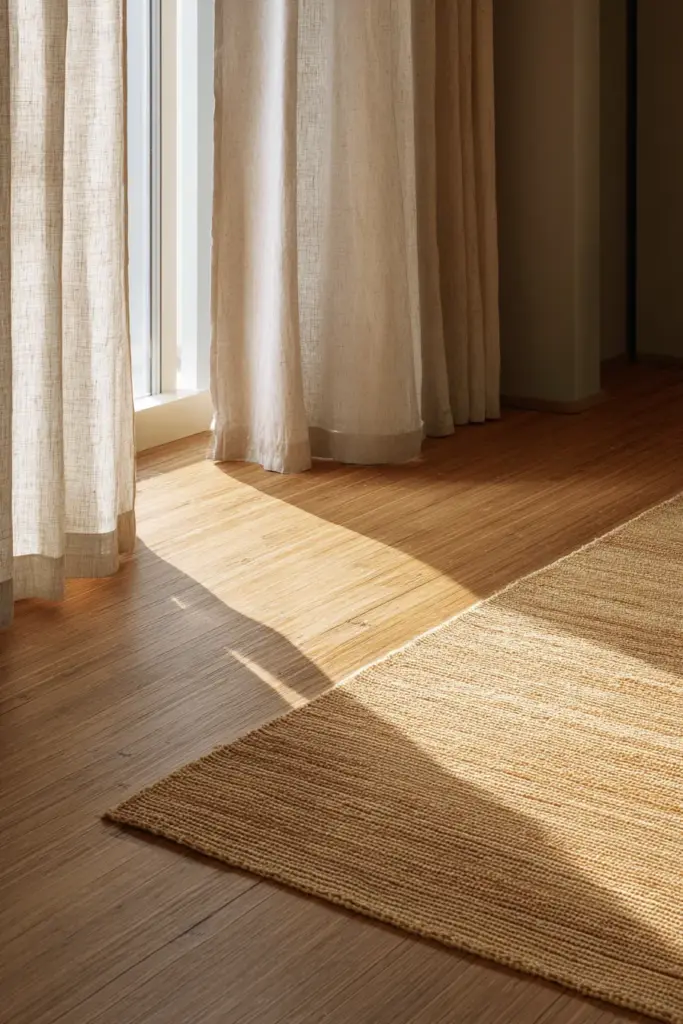
Bamboo flooring occupies a fascinating middle ground in Japandi design — it reads as wood but carries the sustainability credentials of a grass. Strand-woven bamboo in particular is extremely dense and hard, which makes it durable but also slightly less forgiving of improper cleaning methods.
Its biggest vulnerabilities are moisture infiltration and UV fading. In humid climates — or during monsoon season in Southeast Asia — bamboo floors need active humidity management to prevent swelling and warping.
4. Cork Flooring
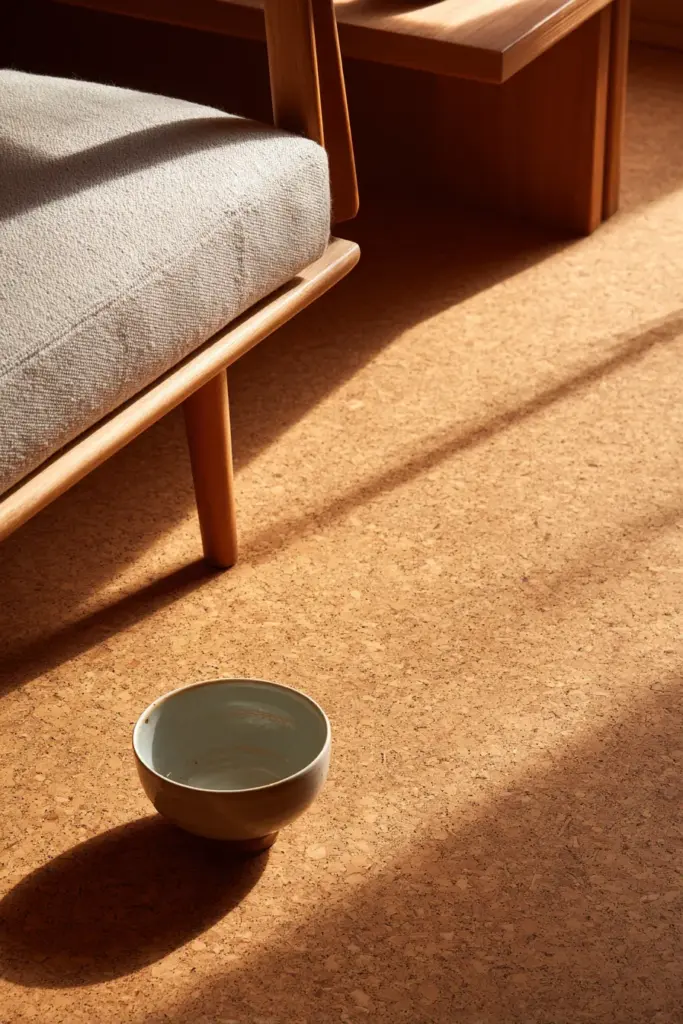
Cork is one of Japandi’s quietest pleasures. Underfoot, it feels slightly springy — like walking on a forest floor. Its natural cellular structure provides thermal insulation and acoustic dampening, making small living rooms feel noticeably more hushed and cozy.
Cork is vulnerable to sharp objects and excess moisture. Its surface finish — typically polyurethane or wax — determines exactly how often it needs to be resealed and how it responds to everyday cleaning.
5. Polished Concrete
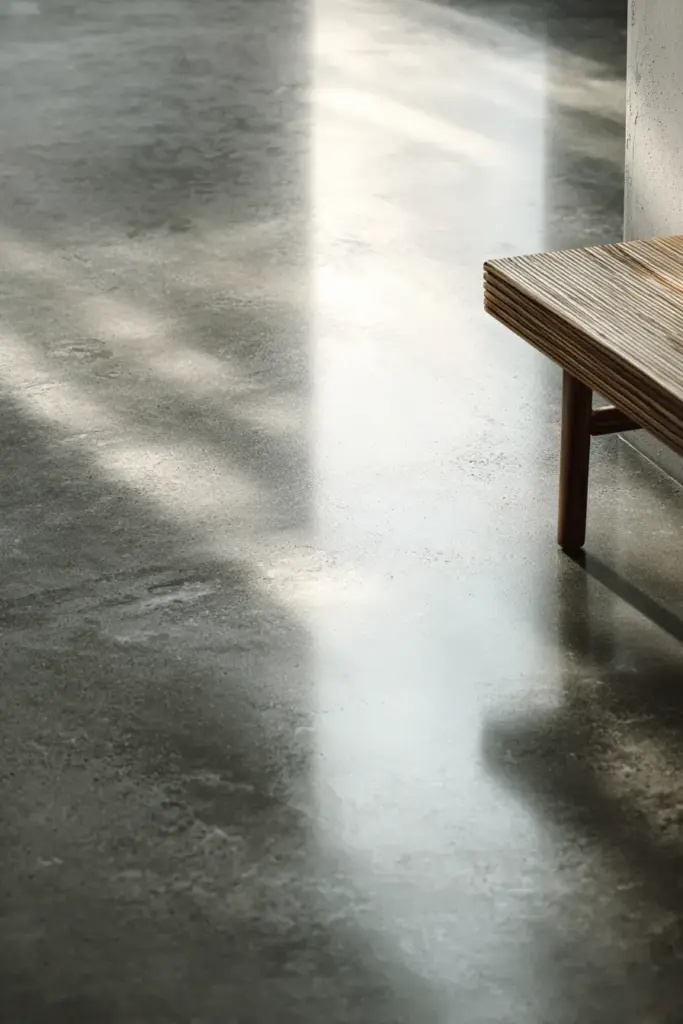
Polished concrete brings the Scandinavian edge of Japandi into sharp focus. Its surface is cool, reflective, and deeply elemental. Sealed and polished, it takes on a subtle luminosity that shifts with the quality of natural light throughout the day.
Concrete is porous by nature, and without proper sealing, it stains with remarkable efficiency. Coffee, red wine, oil — all of these absorb quickly and permanently if the surface isn’t protected.
Japandi Living Room Flooring Maintenance by Material
Hardwood & Wide-Plank Oak: Matte Oil Maintenance
The goal with Japandi hardwood is to preserve the matte, not restore shine. If your floor starts looking plastic or lacquered, something has gone wrong in the care routine.
Daily & Weekly Care
Sweep or dry-dust daily using a microfiber mop — never a stiff broom, which can leave fine scratches across the grain. For weekly cleaning, use a barely-damp mop with a pH-neutral wood floor cleaner. The key word is barely — excess moisture is hardwood’s quiet enemy.
Avoid steam mops entirely. The heat and moisture penetrate the finish and can warp planks over time, especially in rooms with underfloor heating.
Seasonal Re-Oiling
With matte oil and hard-wax finishes, plan to re-oil every 6 to 12 months depending on traffic. High-use living rooms benefit from more frequent treatment. Apply a thin, even coat of matching floor oil using a lint-free cloth, working with the grain. Let it penetrate for 10 to 15 minutes, then buff away any excess.
This ritual is one of the most satisfying parts of Japandi homeownership. The floor visibly deepens in color for an hour before settling back to its calm, natural tone.
Scratch Prevention
Place felt furniture pads under every chair, table leg, and sofa foot — without exception. For high-traffic areas, use a natural fiber rug (jute or wool work beautifully in Japandi spaces) to protect the floor beneath.
Does Japandi flooring scratch easily? Matte oil finishes are softer than polyurethane, so yes — light scratches are more common. The good news: they’re also easier to spot-treat. A small amount of floor oil buffed directly into a scratch often makes it nearly invisible.
Tatami Mat Care: The Art of Gentle Maintenance
Tatami is perhaps the most nuanced flooring material in Japandi design. Its rush grass weave has a directional grain — and nearly every aspect of tatami care flows from respecting that grain.
Vacuuming Tatami Correctly
Always vacuum along the grain, never across it. Use a soft brush attachment, never a beater bar, which can tear and distort the rush fibers. Weekly vacuuming removes the fine dust and debris that settle into the weave and, over time, break down the fibers from within.
Think of it as brushing the mat in the direction it naturally wants to lie.
Cleaning Spills on Tatami
Act immediately. Blot the spill with a dry, absorbent cloth — never rub, which drives moisture deeper into the weave. For most stains, a cloth lightly dampened with diluted white vinegar solution (1 part vinegar to 10 parts water) applied with the grain works gently and effectively.
For stubborn stains, diluted ethanol (around 70%) applied sparingly and allowed to dry completely is effective and also helps prevent mold formation.
Humidity and Mold Prevention
Tatami and excess humidity are a dangerous combination. In humid climates or during wet seasons, use a dehumidifier to keep indoor humidity between 40% and 60%. Ventilate the room daily — even briefly opening windows creates the air circulation tatami needs.
If mold appears (it shows as small dark spots), treat immediately with a cloth dampened with diluted ethanol, then allow the mat to dry completely before replacing any furniture. Never use water alone on mold — it feeds it.
Fixing Dents in Tatami
Heavy furniture leaves dents in tatami over time. The remedy is surprisingly simple: lay a damp towel over the dented area and press gently with a warm iron for 20 to 30 seconds. The steam causes the rush fibers to expand and partially recover their shape. Always move furniture on tatami — never drag it — and use wide-base furniture pads to distribute weight.
Bamboo Flooring: Humidity Control and UV Protection
Strand-woven bamboo is remarkably hard but deeply sensitive to its environment. Maintaining it well is less about cleaning and more about climate management.
Cleaning Bamboo Floors
Use a dry microfiber mop daily and a barely-damp mop weekly with a pH-neutral bamboo floor cleaner. Avoid oil soaps, wax-based products, and anything acidic — these break down the factory finish over time and leave a filmy residue that dulls the surface.
Never allow water to pool on bamboo. In high-humidity climates, always dry-mop after wet mopping to remove any residual moisture.
Managing Moisture in Humid Climates
In regions with distinct wet seasons — Southeast Asia, coastal areas, anywhere that experiences monsoon — bamboo flooring requires seasonal attention. Run a dehumidifier during peak humidity months. Maintain indoor humidity between 45% and 55% to prevent the swelling and gapping that occurs when bamboo absorbs atmospheric moisture.
Use door mats at every entry to minimize the moisture tracked in from outside, and consider area rugs in the highest-traffic zones as a protective buffer.
UV Protection and Sealant
Bamboo fades in direct sunlight — a subtly frustrating process that can create uneven discoloration beneath furniture and rugs. Use UV-filtering window treatments or sheer linen curtains (a perfect Japandi pairing anyway) to diffuse direct light.
Eco-sealant reapplication every 3 to 5 years restores protection and revives the surface’s resistance to moisture and staining. Use water-based, low-VOC sealants to keep the material’s sustainability credentials intact.
Cork Flooring: Quiet Care for a Quiet Material
Cork asks for very little and gives back so much — warmth, softness, silence. Its maintenance routine reflects that gentle character.
Sweep or vacuum weekly with a soft-bristle attachment. Mop monthly with a well-wrung, damp mop and a cork-safe, pH-neutral cleaner. Never soak cork — excess moisture breaks down the cellular structure and can cause the floor to lift or bubble at the edges.
Reseal cork every 2 to 4 years depending on finish type and traffic. Polyurethane-sealed cork can go longer between treatments; wax-finished cork needs more frequent attention. Apply sealant thin and even, allowing each coat to dry fully before the next.
Place felt pads under all furniture and avoid stiletto heels or anything with concentrated point pressure — cork dents more easily than hardwood and doesn’t always recover.
Polished Concrete: Sealing and Stain Prevention
Polished concrete is a material that rewards preventative care. Once staining occurs, remediation is difficult. Once sealed and properly cared for, it’s practically effortless.
Sweep or dust-mop daily to remove grit that can scratch the polished surface over time. Mop weekly with a pH-neutral, concrete-safe cleaner and a microfiber mop. Avoid acidic cleaners — vinegar, citrus-based products — which etch and dull the surface.
Reseal every 1 to 3 years, depending on traffic and the type of sealer used (penetrating sealers last longer than topical options). Apply a concrete wax or polish annually between sealing to maintain the gentle sheen that defines its Japandi presence.
For spills, blot immediately. Oil, wine, and acidic liquids can penetrate even a sealed surface if left unattended. A neutralizing solution of warm water and a small amount of dish soap handles most spills without damaging the finish.
Japandi Flooring Maintenance Comparison Table
| Floor Type | Daily Care | Weekly Care | Resealing / Re-oiling | Key Vulnerability | Cost to Maintain (Est./Year) |
|---|---|---|---|---|---|
| Wide-plank Oak | Dry microfiber sweep | Damp mop, pH-neutral | Re-oil every 6–12 months | Moisture, scratches | $30–$80 |
| Tatami Mat | Grain-direction sweep | Vacuum (no beater) | N/A (replace ~10–15 yrs) | Humidity, mold | $20–$50 |
| Strand-Woven Bamboo | Dry microfiber sweep | Damp mop, pH-neutral | Eco-sealant every 3–5 yrs | Humidity, UV fading | $25–$70 |
| Cork | Soft-bristle sweep | Damp mop, cork-safe | Reseal every 2–4 yrs | Point pressure, soaking | $20–$60 |
| Polished Concrete | Dust mop | pH-neutral mop | Reseal every 1–3 yrs | Staining, acid damage | $40–$100 |
Seasonal Maintenance Checklist
Spring
- Deep vacuum tatami mats along the grain; air them if possible
- Check oak and bamboo planks for any winter gapping or cupping
- Assess whether hardwood floors need re-oiling before summer
- Clean concrete floors with a pH-neutral solution and assess sealant condition
Summer
- Manage humidity with dehumidifiers or air conditioning (target 45%–55%)
- Use UV-filtering curtains to protect bamboo and tatami from fading
- Dry-mop cork and concrete after high-traffic gatherings
Autumn
- Re-oil hardwood floors before the heating season begins
- Check tatami edges and corners for any mold or mildew after summer humidity
- Refresh cork sealant if the surface shows signs of dullness or water absorption
Winter
- Protect tatami and bamboo from dry indoor air — use a humidifier if needed
- Place extra mats at entry points to reduce salt and grit tracked onto hardwood
- Apply concrete floor wax for added protection during heavy-use holiday months
Quick Maintenance Summary
- Always match your cleaning method to your specific finish — matte oil, polyurethane, and unsealed surfaces all respond differently
- Never use steam mops, beater-bar vacuums, or acidic cleaners on Japandi floors
- Always vacuum tatami along the grain with a soft brush attachment
- Keep humidity between 45% and 60% to protect tatami, bamboo, and cork year-round
- Use felt pads under all furniture legs on every Japandi floor type without exception
- Blot spills immediately — never rub — on all natural-material floors
- Reseal or re-oil on schedule, not just when floors look damaged
- Layer area rugs over high-traffic zones for both protection and warmth
Conclusion
A well-maintained Japandi floor is a quiet form of devotion.
It asks for patience — a few minutes weekly, a deeper ritual seasonally. In return, it offers something increasingly rare in modern interiors: a surface that genuinely improves with time. The oak grows richer. The tatami settles into its grain. The bamboo develops a patina that no showroom sample can replicate.
At ERYLIN, we believe that caring for your home is caring for yourself. The act of sweeping a tatami mat at dusk, or buffing a few drops of oil into a beloved oak plank, is not maintenance — it’s a meditation.
Your floors carry the weight of your daily life. Carry theirs gently back.
Frequently Asked Questions
How do you properly clean and maintain hardwood floors in a Japandi living room?
Use a dry microfiber mop daily and a barely-damp mop with a pH-neutral hardwood floor cleaner weekly. For matte oil and hard-wax finishes — the standard for Japandi spaces — re-apply floor oil every 6 to 12 months to nourish the wood and restore its natural depth. Avoid steam mops, harsh chemicals, and excess water entirely.
How do you clean tatami mats without damaging the rush grass?
Always vacuum tatami along the grain using a soft brush attachment — never a beater bar. For spills, blot immediately with a dry cloth and clean with a diluted white vinegar solution (1:10 ratio) or diluted ethanol for mold prevention. Keep humidity below 60% and ventilate regularly to prevent mold growth.
What is the best finish for Japandi wood flooring to hide scratches?
A matte hard-wax oil finish is the classic Japandi choice. It hides minor scratches more forgivingly than gloss finishes, and individual scratches can often be treated with a small amount of floor oil buffed directly into the affected area. Avoid high-gloss polyurethane — it makes every mark visible and reads as too formal for the Japandi aesthetic.
How do you fix dents in tatami or bamboo flooring?
For tatami, place a damp towel over the dented area and press gently with a warm iron for 20 to 30 seconds — the steam expands the rush fibers. For bamboo, minor dents can sometimes be raised with the same steam-towel method, but deep scratches typically require a color-matched wood filler or professional resurfacing.
Does polished concrete need sealing, and how often?
Yes — polished concrete must be sealed to prevent staining, since the material is naturally porous. Use a penetrating concrete sealer for best longevity. Plan to reseal every 1 to 3 years depending on foot traffic, and apply a concrete floor wax or polish annually between sealing cycles to maintain its signature quiet luminosity.