
Table of Contents
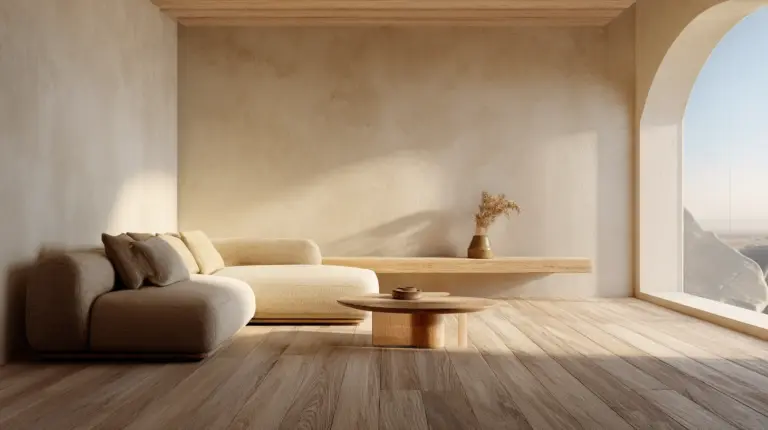
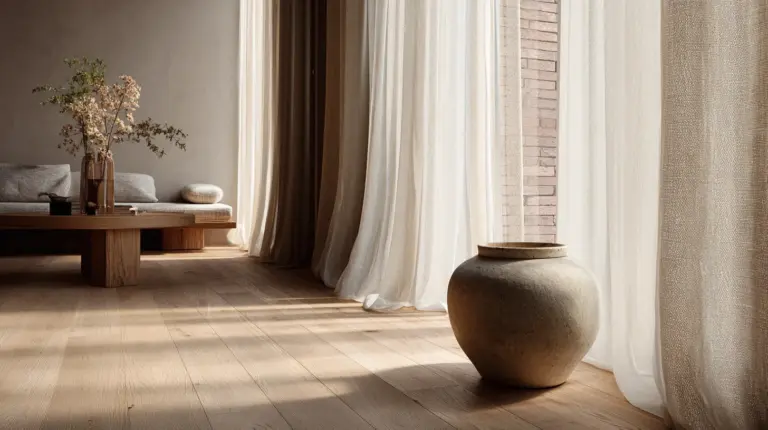
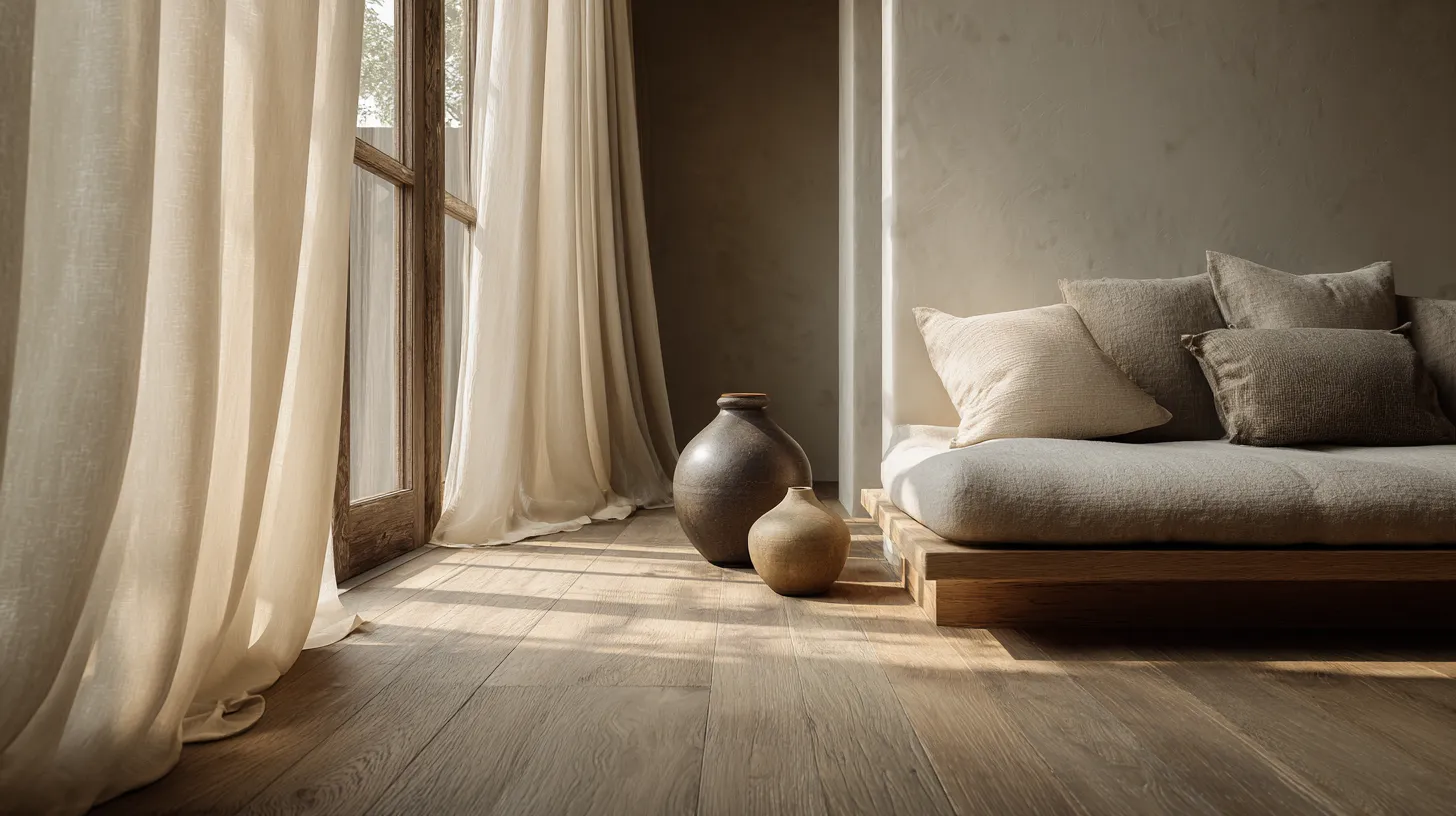
There’s a particular kind of stillness that settles into a room when everything is exactly right. The light is soft. The textures feel honest. The floor beneath you seems to breathe. That feeling — unhurried, grounded, quietly beautiful — is the essence of Japandi design, and it begins, quite literally, at your feet.
Japandi is the meeting of two philosophies: Japan’s wabi-sabi, which finds beauty in imperfection and impermanence, and Scandinavia’s hygge, the art of cozy, intentional living. Together, they create interiors that are spare without being cold, minimal without being empty. And the rug you choose — the one that anchors your sofa, warms your hardwood, and softens your mornings — is one of the most powerful decisions you’ll make in this space.
In this guide, we’re walking you through everything: the best materials, the right colors, how to size a rug for a small living room, and practical tips for keeping your Japandi rug beautiful even in humid climates like the Philippines. Whether you’re working with a sprawling sala or a cozy apartment space, there’s a rug — and a floor — waiting to make your living room feel like home.
Let’s begin.
What Is the Best Flooring for a Japandi Living Room?
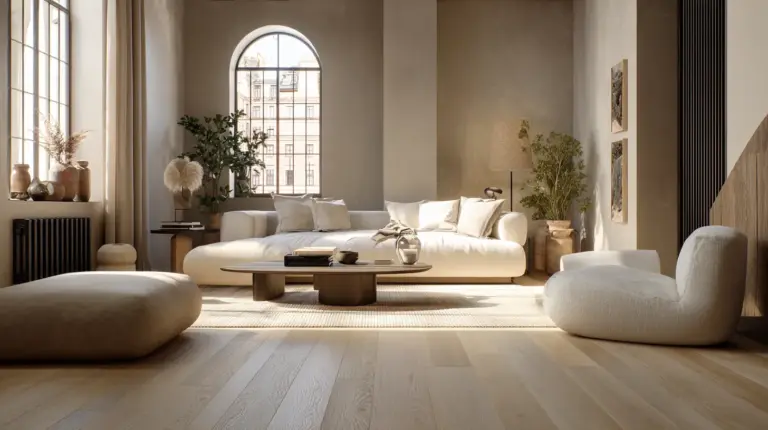
The floor is your canvas. In Japandi spaces, the best flooring options lean into nature: light wood, bamboo, concrete, and cork all work beautifully. Each material brings its own quiet character to the room.
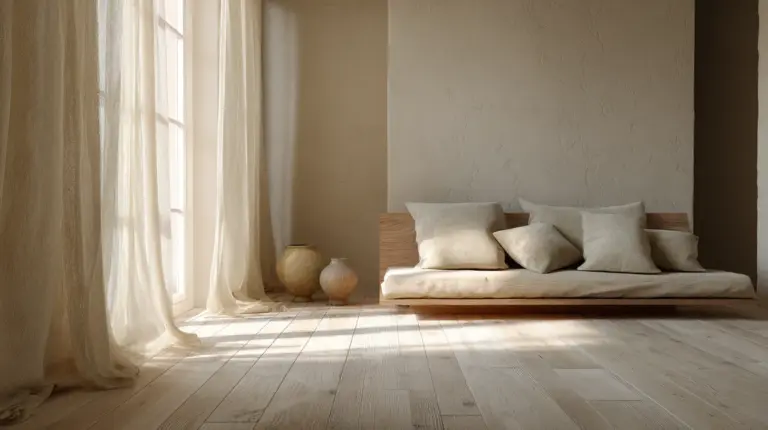
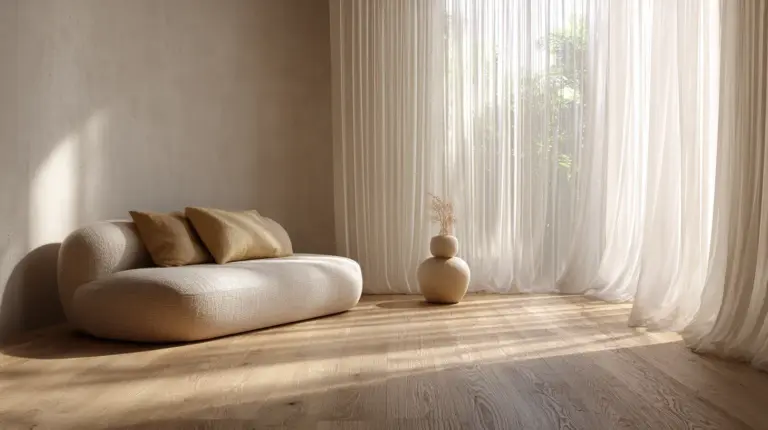
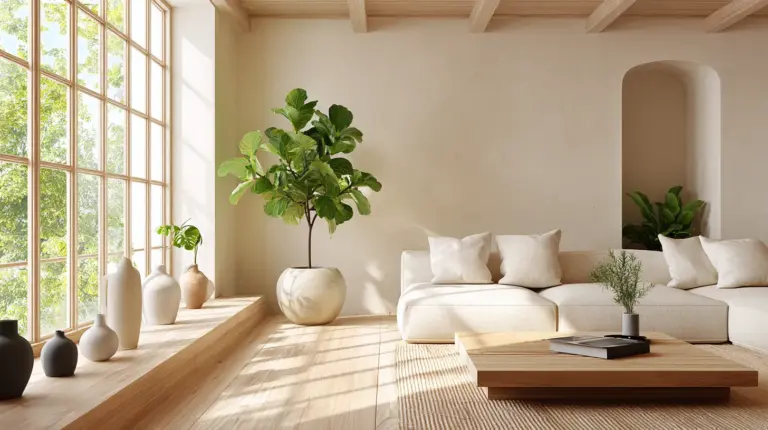
Light oak or ash wood is the classic Japandi choice — warm but not golden, smooth but not shiny. Its matte finish absorbs light rather than reflecting it, keeping the room calm. Bamboo flooring carries a similar energy with an added layer of sustainability, making it a favorite for eco-conscious Japandi homes.
For urban apartments, polished or matte concrete creates a cool, meditative base. It pairs especially well with warmer rugs in wool or cotton, creating that signature Japandi balance of hard and soft. Cork flooring is an underrated gem — naturally warm underfoot, sound-absorbing, and sustainably harvested.
| Flooring Type | Best Paired With | Vibe |
|---|---|---|
| Light wood (oak, ash) | Wool or jute rug | Warm, organic, timeless |
| Bamboo | Flatweave cotton rug | Clean, sustainable, airy |
| Concrete | Chunky wool or hemp rug | Urban, meditative, textural |
| Cork | Layered rugs or natural fiber | Cozy, quiet, eco-forward |
| Vinyl wood-look | Jute or seagrass rug | Budget-friendly, practical |
If real bamboo flooring is beyond your current budget, vinyl plank flooring with a wood-look finish is an excellent, humidity-resistant alternative — especially practical for Philippine homes where tropical weather can warp real wood.
What Rugs Go with Japandi Style?
The right Japandi rug feels like it grew naturally in the room. It doesn’t shout. It grounds.
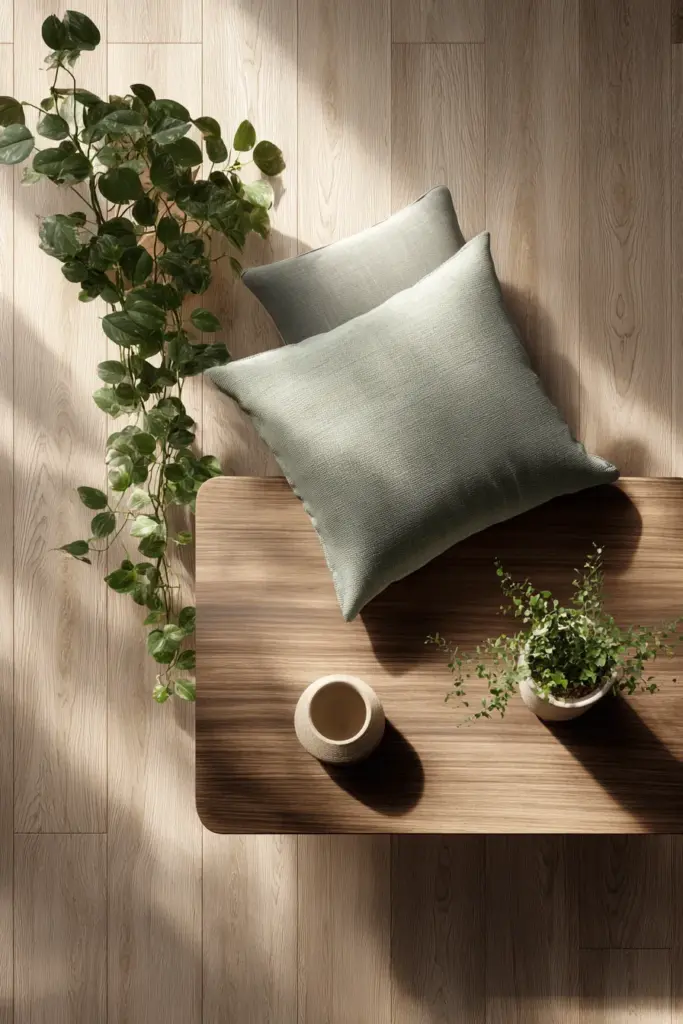
Material: The Soul of the Rug
Wool is the gold standard for Japandi living rooms. It’s dense enough to feel luxurious underfoot, durable enough for daily life, and naturally temperature-regulating — cooler in the heat, warmer in cool months. A low-pile wool rug in oatmeal or warm grey brings an almost meditative softness to the space.
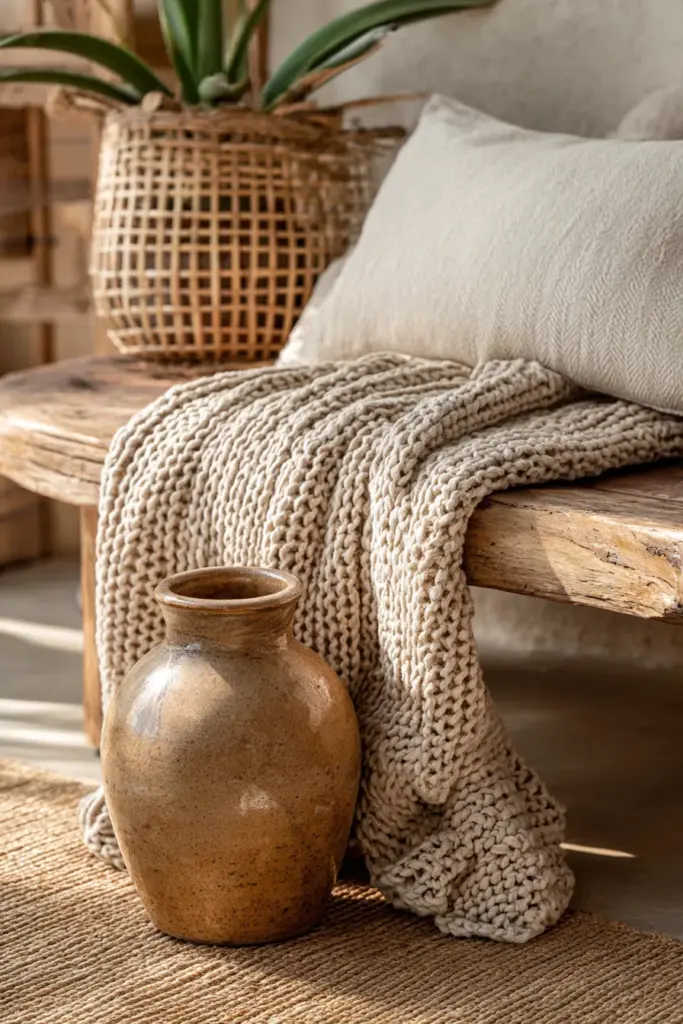
Jute and sisal bring raw, honest texture — the kind that makes you think of sunlight and slow mornings. Their natural, slightly rough weave creates beautiful contrast against smooth wood floors. They’re also among the most sustainable rug fibers available, making them a natural fit for the mindful Japandi home.
Cotton flatweaves are lighter and more casual, ideal for smaller spaces or warmer climates. They clean easily and layer well. For Philippine homes where humidity and daily foot traffic are real considerations, a cotton flatweave is a practical and beautiful choice.
Hemp and linen-blend rugs are rising stars in the Japandi world — durable, mildew-resistant, and beautifully textural. If you’re looking for a humidity-proof Japandi rug that can handle tropical conditions, hemp is worth exploring.
Texture and Weave: Feeling Before Seeing
In Japandi design, texture does the work that color and pattern avoid. Look for rugs with subtle, handcrafted quality — slight irregularities in the weave, natural slubs in the fiber, a surface that invites touch. Flatweaves and low-pile rugs tend to photograph beautifully and wear gracefully over time. Avoid rugs with high sheen or synthetic-looking texture, which can break the spell of organic calm.
Pattern: Quiet, Not Silent
Japandi doesngs’t mean no pattern — it means the right pattern. Subtle geometric designs, tonal stripes, or organic abstract marks work beautifully. Think: a barely-there grid in two shades of sand, or a woven diamond pattern in warm taupe and ivory. The pattern should feel discovered rather than announced.
What Color Rugs Work Best in a Japandi Living Room?
Color in Japandi is a study in restraint and warmth. The palette lives in the space between white and earth — soft, natural, honest.
Beige, taupe, and greige (that perfect grey-beige blend) are the most versatile Japandi rug colors. They read as neutral but feel warm, making them easy to pair with any wood floor tone or wall color.
Warm greys and stone tones add a cooler, more Japanese-influenced sensibility. They work especially well over light wood or concrete floors, creating a harmonious, tonal look.
Muted terracotta, sage green, and dusty clay add just enough warmth and personality without disrupting the minimalist spirit. These earthy accent tones can anchor a room beautifully when used in a rug’s secondary color or border detail.
Avoid: bright whites (they show dirt quickly and feel clinical), bold saturated colors, and high-contrast patterns. These can disrupt the calm that Japandi spaces are built around.
| Rug Color | Best Floor Pairing | Effect |
|---|---|---|
| Warm beige / oatmeal | Light oak, bamboo | Soft, unified warmth |
| Greige / stone grey | Concrete, dark wood | Calm, sophisticated |
| Natural jute tone | Any light floor | Organic, grounded |
| Muted sage or clay | Light wood | Gentle personality |
| Ivory with texture | Bamboo, cork | Airy, layered depth |
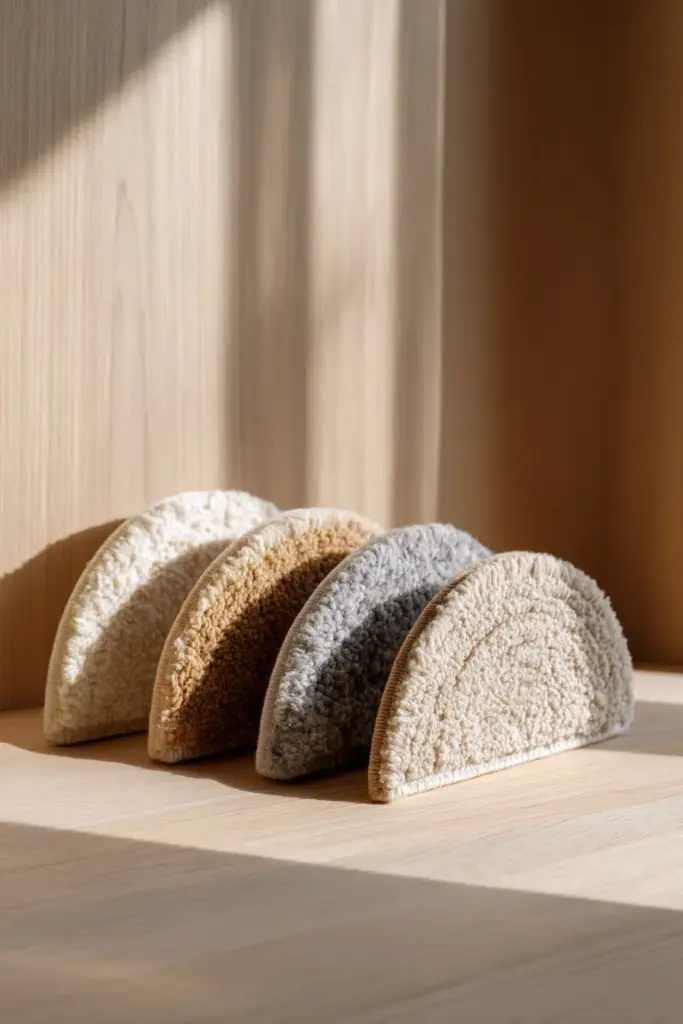
Are Rugs Necessary in a Japandi Living Room?
In a word: yes. And here’s why.
Hard floors — even the most beautiful bamboo or oak — can make a living room feel cold and acoustically harsh. A rug absorbs sound, softens footfall, and creates a visual and physical anchor for your seating area. Without it, even the most curated Japandi furniture arrangement can feel unmoored.
Beyond function, a rug is warmth made visible. It invites you to sink into the sofa, to sit cross-legged on the floor, to feel at home in your own space. In Japandi philosophy, that sense of inhabiting a space — not just filling it — is everything.
Japandi Living Room Rug Size: Getting It Right
Sizing is where many beautiful rug choices go wrong. The rug is either too small (floating awkwardly in the center of the room) or too large (swallowing the furniture arrangement). Here’s a simple guide.
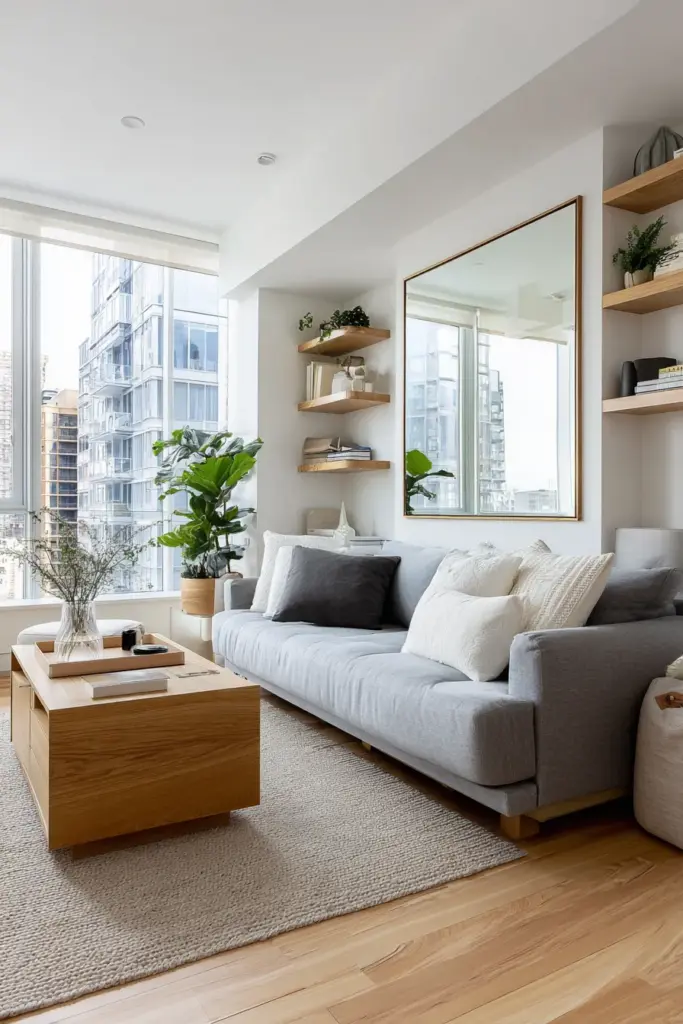
Standard Living Room (Philippine 3BR or larger)
An 8×10 ft rug (approximately 240×300 cm) is the most versatile choice for a standard living room. Place it so all front legs of your sofa and chairs rest on the rug — this creates a unified, grounded seating zone.
Small Living Room or Studio Apartment
For compact spaces, a 5×8 ft or 6×9 ft rug works beautifully. In small Philippine apartments, the trick is to let the rug define the seating area clearly without overwhelming the room. Choose a lighter color and simple texture to keep the space feeling open.
Rug Placement Tips for Japandi Spaces
- Under low sofas: Let the rug extend at least 30–45 cm beyond the sofa on each side. Japandi sofas sit close to the ground, and generous rug margins create a balanced, grounded look.
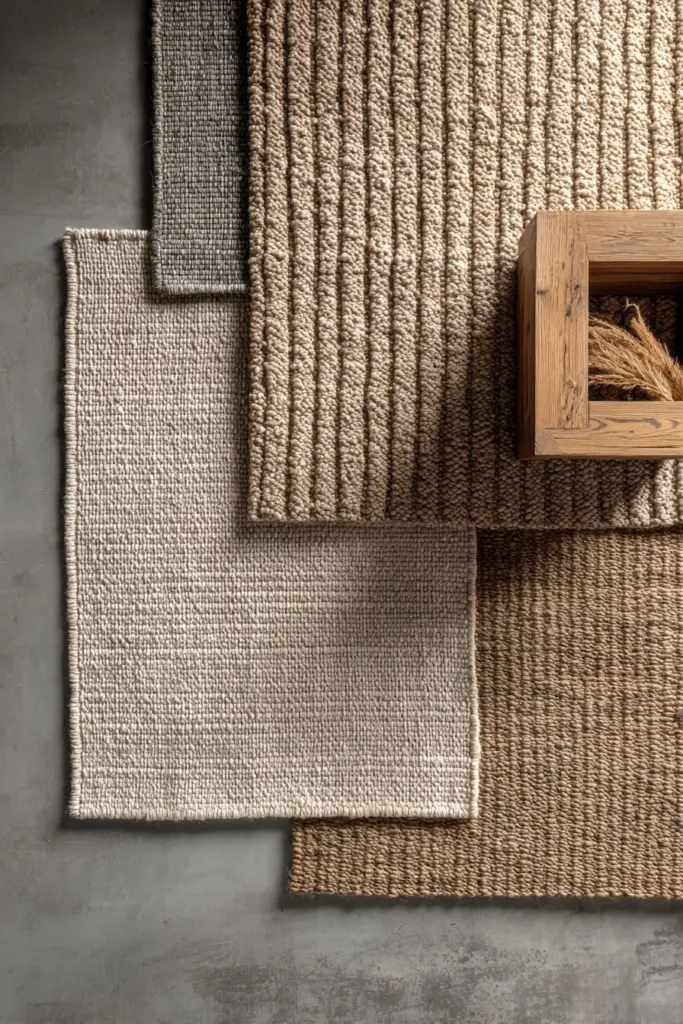
- Layering rugs: A large natural jute rug as a base layer, with a smaller wool rug on top, creates beautiful texture and dimension — a beloved technique in both Scandinavian and Japanese interiors.
- Open plan spaces: Use the rug to define the living area distinctly from dining or workspace zones.
Practical Japandi Rug Guide for the Philippines
Choosing a rug for a tropical climate means thinking beyond aesthetics. Here’s what matters most.
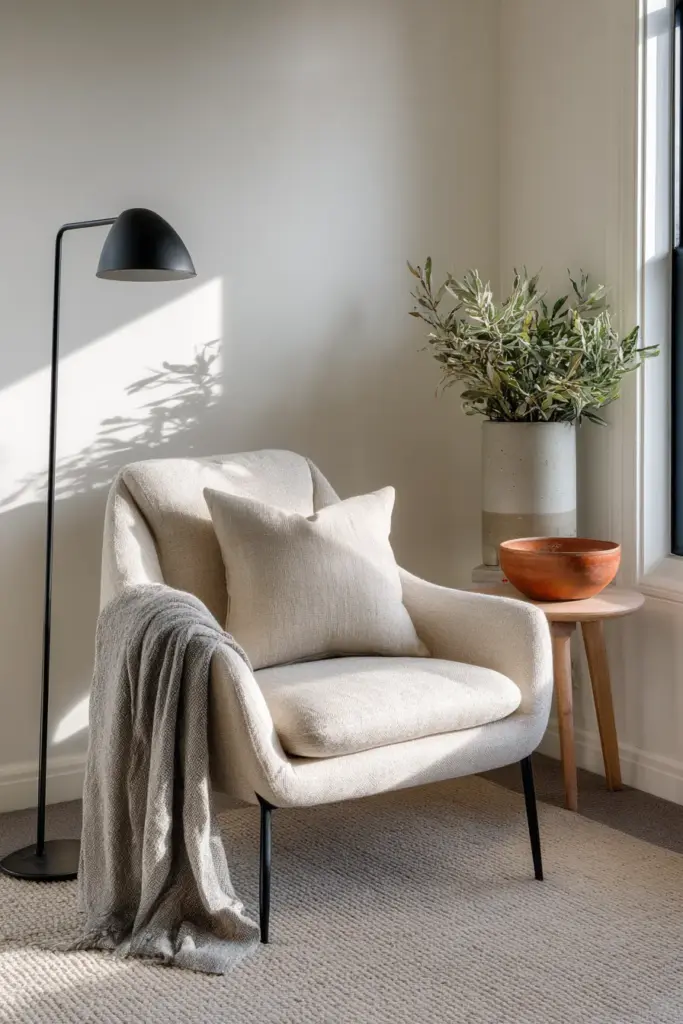
Humidity-Resistant Materials
Wool and jute can both handle moderate humidity, but they need care. Hemp, cotton, and synthetic jute alternatives are more mildew-resistant and easier to dry after wet-weather exposure. For areas near windows or in homes with less airflow, choose a flatweave cotton or hemp rug over a thick wool pile.
Cleaning and Care
- For wool rugs: Blot spills immediately with a clean cloth. For stains, a solution of white vinegar and water (1:1 ratio) works gently without damaging fibers. Avoid steam cleaning in humid climates — excess moisture can encourage mildew.
- For jute rugs: Keep them dry. Jute doesn’t respond well to water, so spot-clean only and allow to air-dry completely. In high-humidity rooms, a rug pad that allows airflow underneath is essential.
- For cotton flatweaves: Most can be machine-washed — a practical miracle for families with children or pets.
Budget-Friendly Japandi Rugs in the Philippines
You don’t need to spend a fortune to achieve the Japandi look. Shopee and Lazada both carry beautiful natural fiber rugs in the PHP 1,500–9,000 range. Look for:
- Jute or seagrass woven rugs
- Cotton flatweave rugs in neutral tones
- Affordable wool-blend options from local home stores
An old, worn rug can also be upcycled into Japandi style with a few simple moves: neutral-toned paint on a flatweave, trimmed edges for a cleaner silhouette, or layered under a smaller statement piece.
5 Beautiful Rug-Flooring Combinations for Japandi Living Rooms
Sometimes the most inspiring thing is a concrete example. Here are five pairings that work beautifully in real Japandi spaces.
- Light oak floor + chunky oatmeal wool rug — The warmest, most classic Japandi combination. Cozy, timeless, effortlessly right.
- Bamboo floor + natural jute flatweave — Sustainable on sustainable. A beautifully organic pairing with an almost ceremonial simplicity.
- Concrete floor + textured hemp rug in warm grey — Urban and meditative. The hemp’s softness perfectly offsets the cool hardness of concrete.
- Vinyl wood-look floor + seagrass rug — The practical Japandi. Looks beautiful, costs less, handles Philippine humidity with ease.
- Cork floor + layered cotton rugs — Soft on soft. A cozy, quiet combination that feels like an embrace. Ideal for a reading corner or meditation nook within the living room.
Japandi Rug Checklist: Key Takeaways
- Material first: Choose natural fibers — wool, jute, hemp, cotton, or seagrass. Avoid synthetics where possible.
- Color palette: Stay in the beige-taupe-greige-stone family. Add one earthy accent tone if desired.
- Texture over pattern: Low-pile, handwoven, or flatweave rugs with subtle irregularities feel most authentically Japandi.
- Right size: 8×10 ft for standard rooms; 5×8 ft for small apartments. Always ensure front furniture legs rest on the rug.
- Humidity matters: In the Philippines, prioritize hemp, cotton, and flatweave rugs over thick wool pile in rooms with limited airflow.
- Floor pairing: Light wood, bamboo, and concrete are the most Japandi-aligned flooring choices. Vinyl wood-look is a budget-smart alternative.
- Rug placement: Extend rug 30–45 cm beyond sofa edges. Try layering for added texture and depth.
- Care routine: Blot spills immediately, avoid steam cleaning, and allow rugs to fully dry in tropical weather.
- Budget options: Shopee and Lazada PH have excellent options under PHP 10,000. Upcycling old rugs is always on-brand for wabi-sabi.
Conclusion
There’s a beautiful Japanese concept called ma — the art of meaningful empty space. In a Japandi living room, the rug is not just a floor covering. It is ma made tangible: the intentional pause between furniture legs, the breath between the hardwood and the sofa, the quiet anchor of the whole room.
When you choose a rug thoughtfully — one that honors the natural world it came from, that fits the room it lives in, that ages gracefully alongside your life — you’re not just decorating. You’re practicing a kind of care. A slow, quiet act of making home.
That is the spirit of Japandi. And it begins right where your feet meet the floor.
Frequently Asked Questions
What is the best flooring for a Japandi living room?
Light wood (especially oak or ash), bamboo, and matte concrete are the most aligned with Japandi aesthetics. Each offers a natural, understated foundation that pairs beautifully with organic-fiber rugs. For budget-conscious homeowners or those in humid climates, vinyl plank flooring with a wood-look finish is an excellent practical alternative.
What rugs go with Japandi style?
Natural fiber rugs in wool, jute, hemp, cotton, or seagrass work best. Look for low-pile or flatweave options in neutral tones — beige, oatmeal, warm grey, or greige. Subtle geometric patterns or tonal weaves add texture without disrupting the minimalist spirit. Avoid bright colors, high-sheen materials, or busy patterns.
Are rugs necessary in a Japandi living room?
Yes — especially over hard floors like wood, bamboo, or concrete. Rugs absorb sound, add warmth, and create a defined seating zone that grounds the furniture arrangement. Without a rug, even a beautifully curated Japandi room can feel acoustically harsh and visually unanchored.
What color rugs work best for Japandi living rooms?
Stay within the beige-taupe-greige-stone palette for the most versatile Japandi look. Warm greys, natural jute tones, and muted earthy accents like sage or clay also work beautifully. Avoid bright whites and high-contrast patterns, which can disrupt the room’s signature calm.
What size rug should I use in a Japandi living room?
An 8×10 ft rug (approximately 240×300 cm) works for most standard living rooms. For small Philippine apartments or studio spaces, a 5×8 ft or 6×9 ft rug is proportionate and practical. The key rule: all front legs of your sofa and chairs should rest on the rug, creating a unified, grounded seating zone.