
Table of Contents
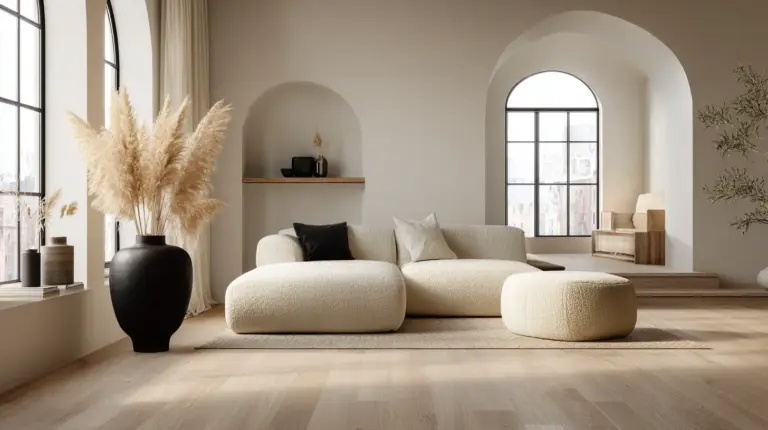
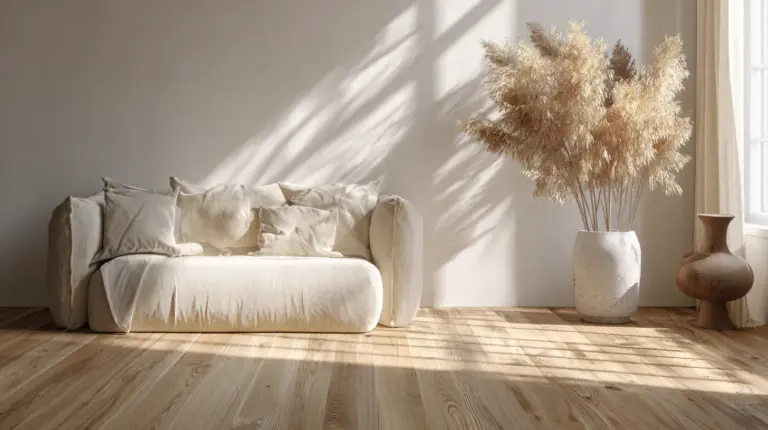
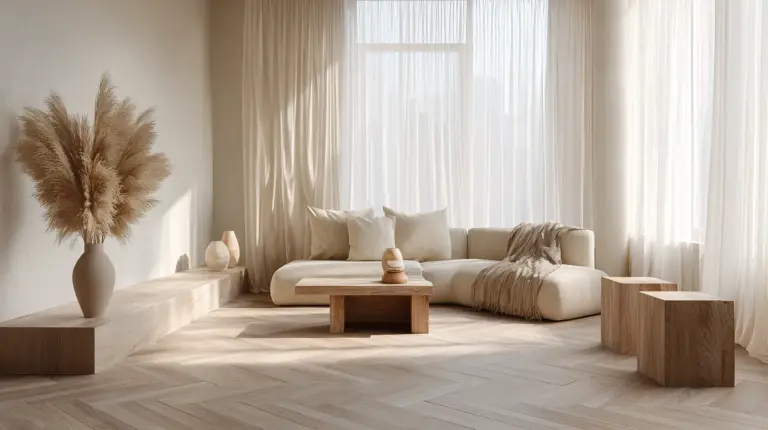
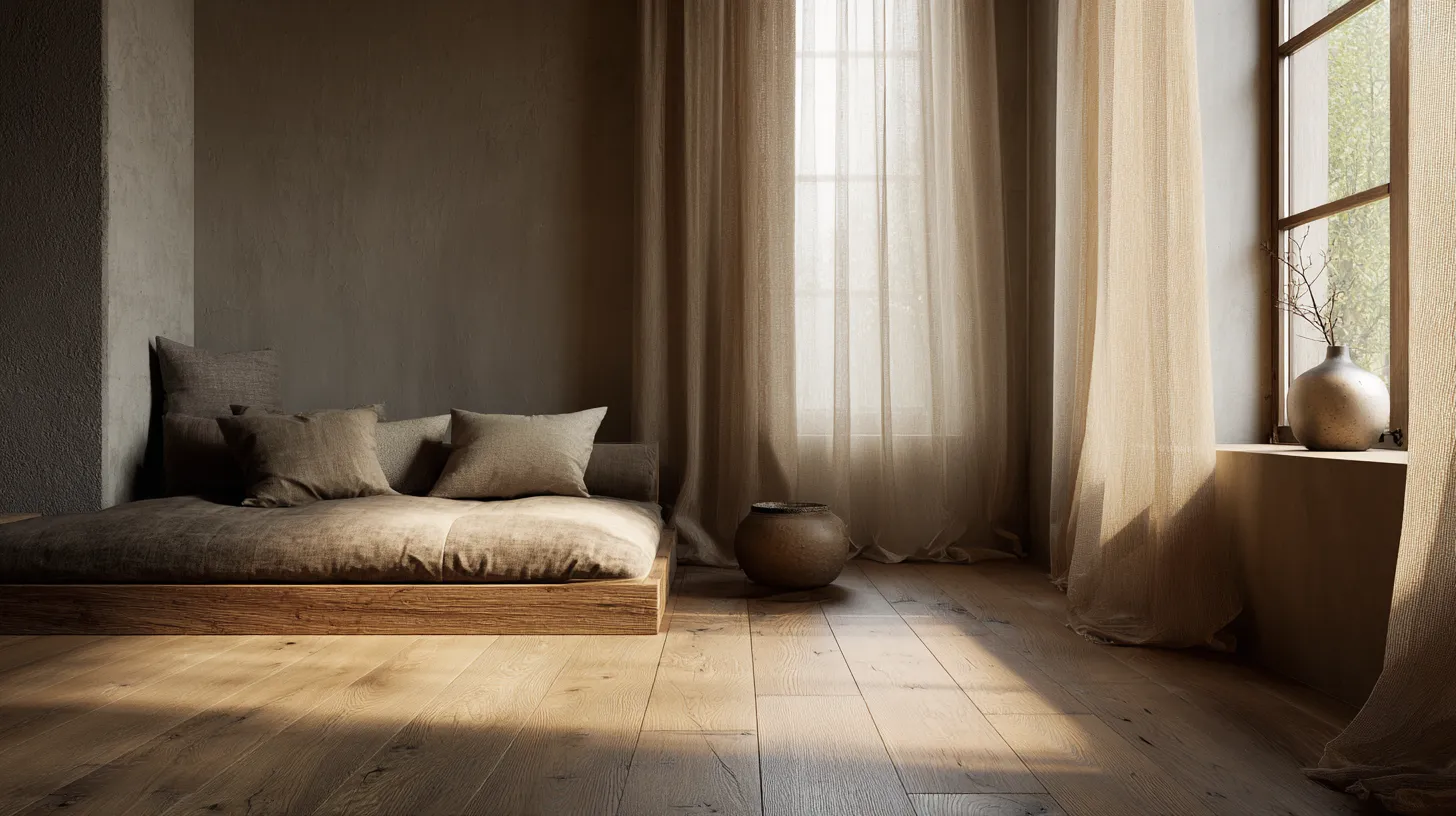
There’s something quietly magnetic about a Japandi living room. The light lands differently there — softer, more intentional. The air feels unhurried. And beneath it all, quite literally, is the floor: the foundation of everything the space becomes.
Japandi style — that soulful marriage of Japanese wabi-sabi and Scandinavian hygge — lives and breathes through its materials. And no material speaks louder than the one underfoot. Your flooring isn’t just a surface. It’s the first sensory experience of the room.
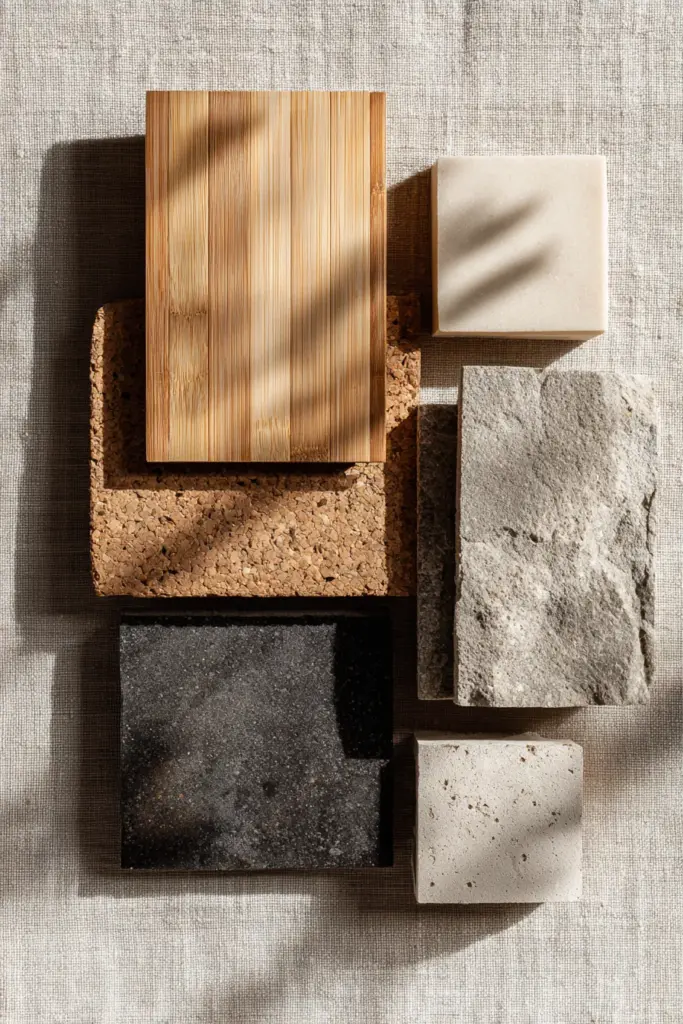
In 2024, Japandi living room flooring trends are leaning deeper into the organic, the honest, and the quietly beautiful. Think warm-toned natural wood planks, whisper-soft cork, breathable bamboo, and the cool serenity of natural stone. Each material tells a story of slowness, intention, and belonging.
Whether you’re designing a fresh space or refreshing what you have, this guide will walk you through every trend, texture, and practical tip — with a few notes tailored especially for Philippine homes navigating tropical humidity.
What Is Japandi Flooring?
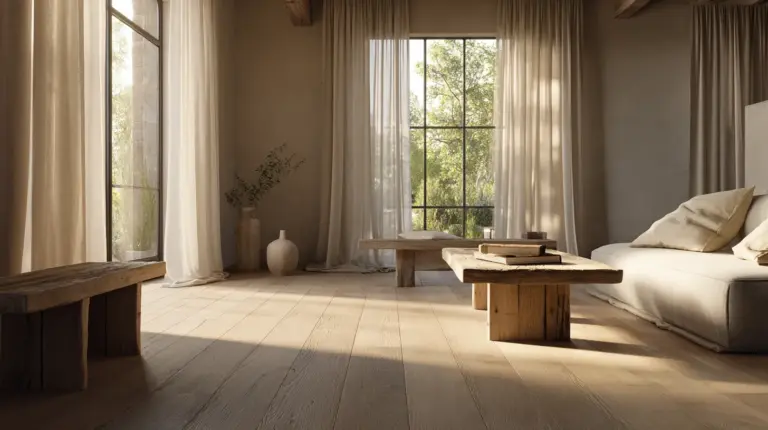
Japandi flooring is defined by its use of natural materials, neutral color palettes, and matte or low-sheen finishes. It draws from the Japanese philosophy of wabi-sabi — finding beauty in imperfection — and the Scandinavian love for warmth, function, and simplicity.
In short: Japandi flooring looks effortless, feels grounded, and serves the room without demanding attention.
Common characteristics include subtle grain patterns, warm undertones (think light oak, blonde bamboo, warm grey stone), durable surfaces, and a resistance to visual clutter. The floor breathes. It supports. It stays beautifully in the background.
The 5 Best Japandi Living Room Flooring Trends for 2024
1. Natural Wood Flooring — The Classic Choice
Nothing anchors a Japandi living room quite like real wood.
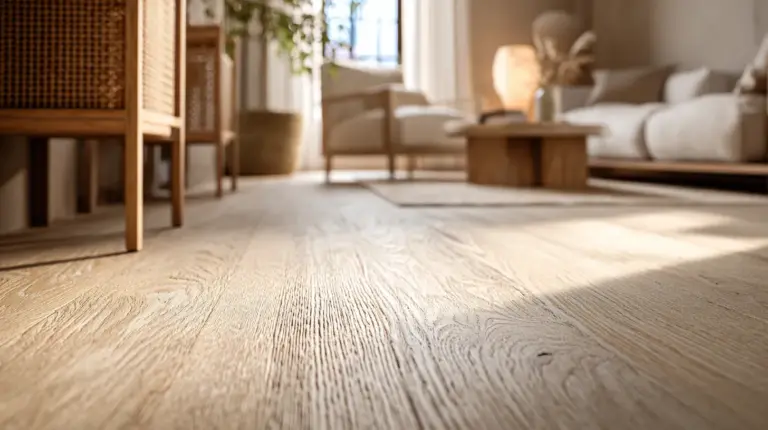
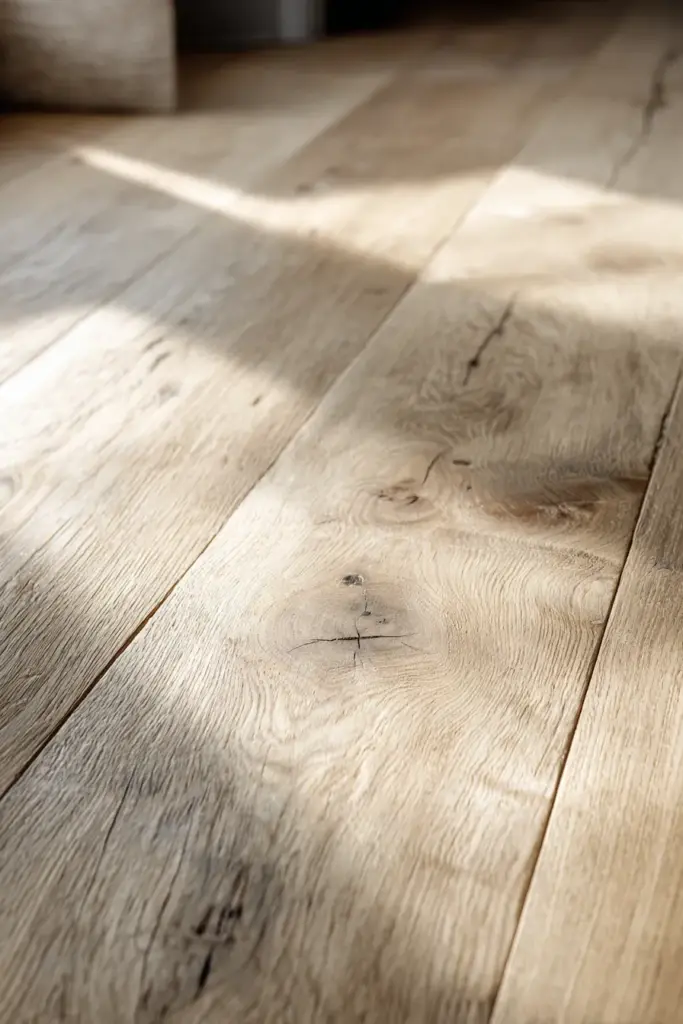
Natural wood flooring remains the gold standard of Japandi interiors. Wide planks — ideally 150mm or wider — stretch the eye across the room, making even compact spaces feel more expansive. Light oak, maple, and ash are the go-to species: pale enough to reflect natural light, warm enough to invite barefoot comfort.
Sensory note: Imagine running your fingers along a lightly oiled oak plank — barely-there texture, a faint woody scent, and the gentle give of real timber beneath your step. That’s the experience Japandi wood flooring creates.
Best Wood Tones for Japandi
- Light oak — the most versatile; pairs beautifully with linen, rattan, and muted ceramics
- Blonde maple — slightly cooler, fresh, and Scandinavian-leaning
- Pale ash — fine grain, soft and modern
Finish matters: Always choose a matte or satin finish. High-gloss wood breaks the quiet spell of Japandi instantly.
Wide Plank for Small Spaces
For living rooms under 200 square feet, wide planks laid lengthwise create an illusion of depth. Avoid intricate parquet patterns — keep it calm and linear.
2. Bamboo Flooring — Sustainable, Resilient, and Perfectly Japandi
Bamboo grows fast, lives beautifully, and belongs naturally in the Japandi world.
Bamboo flooring has moved well beyond its trend moment — it’s now a design staple, and for good reason. It’s harder than most hardwoods, sustainably harvested, and carries that characteristic warmth that Japandi interiors crave. Strand-woven bamboo in particular offers exceptional durability for high-traffic living rooms.
For homes in the Philippines, native bamboo is a genuinely exciting option. Locally sourced bamboo flooring supports regional craftspeople, reduces your carbon footprint, and — crucially — is naturally adapted to tropical humidity. Pair it with a humidity-resistant sealant and you have a floor built for the climate.
2025–2026 Emerging Trend: Heated Bamboo Underfloor Systems
Emerging in cooler climates (and increasingly relevant for energy-efficient design globally), heated bamboo underfloor systems are gaining attention. While not essential in Silang’s warmth, the innovation signals bamboo’s growing presence in premium flooring design.
| Feature | Bamboo Flooring | Hardwood Flooring |
|---|---|---|
| Sustainability | ✅ Very high | ⚠️ Varies by source |
| Hardness | ✅ Harder than most hardwoods | Varies |
| Humidity resistance | ✅ Good (seal properly) | ⚠️ Requires care |
| Estimated cost (PHP/sqm) | ~2,500 | ~3,500–6,000 |
| Japandi aesthetic | ✅ Excellent | ✅ Excellent |
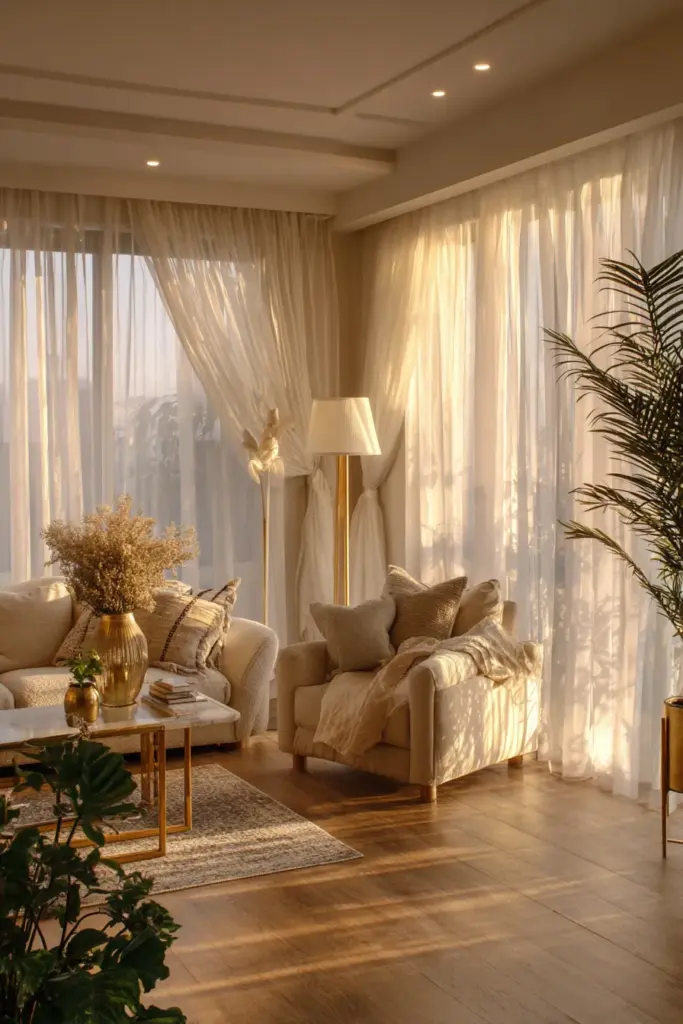
3. Cork Flooring — The Quiet Comfort Choice
Cork is the floor that holds you gently.
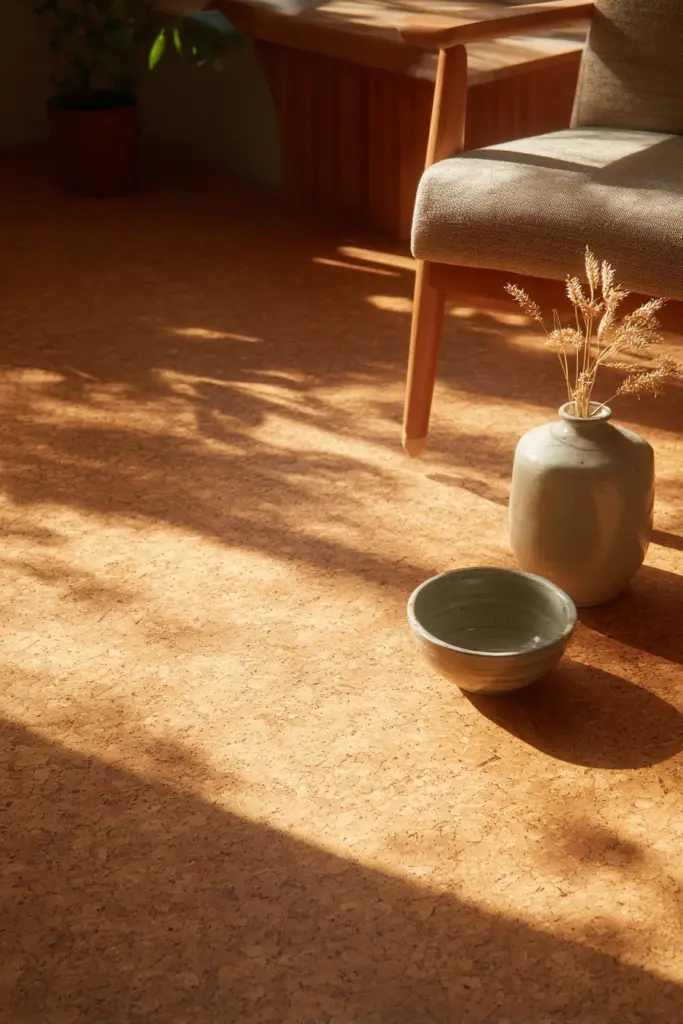
Cork flooring is one of Japandi’s most underrated materials. Harvested from cork oak bark without harming the tree, it’s one of the most sustainably sourced floors available. It’s also warm underfoot, naturally sound-absorbing, and softly textured — a perfect sensory companion for a space designed around calm.
Visually, cork reads beautifully in a Japandi room. Its natural variation in tone — cream, warm beige, soft brown — mirrors the organic unpredictability that wabi-sabi celebrates. No two panels look quite the same, and that’s entirely the point.
Practical note for Philippine homes: Cork is moisture-sensitive. In humid regions, choose sealed cork tiles over floating cork planks, and ensure excellent subfloor ventilation. With the right preparation, cork is a deeply rewarding choice.
4. Concrete and Stone Flooring — For the Cooler, More Minimal Aesthetic
Stone doesn’t decorate a room. It grounds it.
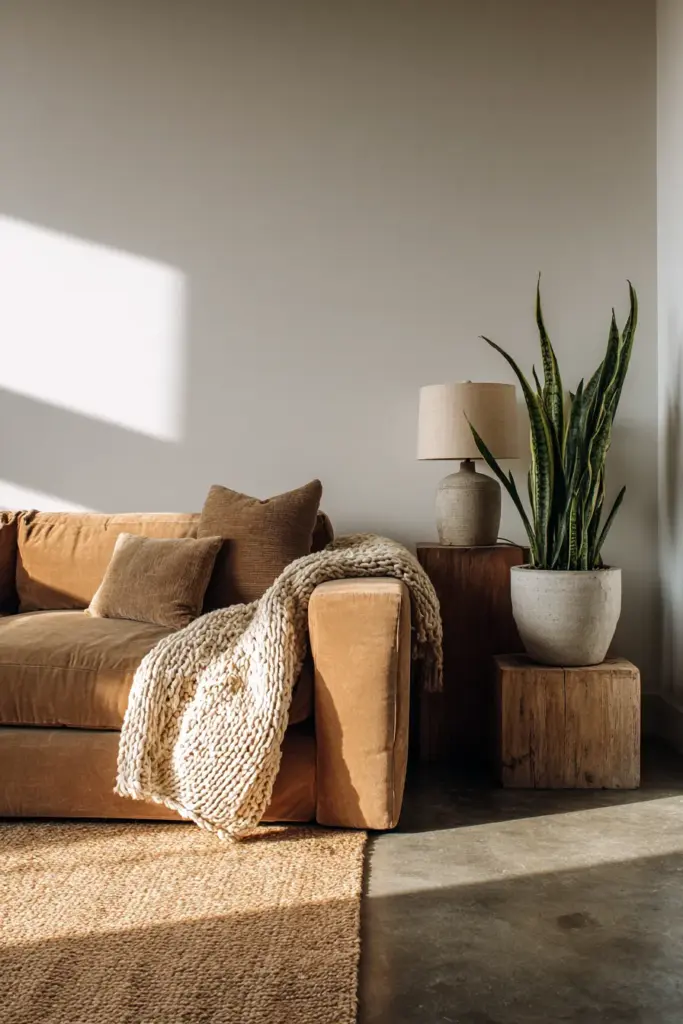
Polished concrete and natural stone tile bring a quieter, more austere edge to Japandi living rooms — particularly fitting for homes that lean more Japanese than Scandinavian in their mood. The cool smoothness of concrete underfoot, the subtle variation in a grey limestone tile, the faint mineral scent of natural stone: these sensory details are deeply, honestly beautiful.
In the Philippines, stone flooring is also a practical choice for managing heat. Natural stone stays cooler than wood or bamboo in high temperatures, and its thermal mass makes the living room feel refreshingly temperate even during warm months.
For warmth: Balance stone or concrete floors with a large, natural-fiber rug — jute or wool in warm sand or oatmeal tones work beautifully. This contrast between cool floors and soft textiles is deeply Japandi in spirit. (Explore our cozy furniture and textile guide for layering ideas.)
5. Vinyl Flooring — The Practical, Budget-Friendly Japandi Option
Yes, vinyl can be Japandi. Done well, it’s nearly indistinguishable from the real thing.
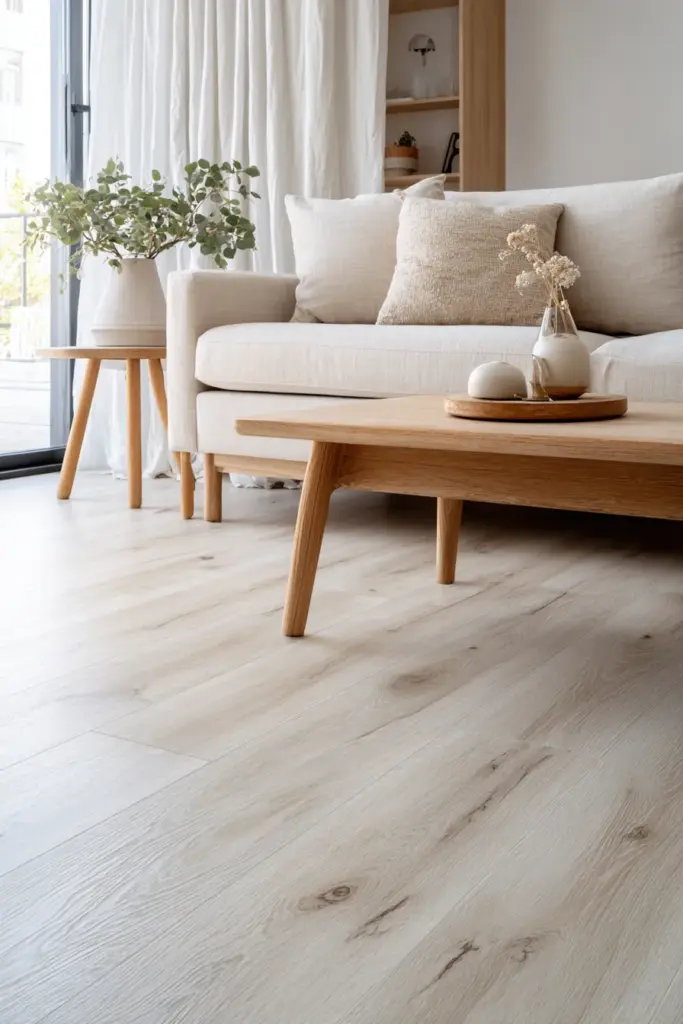
Modern luxury vinyl plank (LVP) has come a very long way. Today’s best options replicate natural wood grain, stone, and even concrete with extraordinary realism — and at a fraction of the cost. For renters, budget-conscious decorators, or anyone living in a high-humidity environment, vinyl is a genuinely smart choice.
Look for these qualities: wood-look or concrete-look finish, matte surface, warm neutral tones, and a textured surface that mimics natural materials. Herringbone-laid vinyl planks add a subtle visual interest without disrupting the Japandi aesthetic — the pattern whispers rather than shouts.
| Flooring Type | Approx. Cost (PHP/sqm) | Humidity Resistance | Japandi Aesthetic |
|---|---|---|---|
| Natural Hardwood | 3,500–6,000 | ⚠️ Moderate | ✅ Excellent |
| Bamboo | 2,500–3,500 | ✅ Good | ✅ Excellent |
| Cork | 2,000–3,000 | ⚠️ Moderate (seal it) | ✅ Very Good |
| Natural Stone | 2,800–5,000 | ✅ Excellent | ✅ Excellent |
| Luxury Vinyl Plank | 1,800–2,500 | ✅ Excellent | ✅ Good–Excellent |
What Colors Work Best for Japandi Floors?
The palette is deliberately quiet.
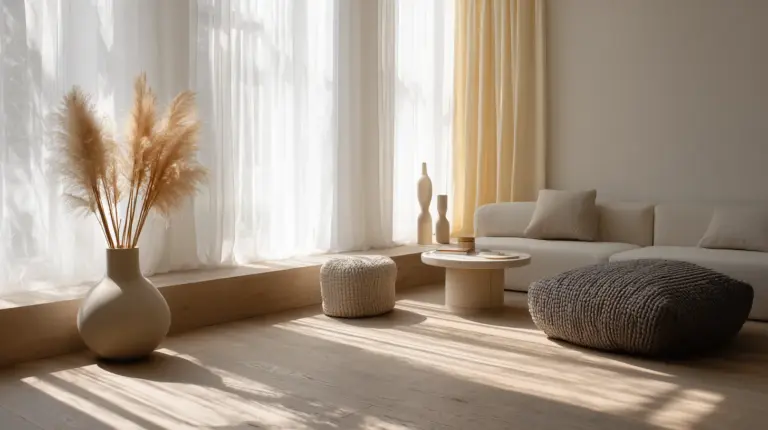
The most Japandi floor tones sit in a narrow, beautifully curated range: warm whites, pale wheat, light oak, honey blonde, warm grey, and soft stone beige. The floor should feel like morning light — not too cool, not too golden, just effortlessly calm.
Avoid floors with red or orange undertones (too warm and busy), high-contrast dark stains (too dramatic), and pure cool whites or greys without any warmth (too clinical). The sweet spot is a floor that reads as natural and unhurried.
Japandi Flooring for Small Living Rooms
Small spaces deserve the same design intelligence as large ones — perhaps more.
If your living room is on the compact side, your floor can do a lot of the heavy lifting visually. These principles work beautifully in small Japandi rooms:
- Use wide planks (150mm+) laid along the longest wall to visually stretch the space
- Keep grout lines minimal on tile — thin, same-tone grout makes floors read as seamless
- Choose lighter tones — pale oak or blonde bamboo reflect light and push walls outward optically
- Anchor with a single area rug rather than multiple small rugs — one large rug defines the seating zone and creates cohesion
- Avoid busy patterns — herringbone is acceptable; intricate geometric tiles are not
Is Japandi Flooring Sustainable?
Yes — and sustainability is woven into the philosophy itself.
The Japandi approach to interiors has always favored materials that carry an honest relationship with nature. Bamboo regenerates in 3–5 years. Cork is harvested without cutting the tree. Natural wood, when sourced responsibly, supports sustainable forestry. Even low-VOC vinyl has improved dramatically in its environmental profile.
For Philippine households, locally sourced bamboo is the most sustainable choice — native species, minimal transport emissions, and natural climate adaptation. If you’re choosing wood, look for FSC-certified timber from local or regional suppliers.
Emerging options for 2025–2026 include recycled ocean plastic composite flooring — an exciting innovation that brings genuine eco-credentials to the Japandi-adjacent aesthetic. Watch this space.
How to Clean and Maintain Japandi Flooring
The care is as minimal as the design.
One of the gifts of Japandi flooring is its low-maintenance nature. Here’s how to keep each material looking its best:
- Natural wood: Sweep or vacuum regularly; damp mop with a pH-neutral cleaner; re-oil annually if using an oil finish; avoid excess water
- Bamboo: Same care as wood; use a microfiber mop; avoid harsh chemicals; reseal annually in humid climates
- Cork: Sweep gently; damp mop sparingly; never soak; reseal every 2–3 years
- Stone/concrete: Sweep and mop with a stone-safe cleaner; seal annually; wipe spills promptly
- Vinyl: The easiest of all — sweep, damp mop, done; no sealing required
For Philippine monsoon season: Place absorbent mats at all entry points; check sealant integrity before the rainy season begins; ensure subfloor ventilation is adequate for bamboo and cork installations.
DIY Japandi Flooring Tips for Renters
You don’t have to own your home to own your aesthetic.
Renters can absolutely achieve a Japandi floor without permanent installation:
- Peel-and-stick vinyl planks are a renter-friendly option that can transform a tired floor in a weekend — and remove cleanly when you leave
- Large natural-fiber rugs (jute, sisal, seagrass) laid over existing flooring create an instant Japandi foundation
- Underlayment matters: If installing floating floors, invest in good cork or foam underlayment for sound insulation and a more grounded feel
- Upcycle what’s there: Sand and re-stain existing wood floors in a lighter tone if permitted — a weekend project with transformative results
Japandi Flooring: Key Takeaways
- Best materials: Natural wood, bamboo, cork, stone, and quality vinyl — all in natural tones with matte finishes
- Best colors: Warm whites, pale oak, honey blonde, light grey, stone beige
- For small rooms: Wide planks, light tones, one large rug, minimal grout lines
- For humid climates: Bamboo and vinyl offer the best natural humidity resistance; seal cork and wood annually
- For budget: Luxury vinyl plank (from ~PHP 1,800/sqm) delivers excellent Japandi aesthetics at accessible price points
- Sustainability: Locally sourced bamboo is the most eco-aligned choice for Philippine homes
- Maintenance: Keep it simple — damp mop, gentle cleaners, annual sealing for natural materials
Conclusion
The floor is where the story begins.
In a Japandi living room, every design decision is a quiet declaration: that beauty matters, that nature belongs indoors, that a home should feel like a long, comfortable exhale. Your floor is the first chapter of that story.
Whether you choose the warm grain of pale oak, the honest resilience of local bamboo, or the understated practicality of a beautifully finished vinyl plank — what matters most is that it feels true. Natural. Unhurried. Like the room was always meant to breathe exactly this way.
At ERYLIN, we believe that the most beautiful homes are built from the ground up — with intention, with care, and with deep attention to how a space feels as much as how it looks. We hope this guide helps you find your floor.
Begin from the ground. Build something lasting.
Frequently Asked Questions
What is the best flooring for a Japandi living room?
The best Japandi living room flooring is natural wood (especially light oak or maple in wide planks), closely followed by bamboo and cork. All three offer the warm, organic textures and matte finishes that define Japandi style. For budget-conscious homes or humid climates, luxury vinyl plank is an excellent practical alternative.
Is vinyl flooring considered Japandi?
Yes — high-quality luxury vinyl plank in natural wood grain or concrete-look finishes is entirely compatible with Japandi aesthetics. Choose matte surfaces, warm neutral tones, and wide plank formats for the most authentic look. The key is visual honesty: it should look and feel as close to a natural material as possible.
What colors work best for Japandi floors?
Japandi floors favor warm neutrals: pale oak, light beige, honey blonde, soft warm grey, and stone cream. Avoid floors with strong red or orange undertones, high-contrast dark stains, or stark cool whites. The ideal Japandi floor tone reads as calm, natural, and gently luminous.
How do I choose Japandi flooring for a small living room?
For small Japandi living rooms, choose wide planks (150mm or wider) in light tones and lay them along the longest wall. This creates a visual stretch that makes compact rooms feel more spacious. Pair with a single large natural-fiber rug to define the seating zone without visual clutter.
Is Japandi flooring sustainable?
Yes — sustainability is central to the Japandi philosophy. Bamboo is one of the most renewable flooring materials available, regrowing in 3–5 years. Cork is harvested without harming the tree. Natural wood, when FSC-certified, supports responsible forestry. For Philippine homes, locally sourced native bamboo is the most eco-aligned and climate-appropriate choice.