
Table of Contents
There’s a quiet beauty in the marriage of Japanese minimalism and Scandinavian warmth. A small living room doesn’t ask for excess—it whispers for intention, for pieces chosen with care, for textures that tell a story without shouting.
You stand in your compact space, perhaps a cozy condo in the city, and wonder how to breathe life into corners without breaking the bank. The answer lies in the Japandi philosophy: less, but better. Fewer items, more meaning. Natural materials that age gracefully, neutral palettes that expand rather than constrain.
This guide will walk you through creating a small Japandi living room that honors both your space and your budget. You’ll discover how to maximize every square foot, where to invest and where to save, and how to layer textures until your room feels like a gentle exhale after a long day.
Let’s begin where all good design starts—with understanding what makes Japandi truly resonate.
What is a Japandi Living Room?
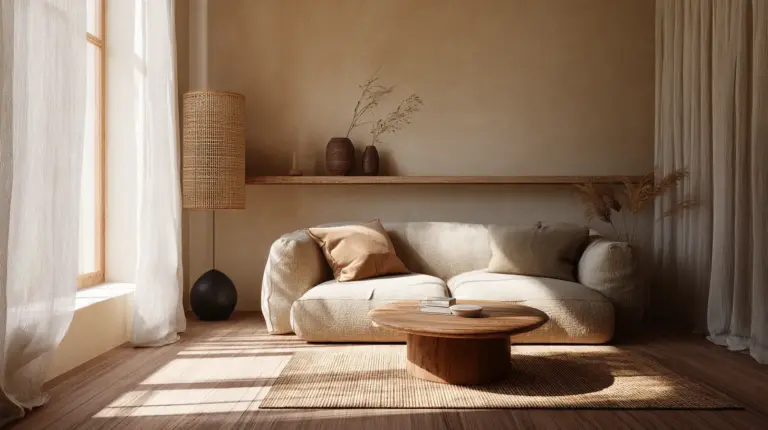
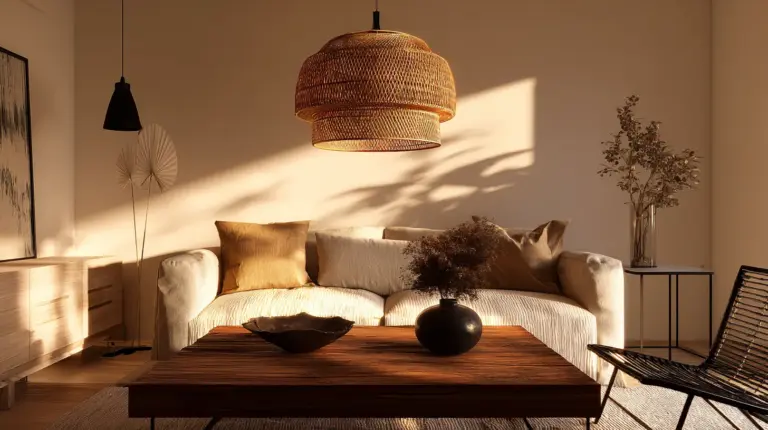
Japandi living rooms blend the wabi-sabi imperfection of Japanese design with Scandinavian hygge coziness. Picture clean lines softened by tactile fabrics, low-profile furniture that doesn’t crowd your sightlines, and a color palette borrowed from nature’s quietest moments.
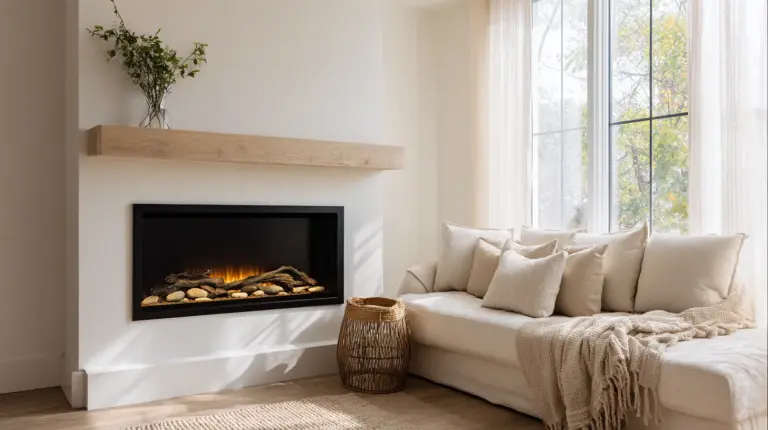
This style celebrates negative space—the breathing room between objects that allows your eye to rest. Unlike stark minimalism, Japandi invites warmth through wood tones, linen textures, and handcrafted ceramics. It’s functional without being cold, serene without feeling sterile.
For small spaces, this philosophy becomes your greatest ally. Every piece serves a purpose, every surface remains uncluttered, and light flows freely across the room.
Understanding Japandi Style Furniture
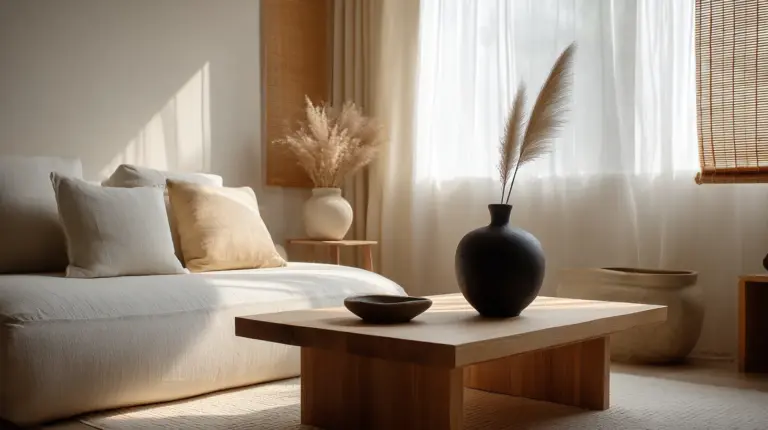
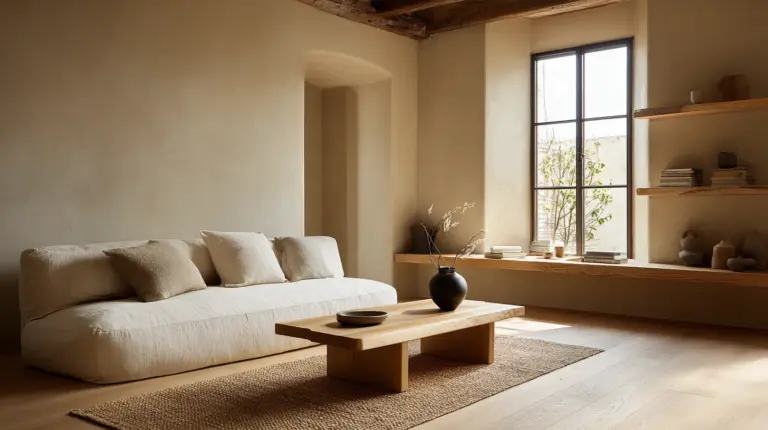
Japandi furniture speaks in whispers, not declarations. Think low-slung sofas with wooden frames, platform beds that hug the floor, and coffee tables crafted from sustainably sourced oak or bamboo.
The key characteristics include:
- Clean lines that create visual continuity
- Natural materials like rattan, jute, bamboo, and light woods
- Multifunctional pieces that solve two problems at once
- Neutral upholstery in linen blends, boucle, or organic cotton
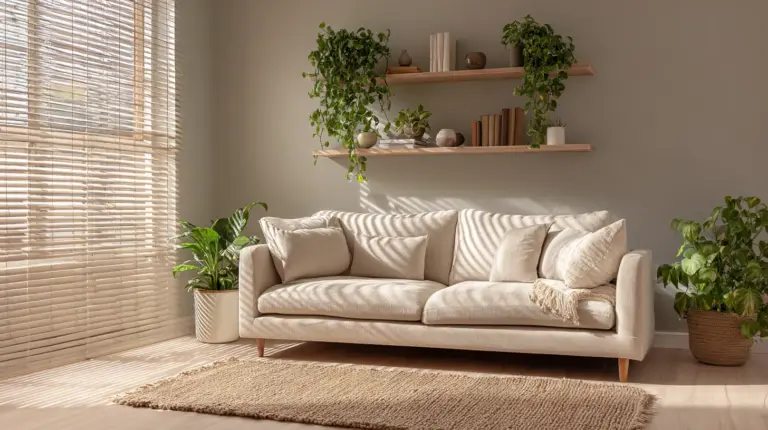
In tight quarters, choose furniture with exposed legs. This elevates pieces slightly off the floor, creating the illusion of more space. A slim console table behind your sofa adds surface area without bulk. Wall-mounted floating shelves replace heavy bookcases.
What Colour is Japandi? The Psychology of Small-Space Palettes
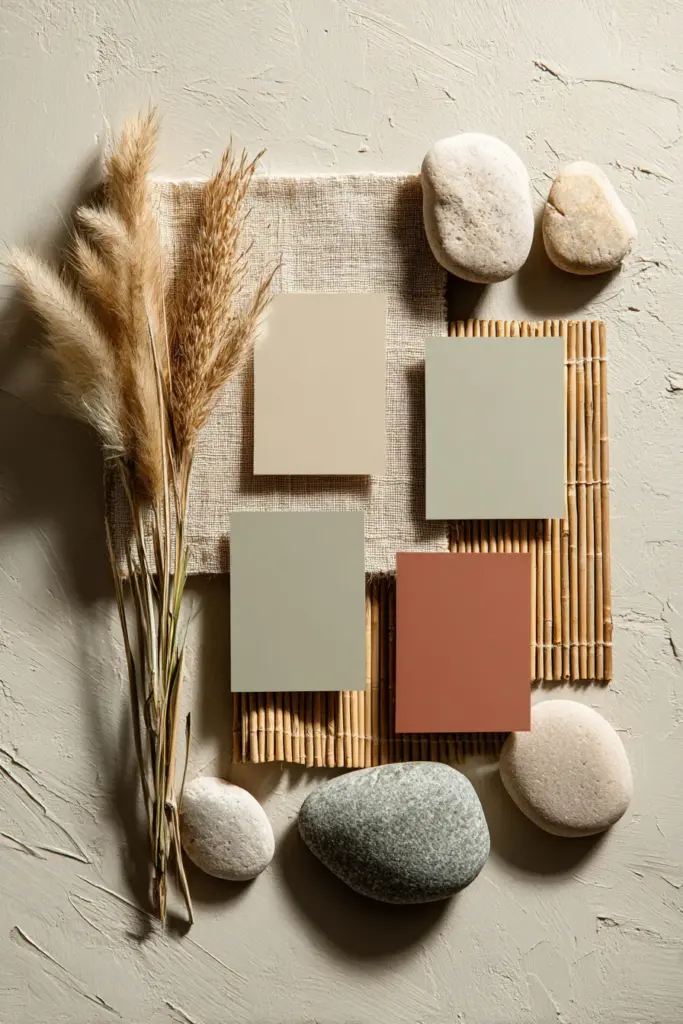
Japandi colors mirror the landscape after dawn—soft beiges, warm grays, muted greens, and the occasional charcoal accent. These hues expand small rooms psychologically, bouncing light rather than absorbing it.
Base palette for compact spaces:
- Walls: Off-white, greige, or pale sand (consider low-VOC paints for humid climates)
- Accents: Terracotta, sage green, dusty rose
- Grounding tones: Charcoal, deep walnut, black iron fixtures
Test swatches in different lighting before committing. Morning light reveals cooler undertones, while evening lamps warm everything. For Philippine homes, choose breathable, anti-mold paint formulations that withstand humidity.
Create a free printable moodboard by collecting paint chips, fabric swatches, and natural elements like dried pampas or bamboo samples. This tactile guide keeps your vision cohesive as you shop.
Budget Breakdown: Small Japandi Living Room Under PHP 50,000
Let’s translate aspiration into actual numbers. Here’s how to allocate a modest budget across essential elements for a 20-square-meter living room.
| Category | Budget (PHP) | Priority | Where to Find |
|---|---|---|---|
| Sofa or seating | 15,000-20,000 | High | IKEA, Lazada, SM Home |
| Coffee table | 3,000-5,000 | Medium | Local bamboo markets, Divisoria |
| Lighting | 2,000-4,000 | High | Ace Hardware, online stores |
| Rugs (jute/natural fiber) | 2,500-4,000 | Medium | Ayala’s The Landmark, thrift shops |
| Storage/shelving | 3,000-5,000 | Medium | DIY plywood, secondhand finds |
| Textiles & cushions | 2,000-3,000 | Low | Dapitan, SM Department Store |
| Plants & ceramics | 1,500-2,500 | Low | Local nurseries, Cartimar |
| Paint & touch-ups | 2,000-3,000 | High | Boysen, Davies Paints |
| Total | 31,000-48,500 |
This leaves room for unexpected finds or statement pieces. Remember: Japandi celebrates the handmade and the found, so thrifting isn’t compromise—it’s authenticity.
Space-Maximizing Layouts for Tiny Japandi Rooms
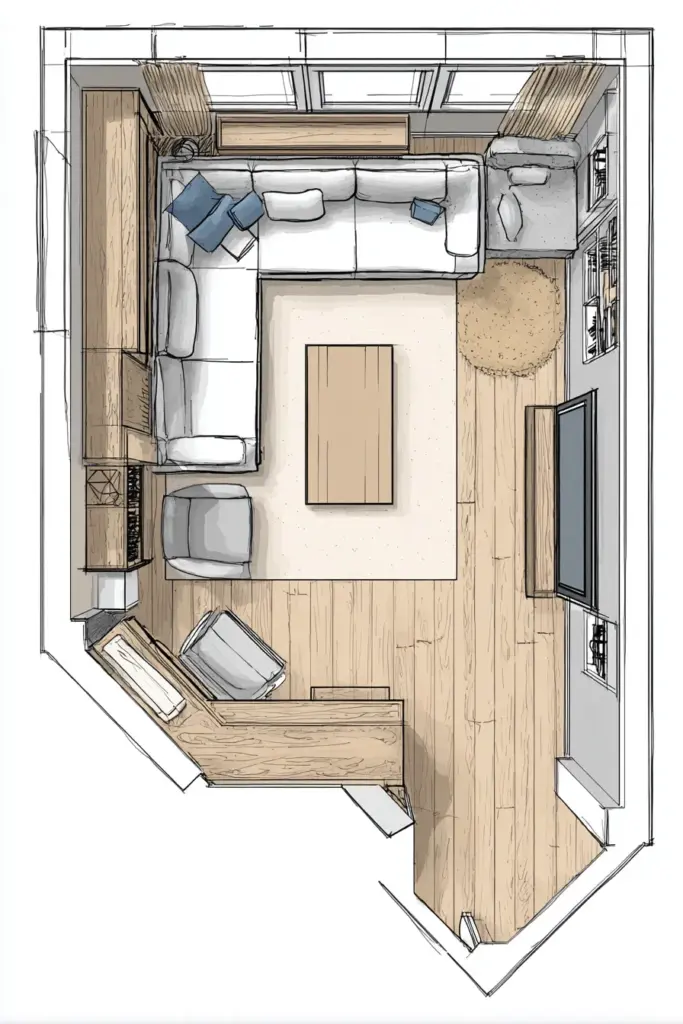
Small living rooms demand strategic furniture placement. Start by identifying your focal point—usually the largest wall or a window with natural light.
Layout principles:
The Floating Arrangement
Pull your sofa 30-40cm away from the wall. This counterintuitive move creates depth perception and allows for a slim console table behind the seating, adding function without footprint.
Corner Optimization
Place a low-profile chair at a 45-degree angle in corners. Add a small side table and task lighting to create an intimate reading nook that doesn’t interrupt the room’s flow.
Mirror Illusions
Mount a large rectangular mirror opposite your window. This doubles perceived space and amplifies natural light. Choose frames in light wood or go frameless for maximum airiness.
Vertical Thinking
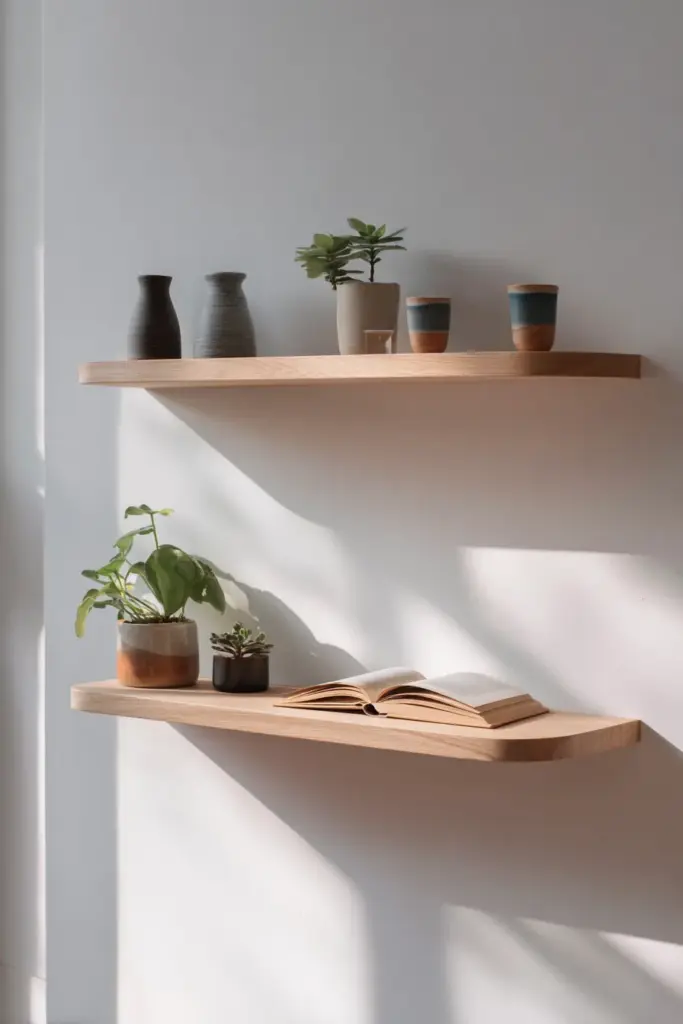
Install floating shelves at varying heights to draw the eye upward. Store books horizontally to create sculptural moments. Limit displayed items to three or five objects per shelf—asymmetry within restraint.
Budget Lighting for Small Japandi Spaces
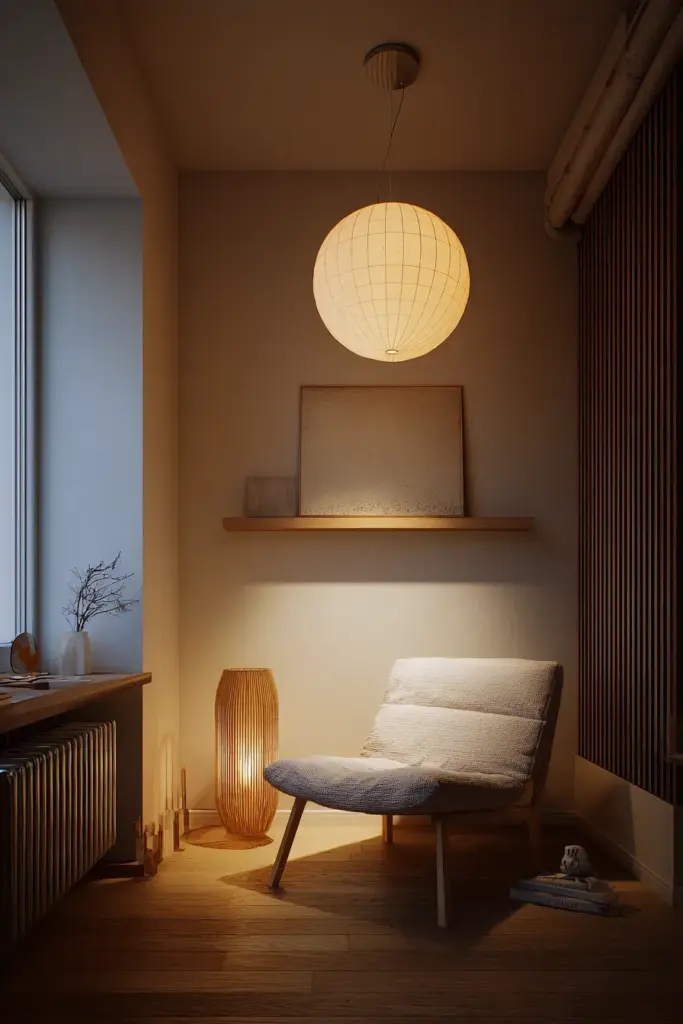
Lighting transforms small rooms from cramped to cozy. Layer your sources at different heights to create dimensional warmth.
Affordable lighting zones:
Ambient Layer
Paper lanterns or dimmable LED pendants provide soft overhead light. Look for spherical designs in natural fibers—available at most home stores for PHP 800-1,500. Install dimmer switches to control mood (approximately PHP 500 per fixture).
Task Layer
LED strip lights mounted under floating shelves cost PHP 300-600 and add subtle drama. They illuminate objects without harsh glare, perfect for highlighting ceramics or books.
Accent Layer
Floor lamps with bamboo or rattan shades (PHP 1,200-2,500) tuck beside chairs without demanding floor space. Choose slim bases and adjustable arms for reading.
For renters, battery-powered puck lights stick beneath cabinets without drilling. Warm white temperatures (2700-3000K) mimic candlelight’s gentle glow.
How to Make a Japandi Living Room on a Budget: 15 Practical Ideas
1. Start with Paint, Not Furniture
Transform your walls first. A gallon of quality greige paint costs PHP 1,500-2,500 and instantly elevates any space. Paint creates your canvas—furniture fills it.
2. Thrift Your Statement Sofa
Secondhand marketplaces often hide mid-century sofas needing only a linen slipcover (PHP 3,000-5,000). Look for solid wooden frames—upholstery can be renewed, structure cannot.
3. DIY Your Coffee Table
Stack two wooden crates (PHP 200 each at Divisoria) and seal with clear varnish. Top with a glass sheet (custom-cut for PHP 800-1,200). Total: under PHP 2,000.
4. Embrace Multifunctional Pieces
Ottoman with storage, nesting tables, fold-down wall desks—each solves two spatial problems. Prioritize hidden storage to maintain visual calm.
5. Layer Affordable Textures
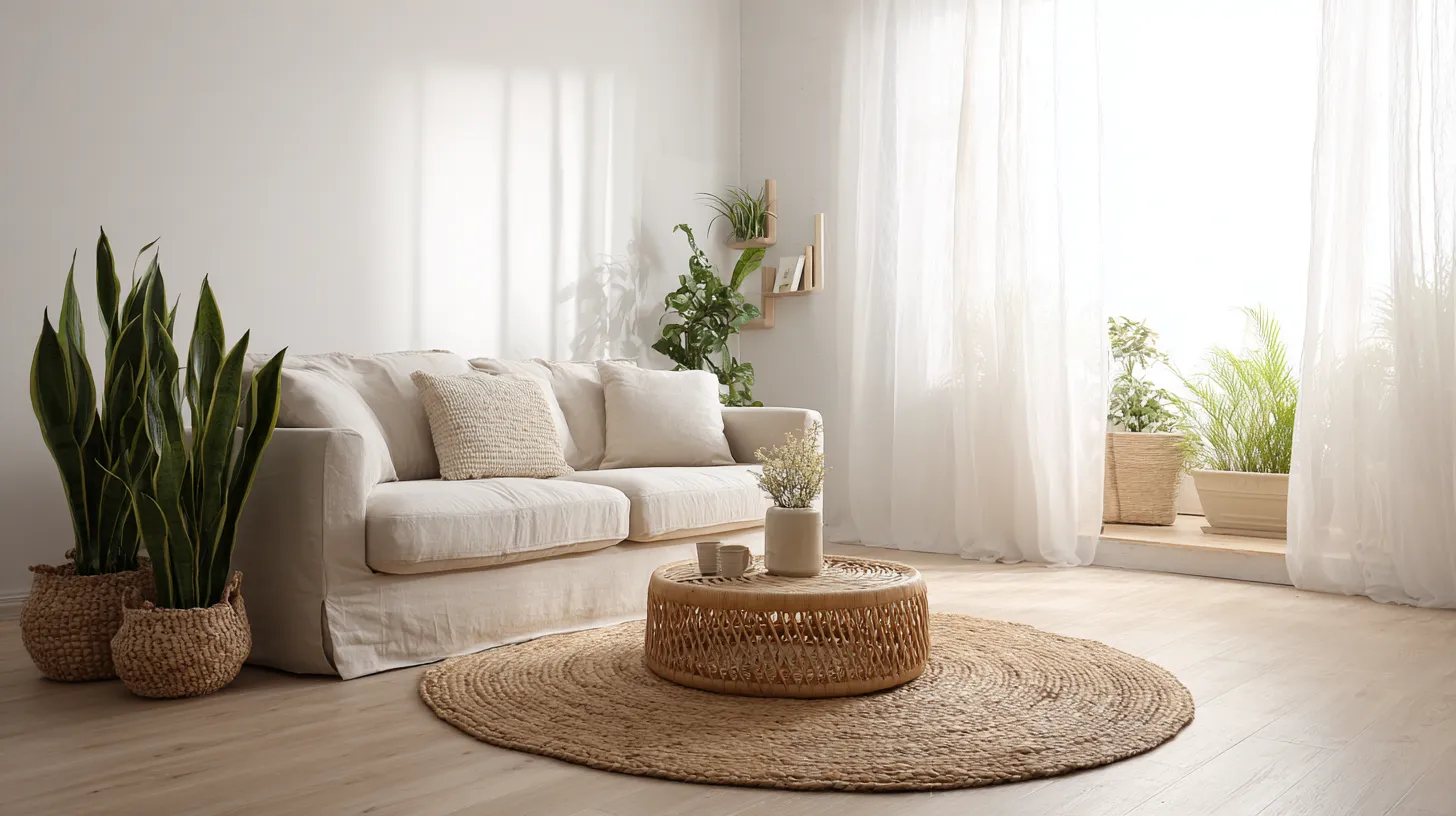
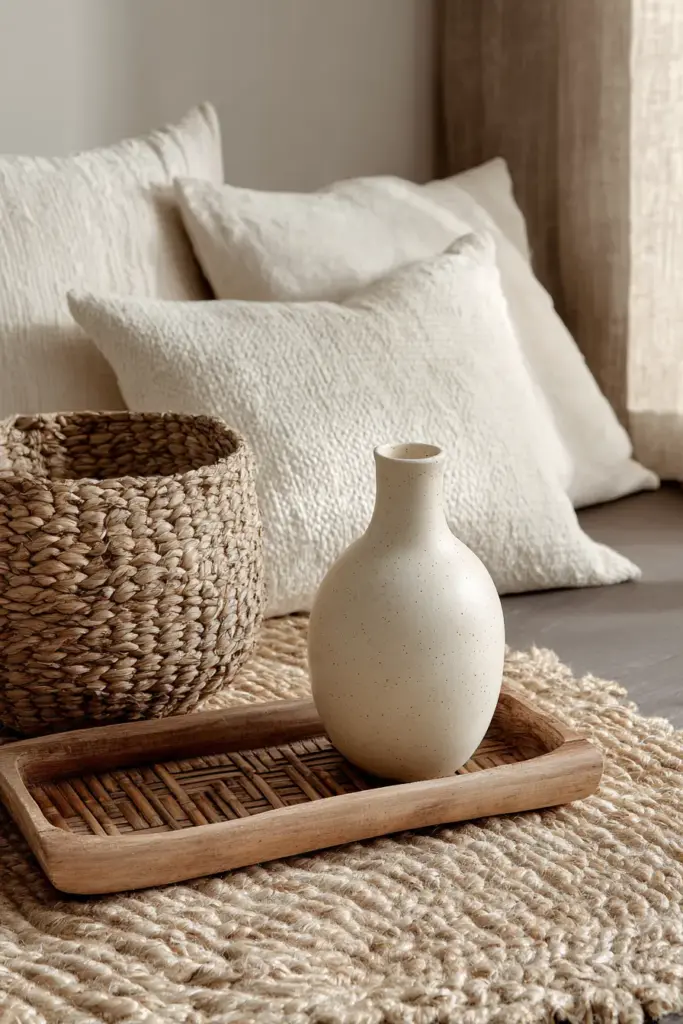
Jute rugs anchor spaces for PHP 2,000-3,500. Add linen cushions in varying sizes (three to five maximum). Mix smooth ceramics with rough baskets for tactile contrast.
6. Bring Nature Inside
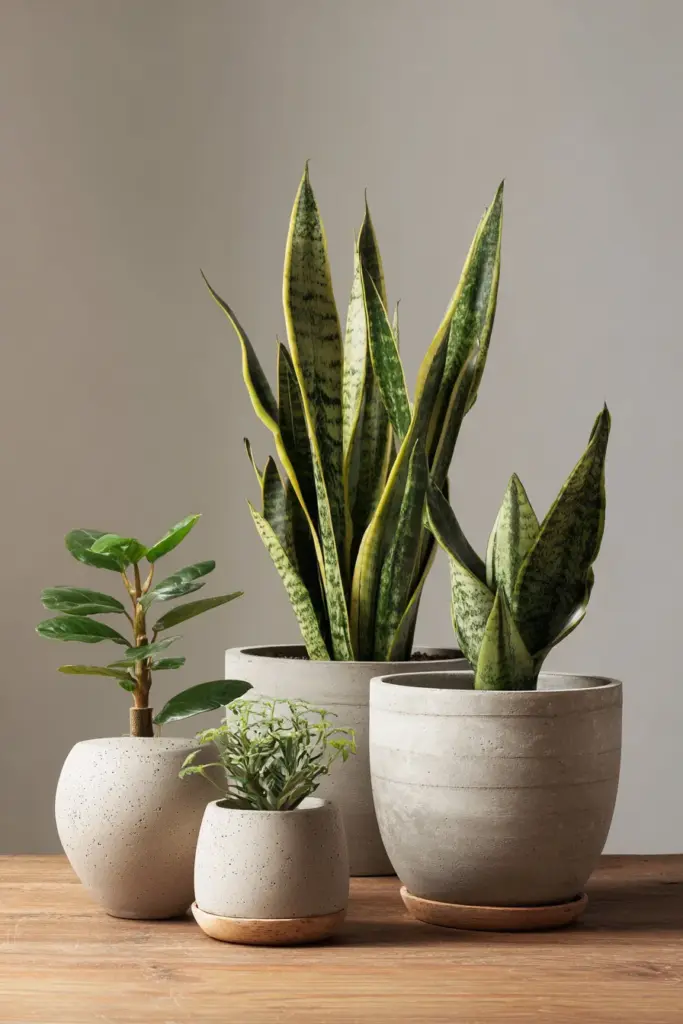
Snake plants, pothos, or ZZ plants thrive in low light and cost PHP 150-400 each. Choose odd numbers in handmade concrete pots (DIY with quick-set cement for PHP 300 total).
7. Source Local Bamboo & Rattan
Tagaytay markets sell handwoven baskets, trays, and furniture at 30-50% below retail. A bamboo ladder shelf runs PHP 1,500-2,500 versus PHP 5,000 in malls.
8. Create Negative Space Deliberately
Leave walls partially bare. Resist filling every corner. Japandi’s power lives in what you don’t add—the space that allows breath.
9. Upcycle with Wabi-Sabi Philosophy
That chipped ceramic vase? Perfect for Japandi’s celebration of imperfection. Sand old wooden stools, leave the grain visible, embrace wear as character.
10. Install No-Drill Solutions for Renters
Command hooks support floating shelves up to 3kg. Tension rods mount curtains without wall damage. Removable wallpaper (PHP 400-800 per roll) adds texture temporarily.
11. Shop Lazada & Shopee Smart
Filter by “natural materials” during sale seasons. Rattan mirrors drop to PHP 600, bamboo storage boxes to PHP 300. Read reviews for quality assurance.
12. Build Open Shelving from Plywood
Two sanded plywood boards (PHP 500 each) and iron brackets (PHP 150-250 per pair) create custom shelving under PHP 2,000. Seal with natural oil for a warm finish.
13. Choose Pet-Friendly Fabrics
If you have pets, select tightly woven linens or performance fabrics in neutral tones. Avoid delicate boucle—opt for machine-washable slipcovers instead.
14. Maintain for Humid Climates
Place moisture-absorbing plants like peace lilies near damp corners. Use dehumidifying bamboo charcoal bags (PHP 150-250) in storage. Wipe wooden furniture weekly with dry cloth.
15. Create a Signature Scent
Japandi engages all senses. Burn natural incense—hinoki cypress or sandalwood—for PHP 200-400 per box. Scent anchors memory, making your small space unforgettable.
How Can I Create Japandi Style in a Small Living Room? Step-by-Step
Week 1: Plan & Purge
Measure your room carefully. Remove everything that doesn’t serve a function or bring joy. Donate duplicates. Clean surfaces until they shine.
Week 2: Paint & Prep
Apply your chosen neutral paint. While drying, shop for your largest piece—typically the sofa. Prioritize comfort and scale over trends.
Week 3: Anchor with Furniture
Position sofa, coffee table, and one accent chair. Leave at least 60cm walkways. Test the flow by walking through your space—adjust until movement feels effortless.
Week 4: Layer & Refine
Add rug, lighting, textiles. Introduce plants last—they’re the final brushstroke. Step back. Remove one item. Japandi always improves with subtraction.
What is the Difference Between Japandi and Scandinavian?
While both celebrate minimalism and natural materials, Japandi adds Japanese restraint to Scandinavian warmth. Scandinavian design welcomes bright whites and playful accents; Japandi prefers deeper beiges and disciplined palettes.
Scandinavian spaces often feature more color and pattern. Japandi leans into earth tones and solid textures. Where Scandinavian might add a bold geometric pillow, Japandi chooses hand-dyed linen in subtle variations.
For small rooms, Japandi’s emphasis on negative space and low-profile furniture creates more breathing room than Scandinavia’s sometimes-busy coziness.
Sustainability Metrics: Small Choices, Big Impact
Japandi’s roots honor sustainability—a natural fit for budget-conscious design.
Measure your impact:
- Recycled wood furniture: Saves approximately 1-2 trees per table/shelf
- Secondhand pieces: Reduces manufacturing emissions by 80% versus new
- Low-VOC paints: Cuts indoor air pollutants by 50-70%
- LED lighting: Uses 75% less energy than incandescent bulbs
Calculate your savings using online carbon footprint tools. Knowing that your PHP 2,000 thrifted chair prevented 15kg of CO2 emissions adds meaning beyond aesthetics.
For Philippine homes, prioritize locally sourced materials. Tagaytay bamboo travels fewer kilometers than imported Danish oak, reducing environmental cost while supporting local artisans.
Essential Checklist: Small Japandi Living Room Basics
Before you begin, ensure you’ve covered these foundational elements:
- Color palette selected (3-5 neutral tones with 1-2 accents)
- Natural light maximized (sheer curtains, mirrors positioned)
- Low-profile seating (sofa height under 80cm)
- Multifunctional storage (hidden compartments, dual-purpose furniture)
- Jute or natural fiber rug (grounds the space, absorbs sound)
- Layered lighting (ambient + task + accent sources)
- Living greenery (3-5 low-maintenance plants)
- Negative space preserved (30-40% of surfaces remain clear)
- Handmade or secondhand item (adds soul and story)
- Scent element (incense, essential oils, or natural candles)
Conclusion
Your small Japandi living room is more than square footage—it’s an invitation to slow down. To notice how afternoon light catches dust motes dancing above your jute rug. To feel the cool smoothness of a ceramic cup cradled in your palms.
Budget constraints don’t limit beauty; they focus it. Every peso spent becomes a choice, every item earned rather than accumulated. This intentionality is Japandi’s beating heart.
As you layer linen textures and prune away excess, remember that you’re not decorating a room—you’re designing a feeling. The soft exhale when you step through your door. The quiet pride of creating something beautiful with your own hands and careful choices.
Welcome home.
FAQs
How much does a small Japandi living room cost to furnish?
A complete small Japandi living room can be furnished for PHP 30,000-50,000 (approximately $550-900 USD), including sofa, coffee table, lighting, textiles, and decor. Prioritize spending on your largest pieces like seating, then fill gaps with thrifted or DIY items to stay within budget.
What are the best affordable Japandi furniture stores in the Philippines?
IKEA at Ayala stores offers budget-friendly minimalist pieces. SM Home and The Landmark carry natural fiber rugs and bamboo accessories. For authentic local finds, explore Divisoria for wooden crates, Tagaytay markets for rattan furniture, and Dapitan for affordable textiles—all at 40-60% below mall prices.
Can you do Japandi style in a condo under 20 square meters?
Absolutely. Small spaces actually enhance Japandi’s core principles of negative space and intentional design. Focus on wall-mounted storage, furniture with exposed legs, and multifunctional pieces like ottomans with hidden storage. Keep your palette neutral to maximize perceived space, and limit decor to 5-7 meaningful objects.
How do I maintain Japandi furniture in humid Philippine climate?
Wipe wooden surfaces weekly with a dry cloth to prevent moisture buildup. Use dehumidifying bamboo charcoal bags in storage areas (PHP 150-250 each). Choose anti-mold paints and place moisture-absorbing plants like peace lilies or snake plants near damp corners. Avoid placing wood furniture directly against exterior walls.
What’s the fastest way to make my living room look Japandi on a tight budget?
Start with paint—a neutral greige or warm white transforms any space for PHP 1,500-2,500. Add a jute rug (PHP 2,500-4,000) to ground the room. Declutter ruthlessly, keeping only functional or beautiful items. Finish with 2-3 houseplants in simple pots (under PHP 1,000 total). These four steps create instant Japandi essence for under PHP 10,000.