
Table of Contents
There’s a quiet magic that happens when you walk into a room and it simply feels right. The light catches something woven, something smooth, something weathered. Your hand reaches out instinctively to touch a linen pillow, a wooden beam, a ceramic bowl glazed in cream.
This isn’t accident. This is texture layering — the deliberate art of combining different materials, surfaces, and finishes to create spaces that speak to all your senses.
At ERYLIN, we believe your home should tell a story through touch as much as through sight. Today, we’re exploring how to layer textures with intention, creating rooms that feel warm, collected, and deeply personal.
What Is Texture Layering?
Texture layering is the practice of combining multiple materials and surface treatments within a single space to create visual depth and tactile interest. It’s what transforms a room from flat and one-dimensional into something rich and inviting.
Think of it as composing a symphony. A single instrument is beautiful, but the orchestra creates emotion. Similarly, pairing smooth velvet with rough jute, cool marble with warm wood, matte ceramics with brushed metal creates harmony through contrast.
The goal isn’t complexity for its own sake. It’s about building layers that feel natural and effortless, like a home that’s been lovingly lived in and gathered over time.
Why Texture Layering Matters: The Emotional Language of Surfaces
Creating Visual Depth Without Clutter
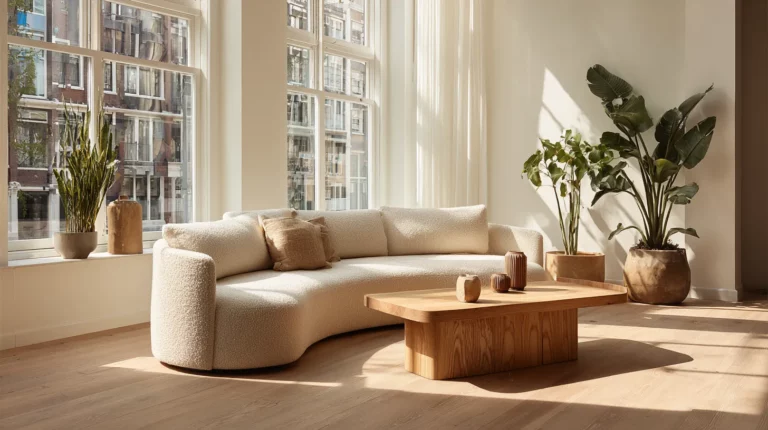
In minimalist or neutral spaces especially, texture becomes your primary design tool. When color palettes are calm and restrained, varied surfaces prevent monotony.
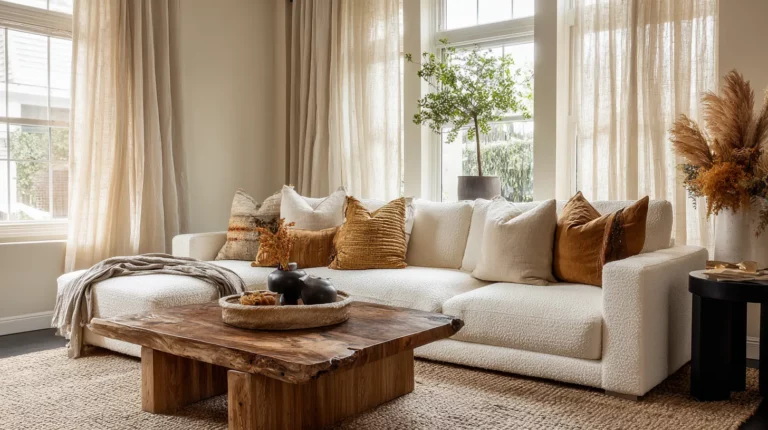
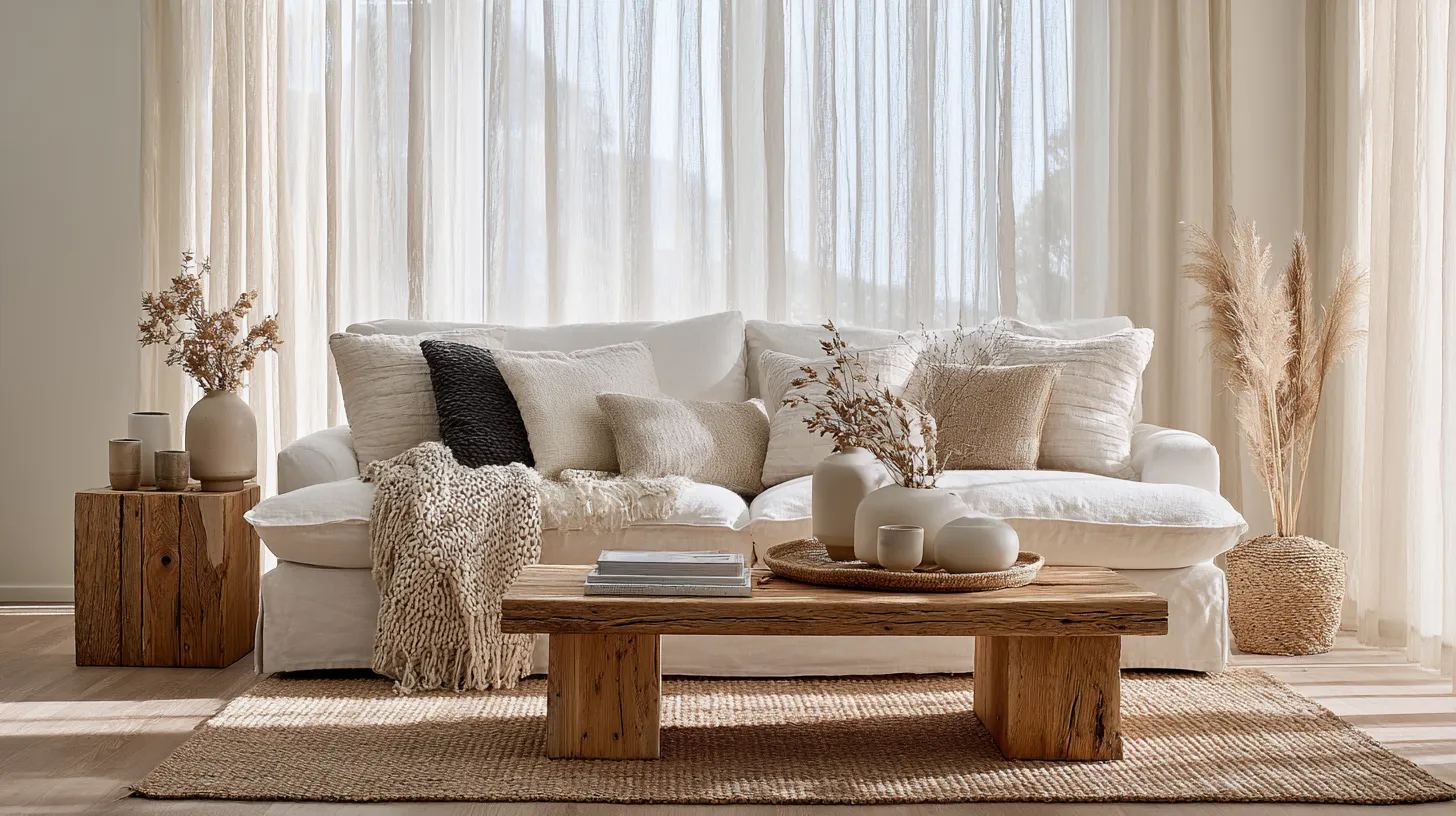
A cream-on-cream room comes alive when you introduce ribbed linen curtains, a chunky knit throw, smooth plaster walls, and raw wooden furniture. Suddenly there’s movement, shadow, and dimension — all without adding visual noise.
The Psychology of Touch and Comfort
We respond to texture on a primal level. Soft materials signal comfort and safety. Rough, natural textures connect us to earth and authenticity. Smooth surfaces feel clean and serene.
Layering these elements thoughtfully affects how a space makes you feel. A bedroom with only hard surfaces — leather, metal, glass — might feel chic but cold. Add washed linen bedding, a wool rug, velvet cushions, and suddenly the room wraps around you like an embrace.
Research in environmental psychology confirms what designers have long known: spaces rich in varied textures reduce stress and increase feelings of wellbeing. Your home becomes a sanctuary not just visually, but physically.
Materials That Layer Beautifully: A Sensory Guide
Natural Fibers and Woven Elements
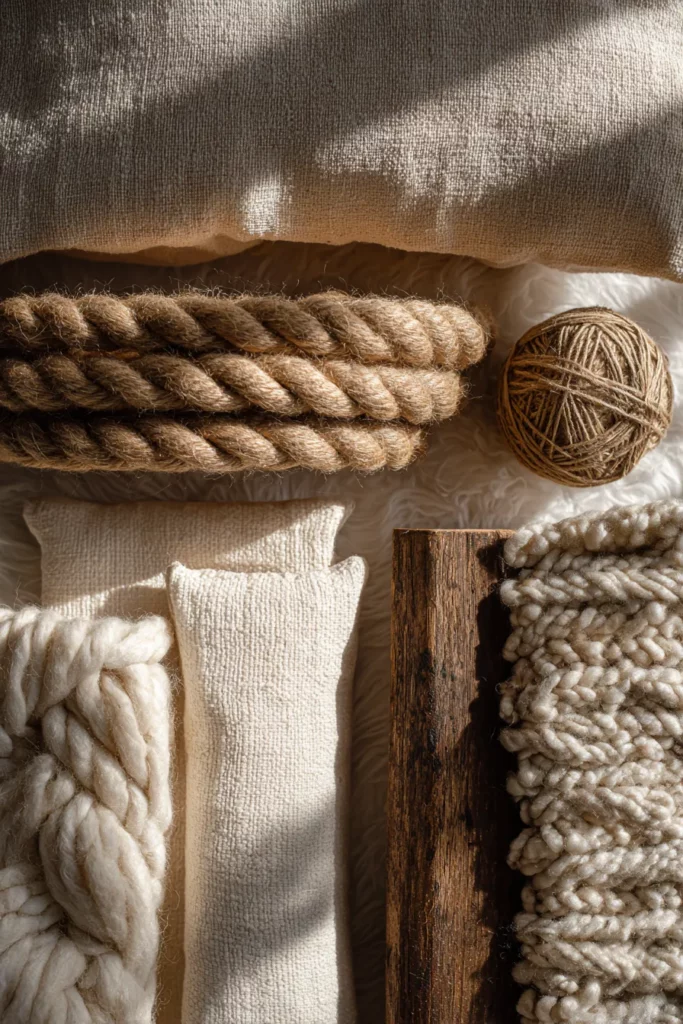
Linen brings effortless elegance with its slight irregularity and soft drape. Use it for curtains, upholstery, or table linens to introduce gentle texture that catches afternoon light beautifully.
Jute and seagrass ground a space with their organic roughness. These work perfectly as rugs, baskets, or even lampshades, adding earthy weight to balance softer elements.
Cotton and wool offer cozy versatility. A chunky knit throw or woven cotton cushions create immediate warmth without overwhelming the eye.
Wood in Its Many Expressions
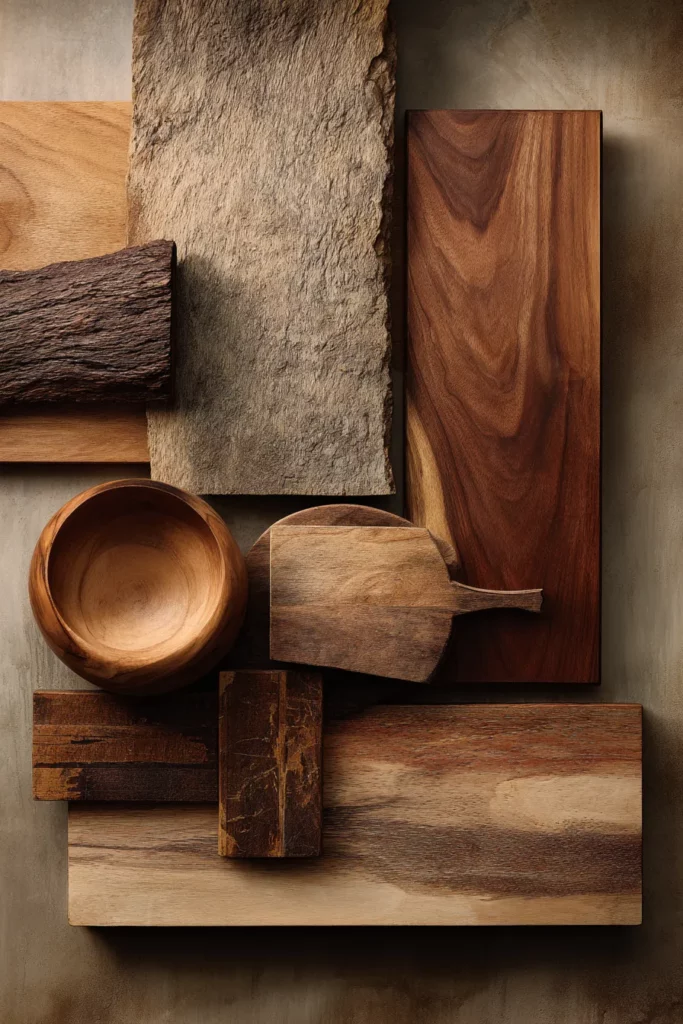
Raw, unfinished wood tells stories through grain and knots. Smooth, oiled wood feels luxurious under your palm. Weathered, reclaimed wood carries history and character.
Layer different wood finishes intentionally. Pair a rustic dining table with sleek walnut shelving. Combine driftwood accessories with polished wooden bowls. The variation creates interest while maintaining natural harmony.
Metals and Their Quiet Presence
Brushed brass adds warmth without shine. Matte black metal provides grounding contrast. Aged bronze brings subtle patina and depth.
Use metal sparingly but strategically — in hardware, light fixtures, furniture legs, or decorative objects. These cool, smooth surfaces balance organic textures beautifully.
Stone, Ceramic, and Earth Elements
Natural stone introduces permanence and grounding energy. A marble countertop, slate coasters, or travertine side table adds cool smoothness that contrasts perfectly with soft textiles.
Handmade ceramics with visible texture — think ribbed vases, dimpled bowls, or matte-glazed planters — bring artisan soul to shelves and surfaces.
Room-by-Room Texture Layering Strategies
Living Rooms: The Art of Comfortable Gathering
Start with foundation pieces in varied materials. A linen sofa, leather armchair, and wooden coffee table establish your base layer.
Add textile richness through cushions in different weaves — waffle cotton, velvet, linen blends. Layer a jute rug under a softer sheepskin or vintage kilim.
Don’t forget vertical surfaces. Woven wall hangings, wooden shelving, plaster walls, or even textured wallpaper create dimensional interest at eye level.
Key material pairings:
- Smooth leather + chunky knit throws
- Raw wood beams + soft linen curtains
- Matte ceramic + brushed metal accents
Bedrooms: Sanctuary Through Softness
Bedrooms thrive on layers of soft texture. Begin with quality bedding — percale or linen sheets feel crisp and breathable, while jersey or flannel adds cozy warmth seasonally.
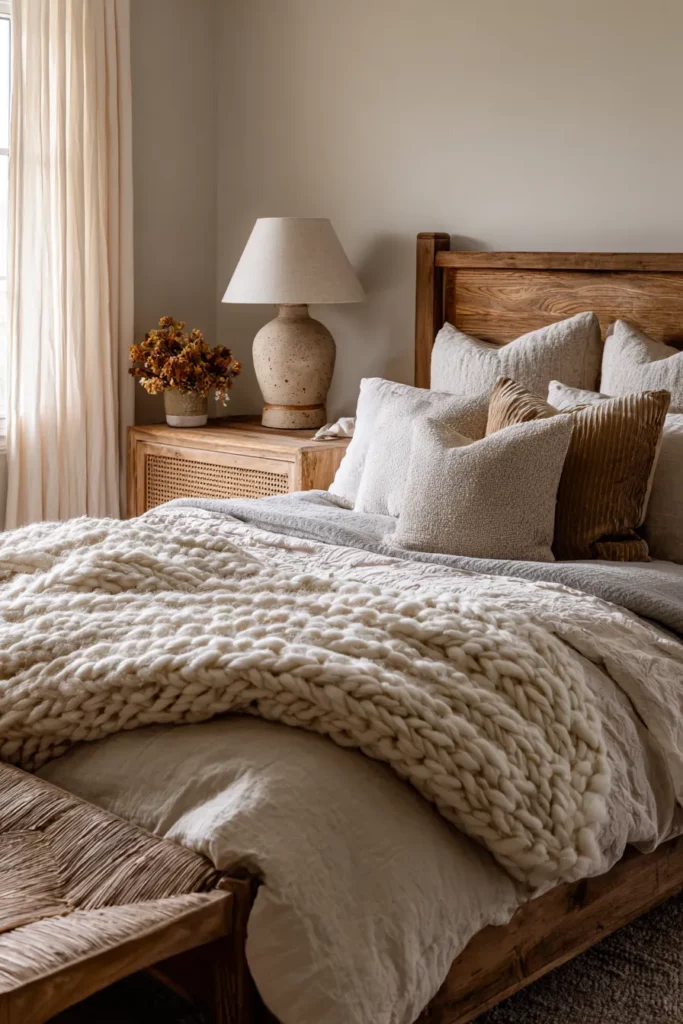
Build dimension through your bedding composition. A linen duvet, cotton quilt, wool blanket, and velvet cushions create an inviting landscape of texture.
Balance softness with grounding elements. A wooden bed frame, woven rattan nightstand, or ceramic bedside lamp prevents the room from feeling too precious.
Kitchens and Dining: Functional Beauty
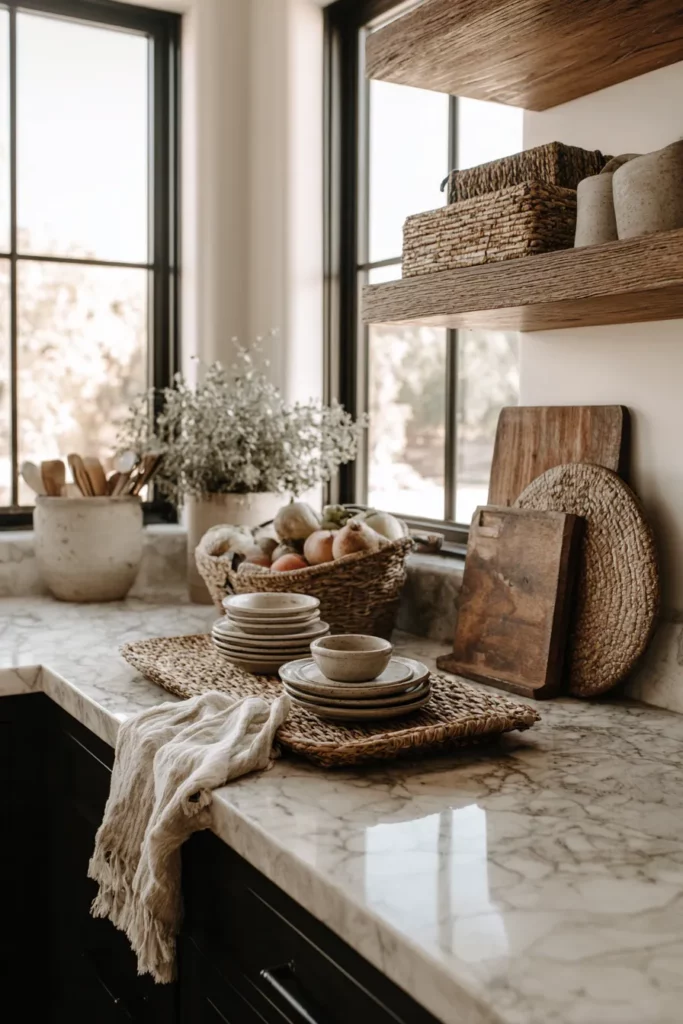
Kitchens naturally combine hard surfaces, so introduce softness deliberately. Linen napkins, wooden serving boards, woven placemats, and ceramic tableware add warmth to countertops and tables.
Layer functional textures thoughtfully. Rough stone counters paired with smooth wooden cutting boards, matte ceramic dishes, and soft cotton towels create a balanced, lived-in feel.
Consider unexpected texture moments — a jute runner on open shelving, handwoven baskets for produce storage, or linen curtains softening window light.
Bathrooms: Spa-Like Serenity
Transform bathrooms through textural contrast. Cool marble or tile gains warmth when paired with wooden bath trays, woven baskets, soft Turkish cotton towels, and linen shower curtains.
Add natural elements — a smooth river stone soap dish, ceramic containers with organic glazes, or a small wooden stool for texture against sleek fixtures.
The ERYLIN Method: Principles for Perfect Texture Layering
Start with Three Texture Families
Choose one rough texture (jute, raw wood, woven baskets), one smooth texture (leather, polished stone, glass), and one soft texture (linen, velvet, wool). This foundational trio ensures balance.
Build from there, but maintain this equilibrium. Too many rough textures feels rustic and unrefined. Too much smoothness reads cold. All soft becomes saccharine.
Honor the 70-20-10 Rule
Apply 70% of your dominant texture (often your larger pieces — upholstery, rugs), 20% of a secondary contrasting texture, and 10% of accent textures for surprise and interest.
This creates cohesion while preventing visual chaos. Your eye needs a primary story with supporting characters, not equal competition.
Consider Scale and Proportion
Vary the scale of your textures. Pair chunky, oversized knits with delicate linen weaves. Balance large-scale patterns (like a bold jute rug) with smooth, plain surfaces.
Small rooms benefit from smaller-scale textures to avoid overwhelming the space. Larger rooms can handle bolder, chunkier textural statements.
Let Light and Shadow Play
Texture reveals itself through light. Ribbed fabrics create shadow lines. Smooth surfaces reflect. Matte finishes absorb.
Place textured elements where natural light can interact with them. Position a chunky knit throw where afternoon sun will catch its ridges. Hang linen curtains to diffuse and soften morning light.
Mix Old and New
Vintage textiles, reclaimed wood, and antique ceramics carry texture through time and wear. Pair these with contemporary smooth pieces for a collected, intentional aesthetic.
This mixing prevents your space from feeling too staged or catalog-perfect. Real homes accumulate layers gradually, and that’s part of their beauty.
Common Texture Layering Mistakes (And How to Avoid Them)
Mistake #1: Too Much of One Thing
A room with only rough, rustic textures feels unfinished. A space with only smooth, polished surfaces feels sterile. Balance is essential.
Solution: Audit your room. If everything feels the same to touch, introduce contrasting textures through small, affordable additions like pillows, throws, or decorative objects.
Mistake #2: Ignoring Visual Weight
Heavy, dark textures can make a room feel smaller and more closed-in. Too many light, airy textures might feel insubstantial.
Solution: Ground light, soft textures with heavier elements. Balance a light linen sofa with a substantial wooden coffee table or jute rug.
Mistake #3: Forgetting Seasonal Shifts
Velvet in July feels oppressive. Bare linen in January feels cold. Your texture layers should breathe with the seasons.
Solution: Create a rotation of textiles. Store heavy wool throws and velvet cushions for summer, swapping in lighter cottons and gauzy linens. This keeps your space feeling intentional year-round.
Mistake #4: Matching Too Perfectly
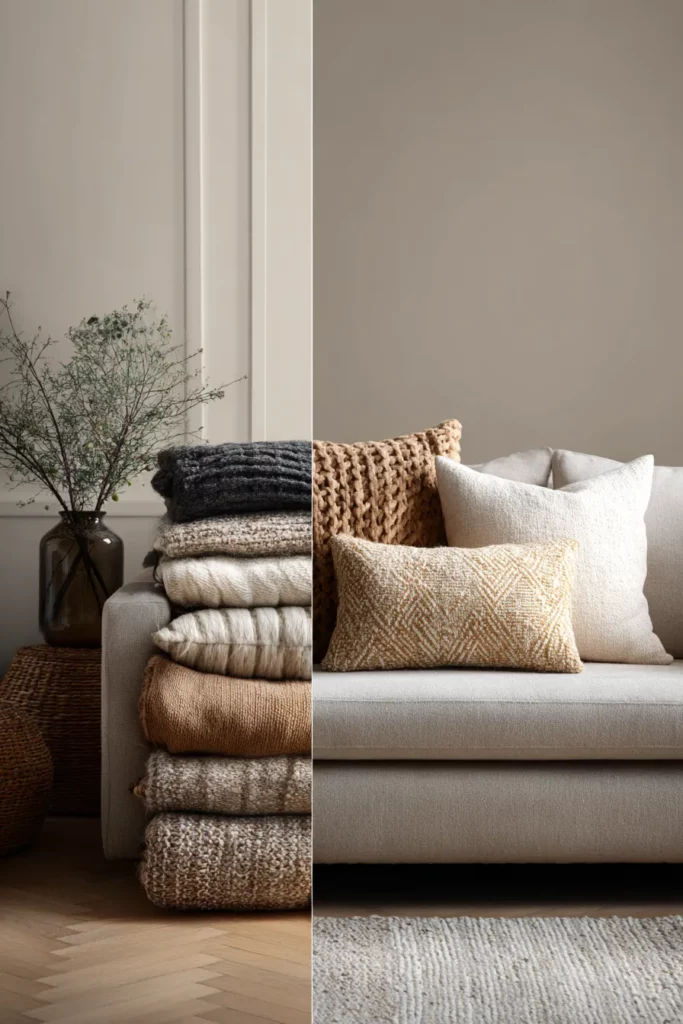
When every texture coordinates in the same color family and finish, the result feels flat despite good intentions.
Solution: Vary finishes even within the same material. Use matte linen with slightly shiny silk velvet. Combine rough jute with smooth cotton. Contrast creates life.
Mistake #5: Ignoring Touch Points
We interact most with surfaces we touch — chair arms, cushions, throws, tabletops. These deserve textural attention.
Solution: Prioritize tactile pleasure in high-touch areas. Choose upholstery and bedding you want to reach for. Select table surfaces that feel good under your hands.
Sustainable Texture Layering: Eco-Conscious Material Choices
Natural and Renewable Materials
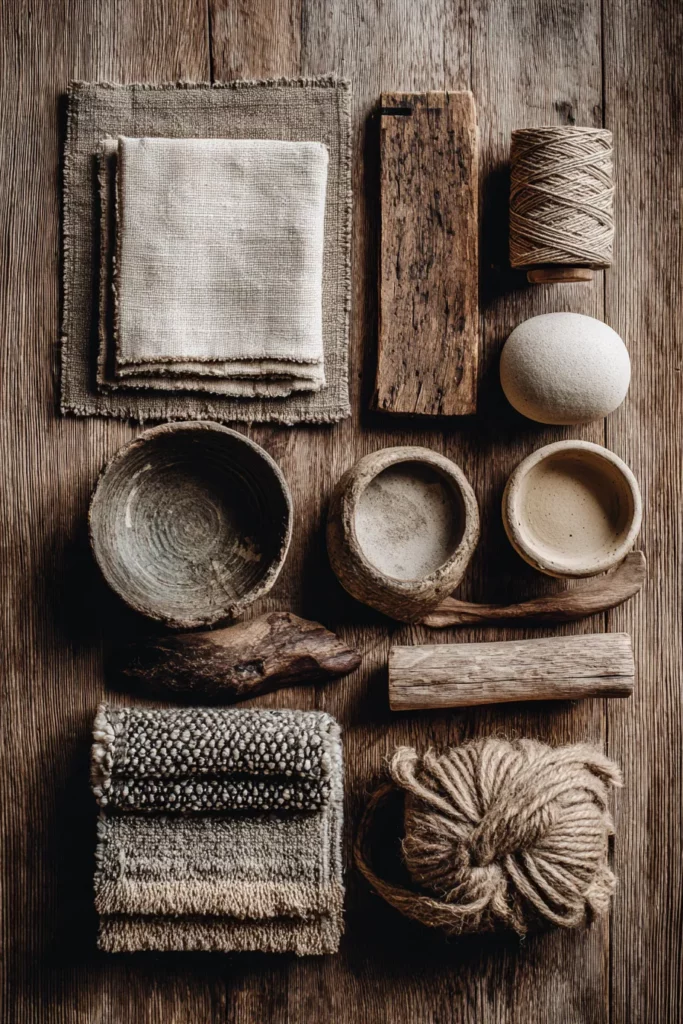
Organic cotton, linen, hemp, and wool are renewable and biodegradable. They age beautifully, developing character rather than looking worn.
Reclaimed wood adds texture with a smaller environmental footprint. Each piece carries unique patina and story.
Supporting Artisan Craftsmanship
Handwoven textiles, hand-thrown ceramics, and handcrafted wooden objects bring texture through making. These pieces support traditional craft while adding authentic, irregular beauty to your space.
Imperfection becomes part of the appeal — slight variations in weave, glaze, or finish create organic visual interest.
Choosing Quality Over Quantity
Well-made natural materials last decades and develop beautiful patina. A quality linen pillow, solid wood side table, or handmade ceramic vase becomes more beautiful with use.
This approach aligns with both sustainability and texture layering. Genuine materials have inherent textural interest that synthetic alternatives lack.
Texture Layering Quick Reference
| Texture Type | Materials | Best Uses | Pairs Well With |
|---|---|---|---|
| Soft | Linen, velvet, wool, cotton | Upholstery, bedding, curtains, cushions | Rough naturals, smooth wood |
| Rough | Jute, seagrass, raw wood, stone | Rugs, baskets, furniture, accessories | Soft fabrics, polished metals |
| Smooth | Leather, polished wood, marble, glass | Furniture, surfaces, decorative objects | Chunky knits, woven elements |
| Woven | Rattan, cane, macramé, basket weave | Furniture, wall hangings, storage | Smooth ceramics, soft linens |
| Metallic | Brass, bronze, iron, copper | Hardware, lighting, accent pieces | Natural woods, neutral textiles |
Creating Your Texture Layering Plan: A Simple Checklist
Start with this foundation and build gradually:
- Choose your color palette first — texture layering works best within a cohesive color story
- Identify your three texture families — rough, smooth, soft
- Select one statement textural piece per room (a chunky rug, leather chair, or wooden beam)
- Layer in medium-scale textures through upholstery and curtains
- Add small-scale accents through cushions, throws, ceramics, and decorative objects
- Consider vertical surfaces — don’t forget walls, shelving, and window treatments
- Audit tactile touch points — ensure frequently touched surfaces feel good
- Rotate seasonal textiles to keep your space feeling fresh and intentional
- Mix finishes within materials for dimensional interest
- Include at least one handmade element for authenticity and soul
The Emotional Reward of Thoughtful Layering
There’s something deeply satisfying about a space that engages all your senses. When texture is layered with intention, your home becomes more than visually appealing — it becomes a place that welcomes you home.
You notice the way afternoon light catches the weave of your linen curtains. Your hand trails across the smooth wooden countertop as you make morning coffee. You sink into cushions that are soft and firm in all the right places.
These aren’t grand gestures. They’re quiet moments of beauty and comfort that accumulate throughout your day, making your home feel truly yours.
At ERYLIN, we believe that’s what home should be — not a showroom, but a sanctuary. Not perfect, but perfectly you. Texture layering is simply the language we use to tell that story, one beautiful, touchable layer at a time.
Frequently Asked Questions
What is texture layering in interior design?
Texture layering is the intentional combination of different materials, surfaces, and finishes within a space to create visual depth and tactile interest. It involves pairing contrasting textures — like rough jute with smooth leather, or soft linen with cool marble — to build dimensional, engaging rooms that feel collected and warm rather than flat or one-note.
How do you layer textures without making a room feel cluttered?
Focus on the 70-20-10 rule: use 70% of a dominant texture, 20% of a secondary contrasting texture, and 10% accent textures. Stay within a cohesive color palette, vary the scale of patterns and weaves, and ensure each textural element serves a purpose. Quality over quantity prevents clutter while maintaining richness.
What materials work best together when layering textures?
Natural materials create the most harmonious combinations. Pair soft fabrics (linen, wool, cotton, velvet) with rough organic elements (jute, raw wood, woven baskets) and smooth surfaces (leather, polished wood, stone, ceramic). Add subtle metallic accents in brass or matte black for contrast. The key is balancing opposing textures rather than matching too perfectly.
Can you layer textures in minimalist or neutral spaces?
Absolutely — texture becomes even more important in minimalist design. When color is restrained, varied surfaces create visual interest and prevent monotony. A neutral palette with cream walls, linen upholstery, jute rugs, wooden furniture, and ceramic accessories feels rich and dimensional despite the simple color story. Texture provides the complexity that color might otherwise supply.
How should texture layering change seasonally?
Rotate textiles with the seasons to keep your home feeling comfortable and intentional. In colder months, introduce heavier textures like wool throws, velvet cushions, and chunky knits. For warmer seasons, swap to lighter materials like gauzy linen, cotton blends, and breathable weaves. Keep foundational elements like wood furniture and jute rugs year-round, changing only the softer, removable layers.