

Table of Contents
There’s something quietly powerful about a well-loved rug. It grounds a room, softens footsteps, and carries the memory of countless mornings and evenings spent in its presence. But like any cherished piece in your home, a rug asks for care in return—gentle attention that honors its craft and extends its life.
At ERYLIN, we believe rug maintenance isn’t a chore. It’s a ritual of preservation, a way to protect the texture and warmth that first drew you to a piece. Whether your rug is a hand-knotted heirloom or a modern synthetic weave, thoughtful care keeps it beautiful and functional for years to come.
This guide walks you through everything you need to know about rug care and maintenance. From daily habits to seasonal deep cleans, we’ll share practical tips that fit naturally into your life—no harsh chemicals, no guesswork, just clarity and care.
Let’s begin.
Understanding Your Rug: Materials Matter
Before you lift a vacuum or mix a cleaning solution, pause. Every rug speaks a different language, and its material tells you exactly how to care for it.
Wool rugs are resilient and forgiving, naturally resistant to stains and dirt. They welcome regular vacuuming and respond well to gentle, water-based cleaning. Their fibers breathe and recover, making them ideal for high-traffic areas when properly maintained.
Silk rugs are delicate, luminous, and best left to professionals for deep cleaning. Handle them with soft brushes and minimal moisture. Their sheen is precious—treat it that way.
Jute, sisal, and seagrass rugs bring organic texture into a space but dislike water. These natural plant fibers can stain or warp when wet, so dry cleaning methods work best. A quick shake outdoors and a soft brush are often all they need.
Synthetic rugs (polypropylene, nylon, polyester) are the workhorses of the rug world. Durable, stain-resistant, and forgiving, they handle more aggressive cleaning and are perfect for homes with pets or children.
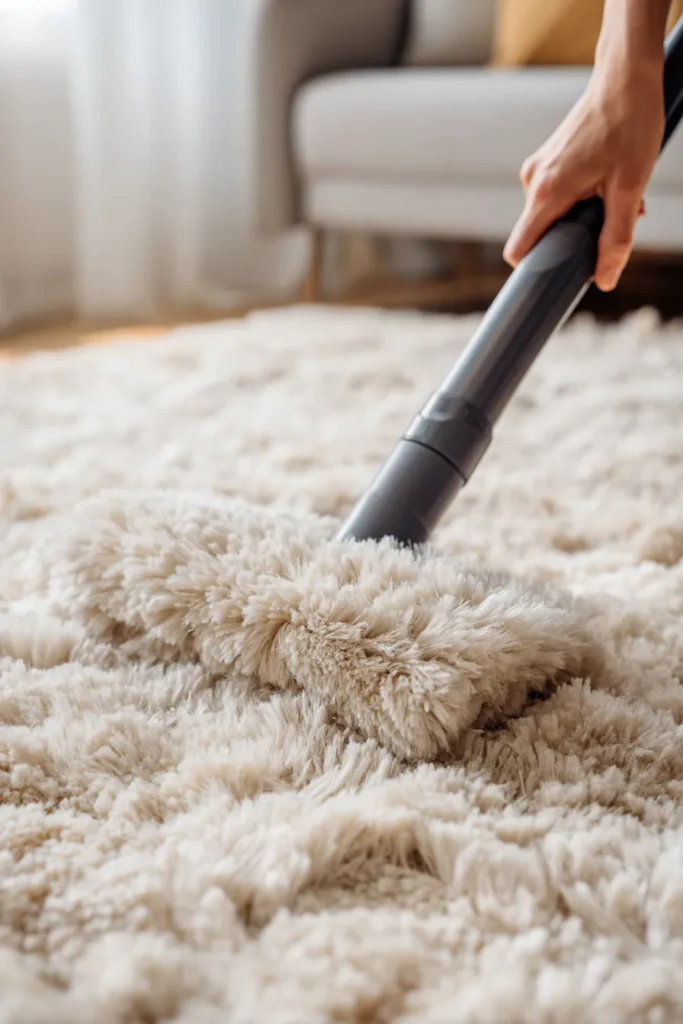
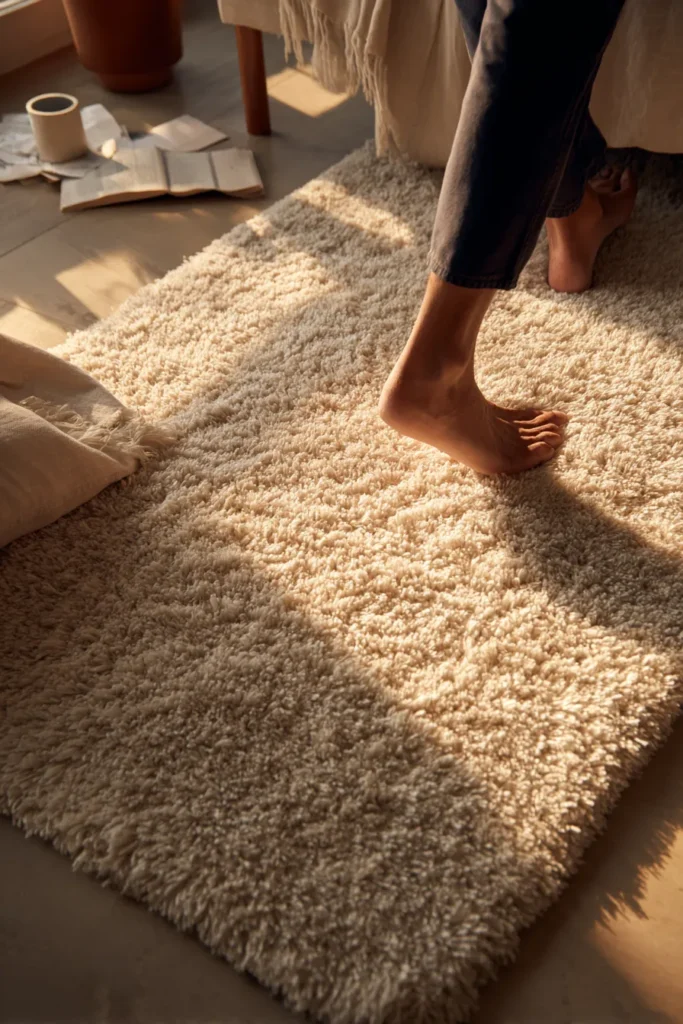
Shag rugs trap dust deep in their plush fibers. Avoid beater bars on vacuums; instead, use a handheld attachment or gently shake them outside. Their depth requires patience, but the softness is worth it.
Knowing your rug’s material is the foundation of all good care. Everything that follows builds on this understanding.
Daily and Weekly Rug Maintenance Rituals
Rug care begins with consistency. Small, regular efforts prevent the buildup of dirt, dust, and damage that lead to costly repairs or replacements.
Vacuum with Intention
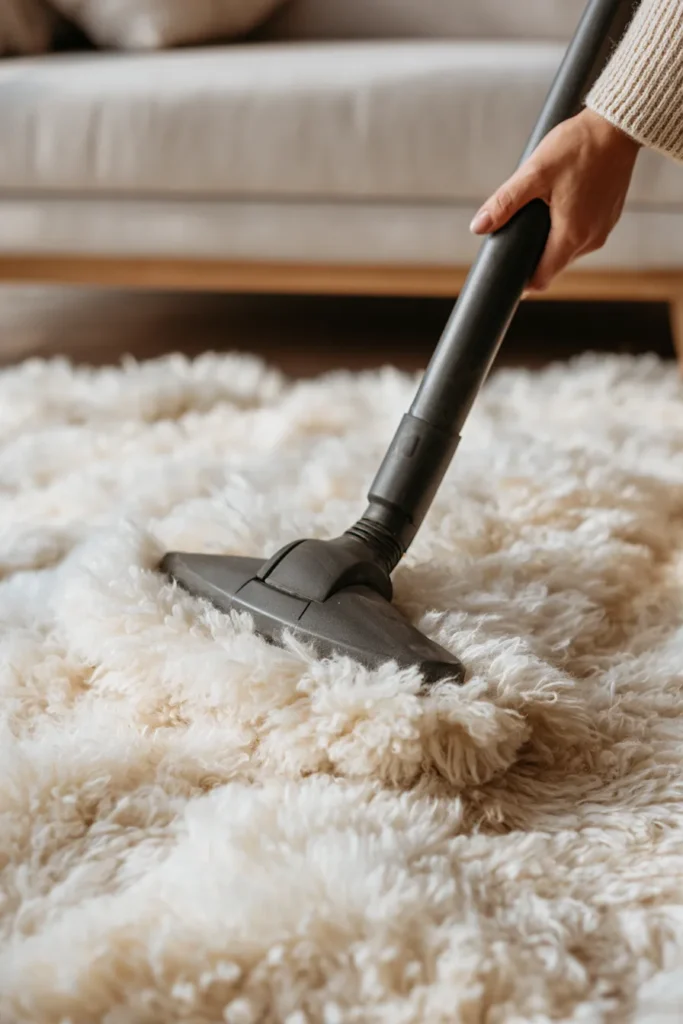
Vacuum your rugs once a week in low-traffic areas and two to three times weekly in busier zones like entryways, living rooms, and hallways. Use low suction settings and turn off the beater bar for delicate fibers like wool, silk, and natural plant materials.
Always vacuum in the direction of the pile. This lifts dirt without stressing the fibers. For fringes, vacuum parallel to them or skip them entirely—beater bars can snag and tear these delicate edges.
Rotate Every Six Months
Sunlight and foot traffic wear unevenly. Rotating your rug every six to twelve months redistributes this wear, preventing permanent fading and flattening in high-use areas. It’s a simple habit that doubles a rug’s visual lifespan.
If your rug sits near a window, consider rotating it more frequently or using sheer curtains to diffuse harsh afternoon light.

Use Doormats and Rug Pads
Prevention is the gentlest form of care. Place doormats at every entrance to trap dirt, moisture, and debris before they reach your rugs. A quality rug pad beneath each piece prevents slipping, cushions fibers, and allows air circulation that reduces mildew and odor.
Look for non-slip, breathable pads made from natural rubber or felt. They protect both your rug and your floors.
Stain Removal: Act Fast, Act Gently
Spills happen. The key is speed and the right technique—not panic.
The Golden Rule: Blot, Don’t Rub
When liquid spills, grab a clean, absorbent cloth and blot from the outside in. Rubbing spreads the stain and pushes it deeper into fibers. Blot until no more liquid transfers to the cloth.
For solid spills, gently scrape up excess with a dull knife or spoon before blotting.
DIY Eco-Friendly Stain Solutions
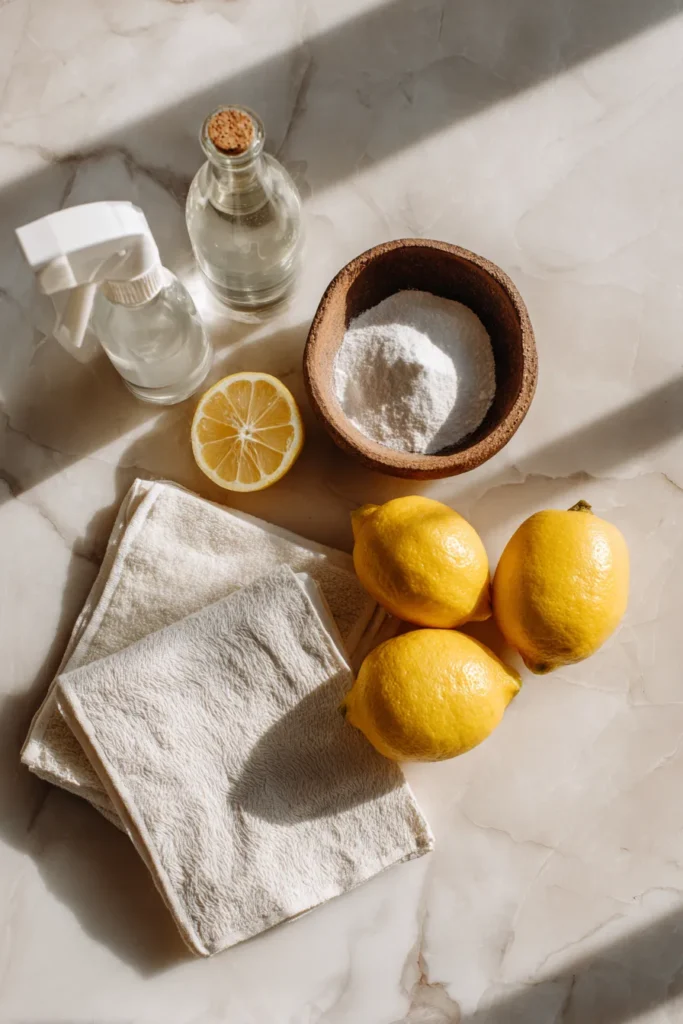
You don’t need harsh chemicals to lift most stains. Here are gentle, effective recipes using ingredients you likely already have:
For general stains:
- Mix 1 tablespoon white vinegar + 1 tablespoon dish soap + 2 cups warm water
- Blot onto the stain with a clean cloth
- Rinse with plain water and blot dry
For wine or juice:
- Sprinkle baking soda over the damp stain to absorb liquid
- Let sit for 15 minutes, then vacuum
- Follow with the vinegar solution above if needed
For grease or oil:
- Sprinkle cornstarch or baking soda generously over the stain
- Let it absorb for 30 minutes
- Vacuum and repeat if necessary
For pet urine:
- Blot thoroughly, then apply a 1:1 solution of white vinegar and water
- Blot again, sprinkle with baking soda, let dry, and vacuum
- For odor, consider an enzyme cleaner safe for your rug type
Always test any solution on an inconspicuous corner first. Natural fibers can react unpredictably to moisture and cleaning agents.
Seasonal Deep Cleaning and Maintenance Calendar
Rug care is seasonal. Just as you rotate your wardrobe, your rugs benefit from scheduled attention throughout the year.
Spring: Refresh and Renew
- Deep vacuum both sides of the rug if possible (take smaller rugs outside and beat them gently)
- Spot clean any lingering winter stains
- Rotate the rug to redistribute wear
- Air out rugs outdoors on a dry, breezy day to refresh fibers and release trapped odors
Summer: Protect from Sun
- Check for fading near windows and adjust curtains or blinds
- Rotate again if the rug receives direct sunlight
- Maintain humidity levels between 40–60% to prevent drying and cracking in natural fibers
Fall: Prepare for High Traffic
- Professional cleaning every 12–18 months—fall is ideal before holiday gatherings
- Inspect for damage: loose threads, worn edges, or moth activity in wool rugs
- Add or replace rug pads if they’ve compressed or shifted
Winter: Monitor Moisture
- Increase vacuuming frequency due to indoor time and tracked-in salt or snow
- Address moisture immediately—wet boots and umbrellas can cause mildew in rug fibers
- Use dehumidifiers in damp climates to prevent mold growth
| Season | Key Task | Frequency |
|---|---|---|
| Spring | Deep vacuum, rotate, air out | Once |
| Summer | Monitor sun exposure, adjust humidity | Ongoing |
| Fall | Professional cleaning, inspect for damage | Once |
| Winter | Increase vacuuming, manage moisture | Weekly+ |
Managing Indoor Air Quality for Rug Preservation
Rugs are natural air filters. They trap dust, allergens, and pollutants—which means they need clean air to function well and last longer.
Maintain humidity between 40–60%. Too dry, and natural fibers become brittle; too humid, and mold or mildew can develop. A simple hygrometer monitors levels, and humidifiers or dehumidifiers adjust as needed.
Improve ventilation. Open windows when weather permits, and run air purifiers with HEPA filters to reduce airborne particles that settle into rug fibers. Cleaner air means less frequent deep cleaning.
Avoid smoking indoors. Smoke particles cling to textiles and are nearly impossible to remove fully. If you smoke, do so outside to protect your rugs (and your health).
Use natural air fresheners. Skip synthetic sprays that can stain or leave residue. Instead, place bowls of baking soda near rugs to absorb odors, or simmer cinnamon and citrus peels on the stove for natural fragrance.
Allergy-Friendly Rug Care for Sensitive Homes
If you or your family members have allergies or asthma, your rugs require extra attention—but they’re not the enemy. With the right care, they can actually improve indoor air quality by trapping allergens before they circulate.
Vacuum with a HEPA filter to capture fine particles instead of redistributing them into the air. Empty the canister or replace the bag outside to avoid reintroducing allergens indoors.
Deep clean more frequently—every 6–12 months instead of the standard 12–18. This removes embedded dust mites, pet dander, and pollen that regular vacuuming misses.
Choose low-pile rugs for easier cleaning and fewer hiding spots for allergens. Flat-weave and tightly woven rugs trap less dust than high-pile or shag styles.
Wash small rugs monthly if they’re machine-safe. Hot water kills dust mites and removes allergens effectively.
Consider professional allergen-reduction treatments during deep cleans. Many services offer green, hypoallergenic options.
Smart Tools and Innovations for Modern Rug Care
Technology has quietly revolutionized rug maintenance. These tools make care easier, more effective, and gentler on delicate fibers.
Robotic vacuums with adjustable suction and “rug mode” settings handle daily maintenance while you focus elsewhere. Look for models that detect rug edges and adjust power automatically.
Handheld UV sanitizers kill bacteria, dust mites, and odor-causing microbes without moisture or chemicals. They’re especially useful for rugs that can’t be washed, like antique silks or delicate wool.
Portable carpet cleaners with gentle extraction settings allow you to spot-clean deeply without hauling rugs to professionals for every spill. Choose models with low-moisture or dry-foam options for sensitive materials.
Smart hygrometers and air purifiers monitor and adjust indoor conditions automatically, protecting your rugs from the silent damage of too-dry or too-humid air.
Invest in tools that suit your lifestyle and your rugs’ needs. The right equipment transforms maintenance from burden to effortless habit.
Sustainable Rug Care and Decorating Practices
Rug care and sustainability go hand in hand. Thoughtful choices extend your rug’s life, reduce waste, and honor the resources that created it.
Choose natural cleaning products. The vinegar, baking soda, and dish soap recipes shared earlier are effective, affordable, and safe for your home and the planet. Avoid harsh chemicals that degrade fibers and pollute waterways.
Repair instead of replace. Loose threads, small stains, and worn edges can often be mended by professionals or with simple DIY techniques. A well-repaired rug can last decades longer than a discarded one.
Buy quality, not quantity. One beautifully made wool or cotton rug will outlast several cheap synthetic versions. Invest in pieces you love, and care for them properly.
Arrange furniture thoughtfully. Use furniture coasters or pads under heavy pieces to prevent permanent dents. Shift furniture placement slightly every few months to distribute weight and wear.
Store properly when not in use. Roll rugs (never fold), wrap them in breathable cotton fabric, and store them in a cool, dry place off the floor. Add cedar blocks or lavender sachets to deter moths naturally.
Sustainable care isn’t just good for the environment—it’s good for your home’s soul.
When to Call a Professional
Some tasks are best left to experts. Knowing when to DIY and when to call for help protects your investment and prevents accidental damage.
Hire a professional for:
- Deep cleaning every 12–18 months, especially for high-value or antique rugs
- Stains you can’t lift after two or three gentle attempts
- Pet odor that persists after home treatment
- Water damage or flooding (mold can develop in 24–48 hours)
- Repairs like reweaving, fringe restoration, or binding edges
- Moth or insect infestations in natural fiber rugs
Ask potential cleaners about their methods. Look for companies that offer gentle, fiber-specific cleaning, green or low-moisture options, and transparent pricing. Never let anyone pressure you into harsh chemical treatments.
A good professional will educate you on your rug’s needs and help you maintain it between visits. That’s a partnership worth investing in.

Quick Checklist: Essential Rug Care Habits
- Vacuum regularly: 1x/week for low-traffic, 2–3x/week for high-traffic areas
- Use low suction and turn off beater bars for delicate fibers
- Rotate every 6–12 months to prevent uneven wear and fading
- Place doormats at all entrances to trap dirt before it reaches rugs
- Use rug pads to prevent slipping, cushion fibers, and improve airflow
- Blot spills immediately—never rub
- Test cleaning solutions on hidden corners before full application
- Deep clean professionally every 12–18 months
- Monitor humidity (40–60%) to prevent fiber damage
- Shake or air out rugs outdoors seasonally to refresh fibers
- Store rolled, not folded, in breathable fabric when not in use
- Inspect regularly for damage, moths, or loose threads
A Closing Though
A rug is more than décor. It’s a threshold between the hard world outside and the softness you’ve built within your home. It absorbs the sound of laughter, the weight of conversations, the quiet moments between busyness.
Caring for it is an act of gratitude—for the hands that wove it, the fibers that grew for it, and the life it now holds beneath your feet. Every gentle vacuum stroke, every quick blot of a spill, every rotation and airing is a small promise: I see you, I value you, I’ll keep you beautiful.
At ERYLIN, we believe homes should be lived in, loved, and lovingly maintained. Your rugs deserve that care. And so do you.
Frequently Asked Questions
How often should you vacuum a rug?
Vacuum low-traffic rugs once a week and high-traffic rugs two to three times weekly. Always use low suction and turn off beater bars for wool, silk, and natural fiber rugs to prevent damage. Vacuum in the direction of the pile and avoid fringes with rotating brushes.
What is the best way to remove stains from a rug at home?
Blot spills immediately with a clean cloth, working from the outside in. For most stains, mix 1 tablespoon white vinegar, 1 tablespoon dish soap, and 2 cups warm water. Blot the solution onto the stain, rinse with plain water, and blot dry. Always test solutions on a hidden corner first.
How do you clean a wool rug without damaging it?
Vacuum regularly with low suction and no beater bar. For spot cleaning, use lukewarm water with a tiny amount of gentle dish soap. Blot—never scrub—and dry thoroughly to prevent mildew. Rotate every six months and have it professionally cleaned every 12–18 months for deep maintenance.
Should natural fiber rugs like jute or sisal get wet?
No. Jute, sisal, and seagrass rugs can stain, warp, or develop mold when exposed to water. Clean them with dry methods: vacuum regularly, shake outdoors, and use a soft brush. For stubborn spots, lightly dampen a cloth with a 1:1 vinegar-water solution, blot quickly, and dry immediately.
How often should you get a rug professionally cleaned?
Most rugs benefit from professional deep cleaning every 12–18 months, depending on traffic and use. High-traffic rugs, homes with pets or allergies, or delicate antique rugs may need cleaning every 6–12 months. Always choose cleaners experienced with your rug’s specific material.