
Table of Contents
There’s something deeply satisfying about stepping into a living room where everything just feels right. The sofa sits at the perfect angle to catch afternoon light. The coffee table holds your favorite books without crowding the space. And beneath it all, a rug anchors the room with quiet confidence.
Choosing the right rug size isn’t about following rigid rules—it’s about understanding how scale, proportion, and flow work together to create harmony. A rug that’s too small can make your furniture look like it’s floating awkwardly. One that’s too large might overwhelm the space, leaving no breathing room between fabric and wall.
But when you get it right? The room transforms. Your seating area becomes a defined oasis. Your hardwood floors gain warmth without losing their character. Every piece of furniture finds its place in a composition that feels intentional, collected, and completely yours.
Let’s walk through this together, step by sensory step.
Understanding the Relationship Between Rug Size and Room Balance
Your living room has a rhythm—a natural flow that guides how you move through the space and how your eye travels across it. The rug is the bass note in that composition, grounding everything else.
When a rug is properly sized, it creates visual weight that balances your furniture arrangement. Too small, and your seating area feels disconnected, like individual pieces rather than a cohesive conversation zone. Too large, and the room loses definition, especially in open-concept spaces where you need subtle boundaries between living, dining, and kitchen areas.
Think of your rug as the stage for your daily life. It should be generous enough to hold the performance—feet tucked under while reading, legs stretched out during movie nights, children building block towers—without the actors constantly stepping off into the wings.
Measuring Your Space: The Foundation of Good Design
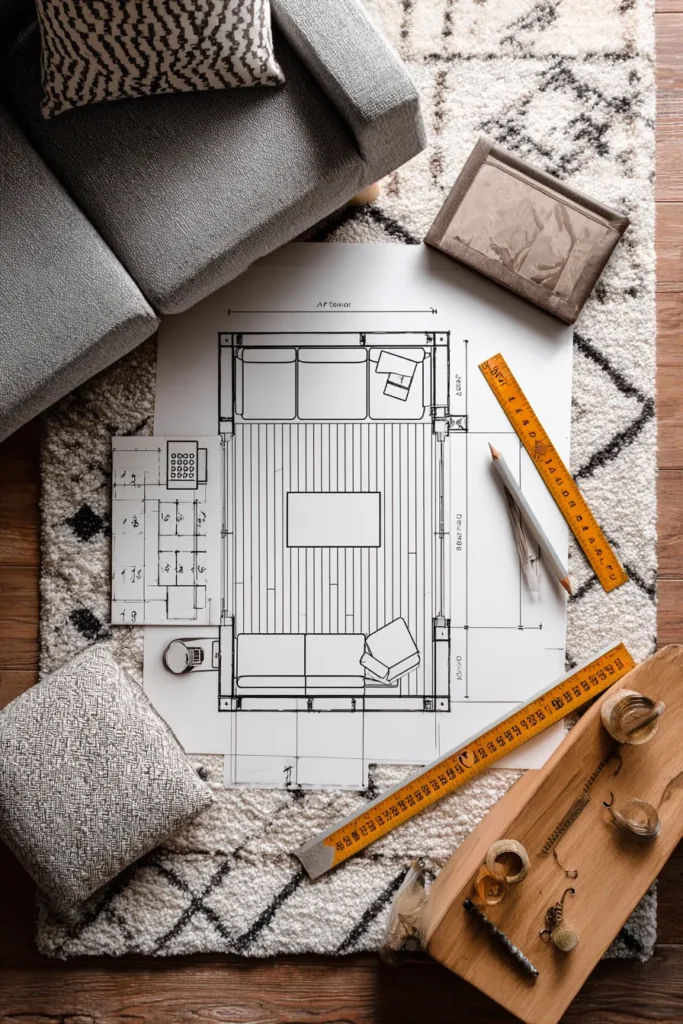
Before you fall in love with a pattern or texture, pull out your measuring tape. This isn’t the glamorous part of design, but it’s the most important.
Start by measuring your seating area, not your entire room. Identify where your sofa, chairs, and coffee table will sit. Add 6 to 8 inches on all sides of this furniture grouping—that’s your ideal rug footprint for a floating furniture arrangement. If you prefer all furniture legs on the rug, add those dimensions to your measurement.
Next, measure the distance from your furniture to the walls. Interior designers typically recommend leaving 12 to 18 inches of bare floor between the rug edge and the walls in medium to large living rooms. In smaller spaces, 6 to 12 inches works beautifully. This breathing room prevents the rug from looking wall-to-wall carpet and maintains that curated, layered aesthetic.
Record these measurements on your phone. Take photos of your room from multiple angles. These references will be invaluable when you’re standing in a showroom or scrolling through online options, trying to visualize how an 8′ x 10′ rug will actually look in your space.
Standard Rug Sizes and What They Mean for Your Room
Rug sizes aren’t arbitrary—they’ve evolved to fit common living room dimensions and furniture layouts. Understanding these standards helps you shop more efficiently and avoid costly sizing mistakes.
| Rug Size | Best For | Typical Layout |
|---|---|---|
| 5′ x 8′ | Small apartments, reading nooks | Coffee table only, front legs of small sofa |
| 6′ x 9′ | Compact living rooms | Front legs of sofa and two chairs |
| 8′ x 10′ | Medium living rooms (12′ x 15′) | All front furniture legs, or sofa + chairs fully on rug |
| 9′ x 12′ | Large living rooms (14′ x 18′) | All furniture legs on rug with generous border |
| 10′ x 14′ | Spacious or open-concept rooms | Complete seating area plus extra layering space |
These dimensions serve as starting points, not commandments. Your specific room proportions, furniture scale, and design goals will fine-tune your choice.
Small Living Rooms (Under 200 sq ft)
In cozy spaces, a 5′ x 8′ or 6′ x 9′ rug typically works best. The key is resisting the urge to go smaller—a tiny rug will make your room feel even more cramped.
Position the rug so at least the front legs of your sofa and chairs rest on it. This creates visual unity without overwhelming the limited floor space. Leave that crucial 6 to 12 inches between the rug edges and walls to maintain the illusion of spaciousness.
Consider lighter colors and simpler patterns here. A heavily patterned or dark rug can make a small room feel closed in, while a cream, soft gray, or pale blue rug reflects light and opens up the space.
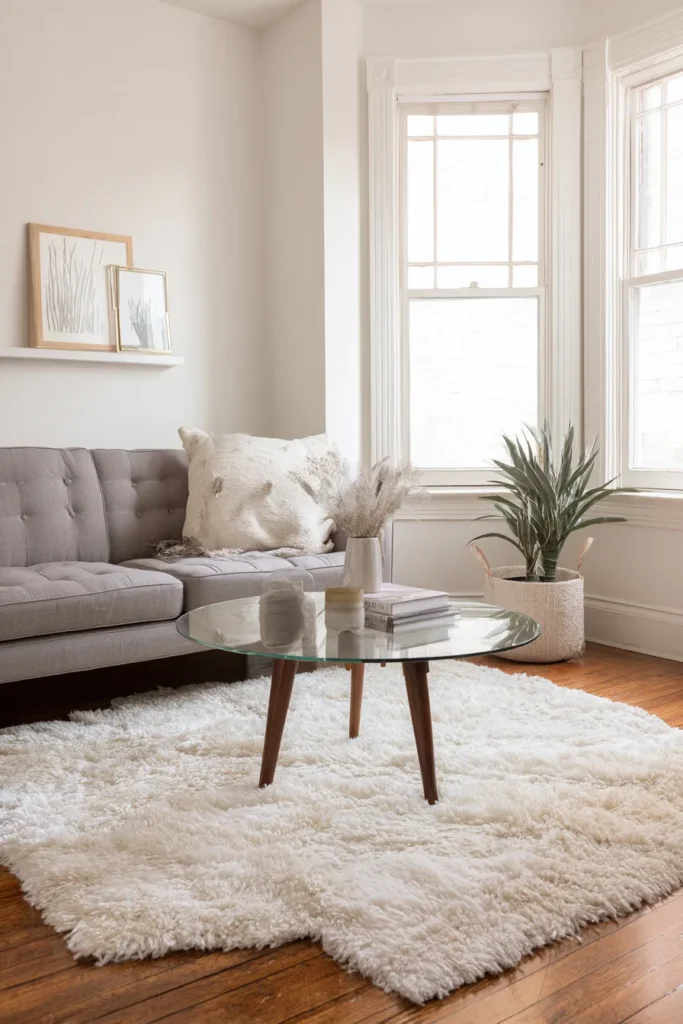
Medium Living Rooms (200-350 sq ft)
The 8′ x 10′ rug is the workhorse of medium living rooms, and for good reason. It’s substantial enough to anchor a standard sofa (typically 84″ to 96″ long) plus two accent chairs or a loveseat.
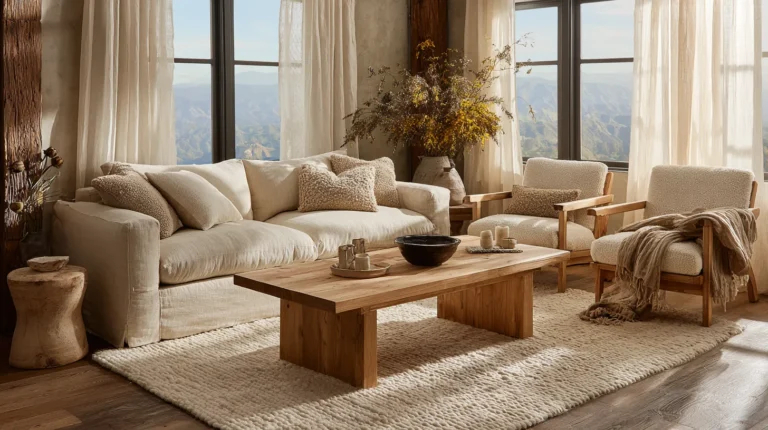
You have flexibility here in how you arrange furniture. The “front legs on” approach—where just the front legs of your seating pieces rest on the rug—creates a sophisticated, designer look while leaving more floor exposed. Alternatively, placing all furniture fully on the rug creates a more intimate, room-within-a-room feeling.
Your coffee table should sit completely on the rug with at least 8 to 10 inches of rug visible beyond it on all sides. This buffer zone prevents the table from feeling like it’s teetering at the rug’s edge.
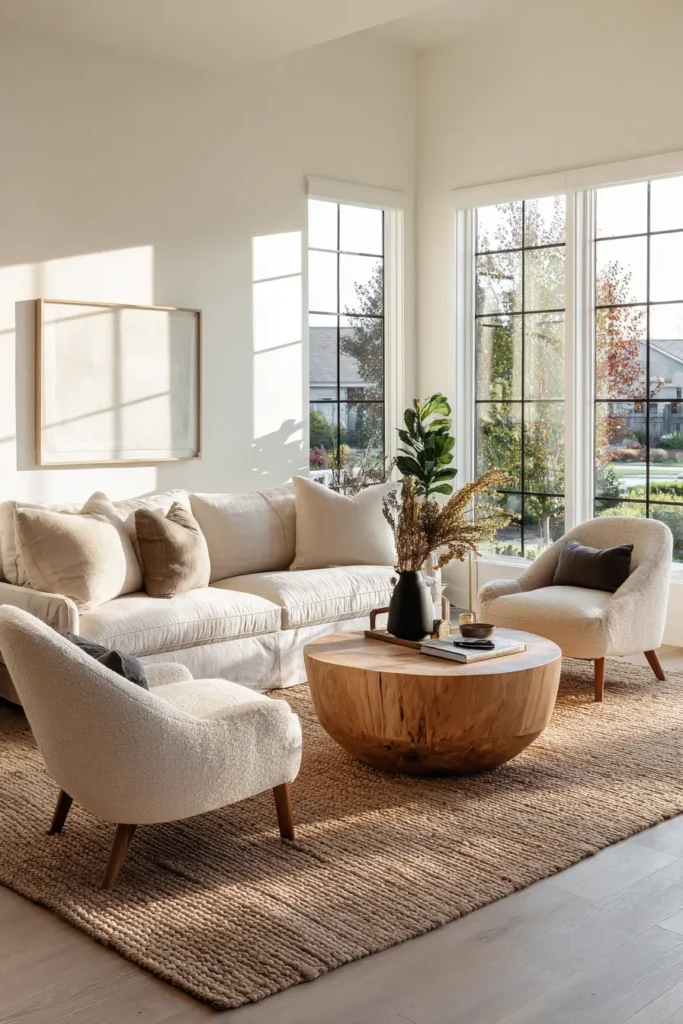
Large Living Rooms (350+ sq ft)
Generous rooms demand generous rugs. A 9′ x 12′ or larger rug prevents your furniture from looking lost in the space. In these rooms, you can comfortably place all furniture legs on the rug while still maintaining that 12 to 18 inches of breathing room to the walls.
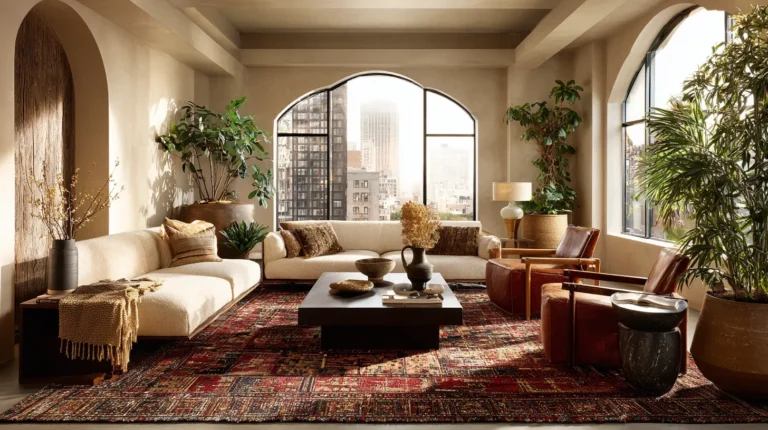
Large rugs also give you the freedom to experiment with rug layering—placing a smaller textured rug atop a larger neutral one for depth and visual interest. This trend, popular in 2025, adds a collected, traveled aesthetic while allowing you to introduce pattern without commitment.
In open-concept spaces, use your large rug to define zones. The rug edge acts as a soft boundary between your living area and adjacent dining or kitchen space, creating flow without physical barriers.
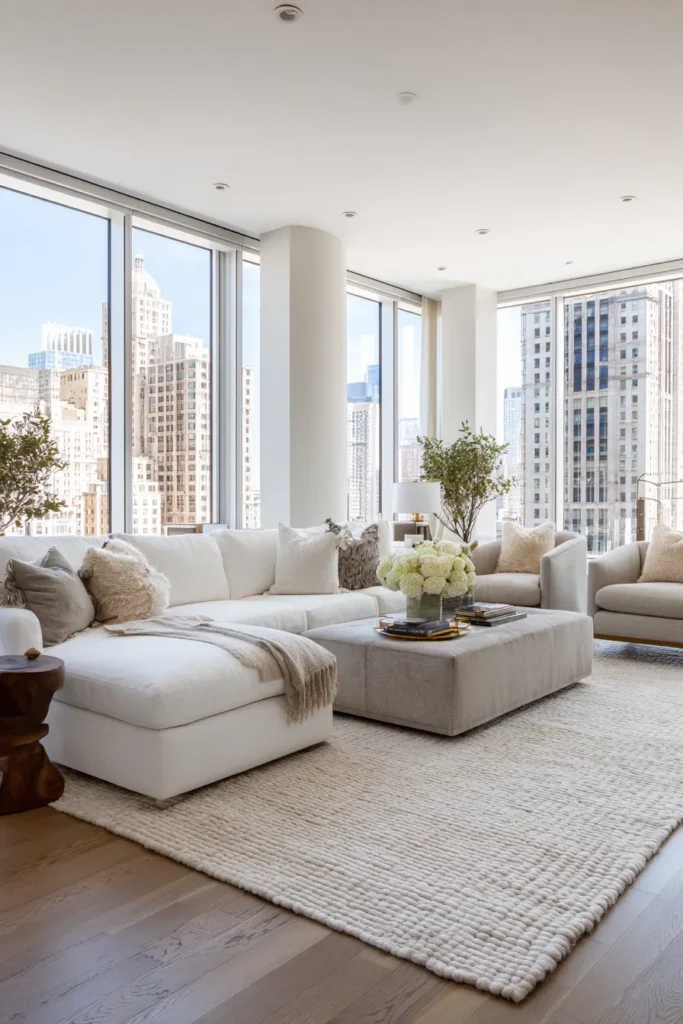
The Three Main Furniture Placement Approaches
How you position furniture on your rug dramatically affects both function and visual impact. Each approach has its own personality.
All Furniture On the Rug
This is the most grounded, cohesive look. Every piece—sofa, chairs, side tables, coffee table—sits completely on the rug. The result feels luxurious and intentional, like a hotel lobby or a room from a design magazine.
This arrangement requires a larger rug (typically 9′ x 12′ or bigger for standard furniture) and works beautifully in formal living rooms where the space is primarily used for conversation and entertaining. The entire seating area becomes a unified zone, perfect for rooms with hardwood or tile floors that might feel cold underfoot.
The drawback? Cost and commitment. Larger rugs are investment pieces, and this layout shows every stain and wear pattern since there’s no hiding behind furniture.
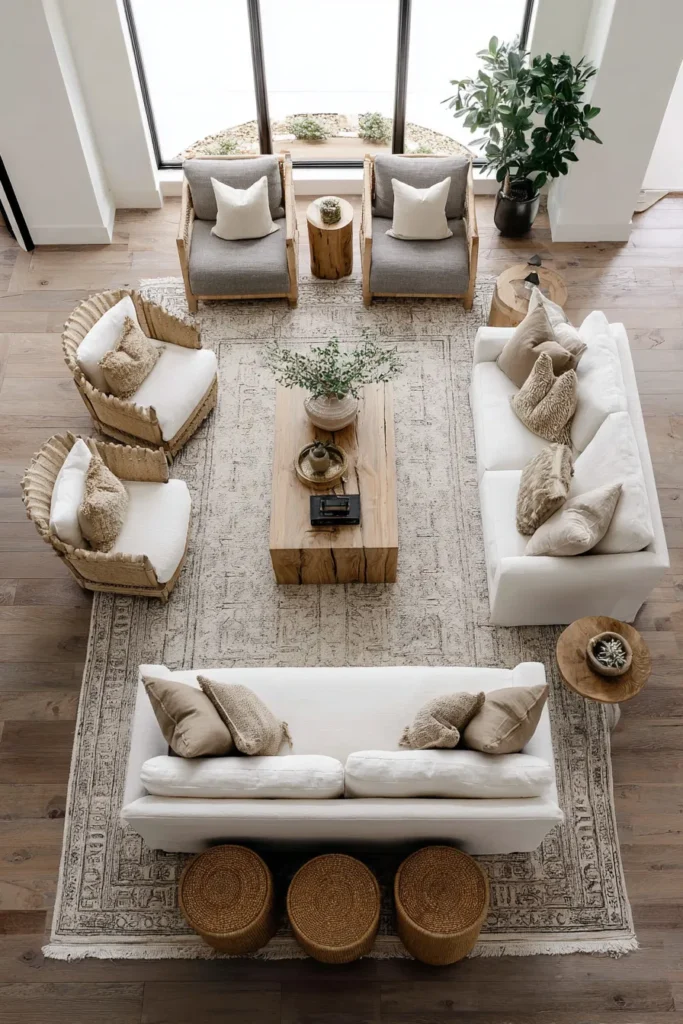
Front Legs Only
This is the most versatile approach and the one interior designers use most frequently. The front legs of your sofa and chairs rest on the rug, while the back legs sit on bare floor.
This method works with medium-sized rugs (8′ x 10′ is ideal) and creates visual connection without overwhelming smaller rooms. It also elegantly solves the problem of awkwardly placed outlets or floor vents—you simply position furniture to keep these features off the rug.
The “front legs on” approach adds just enough rug presence under seating to feel intentional without making the rug the room’s dominant feature. It’s balanced, grown-up, and cost-effective.
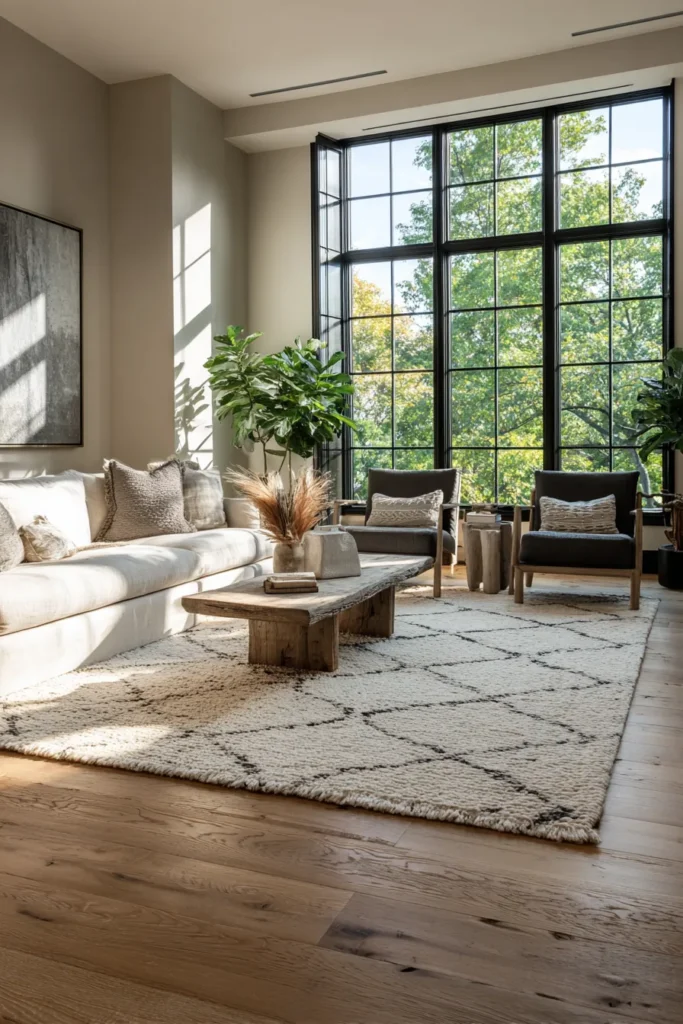
Floating the Rug (No Furniture On)
In this contemporary approach, the rug sits completely under or between furniture pieces—often just under the coffee table with all seating pushed back onto bare floor.
This works best with smaller rugs (5′ x 7′ or 6′ x 9′) in spaces where the flooring itself is beautiful and you want to showcase it. Think wide-plank oak, patterned tile, or polished concrete.
The floating approach creates an airy, minimalist aesthetic. However, it can feel disjointed if not carefully executed. The key is ensuring the rug still relates to the furniture placement—it shouldn’t look forgotten in the middle of the room.
Shape Matters: Matching Rug Geometry to Room Architecture
While rectangular rugs dominate living rooms for good reason, shape selection affects how your space feels and flows.
Rectangular rugs suit most living rooms, especially those with traditional layouts and rectangular furniture. They create clean lines and work beautifully under sectionals or standard sofa-and-chairs arrangements.
Square rugs (8′ x 8′ or 10′ x 10′) shine in square living rooms or under square seating arrangements—think four chairs around a large square ottoman or coffee table. They emphasize symmetry and feel particularly modern.
Round rugs soften angular furniture and work wonderfully in conversation areas with curved sofas or in rooms with lots of hard edges that need balancing. A 6′ to 8′ round rug under a circular coffee table creates an intimate gathering spot. Just ensure the rug extends beyond your seating area enough to avoid a “bullseye” effect.
Runner rugs aren’t just for hallways. A long, narrow rug (3′ x 10′ or 3′ x 12′) can beautifully define a seating area in a narrow living room or behind a sofa to delineate spaces in open-concept layouts.

Material and Texture: How They Influence Size Perception
The material you choose doesn’t just affect durability and maintenance—it actually influences how large or small a rug appears in your space.
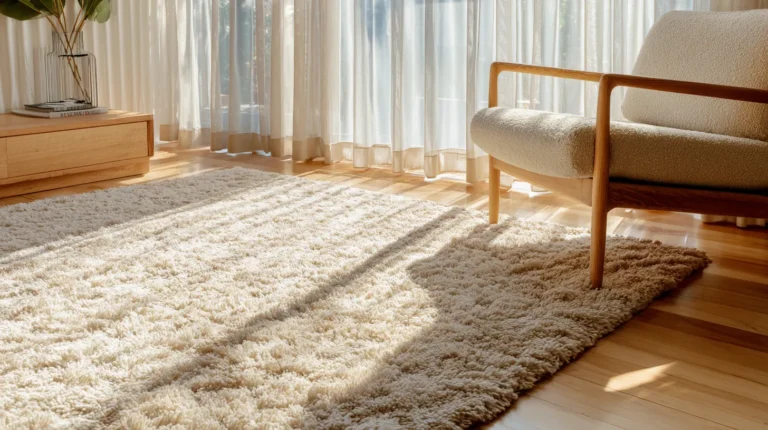
High-pile rugs (shag, frieze, wool blends over 1″ thick) have substantial physical and visual weight. A plush cream shag feels luxurious underfoot but can make a room seem smaller if oversized. These work best in bedrooms or low-traffic living areas where comfort trumps durability.
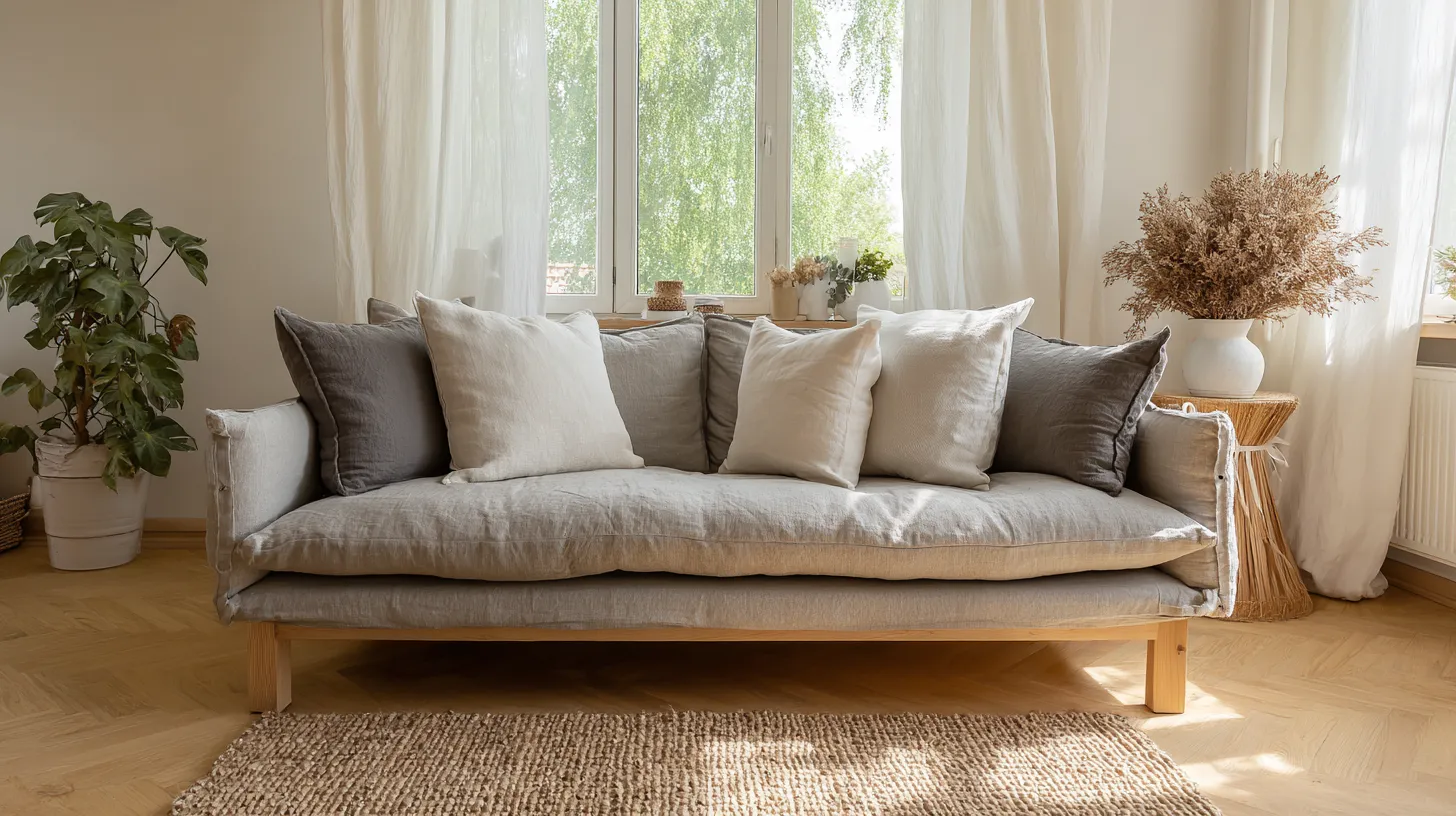
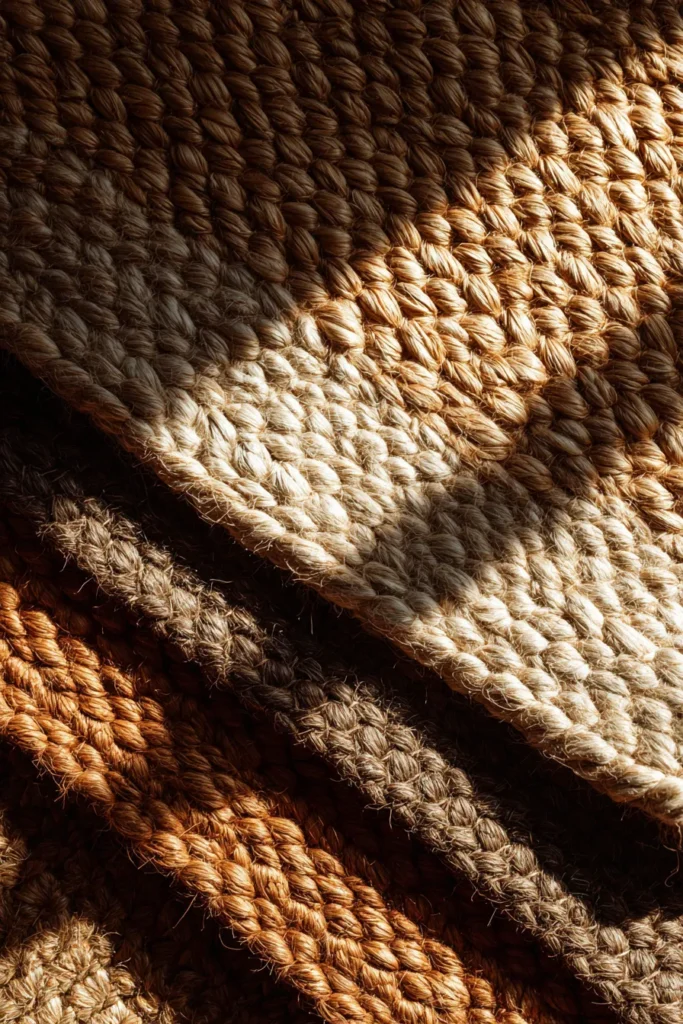
Low-pile rugs (flat weaves, low-profile wool, cotton dhurries) feel lighter and more expansive. A thin jute or sisal rug in a natural fiber maintains an airy quality even at larger sizes. These are ideal for high-traffic living rooms and spaces where you want texture without heaviness.
Textured vs. smooth finishes also play a role. A heavily textured Moroccan-style rug draws the eye and can anchor a minimalist room beautifully, but it needs careful sizing—too large and it overwhelms. A smooth, subtle texture allows for more generous sizing without visual weight.
Sustainability and Eco-Friendly Options
In 2025, sustainable rug materials are no longer niche—they’re mainstream and beautifully designed. Natural fibers like jute, sisal, bamboo silk, and organic wool offer durability and low environmental impact.
These materials often have texture that adds character without pattern, meaning you can go larger without the rug dominating the room visually. A 9′ x 12′ natural jute rug feels earthy and relaxed rather than imposing.
Look for rugs certified by organizations like GOTS (Global Organic Textile Standard) or made from recycled materials like PET yarn from plastic bottles. These choices layer meaning into your design—your rug becomes not just beautiful but also a reflection of your values.
Color, Pattern, and Light: The Invisible Factors in Size Selection
A rug’s color and pattern complexity can make it feel larger or smaller than its actual dimensions—a crucial consideration often overlooked in sizing guides.
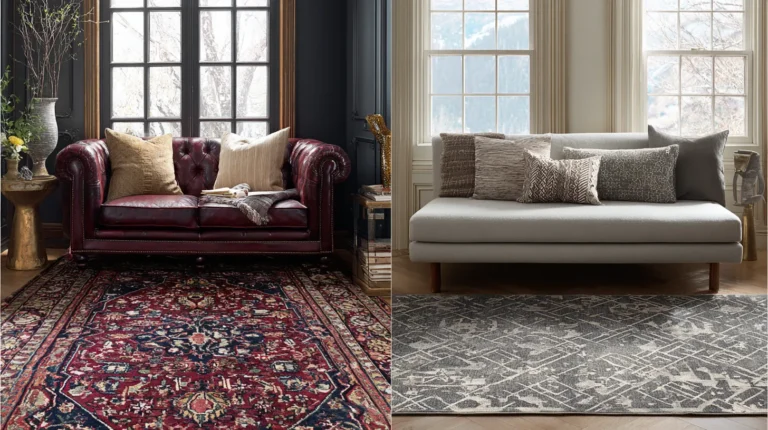
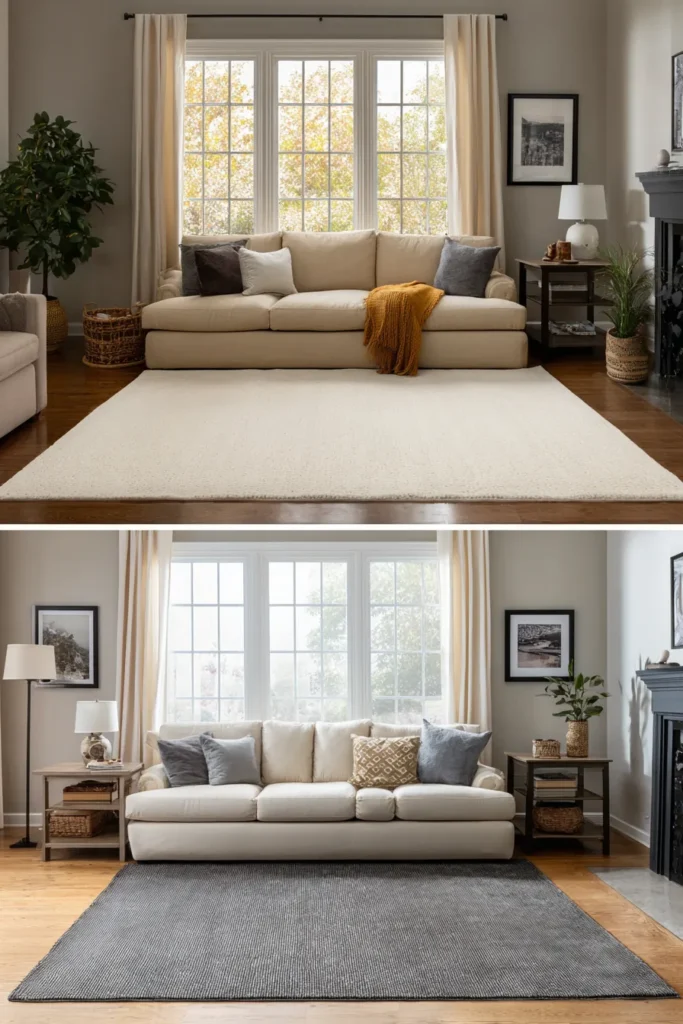
Light colors (cream, soft gray, pale blue, blush) recede visually, making them feel less imposing even at larger sizes. If you’re nervous about committing to a big rug, choose a lighter shade. It will anchor your space without demanding attention.
Dark colors (charcoal, navy, forest green, black) create drama and hide stains beautifully, but they also feel heavier and more prominent. A 9′ x 12′ dark rug can overwhelm a medium room, while the same size in cream might feel just right.
Pattern scale affects perception too. Large-scale patterns (oversized florals, big geometric shapes) make a rug feel more substantial—great for large rooms but potentially overwhelming in compact spaces. Small-scale patterns or subtle tone-on-tone designs allow you to size up without visual heaviness.
How Lighting Changes Everything
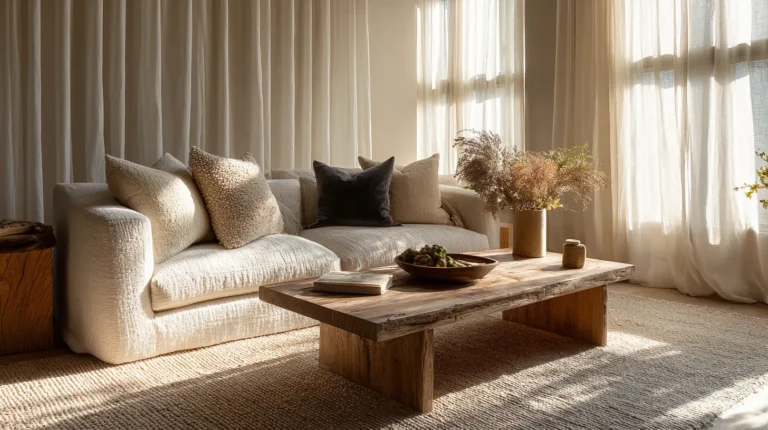
Natural light makes lighter rugs glow and creates soft shadows that give texture dimension. If your living room has generous windows, you can embrace larger, lighter rugs that will feel airy and luminous.
In rooms with limited natural light or primarily artificial lighting, darker or richly colored rugs add warmth without making the space feel cave-like. The rug absorbs light rather than reflecting it, creating coziness in evening hours.
Consider your light sources’ positions too. A rug placed directly under a statement pendant or chandelier becomes a focal point—make sure it’s sized generously enough to claim that spotlight intentionally.
Special Considerations for Modern Living Spaces
Open-Concept Living Rooms
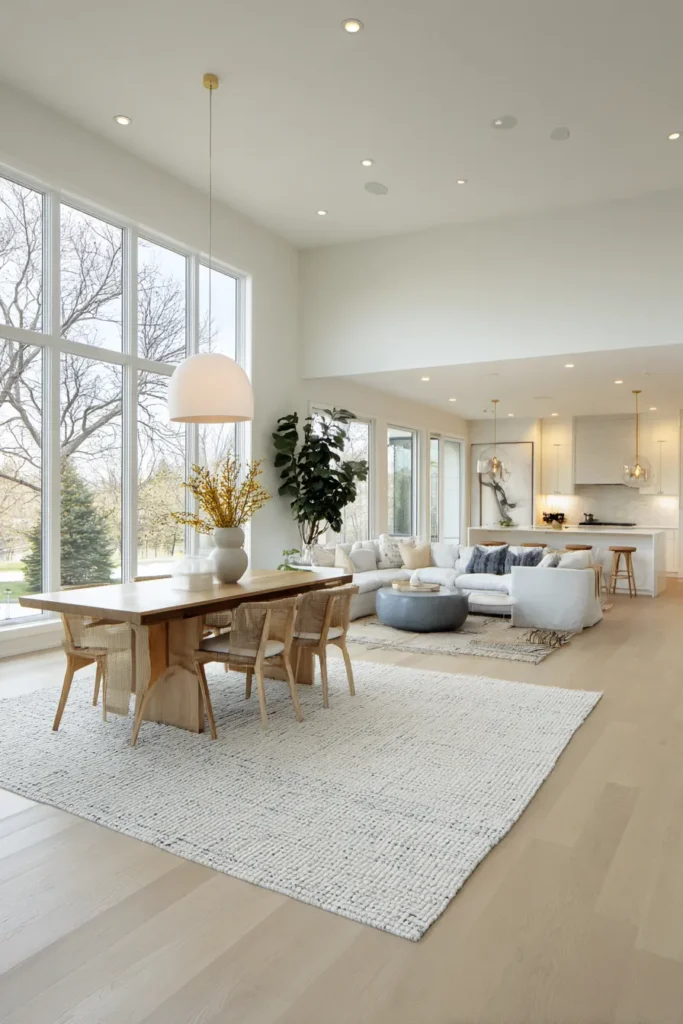
When your living room flows into a dining area or kitchen, your rug becomes a zone definer. Size it to clearly encompass your seating area while stopping several feet before the next functional space begins.
In open concepts, err on the side of slightly larger rugs. A rug that’s too small in a large, undefined space will look lost. Aim for at least 9′ x 12′ in most open living areas, and don’t be afraid to go up to 10′ x 14′ if your seating arrangement is substantial.
Consider rug layering here too—a large neutral base rug under the main seating area with a smaller textured rug layered on top adds depth and helps further define the space within the space.
Multifunctional Living Areas
If your living room doubles as a home office, play area, or yoga studio, think about how your rug supports multiple uses. A larger rug (9′ x 12′ or bigger) creates a unified foundation for varied activities.
Choose durable, easy-to-clean materials like synthetic blends, indoor/outdoor rugs, or tightly woven wool that can handle rolling desk chairs, toy trucks, and the occasional spilled coffee. Darker colors or busy patterns camouflage the wear and tear of daily life.
Different Flooring Types
Hardwood floors: Nearly any rug works, but use a quality rug pad to prevent slipping and protect the floor finish. You can go large here—the contrast between rug and wood is one of interior design’s most satisfying textures.
Tile or stone: These hard surfaces desperately need the softness a rug provides. Choose thicker, cushioned rugs and generous sizing to counteract the cold, hard flooring.
Carpet: Layering a rug over carpet is tricky but trendy. Choose a rug with a very different texture and keep it smaller—too large and it looks like confused wall-to-wall carpeting. A 5′ x 8′ patterned rug over neutral carpet can define a seating area beautifully.
Concrete or polished floors: Industrial spaces benefit from large, soft rugs that humanize the hard surfaces. Consider wool or high-pile rugs that create maximum textural contrast.
Common Rug Sizing Mistakes and How to Avoid Them
Even design-savvy people make these errors. Here’s how to sidestep them.
The Too-Small Rug: This is the most common mistake. A rug that barely fits under your coffee table, with all furniture legs on bare floor, makes your seating area look disjointed and temporary. Solution: If you can only afford one rug size, size up rather than down. Better to have furniture partially on a rug than a lonely rug floating in the room’s center.
The Wall-to-Wall Wannabe: When your rug comes within a few inches of the walls, it looks like carpet with regret. Solution: Always leave 12 to 18 inches (or at minimum 6 inches) of bare floor visible around the rug’s perimeter.
Ignoring the Coffee Table: Your coffee table should sit entirely on the rug with room to spare. If the table hangs off the edge, everything feels unbalanced. Solution: Measure your coffee table dimensions and add at least 16 inches to both length and width when calculating minimum rug size.
Blocking Doorways: A rug edge that stops right at a doorway creates an awkward transition and a tripping hazard. Solution: Position your rug so it either ends well before the doorway or extends slightly beyond it, creating smooth flow between rooms.
Pattern Overwhelm: A large rug with an intricate, high-contrast pattern can dominate a room, fighting with your furniture and art for attention. Solution: In smaller or medium rooms, save bold patterns for accent rugs (5′ x 7′ or smaller) and choose subtle patterns or solid colors for your main rug.
Your Rug Sizing Checklist
Before you make a purchase, run through these questions:
- Have you measured your seating area and not just your room dimensions?
- Does your chosen rug size allow for 12-18 inches of bare floor to the walls (or 6-12 inches in small rooms)?
- Will at least the front legs of your major furniture pieces fit on the rug?
- Does your coffee table sit completely on the rug with at least 8 inches of rug visible beyond it?
- Have you considered your room’s shape when selecting rug shape?
- Does the rug material suit your lifestyle (pets, kids, foot traffic)?
- Have you accounted for doorway clearance and traffic flow?
- Does the color/pattern scale work with your room size?
- If layering rugs, do the sizes create intentional contrast (large base, smaller accent)?
- Have you ordered samples to see how color and texture look in your specific lighting?
The Rug as Your Room’s Foundation Story
Choosing the right rug size is ultimately about creating a space that feels like home—not a showroom, not a catalog page, but a living, breathing environment that holds your life gracefully.
The perfect rug doesn’t announce itself. It simply makes everything else work better. Your sofa looks more grounded. Your coffee table finds its purpose. Your hardwood floors gain warmth without losing their character. The room’s proportions suddenly make sense in a way they didn’t before.
This is why we spend time measuring, considering, imagining. Because when you step into your living room after placing the right rug, there’s that small, quiet moment of recognition: This is exactly right. The room sighs with relief. You sink into your sofa with your feet on soft wool or cool linen or textured jute, and everything feels just a little bit more like it’s meant to be.
That feeling is worth every inch of measuring tape, every calculation, every careful choice. Your rug isn’t just something that sits on your floor—it’s the foundation of every moment that happens in that room. Choose it with care, choose it with confidence, and choose it generously.
Your living room is waiting.
Frequently Asked Questions
How big should my rug be for my living room?
For most living rooms, an 8′ x 10′ rug works well for medium spaces (200-350 sq ft), while larger rooms need 9′ x 12′ or bigger. Measure your seating area and add 6-8 inches on all sides. At minimum, ensure front furniture legs rest on the rug and leave 12-18 inches between rug edges and walls for balanced proportion.
What size rug fits under a sofa?
A standard sofa (84″-96″ long) requires at least an 8′ x 10′ rug for front legs to rest on it comfortably. If you want all furniture legs on the rug, opt for 9′ x 12′. The rug should extend at least 6 inches beyond the sofa on each side for visual balance and proper anchoring.
Should all furniture sit on a rug?
Not necessarily. Three placement options work beautifully: all furniture on the rug (most formal, requires 9′ x 12′ or larger), front legs only (most versatile, works with 8′ x 10′), or floating the rug with minimal furniture contact (contemporary, smaller rugs). Choose based on your room size, budget, and desired aesthetic—front legs only offers the best balance for most spaces.
How far should a rug be from the wall?
Leave 12 to 18 inches of bare floor between your rug edges and walls in medium to large living rooms. In smaller spaces (under 200 sq ft), 6 to 12 inches is acceptable. This breathing room prevents the rug from looking like wall-to-wall carpet and maintains a curated, layered aesthetic that makes rooms feel more spacious.
Can a rug be too big for a room?
Yes, but it’s less common than too-small rugs. A rug is too large if it comes within a few inches of the walls, creating a crowded, wall-to-wall carpet effect. It should never block doorways or extend into adjacent functional zones in open-concept spaces. When in doubt, ensure 12-18 inches of floor remains visible around the perimeter—this prevents overwhelming the space while maximizing the rug’s grounding effect.