
Table of Contents
There’s something deeply satisfying about running your hand across a wall and feeling something more than flatness. Texture invites touch. It catches light in unexpected ways and creates depth where once there was only surface.
Your living room walls and ceilings hold untapped potential for transformation. Beyond paint color alone, texture brings dimension, warmth, and a sensory richness that elevates your entire space. Whether you’re drawn to the organic feel of wood slats or the sculptural drama of 3D panels, textured surfaces create experiences.
This isn’t about following trends blindly. It’s about understanding how texture influences mood, reflects light, and adds layers of beauty to the room where life unfolds. Let’s explore how to bring your walls and ceilings to life through thoughtful, touchable design.
Understanding Texture: The Foundation of Dimensional Design
Tactile vs. Visual Texture
Tactile texture is what you feel—the actual physical surface. Think of the grooves in reclaimed wood panels, the raised patterns of embossed wallpaper, or the rough charm of stucco finish. These textures invite interaction and create genuine three-dimensional interest.
Visual texture creates the illusion of depth through pattern and shading. Faux finishes, printed wallpapers mimicking linen or cork, and certain paint techniques fall into this category. They offer texture’s aesthetic benefits without the physical dimension.
Both serve important roles in living room design. Tactile textures work beautifully on accent walls where you want guests to notice and appreciate the craftsmanship. Visual textures can cover larger expanses without overwhelming the space or collecting dust.
Why Texture Matters in Your Living Room
Texture transforms how we experience a room psychologically and emotionally. Smooth surfaces feel modern and streamlined, while rougher textures evoke organic, grounded energy. The interplay between different textures creates visual interest that keeps a space from feeling flat or sterile.
Light behaves differently across textured surfaces, creating shadows and highlights throughout the day. A textured accent wall catches morning sunlight differently than afternoon glow, making your living room feel alive and ever-changing. This dynamic quality brings sophistication without additional décor.
Popular Textured Wall Ideas for Modern Living Rooms
Wood Slats and Vertical Panels
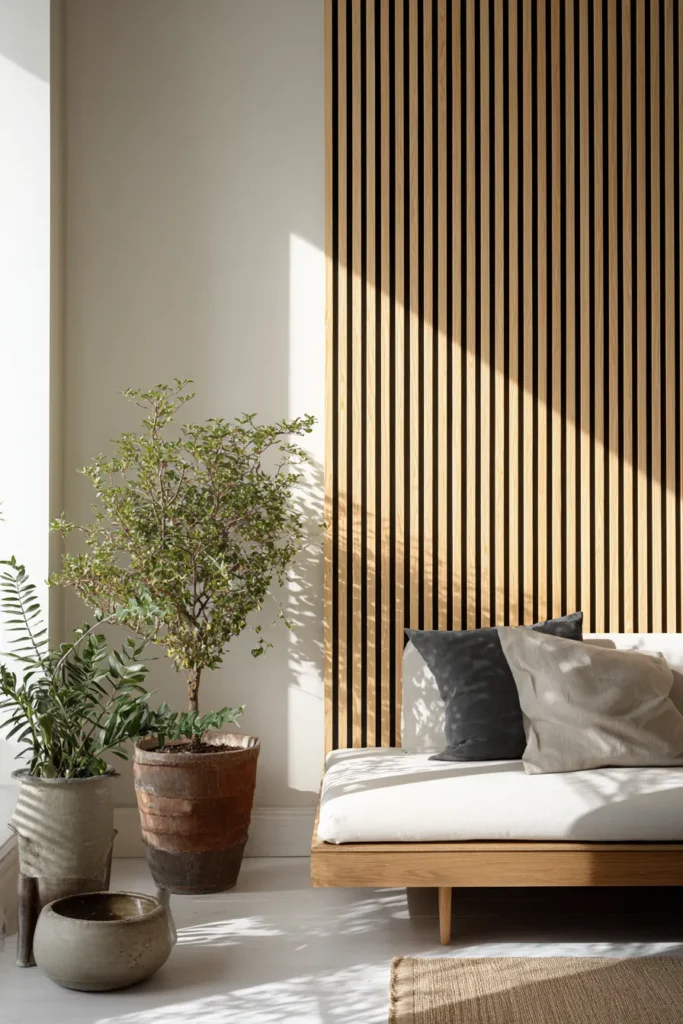
Vertical wood slats bring natural warmth and architectural interest to living room walls. The linear pattern draws the eye upward, making ceilings feel higher while adding organic texture. Choose light oak for Scandinavian minimalism or walnut for richer, more dramatic appeal.
These panels work exceptionally well behind entertainment centers or as accent wall texture in conversation areas. The spacing between slats creates subtle shadow lines that shift with natural light. This is tactile design that feels both contemporary and timeless.
Consider sustainable options like bamboo or reclaimed wood for eco-conscious texture. The environmental impact matters, and these materials offer durability alongside their lower carbon footprint.
3D Wall Panels: Sculptural Drama
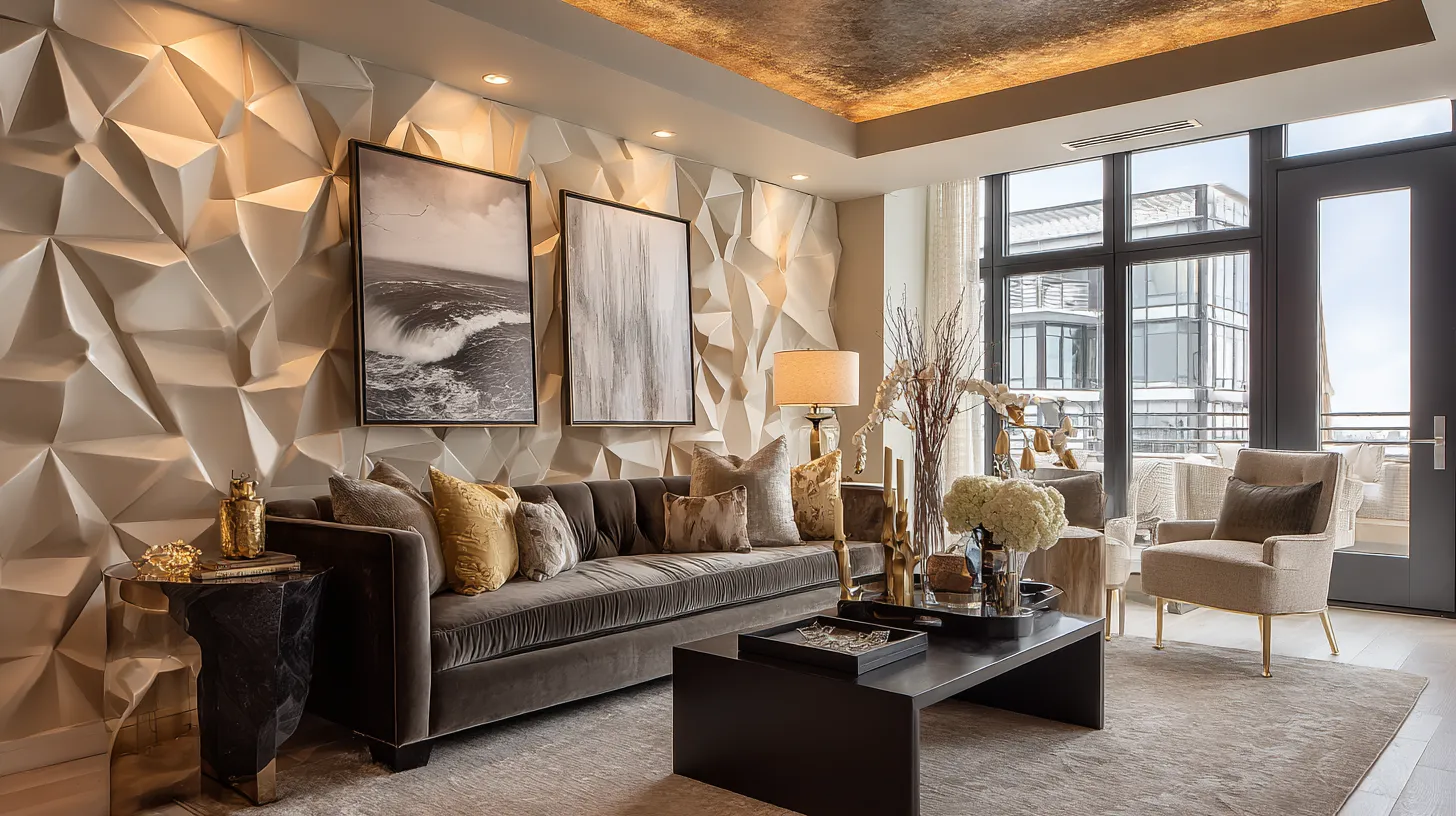
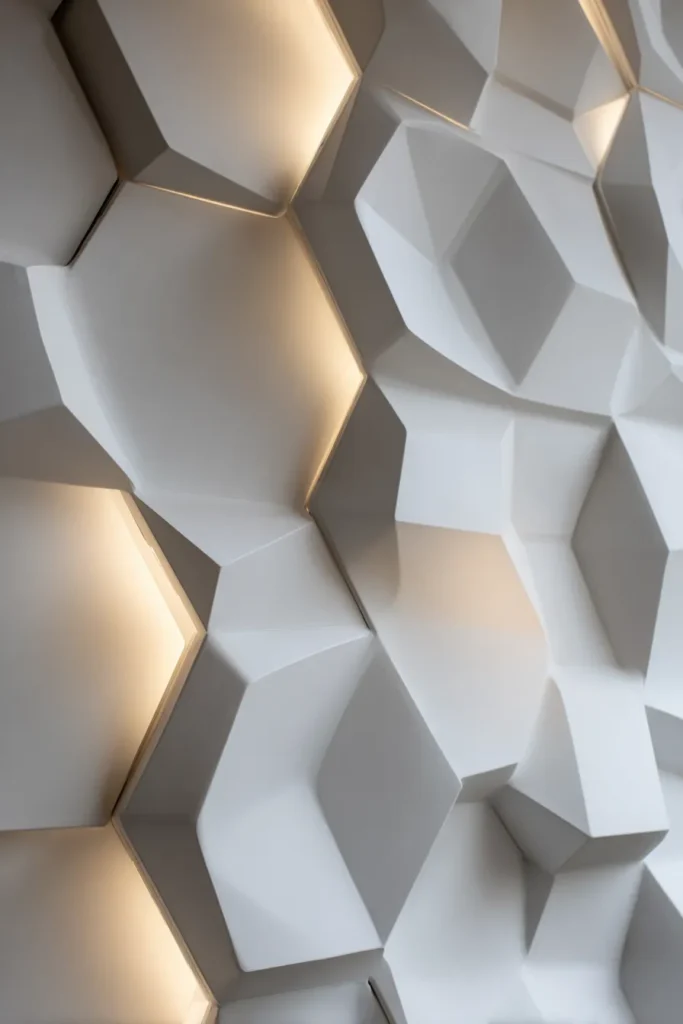
3D wall panels deliver immediate visual impact through geometric patterns and raised surfaces. Available in materials ranging from lightweight PVC to eco-friendly plant fibers, these panels transform blank walls into architectural statements. Popular patterns include waves, hexagons, and abstract geometric designs.
Installation is surprisingly straightforward for DIY enthusiasts. Most panels attach with adhesive and can be painted to match your color scheme. The depth they create (typically 1-2 inches) catches light beautifully, especially when paired with strategic cove ceiling lighting.
The cost ranges from $3-$15 per square foot depending on material quality. For a standard accent wall (100 square feet), budget $300-$1,500 plus installation if hiring professionals.
Texture Wall Paint Techniques
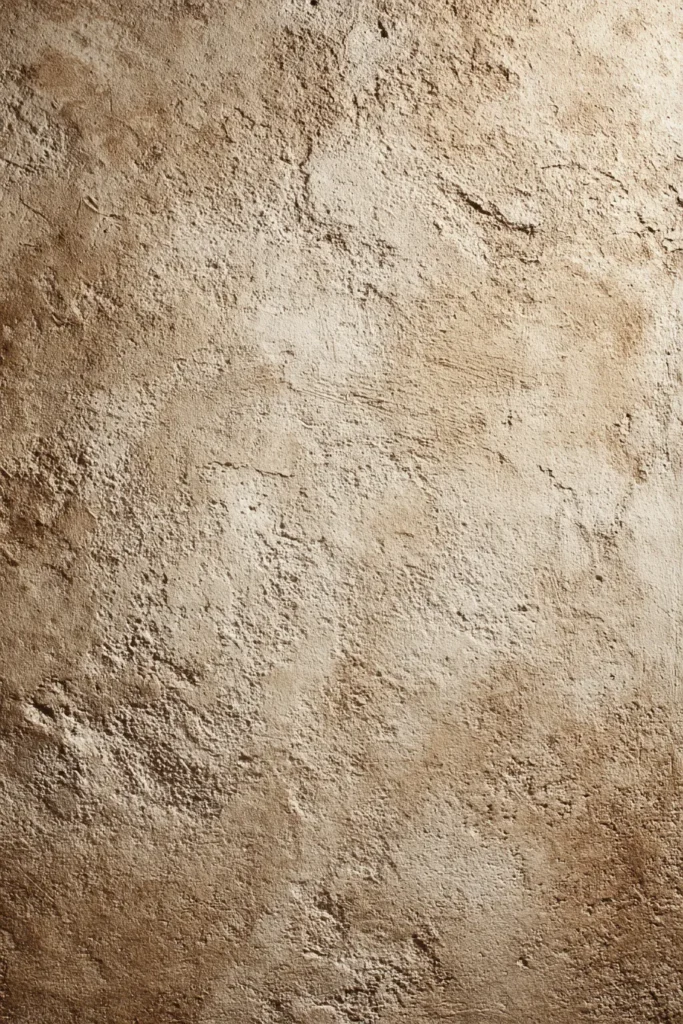
Modern texture wall paint offers endless possibilities without permanent commitment. Limewash paint creates soft, chalky texture with subtle variations—perfect for a European rustic aesthetic. The finish feels authentic and develops a beautiful patina over time.
Other popular techniques include:
- Venetian plaster for polished, marble-like depth
- Skip trowel application for irregular, organic patterns
- Combing techniques for controlled linear texture
- Sponging for soft, cloud-like effects
Each method creates different shadow play and visual interest. Experiment on sample boards before committing to your walls. The beauty lies in slight imperfections that make each surface unique.
Textured Wallpaper: Pattern Meets Dimension
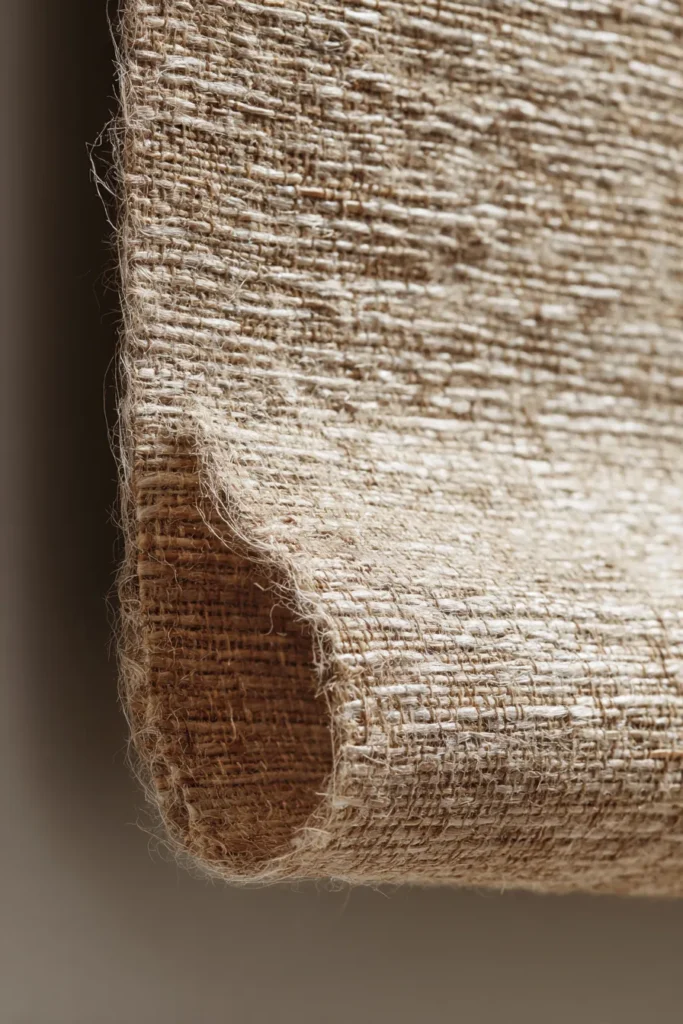
Contemporary textured wallpaper has evolved far beyond grandmother’s damask. Today’s options include grasscloth (genuine woven texture), flock wallpapers with raised velvet patterns, and embossed designs mimicking everything from linen to leather.
Grasscloth brings natural, organic texture with visible plant fibers. Each roll is slightly different, creating an artisanal quality. The texture diffuses light beautifully while adding warmth and subtle color variation.
Maintenance is key with textured wallpaper. Most can be gently vacuumed with a soft brush attachment. Avoid moisture on natural fiber options, and test cleaning methods in inconspicuous areas first.
Stucco and Plaster Finishes
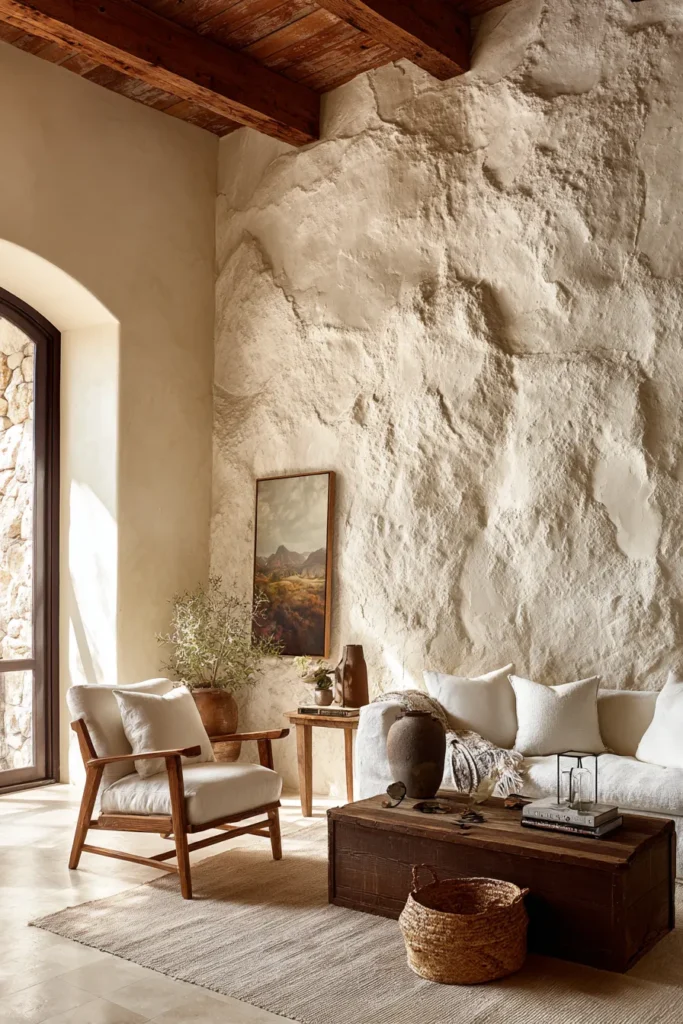
Stucco finish delivers Mediterranean charm with its rough, authentic texture. Originally an exterior treatment, modern interior stucco creates dramatic accent walls with genuine Old World character. The application process is labor-intensive but results in unique, handcrafted beauty.
Smooth or skip-trowel plaster offers a more refined alternative. These finishes work particularly well in neutral tones—think warm whites, soft grays, or creamy beiges. The texture creates depth without competing with furniture or artwork.
Ceiling Texture Ideas That Elevate Your Space
Beyond the Fifth Wall: Designing Upward
Your ceiling deserves as much attention as your walls. Too often, it remains flat white and forgotten. Textured ceilings add architectural interest, improve acoustics, and create cohesion with your wall treatments.
Coffered ceilings with recessed panels and beams add classical elegance. Tray ceilings with textured insets create focal points above seating areas. Even subtle texture paint techniques on a standard flat ceiling can add warmth and dimension.
Consider how your ceiling texture interacts with lighting. Recessed lights in textured ceilings create beautiful shadow patterns. Pendant fixtures cast interesting shadows across dimensional surfaces.
Gypsum Board and False Ceiling Designs
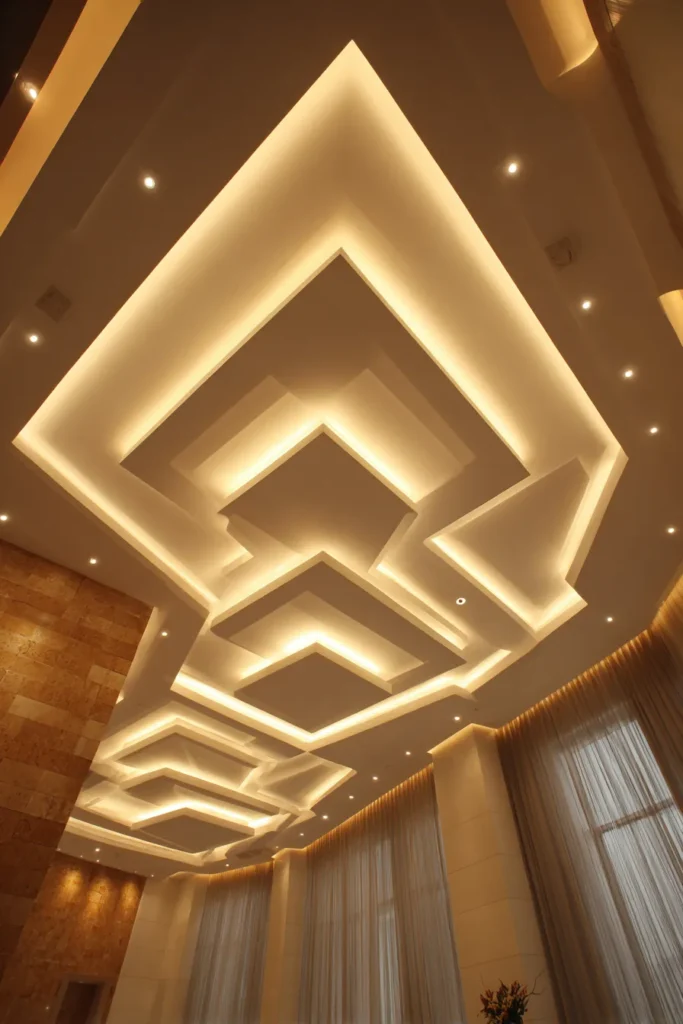
Gypsum board ceiling systems allow for creative multilevel designs with integrated lighting. These false ceilings hide HVAC systems while creating architectural drama. The smooth surface of gypsum provides an excellent base for texture paint or can be left pristine for modern contrast.
Popular false ceiling designs include:
- Step ceilings with multiple levels
- Curved soffit edges that soften transitions
- Geometric patterns with recessed sections
- Cove ceiling details with hidden LED strips
The cost for gypsum board false ceilings ranges from $5-$15 per square foot installed. This investment transforms your living room’s entire atmosphere while providing practical benefits like improved acoustics and energy efficiency.
Wood Beam and Plank Ceilings
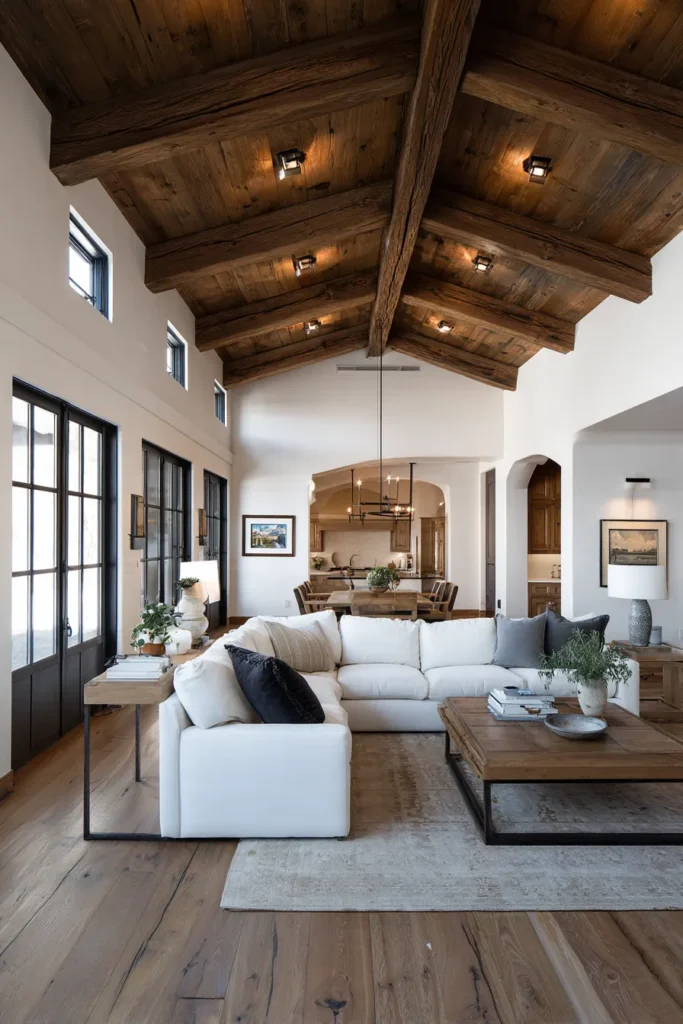
Exposed wood beams bring rustic elegance and strong architectural character. Whether genuine structural beams or decorative faux options, they create visual interest and break up expansive ceiling planes. Stain them dark for dramatic contrast or keep them natural for lighter, airier feel.
Wood plank ceilings offer wall-to-wall texture with organic warmth. Tongue-and-groove pine, cedar, or reclaimed barn wood each brings distinct character. The linear pattern can make rooms feel larger when planks run lengthwise.
For sustainable choices, look for FSC-certified wood or reclaimed materials. Reclaimed wood brings history and patina that new materials simply cannot replicate.
Smart Integration: Technology Meets Texture
Modern textured ceilings can incorporate smart home technology seamlessly. Hidden LED strips behind cove molding create ambient lighting that highlights ceiling texture. Recessed speakers disappear into textured surfaces while delivering quality sound.
Consider acoustic panels with decorative texture patterns. These serve double duty—improving sound quality while adding visual interest. They’re particularly valuable in open-concept living rooms where sound management matters.
Practical Considerations: Cost, Maintenance, and DIY Options
Budget Breakdown by Texture Type
Understanding costs helps you plan effectively. Here’s a comparison of popular textured wall and ceiling options:
| Texture Type | Material Cost (per sq ft) | Professional Install (per sq ft) | DIY Friendly? | Durability |
|---|---|---|---|---|
| Texture Paint | $0.50-$2 | $1-$3 | Yes | Moderate |
| 3D Panels | $3-$15 | $2-$5 | Yes | High |
| Wallpaper | $2-$20 | $1-$4 | Moderate | Moderate-High |
| Wood Slats | $5-$25 | $3-$8 | Moderate | Very High |
| Stucco/Plaster | $3-$8 | $5-$12 | No | Very High |
| Gypsum False Ceiling | $5-$10 | $5-$15 | No | High |
DIY projects like texture painting or panel installation can save 40-60% on labor costs. However, complex installations like stucco application or false ceiling construction require professional expertise.
Maintenance and Cleaning Essentials
Different textures demand different care routines. Popcorn texture, while falling out of favor, notoriously collects dust and cobwebs. If you inherit this texture, vacuum regularly with a soft brush attachment or consider removal and replacement.
For most textured walls:
- Dust regularly with microfiber cloths or vacuum attachments
- Spot clean with damp (not wet) cloths
- Avoid harsh chemicals that can damage texture patterns
- Repaint or touch up as needed every 5-7 years
Wood textures benefit from occasional conditioning with wood-appropriate products. Sealed surfaces can be wiped down; unsealed wood requires gentler care to prevent damage.
3D panels made from PVC or similar materials are the easiest to maintain—simply wipe with damp cloths. Fabric or natural fiber textures require more careful, dry cleaning methods.
When to Choose DIY vs. Professional Installation
Simple texture paint techniques make excellent DIY projects. Rolling, sponging, or combing textures onto walls requires minimal special equipment and offers room for creative expression. Watch tutorial videos, practice on sample boards, and work in good lighting.
Consider professionals for:
- Venetian plaster or stucco application (skilled trowel work required)
- Large-scale 3D panel installations requiring precise alignment
- Any ceiling work above 10 feet or involving electrical modifications
- False ceiling systems with integrated lighting
- Complex geometric patterns requiring mathematical precision
The middle ground? Many homeowners DIY the walls and hire professionals for ceilings, where the work is physically more challenging and mistakes more visible.
Sustainable and Eco-Friendly Texture Options
Materials That Matter
Environmental consciousness shapes modern design choices. Seek textured materials with low VOC content, recycled components, or rapidly renewable sources. Bamboo grows quickly and creates beautiful wall paneling. Cork tiles offer natural texture with excellent sound absorption.
Recycled content panels made from compressed plant fibers or reclaimed materials reduce environmental impact while delivering unique textures. Some manufacturers now offer 3D panels made from ocean-bound plastics—beautiful design with environmental purpose.
Natural lime plaster and clay-based finishes are ancient techniques experiencing revival. These materials are breathable, regulate humidity naturally, and create authentic texture without synthetic chemicals.
The Long-Term Perspective
Durable textures reduce the need for frequent renovations, ultimately lowering environmental impact. A well-installed wood slat wall or quality plaster finish lasts decades with minimal maintenance. This longevity makes higher initial investments more sustainable over time.
Consider the full lifecycle: material sourcing, manufacturing energy, transportation, installation waste, maintenance requirements, and eventual disposal or recycling. Textures you can refinish or repaint offer better long-term sustainability than those requiring complete replacement.
Design Strategies for Different Living Room Styles
Modern Minimalist Texture
Clean-lined 3D panels in monochromatic colors create texture without visual clutter. Vertical wood slats in light woods add warmth while maintaining minimalist restraint. Keep patterns simple—think linear grooves rather than busy geometrics.
Pair textured accent walls with smooth surfaces elsewhere. This contrast highlights your textured feature without overwhelming the space. Choose matte finishes over glossy for subtle sophistication.
Rustic and Natural Living Rooms
Embrace organic textures like reclaimed wood, natural stone impressions, or woven grasscloth. These materials bring outdoor calm inside while creating cozy, grounded atmospheres. Layer different natural textures for depth—smooth leather furniture against rough wood walls, for instance.
Ceiling beams in natural wood tones anchor rustic spaces beautifully. Consider leaving them slightly distressed or weathered rather than perfectly finished. Authenticity matters more than perfection in rustic design.
Contemporary Glamour
Metallic finishes on textured surfaces add luxury and light reflection. Geometric 3D panels painted in soft gold or champagne create sophisticated drama. Venetian plaster with subtle metallic pigments catches light beautifully throughout the day.
Balance bold textured statements with simpler surrounding surfaces. A stunning textured feature wall behind your sofa becomes the room’s jewelry—it should sparkle, not compete.
Essential Checklist for Textured Living Room Design
Before committing to textured walls or ceilings, consider these key factors:
- Room size and ceiling height – Smaller rooms benefit from lighter, less aggressive textures
- Natural light exposure – How will texture catch morning vs. evening light?
- Existing architectural features – Work with your room’s bones, not against them
- Maintenance commitment – Choose textures matching your cleaning tolerance
- Budget allocation – Balance materials, installation, and future maintenance costs
- Style longevity – Will this texture still feel fresh in 5-10 years?
- Sound considerations – Some textures improve acoustics; others amplify echo
- Furniture and décor scale – Texture should complement, not overwhelm your furnishings
- Color palette – Texture in neutral tones offers more flexibility than colored options
- Professional vs. DIY capacity – Be honest about your skill level and time availability
Bringing It All Together
The walls and ceilings surrounding you shape how you experience home. Texture adds dimension that flat surfaces simply cannot provide—it’s the difference between hearing about a place and actually being there, feeling the surfaces, watching light dance across dimensional patterns.
Start small if you’re uncertain. A single textured accent wall tests the waters without overwhelming commitment. Notice how it changes your room’s atmosphere, how guests respond, how you feel in the space. Texture is deeply personal; trust your instincts.
Your living room deserves surfaces that reflect your attention to beauty and detail. Whether you choose the organic warmth of wood, the sculptural drama of 3D panels, or the handcrafted authenticity of plaster, let texture tell your story. These aren’t just walls—they’re the backdrop to your life, and they should feel as intentional as everything else you’ve chosen.
The most beautiful rooms aren’t those with the most expensive materials. They’re the ones where every surface, every texture, every play of light feels considered and true. That’s the space we’re creating together.
Frequently Asked Questions
Can you paint over textured walls and ceilings?
Yes, most textured surfaces accept paint beautifully. Use a roller with appropriate nap thickness for your texture depth—thicker naps for deeper textures. Avoid painting popcorn ceilings, as the weight of paint can cause the texture to detach. Prime first if changing colors dramatically.
What’s the most popular wall texture trend in 2025?
Geometric patterns, 3D textures, and metallic finishes currently dominate. These options add depth and luxury while feeling contemporary. Nature-inspired textures using wood grain or woven materials also trend strongly as people seek eco-friendly, organic designs that ground modern spaces.
How do I choose the right texture for my living room?
Consider your room’s size (smaller spaces need subtler textures), natural lighting (texture creates shadows), and overall décor style. Match texture intensity to your design confidence—bold 3D panels make statements, while soft limewash adds subtle dimension. Test samples on your actual walls before full commitment.
Are textured walls harder to maintain than smooth walls?
Generally yes, but not prohibitively so. Deep textures collect more dust and require regular vacuuming with brush attachments. However, they also hide minor imperfections and wall damage better than smooth surfaces. Sealed textures like painted 3D panels clean easily; natural fibers need gentler care.
What’s the best texture option for a small living room?
Vertical wood slats or subtle texture paint work best in compact spaces. These options add interest without overwhelming. Keep textures lighter in color and place them strategically on one accent wall rather than throughout. Avoid heavy stucco or very deep 3D patterns that can make small rooms feel closed in.