
Table of Contents
There’s something deeply settling about walking into a room that breathes. Where light moves gently across linen throws and shadows dance on wooden surfaces. Where every piece feels intentional, yet nothing demands attention.
This is the essence of Japandi living room furniture accessories—a beautiful marriage of Japanese minimalism and Scandinavian warmth. It’s not about filling space. It’s about honoring it.
In this guide, we’ll explore how to curate Japandi living room furniture accessories that transform your space into a sanctuary. From natural materials and low-profile pieces to the subtle art of wabi-sabi meets hygge, you’ll discover how to bring this serene aesthetic into your home—whether you’re working with a spacious layout or a cozy apartment.
Let’s begin where calm begins: with intention.
What Is Japandi Style Furniture?
Japandi furniture represents the thoughtful convergence of two design philosophies that share a common thread: respect for simplicity and quality.
From Japan comes the principle of ma—the beauty of negative space—and wabi-sabi, which finds perfection in imperfection. From Scandinavia arrives hygge’s warm embrace and functional design that serves life, not ego.
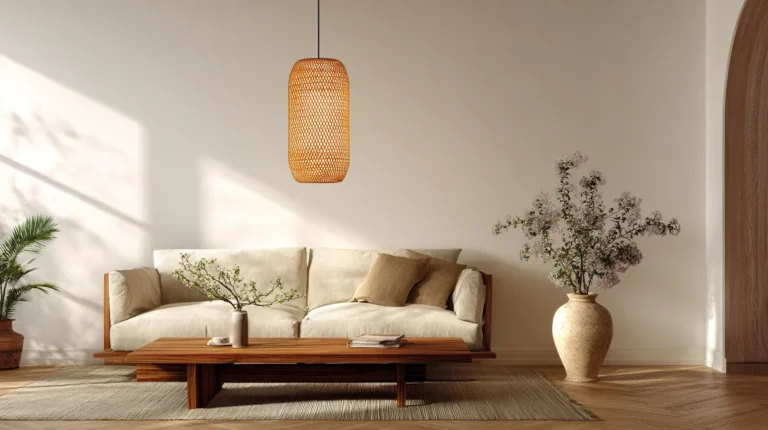
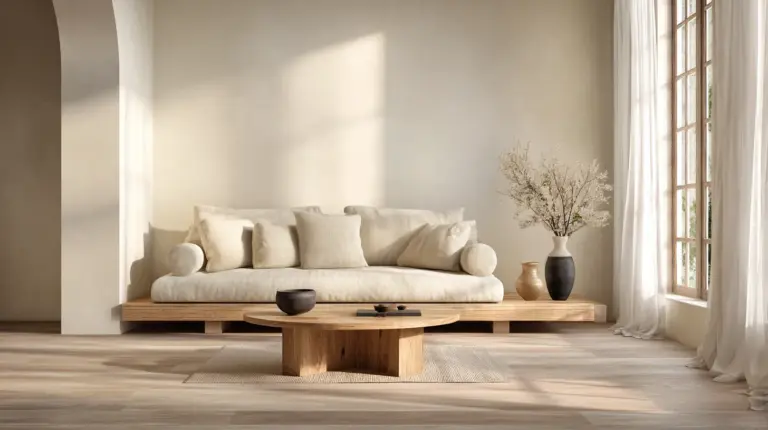
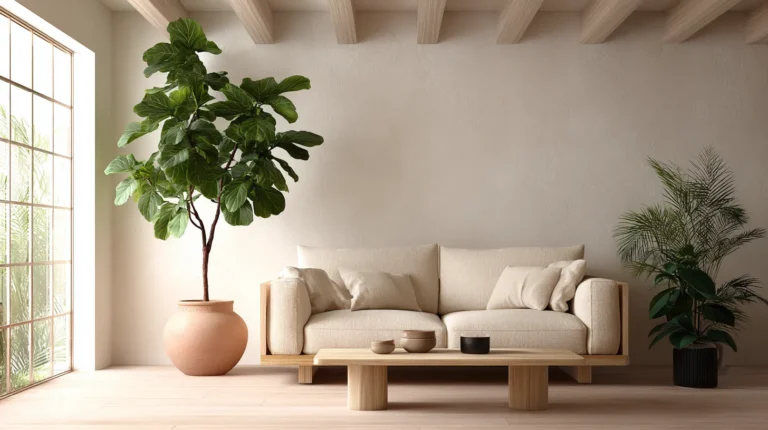
The result? Furniture and accessories that are understated yet deeply felt. Think low-profile sofas in neutral linen, wooden coffee tables with visible grain, and ceramic vases that hold a single stem with quiet dignity.
The Core Principles
Japandi style rests on three pillars that guide every choice:
Functionality first. Every piece should serve a purpose, often multiple purposes. A rattan tray becomes a coffee table centerpiece, then moves to hold breakfast in bed.
Natural materials reign. Wood, bamboo, rattan, linen, cotton, wool, ceramic—these are your building blocks. They age beautifully and connect us to the earth.
Neutral color palettes dominate. Beige, light gray, taupe, warm whites, and soft blacks create a grounded, contemplative ambiance that never tires the eye.
Essential Japandi Living Room Furniture Pieces
Before accessories can sing, the furniture must set the stage.
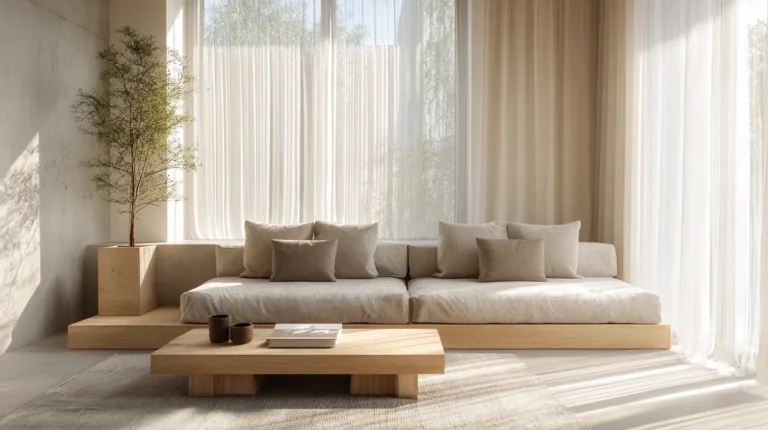
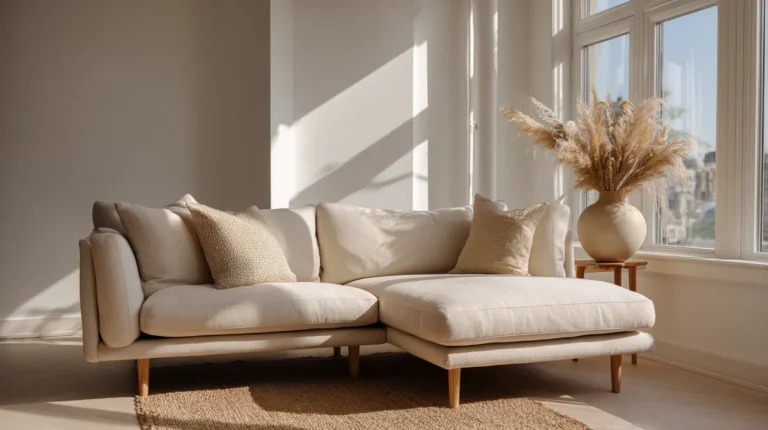
A Japandi living room begins with low-structured seating. Sofas sit close to the ground, often in oatmeal linen or charcoal cotton, with clean lines and minimal embellishment. They invite you to settle in, not show off.
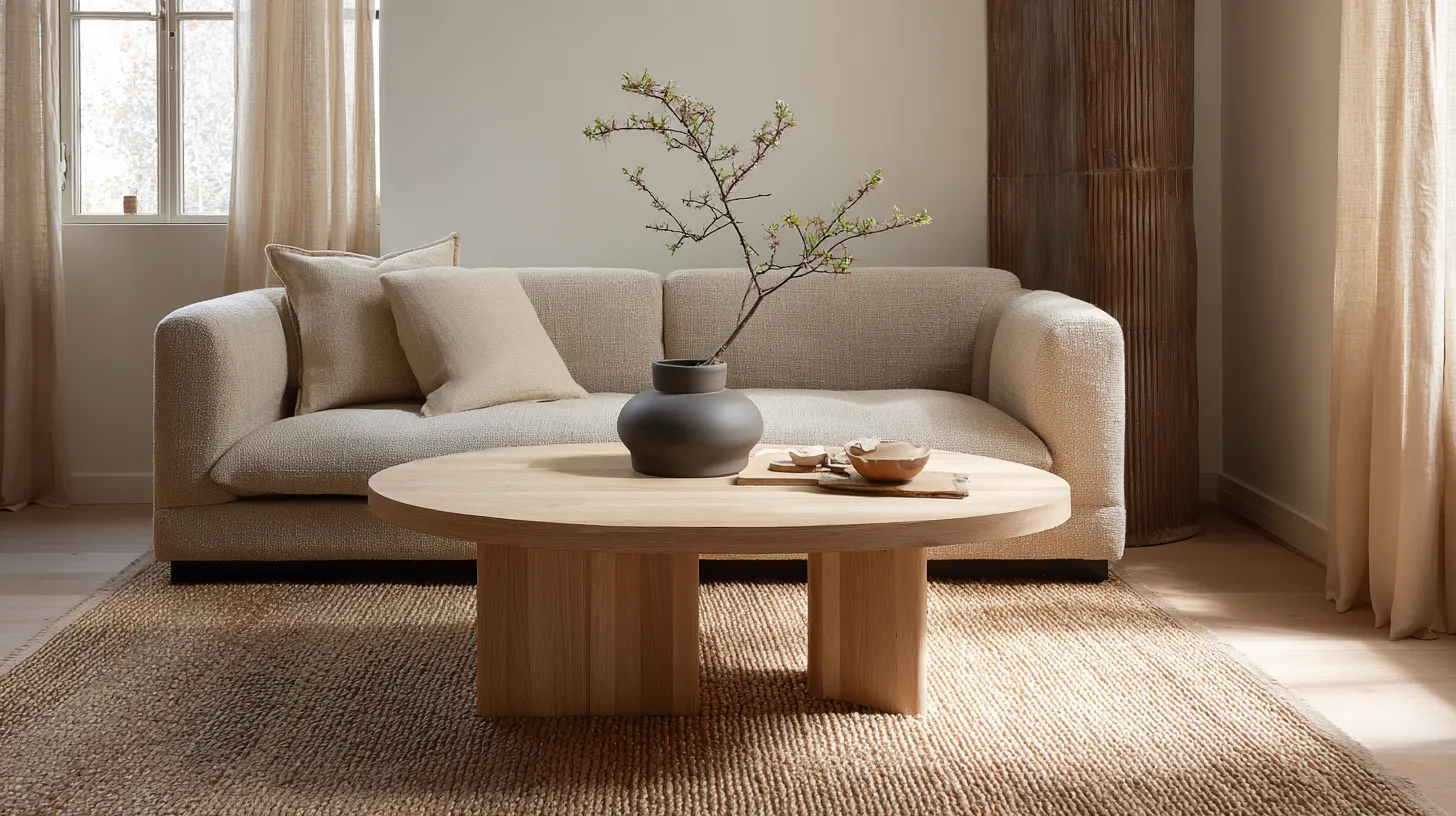
Coffee tables are typically wooden—teak, oak, or walnut—with organic edges and visible texture. Some feature lower shelves perfect for storing woven baskets or art books with muted covers.
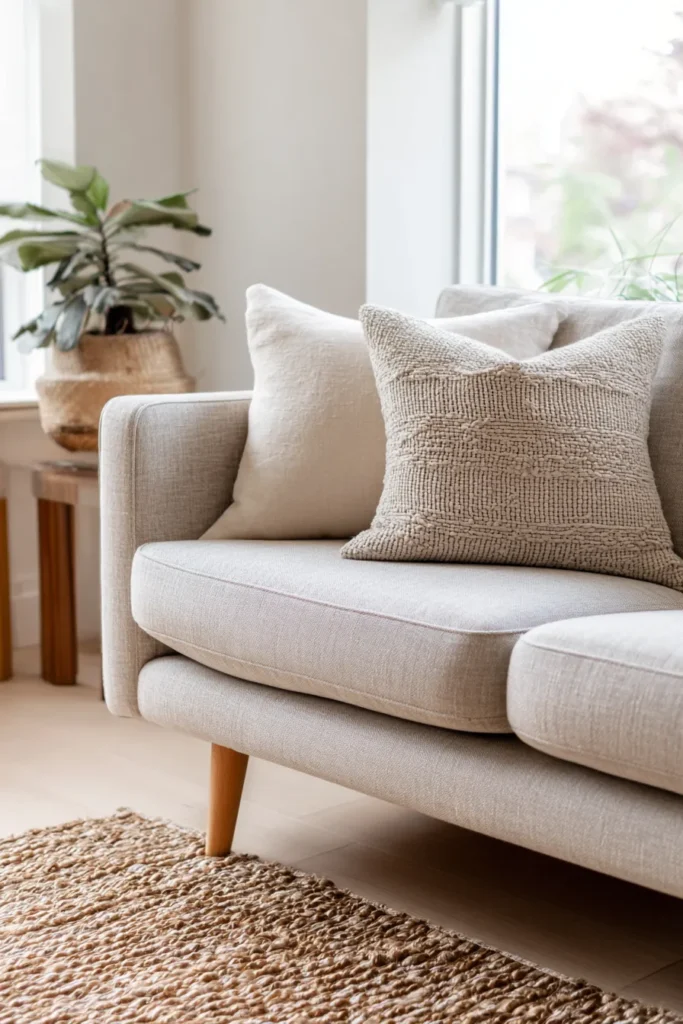
Seating That Centers
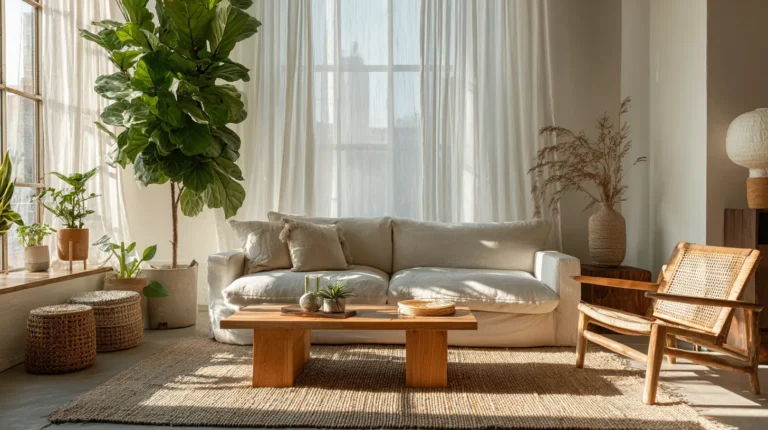
Look for armchairs with curved backs and natural cane details. The Scandinavian influence brings comfort through soft cushioning, while Japanese aesthetics keep profiles sleek and uncluttered.
Poufs and floor cushions in neutral tones add flexible seating without visual weight. They’re perfect for gathering or meditation moments.
Storage Solutions
Open shelving in light wood displays carefully chosen objects—a ceramic bowl, a small plant, three books maximum. Closed cabinets hide life’s necessities, maintaining that serene visual field.
Sideboards with sliding doors nod to Japanese tansu chests while offering Scandinavian practicality. They ground a room without dominating it.
Must-Have Japandi Living Room Accessories
Now we arrive at the details that breathe life into structure.
Textiles and Soft Touches
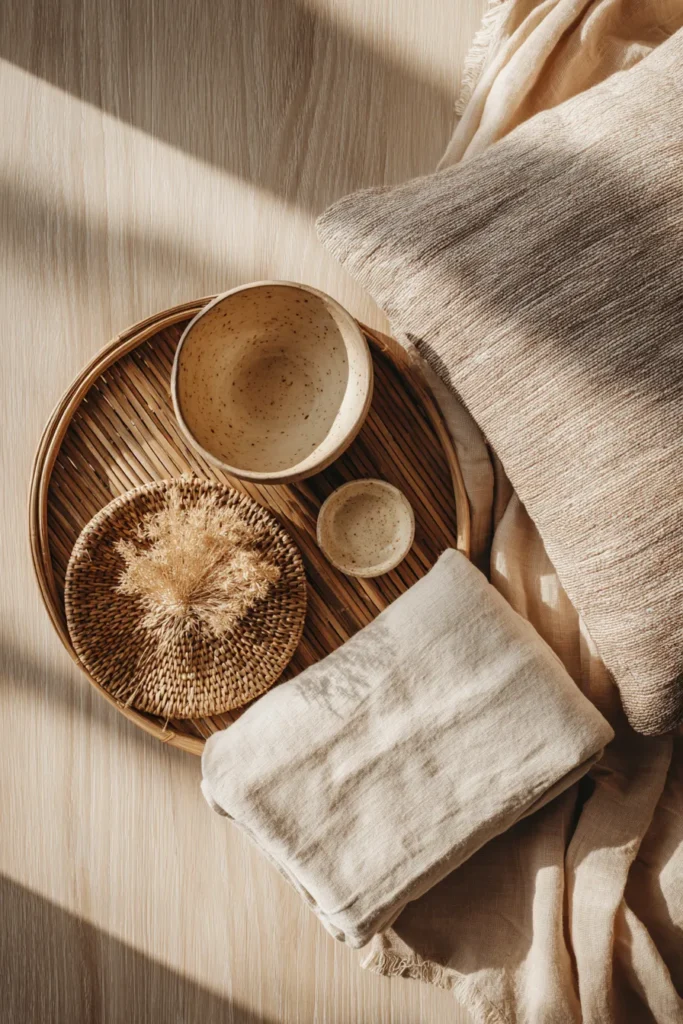
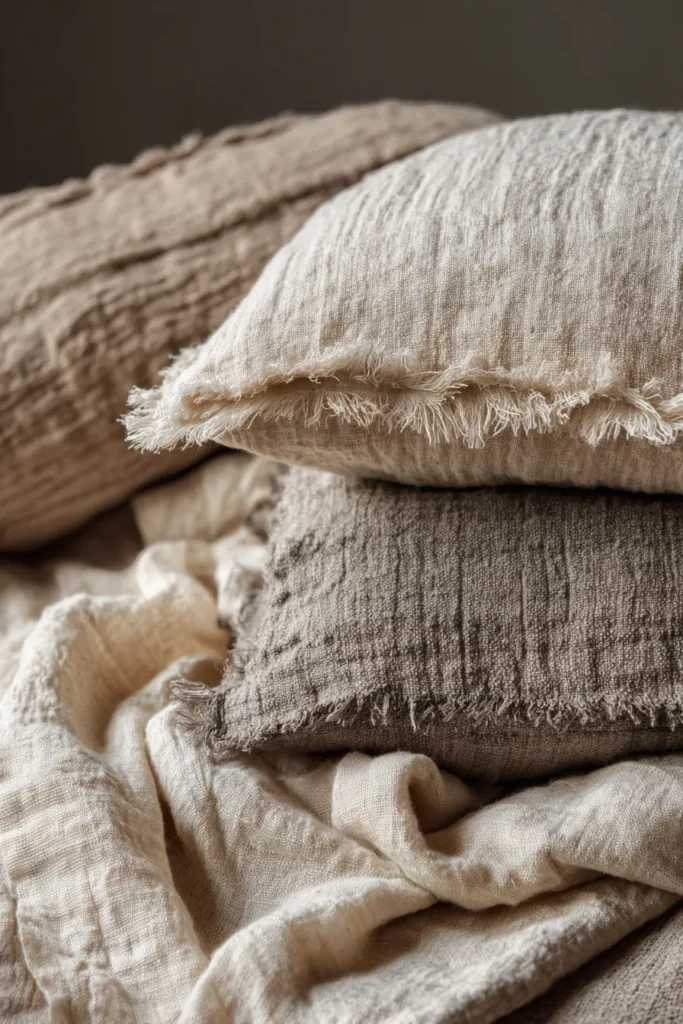
Linen throws in sand, slate, or cream drape over sofa arms, adding texture and warmth. They should look slightly lived-in, never stiff.
Cotton cushions in varied sizes create visual interest through subtle tonal shifts—ecru against mushroom against putty. Avoid patterns; let texture speak.
Woven rugs in natural jute or wool anchor seating areas. Choose low-pile designs in neutral tones that feel grounding underfoot.
Natural Accents
Rattan trays serve tea, organize remotes, or hold candles. Their organic texture softens modern spaces.
Bamboo accents—whether a magazine holder, a plant stand, or decorative branches—bring vertical interest and natural rhythm.
Ceramic vases in matte finishes hold single stems or stand empty as sculptural objects. Imperfect glazes honor wabi-sabi principles.
Lighting Elements
Lighting in Japandi spaces mimics natural light—soft, diffused, never harsh.
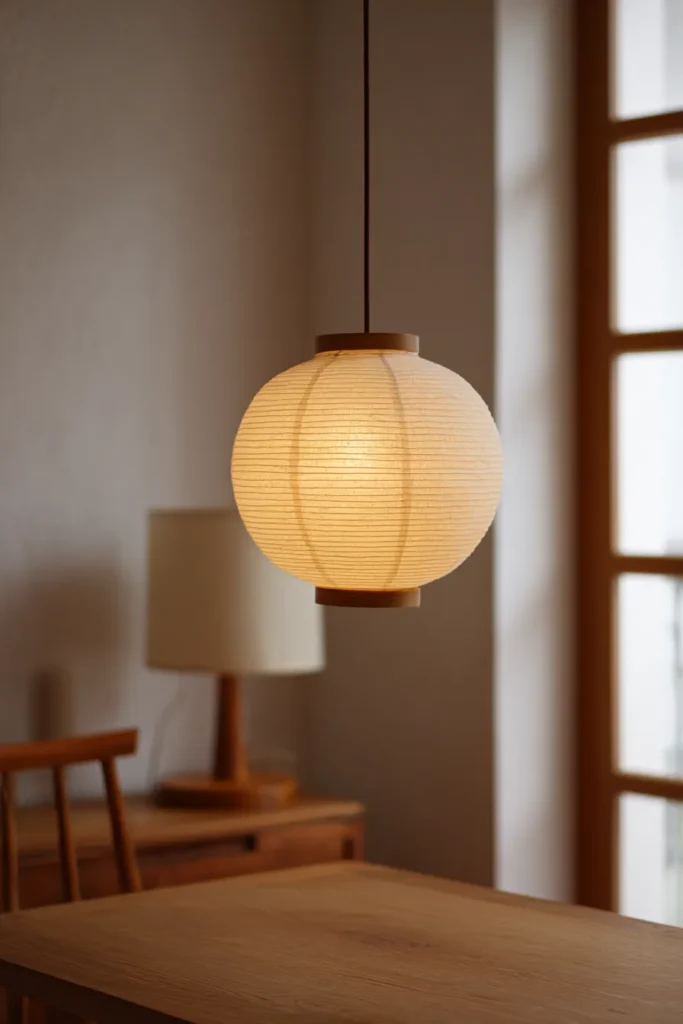
Paper lanterns create ambient glow without intrusion. Rice paper shades filter light beautifully.
Wooden table lamps with linen shades sit on side tables, their warm illumination perfect for evening reading.
Smart-integrated lighting (a 2025 trend) allows you to adjust color temperature throughout the day, supporting circadian rhythms while maintaining minimalist aesthetics.
Living Greenery
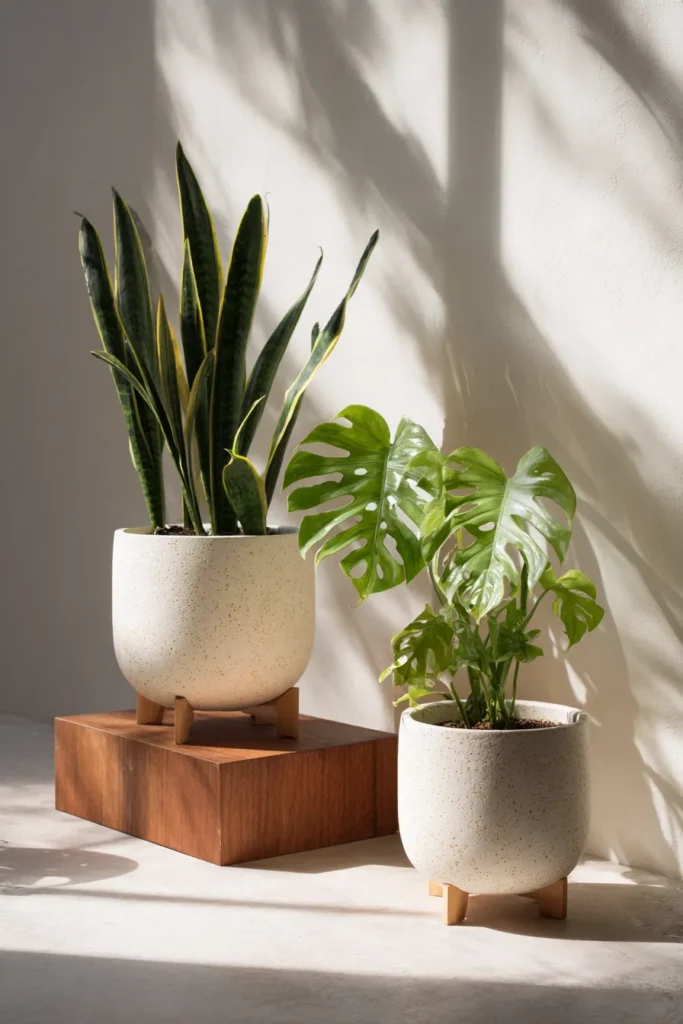
Houseplants are essential Japandi accessories. They breathe life into calm spaces without cluttering them.
Choose plants with architectural forms—snake plants, rubber trees, or a single monstera in a ceramic pot. Group smaller plants on wooden risers or floating shelves.
Bonsai trees make perfect Japandi statements, embodying patience and intentional growth.
Top 10 Japandi Living Room Accessories
| Accessory | Material | Price Range | Best For | Where to Buy |
|---|---|---|---|---|
| Linen Throw Blanket | 100% Linen | $40-$80 | Sofas, chairs, texture | Living Spaces, West Elm |
| Rattan Serving Tray | Natural Rattan | $25-$60 | Coffee tables, organization | Japandi Store, Target |
| Ceramic Floor Vase | Stoneware | $45-$120 | Statement pieces, corners | Vaunt Design, CB2 |
| Jute Area Rug | Natural Jute | $80-$250 | Grounding, texture underfoot | IKEA, Rugs USA |
| Wooden Coffee Table Tray | Teak/Oak | $35-$75 | Styling, serving | Japandi Supply House |
| Cotton Cushion Covers (set of 3) | Organic Cotton | $30-$65 | Layering, comfort | H&M Home, Muji |
| Bamboo Plant Stand | Bamboo | $20-$50 | Vertical greenery, corners | Amazon, Wayfair |
| Paper Pendant Lamp | Rice Paper/Bamboo | $45-$150 | Ambient lighting | IKEA, Lamps Plus |
| Woven Storage Basket | Seagrass/Rattan | $18-$45 | Hidden storage, texture | Target, The Container Store |
| Ceramic Incense Holder | Stoneware | $12-$30 | Ambiance, ritual | Etsy, Japandi Store |
How to Decorate a Japandi Living Room on a Budget
Beautiful doesn’t require expensive. It requires intention.
Start with one quality foundational piece—perhaps a solid wood coffee table or a linen sofa in a neutral tone. Build around it slowly.
Budget-Friendly Japandi Accessories Under $50
- Thrifted wooden trays painted in muted tones (DIY option: $5-$15)
- IKEA paper lanterns for soft lighting ($12-$25)
- Secondhand ceramic vases from estate sales ($8-$20)
- Natural fiber baskets from discount stores ($15-$30)
- Linen tea towels repurposed as cushion covers ($8-$15 each)
DIY Upcycling Ideas
Transform old furniture with light sanding and natural oil finishes. Paint thrifted frames in warm white or soft black for gallery walls with minimal prints.
Create your own macramé plant hangers using natural cotton rope. Make candle holders from smooth river stones and tea lights.
The Japandi aesthetic actually favors pieces with history and imperfection—wabi-sabi at work.
Japandi Living Room Ideas for Small Spaces
Small spaces demand even more intentional curation.
Choose furniture with exposed legs that create visual space underneath. A sofa on wooden legs feels lighter than one with a solid base.
Space-Maximizing Accessories
Multi-functional pieces earn their place. An ottoman with hidden storage. A side table that slides under the sofa when not needed.
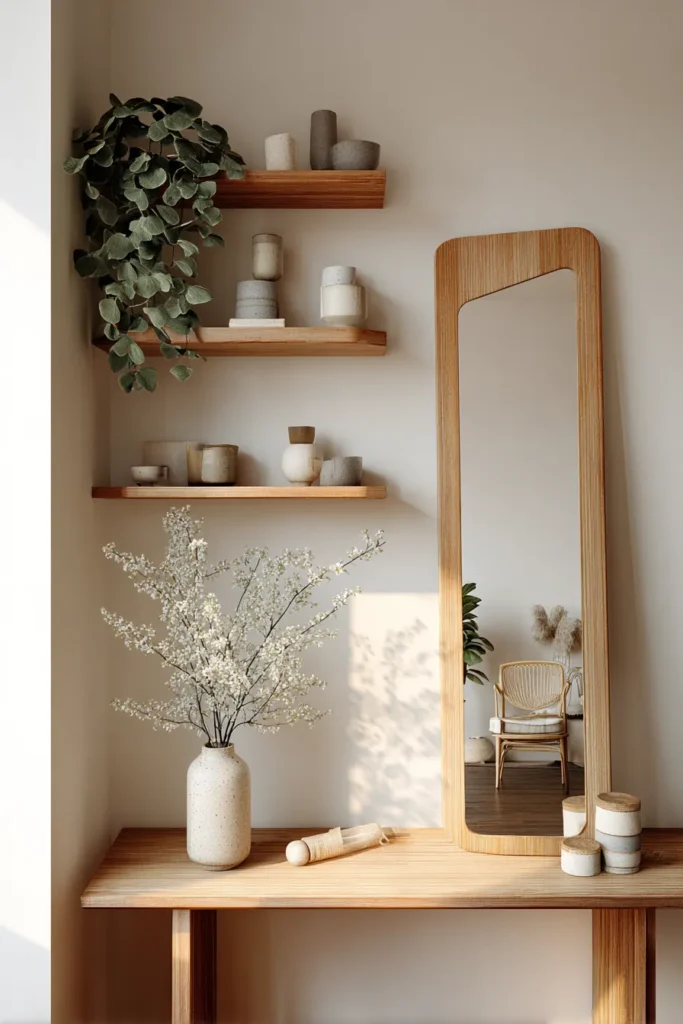
Vertical arrangements draw the eye upward. Tall ceramic vases, wall-mounted shelves with minimal styling, and trailing plants extend space visually.
Mirrors with wooden frames reflect light and expand perceptions without breaking the aesthetic.
The Power of Restraint
In small Japandi living rooms, what you don’t include matters most. Five perfect accessories outperform twenty mediocre ones.
Edit ruthlessly. If it doesn’t serve function or spark quiet joy, release it.
Japandi Accessories for Renters: No-Drill Solutions
You don’t need to own walls to honor them.
Peel-and-stick wall planters bring greenery without holes. Choose designs in light wood or neutral ceramic finishes.
Freestanding screens in bamboo or paper create zones and add vertical interest while remaining completely removable.
Leaning mirrors rest against walls, eliminating mounting needs while adding light and depth.
Temporary Styling Wins
Use furniture risers to lift beds or sofas slightly, creating that low-profile Japandi look without replacing pieces.
Layer rugs to define spaces without installation. A jute base with a smaller cotton accent rug creates dimension.
Command strips hold lightweight wooden shelves for displaying your most treasured objects.
2025 Japandi Trends: What’s Evolving
Japandi continues maturing, embracing sustainability and subtle technology.
FSC-certified woods are becoming standard as conscious consumers demand transparency in sourcing. Look for labels confirming responsible forestry.
Smart lighting that disappears integrates technology without visual intrusion. Bulbs adjust warmth throughout the day while fixtures maintain minimalist profiles.
Eco-smart textiles made from organic linen and recycled cotton align with both Japandi and planetary values.
Deeper Earth Tones
While neutrals remain foundational, deeper shades are emerging—rust, terracotta, deep olive. Used sparingly as accent pieces, they ground spaces with warmth.
Artisan ceramics with visible throwing marks and irregular glazes honor wabi-sabi while supporting makers.
Curating Your Japandi Living Room: A Checklist
Use this as your guide to creating calm:
- Start with neutral foundation: Beige, gray, warm white walls and large furniture
- Choose low-profile seating: Sofas and chairs close to ground with clean lines
- Select wooden coffee table: Natural grain visible, organic edges preferred
- Add natural textiles: Linen throws, cotton cushions in tonal neutrals
- Include woven elements: Jute rug, rattan tray, bamboo accents
- Incorporate ceramic pieces: Vases, planters, decorative bowls in matte finishes
- Layer lighting: Ambient paper lanterns, task lamps with warm bulbs
- Introduce living plants: 2-4 houseplants in ceramic or wooden planters
- Add woven storage: Baskets for hiding remotes, magazines, blankets
- Create negative space: Leave surfaces mostly clear, walls mostly bare
- Edit continuously: Remove anything that doesn’t serve purpose or beauty
Bringing It All Together
A Japandi living room isn’t decorated in a weekend. It unfolds over time, as you discover what truly serves your life.
You’ll know you’ve achieved it when entering the room feels like exhaling. When light becomes something you notice. When you want to sit on the floor and simply be.
This is the gift of Japandi living room furniture accessories—they don’t demand attention, they create space for it. Space for conversation, contemplation, connection, calm.
Your home becomes a place that holds you, not a place you maintain. And that quiet shift changes everything.
Start small. Choose one piece that speaks to you—a ceramic vase, a linen throw, a wooden tray. Place it with intention. Live with it. Let it teach you what your space needs next.
The journey to calm is slow, and that’s exactly the point.
Frequently Asked Questions
What is Japandi style furniture?
Japandi style furniture blends Japanese minimalism with Scandinavian functionality, featuring clean lines, natural materials like wood and rattan, low-profile designs, and neutral color palettes. It emphasizes quality over quantity, with each piece serving both practical and aesthetic purposes while creating serene, uncluttered spaces that feel warm and grounded.
Are Japandi accessories expensive?
Japandi accessories range widely in price. While premium artisan pieces can be costly, many affordable options exist under $50—IKEA paper lanterns, Target rattan trays, and thrifted ceramic vases all work beautifully. The style’s emphasis on fewer, better pieces often means lower overall spending compared to maximalist approaches. DIY projects and secondhand finds align perfectly with wabi-sabi principles.
How to style Japandi accessories for small spaces?
In small spaces, prioritize multi-functional accessories and vertical arrangements. Choose furniture with exposed legs to create visual lightness. Use 3-5 key pieces maximum per room—perhaps a jute rug, linen throw, ceramic vase, rattan tray, and single plant. Leaning mirrors expand space without drilling. Focus on negative space as your primary u0022accessory.u0022
What are essential Japandi living room accessories?
Essential accessories include linen or cotton throws in neutral tones, woven jute or wool rugs, rattan or bamboo trays, ceramic vases in matte finishes, natural fiber storage baskets, wooden decorative objects, paper or linen lampshades, and 2-4 houseplants in simple planters. Each should be functional, natural in material, and restrained in color.
Can you mix modern furniture with Japandi accessories?
Yes, Japandi accessories complement modern furniture beautifully, especially pieces with clean lines and minimal ornamentation. Add linen throws to sleek sofas, place ceramic vases on glass tables, and layer jute rugs under modern seating. The key is maintaining a neutral palette and choosing accessories in natural materials to warm contemporary spaces without visual conflict.