
Table of Contents
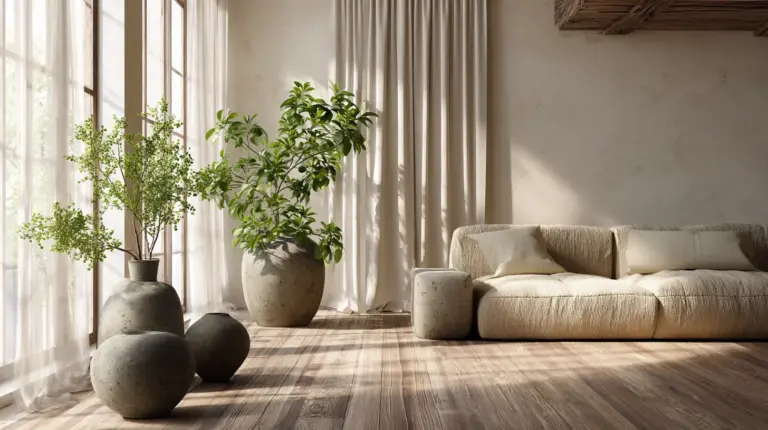
There’s something deeply soothing about walking into a room that breathes. A space where light filters softly through linen curtains, where the warmth of teak meets the coolness of concrete, where every object has intention. This is the heart of Japandi design—a marriage of Japanese wabi-sabi and Scandinavian hygge that transforms even the smallest living room into a sanctuary.
If you’re working with limited square footage, Japandi might be your most elegant solution. It doesn’t crowd or overwhelm. Instead, it strips away excess and celebrates what remains: texture, craftsmanship, and quiet beauty.
In a small living room, every choice matters more. The sofa that grounds your space. The light that shapes your mornings. The bowl on your coffee table that catches shadows at dusk. Japandi teaches us to choose with care, to live with less, and to find richness in restraint.
This guide will walk you through creating your own small Japandi living room—from furniture selection to lighting, color palettes to textures—so your space feels both spacious and intimately yours.
Understanding the Japandi Philosophy
What Makes Japandi Different from Scandinavian Design?
Japandi and Scandinavian styles share a love for minimalism and natural materials, but they diverge in mood and material depth. Scandinavian design leans bright and airy—think white walls, pine furniture, and cheerful pops of color. It embraces hygge, that Danish concept of cozy contentment with chunky knit throws and candlelit corners.
Japandi adds Japanese restraint to this warmth. It introduces deeper, earthier tones—charcoal, terracotta, forest green. Where Scandinavian furniture stands tall on slender legs, Japandi pieces sit low and grounded, echoing traditional Japanese tatami rooms.
The Japanese concept of wabi-sabi—finding beauty in imperfection and transience—infuses Japandi spaces with a quieter elegance. A handmade ceramic vase with an irregular glaze. A wooden table that shows its grain and knots. These aren’t flaws; they’re stories.
Why Japandi Works Beautifully in Small Spaces
Small living rooms thrive on visual calm, and Japandi delivers exactly that. By limiting color palettes to neutrals and limiting furniture to essentials, your space immediately feels larger. The eye isn’t jumping from pattern to pattern or fighting through clutter.
Low-profile furniture—sofas that hug the floor, sleek platform benches—creates more perceived vertical space. Your walls seem taller. Your ceilings breathe. This is crucial when you’re working with 4×5 meter rooms common in Philippine homes.
The emphasis on natural light and minimal window treatments keeps sightlines open. Japandi doesn’t hide your windows behind heavy drapes; it celebrates them with simple linen panels or nothing at all, inviting the outside in.
Color Palette for Small Japandi Living Rooms
The Foundation: Neutrals That Ground
Start with a base of soft whites, warm beiges, and gentle grays. These aren’t sterile hospital whites—think cream with undertones of sand, or gray that leans slightly green. Paint your walls in these forgiving neutrals and you’ve given your small room permission to expand.
Floors can introduce warmth through light oak or bamboo. These pale woods reflect light beautifully while adding natural texture underfoot. If you’re renting or can’t change flooring, consider a large jute rug in natural fiber tones to anchor your seating area.
Ceiling choices matter too in small spaces. Keep them white or off-white to maximize light reflection, creating that essential sense of height.
Adding Depth: Earthy Accents
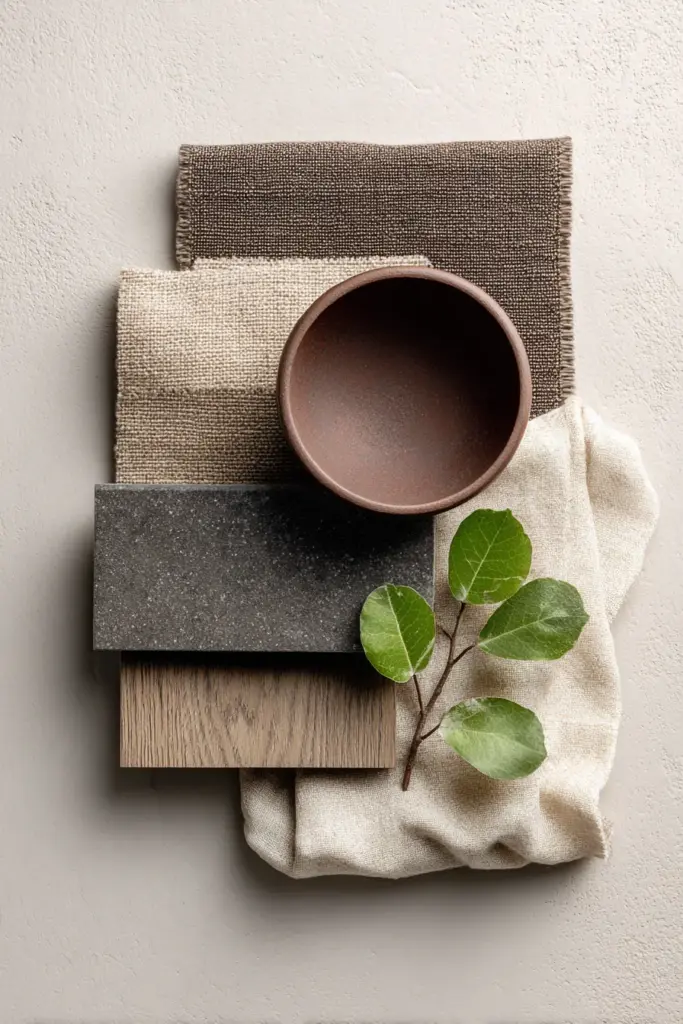
Once your foundation is set, layer in deeper tones sparingly. A charcoal gray accent wall behind your sofa. Terracotta cushions scattered across neutral upholstery. A black steel coffee table with clean lines and honest materials.
These darker elements prevent your space from feeling washed out while maintaining Japandi’s calm restraint. The key is proportion—in a small room, limit bold colors to 20% of your palette. Let them be punctuation marks, not paragraphs.
Forest green through plants, burnt umber in a ceramic bowl, deep indigo in a single throw pillow—these natural pigments connect your interior to the earth outside your windows.
The Japandi Color Philosophy
| Design Style | Primary Colors | Accent Colors | Overall Mood |
|---|---|---|---|
| Pure Scandinavian | Whites, light grays, pastels | Bright pops (yellow, blue) | Airy and cheerful |
| Pure Japanese | Deep browns, blacks, natural woods | Subtle earth tones | Zen and meditative |
| Japandi Fusion | Warm neutrals, soft grays | Charcoal, terracotta, forest | Calm and grounded |
Furniture Selection for Compact Japandi Spaces
The Sofa: Your Room’s Anchor
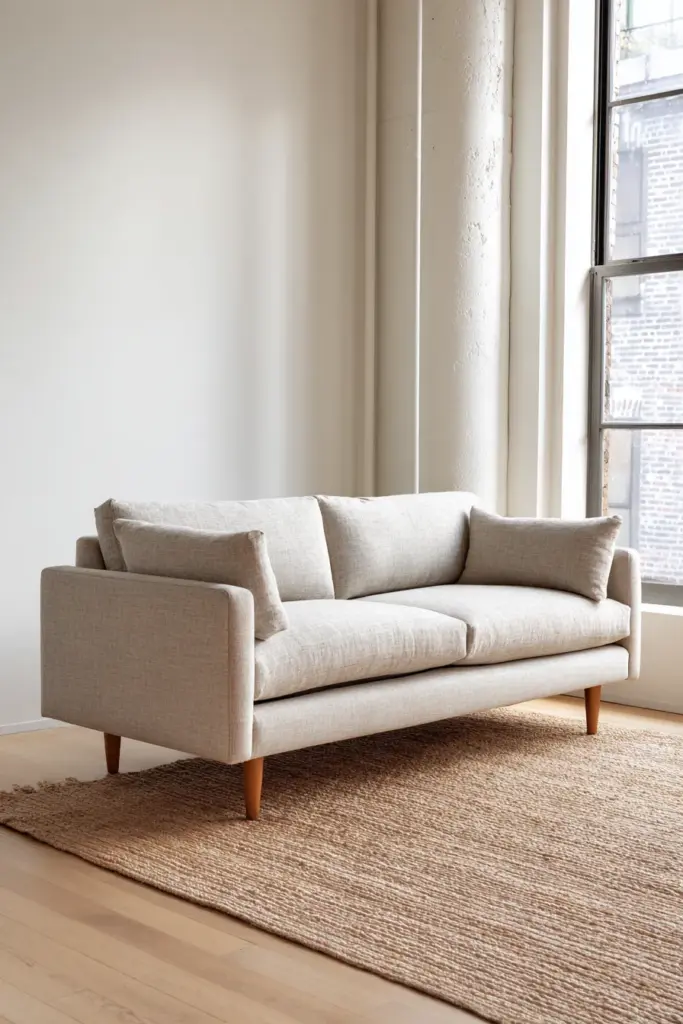
Choose a low-profile sofa with clean lines and minimal ornamentation. Look for pieces 70-80cm in seat height rather than standard 90cm—this lower positioning opens up sightlines and creates that essential Japandi groundedness. A simple linen or cotton blend in oatmeal or warm gray works beautifully.
Avoid bulky rolled arms or heavy cushioning. Instead, seek out Japanese-inspired track arms or even armless designs that don’t visually consume space. A compact 160-180cm two-seater often serves small rooms better than cramming in a three-seater that overwhelms.
If your budget allows, invest in solid wood legs in walnut or teak. These darker woods against lighter upholstery create the material contrast Japandi loves—the meeting of Scandinavian lightness and Japanese depth.
Coffee Tables and Storage
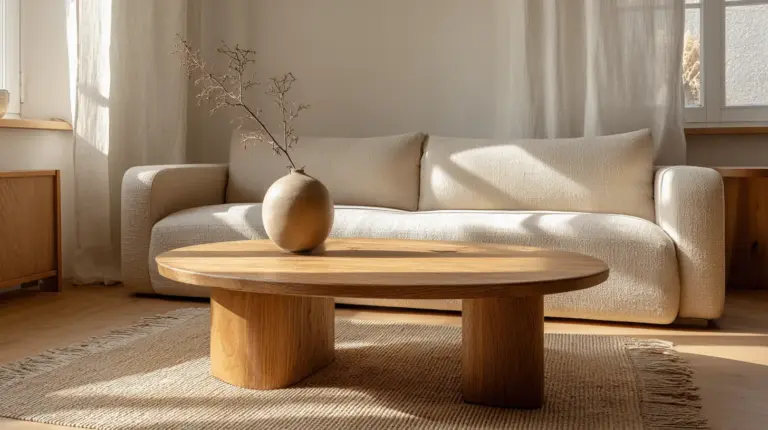
A low coffee table in natural wood—perhaps 30-35cm high—maintains the horizontal emphasis while providing function. Look for simple rectangular or organic oval shapes rather than ornate carved pieces. Teak, oak, or bamboo all bring warmth without weight.
For storage in small spaces, choose closed cabinets over open shelving. Japandi values negative space and visual rest. A sleek sideboard in light wood with handleless doors can hide your entertainment system, books, and miscellaneous items while presenting a calm facade.
Multifunctional furniture earns its place here—a storage ottoman in natural linen, a bench that holds throw blankets inside, nesting tables you can tuck away when hosting.
Seating Beyond the Sofa
Add one or two floor cushions in organic fabrics for flexible seating that disappears when not needed. A simple wooden stool can serve as both side table and extra seat. A low pouf in natural jute provides texture while maintaining the room’s uncluttered feel.
Avoid matching furniture sets. Japandi celebrates the thoughtfully curated over the coordinated. Your sofa doesn’t need to match your chair—it needs to relate through shared materials, similar tones, or complementary shapes.
Budget-Friendly Furniture Swaps
| Item | Budget Option (~₱15,000-30,000) | Investment Option (~₱50,000-80,000) |
|---|---|---|
| Sofa | IKEA Kivik in beige linen cover | Custom low-profile teak frame with neutral cushions |
| Coffee Table | Bamboo table from local craftsmen | Solid walnut slab with steel legs |
| Storage | Simple pine cabinet, refinished | Japanese-inspired tansu chest in dark wood |
| Seating | Floor cushions from Kultura | Handcrafted rattan meditation chair |
Lighting: Creating Atmosphere in Small Spaces
Layered Lighting Principles
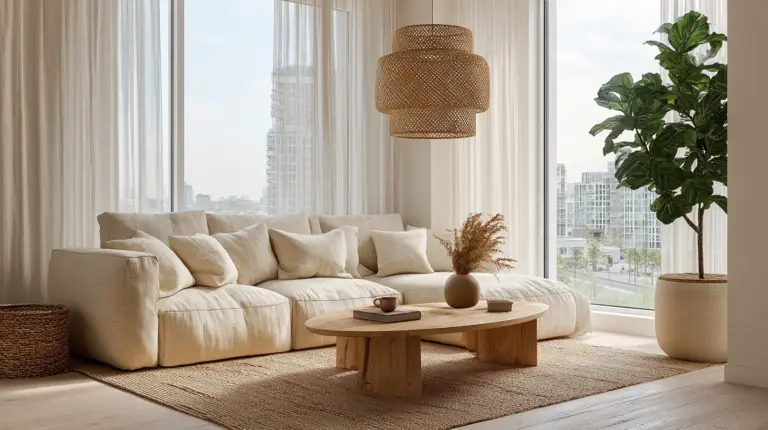
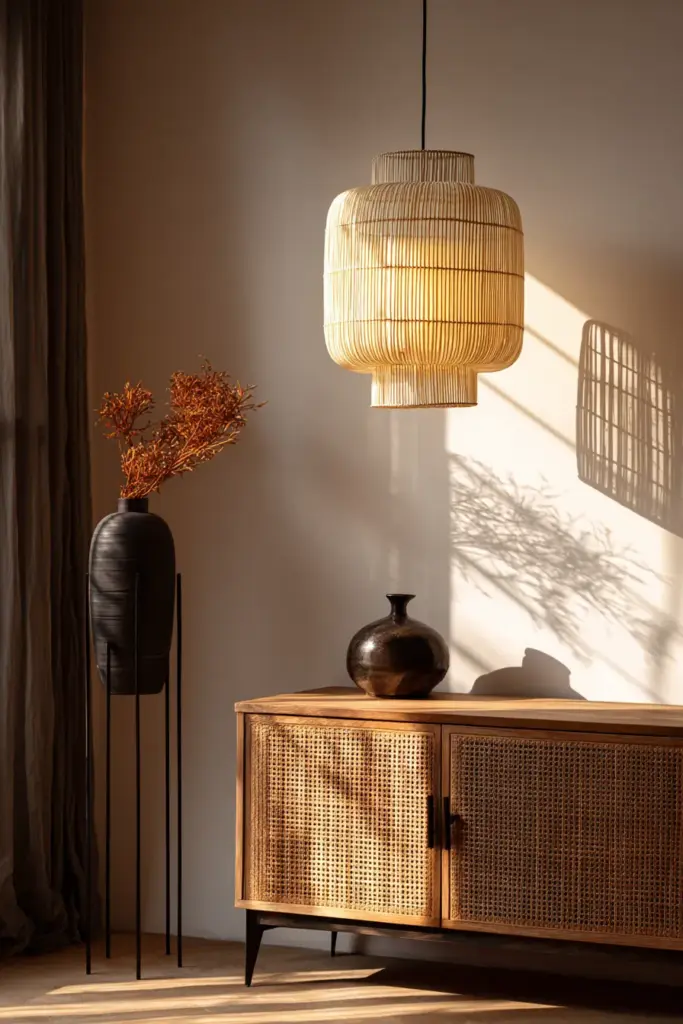
Small Japandi living rooms need multiple light sources at different heights to create depth without clutter. Start with ambient lighting—perhaps a simple pendant in rice paper or woven rattan that casts soft, diffused light. Position this centrally, but keep it understated.
Add task lighting through a slender floor lamp beside your reading corner. Choose designs with clean lines in black metal or natural wood that reach upward without visual bulk. A simple linen shade softens the light beautifully.
Accent lighting can be as simple as a small ceramic table lamp on your sideboard or LED strips behind floating shelves to create gentle backlighting. These create dimension in the evening when overhead lights feel too harsh.
Natural Light Maximization
In daylight hours, Japandi living rooms worship natural light. Replace heavy curtains with sheer linen panels in ivory or natural beige that filter sunlight into a soft glow. Or embrace the Japanese approach—leave windows bare if privacy allows, letting light pour freely across your floors.
Position mirrors strategically to bounce light into darker corners. A large mirror with a simple wooden frame opposite your window can effectively double your natural light while creating the illusion of extended space.
Keep windowsills clear or minimal—perhaps a single small plant or stone. Clutter here blocks light and disrupts the clean sightlines Japandi requires.
Hygge Meets Zen: Evening Ambiance
As sun sets, bring in the Scandinavian tradition of candles. Group three pillar candles in varying heights on a wooden tray for your coffee table. Choose unscented or naturally scented options like beeswax to avoid overwhelming a small space.
Japanese paper lanterns add sculptural interest while providing gentle mood lighting. A single akari-style lantern in a corner creates a soft focal point that doesn’t compete with your space—it enhances it.
For smart integration, consider warm-toned LED bulbs (2700-3000K) in all fixtures. Modern options like Philips Hue allow you to adjust brightness and warmth throughout the day, maintaining Japandi’s connection to natural rhythms while embracing gentle technology.
Texture and Materials: The Soul of Japandi
Natural Materials as Non-Negotiables
Wood is essential—and not just one type. Mix light ash or oak with darker walnut or teak to create the Scandinavian-Japanese conversation. A light wood floor with a dark wood coffee table. Pale wooden walls with a deep wooden bowl.
Introduce stone through small accents: a granite trivet, a marble dish for keys, concrete bookends. These cool, mineral textures balance wood’s warmth and prevent your space from feeling too soft or too rustic.
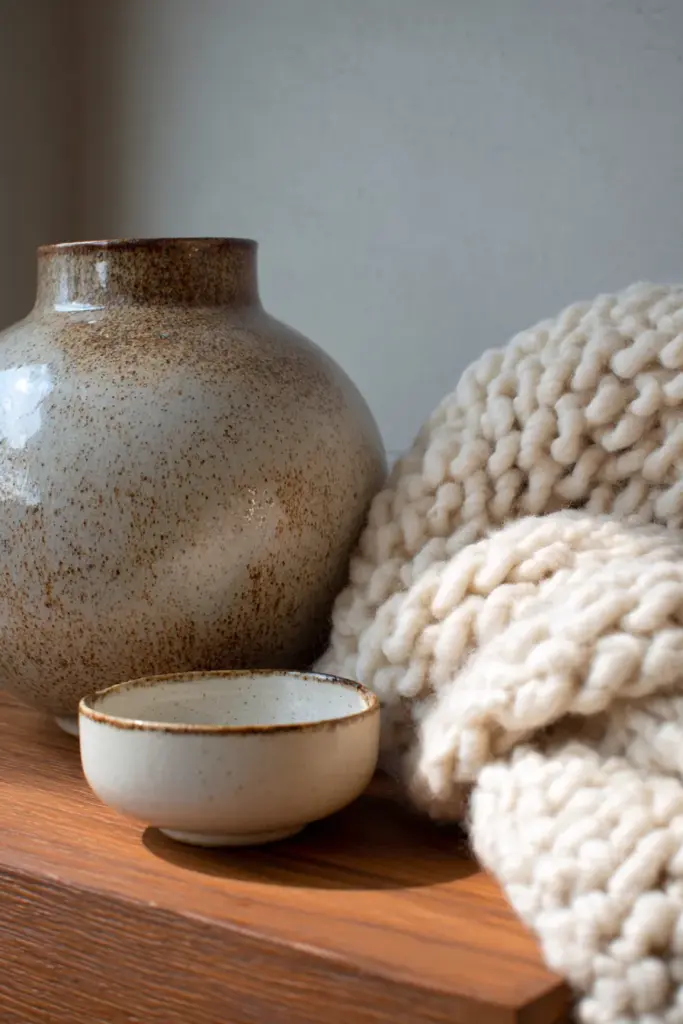
Ceramics bring handmade irregularity into Japandi spaces. Choose pieces with visible wheel marks, reactive glazes, organic shapes. A stoneware vase in matte charcoal. Tea bowls in earthy browns. These celebrate the maker’s hand.
Textile Layering for Warmth
Start with your sofa—dress it in natural fiber slipcovers or upholstery. Linen wrinkles beautifully and ages with character. Cotton canvas offers durability. Both breathe well in tropical climates while maintaining that relaxed, lived-in quality Japandi values.
Layer throws in complementary textures: a chunky knit in undyed wool, a smooth cotton waffle weave, a lightweight linen in warm taupe. Drape them casually rather than arranging them precisely—wabi-sabi loves the imperfect fold.
Cushions in varied fabrics add subtle interest without pattern chaos. Mix linen, cotton, and perhaps one boucle piece. Keep colors within your neutral-plus-accent palette—three cushions in cream and oatmeal, one in terracotta.
Plant Life as Living Texture
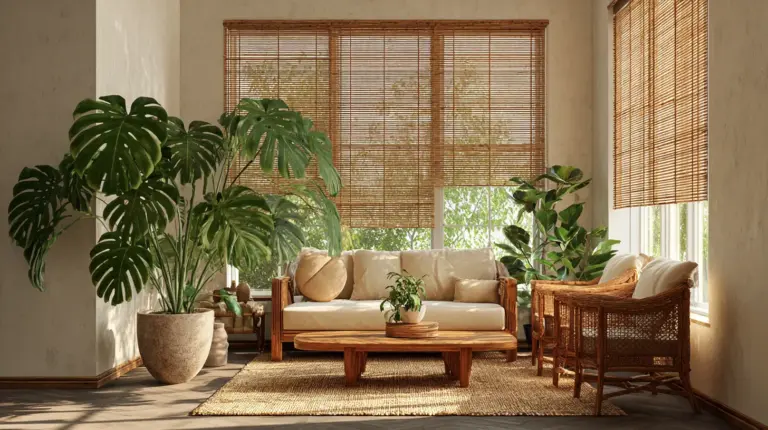
Plants aren’t optional in Japandi—they’re essential breathing elements. Choose varieties with architectural form: a fiddle leaf fig in a simple terracotta pot, a snake plant’s vertical lines, a peace lily’s glossy leaves.
Keep planters simple—unglazed terra cotta, concrete, or woven baskets in natural fibers. Avoid busy patterns or bright colors that fragment your visual peace. The plants themselves provide all the necessary visual interest.
Position greenery at different heights: a tall floor plant in one corner, a small succulent on your coffee table, a trailing pothos on a high shelf. This creates natural layering that guides the eye through your small space.
Layout Strategies for Small Japandi Living Rooms
Furniture Flow for Compact Spaces
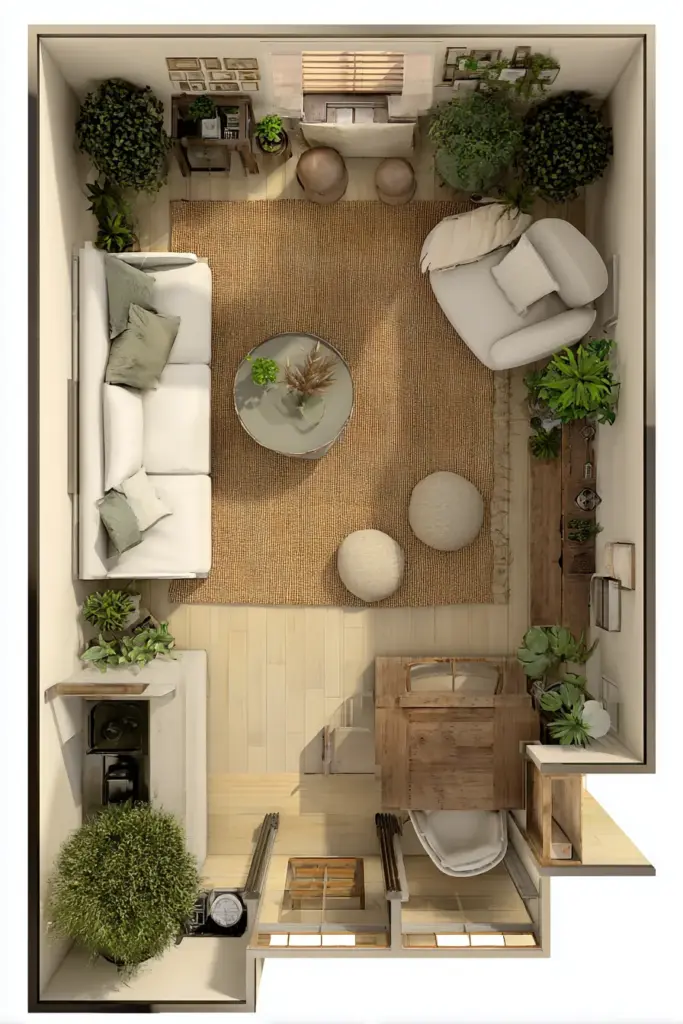
Float your sofa away from walls if possible—even 30-40cm creates circulation space and prevents that pushed-against-the-wall cramped feeling. In a 4×5 meter room, this might mean a compact loveseat facing your main window with a low console table behind it.
Create clear pathways of at least 60cm width for comfortable movement. Japandi values ease of flow—you should glide through your space, not squeeze past furniture edges. If your coffee table forces an awkward sideways shuffle, it’s too large.
Establish one clear focal point—usually your largest window or a simple wall with one piece of art. Arrange furniture to honor this rather than competing with multiple focus areas that fracture attention in a small room.
The Art of Negative Space
Leave areas intentionally empty. A blank corner isn’t a problem to solve—it’s breathing room for your eyes and spirit. Japandi knows that what you don’t include matters as much as what you do.
Resist filling every surface. Your sideboard doesn’t need seven objects—perhaps three beautiful pieces thoughtfully spaced create more impact. Your walls don’t need gallery density—one large piece or a small grouping of two is often enough.
This restraint is what allows small Japandi living rooms to feel spacious rather than sparse. You’re not depriving the space; you’re honoring it.
Zone Creation Without Walls
In studio or open-plan situations, define your living zone through furniture positioning and a large area rug. A jute rug in 200x300cm grounds your seating arrangement and psychologically separates living space from dining or sleeping areas.
Low open shelving—perhaps 90cm high—can create gentle division without blocking light. Fill it sparingly with books arranged vertically, a few ceramic pieces, a small plant. This maintains openness while establishing boundaries.
Lighting also zones space effectively. Pendant lights centered over specific areas tell your eye where one function ends and another begins, all without physical barriers.
Essential Japandi Living Room Checklist
Before you begin transforming your small living room, use this checklist to ensure you’re capturing Japandi’s essential elements:
Color & Light
- Neutral base colors (warm whites, beiges, soft grays)
- 2-3 deeper earth-tone accents maximum
- Multiple light sources at different heights
- Sheer or minimal window treatments
- Candles for evening warmth
Furniture Essentials
- Low-profile seating (70-80cm seat height)
- Wooden coffee table (preferably 30-35cm high)
- Closed storage to minimize visual clutter
- One statement natural-material piece
- Multifunctional items for flexibility
Materials & Texture
- Mix of light and dark woods
- Natural fiber textiles (linen, cotton, jute)
- Handmade ceramics or pottery
- Stone or concrete accents
- Live plants in simple containers
Layout Principles
- Clear pathways (minimum 60cm wide)
- Furniture floated from walls where possible
- One clear focal point
- Intentional negative space
- Area rug defining the zone
Atmosphere
- Minimal decorative objects (quality over quantity)
- Natural scents or unscented candles
- Books displayed vertically or stacked simply
- No visible cords or technology clutter
- Overall sense of calm and groundedness
Styling Details That Elevate Your Space
The Coffee Table Moment
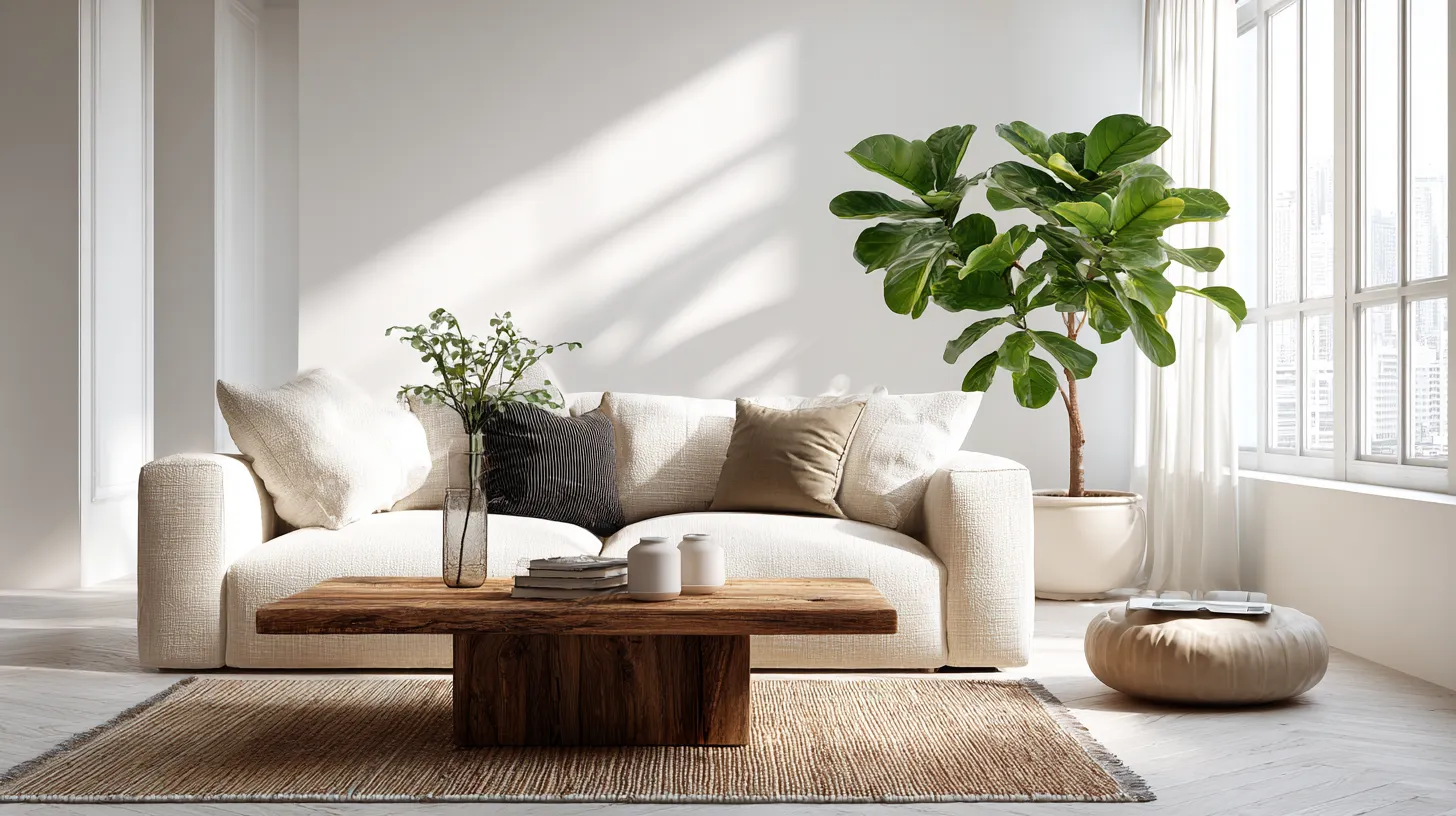
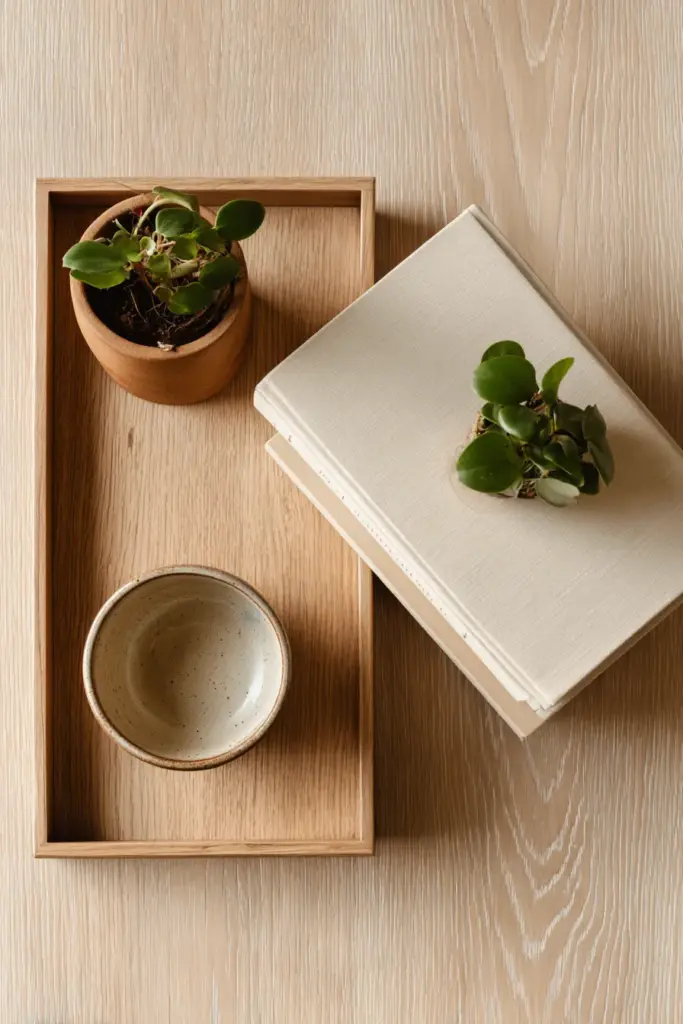
Style your coffee table with intention. A wooden tray holding a small plant, a stack of two books, and a ceramic bowl creates a vignette without crowding. The tray contains the grouping and makes it easy to clear space when needed.
Vary heights within this small arrangement—a low dish, medium books, taller plant. This creates visual interest while maintaining simplicity. Keep everything within arm’s reach from your seated position; this is about function meeting beauty.
Choose books with neutral spines or turn them pages-out to hide colorful covers that might disrupt your palette. This isn’t about hiding literature; it’s about visual cohesion in a compact space.
Wall Art and Decor
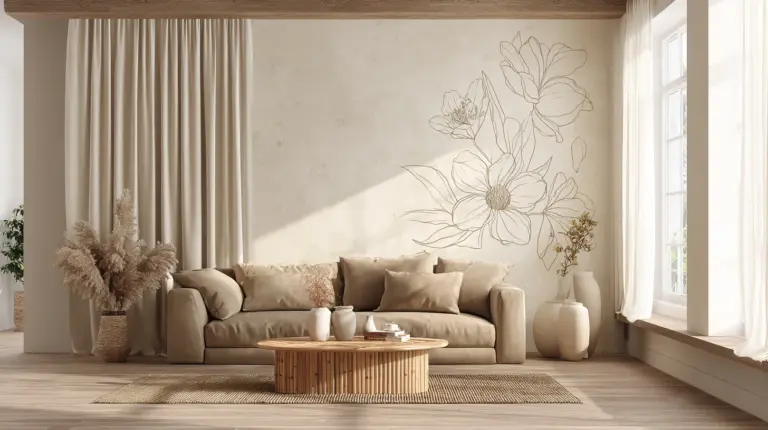
Select one large piece (80x100cm or similar) rather than multiple small frames. Japandi favors bold simplicity—an abstract print in charcoal and cream tones, a photograph of natural landscapes, or a Japanese-inspired ink drawing.
Hang art at eye level (typically 145-150cm to center) and resist the urge to add more. That single piece against calm walls makes a stronger statement than a crowded gallery wall ever could in a small room.
If you prefer multiple pieces, try a diptych or triptych—two or three panels that relate to each other through color or theme, hung with consistent spacing. This feels intentional rather than collected.
Seasonal Shifts
Japandi celebrates seasonal awareness. In cooler months, add a chunky knit throw in cream wool. Swap your cotton cushions for velvet in deep charcoal. Light more candles as days shorten.
When heat returns, remove heavy textiles. Bring in lighter linen, add a bowl of river stones, introduce white ceramic pieces. These small shifts keep your space feeling alive and connected to natural cycles.
This isn’t about constant redecorating—it’s about small, thoughtful adjustments that honor the world outside your windows.
Sustainability in Japandi Living
Choosing Mindful Materials
Japandi’s emphasis on natural materials aligns beautifully with sustainable living. When selecting furniture, seek FSC-certified woods—bamboo from controlled harvesting, teak from reclaimed sources, oak from managed forests.
Look for low-VOC paints if repainting walls. These water-based options emit fewer harmful chemicals while achieving the same warm neutrals Japandi requires. Your small space benefits from cleaner indoor air quality.
Choose organic textiles where budget allows—GOTS-certified cotton, linen from European flax, undyed wool. These materials age gracefully, embodying wabi-sabi principles while reducing environmental impact.
The Joy of Secondhand
Vintage and secondhand pieces often fit Japandi aesthetics perfectly. Mid-century furniture shares the clean lines and quality craftsmanship Japandi values. A teak cabinet from the 1960s or a simple wooden bench brings history and character.
Thrift stores, online marketplaces, and estate sales yield treasures that cost less and carry more soul than mass-produced alternatives. That slight wear and patina? Perfectly wabi-sabi.
Upcycling worn pieces honors Japandi’s respect for objects and resources. Sand and refinish a scratched coffee table. Reupholster a well-built chair in natural linen. These projects transform budget finds into personalized focal points.
Common Small Space Mistakes to Avoid
Overcorrecting Minimalism
Minimalism doesn’t mean sterile emptiness. Some interpret Japandi as “remove everything” and end up with cold, unwelcoming spaces. Your living room should feel calm but also lived-in and warm.
Include personal objects—just fewer of them. Display that handmade bowl from your travels. Keep your favorite books visible. Add cushions that invite you to sit. Warmth comes from thoughtful curation, not elimination of everything personal.
The balance lies in restraint without deprivation. Each object should serve purpose or bring joy, ideally both.
Ignoring Scale
In small rooms, scale errors feel amplified. An oversized sectional overwhelms. A tiny coffee table looks lost. Pay attention to proportions—furniture should relate to your room size, not fight against it.
Before purchasing, measure carefully. Create a floor plan on paper. Use painter’s tape to map furniture footprints on your actual floor. This prevents expensive mistakes and ensures pieces enhance rather than crowd.
Trust that smaller, well-chosen pieces create more livable space than cramming in everything you think a living room “should” have.
Fighting Your Architecture
Japandi works with what exists rather than against it. If you have beautiful wood floors, don’t cover them entirely. If natural light streams from one direction, arrange furniture to celebrate it rather than block it.
Work with your room’s quirks—that awkward corner might be perfect for a single floor cushion and reading lamp. Low ceilings call for low furniture that maintains rather than fights proportions. Honor your space as it is.
Conclusion
Creating a small Japandi living room isn’t about following rigid rules—it’s about understanding principles and applying them to your unique space and life. It’s choosing warmth over trend, quality over quantity, calm over chaos.
Your living room might be compact, but that doesn’t limit its capacity for beauty. In fact, small spaces often hold beauty more intensely, like perfume in a small bottle. Every choice concentrates meaning.
As you build your Japandi sanctuary, move slowly. Add one piece at a time. Live with it. Notice how light moves across new surfaces, how textures feel under your hand, how the room makes you breathe differently when you walk through the door.
This is the gift of Japandi—not just a design style, but an invitation to live more intentionally. To surround yourself with things that matter. To find peace in simplicity. To create a small living room that feels like the most spacious place in the world because it holds exactly what you need and nothing more.
Welcome home to your calm, beautiful space.
Frequently Asked Questions
What is the main difference between Japandi and Scandinavian living room design?
Scandinavian design emphasizes brightness, light woods like pine, and hygge coziness with plenty of soft textiles and cheerful accents. Japandi adds Japanese wabi-sabi philosophy, introducing lower furniture profiles, darker wood tones like walnut and teak, and a more restrained color palette with deeper earth tones. While both value minimalism, Japandi leans quieter and more grounded, where Scandinavian design tends toward airy cheerfulness.
Can I create a Japandi living room on a budget?
Absolutely. Focus on neutral paint colors first—these transform space inexpensively. Source secondhand teak or oak furniture which often costs less than new pieces while offering better quality. DIY elements like painting existing furniture in matte earth tones, making floor cushions from natural fabrics, or creating simple shelving from reclaimed wood. Prioritize one quality investment piece like a good sofa, then build around it gradually with affordable natural materials from local artisans.
How do I make my small Japandi living room feel larger?
Choose low-profile furniture that creates more vertical space perception. Keep window treatments minimal to maximize natural light. Use large mirrors strategically to reflect light and create depth. Maintain a neutral color palette that allows walls to recede visually. Most importantly, resist over-furnishing—leave intentional negative space and clear pathways. These strategies combined make even 4×5 meter rooms feel surprisingly spacious.
What plants work best in Japandi living rooms?
Select plants with architectural forms and simple care requirements. Snake plants offer striking vertical lines. Fiddle leaf figs provide sculptural presence. Peace lilies add glossy foliage. Pothos trails beautifully from high shelves. Monstera brings organic shapes without fussiness. Keep them in simple containers—unglazed terracotta, concrete, or woven baskets in natural tones. Avoid busy planters that compete with the room’s calm aesthetic.
How much should I budget for a small Japandi living room transformation?
Budget ranges vary widely based on existing furniture and space size. A basic refresh keeping current furniture might cost ₱20,000-40,000 for paint, textiles, lighting, and accessories. A moderate renovation replacing key furniture pieces typically runs ₱80,000-150,000. A complete transformation with quality investment pieces can reach ₱200,000-400,000. Prioritize based on what you’ll use most—start with seating and lighting, then add storage and decorative elements as budget allows.