
Table of Contents
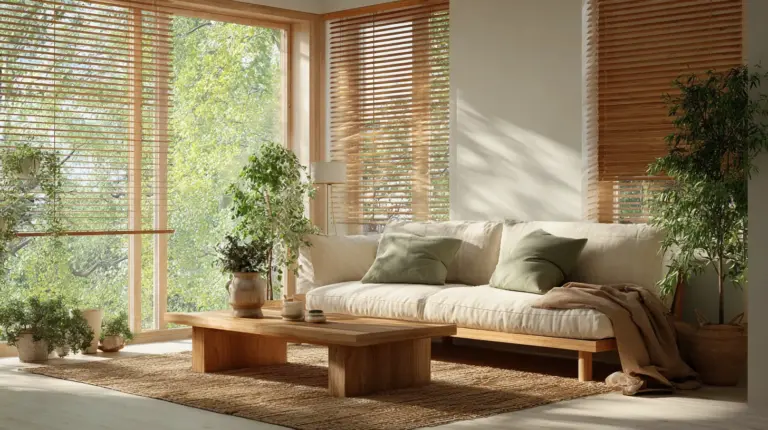
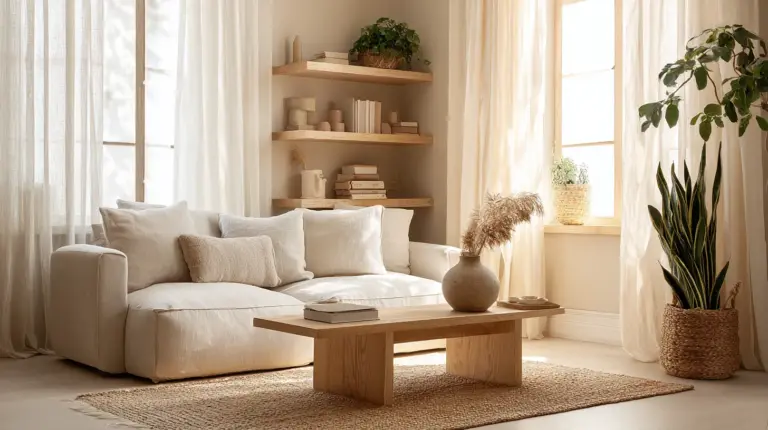
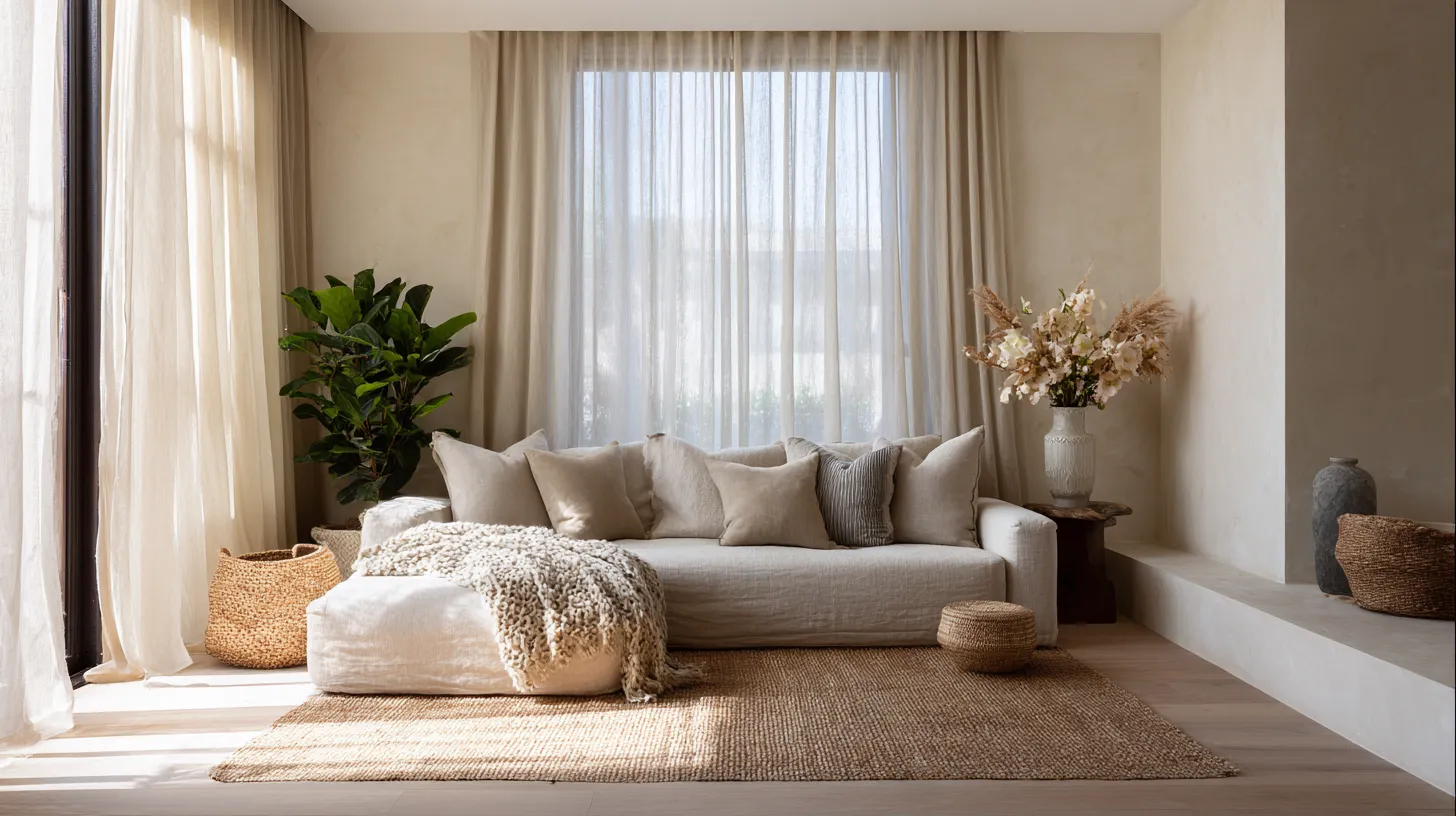
There’s something deeply comforting about a room that breathes. Where soft linen drapes move gently with the afternoon breeze, where a chunky knit throw invites you to sink into the sofa, where every textile tells a story of craft and care.
Japandi living rooms achieve this effortless balance through thoughtful textile choices. They blend the refined minimalism of Japanese design with the cozy warmth of Scandinavian hygge, creating spaces that feel both serene and welcoming.
The textiles you choose become the soul of your living room. They add layers of texture without visual clutter, warmth without heaviness, personality without noise.
This guide will walk you through selecting, layering, and styling textiles that honor both traditions—creating a space that feels like a gentle embrace at the end of a long day.
Understanding Japandi Textile Philosophy
The Wabi-Sabi and Hygge Connection
Japandi textiles embody two beautiful philosophies working in harmony. Japanese wabi-sabi celebrates imperfection and natural aging—the slightly irregular weave of handwoven cotton, the gentle fade of indigo-dyed linen.
Scandinavian hygge brings warmth and comfort to this restraint. It’s the reason you layer that soft wool throw over clean-lined furniture, the impulse to add one more cushion for curling up with tea on rainy afternoons.
Together, they create textile stories that feel both elevated and livable. Nothing is too precious to touch, yet everything deserves appreciation.
Natural Materials as Foundation
The Japandi approach starts with natural, honest materials. Think raw linen with its beautiful texture and slight irregularity, organic cotton that softens with each wash, wool that holds warmth without weight.
These materials age gracefully. They develop character over time rather than looking worn out—wrinkles become part of their charm, slight variations in tone add depth.
Avoid synthetic fabrics that look too perfect or feel plasticky. Your textiles should connect you to the natural world, not distance you from it.
Essential Textile Elements for Japandi Living Rooms
Window Treatments: Light and Privacy in Balance
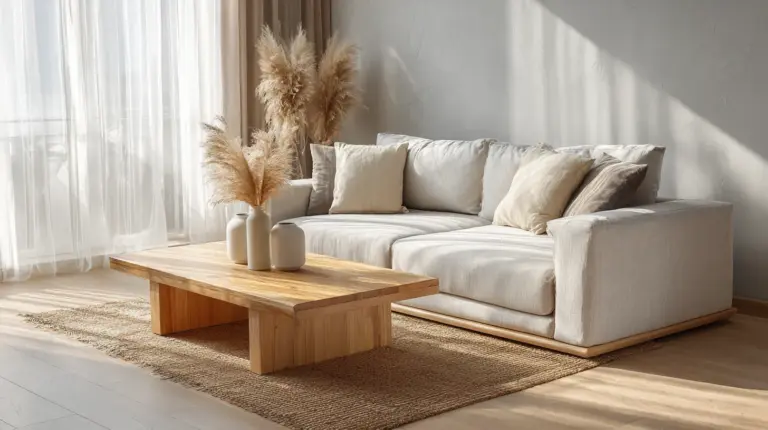
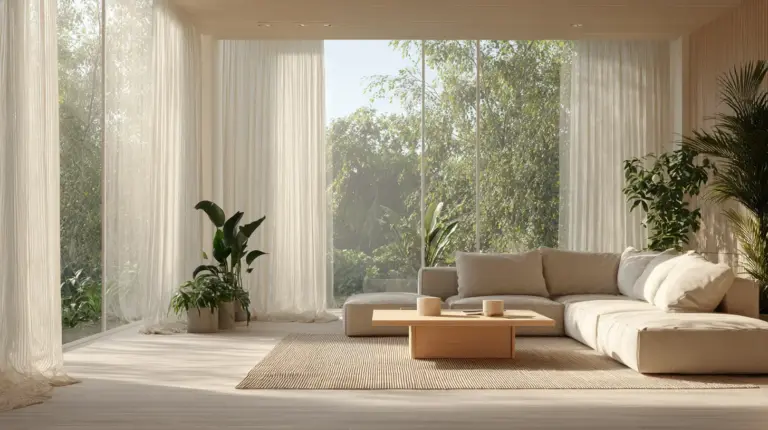
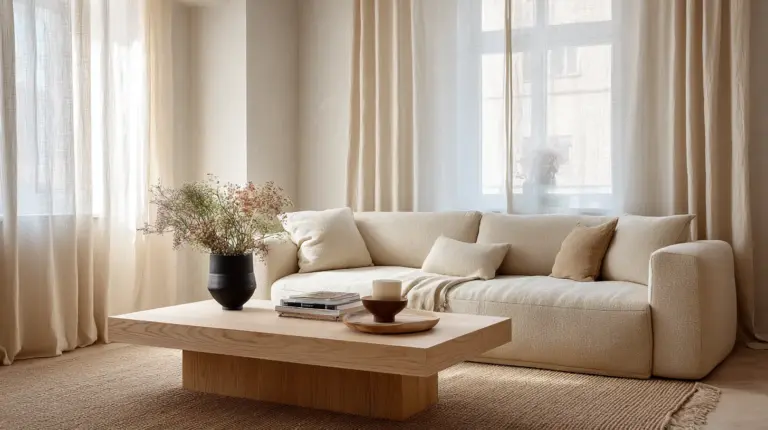
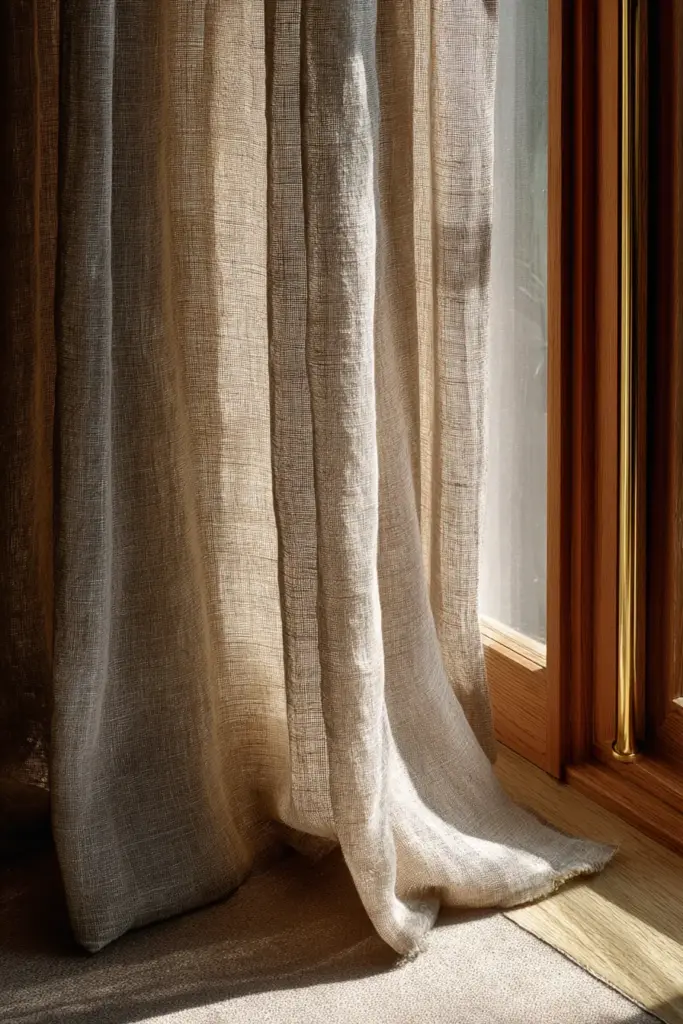
Linen curtains are the quintessential Japandi choice. Choose natural, undyed linen or soft neutral tones—warm whites, gentle grays, dusty blush, or muted sage.
The fabric should filter light beautifully during the day, creating a soft glow that changes throughout the hours. At night, it offers privacy without blocking the connection to the outside world completely.
Install them with simple wooden or brushed brass rods. Let them puddle slightly on the floor for an effortless, lived-in feel—or keep them just grazing the ground for cleaner lines.
DIY Option: Transform affordable linen fabric from local textile markets into no-sew curtains using clip rings. Choose fabrics with natural texture and slight imperfections for authentic wabi-sabi character.
Sofa and Seating Textiles
Upholstery fabrics should be durable yet soft. Opt for natural linen, cotton-linen blends, or textured bouclé in neutral palettes—oatmeal, warm gray, soft taupe, or natural beige.
Low-profile sofas with clean lines look best in solid colors that ground the space. Save pattern and variety for layering pieces like cushions and throws.
If you’re working with existing furniture, consider slipcovers in natural fabrics. They’re practical for humid climates like Quezon City, washable, and give any sofa an instant Japandi refresh.
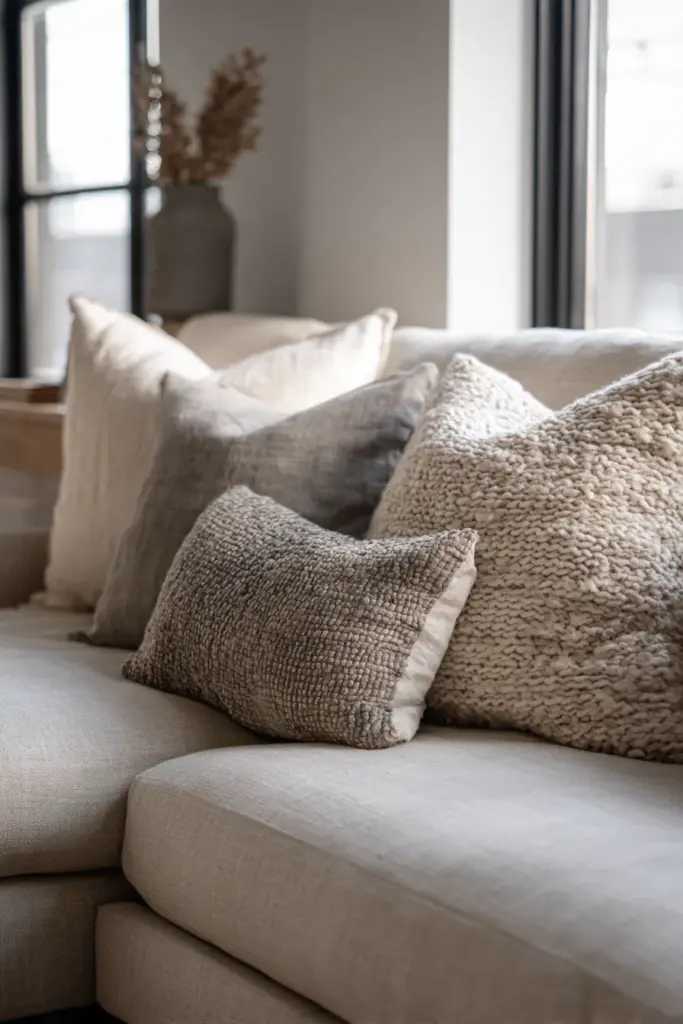
Cushions and throw pillows bring subtle variation. Mix textures rather than patterns—pair smooth linen with nubby cotton, add one piece in chunky knit or textured weave.
Choose 2-3 complementary neutral tones. A 50cm linen cushion in warm gray, a 45cm cotton cushion in cream, a lumbar pillow in natural jute or textured weave creates pleasing rhythm without chaos.
Avoid too many cushions. In Japandi design, negative space matters—three to five well-chosen pieces on a standard three-seater sofa is plenty.
Throws and Blankets: Layers of Comfort
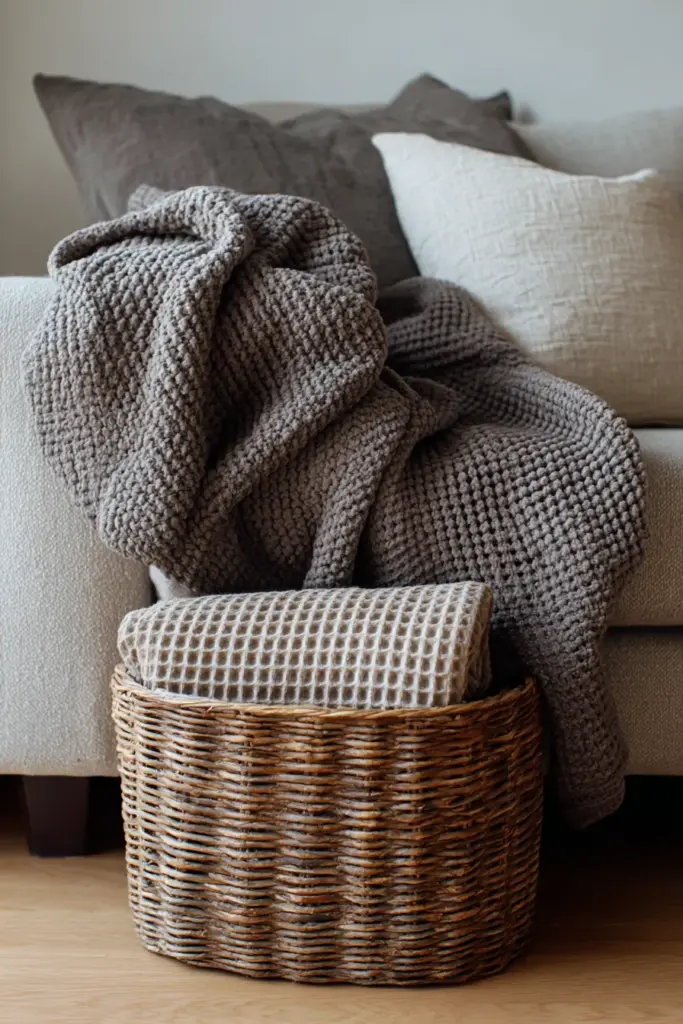
Throw blankets add instant hygge to minimalist Japanese-inspired spaces. Drape one casually over your sofa arm or fold it loosely in a basket nearby.
Choose natural fibers: chunky merino wool for cool evenings, lightweight cotton waffle weave for warmer seasons, linen-cotton blends that work year-round.
Colors should echo your palette—charcoal gray, warm sand, soft sage, or classic cream. A subtle stripe or simple geometric pattern works if kept minimal.
The throw should look effortlessly placed, not styled to perfection. This casual approach embodies both wabi-sabi’s acceptance of imperfection and hygge’s emphasis on comfort.
Rugs: Grounding Texture Underfoot
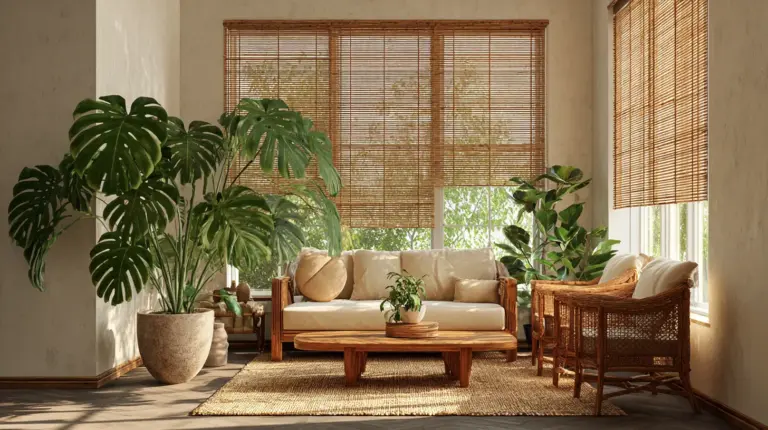
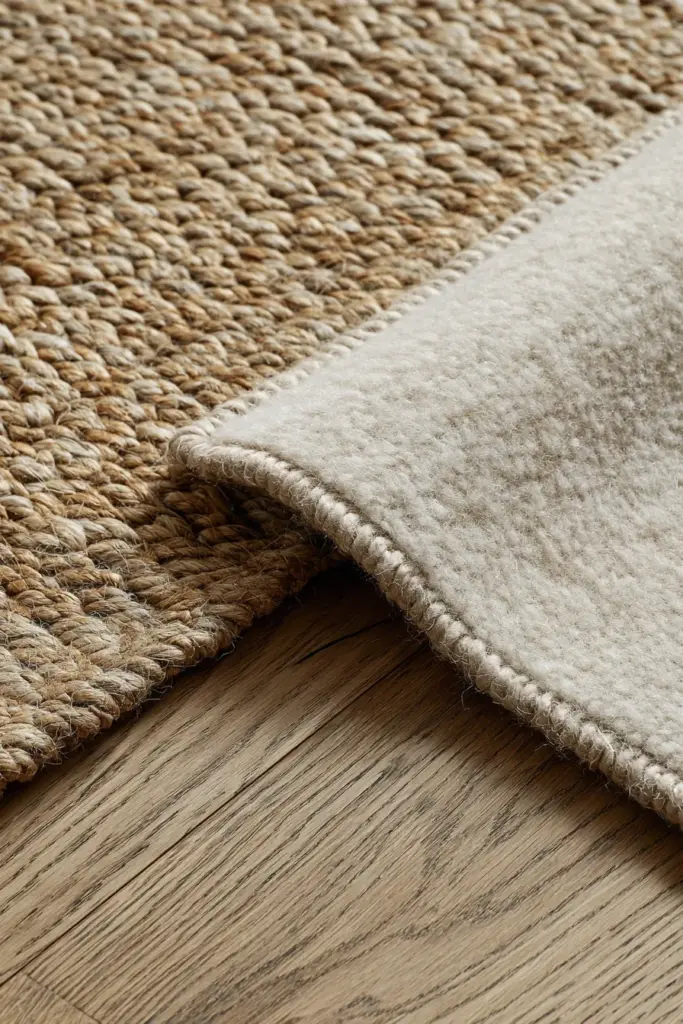
Natural fiber rugs define Japandi living rooms. Jute, sisal, seagrass, and wool bring organic texture that grounds furniture groupings without demanding attention.
Large-scale rugs work best—ensure your rug extends at least 15-20cm beyond your sofa and chairs on all sides. This creates visual cohesion and defines your seating area clearly.
Layer textures for depth: place a soft wool rug over a larger jute base, or add a small sheepskin accent beside low seating. This layering adds warmth while maintaining the clean, uncluttered aesthetic.
For DIY lovers: Craft simple rope rugs using natural abaca or jute cord in spiral or rectangular patterns. Seal with mold-resistant treatments suitable for humid Philippine climates.
Creating a Cohesive Textile Palette
The Neutral Foundation
Start with a base of warm neutrals. Think cream, beige, warm gray, taupe—colors that feel calm and timeless rather than stark or cold.
These create breathing room. They let architectural details shine, allow natural light to play across surfaces, and provide a restful backdrop for daily life.
Your largest textile pieces—curtains, sofa upholstery, main area rug—should come from this neutral family. Save variation for accent pieces.
Adding Depth Through Texture
Japandi design achieves visual interest through texture rather than color or pattern. Your textiles should offer tactile variety that invites touch and creates subtle shadows.
Pair smooth linen curtains with a chunky jute rug. Layer a soft bouclé cushion against smooth cotton upholstery. Add a waffle-weave throw to nubby linen seating.
Each texture catches light differently throughout the day. This creates a living, breathing quality—your room evolves from morning’s bright clarity to evening’s soft shadows.
Strategic Use of Accent Colors
Introduce one or two accent colors from nature. Dusty sage green, warm terracotta, soft indigo, charcoal gray, or earthy rust add personality without disrupting calm.
Use these sparingly—one accent cushion, a single throw in deeper tone, perhaps window treatments in very soft sage rather than pure cream.
These colors should feel like they emerged from the earth: the gray of river stones, the green of moss, the rust of autumn leaves.
Pattern: When and How
Patterns should be subtle, geometric, and grounded in traditional craft. Thin stripes, simple checks, small-scale grid patterns, or traditional Japanese sashiko stitching work beautifully.
Keep patterns monochromatic or low-contrast. A cream cushion with tone-on-tone embroidered lines adds interest without visual noise.
One patterned element per seating area is usually enough. Let it be a quiet surprise rather than a focal point.
Textile Styling Techniques
The Art of Layering
Start with your foundation: sofa upholstery and main area rug establish your base layer. These should be neutral, substantial, and high-quality.
Add middle layers: cushions and side chair upholstery bring in texture variation while maintaining color harmony.
Finish with accent layers: throws, smaller accent pillows, a sheepskin draped over a chair. These are your most personal touches, easiest to swap seasonally.
This three-layer approach creates depth without clutter. Each layer serves a purpose, nothing feels superfluous.
Balancing Softness and Structure
Japandi rooms need both soft comfort and clean lines. Your textiles should enhance this balance, not tip too far in either direction.
Crisp linen curtains provide structure while remaining soft. A tailored cushion in nubby fabric offers geometry with warmth. A precisely folded throw maintains order while inviting use.
Avoid textiles that look too fussy (ruffles, elaborate trims) or too rigid (heavily starched, overly structured). Everything should feel approachable yet intentional.
Seasonal Transitions
Swap textiles with the seasons to keep your space feeling fresh. This honors the Japanese concept of seasonality while embracing Scandinavian coziness.
Warm season: Lightweight linen throws, cotton cushion covers, open-weave materials that allow airflow. Keep layers minimal.
Cool season: Merino wool throws, heavier cotton-linen blends, perhaps one sheepskin accent. Add one extra layer of cushions for enhanced coziness.
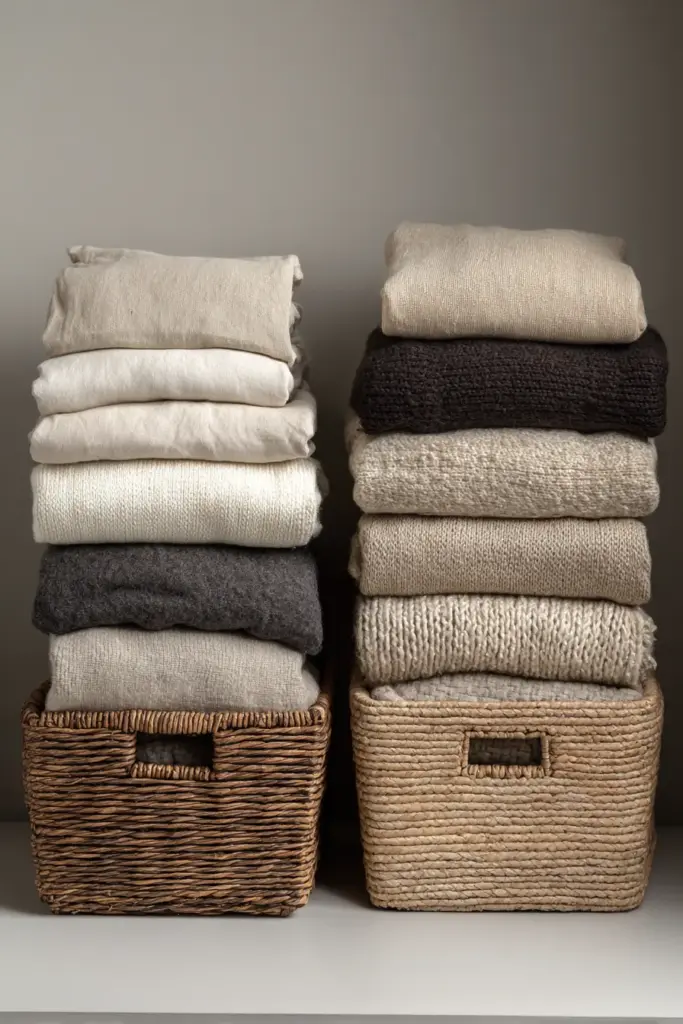
Store off-season textiles in natural fiber baskets or wooden boxes—continuing the aesthetic even in storage.
DIY Japandi Textile Projects
No-Sew Linen Cushion Covers
Purchase natural linen fabric (look for locally-sourced options or sustainable blends). Cut to size with extra allowance for overlap.
Wrap fabric around existing cushion inserts, tucking and folding at the back. Secure with hidden safety pins or simple hand-stitching at corners.
This approach embraces wabi-sabi—slight imperfections in your folds and closures add character. Change covers seasonally without investing in sewing equipment.
Budget: Under ₱500-800 per cushion using local linen-cotton blends.
Hand-Dyed Textiles with Natural Dyes
Experiment with plant-based dyes from materials available in Philippine markets: onion skins for warm golds, avocado pits for soft pinks, indigo for classic blue-grays.
Start with white or natural cotton or linen fabric. Follow traditional Japanese shibori techniques for subtle patterns—tie, bind, or fold fabric before dyeing.
The resulting textiles have organic color variations that embody wabi-sabi perfectly. Each piece becomes truly one-of-a-kind.
Safety note: Work in ventilated areas, use mold-resistant fixatives suitable for humid climates, always test colorfastness before incorporating into finished projects.
Simple Woven Wall Hanging
Create a minimalist textile art piece using a basic wooden frame (DIY from local bamboo or salvaged wood) and natural fibers—jute, cotton rope, or wool.
Warp your frame vertically with neutral twine. Weave horizontal rows in varying textures—chunky sections alternating with tight weaves, leaving intentional gaps for negative space.
Hang using a simple wooden dowel. This adds warmth to walls without competing with other elements.
Cost: Under ₱1,500-2,000 for materials, creates heirloom-quality art.
Upcycled Throw from Vintage Textiles
Source vintage cotton or linen fabrics from thrift stores or family textiles. Choose pieces with beautiful patina—slight fading and wear add authenticity.
Cut into uniform squares or rectangles. Hand-stitch together using visible running stitches in contrasting thread (sashiko-inspired technique).
The resulting patchwork throw tells a story while being deeply sustainable. Imperfect seams and color variations become design features.
Caring for Japandi Textiles
Cleaning Natural Fabrics
Linen and cotton: Wash in cool water with gentle, fragrance-free detergent. Line dry when possible—sunlight naturally brightens while maintaining fabric integrity.
Wool: Spot clean or hand wash in cool water. Lay flat to dry, never wring or twist. Professional cleaning for larger pieces annually.
Jute and natural fiber rugs: Vacuum regularly. Spot clean with mild soap solution, allow to dry completely to prevent mold in humid climates.
Accept that natural fabrics will soften and develop character with washing. This patina is desirable in Japandi design—embrace the aging process.
Protecting Against Humidity
In tropical climates like Quezon City, moisture management is essential. Ensure good air circulation around textile pieces—avoid pushing furniture directly against walls.
Use dehumidifiers in consistently humid seasons. Treat natural fiber rugs with mold-resistant sealants safe for indoor use.
Rotate cushion covers and throws regularly, airing them in indirect sunlight. Store off-season textiles with natural moisture absorbers like bamboo charcoal.
Extending Textile Life
Quality natural fabrics should last years, developing beautiful patina. Rotate cushions regularly to ensure even wear.
Repair small tears or loose seams immediately using simple hand-stitching—visible mending in the Japanese tradition adds character.
When textiles reach the end of their primary use, repurpose them: cushion covers become cleaning cloths, worn throws cut into smaller accent pieces, truly finished items composted if fully natural.
Japandi Textile Checklist
Before finalizing your textile choices, ensure you’ve considered:
- Material authenticity: All textiles primarily natural fibers (linen, cotton, wool, jute)?
- Color harmony: Palette limited to 3-4 neutral tones plus 1-2 subtle accents?
- Texture variety: Mix of smooth, nubby, chunky, and woven textures present?
- Functional comfort: Pieces actually inviting to touch and use?
- Negative space: Room to breathe between textile elements?
- Seasonal adaptability: Easy to swap layers as weather changes?
- Sustainable choices: Natural, long-lasting materials that age gracefully?
- Climate considerations: Treatments for humidity and proper care plan?
- Budget alignment: Investment pieces balanced with DIY or affordable options?
- Personal connection: Textiles that make your specific space feel like home?
Bringing It All Together
The textiles in your Japandi living room should feel like a gentle conversation between Japanese restraint and Scandinavian warmth. Each piece considered, nothing excessive.
Start with your largest elements—curtains and sofa—in quality natural fabrics and neutral tones. Build from there with textured cushions, a statement throw, a beautiful rug underfoot.
Let your textiles be touchable, usable, real. They’re not just decoration but daily companions—the throw you reach for on cool evenings, the cushion you sink into while reading, the rug soft beneath bare feet.
As you layer and arrange, trust your instincts about balance. If a space feels too sparse, add one soft element. If it feels cluttered, remove the least meaningful piece.
Your living room’s textiles will evolve with you—some replaced, others gaining character and memory. This evolution itself is deeply Japandi: honoring both the beauty of impermanence and the comfort of home.
Frequently Asked Questions
What fabrics work best for Japandi living rooms?
Natural materials dominate: linen for curtains and cushions, cotton for upholstery and throws, wool for cozy layers, jute and sisal for rugs. These age beautifully, feel authentic to touch, and align with both Japanese and Scandinavian design values. Avoid synthetics that look too perfect or feel artificial—the slight irregularity of natural weaves adds character.
How many cushions should I use on a Japandi sofa?
Less is more in Japandi design. For a standard three-seater sofa, 3-5 cushions create comfort without clutter. Choose varied textures in similar neutral tones—perhaps two large (50cm) cushions in linen, one medium (45cm) in nubby cotton, and one lumbar pillow. Negative space matters, so resist the urge to fill every inch.
Can I use patterns in Japandi textile design?
Yes, but with restraint. Choose subtle, geometric patterns in low contrast: thin stripes, small checks, simple grids, or traditional Japanese sashiko stitching. Keep patterns monochromatic or tone-on-tone. One patterned element per seating area is usually sufficient—perhaps a single cushion or a throw with minimal geometric detail.
How do I maintain natural fiber textiles in humid climates?
Ensure good air circulation, use dehumidifiers during humid seasons, and treat rugs with mold-resistant sealants. Rotate and air cushions and throws regularly in indirect sunlight. Wash linens and cottons frequently to prevent moisture buildup, and always allow pieces to dry completely before returning them to furniture. Store off-season textiles with bamboo charcoal or natural moisture absorbers.
What’s a reasonable budget for Japandi living room textiles?
You can start with ₱10,000-20,000 for essential pieces: quality linen curtains (₱3,000-6,000), 3-4 cushion covers in natural fabrics (₱1,500-3,000 total), a good throw (₱2,000-4,000), and a natural fiber rug (₱3,000-7,000). Invest in larger foundational pieces and DIY accent elements. Quality natural textiles last for years, making them worthwhile investments that develop beautiful patina over time.