
Table of Contents
There’s something quietly transformative about stepping into a small Japandi living room. The air feels lighter. The clutter falls away. Your shoulders drop, just a little.
This isn’t about forcing minimalism into tiny square footage. It’s about breathing room—creating space that holds you gently, where every texture whispers intention and every corner invites rest.
If you’re working with a compact living area, Japandi design offers more than aesthetic appeal. It gives you a philosophy: less, but better. And in small spaces, that changes everything.
Let me walk you through how to craft a small Japandi living room that feels expansive, grounded, and unmistakably yours.
What Is Japandi Style in a Living Room?
Japandi is where Japanese wabi-sabi—the beauty of imperfection—meets Scandinavian hygge, that cozy contentment we all crave. Together, they create interiors that are minimal yet warm, functional yet soulful.
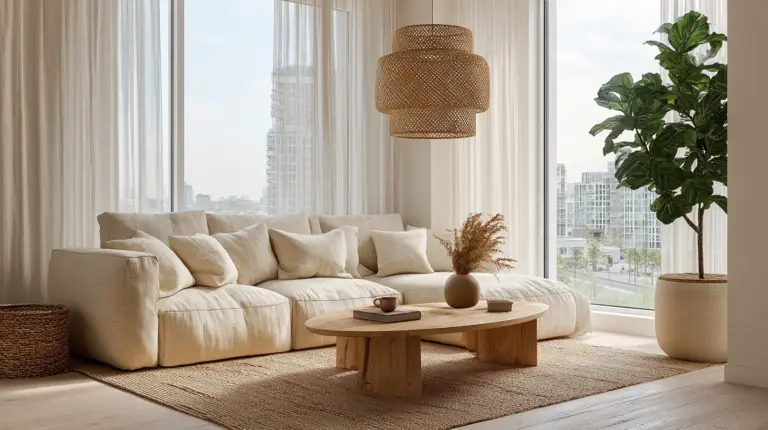
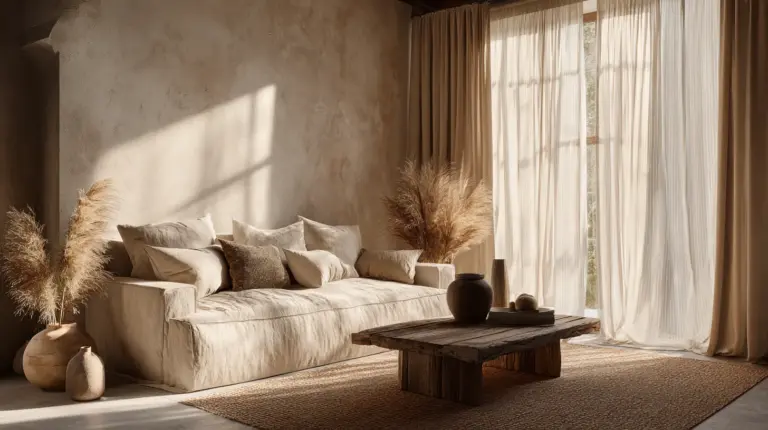
In a living room, this translates to clean lines softened by organic materials. Think blonde oak floors meeting linen cushions. A low sofa framing an uncluttered view. Natural light pooling on handwoven baskets.
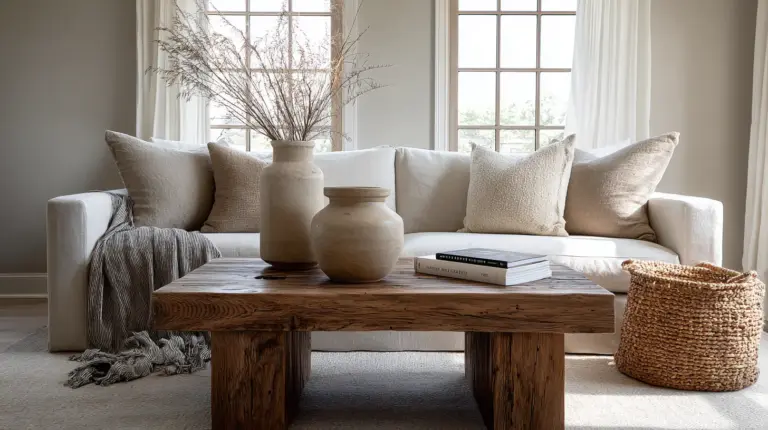
The palette stays neutral—beiges, soft grays, warm taupes—with wood tones providing gentle contrast. There’s no excess, but there’s abundant texture: the grain of reclaimed teak, the weave of a cotton throw, the matte finish of ceramic vessels.
For small spaces, Japandi becomes even more essential. It eliminates visual noise while adding layers of tactile comfort, making your living room feel larger and infinitely more inviting.
Why Small Japandi Living Rooms Work So Beautifully
Space That Breathes
Japandi design respects emptiness. In Japanese aesthetics, ma—negative space—is as important as the objects themselves.
When you apply this to a small living room, magic happens. By keeping surfaces clear and furniture low-profile, you create visual flow. The eye travels without interruption, making 80 square feet feel like 120.
Function Meets Soul
Every piece in a Japandi space earns its place through both purpose and beauty. That rattan ottoman? It’s storage, seating, and a sculptural moment. The ceramic lamp? It casts diffused light while grounding your corner in earthy elegance.
This dual-purpose approach is particularly crucial in compact areas. You’re not sacrificing style for function—you’re demanding both, which elevates your entire space.
Calm in Chaos
Small living rooms can feel overwhelming when overstuffed. Japandi’s restrained palette and natural materials create psychological calm even in tight quarters.
Research in color psychology shows that beige and warm gray tones reduce cortisol levels, especially beneficial in humid, high-stress environments like tropical climates. Your small living room becomes a decompression chamber after chaotic days.
Essential Elements for Your Small Japandi Living Room
Low-Profile Furniture That Opens the Room
Start with seating that sits close to the ground. A sleek sofa with wooden legs in natural oak, no higher than 80cm from floor to backrest, immediately creates the illusion of taller ceilings.
Consider a Japanese-inspired zabuton cushion setup paired with a low coffee table for flexible seating. When guests aren’t over, the cushions stack neatly in a linen storage basket, freeing precious floor space.
Skip bulky armchairs. Instead, choose a single accent chair—perhaps a Scandinavian-style piece with organic curves in ash wood—positioned where it catches morning light.
Neutral Tones with Natural Wood Accents
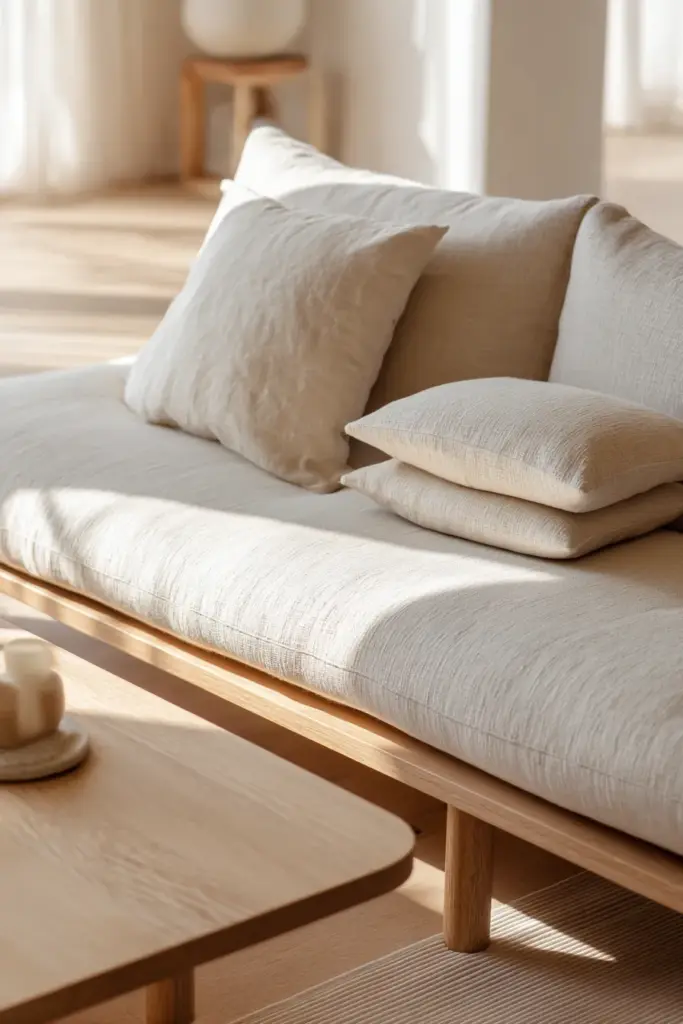
Your base palette should whisper, not shout. Walls in warm white or soft greige provide a serene backdrop. Layer in beige through your sofa upholstery, perhaps in a textured cotton-linen blend.
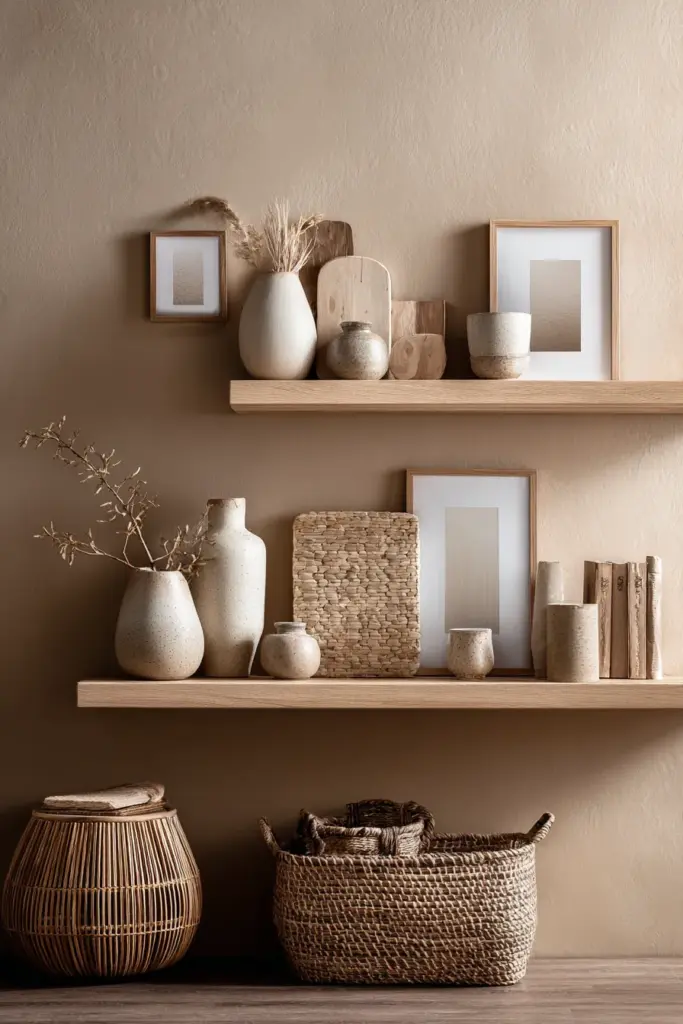
Introduce wood through coffee tables, floating shelves, and picture frames. In the Philippines, locally-sourced rattan and bamboo offer affordable, sustainable alternatives to imported oak. A rattan side table from Naic markets might cost ₱3,500 versus ₱15,000 for Scandinavian imports, while delivering authentic tropical-Japandi fusion.
Add depth through tonal variation: cream cushions against a taupe sofa, a charcoal ceramic vase on pale wood. This layering creates visual interest without pattern overload.
Smart Storage Solutions That Disappear
Clutter is the enemy of small Japandi spaces. Every item needs a hidden home.
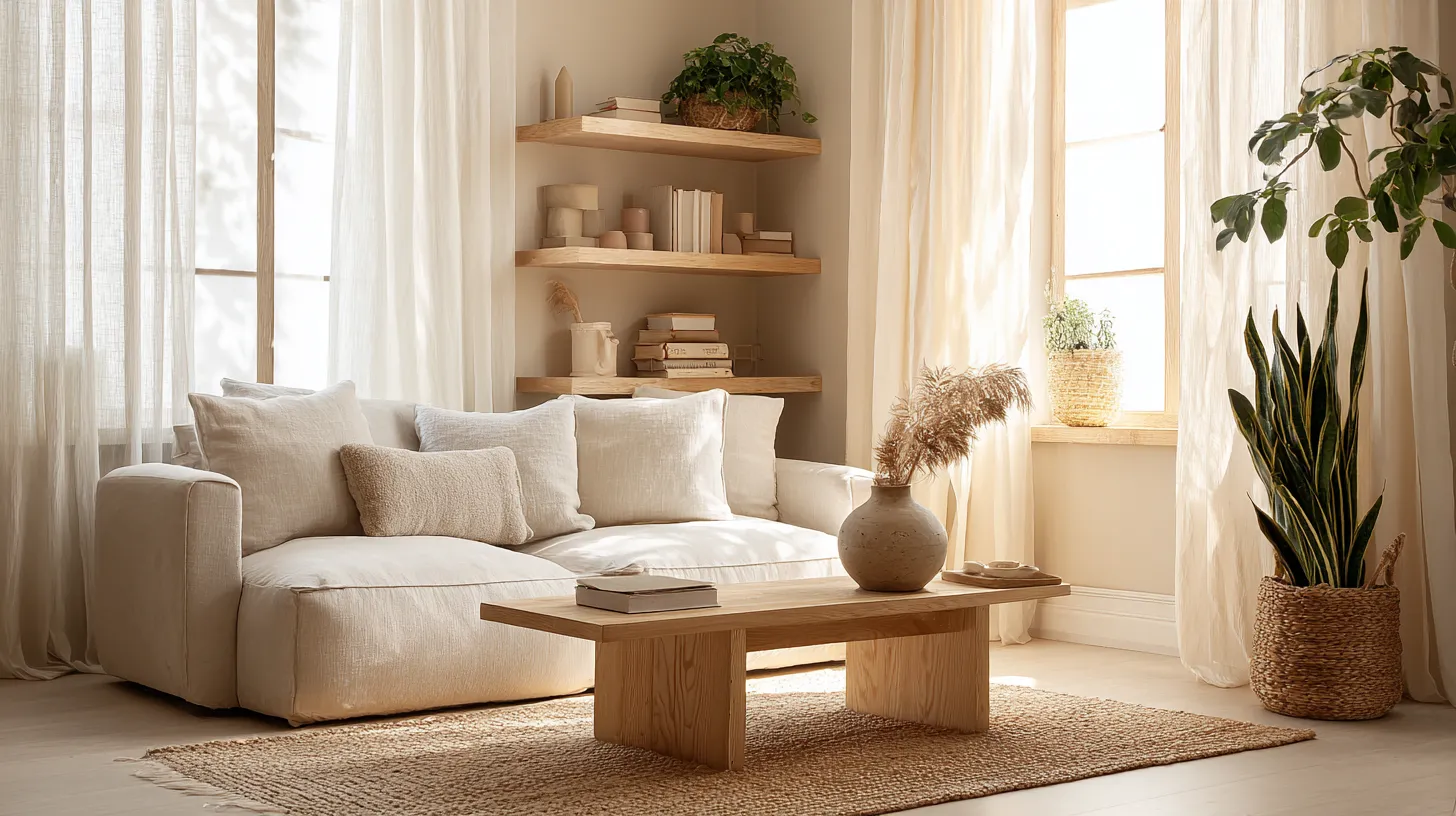
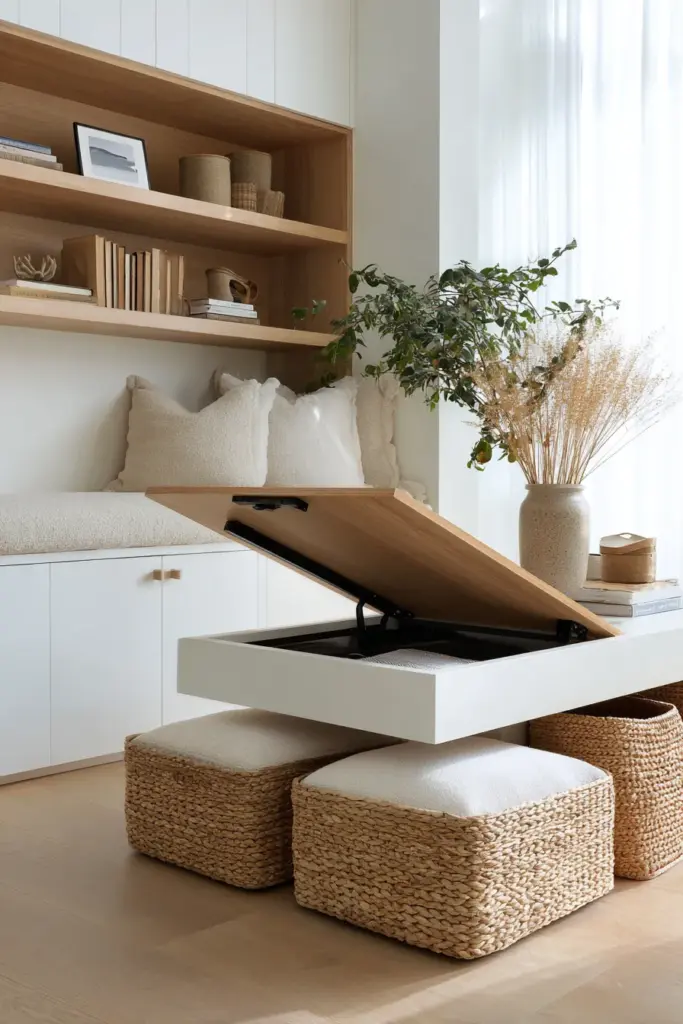
Opt for coffee tables with lift-top compartments or drawers. A 90cm piece can store magazines, remotes, and throws while maintaining clean lines. Floating shelves in light oak keep books organized without visual weight—install them high to draw eyes upward.
Multifunctional ottomans with interior storage become your secret weapon. Choose one upholstered in natural linen to double as extra seating when needed. Woven baskets tucked under console tables hold everything from yoga mats to extra pillows.
If possible, consider built-in cabinetry along one wall. Flush-mount doors in matte white blend seamlessly, creating storage that vanishes into architecture.
Layered Lighting for Depth and Warmth
Lighting transforms small spaces from cramped to cozy. Japandi embraces soft, diffused illumination over harsh overhead fixtures.
Install warm-toned LED strips along cove ceilings to create ambient glow without taking floor space. In low-ceiling Philippine homes, this upward wash of light adds perceived height—a trick often overlooked in tropical design.
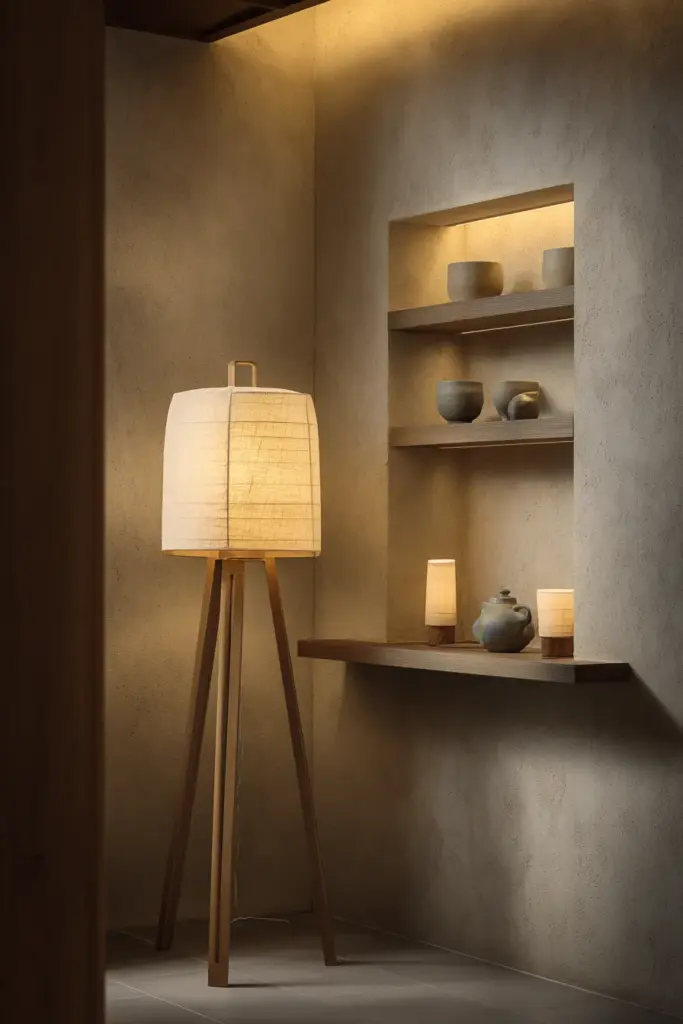
Add a floor lamp with a linen shade in your reading corner. Choose one with a slender wooden tripod base that echoes your furniture’s natural tones. The warm, filtered light creates intimate zones within your open-plan space.
Place small ceramic table lamps on floating shelves. Their sculptural forms become decor when unlit, functional art when glowing. Avoid cool-white bulbs—stick to 2700K-3000K for that signature Japandi warmth.
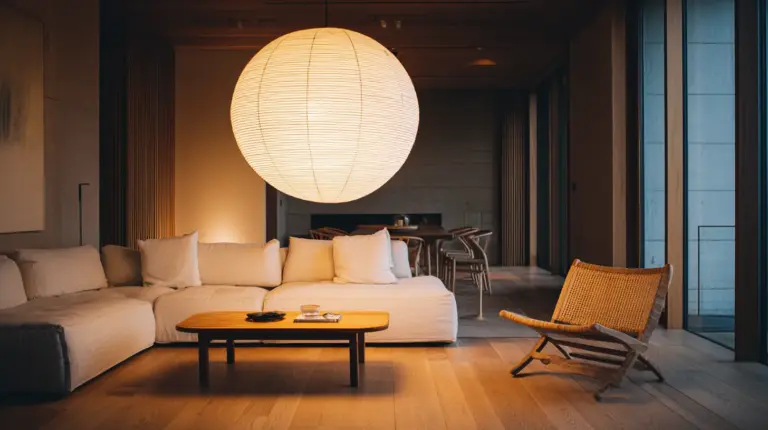
Consider paper pendant lights inspired by Japanese lanterns. A rice-paper sphere diffuses light beautifully while adding organic texture overhead without visual bulk.
Textured Textiles That Invite Touch
Japandi spaces come alive through layered textures. In small living rooms, this layering adds richness without clutter.
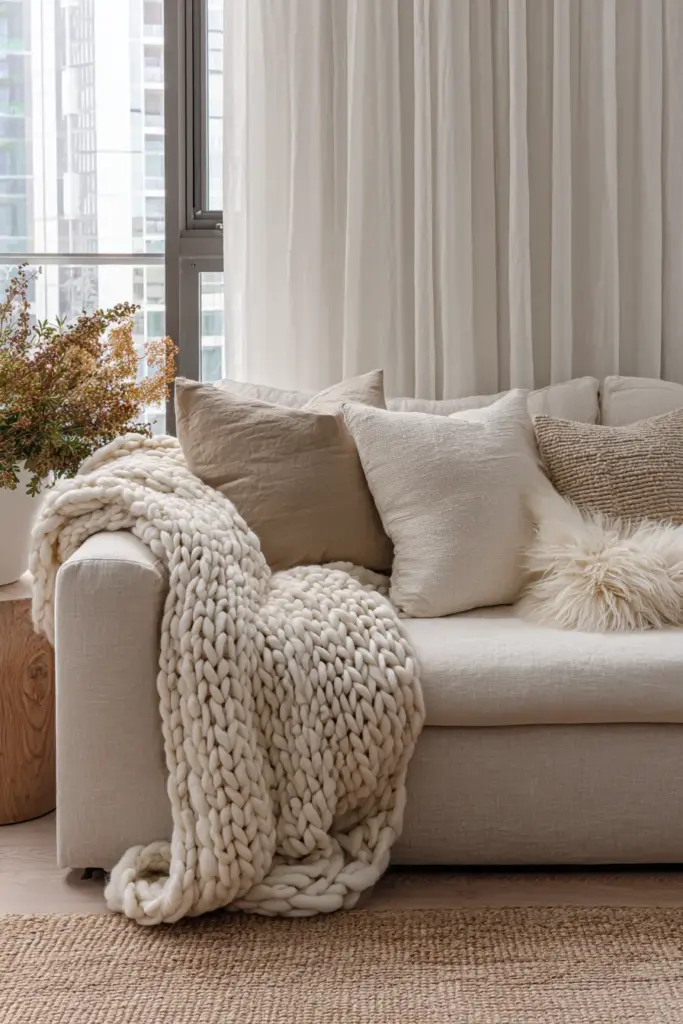
Drape a chunky knit throw in oatmeal linen over your sofa’s arm. Its weight and weave contrast beautifully against smooth upholstery. Add cushions in varied natural fabrics—a Belgian linen, a coarse cotton, perhaps one in textured wool.
Your area rug anchors the room. Choose a flat-weave jute or sisal in natural tones, approximately 180x240cm for most small living rooms. Its subtle texture grounds furniture while remaining visually quiet. For added softness underfoot, layer a smaller sheepskin or cotton rug over one corner.
Curtains should be sheer linen in ivory, filtering tropical sunlight into gentle diffusion. Mount them high and wide to create the illusion of larger windows and taller walls.
Strategic Greenery for Life and Air
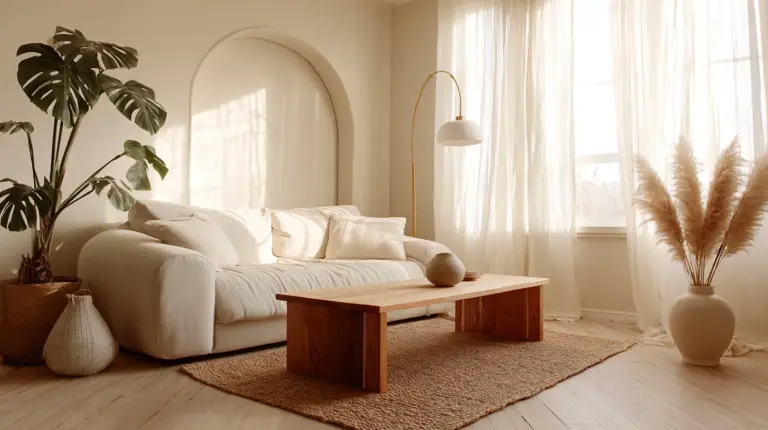
Plants are non-negotiable in Japandi design. They bring living beauty into curated spaces, softening hard edges with organic movement.
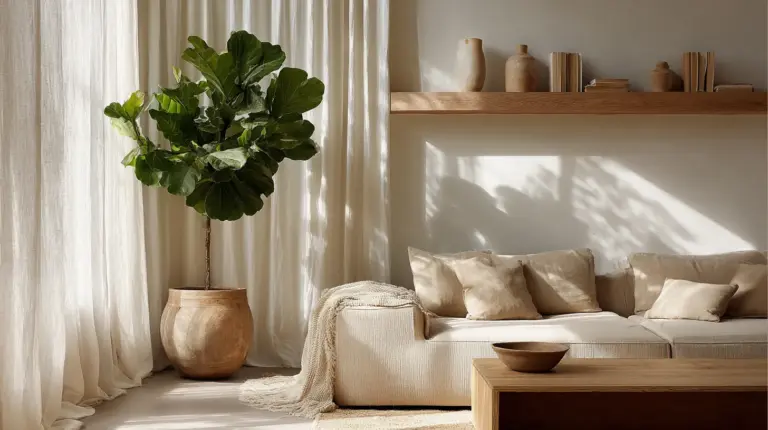
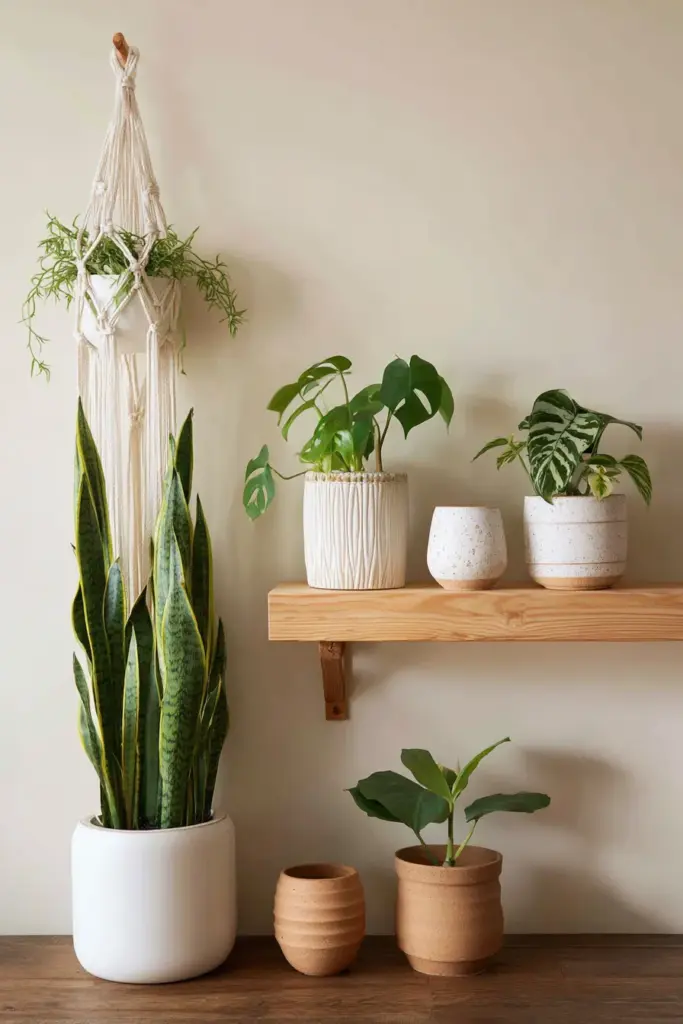
In small living rooms, go vertical. A tall snake plant in a ceramic planter occupies minimal floor space while adding height. A hanging pothos in a minimalist macramé holder draws eyes upward without consuming surfaces.
Group three plants in varying heights on a floating shelf—perhaps a small monstera, a peace lily, and cascading ivy. Their shapes create visual rhythm against neutral walls.
Choose planters in matte white, natural terracotta, or charcoal ceramic. Avoid patterns. The plants themselves provide all the organic detail you need.
Sustainable and Organic Material Choices
Japandi philosophy embraces environmental consciousness. Your material choices should reflect respect for nature.
Opt for FSC-certified oak or local hardwoods over particle board. A sustainably-sourced coffee table might cost ₱8,000-₱12,000 more, but it lasts decades and ages beautifully—core wabi-sabi principles.
Bamboo offers excellent sustainability metrics: it sequesters 35% more CO₂ than hardwoods and matures in 3-5 years versus 20+ for oak. Philippine bamboo furniture makers create Japandi-aligned pieces at competitive prices.
Choose organic cotton, linen, or wool for textiles. These breathe better in humid climates, resist mold, and decompose naturally. A linen sofa might require more maintenance, but it embodies the imperfect, lived-in quality Japandi celebrates.
How to Create a Small Japandi Living Room on a Budget
Start with Strategic Foundation Pieces
You don’t need to replace everything. Begin with one excellent sofa in neutral fabric—this is your non-negotiable investment, around ₱25,000-₱40,000 for quality.
Everything else can be sourced affordably. Local markets in areas like Naic or Pampanga offer beautiful rattan pieces for a fraction of imported costs. A handwoven side table might be ₱2,500. A bamboo magazine rack, ₱800.
DIY and Upcycle with Intention
Transform existing furniture through simple updates. That old teak side table? Sand it lightly and apply an ash-toned wood stain (₱350 per can) for instant Scandinavian appeal.
Paint dated frames in matte white or soft gray. Swap colorful cushion covers for neutral linen (₱400-₱600 per cover from online Philippine shops). Suddenly, your existing pieces align with Japandi aesthetics for under ₱5,000 total.
Create your own floating shelves from reclaimed wood planks. Three 90cm shelves with minimalist brackets cost around ₱2,000 in materials—a fraction of retail prices.
IKEA Hacks for Japandi Style
IKEA’s Scandinavian DNA aligns perfectly with Japandi. The KALLAX unit (₱2,999) becomes elegant storage when you add woven baskets. The LACK coffee table (₱695) transforms with wooden furniture legs (₱800 for four) replacing the standard ones.
The FEJKA artificial plants (₱129-₱399) work beautifully if budget constrains real plant care. Pair them with terracotta planters for authentic texture.
Total budget for a small Japandi living room using IKEA foundations plus local finds: ₱18,000-₱25,000, excluding major sofa investment.
Focus on Free Changes First
Rearrange for better flow. Push your sofa away from walls—even 30cm creates breathing room. Declutter ruthlessly. Remove decorative items that don’t serve beauty or function.
Maximize natural light by removing heavy curtains. Clean windows thoroughly. These zero-cost changes immediately shift your space toward Japandi’s airy aesthetic.
Addressing Small-Space Challenges
Creating Zones Without Walls
In open-plan small living rooms, define areas through furniture placement and rugs. Position your sofa to float in the space rather than hugging walls, creating an implied “room” for lounging.
Use a low bookshelf (max 120cm high) as a subtle divider between living and dining areas. It maintains sightlines while establishing boundaries.
Your area rug acts as a visual anchor, defining the living zone without physical barriers. Keep it proportional—too small makes spaces feel disjointed.
Dealing with Low Ceilings
Philippine homes often feature 2.4m ceilings. Combat the cave feeling through vertical emphasis.
Mount curtains at ceiling height, even if windows sit lower. The unbroken vertical lines elongate walls. Choose floor lamps with tall, slender profiles.
Paint ceilings in white with higher sheen than walls—this reflects light upward, creating depth. Install the LED cove lighting mentioned earlier for upward illumination that lifts the entire space.
Managing Humidity and Mold
Tropical climates require material adaptation. Choose mold-resistant fabrics for cushions—outdoor-grade Sunbrella in neutral tones offers durability with Japandi aesthetics.
Ensure adequate ventilation. Position furniture away from exterior walls where moisture accumulates. Rattan and bamboo naturally resist mold better than solid wood, making them ideal for Philippine Japandi spaces.
Apply mold-resistant paint on walls. Consider a dehumidifier disguised in a rattan basket—functional and on-brand.
Maximizing Natural Light
Light makes small rooms feel expansive. Position mirrors opposite windows to bounce daylight throughout. A large round mirror (90cm diameter) in natural wood frame doubles light while serving as sculptural art.
Keep window treatments minimal. Sheer linen panels filter harsh afternoon sun without blocking precious daylight.
Avoid dark furniture near windows—it absorbs light. Instead, use light oak or bamboo pieces that reflect and glow in natural illumination.
Small Japandi Living Room Checklist
Before you begin your transformation, ensure you’ve considered:
- Color palette: Neutrals selected (beiges, warm grays, whites) with natural wood accents
- Furniture scale: Low-profile pieces chosen (sofa under 80cm high, coffee table under 45cm)
- Storage solutions: Hidden storage identified (ottomans, lift-top tables, floating shelves)
- Lighting layers: Three types planned (ambient cove, task floor lamp, accent table lamps)
- Textile variety: At least three different natural textures sourced (linen, cotton, jute)
- Greenery strategy: Plant locations chosen with vertical options prioritized
- Sustainability check: Materials verified for eco-credentials and local sourcing
- Budget breakdown: Costs allocated across priorities (sofa investment, affordable accents)
- Climate adaptation: Mold-resistant fabrics and ventilation planned for humidity
- Declutter plan: Non-essential items removed before new additions
The Soul of Your Small Japandi Space
Creating a small Japandi living room isn’t about following rules rigidly. It’s about understanding principles, then applying them to your unique life.
Maybe your version includes a vibrant painting from a local artist—not strictly Japandi, but yours, hung above a minimal console where it sings against neutral walls. Perhaps you keep your grandmother’s carved wooden chair, its patina and history embodying wabi-sabi perfectly.
The beauty of this design philosophy is its embrace of imperfection and authenticity. Your small space doesn’t need to replicate a magazine spread. It needs to hold your life gently, offering calm when you’re overwhelmed, warmth when you’re tired, and beauty because you deserve it.
Start small. Choose one corner. Add a plant, a linen cushion, a wooden tray. Feel how these simple changes shift the energy. Then expand, slowly, thoughtfully.
Your small Japandi living room is waiting—not as an destination, but as an ongoing practice of intentional living.
Frequently Asked Questions
What is the difference between Japandi and minimalist style?
While minimalism often feels stark and cold, Japandi adds warmth through natural materials and textures. Minimalism says u0022less is moreu0022—Japandi says u0022less, but better, and cozy.u0022 You’ll find more wood tones, softer textiles, and organic imperfections in Japandi spaces compared to the sometimes-austere minimalist approach.
Can Japandi work in very small apartments (under 50 sqm)?
Absolutely—Japandi might be ideal for tiny spaces. The low furniture profile, neutral palette, and focus on multifunctional pieces prevent visual overcrowding. The key is discipline: every item must earn its place through beauty and function. A 40 sqm studio can feel spacious with proper Japandi principles applied.
How do I incorporate Japandi style if I rent and can’t paint walls?
Focus on removable elements: neutral-toned furniture, natural wood accessories, linen textiles, and strategic lighting. Large woven wall hangings, peel-and-stick wallpaper in subtle patterns, and area rugs can transform rented spaces without permanent changes. Your furniture and decor create the Japandi atmosphere more than wall color alone.
What’s the best flooring for small Japandi living rooms?
Light wood flooring—blonde oak, ash, or bamboo—works beautifully by reflecting light and creating visual continuity. If changing floors isn’t possible, large jute or sisal area rugs in natural tones can cover existing flooring while adding Japandi texture. Avoid dark floors in small spaces as they absorb light and make rooms feel smaller.
How many plants are too many for a small Japandi living room?
Quality over quantity applies here. Three to five well-placed plants create life without clutter. Choose varying heights and group them intentionally—perhaps two tall floor plants and three smaller shelf plants. Avoid covering every surface. Remember, Japandi celebrates negative space as much as the objects within it.