
Table of Contents
There’s something deeply calming about running your hand across linen that’s been washed a hundred times. The way it catches afternoon light. The soft give beneath your fingertips.
This is the heart of Japandi textiles—fabrics that feel like they’ve always belonged in your home. Where Scandinavian hygge meets Japanese wabi-sabi, textiles become more than decoration. They become the breath of a room.
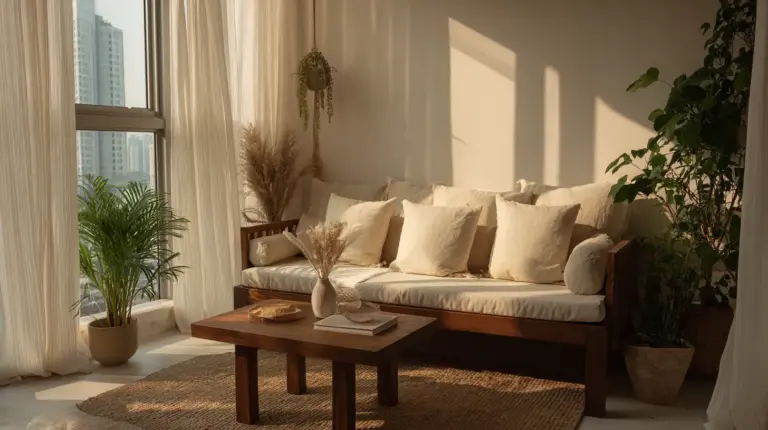
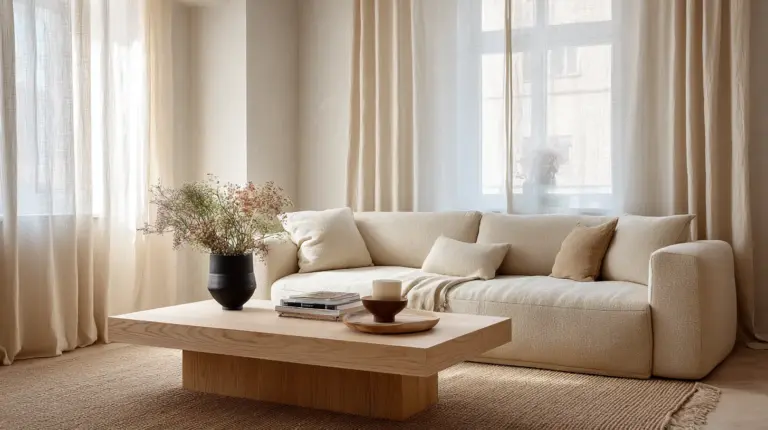
In your living room, textiles set the emotional temperature. They soften hard edges, absorb sound, and invite you to stay. The right fabrics don’t shout—they whisper stories of slow mornings and quiet evenings.
Let’s explore how to bring this textile philosophy into your space, especially here in the Philippines where humidity, light, and warmth shape our daily lives.
Understanding Japandi Textile Philosophy
Japandi textiles honor imperfection and purpose in equal measure. Each fabric serves a function while feeding the soul.
The philosophy draws from two rich traditions. Scandinavian design celebrates hygge—that untranslatable coziness that makes you want to curl up with tea. Japanese wabi-sabi finds beauty in natural wear, in the way linen wrinkles or wool softens over time. Together, they create textiles that age gracefully rather than simply aging.
Think of Japandi fabrics as the quiet guests at a dinner party. They don’t demand attention, but their absence would be deeply felt. Matte finishes replace shine. Organic textures replace patterns. Neutrality replaces noise.
The Core Textile Principles
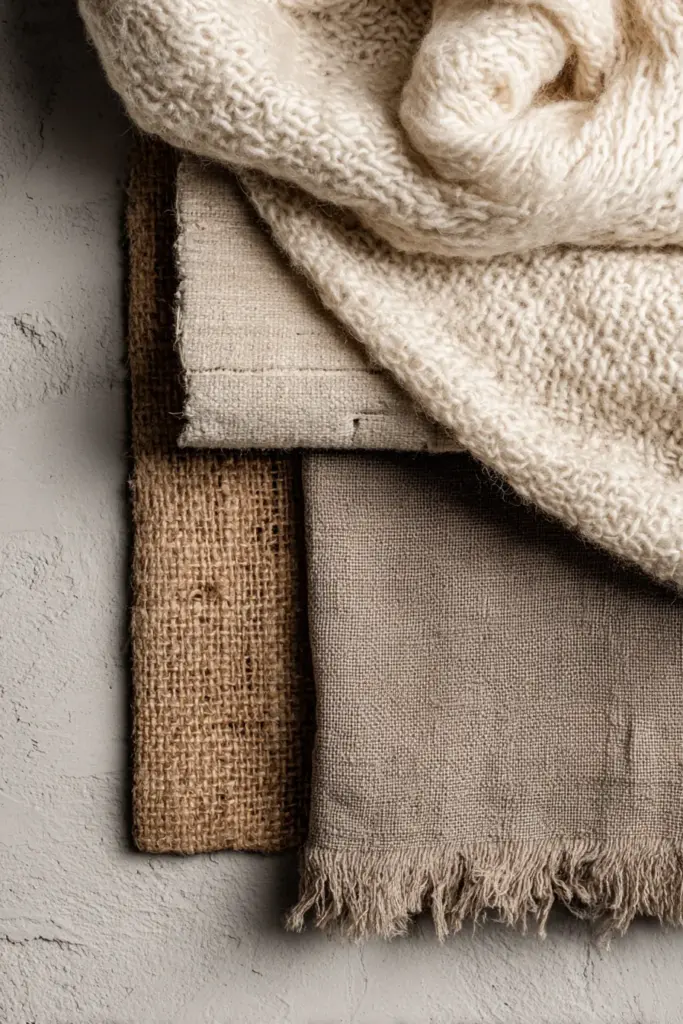
Natural fibers form the foundation. Linen breathes in tropical heat. Wool adds warmth without weight. Cotton offers everyday softness. These materials connect your home to earth, to hands that wove them, to fields where they grew.
Texture provides visual interest without pattern. A chunky knit throw draped over smooth linen upholstery. Flatwoven jute beneath a velvet cushion. The interplay of rough and refined creates depth that solid colors alone cannot achieve.
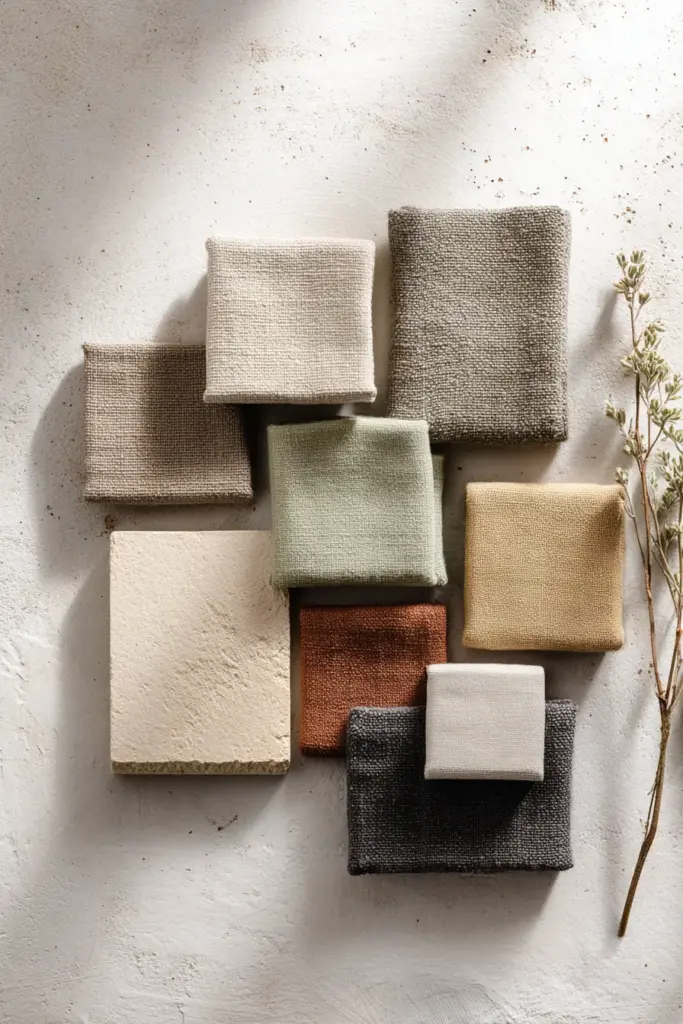
Color restraint lets materials speak. Japandi textiles embrace greige (that perfect gray-beige), warm taupe, sage green, soft charcoal, and creamy off-white. These tones adapt to changing light throughout the day, never competing with the life happening within your space.
Best Fabrics for Japandi Living Rooms
Choosing the right textiles means understanding how they’ll live in your home—not just how they look on day one.
Linen: The Foundation Fabric
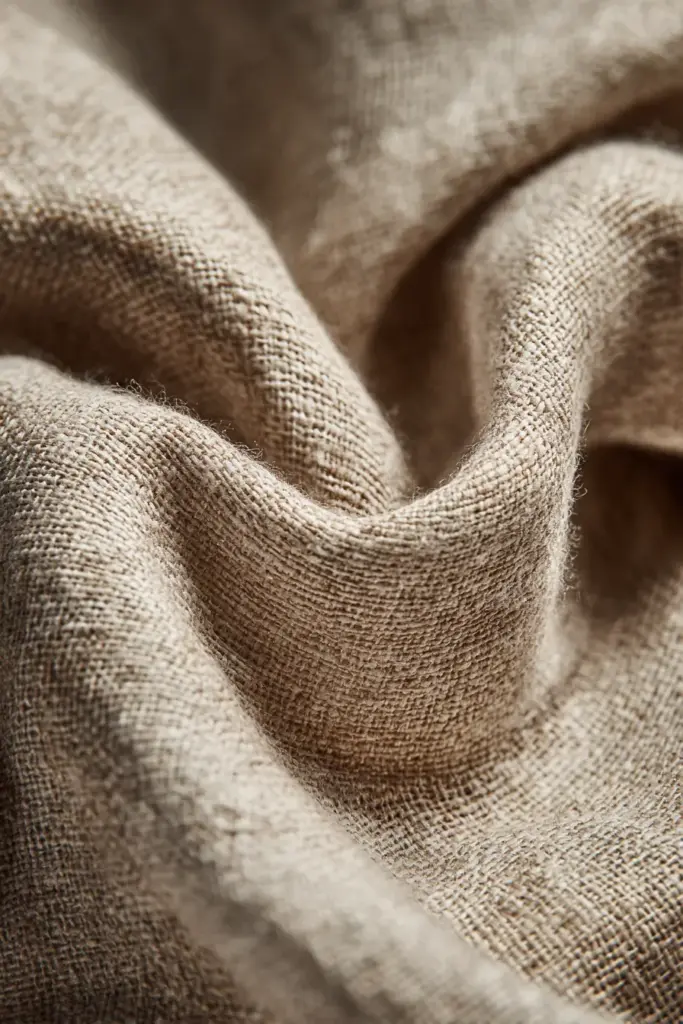
Linen is Japandi’s textile soul. It wrinkles beautifully, softens with each wash, and breathes better than almost any fabric in humid climates. For Philippine homes, this breathability isn’t luxury—it’s necessity.
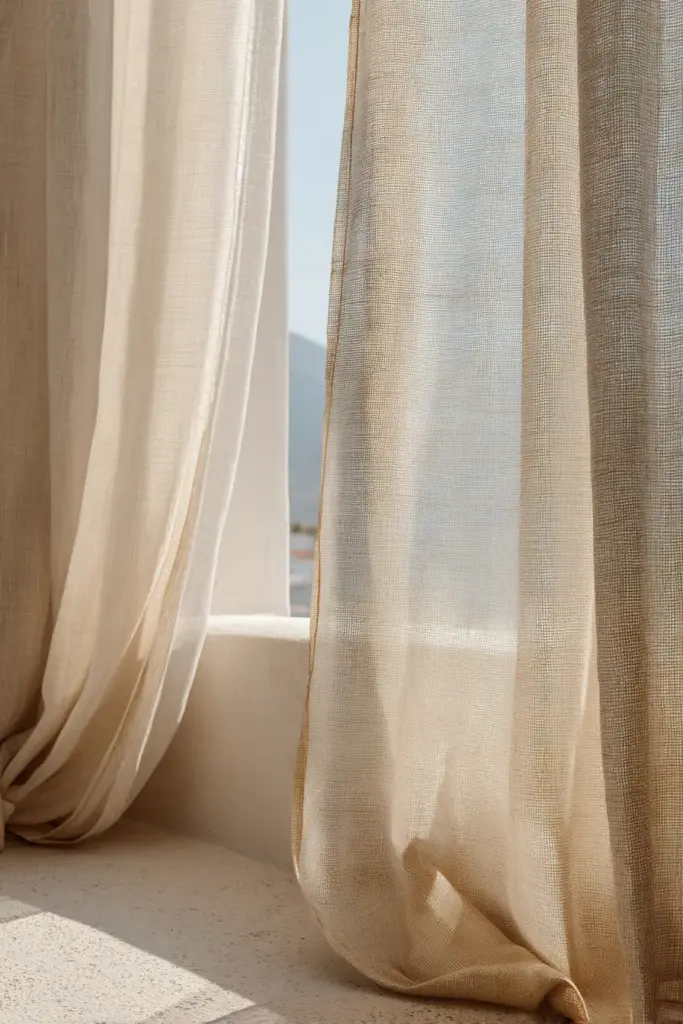
Use heavyweight linen for curtains that filter harsh afternoon sun into golden diffusion. Mid-weight linen works perfectly for slipcovers that you can throw in the wash when life gets messy. Light linen makes throw pillows that stay cool against your skin even in March heat.
The wrinkles that some people fight? In Japandi design, they’re proof of a life well-lived. Each crease tells a story of use, of comfort, of home.
Wool: Warmth Without Weight
Wool brings textural richness and natural durability. Look for flatwoven wool rugs in ivory or warm gray—they ground a space without overwhelming it. Merino wool throws add softness without the itch of traditional wool.
In tropical climates, wool might seem counterintuitive. But lightweight wool blends offer surprising breathability while adding visual warmth during rainy season evenings when air conditioning runs cold.
Wool also ages beautifully. It develops a soft patina over years, fitting perfectly into the wabi-sabi appreciation of natural wear.
Cotton: The Daily Workhorse
Organic cotton handles daily life with grace. It’s washable, affordable, and endlessly versatile. Use cotton canvas for sturdy cushion covers that withstand children and pets. Choose brushed cotton for throws that beg to be touched.
For Philippine homes, cotton’s moisture-wicking properties help in humid months. It dries quickly, resists mildew better than many natural fibers, and maintains freshness with proper care.
Heavyweight cotton duck cloth works wonderfully for ottoman upholstery—substantial enough to last but simple enough to replace affordably when you’re ready for change.
Jute and Abaca: Grounding Natural Fibers
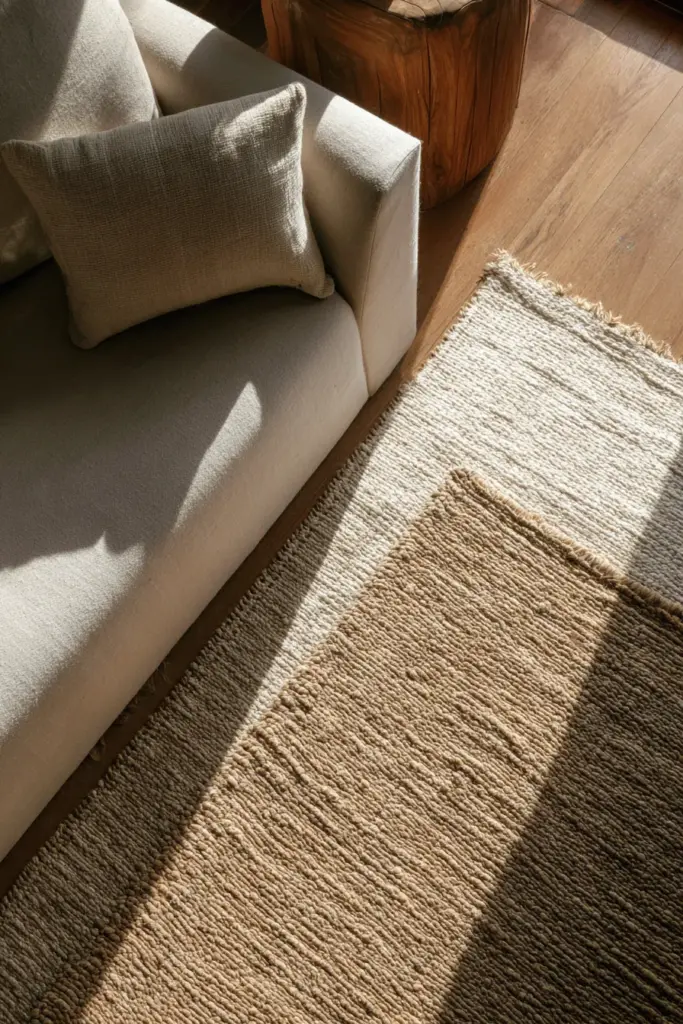
Jute rugs bring earthy texture underfoot. Their natural variations in color and weave add organic interest that machine-made perfection cannot replicate. Layer a smaller wool rug over jute for added dimension and comfort in seating areas.
For Filipino homes, consider abaca (Manila hemp)—a locally-sourced fiber that thrives in tropical humidity. Abaca blends offer the same natural aesthetic as jute but with better moisture resistance and local sustainability. Supporting Calabarzon eco-fabric suppliers connects your design choices to community craft.
These fibers age honestly. They may shed initially, develop uneven wear patterns, and show their origins—all characteristics that Japandi philosophy celebrates rather than hides.
Velvet: The Unexpected Accent
Matte velvet adds subtle luxury without pretension. Choose it sparingly—a single accent chair, a few cushions—in colors like dusty sage, warm clay, or deep charcoal.
Avoid high-sheen velvets that read too formal. Look for cotton or linen-blend velvets with a more casual hand. They catch light softly, adding depth to neutral rooms without disrupting the calm.
In humid climates, velvet requires care. Place it in air-conditioned spaces or use removable covers that can air out regularly to prevent moisture buildup.
Japandi Textile Color Palette
Color in Japandi textiles mimics nature’s subtle shifts—dawn sky, weathered stone, forest moss after rain.
The foundation lives in neutrals that change throughout the day. Greige adapts from cool morning gray to warm afternoon beige. Cream reflects golden hour light differently than harsh noon sun. These colors create a neutral backdrop that never feels boring because they’re constantly shifting.
Accent colors come from earth—sage green like new tea leaves, terracotta like clay pots, charcoal like volcanic sand, warm taupe like tree bark. Use these sparingly. A sage green throw pillow. Terracotta rug corner. Charcoal curtain edge.
Color Combinations That Work
| Base Color | Accent 1 | Accent 2 | Best Use |
|---|---|---|---|
| Greige linen sofa | Sage wool throw | Charcoal cotton pillows | Main seating area |
| Ivory jute rug | Warm taupe velvet cushion | Clay linen curtains | Full room foundation |
| Off-white cotton curtains | Moss green linen pillow | Natural wood tones | Window treatments |
| Beige wool rug | Cream cotton throw | Black accents (minimal) | Layered flooring |
For Philippine homes with intense tropical light, slightly warmer neutrals prevent spaces from feeling cold under bright sun. Choose cream over stark white, warm gray over cool gray, honey beige over pure beige.
Mixing Textures in Japandi Style
Texture layering creates visual interest in spaces that avoid pattern. This is where Japandi design becomes tactile poetry.
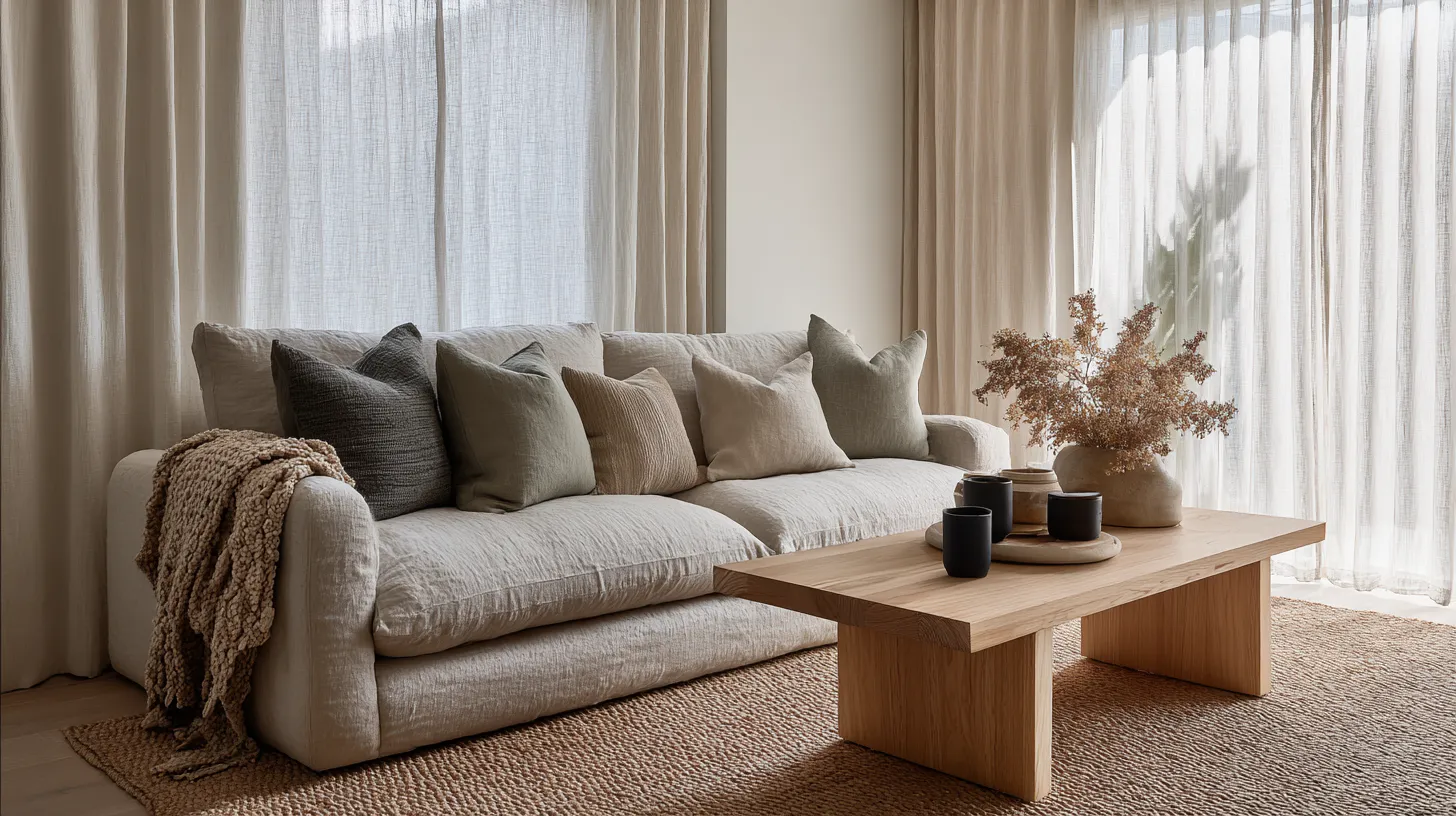
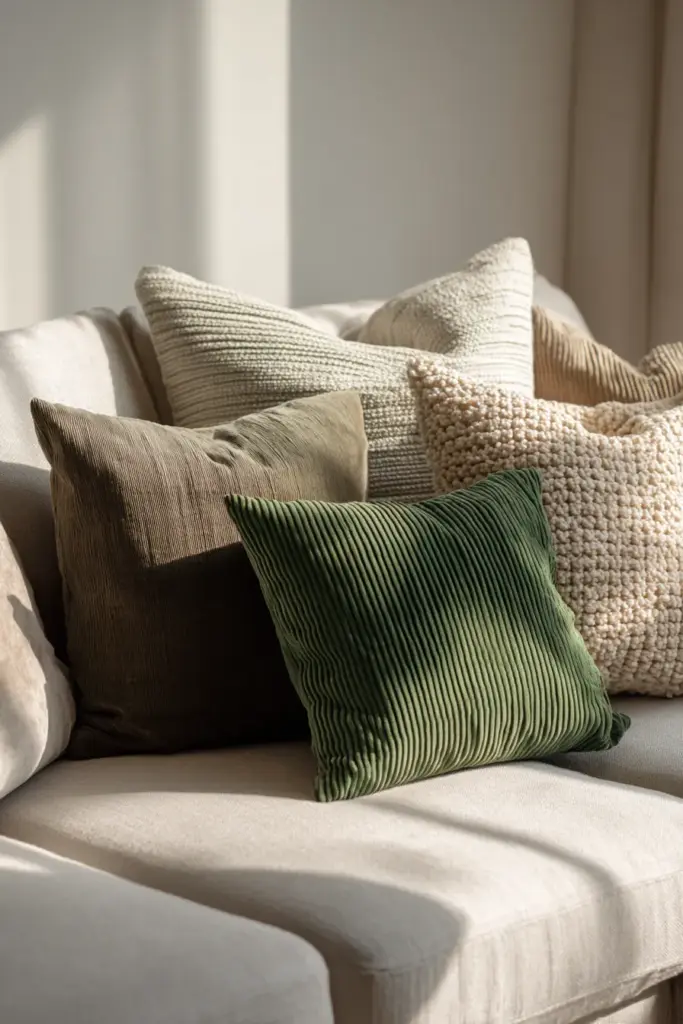
Start with your largest textile—usually upholstery. A smooth linen sofa provides a clean backdrop. Layer a chunky knit throw over one arm. Add cushions in varied textures: one in ribbed cotton, another in nubby wool, a third in soft velvet.
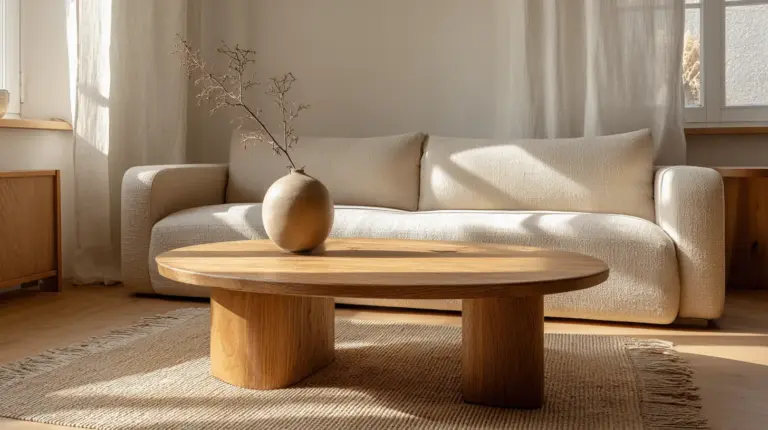
On the floor, place a flatwoven jute rug as foundation. Layer a smaller sheepskin or high-pile wool rug in the seating area. This creates zones while adding dimensional comfort underfoot.
The Rule of Three Textures
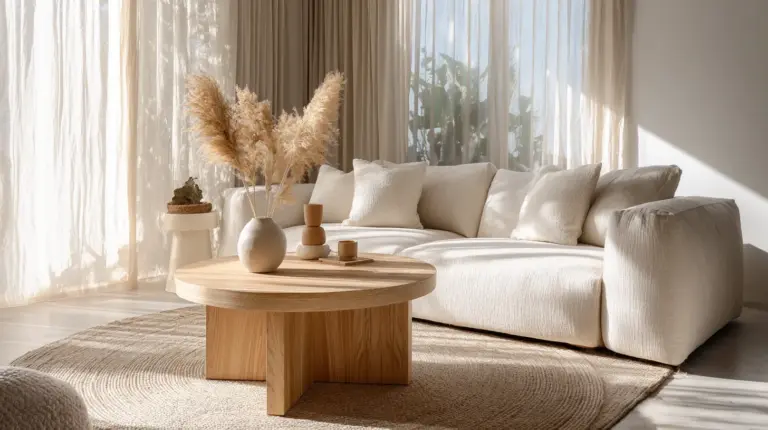
In any vignette, aim for three distinct textures. On a sofa: smooth linen upholstery, a waffle-weave cotton throw, and a chunky knit pillow. At a window: sheer linen panels, heavier cotton blackout layer, and a woven bamboo shade.
Three textures create richness. More than three risks visual chaos. Fewer than three feels flat.
Balance rough with smooth, matte with subtle sheen, tight weave with loose. A rough jute rug balances smooth leather. Matte linen curtains balance subtle velvet sheen.
Sustainable and Eco-Friendly Textile Choices
Japandi design inherently values sustainability—buying less, choosing better, keeping longer.
Prioritize natural fibers from responsible sources. Look for organic cotton certifications, linen from European flax, wool from ethical farms. These materials biodegrade, unlike synthetic fabrics that shed microplastics with each wash.
In the Philippines, support local sustainable textile makers. Abaca from Mindanao, piña from Aklan, cotton from local weavers. These choices reduce shipping impact while preserving traditional crafts.
Budget-Friendly Sustainable Options
Sustainability doesn’t require luxury budgets. Visit thrift stores and upcycle quality textiles. That dated linen curtain can be dyed greige. Old wool blankets become cushion covers. Cotton bedsheets transform into pillow cases.
For DIY dyeing, use natural materials: tea for beige, avocado pits for dusty pink, onion skins for warm gold. These processes create subtle color variations that align perfectly with wabi-sabi appreciation of imperfection.
Calculate costs realistically:
₱5,000 Budget Refresh:
- Thrifted linen curtains (₱800) + natural dye kit (₱200)
- Two jute cushion covers (₱600)
- Cotton throw from local market (₱1,200)
- Small jute rug (₱2,200)
₱20,000 Investment Setup:
- Quality linen sofa slipcover (₱8,000)
- Large flatwoven wool rug (₱7,000)
- Set of 6 mixed-texture cushions (₱3,000)
- Organic cotton curtain panels (₱2,000)
Caring for Japandi Textiles in Tropical Climates
Philippine humidity demands special textile care. Proper maintenance extends life and prevents mildew—both sustainable practices.
Air circulation prevents moisture buildup. Rotate cushions weekly so all sides dry evenly. Remove throws from sofas between uses. Open curtains daily to let air flow through fabric folds.
Wash natural fiber textiles in cool water with mild, plant-based detergent. Hot water can shrink linen and wool. Harsh chemicals break down natural fibers faster. Line dry in shade—direct tropical sun can fade even neutral colors over time.
Seasonal Textile Rotation
Consider rotating textiles seasonally even in tropical climates. During intense heat months (March-May), use only lightest-weight linens and cottons. Store heavier wool throws to prevent attracting moisture.
During rainy season (June-November), add wool throws back in for air-conditioned evenings. The key isn’t warmth but creating cozy atmosphere when skies are gray.
Store off-season textiles in breathable cotton bags with cedar blocks or dried lavender to prevent insects. Never plastic bags—they trap moisture and encourage mildew.
Japandi Textile Shopping Guide for Philippine Homes
Finding quality Japandi textiles in the Philippines requires knowing where to look and what to ask.
Local Sources
Check Manila Home Textile Center for wholesale linen and cotton. While aesthetics skew traditional, natural fiber quality often matches imported goods at better prices. Ask for unbleached, undyed fabrics you can customize.
Visit Naic and other Calabarzon areas for local abaca and natural fiber weavers. These artisans create custom pieces that support traditional crafts while perfectly suiting tropical climates.
Online Philippine sellers increasingly stock Japandi-appropriate textiles. Search terms: “natural linen Philippines,” “organic cotton throw,” “jute rug Manila.” Read reviews carefully for quality consistency.
International Options
IKEA offers affordable Japandi-aligned textiles in neutral colors and natural materials. Their linen curtains and cotton throws provide excellent value for foundational pieces.
For investment pieces, consider international shops that ship to Philippines: Muji for minimalist cotton, Zara Home during neutral-focused collections, H&M Home for budget-friendly natural fiber options.
Calculate total cost including shipping and customs. Sometimes “expensive” local options cost less than “cheap” international options after fees.
10-Step Japandi Textile Refresh Under ₱10,000
Transform your living room with this prioritized approach:
- Step 1: Remove all patterned textiles. Store or donate anything that doesn’t align with neutral Japandi palette. (Free)
- Step 2: Wash or dry-clean remaining neutral textiles to refresh and assess their condition. (₱500)
- Step 3: Invest in one quality foundation piece—either sofa slipcover or large rug in natural fiber. (₱5,000-₱6,000)
- Step 4: Add jute rug if you chose slipcover, or slipcover if you chose rug. Alternatively, get smaller rug to layer. (₱2,000-₱3,000)
- Step 5: Select three cushions in varied textures (wool, linen, cotton) in coordinating neutral tones. (₱1,500)
- Step 6: Choose one high-quality throw in contrasting texture to your sofa. Chunky knit if sofa is smooth, smooth if sofa is textured. (₱1,200)
- Step 7: Update curtains with simple linen or cotton panels in greige or cream. (₱1,800)
- Step 8: Add small textural elements: jute basket for throw storage, wool trivet on coffee table. (₱600)
- Step 9: Layer your textiles—throw over sofa arm, cushions in varied arrangements, rug layers if you have them. (Free)
- Step 10: Edit down. Remove one textile item if space feels crowded. Japandi celebrates restraint. (Free)
Total: ₱9,600-₱9,800
Textile Comparison: Making Smart Choices
Understanding textile properties helps you choose fabrics that match your lifestyle and climate needs.
| Material | Cost per Meter (₱) | Durability Rating | Humidity Resistance | Sustainability Score | Best Use |
|---|---|---|---|---|---|
| Linen | 450-800 | 8/10 | Excellent | 9/10 | Curtains, cushions, slipcovers |
| Organic Cotton | 250-500 | 7/10 | Very Good | 8/10 | Throws, everyday cushions |
| Wool | 600-1200 | 9/10 | Good | 8/10 | Throws, rugs, accent pillows |
| Jute | 180-350 | 6/10 | Fair | 9/10 | Rugs, basket weaving |
| Abaca | 300-550 | 8/10 | Excellent | 10/10 | Rugs, wallcoverings, cushions |
| Cotton Velvet | 400-700 | 6/10 | Fair | 6/10 | Accent pillows, chairs |
Durability Rating: Resistance to wear, pilling, and fading over 3-5 years of daily use.
Humidity Resistance: Performance in 70-90% humidity without mildew or deterioration.
Sustainability Score: Considers renewability, production impact, biodegradability, and local sourcing potential.
For Philippine homes, prioritize materials scoring “Good” or higher in humidity resistance. Linen, organic cotton, and abaca offer best performance in tropical climates while maintaining Japandi aesthetic principles.
Creating Cohesive Textile Stories
Think of your living room textiles as characters in a story. They should relate to each other without being identical twins.
Choose a lead textile—perhaps your sofa upholstery. This sets the tone. If it’s smooth linen in greige, your supporting textiles should vary in texture (not smoothness) while harmonizing in color temperature (warm neutrals if greige leans beige, cool if it leans gray).
Connect textiles through repeated elements. If your curtains are linen, echo that material in a cushion. If your rug is jute, add a jute basket. These repetitions create visual rhythm without matching sets.
Leave breathing room between textiles. Not every surface needs softening. A wooden coffee table can stand bare. A wall doesn’t need a hanging. Empty space gives textiles room to speak.
Key Takeaways: Japandi Living Room Textiles
- Prioritize natural fibers: Linen, wool, cotton, jute, and abaca offer breathability, sustainability, and aging grace
- Embrace neutral earth tones: Greige, cream, sage, taupe, and charcoal adapt to changing light
- Layer three textures: Balance rough with smooth, matte with subtle sheen, tight weave with loose
- Choose humidity-resistant materials: Linen and abaca excel in Philippine tropical climates
- Buy quality over quantity: One excellent piece outperforms three mediocre ones
- Care naturally: Cool water, mild detergent, air circulation, and rotation extend textile life
- Support local sustainability: Calabarzon weavers, natural dyes, and upcycled materials reduce impact
- Honor wabi-sabi: Wrinkles, uneven wear, and natural variations add character, not flaws
- Edit ruthlessly: Remove textiles that don’t serve function or feed soul
- Rotate seasonally: Adjust textile weight for humidity levels and air conditioning use
Bringing It Home
Your living room textiles are more than decoration. They’re the soft places you land after long days. The warmth that greets guests. The textures that invite touch.
Japandi textile philosophy asks us to choose carefully and keep gratefully. To value the linen curtain that’s been washed fifty times over the one that’s only been admired. To see beauty in the throw pillow that’s slightly faded where afternoon sun hits.
There’s no rush to perfect your space. Add one textile at a time. Live with it. Notice how light changes it throughout the day. Feel how it ages over months. Let each piece earn its place through use rather than just appearance.
Your hands will guide you. Touch everything before you buy. Close your eyes and feel the weave. Imagine it in your home, in your hands, in your daily life. The right textiles will feel like they’ve been waiting for you.
This is the Japandi way—slow, intentional, deeply felt. Your living room will become a refuge not because you rushed to fill it, but because you carefully, lovingly, brought it to life one textile at a time.
Frequently Asked Questions
What fabrics work best for Japandi living rooms?
Natural fibers form the foundation of Japandi textile design. Linen offers breathability and softens beautifully with age, making it ideal for curtains and upholstery in tropical climates. Organic cotton provides washable durability for everyday throws and cushions. Wool adds textural warmth through rugs and accent pillows. Jute and abaca ground spaces with earthy, flatwoven texture underfoot. Choose matte finishes over shiny fabrics, and prioritize materials that develop character through use rather than looking perpetually new.
How do I mix textures in Japandi textiles without creating visual chaos?
Follow the rule of three: combine three distinct textures in any area. Pair smooth linen upholstery with a chunky knit throw and nubby wool cushions. Balance rough jute rugs with smooth leather or cotton velvet accents. The key is varying texture while maintaining color harmony—all pieces should relate through neutral, earthy tones. Layer your textiles at different heights and depths: flatwoven rug as base, furniture upholstery at mid-level, throws and cushions on top. This creates dimensional interest without overwhelming the eye.
What colors should I choose for Japandi upholstery and curtains?
Earthy neutrals form Japandi’s color palette: greige (gray-beige blend), warm taupe, cream, off-white, and soft charcoal provide foundation colors. Add nature-inspired accents sparingly through sage green, clay terracotta, moss, or warm stone gray. For Philippine homes with intense tropical light, choose slightly warmer neutrals—cream over stark white, warm gray over cool gray—to prevent spaces from feeling cold. Avoid pure black and bright white; instead embrace the subtle shifts of dawn sky, weathered stone, and forest after rain.
Are Japandi textiles practical for humid Philippine climates?
Yes, when you choose wisely. Linen excels in humidity due to superior breathability and quick-drying properties. Organic cotton resists mildew better than synthetic blends. Locally-sourced abaca (Manila hemp) offers natural humidity resistance while supporting Filipino artisans. Avoid high-pile synthetic rugs and densely-woven synthetics that trap moisture. Maintain textiles through regular rotation, weekly airing, and ensuring good air circulation around all fabric surfaces. Consider seasonal rotation—lighter-weight textiles during intense heat months, adding wool throws during rainy season evenings when air conditioning creates cooler indoor temperatures.
How can I create a Japandi textile look on a limited budget?
Start by decluttering—remove patterned textiles and keep only neutrals, which immediately creates Japandi simplicity at zero cost. Shop thrift stores for quality linen curtains and wool blankets you can upcycle through natural dyeing (tea, onion skins, avocado pits create beautiful neutral tones for under ₱200). Visit local markets for cotton throws and jute rugs instead of expensive imports. Invest your budget in one quality foundation piece—either a linen sofa slipcover or natural fiber rug—that transforms the entire room. Add inexpensive texture through jute baskets, cotton pillowcases sewn from market fabric, and by repurposing what you already own in creative ways.