
Table of Contents
There’s something profoundly peaceful about a room that breathes. Not cluttered, not bare—just balanced. In the gentle fusion of Japanese minimalism and Scandinavian warmth, storage becomes more than utility. It becomes an art form that honors both the things you keep and the space around them.
Japandi living room storage isn’t about hiding everything away. It’s about curating what matters, displaying what brings joy, and concealing the rest with quiet elegance. Think handwoven baskets that catch afternoon light, low wooden cabinets with grain you can almost feel, and open shelving that frames your favorite ceramics like a gallery wall.
This is storage that doesn’t apologize for existing. It enhances. It grounds. It whispers rather than shouts.
Let’s explore how to bring this philosophy into your living room—with textures you’ll want to touch, solutions that actually work, and a beauty that deepens with time.
Understanding Japandi Storage Philosophy
Japandi storage starts with intention. Before you add a single shelf or basket, you ask: What do I truly need? What brings me peace?
This isn’t about minimalism for minimalism’s sake. It’s about creating breathing room for life to unfold naturally. Japanese ma (negative space) meets Scandinavian lagom (just the right amount). The result? Storage that serves without overwhelming, that feels purposeful yet soft.
Materials matter deeply here. You’ll reach for oak and walnut, rattan and bamboo, linen and wool. Natural fibers age beautifully, developing character marks that tell your home’s story. Avoid plastic storage bins and opt instead for seagrass baskets that smell faintly of summer or ceramic vessels cool to the touch.
The Multi-Functional Mindset
In Japandi spaces, furniture works double-duty with grace. An ottoman isn’t just seating—it’s hidden storage wrapped in oatmeal linen. A coffee table lifts to reveal compartments for throws and magazines. A bench beneath the window holds extra cushions while anchoring the room’s horizontal lines.
This approach honors both cultures’ roots in compact living. You maximize every square foot without the space feeling cramped or calculated.
Essential Japandi Storage Furniture Pieces
Low Wooden Cabinets and Sideboards
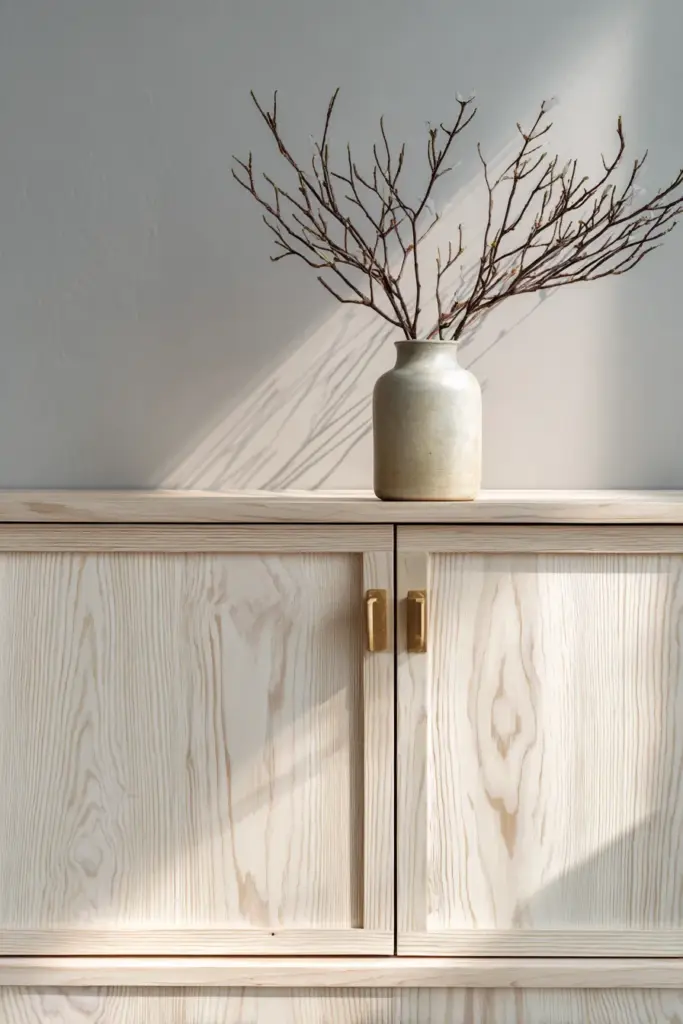
Picture a sideboard in light ash, sitting low to the ground with clean lines and subtle brass pulls. The wood grain runs like quiet rivers across its surface. Inside, you tuck away remotes, board games, photo albums—the everyday items that need a home but not a spotlight.
Look for pieces with sliding doors rather than swinging ones. They save space and add that distinctly Japanese sensibility. The movement itself becomes meditative—the soft shhhh of wood on wood.
Pair your sideboard with a ceramic vase holding three bare branches. Less becomes profoundly more.
Open Shelving Units
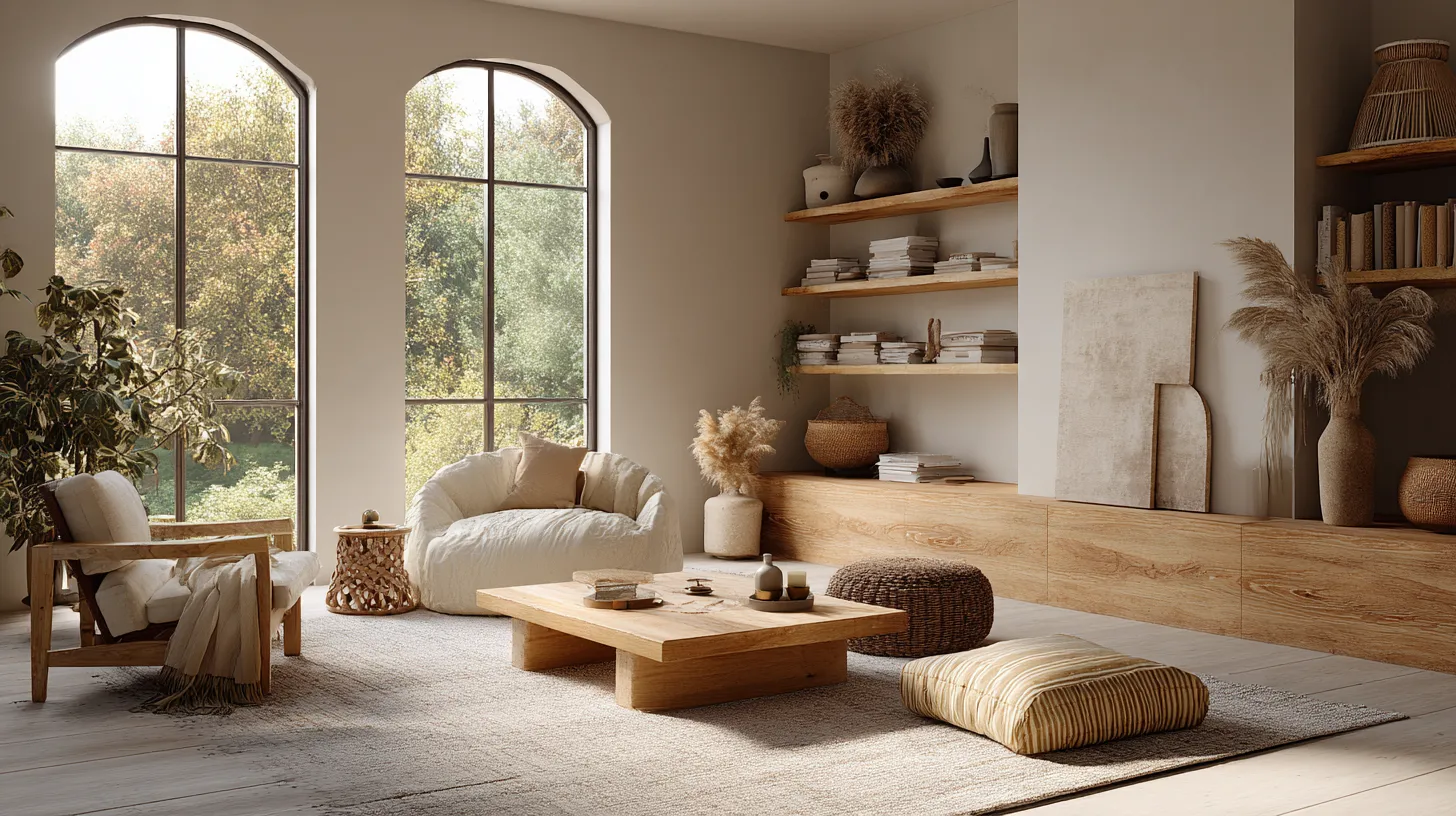
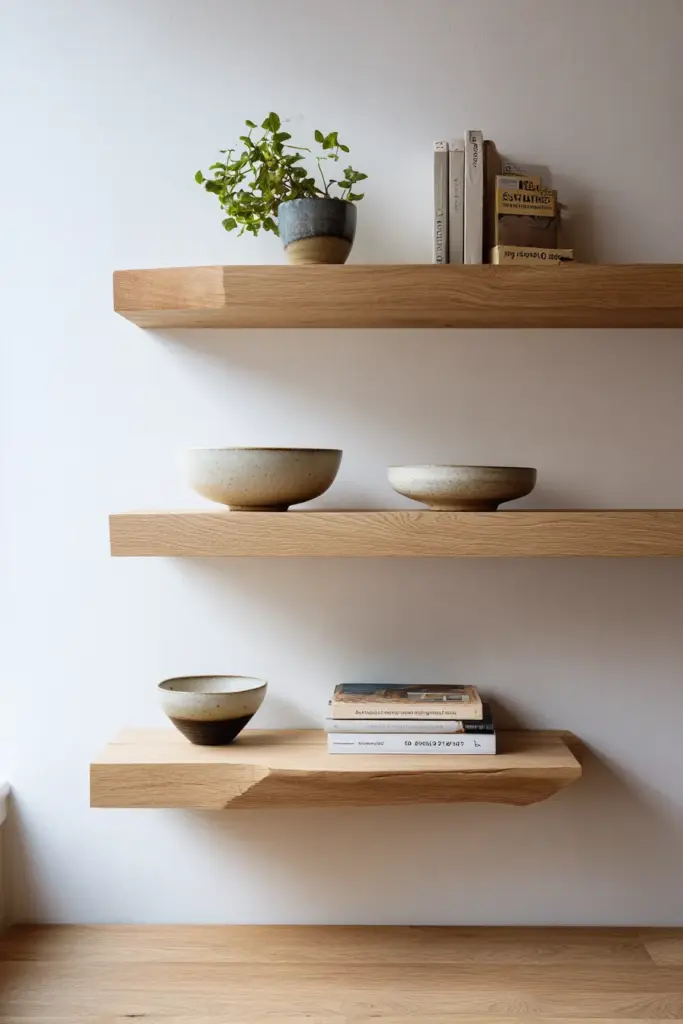
Floating shelves in warm oak create rhythm on your walls. Arrange them asymmetrically for visual interest while maintaining balance—three books here, a small plant there, a handmade bowl catching light beside it.
The key is restraint. Leave 40-50% of your shelving empty. This negative space lets each displayed object breathe and prevents that cluttered gift-shop feeling. Rotate items seasonally to keep your eye engaged and your space feeling fresh.
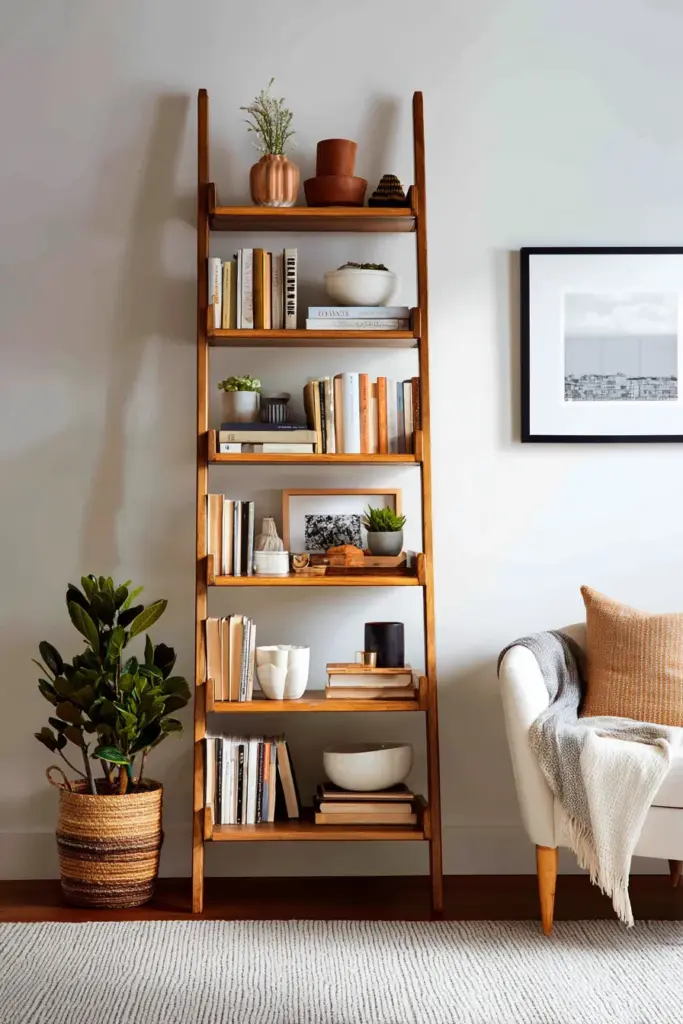
Consider ladder-style shelving units that lean against the wall with natural grace. They offer storage without the visual weight of traditional bookcases, and they’re renter-friendly—no wall anchors required.
Multifunctional Ottomans and Benches
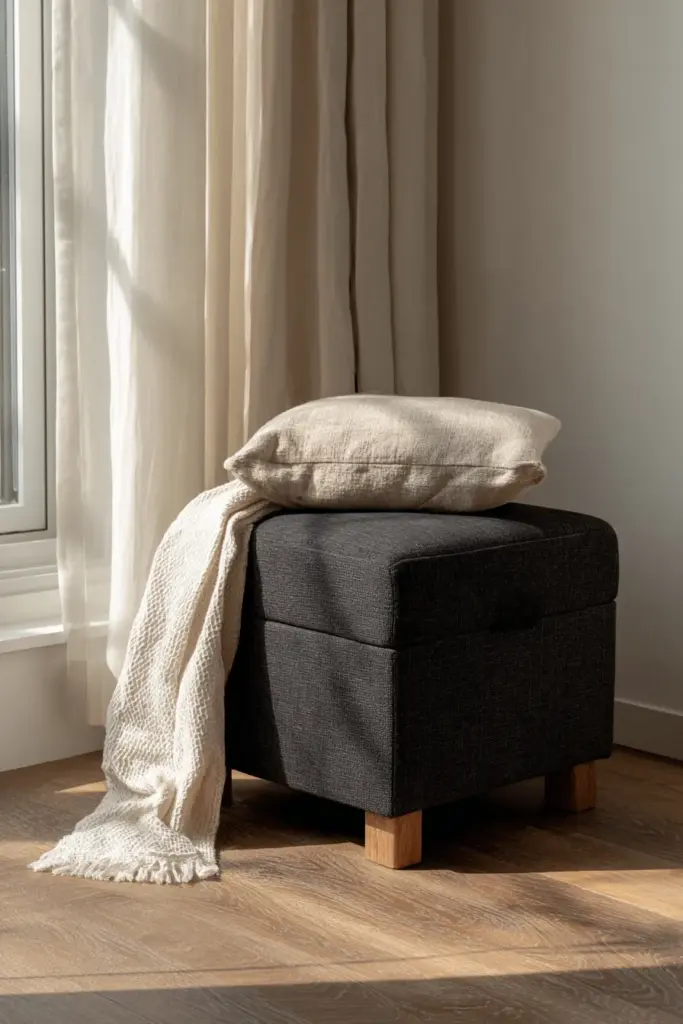
A tufted storage ottoman in charcoal linen becomes your coffee table, extra seating for guests, and blanket storage all at once. Choose one with a removable lid for easy access. Inside, store throws in complementary neutrals—cream, taupe, soft gray—ready to pull out when evening turns cool.
Bench seating along one wall maximizes seating while hiding seasonal items. Add cushions in natural fabrics for comfort and warmth. The bench itself becomes architectural, defining zones within your living room.
Modular Storage Systems
Modular units let you build storage that grows with your needs. Start with a few cubes in light wood, then add more as your collection evolves. Mix open and closed compartments—display your favorite ceramics while concealing electronics and cables.
Japanese tansu-inspired chest designs bring traditional craftsmanship into contemporary spaces. Look for pieces with varied drawer sizes, each with its own distinct pull. They’re practical poetry.
Maximizing Storage in Small Japandi Living Rooms
Small spaces demand creativity wrapped in calm. Here’s where Japandi principles truly shine.
Vertical Solutions
When floor space is limited, think upward. Floor-to-ceiling shelving in natural wood draws the eye up while providing ample storage. Keep lower shelves for frequently accessed items, higher ones for seasonal decor or books you revisit less often.
Wall-mounted floating cabinets hover at eye level, offering storage without eating into precious floor space. Choose ones with push-to-open mechanisms for that seamless, hardware-free look.
Corner shelving units transform overlooked angles into functional beauty. Their triangular footprint barely intrudes while offering surprising capacity for plants, books, or woven baskets filled with smaller items.
Hidden and Built-In Storage
Built-in window seats with lift-up tops turn architectural features into hardworking storage. Line the interior with cedar for natural moth protection and that subtle, woodsy scent.
Behind-sofa consoles create storage in dead space. A narrow table running the sofa’s length holds table lamps, frames, and decorative boxes that discreetly store remote controls and charging cables.
TV units with closed cabinets hide gaming consoles and tangled cords. Choose ones with cable management cutouts to maintain that clean aesthetic. The fewer wires visible, the calmer the space feels.
Smart Zoning with Storage
Use storage pieces to define areas within your living room. A low bookshelf perpendicular to the wall creates a subtle room divider between your seating area and workspace. It offers storage while maintaining visual connection and light flow.
Rolling storage carts in bamboo or painted steel move where needed. Tuck one beside your reading chair for books and tea supplies, then wheel it away when hosting guests.
Materials That Define Japandi Storage
| Material | Benefits | Best Uses | Care Tips |
|---|---|---|---|
| Oak & Walnut | Durable, beautiful grain, ages gracefully | Cabinets, shelving, benches | Dust regularly, oil annually |
| Bamboo | Sustainable, lightweight, warm tone | Organizers, ladder shelves, boxes | Wipe with damp cloth, avoid soaking |
| Rattan & Wicker | Textural, breathable, natural | Baskets, drawer inserts, decorative storage | Vacuum gently, mist occasionally |
| Linen & Cotton | Soft, washable, neutral palette | Ottoman covers, storage bags, basket liners | Machine wash cool, line dry |
| Ceramic & Stoneware | Cool touch, artisanal quality | Small container storage, display pieces | Hand wash, handle carefully |
These materials share common threads: natural origin, tactile pleasure, honest aging. They’re forgiving materials that welcome the marks of living.
Sustainable Sourcing in the Philippines
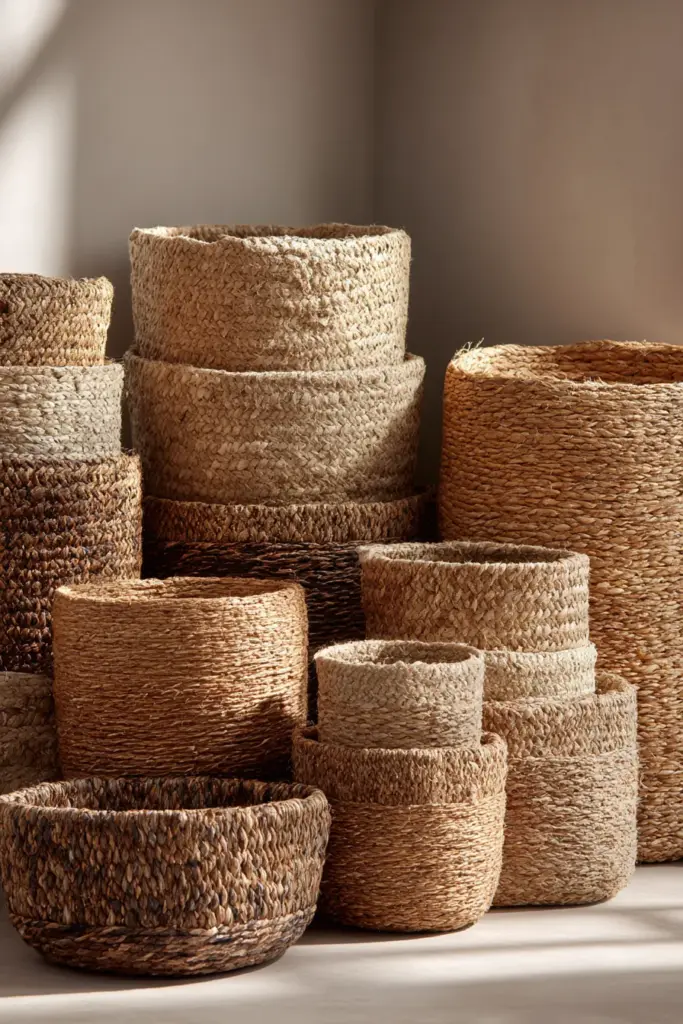
Filipino makers offer beautiful alternatives aligned with Japandi values. Visit local markets like Divisoria for handwoven abaca baskets at budget-friendly prices. Seek out bamboo organizers from Mindanao craftspeople—they’re often more durable than imports.
Upcycle vintage wooden crates from Cubao Expo or similar vintage spots. Sand them down, add a natural oil finish, and stack them as modular storage with instant character.
DIY Japandi Storage Ideas Under ₱5,000
Painted Crate Shelving
Collect wooden crates from fruit vendors (often free or very cheap). Sand rough edges, then paint in muted tones—sage, putty, warm gray using Benjamin Moore Revere Pewter or local alternatives. Mount to the wall in an asymmetric grid pattern for books and plants.
Cost: ₱1,500-2,000 including paint and mounting hardware.
Bamboo Ladder Organizer
Purchase bamboo poles from hardware stores. Cut to varying lengths and lash together with natural jute rope to create a leaning ladder shelf. The handmade quality adds character, and bamboo’s natural flexibility means it’s forgiving of uneven floors.
Cost: ₱800-1,200 for materials.
Dyed Canvas Storage Bins
Buy plain canvas bins and dye them in tea or coffee for natural beige tones. Or use fabric dye in charcoal, olive, or terracotta. Add leather pull tabs cut from old belts. They’ll look intentionally curated rather than store-bought.
Cost: ₱600-900 for several bins.
Floating Box Shelves
Cut and join pine boards into shallow boxes, leaving the front open. Paint or stain in light oak tones. Mount directly to walls with concealed brackets for that floating effect. Vary sizes for visual interest.
Cost: ₱2,000-3,000 for three shelves including hardware.
Styling Your Japandi Storage
Storage shouldn’t just contain—it should compose. Style open storage like you’re arranging a still life.
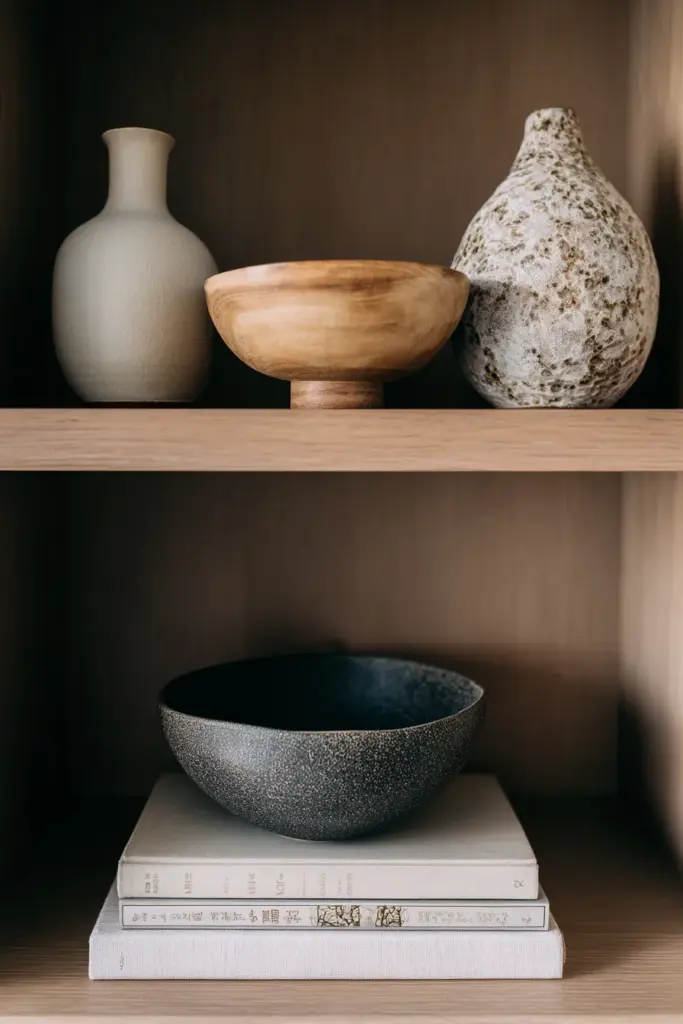
The Rule of Thirds and Odd Numbers
Group items in threes or fives. Three ceramic vessels in graduating heights. Five books stacked horizontally with one vertical spine-out. This creates visual rhythm without chaos.
Leave one-third of any shelf surface empty. It’s in this emptiness that the eye finds rest and objects find importance.
Texture Layering
Mix hard and soft, rough and smooth. A glazed ceramic pot beside a linen-covered box. A wooden bowl holding wool felt balls. Contrast creates interest while the neutral palette maintains harmony.
Woven baskets add warmth to stark shelving. Choose seagrass for coastal vibes, rattan for traditional warmth, or jute for earthy texture.
Color Palette Precision
Stick to a narrow color story: warm whites, soft grays, caramel browns, black accents. Introduce one muted accent color—dusty rose, sage green, or terracotta—and use it sparingly.
If displaying books, turn spines inward for a neutral backdrop, or arrange by color in tonal gradients. The latter adds subtle visual interest without breaking the calm.
Integration with Lighting
Position storage where it catches natural light. Morning sun on a wooden cabinet brings out amber undertones. Place table lamps on sideboards to create warm pools of evening light.
Under-shelf LED strips add functionality while highlighting displayed objects. Choose warm white (2700K) bulbs to maintain coziness.
Pet-Friendly and Renter-Friendly Solutions
For Pet Owners
Choose scratch-resistant materials like sealed wood and smooth rattan rather than loosely woven pieces cats can snag. Opt for closed storage for items you don’t want knocked off shelves during midnight zoomies.
Designate one basket as “pet toy storage” in a complementary neutral. It keeps clutter contained while acknowledging your furry friend’s presence in your curated space.
For Renters
Freestanding furniture over built-ins. Tension rod shelving that needs no wall anchors. Command strips for lightweight decorative storage.
Modular systems shine here—take them when you move, reconfigure them for new spaces. Your investment travels with you.
Maintenance in Humid Climates
The Philippines’ humidity demands specific care for natural materials.
Bamboo and rattan: Wipe weekly with a slightly damp cloth to prevent dust buildup that traps moisture. Place silica gel packets inside closed baskets during rainy season.
Wood furniture: Use a dehumidifier in your living room during monsoon months. Apply furniture oil every 3-4 months to prevent wood from drying and cracking as humidity fluctuates.
Fabric storage: Choose removable, washable covers. Air them in sun quarterly to prevent mustiness. Add cedar sachets to storage ottomans as natural moisture absorbers.
Preventive schedule:
- Weekly: Dust all surfaces with microfiber cloth
- Monthly: Air out fabric storage, check for mildew
- Quarterly: Deep clean baskets, oil wood pieces
- Seasonally: Rotate displayed items, assess for damage
Storage Checklist: Creating Your Japandi System
Before purchasing, assess your needs:
- Inventory honestly: What truly needs storing? What can you release?
- Measure carefully: Height, width, depth—and door/hallway dimensions for delivery
- Consider traffic flow: Will new furniture block natural pathways?
- Think vertically: Are you using wall space effectively?
- Budget by priority: Invest in quality for daily-use pieces, save on decorative storage
- Source sustainably: Local craftspeople, vintage shops, eco-certified materials
Core pieces for a complete system:
- One substantial media console or sideboard (focal point storage)
- 2-3 shelving solutions (mix open and closed)
- 4-6 attractive baskets or boxes (various sizes)
- One multifunctional seating piece with storage
- Small organizational tools (drawer dividers, cable ties, decorative trays)
Conclusion: Storage as Self-Care
The way you store your belongings reflects how you care for yourself. Japandi storage isn’t about perfection—it’s about intentionality wrapped in beauty.
When every item has a considered home, when you can find what you need without frantic searching, when your eye lands on curated simplicity rather than chaos—that’s when your living room becomes a sanctuary. Not just a place to store things, but a place to restore yourself.
Start small. One beautiful basket. One shelf styled with care. One drawer organized with intention. These small acts compound into spaces that hold you as thoughtfully as they hold your belongings.
Your living room deserves this kind of attention. And so do you.
Frequently Asked Questions
What is Japandi style storage?
Japandi storage combines Japanese minimalism’s clean lines and intentional empty space with Scandinavian warmth through natural materials and functional beauty. It emphasizes multifunctional furniture in wood, bamboo, and rattan, with a neutral palette and the philosophy that storage should enhance rather than dominate a space.
How do you maximize storage in a small Japandi living room?
Focus on vertical solutions like floor-to-ceiling shelving and wall-mounted cabinets that don’t consume floor space. Choose multifunctional pieces—ottomans with hidden storage, benches with lift-tops, and modular systems you can reconfigure. Use the space behind sofas and in corners with narrow consoles and triangular shelving units.
What furniture is best for Japandi living room storage?
Low wooden sideboards in oak or walnut, floating shelves in asymmetric arrangements, storage ottomans in natural fabrics, and modular cube systems that mix open and closed storage. Look for pieces with clean lines, visible wood grain, and subtle hardware. Ladder-style shelving and tansu-inspired chests work beautifully.
u003cstrongu003eAre there DIY Japandi storage ideas?u003c/strongu003e
Yes—painted wooden crates mounted as modular shelving, bamboo ladder organizers lashed with jute rope, dyed canvas bins with leather pulls, and floating box shelves in light-stained pine. These projects typically cost ₱600-3,000 and add handmade character that complements the Japandi aesthetic perfectly.
What materials work for Japandi storage units?
Natural materials age gracefully and feel authentic: oak and walnut for furniture, bamboo for lightweight organizers, rattan and seagrass for baskets, linen and cotton for soft storage, and ceramic for small containers. These materials share tactile warmth, sustainable origins, and the ability to develop beautiful patina over time.