
Table of Contents
There’s something profound that happens when you step into a space that breathes with you. A room where every element seems to whisper rather than shout, where light falls softly across natural wood, and where the air itself feels lighter. This is the quiet magic of Japandi design—a fusion of Japanese minimalism and Scandinavian warmth that does far more than create beautiful rooms.
It actually changes how your brain works.
Recent neuroscience research reveals that Japandi living rooms can reduce cortisol levels by up to 27% and boost alpha wave activity by 40%, creating measurable improvements in focus and emotional balance. But beyond the numbers, there’s an intimate relationship between this design philosophy and your daily sense of peace. When you understand the psychology behind each element—from the negative space that gives your mind room to breathe to the natural materials that ground you in something real—you begin to see your living room not just as décor, but as a daily meditation.
Let’s explore how Japandi design becomes a sanctuary for your mind, and why this matters more than ever in 2026.
The Neuroscience of Calm: What Happens in Your Brain
Your brain responds to visual information faster than you can consciously process it. Within milliseconds, your nervous system registers clutter, harsh colors, or chaotic patterns as subtle stressors. Japandi design works with your neurology, not against it.
The style’s signature neutral palette—warm whites, soft grays, muted beiges—activates what researchers call “perceptual ease.” Your brain doesn’t have to work hard to process these colors, which naturally lowers cognitive load. Studies show that rooms dominated by neutral tones with natural wood accents create environments where focus improves by approximately 25% and mental fatigue decreases significantly.
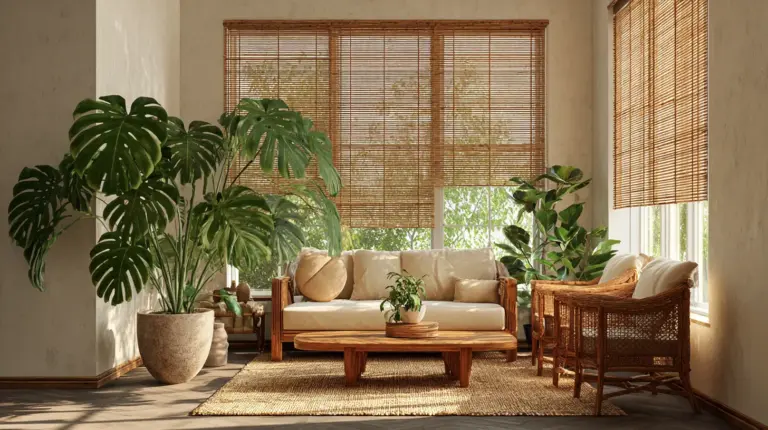
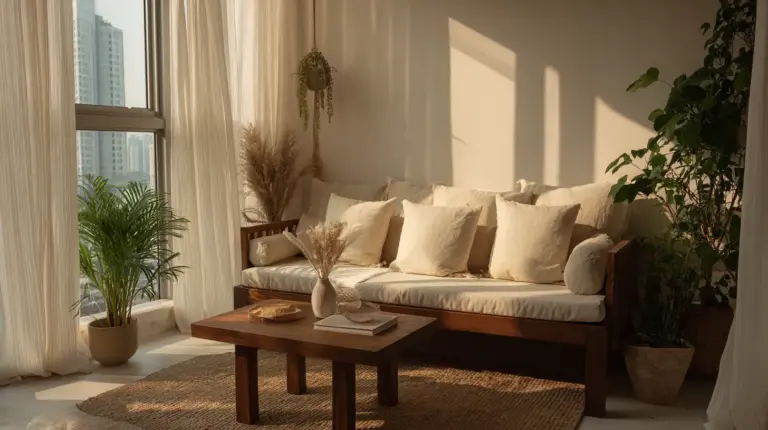
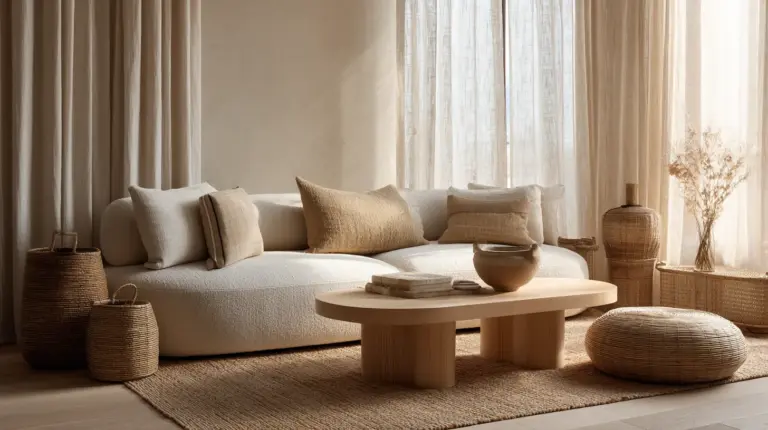
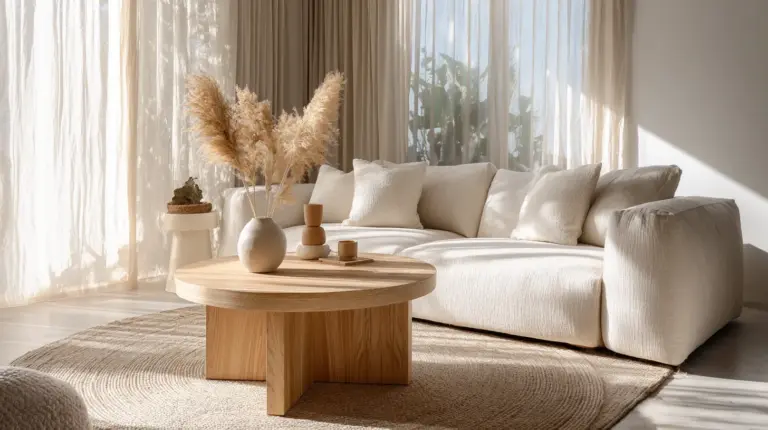
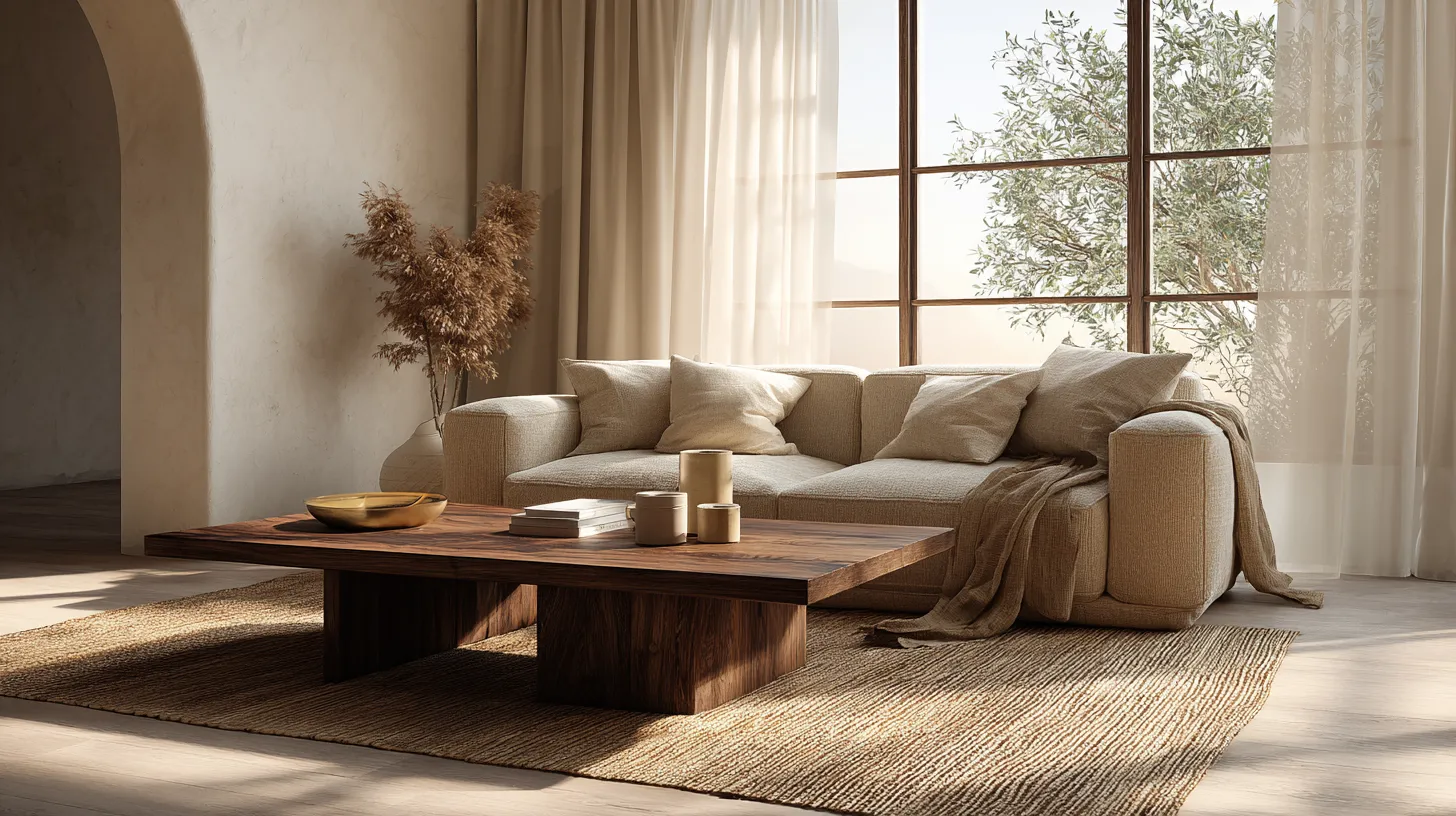
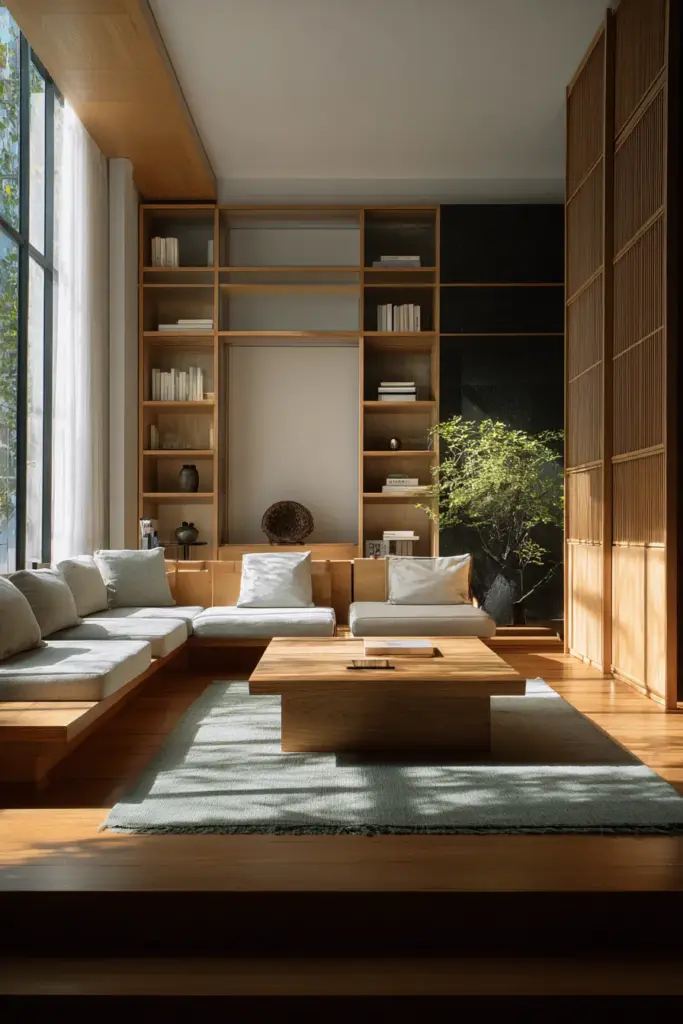
Consider the textures: a linen sofa in oatmeal, a low walnut coffee table with visible grain, a handwoven jute rug beneath your feet. Each of these materials connects you to nature through biophilic design principles, triggering a measurable drop in stress hormones. Your body recognizes these organic elements as safe, familiar, calming.
The Power of Negative Space
Japanese ma—the concept of intentional emptiness—is perhaps the most psychologically powerful element of Japandi design. When 30-40% of your living room remains visually open, your brain enters what neuroscientists call “soft fascination,” a state that allows the default mode network to activate without overstimulation.
Think of negative space as breathing room for your thoughts. A single sculptural vase on an empty shelf. Three cushions instead of seven. One carefully chosen piece of art rather than a gallery wall. This restraint isn’t about deprivation—it’s about creating space for your mind to rest.
Research on perceptual load theory confirms that cluttered environments force your brain to work harder, filtering out excess stimuli and depleting mental resources. Empty space, conversely, reduces this cognitive burden and has been linked to increased alpha wave activity—the brain state associated with relaxed alertness and creativity.
Wabi-Sabi and Emotional Acceptance
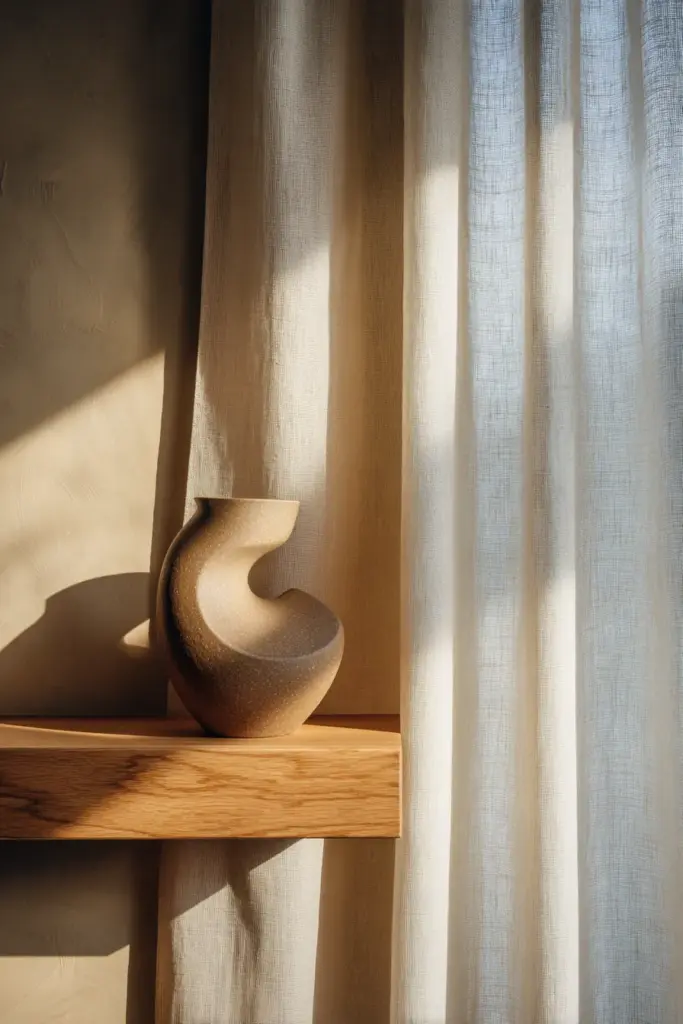
The Japanese philosophy of wabi-sabi—finding beauty in imperfection and impermanence—offers profound psychological benefits that extend beyond aesthetics. When you embrace a living room that celebrates natural aging, weathered wood, and handmade irregularities, you’re practicing acceptance at a visceral level.
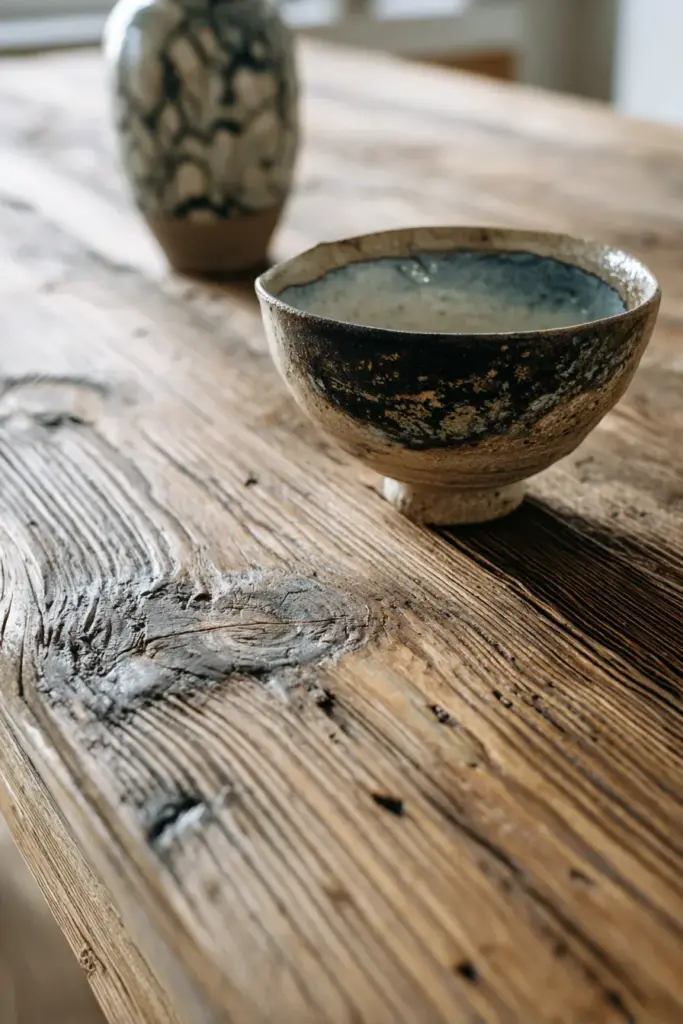
A dining table with natural knots and variations in grain. Ceramic vessels with slight asymmetries. Linen curtains that wrinkle beautifully in the light. These elements quietly teach your mind that perfection isn’t the goal—authenticity is.
This philosophy directly counters the stress of curated perfection that dominates social media. Living with wabi-sabi design can reduce anxiety around maintaining an “Instagram-worthy” home and foster a more compassionate relationship with your environment and yourself.
Functionality Meets Peace of Mind
Every element in a Japandi living room serves a purpose, following the Japanese concept of kanso (simplicity) combined with Scandinavian functionality. This isn’t minimalism for its own sake—it’s intentional design that eliminates decision fatigue and visual noise.
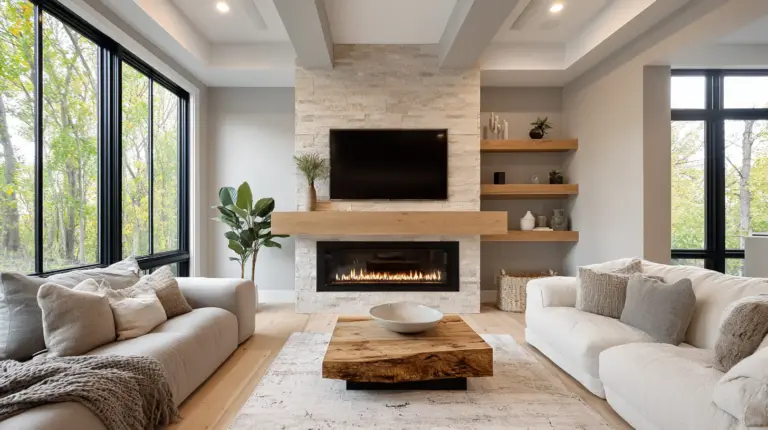
Low-profile furniture with clean lines creates horizontal emphasis that naturally calms the eye. Built-in storage keeps surfaces clear, reducing the daily mental load of managing visible clutter. Multi-functional pieces—a bench with hidden storage, a coffee table that doubles as a work surface—streamline your life without sacrificing beauty.
Research consistently shows that functional, organized spaces improve emotional regulation and reduce the cognitive burden of daily life. When everything has a place and serves a purpose, your mind is freed to focus on what matters.
Lighting as Mood Architecture
Light is perhaps the most underestimated psychological element in Japandi living rooms. The style’s approach to illumination—layered, warm, and natural—directly influences your circadian rhythms and emotional state.
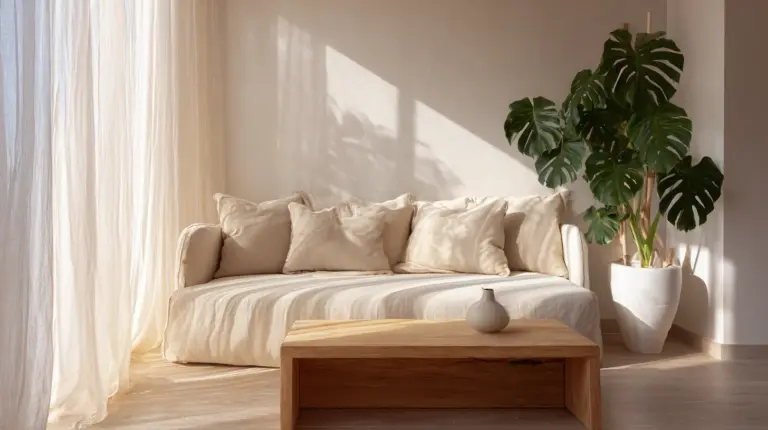
Natural daylight takes priority. Sheer linen curtains filter harsh afternoon sun into soft, diffused glow. Large windows remain unobstructed, allowing morning light to regulate your body’s melatonin production and support healthy sleep-wake cycles. Studies in chronobiology confirm that exposure to natural light patterns significantly improves mood and cognitive function.
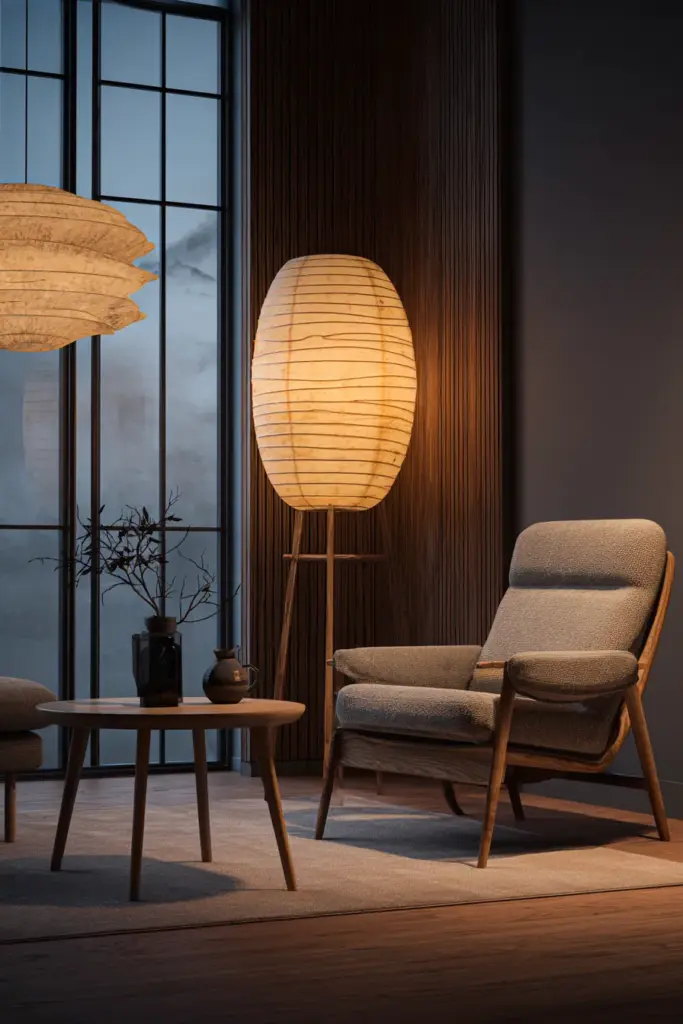
Evening lighting shifts to warm, layered sources: rice paper pendant lamps casting gentle ambient light, wooden floor lamps with fabric shades, perhaps a cluster of candles on a low side table. These multiple, lower-wattage sources mimic the natural dimming of daylight, preparing your body for rest while creating pockets of warmth that invite conversation and connection.
The Color Psychology of Neutrals with Warmth
Japandi’s color palette is deceptively simple: predominantly neutral with strategic warmth. But the psychology behind this choice runs deep.
Base colors—ivory, warm gray, soft taupe—create what color psychologists call a “psychological neutral zone.” These hues don’t trigger strong emotional responses, allowing your nervous system to settle into baseline calm. They’re the visual equivalent of a deep breath.
Warmth comes through natural materials: honey-toned oak flooring, warm walnut furniture, touches of terracotta in a single ceramic bowl. These warm neutrals activate feelings of security and comfort without the overstimulation of bright or saturated colors. The result is a space that feels both sophisticated and deeply welcoming—hygge meets kanso in perfect balance.
Black accents—a matte metal lamp, charcoal throw pillows, a dark ceramic vase—provide visual anchors that prevent the space from feeling washed out. These touches of contrast create just enough visual interest to keep the eye engaged without creating stress.
Biophilic Design: Bringing Nature’s Calm Indoors
The human nervous system evolved in natural environments, and your brain still craves that connection. Japandi design satisfies this innate need through strategic biophilic elements that boost vitality and reduce stress.
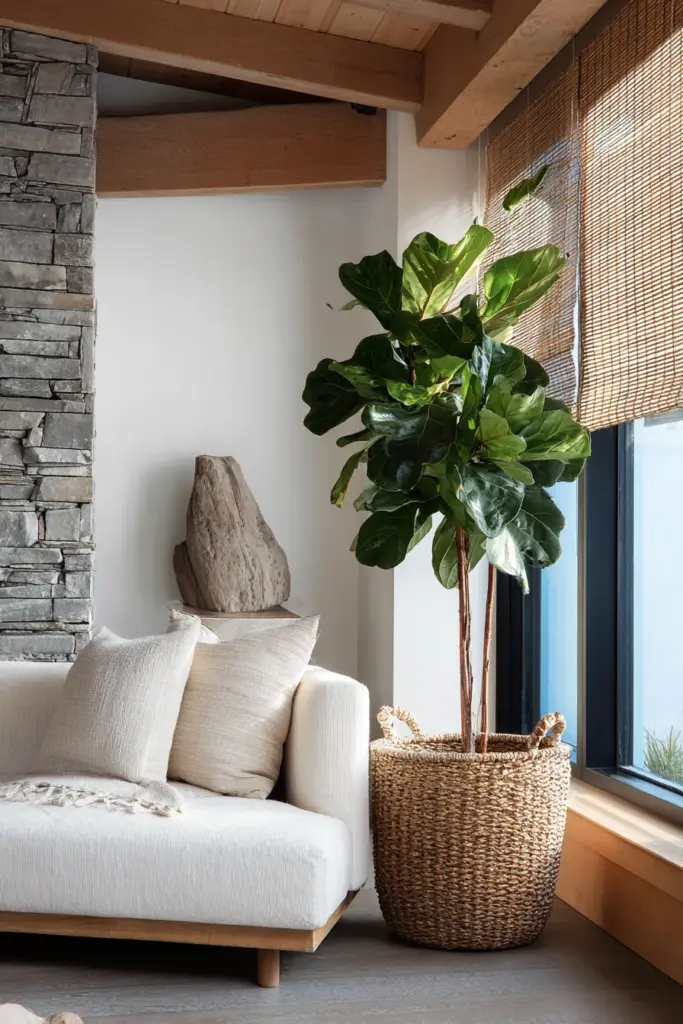
Plants are integrated thoughtfully, not abundantly. A fiddle leaf fig in a natural fiber basket. Snake plants on a floating shelf. A single statement monstera in a corner. Each plant serves as a living focal point, improving air quality while providing the psychological benefits of caring for something alive.
Natural materials reinforce this connection: bamboo blinds, a stone accent piece, reclaimed wood beam, wool throws. These textures ground you in the physical world, offering tactile experiences that screen-based life cannot provide. Studies show that regular contact with natural materials can lower blood pressure and reduce symptoms of anxiety.
For those in tropical climates like Quezon City, consider humidity-resistant materials that maintain the aesthetic while working with your environment: teak or acacia wood, linen blends, sealed concrete, tropical plants that thrive in your specific conditions.
The Psychology of Texture and Touch
Japandi living rooms invite touch—a often-overlooked sensory experience with profound psychological benefits. The style’s emphasis on natural, tactile materials creates opportunities for grounding through physical sensation.
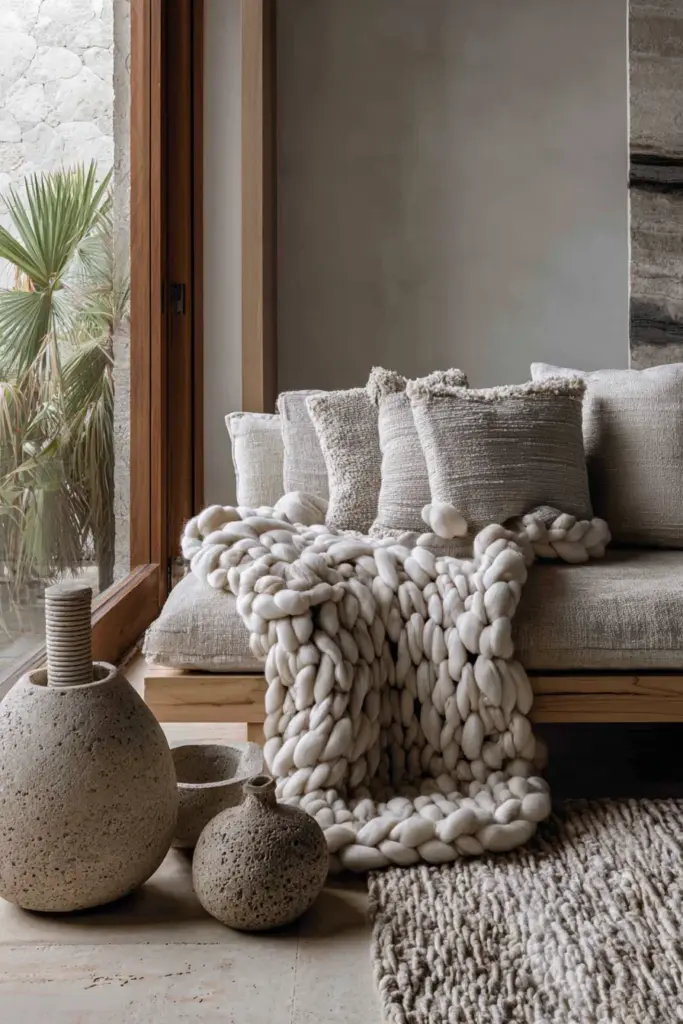
Run your hand across a chunky knit throw. Feel the smooth coolness of a ceramic bowl. Sink your feet into a wool rug’s soft pile. These small tactile experiences trigger your parasympathetic nervous system, the “rest and digest” state that counteracts stress.
The variety of textures—rough linen, smooth wood, soft wool, cool stone—keeps your sensory system engaged without overwhelming it. This balanced stimulation is key to creating spaces that feel alive and interesting while remaining deeply calming.
Creating Flow States Through Spatial Design
The Japanese concept of nagare (flow) applies beautifully to Japandi living rooms. When furniture placement and sight lines are carefully considered, movement through space becomes intuitive and stress-free.
Low furniture maintains horizontal emphasis, creating a sense of expanded space and visual rest. Clear pathways between areas reduce the micro-stresses of navigating cluttered rooms. Focal points—a single piece of art, a carefully arranged shelf, a view to a window—guide the eye without demanding attention.
This thoughtful spatial organization supports what psychologists call “environmental competence”—the feeling that you understand and can easily navigate your space. This competence breeds comfort and reduces the subtle anxiety of disorienting or chaotic environments.
Practical Implementation: A Room-by-Room Psychology Checklist
Transform your living room’s psychological impact with these evidence-based Japandi principles:
Foundation Elements
- Clear 30-40% of surfaces to create negative space
- Choose a neutral base palette (warm whites, soft grays, natural beiges)
- Select low-profile furniture with clean lines
- Ensure clear pathways between areas (minimum 36 inches)
- Maximize natural light through unobstructed windows
Material & Texture Strategy
- Incorporate 3-5 natural materials (wood, linen, wool, stone, bamboo)
- Layer textures for tactile interest without visual clutter
- Choose handmade or artisan pieces that show natural variation
- Embrace visible wood grain and organic imperfections
Lighting Design
- Prioritize natural light first
- Use sheer curtains to diffuse harsh sun
- Layer evening lighting with 3-4 warm sources at different heights
- Avoid overhead-only lighting; add floor and table lamps
- Consider smart bulbs for circadian-friendly color temperature shifts
Biophilic Integration
- Add 2-4 statement plants in natural fiber or ceramic containers
- Choose low-maintenance varieties suited to your climate
- Position plants where they’ll catch natural light
- Include one natural accent piece (stone, driftwood, dried arrangement)
Functional Organization
- Provide storage for every category of items
- Keep only items that serve a purpose or bring joy
- Use trays or bowls to contain small objects
- Maintain clear surfaces except for 1-2 intentional displays
Personal Touches
- Display 1-3 meaningful objects rather than collections
- Choose art that evokes calm (abstract landscapes, minimal photography)
- Incorporate family photos in consistent, simple frames
- Add one element of personal heritage or story
Measuring Your Psychological Shift
The benefits of Japandi design aren’t just theoretical—they’re measurable in your daily experience. Consider tracking these indicators before and two weeks after implementing changes:
| Well-Being Indicator | What to Notice |
|---|---|
| Morning Mood | Energy level and emotional state upon waking in adjacent bedroom |
| Evening Relaxation | How quickly you feel settled after entering the living room |
| Focus Quality | Ability to concentrate on reading or conversation without distraction |
| Visual Comfort | Instances of feeling overwhelmed or irritated by your space |
| Sleep Quality | Restfulness of sleep (influenced by evening light exposure in living areas) |
| Social Connection | Frequency and quality of meaningful conversations in the space |
Simple mood-tracking apps can help you notice patterns. Many users report significant improvements within 10-14 days of implementing Japandi principles—faster than anticipated because the changes work with your neurology rather than against it.
Special Considerations: Family Dynamics and Japandi Psychology
While Japandi design is often showcased in adult-only spaces, its psychological benefits extend powerfully to family living rooms, particularly for children’s cognitive development.
Minimalist environments help children develop executive function skills—the ability to focus, organize, and self-regulate. When toy storage is streamlined and organized, children learn decision-making within boundaries. When surfaces are clear, homework and creative play have dedicated space.
For multigenerational households, Japandi’s emphasis on low furniture and clear pathways supports mobility and safety for older family members while maintaining aesthetic sophistication. The style’s flexibility allows for child-safe elements—rounded edges, durable fabrics, washable materials—without sacrificing beauty.
Budget-Conscious Transformations
Japandi psychology doesn’t require expensive furniture. The mental health benefits come from principles, not price tags.
Start with subtraction: removing excess is free and immediately impactful. Reorganize existing furniture to create better flow and negative space. Paint walls in warm neutrals—a weekend project with immediate psychological returns.
Invest strategically in one quality natural material piece: a secondhand wood coffee table, a jute rug, linen curtains. Mix these with simpler items—white ceramic from local makers, plants propagated from cuttings, DIY floating shelves from sustainable wood.
The goal isn’t perfection but progression toward principles that serve your well-being. Even partial implementation—clearing surfaces, improving lighting, adding one natural element—creates measurable psychological benefits.
The Broader Context: Wellness Design in 2026
As we navigate an increasingly complex world, the psychology of home design matters more than ever. Post-pandemic, post-election, in an era of digital overwhelm, our living spaces have become primary sanctuaries for mental health.
Japandi design offers a counterbalance to modern stressors: simplicity against complexity, presence against distraction, authenticity against curated perfection. The style’s growth in 2026 reflects a collective hunger for spaces that support rather than deplete us.
This isn’t about trend-chasing—it’s about understanding that our environments shape our internal states. When you design with intention, respecting both aesthetic beauty and psychological function, you create more than a beautiful room. You create a daily practice of well-being.
Conclusion: Your Living Room as Daily Meditation
The most powerful spaces aren’t those that impress others—they’re the ones that restore you. A Japandi living room doesn’t demand your attention or ask for maintenance it whispers instead of shouts. It welcomes imperfection while celebrating beauty. It gives you space to breathe, think, connect, and simply be.
When you walk through your door after a long day, what greets you? Chaos or calm? Distraction or focus? The psychology of Japandi design offers a pathway to transformation—not through dramatic overhaul, but through intentional simplification and connection to what’s real.
Your living room is where life happens: conversations over tea, quiet Sunday mornings, family gatherings, solitary moments of reflection. When that space is designed to support your nervous system, honor natural rhythms, and celebrate simple beauty, it becomes more than décor.
It becomes your daily meditation, your refuge, your reminder that peace is always possible—one intentional choice at a time.
Frequently Asked Questions
What is the psychology behind Japandi design?
Japandi design combines Japanese minimalism with Scandinavian warmth to create spaces that reduce cognitive load and stress. The style works with your brain’s natural preferences for simplified visual processing, natural materials, and organized environments. Research shows this approach can lower cortisol levels by up to 27% while improving focus through reduced perceptual load. The intentional use of negative space, neutral colors, and functional design eliminates decision fatigue and creates what neuroscientists call u0022soft fascinationu0022—a restorative mental state.
How does Japandi design reduce stress?
Stress reduction in Japandi spaces comes from multiple elements working together: neutral color palettes that ease visual processing, decluttered surfaces that reduce cognitive burden, natural materials that trigger biophilic responses, and layered lighting that supports healthy circadian rhythms. The wabi-sabi philosophy of embracing imperfection also reduces the anxiety of maintaining u0022perfectu0022 spaces. Studies indicate that these combined elements can improve emotional regulation and create measurable decreases in stress hormones within just two weeks.
Why is Japandi good for mental health?
Japandi supports mental health through environmental psychology principles. The style’s emphasis on functionality reduces daily decision fatigue, while negative space provides visual and mental rest. Natural materials and biophilic elements ground you in sensory experiences that counteract digital overstimulation. The aesthetic’s balance of simplicity and warmth creates what psychologists call u0022environmental competenceu0022—spaces you intuitively understand and navigate easily, fostering feelings of control and comfort that support overall emotional well-being.
What are the psychological benefits of minimalism in Japandi living rooms?
Minimalism in Japandi contexts offers several measurable benefits: improved focus (up to 25% in some studies), reduced anxiety from visual clutter, better emotional regulation, and enhanced creativity through increased alpha wave activity. Unlike stark minimalism, Japandi’s warm minimalism maintains sensory interest through texture and natural materials while eliminating excess. This balance prevents the coldness sometimes associated with extreme minimalism while delivering the psychological benefits of simplified, intentional spaces.
How does negative space in Japandi affect the mind?
Negative space, or ma in Japanese philosophy, allows your brain to process information more efficiently by reducing perceptual load. When 30-40% of your visual field remains unoccupied, your default mode network can activate—the brain state associated with reflection, creativity, and emotional processing. This empty space isn’t void but active rest for your mind. Neuroscience research shows that environments with adequate negative space increase alpha wave activity by up to 40%, promoting the relaxed alertness that supports both productivity and peace.