
Table of Contents
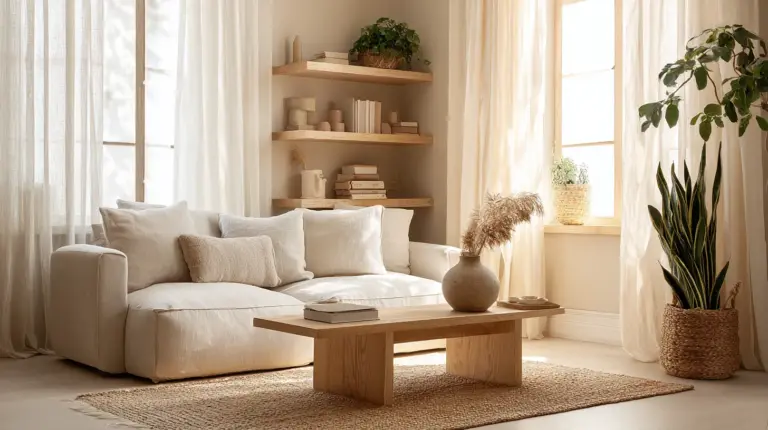
There’s something magical about a living room that feels like a deep breath. A space where children can sprawl with building blocks on warm oak floors, while sunlight filters through linen curtains and everything—somehow—still feels serene.
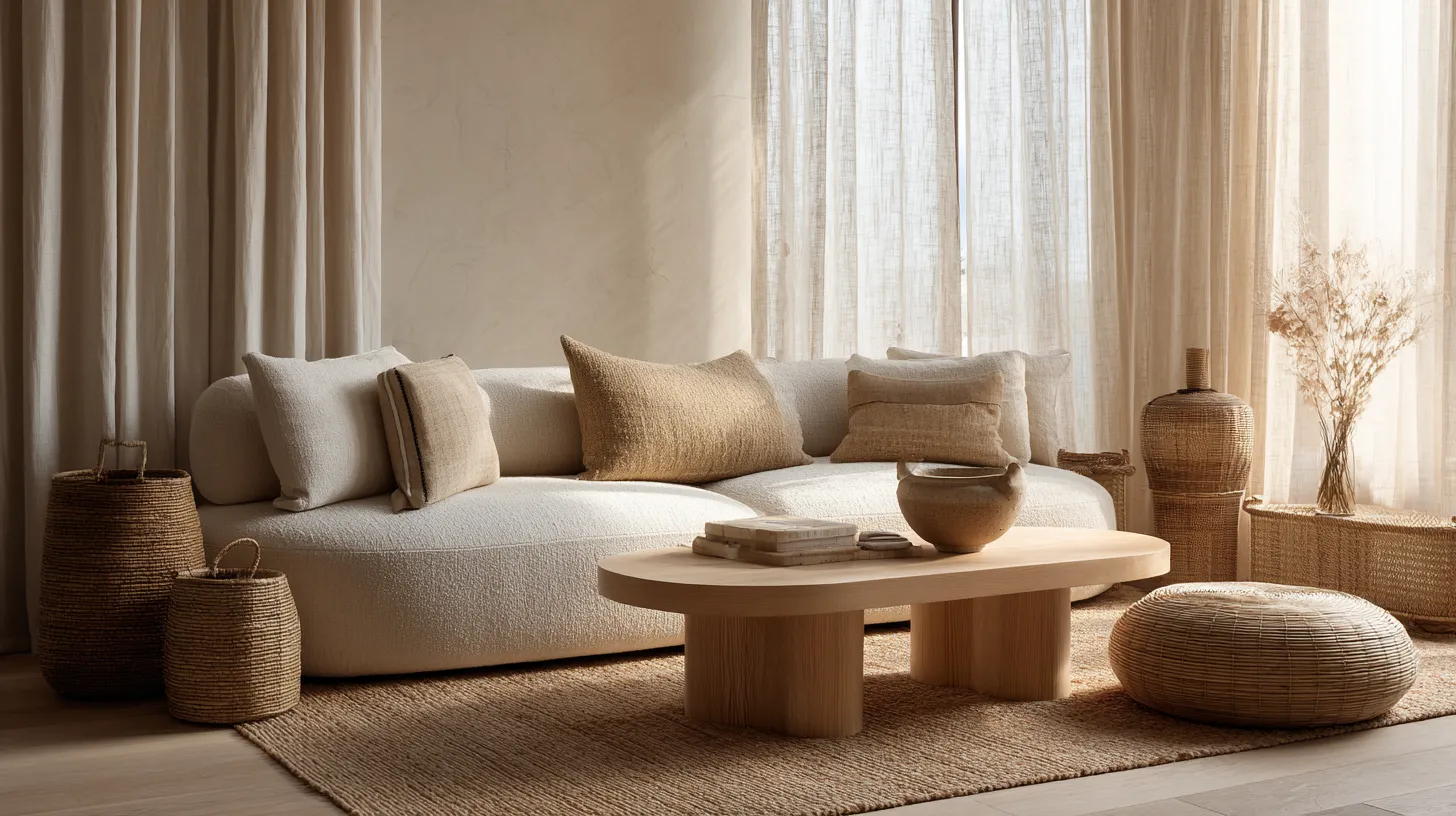
This is the promise of a Japandi living room designed for families with kids. It’s where Scandinavian coziness meets Japanese minimalism, creating environments that don’t just tolerate childhood chaos but gently contain it. Think low-profile sofas in oatmeal linen, woven baskets tucked beneath benches, and play corners defined by rattan screens rather than plastic dividers.
The beauty lies in how little you need. Natural wood furniture with rounded edges. Muted neutrals punctuated by a single green plant. Storage that disappears into the architecture itself.
For families navigating the beautiful mess of raising children, Japandi offers something rare: a design language that honors both calm and play, restraint and warmth, adult sanctuary and childhood wonder.
What Is a Japandi Living Room?
Japandi living rooms blend the hygge-infused warmth of Scandinavian design with the wabi-sabi philosophy of Japanese aesthetics. The result feels like filtered morning light made tangible.
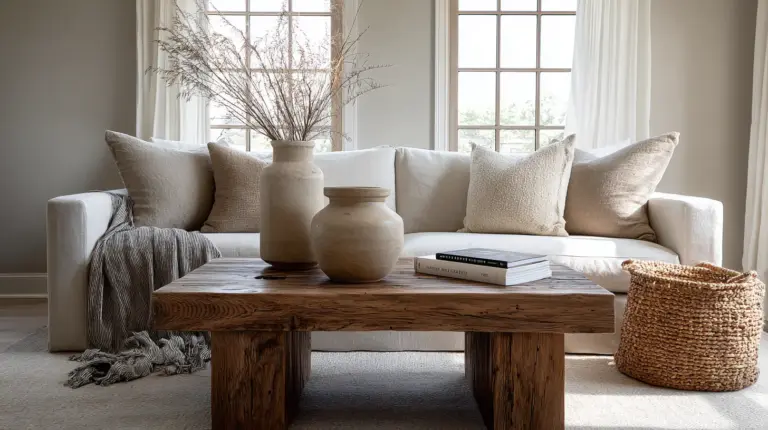
At its core, this style champions natural materials—think teak coffee tables, cotton throws, ceramic planters. Color palettes stay firmly in neutral territory: soft grays, warm beiges, creamy whites, with occasional charcoal or sage green accents. Furniture sits low to the ground, creating visual calm and physical safety for little ones learning to navigate space.
But Japandi isn’t cold minimalism. It’s minimalism with soul. A single handwoven basket becomes sculptural. A floor cushion in oat-colored linen invites curling up with picture books. Every object earns its place through beauty and function—a philosophy that serves families beautifully when square footage and sanity both run precious.
Why Japandi Style Works Beautifully for Families with Children
Safety Meets Serenity
Low-profile furniture isn’t just aesthetically pleasing—it’s inherently safer for toddlers. Platform sofas eliminate the hard edges of traditional frames. Floor beds and cushions create play zones where tumbles are gentle. Rounded corners on coffee tables made from sustainable oak mean fewer protective bumpers disrupting your design vision.
Japanese design principles emphasize living close to the ground, which naturally aligns with how young children explore the world. A tatami area with floor seating becomes both a meditation space for parents and a safe tumbling zone for babies learning to crawl.
Reducing Overstimulation Through Intentional Design
Neurodiverse children especially benefit from Japandi’s sensory restraint. When walls stay in soft sand tones and toys hide in woven baskets, visual noise decreases dramatically. Research shows minimalist environments can reduce anxiety and improve focus in children prone to overstimulation.
Instead of bright plastic bins, imagine natural fiber storage that blends seamlessly. The calm isn’t oppressive—it’s restorative. Children can still play freely, but return to a space that helps their nervous systems settle rather than rev higher.
Durability Hidden in Natural Materials
Linen blends resist stains better than you’d expect. A spilled juice box wipes clean from sealed oak surfaces. Cotton slipcovers on sofas can be removed and washed when crayon meets cushion (because it will).
The sustainable textiles core to Japandi—think undyed cotton, natural wool, hemp-blend fabrics—often outlast synthetic alternatives. They age beautifully rather than cheaply, developing patina instead of looking worn. For budget-conscious families, investing in fewer, better-quality natural pieces proves economical over time.
Creating Child-Friendly Japandi Living Room Zones
The Play Nook: Contained but Connected
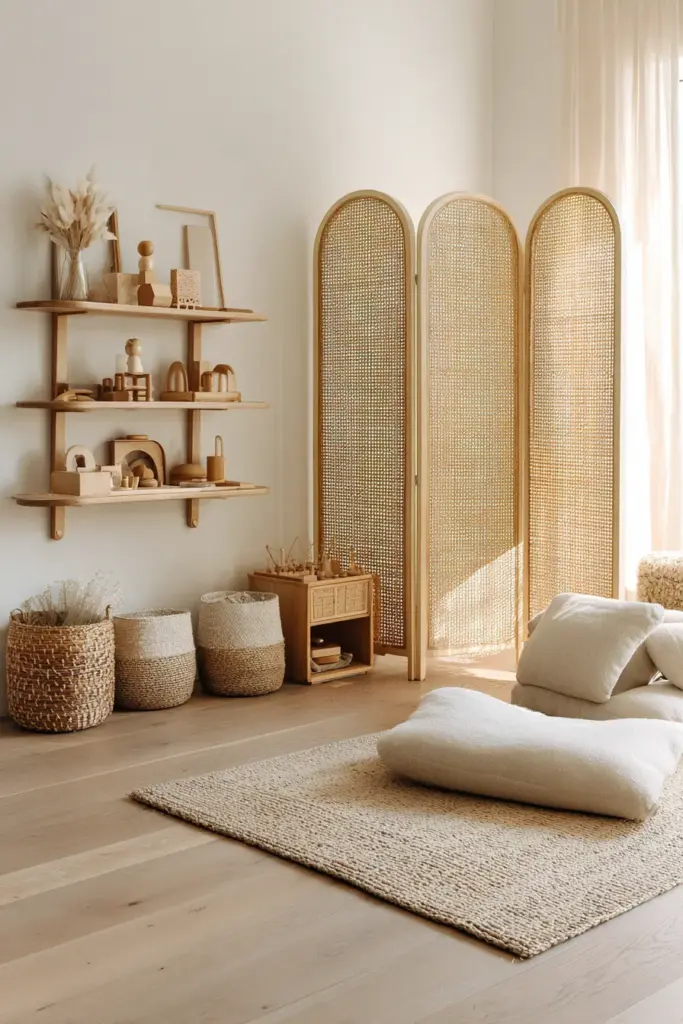
Instead of toys colonizing every surface, designate a specific play zone within your open-plan living room. Use a low rattan screen or minimalist bookshelf as a gentle boundary—visible enough that you can monitor from the sofa, distinct enough that toys have a “home.”
Place a jute rug to define the space. Add Montessori-style low shelves in light ash wood where toys display at child height, rotating items to prevent overwhelm. Keep a single woven basket for quick clean-ups when guests arrive.
This zoning respects Japanese concepts of ma (negative space) while honoring the reality that children need accessible, inviting areas to play. The screen becomes architectural rather than punitive, a soft division rather than a wall.
Multifunctional Furniture That Serves Everyone
Seek out modular low sofas with hidden storage compartments. Beneath those minimalist oatmeal cushions, board books and soft toys tuck away. Ottoman cubes in natural linen provide extra seating for playdates and storage for art supplies.
A Japanese-inspired kotatsu table with rounded edges serves as a coffee table, craft station, and floor-level dining spot. Choose pieces in sustainable bamboo or mango wood that age gracefully under the wear of family life.
Built-in benches along windows create reading nooks while hiding seasonal toys underneath. This kind of bespoke furniture maximizes small spaces—essential for urban Philippine homes where every square meter counts.
The Adult Sanctuary Corner
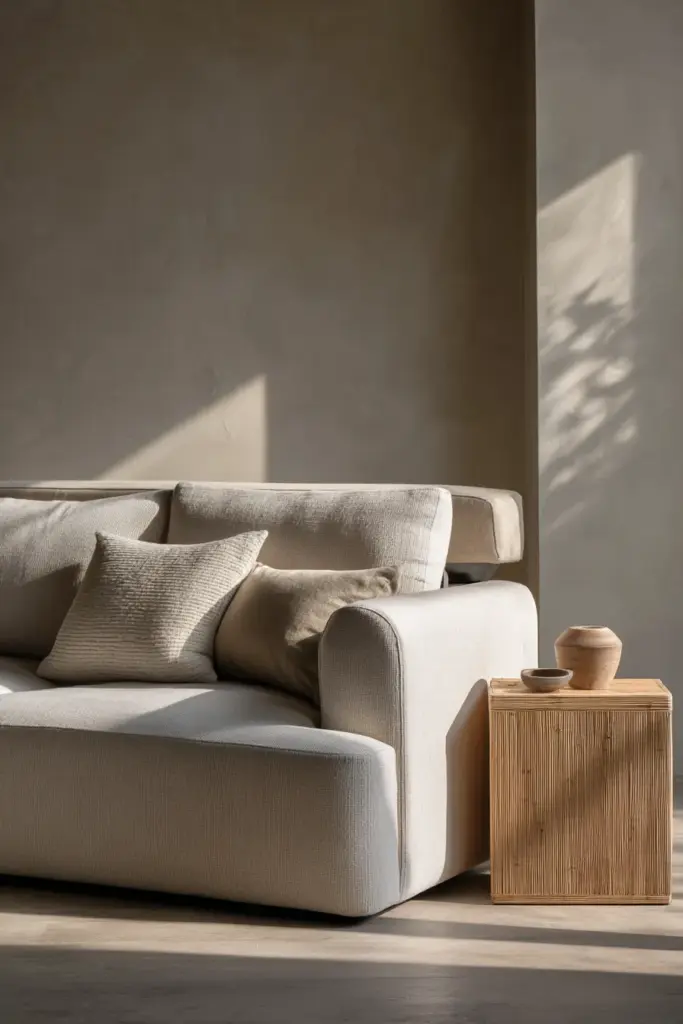
Even in family spaces, carve out one corner that stays predominantly adult. A single accent chair in charcoal linen facing a window. A small side table holding a ceramic cup and a book. Perhaps a standing paper lamp providing warm, diffused lighting.
This isn’t selfishness—it’s modeling healthy boundaries. Children learn that spaces can serve multiple needs, that minimalism doesn’t mean erasure of personality, just intentional curation. Plus, parents need visual rest areas within shared family zones.
Japandi Color Palette and Materials for Kid-Proof Living Rooms
The Foundation: Muted Neutrals with Playful Intention
Start with walls in warm white or soft greige. These tones hide tiny fingerprints better than stark white while maintaining airiness. For flooring, light oak or bamboo brings warmth underfoot—sealed properly, both handle spills with grace.
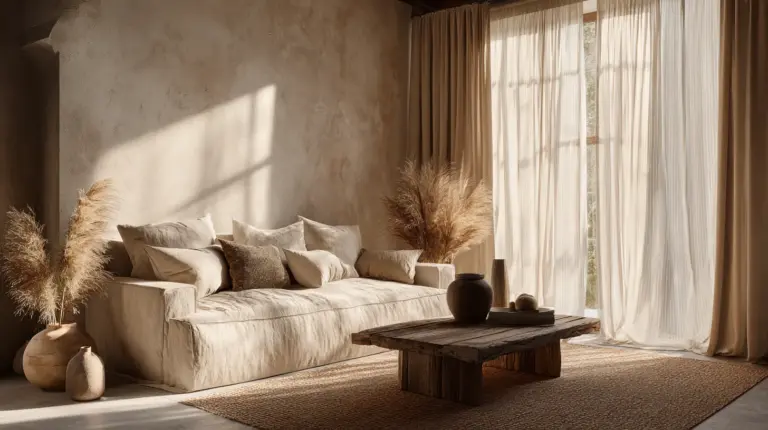
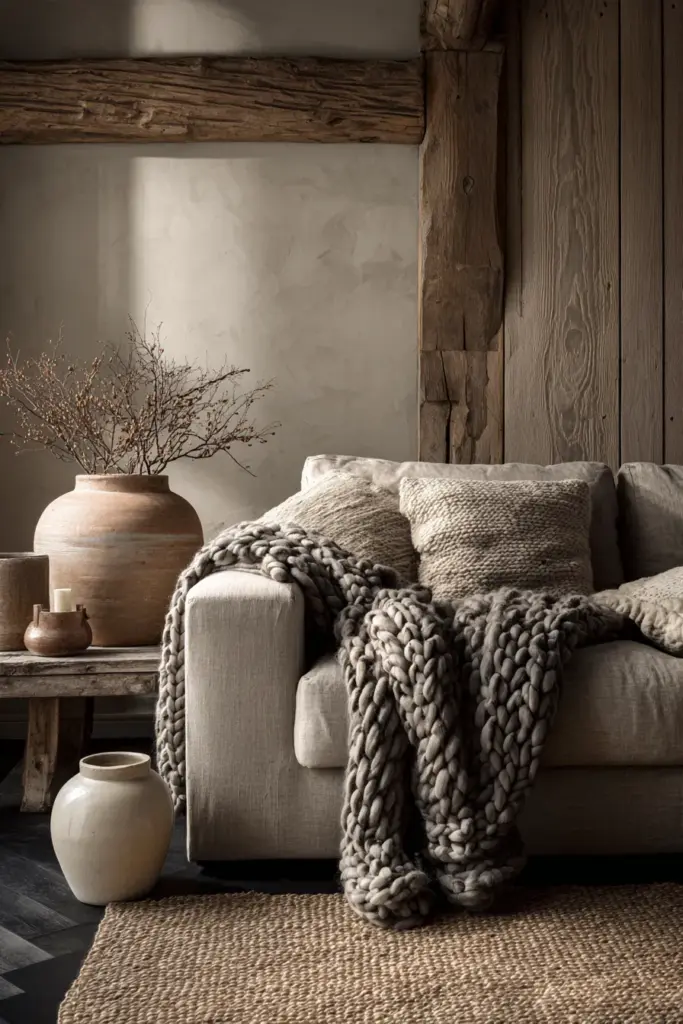
Introduce depth through texture rather than color. A chunky knit throw in undyed wool. Linen curtains in oat. A jute rug grounding the seating area. The palette stays cohesive but never flat, each material catching light differently throughout the day.
When adding color, think nature’s muted tones: sage green in a single accent pillow, terracotta in a ceramic planter, soft charcoal in picture frames. Avoid the temptation toward primary colors—even kids’ items can stay within the Japandi palette through careful selection.
Stain-Resistant Natural Fabrics That Look Luxurious
Not all natural fabrics are delicate. Linen-cotton blends rated for high traffic resist staining while maintaining that lived-in elegance Japandi loves. Slipcovers in these materials wash beautifully, returning to their soft drape after tumbling dry.
For rugs, choose low-pile jute or sisal that vacuums easily and hides crumbs. Layer a washable cotton dhurrie in the play zone—affordable enough to replace if a paint incident proves permanent, beautiful enough to display intentionally.
Leather also fits Japandi principles when sourced sustainably. A tan leather pouf develops rich patina as it ages, surviving everything from spilled milk to crayon marks with simple wiping. It’s the opposite of precious—it’s built to be lived with.
Budget-Friendly Philippine Sources
You don’t need Scandinavian price tags to achieve this aesthetic. Divisoria markets offer undyed cotton textiles under ₱5,000 that work perfectly for curtains or cushion covers. Local artisans in Quezon City craft rattan screens and woven baskets at a fraction of imported costs.
Seek out native woods like narra or molave for furniture pieces—their natural warmth aligns perfectly with Japandi’s love of organic materials. Many small carpentry shops can create custom low-profile pieces more affordably than purchasing imports.
Thrift secondhand teak or oak furniture, then refinish with natural oils. The imperfections add wabi-sabi character while your budget breathes easier.
Furniture Essentials for a Japandi Family Living Room
Low-Profile Sofa with Kid-Safe Features
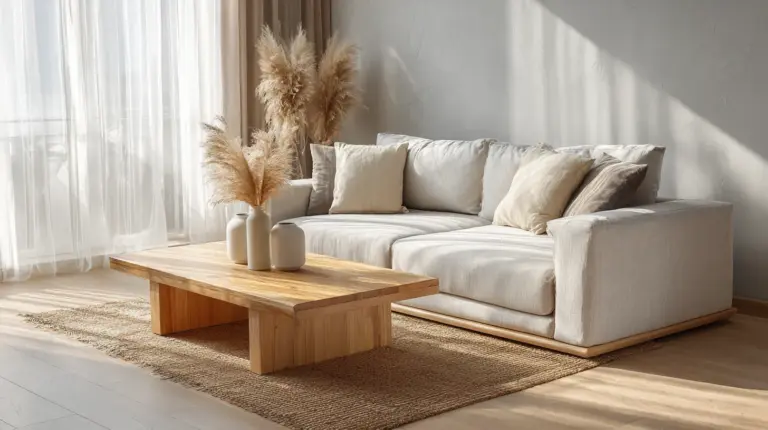
Choose a platform sofa that sits low, with a solid base rather than exposed legs (less space for lost toys). Opt for removable, washable slipcovers in natural linen blends. Rounded armrests prevent injuries during indoor roughhousing.
Look for modular designs that adapt as children grow—sections can be rearranged for playdates or movie nights. Hidden storage underneath keeps the aesthetic clean while accommodating the reality of family life.
Coffee Table: Rounded, Functional, Beautiful
A round or oval coffee table in light wood eliminates sharp corners while maintaining Japandi’s minimalist lines. Choose one with a lower shelf for displaying art books or storing remote controls out of tiny, curious hands.
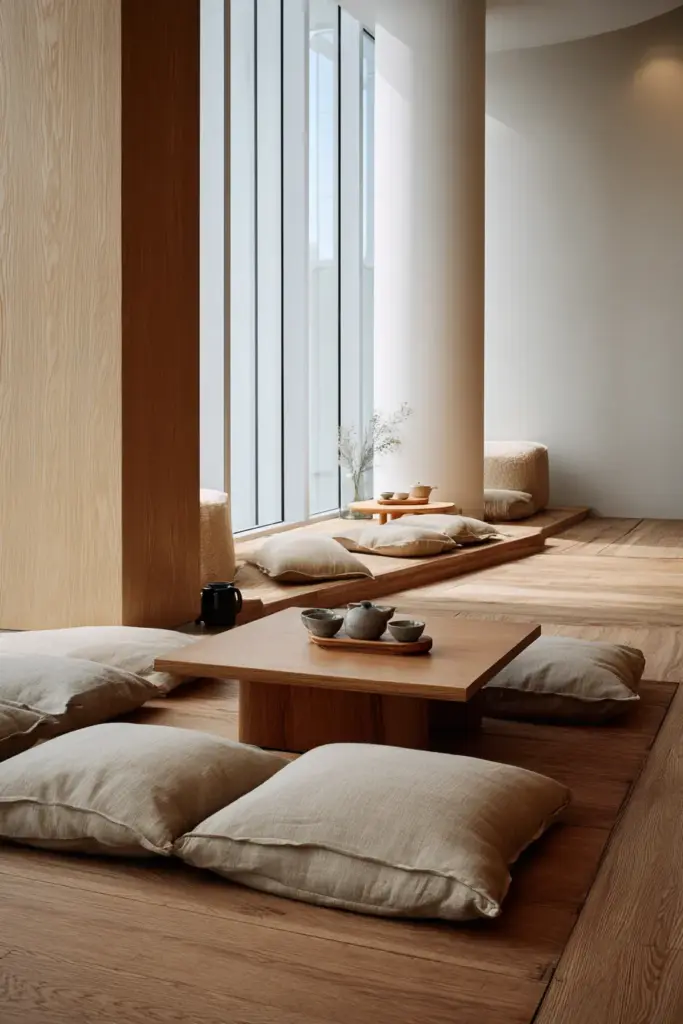
Japanese chabudai tables (low dining tables) work wonderfully as coffee tables in family spaces. Their height suits floor cushion seating while providing a surface for snacks, puzzles, or coloring.
Montessori-Inspired Low Shelving
Open shelving in natural ash or birch, positioned at toddler height, makes toys accessible without creating visual clutter. Rotate displayed items monthly—too many choices overwhelm small decision-makers.
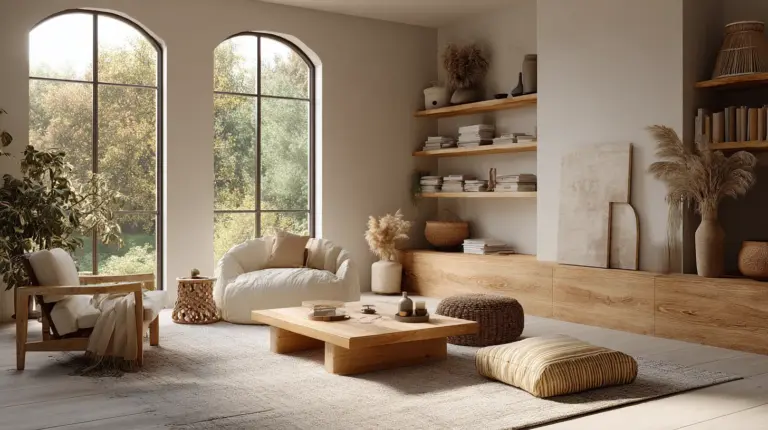
These shelves double as room dividers, creating subtle zones without blocking light. Top surfaces can hold adult items (a ceramic vase, a small plant) while lower shelves serve children’s needs.
Floor Cushions and Tatami Seating
Large floor cushions in neutral linens create flexible seating that children can rearrange for fort-building, then easily reset. Invest in high-density foam cores that maintain shape despite daily use.
A small tatami area defines a meditation corner or reading nook. The natural rush material provides textural interest while feeling special enough that children treat it with respect—a dedicated “calm zone” within the larger living space.
Storage Solutions That Maintain Japandi Minimalism
Woven Baskets: Beautiful and Hardworking
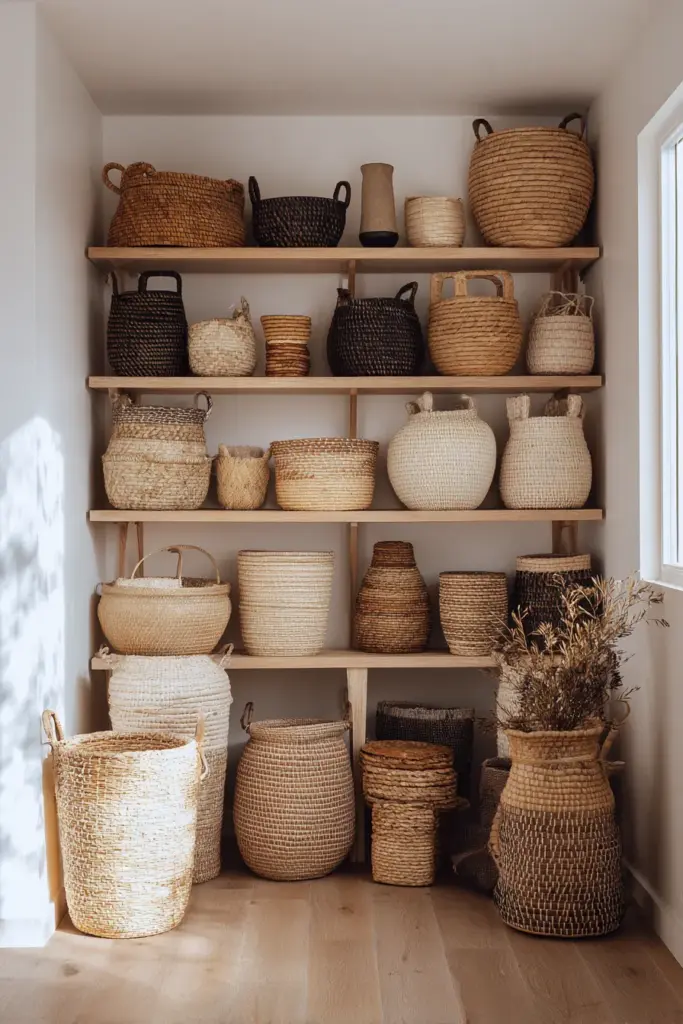
Seagrass, rattan, or bamboo baskets in varying sizes create a cohesive storage system. Large floor baskets corral stuffed animals. Medium baskets on shelves hold art supplies. Small versions organize remote controls.
The natural tones and textures add warmth while hiding visual clutter. Choose handles woven from the same material for a seamless look—no jarring hardware or plastic clips.
Built-In Solutions That Disappear
If renovating, consider built-in benches along walls with lift-up seats hiding toys. Floor-to-ceiling built-in bookcases in light wood provide ample storage while becoming architectural elements rather than furniture pieces taking up floor space.
Hidden compartments beneath window seats or staircases maximize every centimeter—crucial in smaller Philippine urban homes where storage is perpetually scarce.
Toy Rotation System
Instead of storing every toy accessibly, keep most in closed cabinets (perhaps in bedrooms or a dedicated storage room). Rotate items into the living room weekly. This prevents overwhelm, keeps novelty fresh, and maintains the minimalist aesthetic you’re cultivating.
Use uniform storage boxes in natural materials for the rotation system. Label with simple tags in soft colors. The system itself becomes part of the calming ritual of Japandi living.
Lighting for a Calm, Kid-Friendly Japandi Space
Layered, Warm Illumination
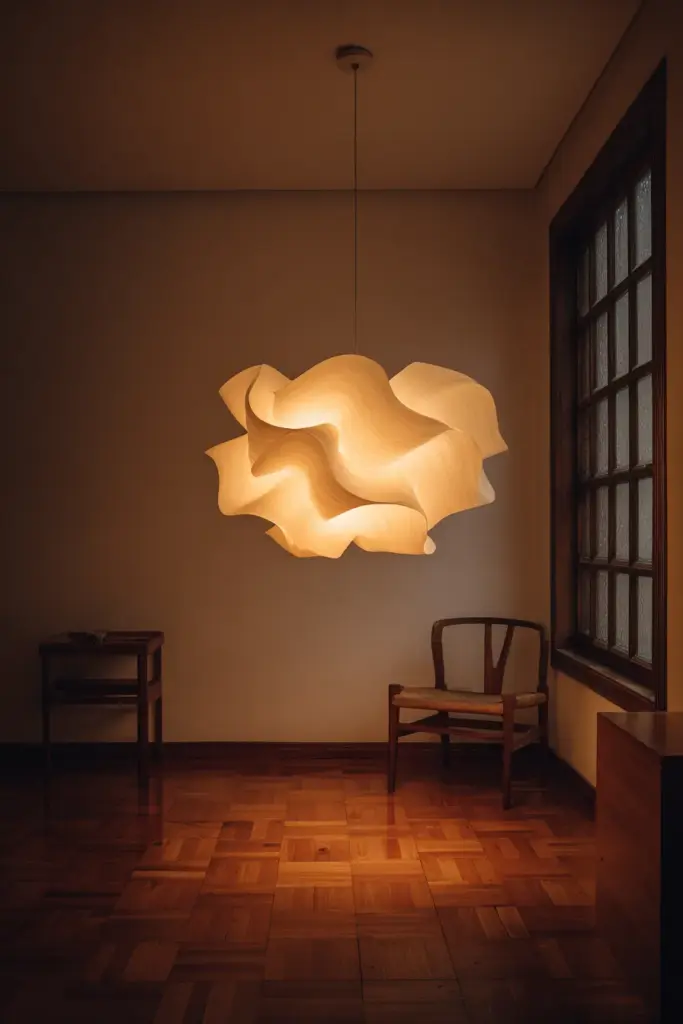
Avoid harsh overhead lighting. Instead, combine paper pendant lamps (hung high enough to avoid curious hands), floor lamps with stable bases, and wall sconces that provide ambient glow.
Choose warm LED bulbs (2700K) that mimic natural light without the blue tones that disrupt children’s circadian rhythms before bedtime. Dimmers on all light sources let you adjust brightness for different activities—bright for playtime, soft for winding down.
Natural Light Maximization
Keep window treatments minimal. Linen curtains in ivory filter light beautifully while maintaining privacy. Avoid heavy drapes that darken spaces unnecessarily.
Position mirrors opposite windows to bounce natural light deeper into the room—a Japanese design trick that makes small spaces feel expansive. Choose simple wood-framed mirrors rather than ornate styles.
Task Lighting for Play and Reading
A flexible arm desk lamp in matte black provides focused light for puzzles or coloring without overwhelming the room’s minimalist aesthetic. Position floor lamps near reading nooks, creating cozy pools of light that invite quiet activities.
String lights are tempting but often read too busy for Japandi sensibilities. If you include them, choose large-bulb versions with warm tones, hung sparingly and intentionally rather than draped everywhere.
Japandi Living Room Kid-Proof Makeover Checklist
Before beginning your transformation, assess your space with this practical guide:
Safety First:
- Round or pad all sharp furniture corners
- Secure tall shelving units to walls with earthquake straps
- Choose low furniture heights (sofas under 18 inches, tables under 16 inches)
- Ensure all rugs have non-slip pads underneath
- Remove breakable décor items from child reach
Furniture Selection:
- Platform or low-profile sofa with washable slipcover
- Rounded coffee table in natural wood
- Montessori-style low shelving in light wood
- Floor cushions with high-density foam cores
- Storage ottoman or bench with hidden compartments
Color and Materials:
- Paint walls in warm white, greige, or soft sand tones
- Choose stain-resistant linen-blend textiles
- Select natural fiber rugs (jute, sisal, washable cotton)
- Incorporate sustainable woods (oak, bamboo, local Philippine hardwoods)
- Add one or two muted accent colors (sage, terracotta, charcoal)
Storage Systems:
- Large woven baskets for toy corralling
- Open shelving at child height for accessible items
- Closed cabinets for toy rotation storage
- Built-in solutions if renovating
- Uniform containers in natural materials
Lighting Design:
- Replace harsh overhead with paper pendant lamps
- Add floor lamps with stable, heavy bases
- Install dimmers on all light switches
- Choose warm LED bulbs (2700K temperature)
- Maximize natural light with minimal window treatments
Zoning Strategy:
- Define play nook with rattan screen or low bookshelf
- Create adult sanctuary corner with single accent chair
- Establish tatami or cushion area for calm activities
- Use rugs to visually separate functional zones
- Maintain visual connection across open-plan spaces
Finishing Touches:
- Display one or two meaningful art pieces
- Add greenery in ceramic planters (choose non-toxic plants)
- Include natural textures (chunky knit throw, ceramic vessels)
- Keep surfaces mostly clear with one curated vignette
- Rotate children’s artwork in simple wood frames
Age-Appropriate Japandi Adaptations
Toddlers (1-3 Years)
Focus on safety and floor-level living. A larger tatami area gives babies room to practice crawling and walking. Floor beds or very low platform beds in bedrooms extend into living spaces with large cushions for supervised napping.
Eliminate small decorative items entirely during this stage. Choose chunkier textures—thick wool blankets, large ceramic bowls—that tiny hands can explore without danger. The simplicity actually benefits development, allowing focus without distraction.
Preschoolers (3-5 Years)
Introduce more interactive elements while maintaining calm. A low art table in one corner with washable supplies. Open shelving displaying rotating toys at eye level. Picture books in a dedicated basket.
This age appreciates beauty—let them help choose which stuffed animal appears on the shelf this week, or which nature find (a special rock, a fallen leaf) displays in the small ceramic bowl on the coffee table. Participation builds respect for the space.
School-Age Children (6+ Years)
Adapt zones for homework and hobbies. A minimalist desk in natural wood tucked near a window. A reading nook with a small bookshelf holding current favorites. Perhaps a floor cushion area that serves as both play space and where older kids lounge while scrolling devices.
Involve them in maintaining the aesthetic. Teach the “one in, one out” rule for toys. Explain how the calm space helps everyone’s mood. Older children often become protective of the peaceful environment once they understand its value.
Comparing Japandi vs. Traditional Kids Living Room Design
| Element | Traditional Kids Living Room | Japandi Family Living Room |
|---|---|---|
| Color Palette | Bright primary colors, bold patterns | Muted neutrals with natural accents |
| Furniture Height | Standard sofas and tables | Low-profile, floor-level pieces |
| Storage Approach | Plastic bins, visible toy boxes | Woven baskets, hidden built-ins |
| Material Focus | Synthetic, wipe-clean plastics | Natural woods, washable linens |
| Décor Philosophy | More is more, stimulating | Minimal, intentional curation |
| Safety Features | Plastic corner guards, gates | Inherently safe rounded edges, low heights |
| Visual Impact | Energetic, playful chaos | Calm, breathable serenity |
| Longevity | Outgrown quickly, replaced often | Grows with family, timeless aesthetic |
| Sensory Effect | High stimulation | Reduced overstimulation, restorative |
2026 Trends: Smart Japandi for Modern Families
Multifunctional Furniture with Hidden Technology
The latest Japandi-inspired pieces integrate charging stations within wooden coffee tables, hidden cable management in minimalist entertainment units, and smart home controls disguised within bamboo panels. Technology serves function without disrupting the aesthetic.
Look for furniture with built-in child safety features—soft-close drawers, magnetic locks on cabinets, all hidden within clean Scandinavian lines. These smart additions make family life easier without visual clutter.
Sustainable, Local Craftsmanship
The global shift toward sustainability aligns perfectly with Japandi values. Seek out Philippine artisans creating furniture from reclaimed local hardwoods, weavers using traditional techniques for modern baskets, and textile artists working with organic cotton and natural dyes.
Supporting local makers reduces environmental impact while creating one-of-a-kind pieces. The slight imperfections—a variation in weave, a knot in the wood—embody wabi-sabi philosophy beautifully.
Biophilic Elements for Child Development
Incorporating more plants, natural light, and organic materials reflects growing research on nature’s developmental benefits for children. A small indoor tree in a ceramic planter. A living wall of easy-care pothos. Windows kept unobstructed for bird-watching.
Choose non-toxic plants like spider plants, prayer plants, or bamboo palms. Position them high enough to avoid toddler sampling but visible enough to bring that essential connection to the natural world indoors.
Common Mistakes to Avoid
Being Too Precious: Japandi should feel lived-in, not museum-like. If you’re constantly stressed about fingerprints, you’ve chosen impractical materials. The aesthetic works with family life, not against it.
Choosing Pure White Everything: Warm whites, creams, and beiges hide the realities of family living far better than stark white. Save bright white for small accent areas only.
Skimping on Storage: Minimalist doesn’t mean lacking adequate storage. Without sufficient hidden storage, clutter will accumulate and destroy the calm you’re cultivating. Invest here first.
Ignoring Texture: Without textural variety, neutral spaces feel flat and cold. Layer materials—smooth wood, nubby linen, soft wool, rough jute—to create visual interest within the restrained palette.
Forgetting Comfort: Low-profile doesn’t mean uncomfortable. Choose quality cushions, supportive seating, and soft textiles. A beautiful but uncomfortable sofa serves no one, especially not tired parents at day’s end.
Conclusion: The Gift of Calm
Creating a Japandi living room for your family isn’t about achieving magazine perfection. It’s about crafting a space that allows everyone to breathe—where children can play freely within gentle boundaries, where visual calm soothes overstimulated nervous systems, where the adults you’re raising them to become see that beauty and function can coexist gracefully.
These spaces teach without lecturing. They show that less truly can be more, that natural materials age beautifully rather than cheaply, that restraint isn’t deprivation but intentional curation. Children growing up in such environments learn to appreciate quality over quantity, to find peace in simplicity, to respect the objects and spaces they inhabit.
And for you, exhausted parent navigating these tender, chaotic years? You deserve a home that doesn’t add to the noise. You deserve a sofa that invites collapse, storage that actually stores, and a room that still feels like yours even when scattered with wooden blocks and board books.
This is the quiet power of Japandi design—it holds space for all of you, exactly as you are.
Frequently Asked Questions
How do I make a Japandi living room work with very young children who need colorful stimulation?
Incorporate color through rotating toys and books rather than permanent décor. Children receive ample visual stimulation from their play items—the space itself can remain calm. Use one or two soft accent colors (sage green, dusty blue) in textiles if concerned, but research shows even young children benefit from environments that aren’t visually overwhelming. Save bright colors for dedicated play areas or bedrooms.
What are the most durable, affordable materials for kid-friendly Japandi furniture?
Bamboo, oak, and locally-sourced Philippine hardwoods like molave offer excellent durability at reasonable price points. For textiles, linen-cotton blends (at least 50% cotton) resist stains while maintaining the natural aesthetic. Jute and sisal rugs withstand heavy traffic and can be spot-cleaned easily. Avoid expensive pure linen on sofas—the blend versions perform better with children while looking identical. Source from local markets and carpentry shops rather than imported Scandinavian brands to cut costs by 60-70%.
Can Japandi style work in small Philippine apartments with limited space?
Absolutely—in fact, Japandi’s minimalist principles make it ideal for smaller spaces. The low-profile furniture creates visual spaciousness. Multi-functional pieces (storage ottomans, built-in benches, modular sofas) maximize limited square meters. The emphasis on decluttering and negative space prevents small rooms from feeling cramped. Use vertical storage with wall-mounted shelves, choose furniture with built-in storage, and embrace the Japanese concept of ma (empty space) as a design element itself.
How do I transition from our current colorful, cluttered living room to Japandi without traumatizing my kids?
Make changes gradually. Start with decluttering—involve children in donating toys they’ve outgrown. Introduce neutral slipcovers over existing sofas before replacing furniture. Add woven baskets for current plastic bins. Explain that you’re creating a u0022calm spaceu0022 together and observe their response—many children actually prefer less visual chaos. Keep a few beloved colorful items but contain them to specific zones. The transition over 3-6 months feels less jarring than an overnight transformation.
Is Japandi living room design suitable for neurodiverse children or those with sensory sensitivities?
Yes, Japandi’s sensory restraint often benefits neurodiverse children significantly. The muted colors, natural materials, and lack of visual clutter reduce overstimulation that can trigger anxiety or meltdowns. Textural variety (soft linens, smooth wood, nubby wool) provides appropriate sensory input without overwhelm. Low lighting options and quiet color palettes create a regulating environment. Many occupational therapists recommend similar principles for sensory-friendly spaces. Just ensure adequate storage so the child can control their environment by putting away items when stimulation levels feel too high.