
Table of Contents
There’s a particular kind of quiet that happens when light filters through linen. It softens the edges of a room, makes the dust motes dance, and invites you to pause. This is the soul of Japandi design — a fusion of Japanese minimalism and Scandinavian warmth that transforms your living room into a sanctuary.
Your curtains aren’t just window dressing. They’re the breath of your space, controlling light like a conductor controls tempo. In a Japandi living room, they whisper rather than shout, offering privacy while celebrating the natural world just beyond your windows.
If you’ve been dreaming of a living space that feels both grounded and graceful, where every element serves a purpose wrapped in beauty, then choosing the right curtains is your first gentle step. Let’s explore how fabric, color, and texture can transform your windows into poetry.
Understanding Japandi Curtain Style
Japandi curtains embody the philosophy of less but better. This design approach marries the Japanese concept of ma (negative space) with Scandinavian hygge (cozy contentment), creating window treatments that feel intentional yet effortless.
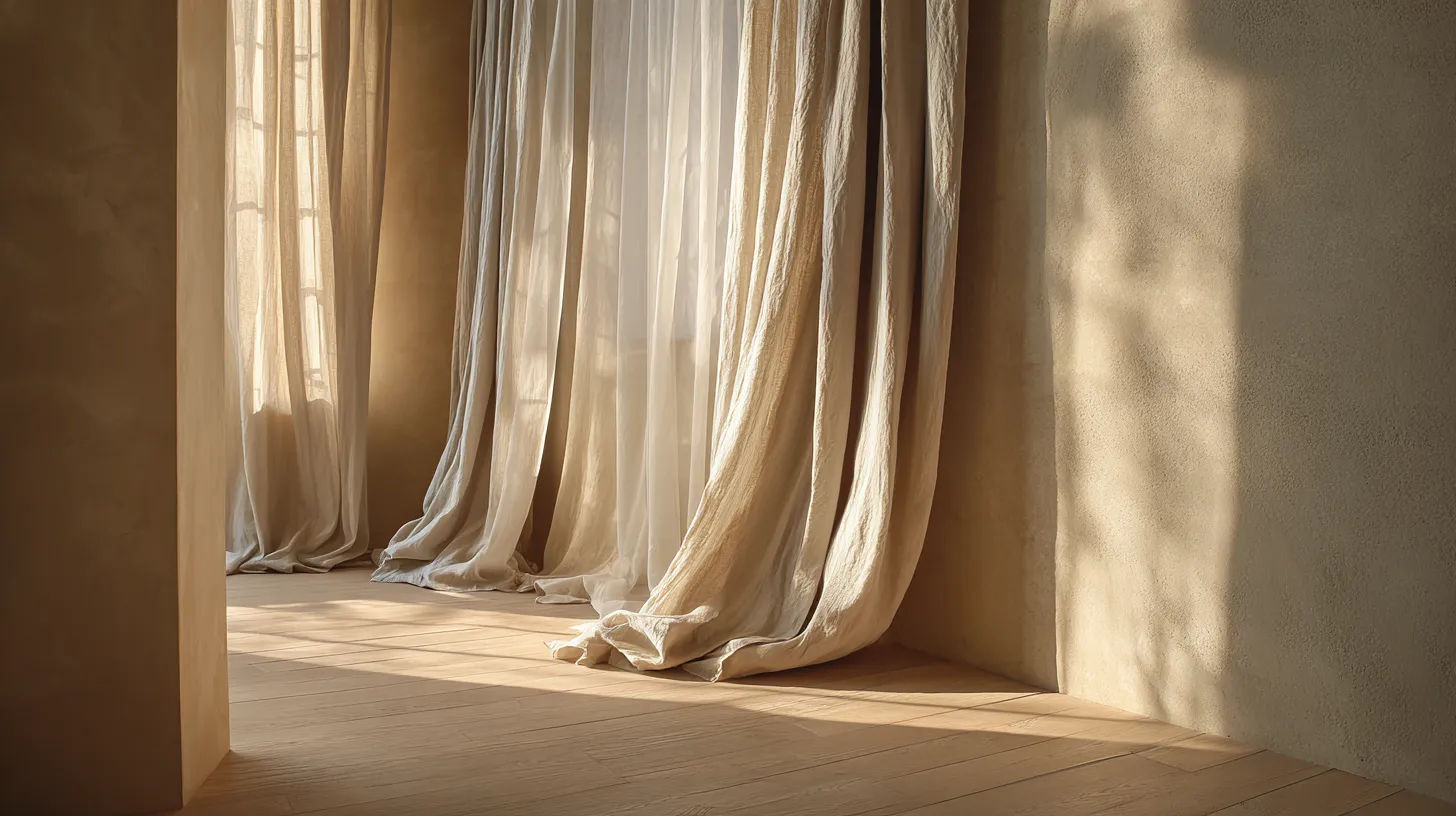
The hallmark of Japandi curtain style lies in clean lines and floor-length drapes that pool ever so slightly on the ground. There are no fussy swags or ornate tiebacks here. Instead, you’ll find simple wave fold headings or subtle pinch pleats that create gentle, rhythmic folds when drawn.
Think of noren-inspired room dividers — those traditional Japanese fabric panels that separate spaces without closing them off entirely. This functional beauty translates perfectly to modern living rooms, where curtains can define zones while maintaining visual flow.
Key Characteristics of Japandi Window Treatments
The beauty lives in restraint. Japandi curtains typically feature minimal or no patterns, allowing texture to create visual interest instead. When patterns do appear, they’re subtle — a gentle slub in the weave, the organic irregularity of hand-loomed fabric, or delicate shibori techniques that echo nature’s imperfections.
Functionality walks hand-in-hand with aesthetics. Your curtains should filter light beautifully during the day and offer adequate privacy at night, often achieved through thoughtful layering rather than heavy, light-blocking fabrics.
The installation itself matters. Floor-to-ceiling mounting creates the illusion of taller windows and more spacious rooms, while the curtains themselves should just kiss the floor — long enough to feel luxurious, not so long they become impractical.
What Color Curtains Go With Japandi Style?
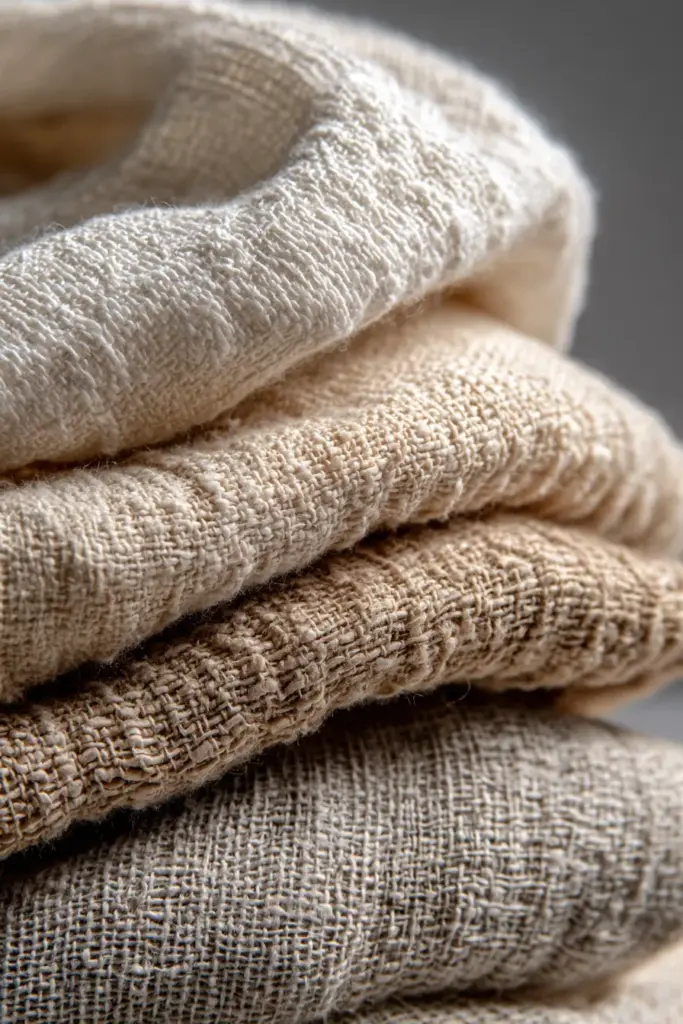
Neutrals are your north star. The Japandi palette draws from nature’s most calming moments — the pale sand of morning beaches, the warm beige of unbleached linen, the soft gray of river stones smoothed by time.
Ivory and cream bring warmth without weight, reflecting light back into your living room while maintaining that airy, open feeling central to Japandi design. These shades work beautifully in spaces with limited natural light, gently brightening the room without the starkness of pure white.
Taupe and greige (that perfect gray-beige hybrid) offer sophisticated neutrality. They ground a space, providing just enough depth to feel cozy while keeping the palette cohesive with natural wood furniture and stone accents.
Expanding Beyond Basic Neutrals
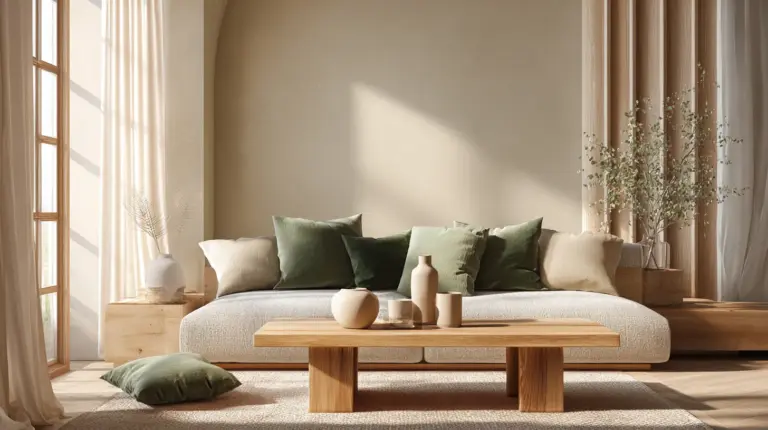
Muted earth tones add unexpected richness. Consider dusty sage, warm terracotta, or soft charcoal — colors that feel pulled from nature rather than imposed upon it. A sage linen curtain paired with light oak furniture creates a living room that breathes with organic harmony.
The key is keeping saturation low. Even when you venture into color, choose shades that have been softened, as if filtered through morning fog. These tones complement rather than compete with your minimalist furniture and natural textures.
Monochromatic layering creates depth without visual noise. Pair ivory sheers with warm beige drapes, or combine two weights of the same linen in slightly different tones for a sophisticated, tonal effect.
Color Comparison for Japandi Living Rooms
| Color | Light Reflection | Best For | Pairs Well With |
|---|---|---|---|
| Ivory/Cream | High | Small spaces, dark rooms | Walnut, teak, rattan |
| Taupe/Greige | Medium-High | Medium to large rooms | Oak, bamboo, concrete |
| Soft Charcoal | Low-Medium | Bright rooms needing grounding | Light woods, white walls |
| Muted Sage | Medium | Rooms with natural views | Natural wood, stone accents |
| Warm Beige | Medium-High | Universal application | All wood tones, neutral palettes |
What Fabric Is Best for Japandi Curtains?
Natural fibers are non-negotiable. The Japandi aesthetic celebrates materials in their most honest form — linen with its characteristic slubs, cotton with its breathable simplicity, even wool and silk in their most minimal expressions.
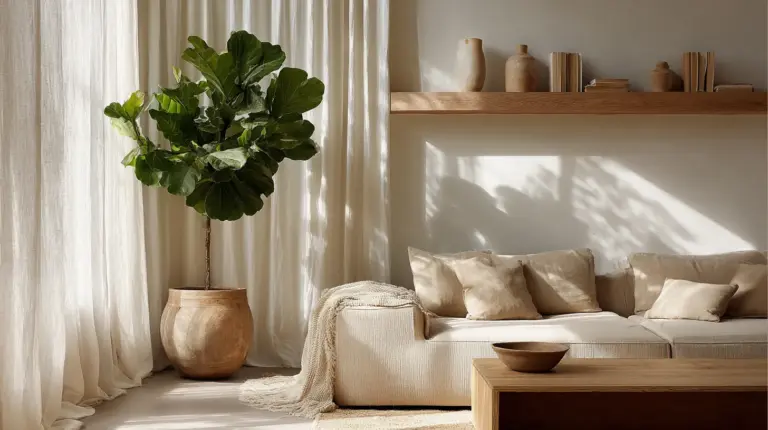
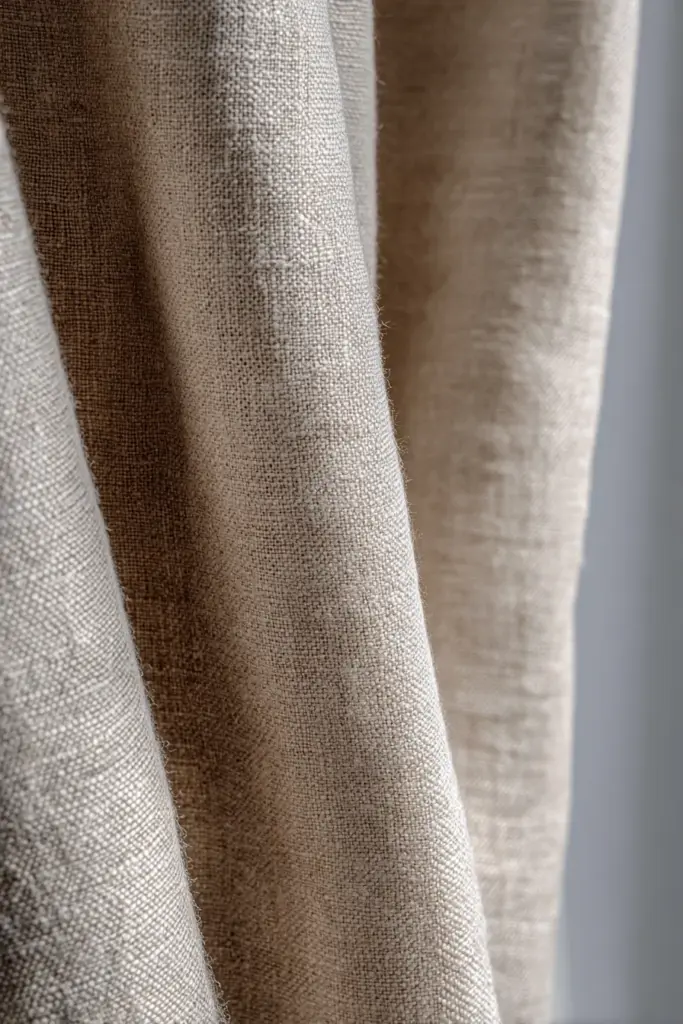
Linen reigns supreme in Japandi interiors. Its organic texture catches light beautifully, creating subtle variations throughout the day as the sun moves across your windows. Pure linen or linen blends offer that perfectly imperfect drape, hanging with natural elegance rather than stiff formality.
The fabric should have presence — enough weight to hang beautifully but not so heavy it blocks all light. A medium-weight linen (approximately 180-220 GSM) achieves this balance, providing privacy while maintaining that luminous, lived-in quality.
Exploring Natural Fabric Options
Cotton voile and organic cotton bring softness and accessibility. These lighter fabrics work wonderfully as sheer layers, diffusing harsh sunlight into a gentle glow that flatters furniture and faces alike. Organic cotton aligns with the sustainable values inherent to Japandi philosophy.
Slub cotton offers texture enthusiasts something to love. The irregular yarns create a visual depth that plain weaves can’t match, adding interest without patterns or prints. This fabric strikes a beautiful balance between casual and refined.
For those in humid climates, consider linen-cotton blends that resist humidity better than pure linen while maintaining natural aesthetics. This practical consideration matters especially in tropical regions where pure linen might not perform ideally year-round.
Material Selection Guide
- Pure Linen: Best for dry climates, offers authentic Japandi texture, requires regular ironing for crisp look or embrace relaxed wrinkles
- Linen-Cotton Blend (55/45 or 70/30): Humidity-resistant, lower maintenance, slightly smoother drape
- Cotton Voile: Ideal for layering, provides sheer filtration, budget-friendly option
- Slub Cotton: Adds visual texture, medium weight, good light filtration
- Organic Cotton: Sustainable choice, soft hand feel, suitable for eco-conscious homes
- Wool Blend: Acoustic benefits, heavier drape, best for colder climates
Are Linen Curtains Japandi?
Absolutely — linen curtains are perhaps the most quintessentially Japandi choice. Their natural, slightly rumpled appearance embodies the Japanese aesthetic principle of wabi-sabi, finding beauty in imperfection and impermanence.
Linen’s inherent characteristics align perfectly with Japandi values. The fabric ages gracefully, softening over time rather than deteriorating. Its subtle texture creates visual interest without busy patterns, and its organic origins connect your interior to the natural world.
However, linen curtains work best when thoughtfully implemented. Pure linen sheers alone may not provide adequate privacy for evening hours, which brings us to the art of layering.
The Art of Layering Linen
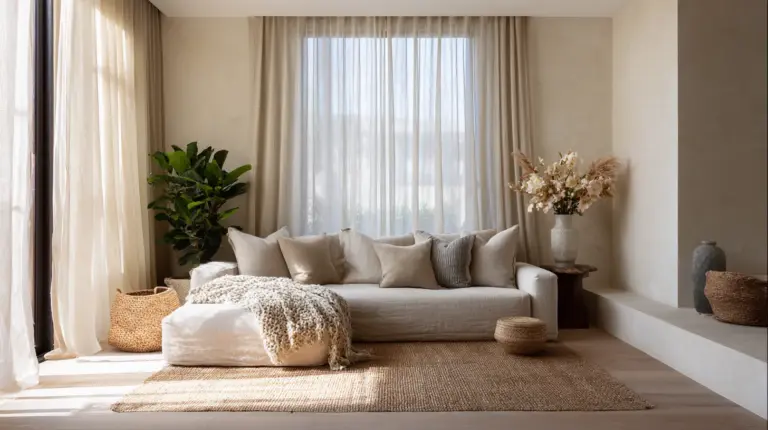
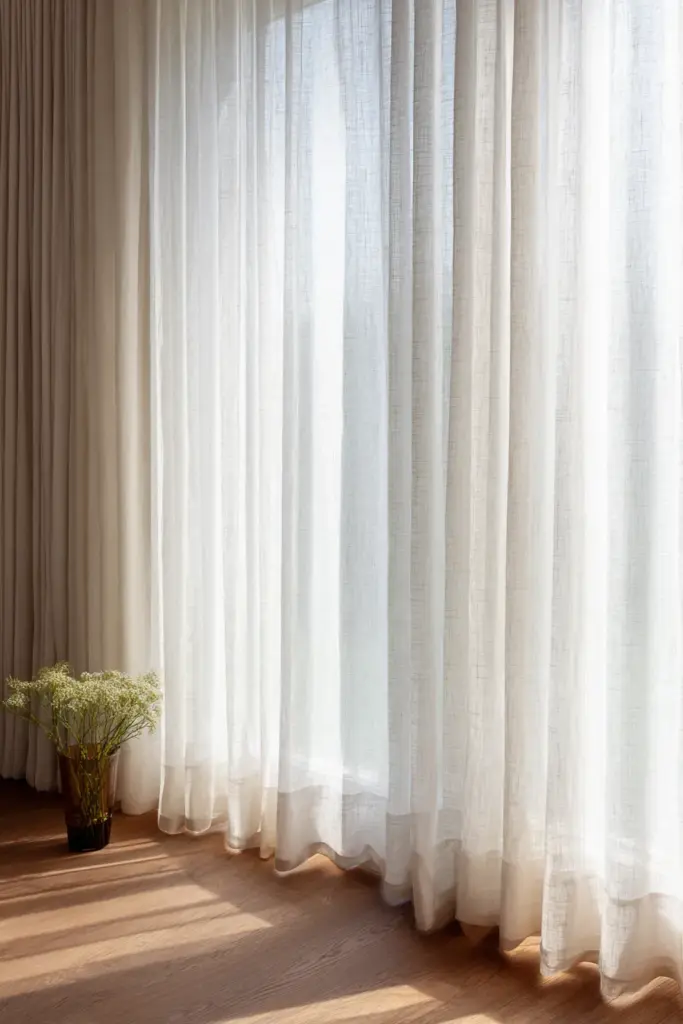
Combine sheer linen panels with heavier natural drapes for both beauty and function. During the day, draw back the outer layer to enjoy filtered light through lightweight linen. As evening approaches, close the heavier curtains for privacy without sacrificing style.
Consider a 70% blackout linen-backed curtain paired with a sheer organic cotton voile. This combination gives you flexibility — sheer alone for bright mornings, both layers for cozy movie nights, or just the outer curtain for balanced light control.
The layering should feel intentional but effortless. Use simple curtain rods in matte black, natural wood, or brushed brass — materials that complement rather than compete with your fabric choices.
Styling Japandi Living Room Curtains
Installation height transforms proportion. Mount your curtain rods as close to the ceiling as possible, even if your windows sit lower. This visual trick elongates your walls and makes the entire room feel more spacious and open.
Your curtains should just kiss or slightly puddle on the floor — approximately half an inch of fabric touching the ground. This length feels luxurious and intentional, avoiding the awkward gap of too-short curtains or the impractical excess of dramatic pooling.
Width matters as much as length. Choose panels that, when closed, provide 1.5 to 2 times the width of your window. This creates those beautiful, generous folds that make Japandi curtains look expensive and considered rather than stretched tight across the opening.
Hardware and Hanging Techniques
Wave fold headings create the soft, rippling effect you see in high-end Japandi spaces. This hanging style produces consistent, elegant folds that work whether curtains are open or closed. While more expensive than standard options, the visual impact justifies the investment.
Simple rod pocket or back tab headings offer budget-friendly alternatives with clean aesthetics. Avoid ornate grommets or excessive pleating — the simpler, the better.
Consider wooden or matte black curtain rods in diameters of 1 to 1.5 inches. These finishes disappear into the design rather than announcing themselves, keeping focus on the fabric’s natural beauty.
Room-Specific Considerations
For small living rooms, stick with lighter neutral curtains (ivory, pale beige) and avoid heavy layering. Single-panel medium-weight linen in warm cream can make a compact space feel surprisingly airy.
In large, bright living rooms, embrace deeper neutrals like taupe or soft charcoal. These rooms can handle the visual weight, and darker curtains actually help balance abundant natural light, preventing the space from feeling washed out.
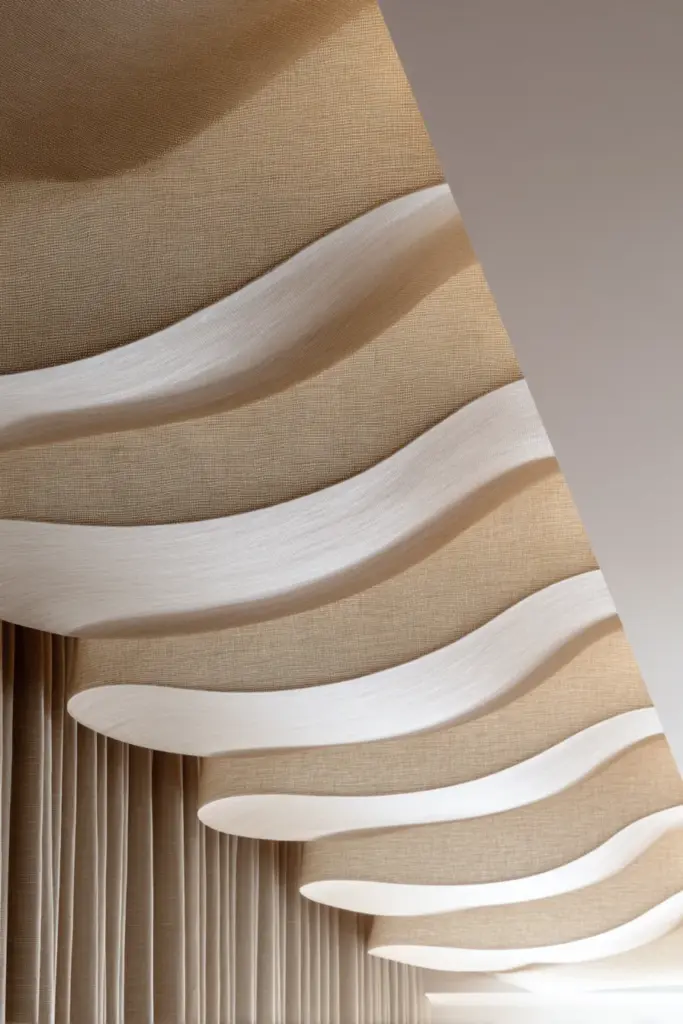
If your living room features distinctive architectural elements — exposed beams, statement lighting fixtures, or unique molding — choose curtains that complement rather than compete. Simple, solid-colored linen allows these features to shine.
Budget-Friendly Japandi Curtain Solutions
Japandi style doesn’t require luxury pricing. Smart shopping and creative thinking can achieve the aesthetic at accessible price points, especially important in markets with budget constraints.
IKEA hacks offer surprising potential. Their simple linen-look curtains (like the GUNRID air-purifying panels or AINA linen curtains) can be elevated with upgraded hardware or subtle DIY customizations. At under PHP 5,000 for a complete living room window treatment, this approach delivers authentic Japandi vibes without financial stress.
Thrift stores and fabric markets hold hidden treasures. Look for natural fiber curtains in neutral tones that need minor alterations — hemming, adding weight to the bottom, or simply ironing and rehanging with better hardware.
DIY and Upcycling Approaches
Purchase raw linen or cotton fabric by the meter and create simple curtains yourself. A straight hem is manageable even for beginners, and the savings can be substantial — fabric costs typically range from PHP 300-800 per meter versus PHP 2,000-5,000 for ready-made curtains.
Transform existing curtains with natural dye. Tea, coffee, or onion skins create beautiful muted tones that align perfectly with Japandi palettes. This technique works especially well for white or cream curtains that feel too bright.
Consider mixing high and low. Invest in quality curtain rods and beautiful tiebacks, then pair them with budget-friendly fabric panels. The eye notices the overall effect — the quality hardware elevates the entire installation.
Cost Breakdown by Approach
| Approach | Estimated Cost (PHP) | Time Investment | Skill Required |
|---|---|---|---|
| IKEA ready-made | 3,000-5,000 | Minimal | None |
| Fabric by meter + DIY | 2,500-4,000 | Moderate | Basic sewing |
| Thrifted + altered | 1,500-3,000 | Moderate | Basic alterations |
| Natural dyeing project | 500-1,500 | High | Moderate |
| Quality hardware + budget panels | 3,500-6,000 | Low | None |
Maintenance and Care for Natural Fabrics
Linen and cotton curtains require thoughtful care to maintain their beauty. The good news? Japandi style embraces a slightly relaxed, lived-in aesthetic, making maintenance less demanding than you might expect.
Regular dusting prevents buildup that can dull fabric over time. A gentle shake or quick vacuum with the upholstery attachment every two weeks keeps curtains fresh between deeper cleanings.
For washing, check fabric care labels carefully. Most linen and cotton curtains handle gentle machine washing in cool or lukewarm water. Remove promptly and hang while still slightly damp — this prevents excessive wrinkling and allows gravity to naturally straighten the fabric.
Stain Removal and Longevity Tips
Treat stains immediately for best results. Blot (never rub) fresh spills with a clean, damp cloth. For stubborn marks, a solution of mild soap and cool water usually suffices for natural fibers.
UV protection extends curtain life, especially in tropical climates with intense sun. Consider sheer underlayers that take the brunt of sun exposure, or rotate panels seasonally if you have extras.
Embrace the natural softening of linen over time. What might seem like “wearing out” in other fabrics becomes part of linen’s charm in Japandi design — the gentle patina of well-loved textiles.
Humidity Considerations for Tropical Climates
In humid regions, natural fibers need air circulation to prevent mildew. Avoid leaving curtains bunched closed for extended periods. Open windows when possible to allow fresh air movement around fabric.
Consider adding silica gel packets to curtain storage areas or using dehumidifiers in particularly damp rooms. Prevention is easier than treating mildew on natural fabrics.
If mildew does appear, sun-drying often resolves minor issues. Sunlight’s natural disinfecting properties work wonders on organic fabrics, though prolonged exposure can fade colors over time.
Integrating Curtains With Japandi Living Room Elements
Your curtains exist in conversation with the entire room. The most successful Japandi spaces create visual harmony between window treatments, furniture, and architectural elements.
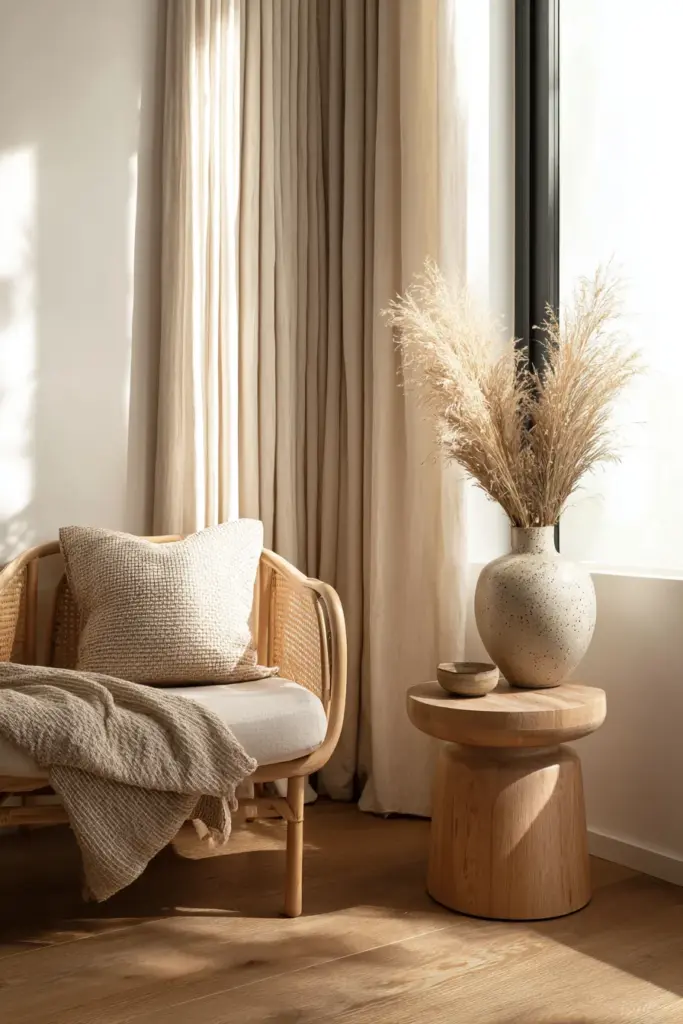
Wood tones should complement your curtain color. Warm beige linen pairs beautifully with teak or walnut, while cooler gray-toned curtains enhance the beauty of light oak or ash furniture. This coordination needn’t be exact — think complementary rather than matching.
Consider how curtains frame your rattan furniture or bamboo accents. Natural fiber curtains echo these organic materials, creating cohesive visual rhythm throughout the space.
Balancing Texture and Pattern
In a Japandi living room, curtains often provide the primary textile element. If your sofa features solid upholstery and your rug is minimal, curtains can introduce subtle texture through slub weaves or gentle linen irregularity.
Conversely, if you have a textured bouclé sofa or patterned throw pillows, simpler smooth-weave curtains prevent visual overwhelm. The goal is balanced interest — enough texture to feel inviting, not so much that the eye doesn’t know where to rest.
Layer textures thoughtfully. Smooth cotton voile sheers against rougher linen drapes create tactile interest. This interplay of surfaces enriches the sensory experience of your living room.
Light and Shadow Play
Observe how sunlight moves through your space at different times of day. East-facing windows flood with morning light, while west-facing windows can overwhelm in late afternoon. Your curtain choices should respond to these patterns.
Sheer curtains on south-facing windows (in the northern hemisphere) diffuse constant light beautifully. Heavier layered treatments on west windows tame harsh afternoon sun without completely blocking warmth and brightness.
Consider the shadows your curtains create when drawn open. The folds and draping produce ever-changing patterns on walls and floors — free, dynamic art that shifts with the sun’s movement.
Sustainable and Eco-Conscious Choices
Japandi philosophy inherently values sustainability. Choosing curtains aligns with these principles when you prioritize longevity, natural materials, and ethical production.
Look for OEKO-TEX certified fabrics that ensure no harmful chemicals in textile production. This certification matters especially for living room curtains that exist in your breathing space for years.
Organic cotton and linen require significant water in cultivation, but choosing these materials still beats synthetic alternatives in overall environmental impact. Supporting brands transparent about their production methods helps drive positive industry change.
Multifunctional Benefits
Natural fiber curtains offer acoustic benefits that synthetic materials can’t match. The density and texture of linen or heavy cotton help absorb sound, reducing echo in hardwood-floored living rooms and creating more peaceful environments.
Thermal regulation is another hidden benefit. Natural curtains provide insulation without chemical treatments, helping maintain comfortable room temperatures and potentially reducing energy costs.
Consider curtains as room dividers beyond windows. Noren-style panels can define zones in open-plan living spaces, creating flexible boundaries that maintain Japandi’s emphasis on flow and negative space.
Supporting Ethical Production
Research brands committed to fair labor practices and sustainable supply chains. While not all budget options meet these criteria, even incremental choices toward ethical purchasing contribute to positive change.
Consider the complete lifecycle. A higher-quality linen curtain lasting ten years creates less waste than cheap synthetic panels replaced every two years. Investment pieces align perfectly with Japandi’s quality-over-quantity philosophy.
Key Takeaways for Japandi Living Room Curtains
Before we part, here’s your gentle checklist for choosing curtains that transform your living room into a Japandi sanctuary:
- Embrace natural fibers: Prioritize linen, cotton, and blends for authentic texture and sustainability
- Choose neutral, nature-inspired colors: Ivory, beige, taupe, greige, muted sage, or soft charcoal
- Install floor-to-ceiling: Mount rods near the ceiling, let panels kiss the floor
- Layer for function: Combine sheers with heavier drapes for flexible light control
- Keep it simple: Clean lines, minimal patterns, quality over ornamentation
- Consider your climate: Linen-cotton blends for humidity, pure linen for dry environments
- Invest thoughtfully: Quality hardware elevates even budget-friendly panels
- Maintain naturally: Regular dusting, gentle washing, embrace lived-in softness
- Create harmony: Coordinate with wood tones, furniture, and existing textures
- Think sustainability: OEKO-TEX certification, organic materials, longevity-focused choices
Conclusion: Windows to Serenity
Your living room windows are more than architectural openings. They’re portals to sky and season, to changing light and shifting weather. The curtains you choose become the gentle mediators between outside and in, between openness and shelter.
Japandi curtains invite you to slow down. They ask you to notice how morning light feels different from evening glow, to appreciate the whisper of linen moving in an open window, to find peace in simple, natural beauty.
When you draw your curtains closed at day’s end, you’re not just ensuring privacy. You’re creating a cocoon of calm, a space where nothing demands attention, where everything simply is. This is the gift of thoughtful design — rooms that nurture without effort, that feel both intentional and effortless.
May your windows frame beauty. May your curtains filter light with grace. And may your living room become the sanctuary you deserve.
Frequently Asked Questions
What color curtains are best for small Japandi living rooms?
Light neutrals like ivory, cream, or warm beige work best for smaller spaces. These colors reflect natural light, making the room feel larger and more open. Avoid dark or heavy colors that can make compact living rooms feel closed in. Pair light curtains with ceiling-mounted rods to create vertical visual lines that enhance the sense of height.
Can I use blackout curtains in a Japandi living room?
Yes, but choose carefully. Look for blackout linen or linen-backed curtains in natural colors rather than synthetic materials in stark black. A 70% blackout rating often provides enough light control for comfortable TV viewing while maintaining the soft, natural aesthetic Japandi design requires. Layer blackout panels behind sheer curtains for the most flexibility.
How do I clean linen Japandi curtains without ruining them?
Machine wash on gentle cycle with cool water and mild, plant-based detergent. Remove while slightly damp and hang immediately to minimize wrinkles — the weight of the damp fabric naturally straightens panels. Iron on medium heat while still slightly damp if you prefer crisp lines, or embrace the relaxed, lived-in texture that suits Japandi style. Avoid harsh chemicals and high heat that can damage natural fibers.
Are Japandi curtains suitable for humid tropical climates?
Absolutely, with slight modifications. Choose linen-cotton blends (rather than pure linen) that resist humidity and mildew better while maintaining natural aesthetics. Ensure good air circulation around curtains, open windows regularly, and consider using dehumidifiers in particularly damp rooms. The natural breathability of organic fabrics actually performs better in tropical climates than synthetic alternatives when properly maintained.
What’s the most budget-friendly way to achieve Japandi curtains?
Start with IKEA’s natural fiber curtains (under PHP 5,000 for most living rooms) and upgrade the hardware to matte black or wood rods. Alternatively, purchase raw linen or cotton fabric by the meter and create simple rod-pocket curtains yourself — even basic sewing skills suffice for straight hems. Thrifted neutral curtains can be transformed with natural dyes (tea, coffee) into perfect Japandi tones for under PHP 3,000 total investment.