
Table of Contents
There’s something about a fireplace that makes a room feel alive. The flicker of flame, the slow warmth spreading across wood floors, the way shadows dance on neutral walls — it’s the kind of beauty that asks you to stay awhile.
In Japandi design, the fireplace isn’t just a heat source. It’s a focal point that embodies the philosophy itself: functional simplicity meeting organic warmth. It’s where Scandinavian hygge embraces Japanese wabi-sabi, creating spaces that feel both pared back and deeply comforting.
If you’re dreaming of a living room that breathes calmness while centering around a beautiful fire, you’re in exactly the right place. Let’s explore how to create a Japandi fireplace that becomes the quiet heart of your home.
What Makes a Fireplace “Japandi”?
A Japandi fireplace balances two design philosophies with remarkable grace. From Scandinavia, it borrows cozy minimalism, natural light, and hygge warmth. From Japan, it takes refined craftsmanship, negative space, and an appreciation for imperfection.
The result? Clean lines meet organic textures. Neutral tones create a serene backdrop while natural materials — wood, stone, clay, concrete — add tactile richness. There’s no clutter, no excess, just intentional elements that serve both beauty and purpose.
Key Characteristics
- Natural materials: Unfinished wood mantels, stone surrounds, concrete hearths
- Neutral color palette: Warm grays, beiges, soft whites, charcoal blacks
- Minimalist aesthetic: Clean lines, negative space, restrained ornamentation
- Sustainable choices: Eco-friendly inserts, reclaimed wood, ethically sourced stone
- Functional beauty: Every element serves a purpose while elevating the design
Choosing Materials for Your Japandi Fireplace
The materials you select define the entire mood of your fireplace. In Japandi design, authenticity matters — each texture should feel honest, unforced, quietly beautiful.
Wood Elements
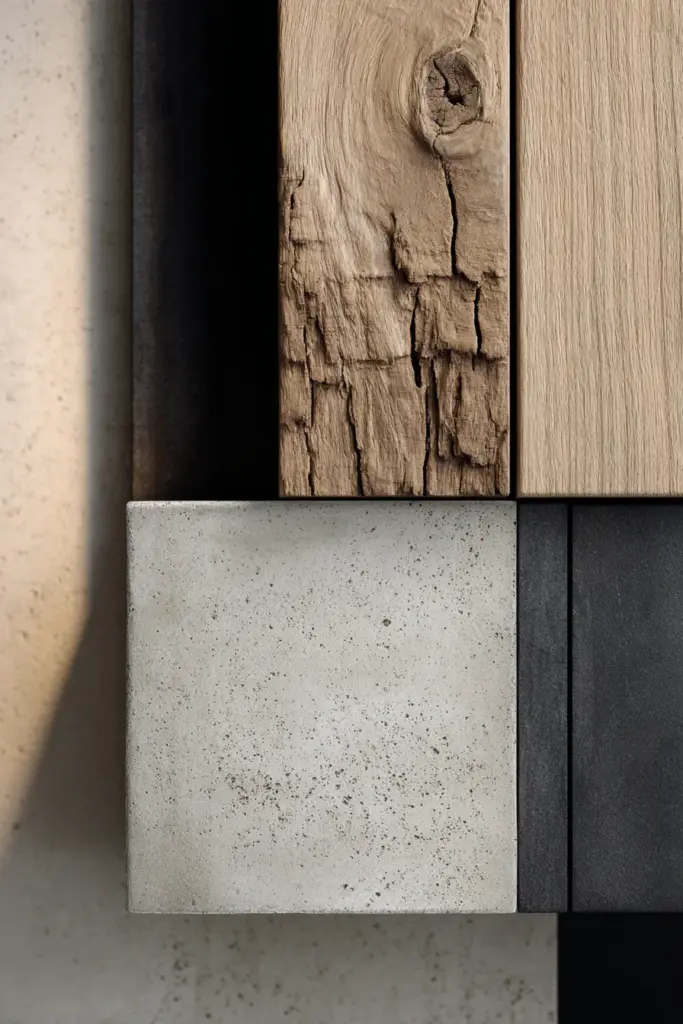
Wood brings instant warmth to minimalist spaces. Consider a floating oak mantel with visible grain, or vertical wood slat cladding that adds subtle rhythm without overwhelming the eye. Reclaimed timber brings wabi-sabi character, celebrating the beauty of age and imperfection.
For tropical climates like the Philippines, choose hardwoods like narra or molave that resist humidity naturally. Seal them properly to prevent warping while maintaining their organic texture.
Stone and Concrete
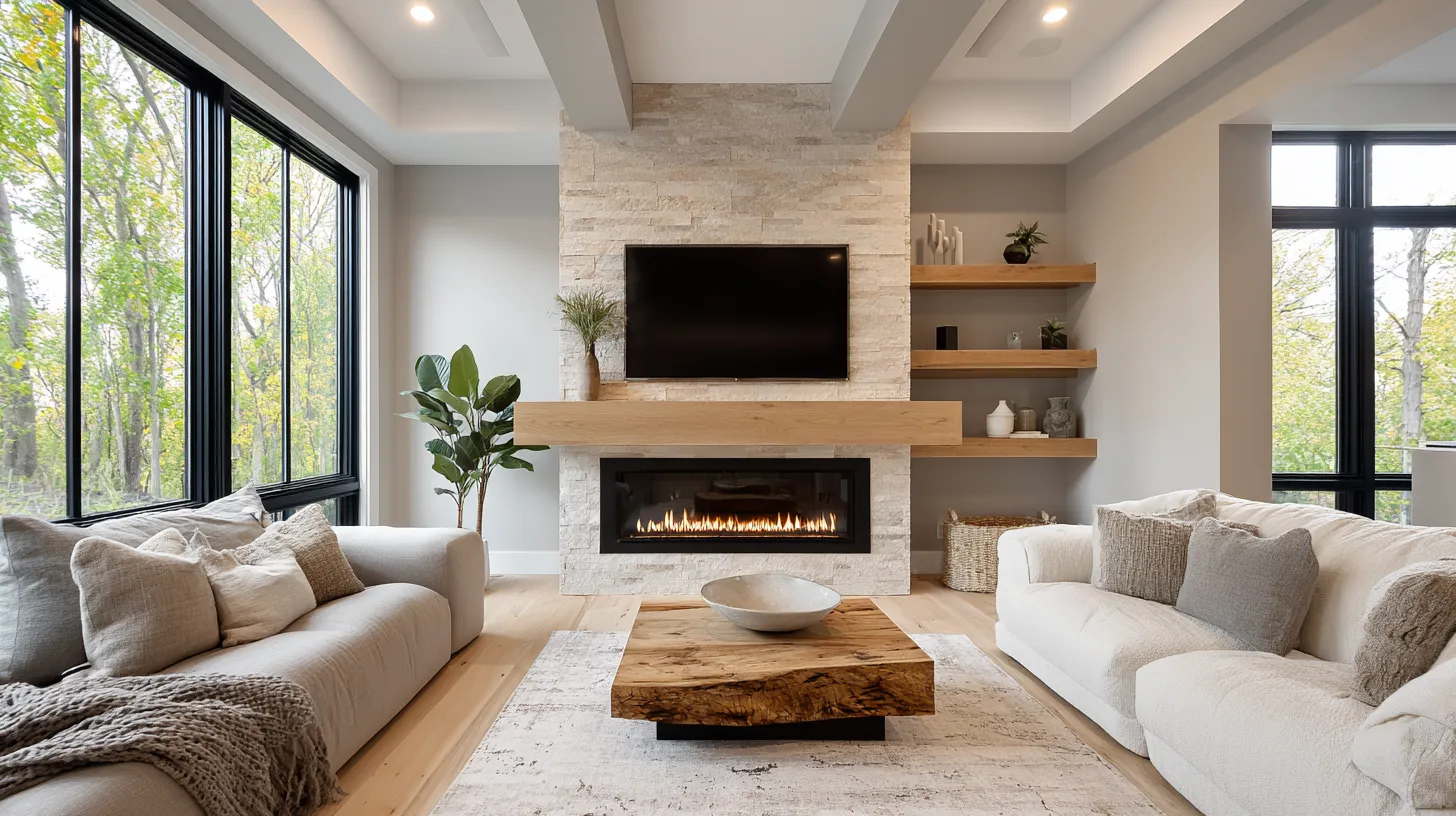
Stone grounds a fireplace with earthy permanence. Light limestone or travertine creates a soft, luminous surround that reflects firelight beautifully. For a more industrial-meets-organic feel, smooth concrete brings cool minimalism with surprising warmth.
Stacked stone in muted grays or beiges adds gentle texture without pattern overload. The key is consistency — stick to one stone type and let its natural variation provide visual interest.
Metal Accents
Black steel frames create striking contrast against neutral walls while maintaining clean lines. Brushed brass or aged copper adds subtle warmth without demanding attention. These metals work especially well for fireplace doors, log holders, or minimalist tool sets.
Keep metal elements sparse. One or two thoughtfully placed pieces create more impact than scattered accents throughout the room.
Design Ideas for Japandi Living Room Fireplaces
The Floating Mantel Statement
A single thick wood slab suspended above the fireplace becomes sculpture and shelf in one. Style it with absolute restraint — perhaps a single ceramic vase, a small sculptural object, or just beautiful emptiness.
This approach emphasizes horizontal lines and negative space, two pillars of Japandi aesthetics. The mantel floats, the wall breathes, and the fire becomes the true star.
Floor-to-Ceiling Minimalism
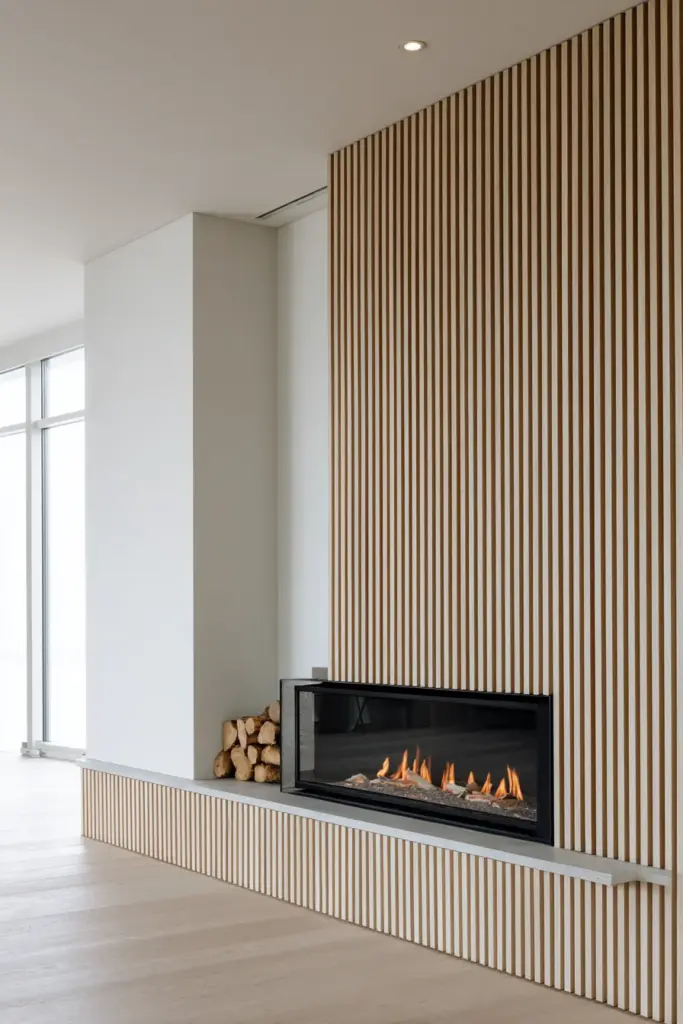
Extend your fireplace materials from floor to ceiling for dramatic simplicity. Vertical wood slats or smooth concrete create an unbroken line that draws the eye upward, making rooms feel taller and more serene.
This works beautifully in smaller living rooms common in Metro Manila condos. The vertical emphasis adds spaciousness without requiring extra square footage.
Built-In Seating Integration
Low platform seating built into the fireplace wall creates an intimate gathering spot. Topped with linen cushions in oatmeal or charcoal, it embodies hygge comfort within Japanese-inspired restraint.
This design solution is particularly practical for compact spaces, eliminating the need for bulky furniture while maintaining clean sightlines.
Two-Tone Contrast
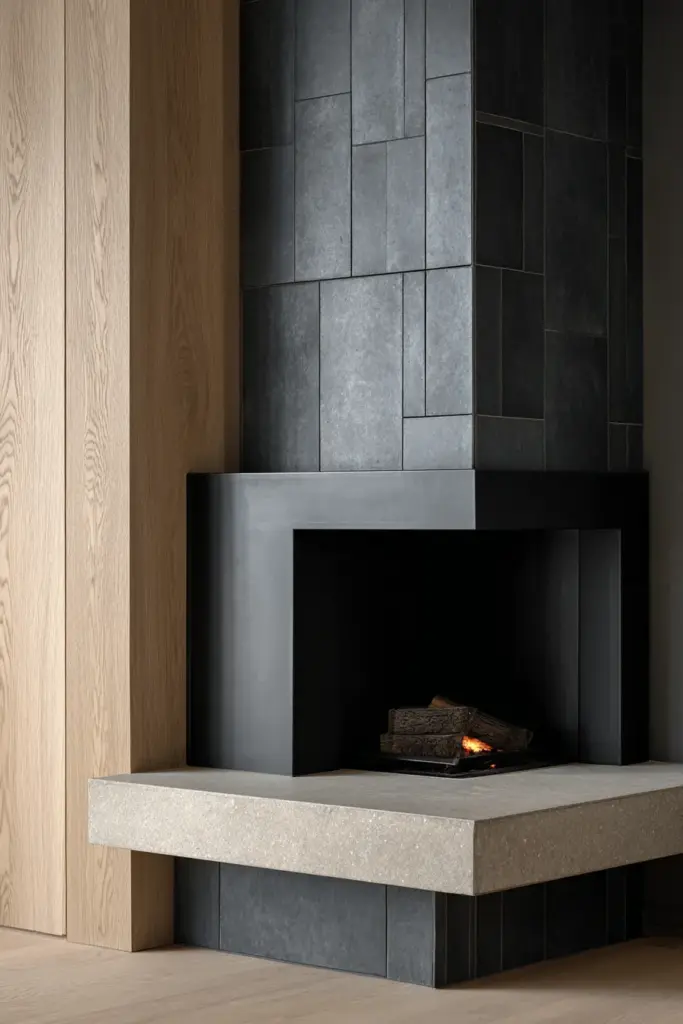
Pair light wood with dark stone, or soft plaster with black steel. These material contrasts define Japandi style — balancing warm and cool, organic and industrial, light and shadow.
The contrast should feel natural, never jarring. Think: pale ash wood against charcoal tiles, or warm limestone beside a matte black firebox.
Styling Your Japandi Fireplace Space
Furniture Arrangement
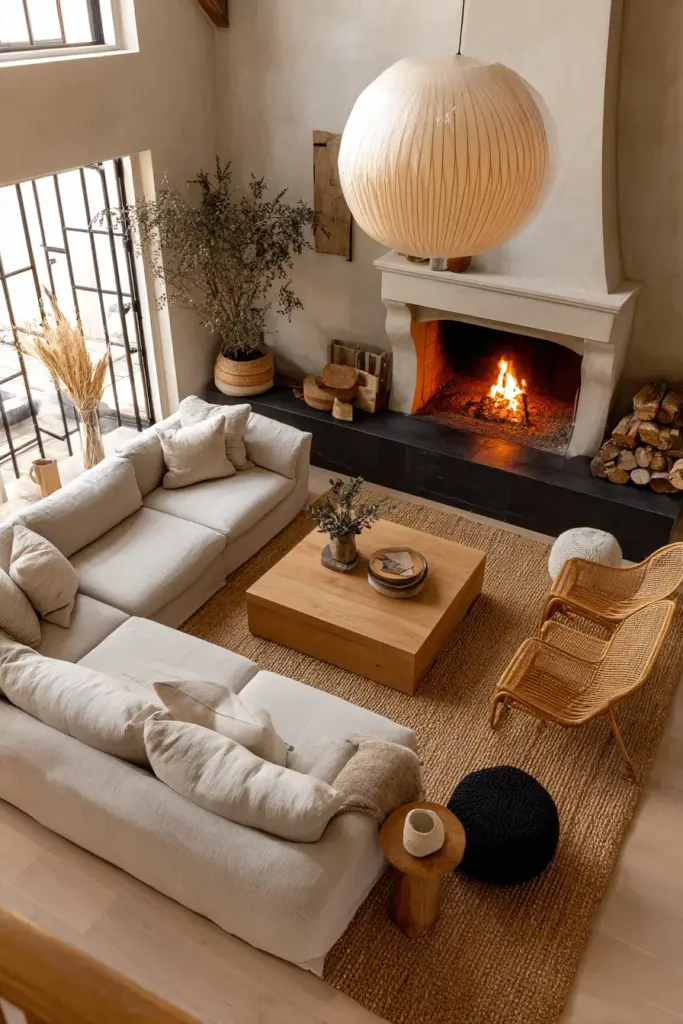
Position low-profile seating in a gentle arc around the fireplace, maintaining generous negative space. A wool or jute area rug anchors the zone without cluttering it. Choose pieces with slim legs and natural upholstery — linen sofas, oak coffee tables, rattan accent chairs.
Leave breathing room. In Japandi design, what you don’t place is as important as what you do.
Layered Lighting
The fireplace provides ambient glow, but layer in additional light sources for functionality. Paper pendant lamps cast soft shadows. Ceramic table lamps on side tables add pools of warm light. Keep fixtures simple, sculptural, never ornate.
Dimmer switches are essential. They let you adjust the mood from bright morning light to evening coziness as the fire takes over.
Organic Accents
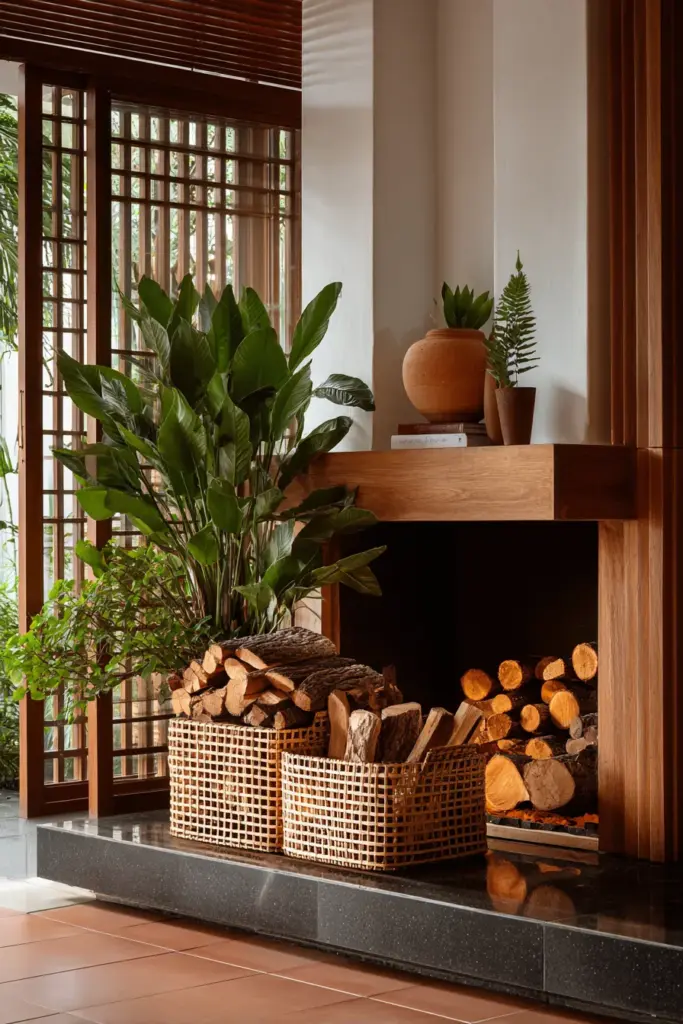
A single ikebana arrangement in a handmade ceramic vase. A woven basket holding sustainably sourced firewood. A small indoor plant in a terracotta pot. These organic touches connect the space to nature without overwhelming the minimalist foundation.
Select vessels and containers with visible craftsmanship — hand-thrown pottery, woven natural fibers, unglazed ceramics that celebrate the maker’s hand.
Texture Layering
Since color is restrained, texture becomes crucial. Layer a chunky knit throw over a linen sofa. Place a sheepskin rug on the floor near the hearth. Add velvet cushions in muted tones. These tactile elements invite touch and create warmth without visual noise.
Budget-Friendly Japandi Fireplace Transformations
Electric Insert Upgrades
Transform an existing fireplace with a modern electric insert for under $500. Many models offer realistic flames and supplemental heat without requiring chimney work or gas lines. Look for frameless designs that disappear into your surround for seamless integration.
Electric options work perfectly in tropical climates where you want ambiance more than constant heat. They’re safe, efficient, and require minimal installation.
DIY Wood Cladding
Purchase pre-finished wood planks from local suppliers and create vertical slat cladding for around $200-300. Use a simple ledger board system to mount them with spacing for shadow lines. This technique works over existing brick or dated stone, instantly modernizing your fireplace wall.
In Quezon City, check out suppliers specializing in reclaimed wood or sustainable hardwoods for budget-friendly, eco-conscious options.
Paint Transformation
Sometimes the simplest solutions create the biggest impact. Paint outdated brick in matte white, soft gray, or warm beige for an instant Japandi refresh. Use high-quality masonry paint with proper primer for long-lasting results.
This DIY approach costs under $100 and can completely transform a fireplace in a weekend.
Mantel Upcycling
Source reclaimed wood from architectural salvage yards or repurpose old furniture into a floating mantel. A thick cutting board, properly mounted and sealed, becomes a beautiful minimalist shelf for a fraction of retail costs.
Sand, seal, and mount it with hidden brackets for that signature floating effect.
Budget Comparison: Fireplace Options
| Option | Price Range | Installation | Best For |
|---|---|---|---|
| Electric Insert | $300 – $800 | DIY-friendly | Renters, tropical climates, ambiance-focused spaces |
| Ethanol Fireplace | $400 – $1,200 | Minimal | No chimney needed, modern aesthetics |
| Gas Insert | $1,500 – $4,000 | Professional required | Consistent heat, authentic flame |
| Wood-Burning | $2,000 – $6,000+ | Professional required | Traditional experience, requires chimney |
| DIY Cladding Update | $200 – $500 | DIY possible | Existing fireplace refresh |
Safety and Installation Considerations
Ventilation for Tropical Climates
In humid environments like the Philippines, proper airflow prevents moisture buildup around fireplace materials. Ensure adequate ventilation if using gas or wood-burning options. Electric and ethanol models offer safer alternatives for spaces without existing chimneys.
Consider the reality of your climate. If you’ll rarely need heat, prioritize ambiance and air quality over heating power.
Material Selection for Humidity
Choose humidity-resistant materials to prevent warping, mold, or deterioration. Sealed hardwoods, stone, concrete, and ceramic all perform well in tropical conditions. Avoid unsealed softwoods or materials prone to moisture damage.
Apply appropriate sealants annually to maintain protection and appearance.
Professional vs. DIY
Cosmetic updates like painting, cladding, or mantel installation are often DIY-friendly for handy homeowners. However, anything involving gas lines, electrical work, or structural changes requires licensed professionals for safety and code compliance.
When in doubt, consult an expert. A beautiful fireplace isn’t worth compromising safety.
Common Japandi Fireplace Mistakes to Avoid
Over-accessorizing the mantel. That floating shelf isn’t a display case. One or two carefully chosen objects create more impact than a crowded collection. Embrace negative space as a design element, not emptiness to fill.
Wrong color temperatures. Mixing cool blues with warm woods creates discord. Stick to either warm neutrals (beiges, taupes, warm grays) or cool neutrals (true grays, whites) throughout the space for cohesive serenity.
Ignoring scale. A massive stone fireplace overwhelms a small living room. A tiny electric insert disappears in a large space. Match your fireplace size to your room dimensions for proper visual balance.
Poor material mixing. Not all natural materials harmonize. Rough rustic wood clashes with sleek modern concrete. Choose materials with similar levels of refinement and finish for cohesive design.
Neglecting negative space. Cramming furniture too close to the fireplace destroys the breathing room Japandi design requires. Leave generous space around your fireplace to let it shine as a focal point.
Japandi Fireplace Planning Checklist
Before beginning your fireplace project, consider these essential elements:
- Room measurements and fireplace wall dimensions
- Existing infrastructure (chimney, electrical, gas lines)
- Budget allocation for materials, installation, and accessories
- Climate considerations and humidity-resistance needs
- Fuel type preference (electric, gas, wood, ethanol)
- Material palette (2-3 primary materials maximum)
- Color scheme (warm or cool neutrals, staying consistent)
- Furniture layout with adequate negative space
- Lighting plan for layered ambient and task lighting
- Safety requirements and professional consultation needs
- Local suppliers for sustainable, budget-friendly materials
- Long-term maintenance considerations for your climate
Sourcing Materials Locally in the Philippines
Natural Materials
For authentic Japandi aesthetics on a budget, explore local options. Philippine hardwoods like narra and molave offer beautiful grain patterns and natural humidity resistance. Rattan and woven abaca bring organic texture to furniture and accessories.
Visit architectural salvage yards in Quezon City or Manila for reclaimed wood at fraction of new-material costs. These pieces carry wabi-sabi character that enhances Japandi authenticity.
Sustainable Suppliers
Seek out eco-conscious suppliers specializing in sustainable harvesting and ethical sourcing. Many local craftspeople create handmade ceramics, woven baskets, and wood furniture that embody Japandi principles while supporting Filipino artisans.
This approach aligns perfectly with the Japandi philosophy of mindful consumption and appreciation for craftsmanship.
Creating Seasonal Warmth
Summer Ambiance
In tropical heat, you still want your fireplace as a design focal point. Style the hearth with natural elements — driftwood, coral, smooth river stones. Use the space for decorative purpose while the fire remains unlit.
This keeps your fireplace relevant year-round, not just during cooler months.
Rainy Season Coziness
When Manila’s monsoon brings cooler, damp days, light your fireplace and layer textiles. Add extra throw blankets, swap lighter cushions for velvet or wool, and enjoy the hygge warmth that makes Japandi design so irresistible.
The flexibility to shift textures seasonally keeps your space feeling fresh and responsive to your needs.
The Heart of Your Home
A Japandi fireplace isn’t about trends or Instagram-worthy moments. It’s about creating a space that holds you gently, that invites quietness, that feels like coming home to yourself.
It’s the warmth of natural materials under your fingertips. The way firelight softens sharp edges. The peace of a room that knows exactly what it is and needs nothing more.
When you design with intention, restraint, and respect for natural beauty, you create more than a living room. You create sanctuary. And in our busy, cluttered world, that might be the most valuable thing we can make.
So choose your materials with care. Leave space for breath. Let the fire be the heartbeat of your room. And trust that less, done beautifully, is always more.
Frequently Asked Questions
What is a Japandi fireplace?
A Japandi fireplace blends Scandinavian minimalism with Japanese aesthetics, featuring clean lines, natural materials like wood and stone, and a neutral color palette. It emphasizes functional beauty, craftsmanship, and serene simplicity, serving as both a heat source and a calming focal point in the living room.
How do I make my existing fireplace look more Japandi?
Paint brick in matte white or warm beige, add a floating wood mantel, and remove ornate accessories. Style with minimal decor — perhaps one ceramic vase or woven basket. Surround the fireplace with low-profile furniture in natural materials and maintain generous negative space for that signature calm aesthetic.
What are the best materials for a Japandi fireplace?
Natural, authentic materials work best: unfinished or lightly sealed wood (oak, ash, walnut), stone (limestone, travertine), smooth concrete, and matte black steel. For tropical climates like the Philippines, choose humidity-resistant hardwoods like narra or molave, and properly seal all wood elements to prevent warping.
Can I create a Japandi fireplace on a budget?
Absolutely. Electric inserts start around $300 and require no chimney. DIY wood cladding using local reclaimed materials costs $200-300. Simply painting existing brick in neutral tones runs under $100. Focus on one quality material change and minimal, carefully chosen accessories rather than complete renovation.
What fireplace type works best for tropical climates?
Electric or ethanol fireplaces work beautifully in humid environments since they require no chimney and produce controllable heat. They provide ambiance without overwhelming your space with warmth. Choose humidity-resistant materials like sealed hardwood, stone, or concrete for surrounding elements to prevent moisture damage and ensure longevity.