
Table of Contents
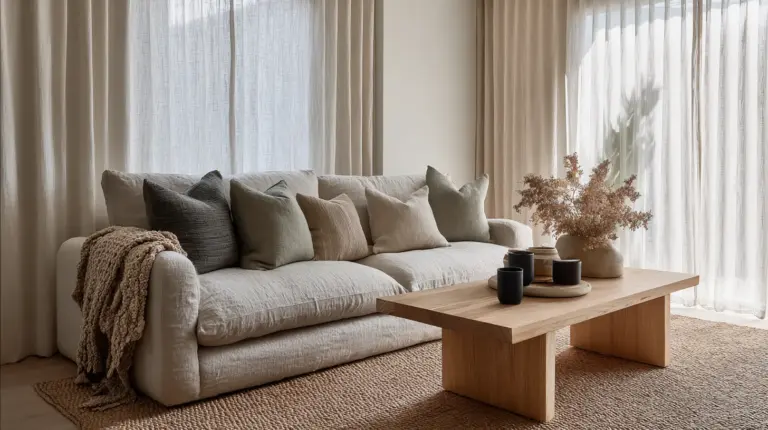
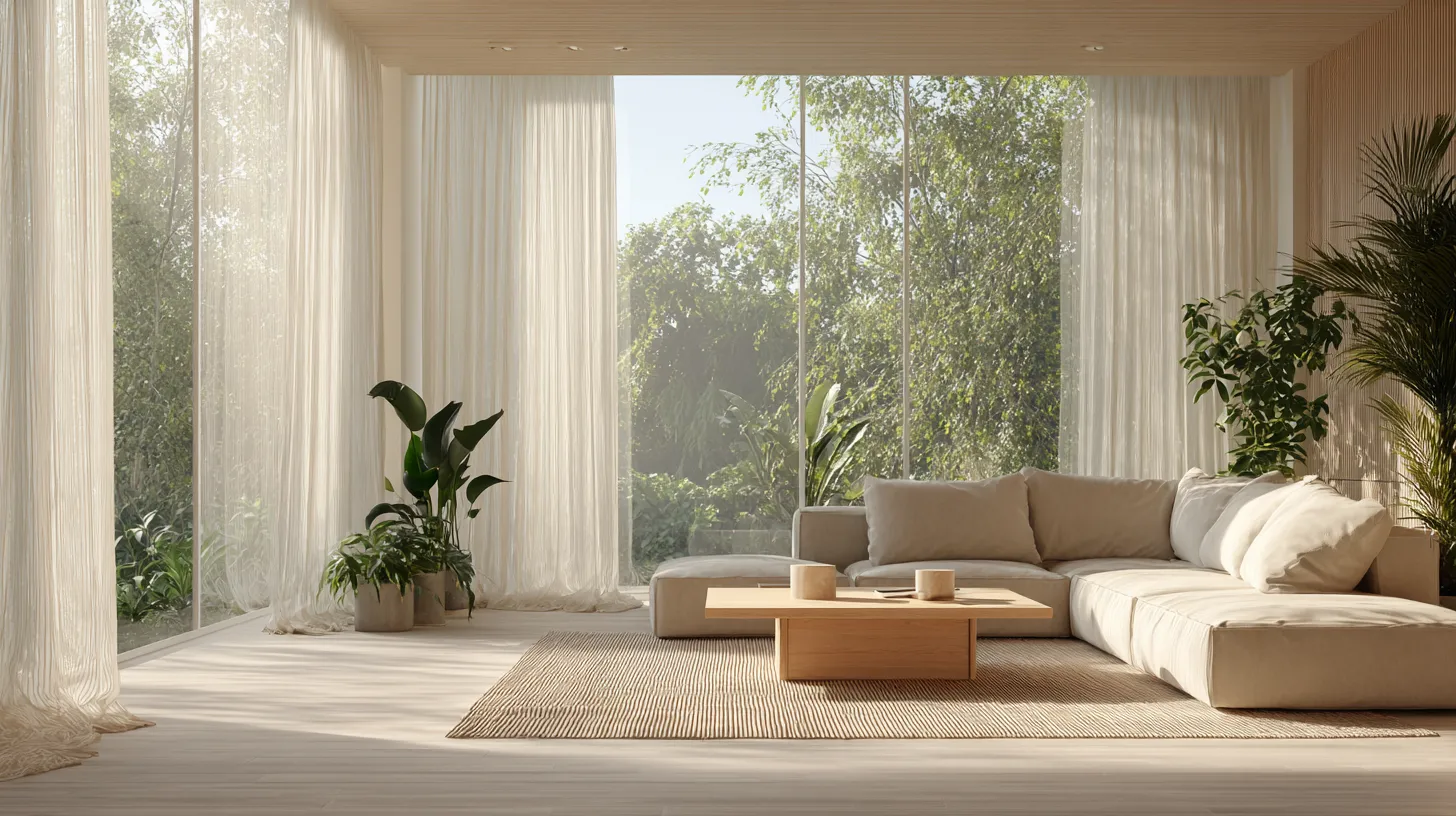
Picture this: morning light filtering through sheer linen curtains, casting soft shadows across low-profile furniture. A view of swaying branches or distant rooftops frames your living space, not competing with it, but completing it. This is the essence of a Japandi living room view—a deliberate marriage of Japanese minimalism and Scandinavian hygge that transforms your outlook into part of the design itself.
The beauty of Japandi isn’t just what you place in a room. It’s how those elements interact with natural light, outdoor vistas, and the quiet rhythm of daily life. When you design with your view in mind, every window becomes a living canvas, every sightline a meditation.
In this guide, we’ll explore how to create a serene Japandi lounge vista that honors both your interior and the world beyond your walls. From framing techniques to furniture placement, from budget-friendly solutions to sustainable material choices, you’ll discover how to craft a space where inside and outside breathe as one.
Let’s begin where all beautiful rooms do—with intention and light.
Understanding the Japandi Living Room Philosophy
Japandi interior design living room concepts rest on a foundation of wabi-sabi and hygge. Wabi-sabi, the Japanese art of finding beauty in imperfection, teaches us to embrace natural wear and organic irregularities. Hygge, the Danish pursuit of cozy contentment, invites warmth and comfort into minimalist spaces.
When these philosophies unite, they create rooms that feel both decluttered and deeply welcoming. Neutral colors dominate—soft whites, warm beiges, gentle grays, and muted earth tones. Natural materials like wood, linen, stone, and bamboo bring tactile richness without visual noise.
The “view” aspect elevates traditional Japandi principles. Rather than treating windows as afterthoughts, you position them as focal points that change with seasons and daylight. A cozy Japandi seating outlook might frame a garden through strategically placed greenery, or highlight urban architecture through thoughtful furniture angles.
Core Elements That Define the Style
Japanese minimalism contributes clean lines, low furniture profiles, and negative space that allows the eye to rest. Scandinavian design adds textured textiles, soft lighting, and functional furniture that serves multiple purposes without sacrificing beauty.
Together, they create living rooms where every piece earns its place. A handwoven rug, a single ceramic vase, a wooden bench with visible grain—each element tells a story while maintaining the peaceful simplicity the style demands.
Framing Your Japandi Living Room View
Your windows are galleries displaying ever-changing natural art. The key is enhancing, not obstructing, what lies beyond the glass.
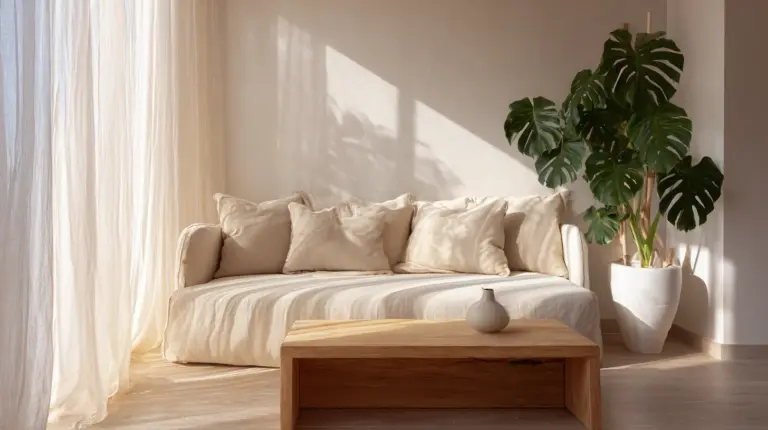
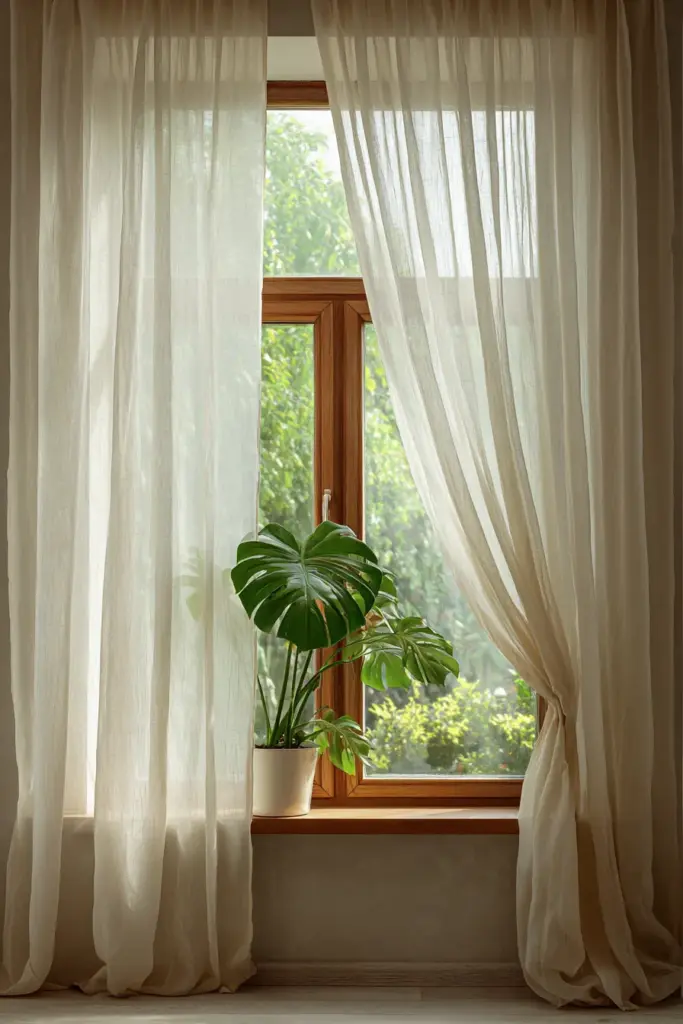
Sheer linen panels work beautifully for Japandi window treatments. They diffuse harsh sunlight while maintaining transparency, creating soft, diffused lighting that flatters wood textures and neutral palettes. Choose panels in natural cream, warm white, or pale gray—colors that seem to capture and hold morning light.
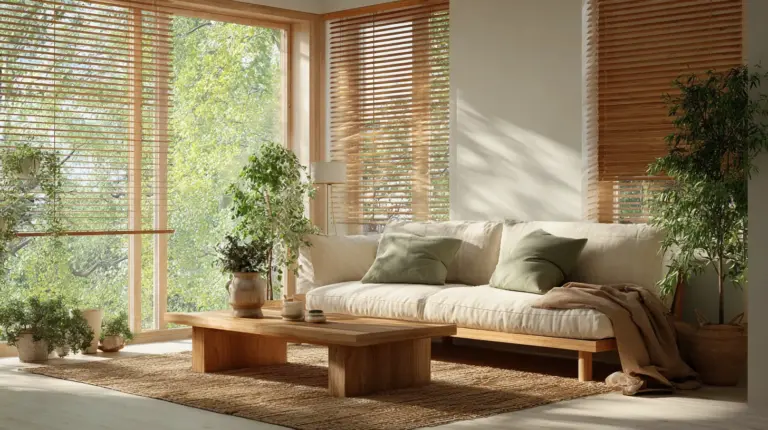
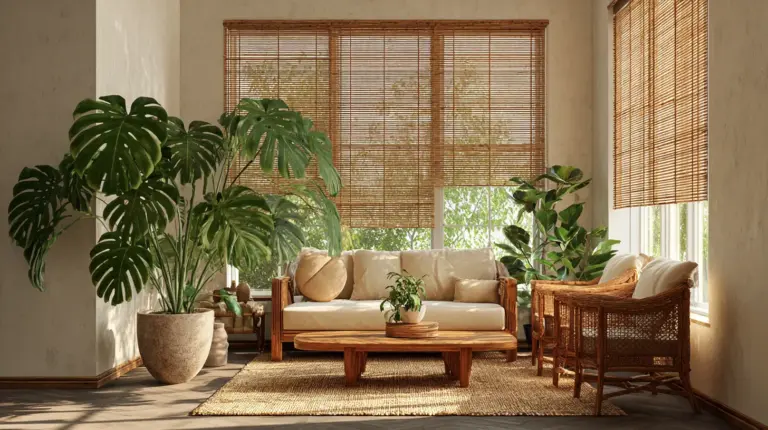
For balcony views or garden outlooks, consider bamboo roller blinds that can be raised completely during golden hour. These provide privacy when needed while disappearing entirely when you want unobstructed sightlines.
Strategic Furniture Placement for Optimal Views
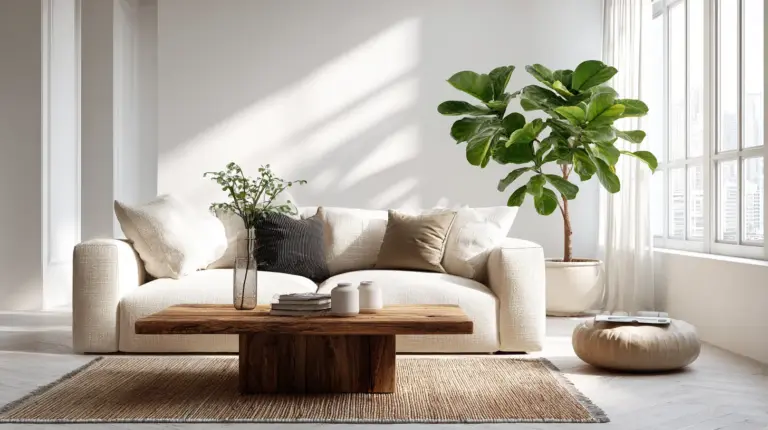
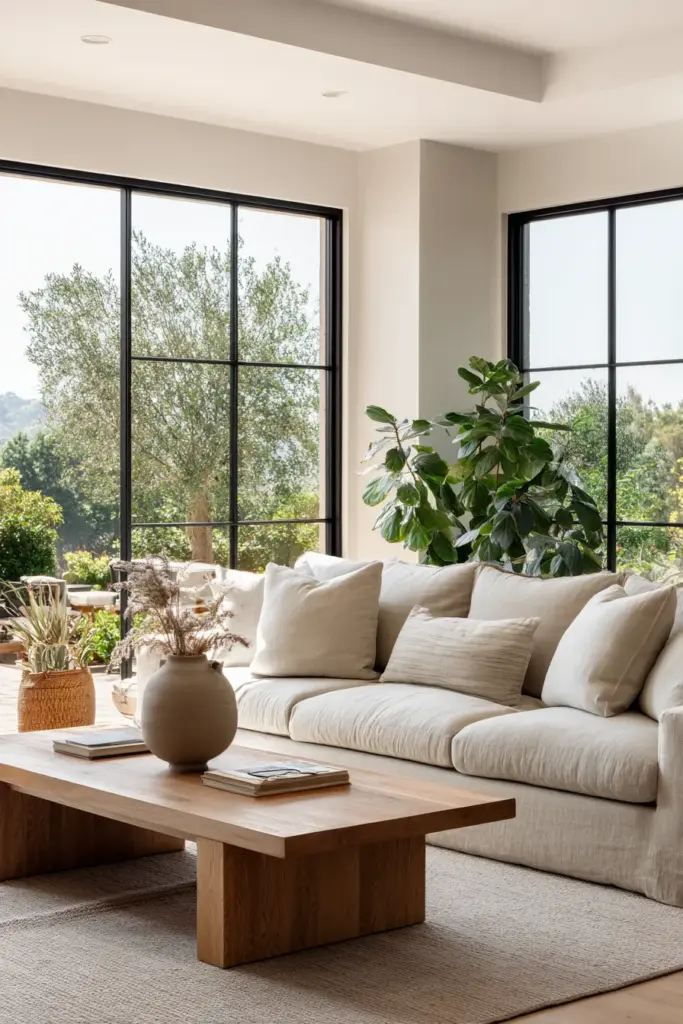
Position low-profile seating to face your best views. A minimalist furniture arrangement might include a streamlined sofa parallel to windows, allowing anyone seated to gaze outward naturally. Avoid tall bookcases or storage units that block sightlines—opt instead for floating shelves or low storage benches.
Create intentional pause points near windows. A single accent chair angled toward the view, paired with a small side table for morning tea, becomes a meditation corner. Add a floor cushion and you’ve honored both Japanese floor-seating traditions and Scandinavian comfort.
Indoor plants serve double duty in view-focused Japandi design. Place a potted fiddle leaf fig or monstera near windows to frame outdoor greenery, creating visual continuity between inside and outside. Smaller houseplants like pothos or snake plants on windowsills soften hard edges without overwhelming the view.
Essential Materials and Textures
Japandi thrives on tactile contrast within a restrained color palette. The sensory experience comes from touching, seeing, and feeling different natural materials that share visual harmony.
| Material | Texture | Best Use | View Enhancement |
|---|---|---|---|
| Teak Wood | Warm, grainy | Coffee tables, shelving | Rich tones complement garden views |
| Linen Textiles | Soft, breathable | Curtains, cushions | Filters light beautifully |
| Rattan | Woven, organic | Accent chairs, baskets | Adds depth without blocking sightlines |
| Ceramic Stoneware | Matte, earthy | Vases, planters | Grounds window displays |
| Bamboo | Smooth, sustainable | Blinds, screens | Creates natural privacy layers |
| Wool Blend | Cozy, textured | Area rugs, throws | Softens floors near seating |

Sourcing Sustainable Woods
For those in the Philippines or similar regions, consider locally-sourced woods like narra or molave. These hardwoods offer rich grain patterns and durability while supporting sustainable forestry. Narra’s reddish-brown hues bring unexpected warmth to neutral Japandi palettes, creating spaces that feel both globally inspired and locally rooted.
Reclaimed wood pieces—whether from old barn doors or salvaged furniture—embody wabi-sabi perfectly. Their imperfections and weathered surfaces tell stories while reducing environmental impact.
Color Palette Strategies for View Integration
The traditional Japandi neutral palette exists specifically to let natural light and outdoor views shine. But “neutral” doesn’t mean lifeless.
Start with warm whites and soft beiges as your base. These colors reflect natural light beautifully while creating calm backdrops for window views. Add depth with charcoal gray accents in throw pillows or pottery—just enough contrast to prevent blandness.
Introduce muted earth tones inspired by your specific view. If you overlook a garden, echo green hues in sage cushions or olive ceramics. Urban views pair beautifully with warm grays and soft blacks that mirror concrete and steel without feeling cold.
Accent Colors for 2026 Trends
While Japandi traditionally avoids bold color, contemporary interpretations allow for soft, nature-inspired accents. Dusty terracotta, muted mauve, or gentle rust can appear in single statement pieces—a hand-thrown vase, a woven wall hanging—without disrupting serenity.
The rule: if you can find the color in nature during a misty morning walk, it belongs in Japandi.
Lighting That Honors Natural Views
Soft lighting is non-negotiable in Japandi design. Harsh overhead lights destroy the gentle atmosphere the style cultivates.
Layer your lighting like a photographer composes a shot. Start with natural light as your primary source, then supplement with warm, diffused artificial lighting that mimics dawn and dusk.
Biophilic Smart Lighting
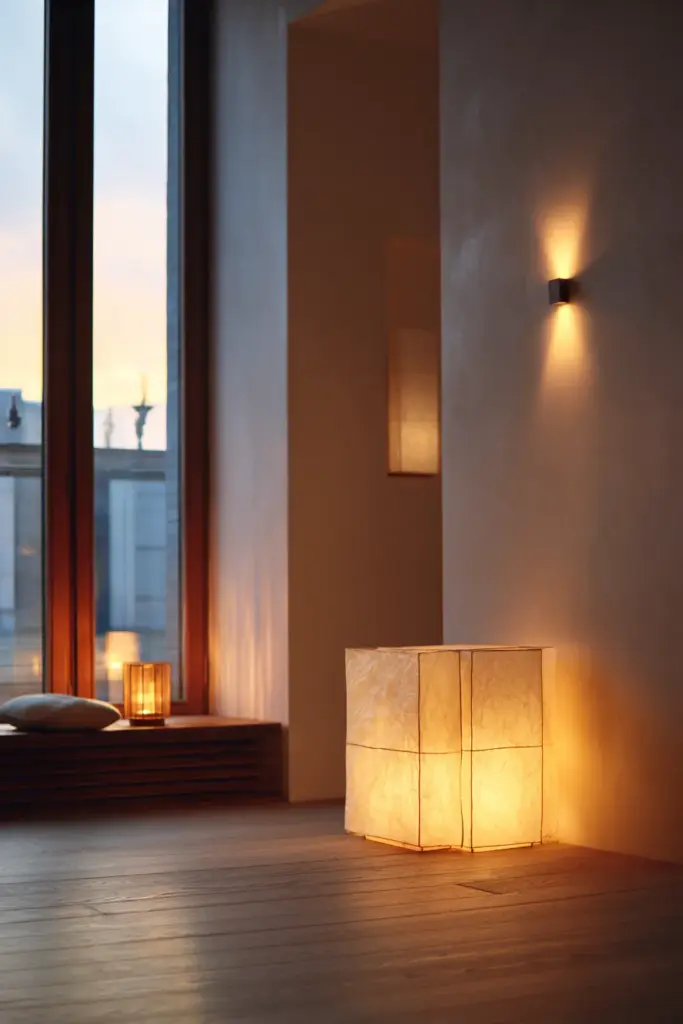
Smart biophilic lighting represents a 2026 innovation perfect for view-focused Japandi rooms. These systems adjust color temperature throughout the day to sync with natural circadian rhythms and outdoor light quality. As sunset paints your window view in amber, your indoor lighting gradually warms to match, creating seamless transitions between inside and outside.
Position rice paper floor lamps in corners to create soft pools of light that don’t compete with evening views. Wall sconces with dimmer switches allow you to adjust brightness as natural light fades, maintaining visual comfort without overpowering twilight vistas.
Avoid pendant lights that hang in window sightlines. Instead, choose low-profile ceiling fixtures or track lighting aimed at walls, which provides ambient illumination while keeping views clear.
Furniture Selection for Serene Japandi Lounges
Multifunctional furniture solves the Japandi challenge of maintaining minimalism while ensuring comfort and practicality.
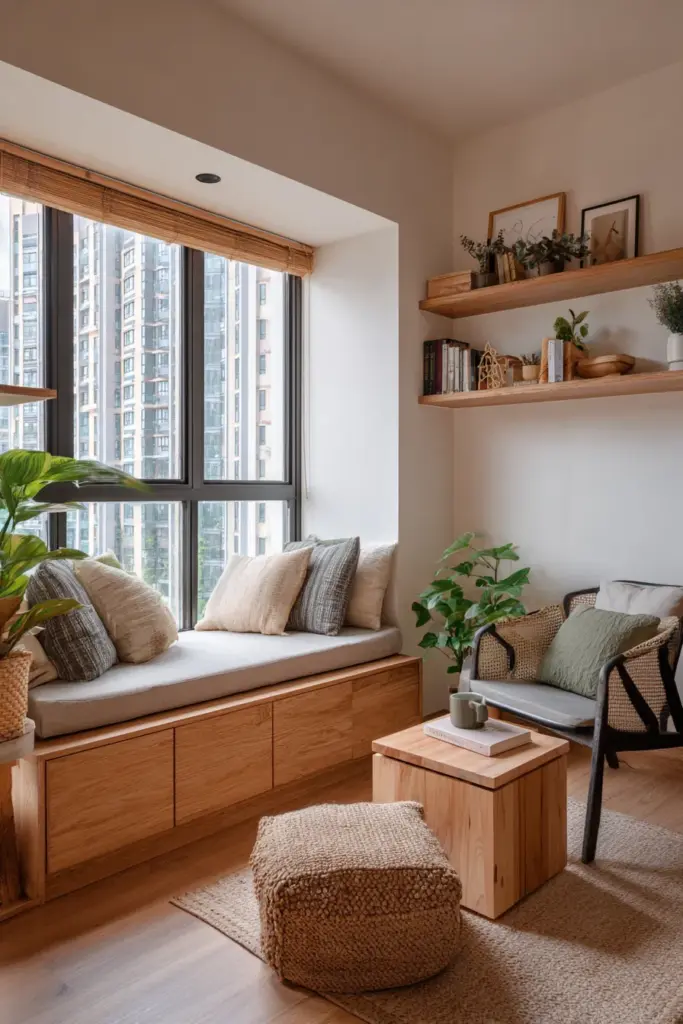
A storage bench beneath a window serves as both seating and decluttering solution. Choose one with lift-top storage for blankets, books, or seasonal items. Upholster it in natural linen or leave wood exposed with cushions you can remove to showcase grain patterns.
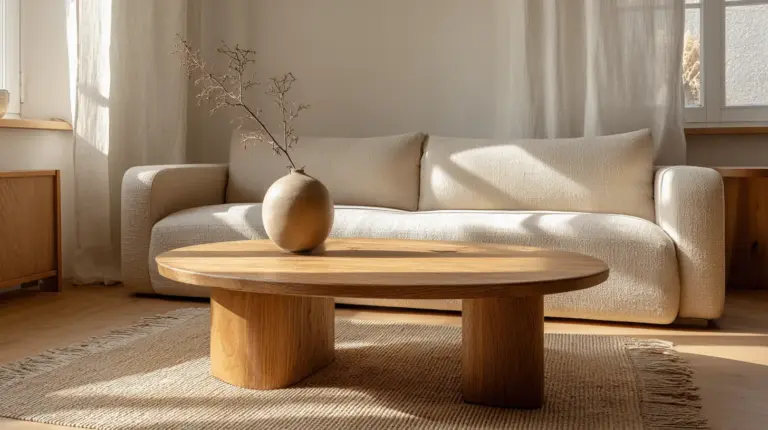
Low coffee tables in walnut or oak anchor seating areas without blocking lower window views. Look for pieces with clean lines and minimal ornamentation—the wood’s natural beauty provides all the decoration needed.
Budget-Friendly Japandi Solutions
Creating a Japandi living room with balcony view doesn’t require designer budgets. IKEA hacks offer surprising potential when approached with Japandi principles.
Transform a simple IKEA shelf unit by replacing factory hardware with minimalist brass pulls. Paint it in a warm neutral and top with a custom-cut piece of reclaimed wood for an elevated look. A basic futon frame becomes a perfect low-profile sofa with the right linen slipcover and organic cotton cushions.
Thrift stores and vintage shops yield treasures perfect for Japandi spaces. Look for mid-century teak pieces, handwoven baskets, or ceramic vessels with matte finishes. These items bring wabi-sabi character while keeping costs under $1,000 for complete room setups.
Small Space Japandi Living Room Ideas
Compact living rooms benefit enormously from Japandi principles. The style’s emphasis on decluttered spaces and low furniture actually makes small areas feel more expansive.
Choose a loveseat over a full sofa, positioning it to maximize your best view. A single statement chair and ottoman can provide equivalent seating while consuming less visual space. Keep furniture away from walls—counterintuitively, this creates better flow in small rooms and allows you to walk around pieces to access windows.
Vertical storage keeps floors clear and sightlines open. Floating shelves in light wood hold minimal décor items and books without overwhelming the space. Wall-mounted planters bring greenery to eye level without consuming precious floor area near windows.
Multifunctional Pieces for Naic Homes
For small Naic homes or similar compact dwellings, every piece must earn its keep. A dining table that converts to a desk, a coffee table with hidden storage, or a daybed that serves as sofa by day and guest bed by night—these solutions honor Japandi’s functional furniture ethos.
Nesting side tables disappear when not needed, then emerge to hold drinks during gatherings. A room divider made from sheer fabric or bamboo screens can separate spaces without blocking light or views, crucial in open-plan layouts.
Creating Zen Energy Flow
Feng shui principles complement Japandi aesthetics beautifully, both emphasizing harmony between inhabitants and their environment.
Arrange furniture to allow clear pathways to windows. Energy (or simply human movement) should flow naturally toward views rather than being blocked or redirected. Avoid placing sofas with backs to windows—this closes off the room’s connection to the outside world.
Balance is key. If your window view is on one side, balance it with a vertical element on the opposite wall—perhaps a tall houseplant or a slim wooden shelf. This prevents the room from feeling tilted toward the view.
Mirrors require careful consideration. A mirror opposite a beautiful garden view doubles the greenery and light. But mirrors facing cluttered urban vistas or neighboring buildings can create visual chaos. Use them strategically.
View-Specific Design Techniques
Garden and Nature Views
Frame lush views with minimalist art that echoes natural forms—simple line drawings of branches, abstract representations of hills or water. This creates dialogue between indoor art and outdoor reality.
Position a low wooden bench or meditation cushion directly at the window for morning contemplation. Add a small side table for tea and you’ve created a ritual space that honors the view.
Bring garden colors inside through houseplants that complement what’s outside. If autumn leaves turn gold and orange, display dried pampas grass or a terracotta vessel on your windowsill.
Urban and Cityscape Views
Urban outlooks benefit from Japandi’s calming influence. The visual noise of buildings and traffic needs counterbalance through serene interiors.
Keep window areas especially decluttered—no crowded windowsills or busy curtain patterns. Clean glass and simple frames let architectural views speak for themselves while your neutral interior provides respite.
Incorporate one or two pieces with strong geometric shapes that echo urban lines—a rectangular concrete planter, a black metal side table. These acknowledge the city view while maintaining Japandi softness through natural materials.
Balcony and Indoor-Outdoor Transitions
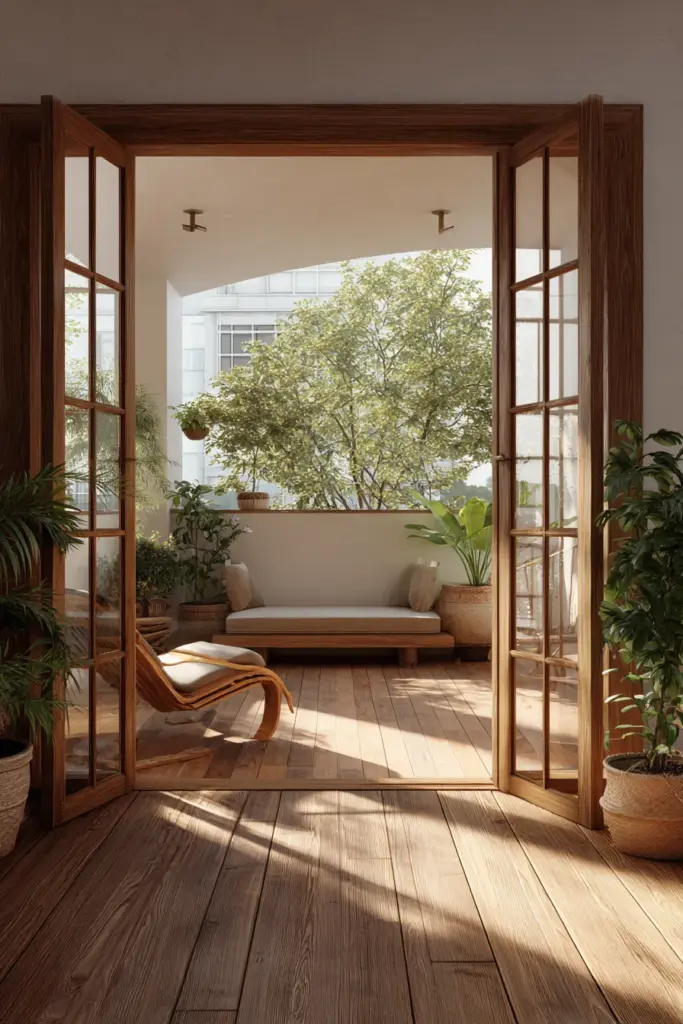
Japandi living rooms with balcony views require seamless transitions. Use consistent flooring materials from inside to balcony when possible, or choose outdoor rugs that match interior textiles.
Position organic shapes near balcony doors—a curved accent chair, a rounded wooden stool—to soften the hard lines of door frames and railings. These invite movement between spaces.
Treat your balcony as an extension of the living room. A simple wooden bench, a few potted plants, and a lantern for evening ambiance create an outdoor room that enhances your interior view when seen from inside.
Budget Breakdown: Japandi Living Room Under $1,000
Creating serene Japandi spaces doesn’t require luxury spending. Here’s a realistic budget for a small to medium living room:
- Seating: $300 – IKEA KIVIK loveseat with linen slipcover or thrifted mid-century sofa refinished
- Coffee Table: $150 – Simple wood table from Wayfair or salvaged vintage piece
- Window Treatments: $100 – Linen curtains or bamboo blinds
- Lighting: $120 – Two floor lamps with paper shades, LED warm bulbs
- Storage Bench: $100 – IKEA hack or DIY from reclaimed wood
- Textiles: $80 – Area rug (jute or cotton), throw pillows, blanket
- Plants and Planters: $70 – Four houseplants in ceramic pots
- Décor: $80 – Ceramic vase, wooden tray, framed minimalist art
Total: $1,000
This leaves room for DIY projects that add personal touches while keeping costs down.
DIY Upcycling for Japandi Character
Upcycling embodies wabi-sabi’s appreciation for imperfection and history. Old furniture gains new life through thoughtful transformation.
Sand down a worn wooden chair and finish it with natural oil to highlight grain patterns. Replace dated upholstery with linen or cotton in neutral tones. The chair’s age and subtle wear become features, not flaws.
Turn vintage window frames into wall art by backing them with sheer fabric and hanging them to create shadow play. Use old wooden crates as modular shelving near windows, staining them to match existing furniture.
Mason jars become minimalist planters or tea light holders. Wrap them in twine or leave them plain for windowsill displays that don’t obstruct views but add gentle visual interest.
Avoiding Common Japandi Design Mistakes
Even with the best intentions, certain pitfalls can undermine Japandi serenity.
Mistake #1: Over-minimizing to sterility. Japandi should feel warm, not clinical. If your room feels cold, add textured textiles, introduce warm wood tones, or increase soft lighting. The goal is serene, not sparse.
Mistake #2: Blocking natural light. Heavy curtains, dark walls near windows, or tall furniture in front of glass all diminish the natural light that makes Japandi glow. Keep window areas open and bright.
Mistake #3: Mixing too many wood tones. Stick to two or three wood finishes maximum—perhaps light oak, medium walnut, and natural bamboo. More creates visual confusion.
Mistake #4: Neglecting textural contrast. All-smooth or all-rough surfaces feel one-dimensional. Pair smooth ceramic with chunky knit throws, sleek wood with woven rattan, cool linen with warm wool.
Mistake #5: Forgetting functional needs. Beauty without function isn’t Japandi. Ensure you have adequate storage, comfortable seating, and proper lighting for actual living, not just aesthetics.
Seasonal View Adaptations
Your Japandi living room view changes with seasons. Design elements should adapt subtly to honor these shifts.
Spring/Summer: Remove heavy throws and dark cushions. Display fresh flowers or branches in simple vessels. Open blinds fully to maximize views of blooming gardens or bright urban light.
Fall/Winter: Layer textiles—add wool blankets, velvet cushions in muted tones. Introduce warm amber lighting to counteract shorter days. Position seating closer to windows to appreciate low winter sunlight.
This seasonal rotation prevents stagnation while maintaining core Japandi principles. It’s about subtle evolution, not complete redesign.
Japandi Living Room View Checklist
Before finalizing your space, ensure you’ve addressed these essentials:
- View Optimization
- Windows are clean and unobstructed
- Furniture positioned to face best sightlines
- Window treatments filter light without blocking views
- Indoor plants frame outdoor vistas
- Core Japandi Elements
- Neutral color palette with 2-3 accent tones
- Natural materials (wood, linen, stone, bamboo)
- Low-profile furniture with clean lines
- Minimal décor with intentional placement
- Lighting Strategy
- Layered lighting (natural + ambient + task)
- Warm color temperature (2700K-3000K)
- Dimmers for adjustable brightness
- No harsh overhead lighting
- Functional Comfort
- Adequate seating for household size
- Storage solutions that maintain minimalism
- Textiles for warmth and coziness
- Clear pathways and good energy flow
- Wabi-Sabi Spirit
- Imperfect or handmade elements
- Natural materials showing authentic wear
- Connection to nature through views and plants
- Simplicity that feels intentional, not empty
A Closing Meditation
Creating a Japandi living room view isn’t about following rules. It’s about crafting a space where you pause, breathe, and reconnect with what matters.
It’s the way afternoon light travels across your linen sofa. The quiet pleasure of tea beside a window overlooking swaying branches. The satisfaction of a room that holds only what you need and love, where every view—through glass or across furniture—brings peace.
Your living room becomes more than a place to sit. It becomes a frame through which you witness seasons changing, light shifting, life unfolding. The Japanese call this “ma”—the meaningful space between things. Scandinavians call it “lagom”—just the right amount.
You might simply call it home. A sanctuary where outside and inside, beauty and function, simplicity and warmth all find their perfect balance. And every time you enter this space, you feel your shoulders drop, your breath deepen, your spirit settle.
This is the gift of Japandi. This is what awaits when you design not just a room, but a view into tranquility itself.
Frequently Asked Questions
What are the key elements of a Japandi living room?
The essential elements include a neutral color palette (whites, beiges, grays), natural materials like wood and linen, low-profile minimalist furniture, soft diffused lighting, decluttered spaces, and houseplants. The style balances Japanese wabi-sabi principles with Scandinavian hygge comfort, creating rooms that feel both serene and welcoming.
How do I plan a Japandi living room layout for optimal views?
Position seating to face your best windows, keeping furniture low to avoid blocking sightlines. Create clear pathways to windows and avoid placing tall storage units near glass. Use sheer curtains that filter light without obstructing views, and place indoor plants strategically to frame outdoor vistas rather than compete with them.
Can I create a Japandi living room on a budget?
Absolutely. Focus on thrifted or upcycled furniture in natural wood, use IKEA hacks with simple modifications, and source textiles like linen curtains and jute rugs from budget-friendly retailers. A complete room can be designed for under $1,000 by prioritizing quality over quantity and embracing DIY projects that add wabi-sabi character.
How do I incorporate Japandi design into my existing living room?
Start by decluttering and removing excess décor. Swap colorful or patterned textiles for neutral tones in natural fabrics. Add warm wood elements through a coffee table or shelving. Replace harsh overhead lighting with soft floor lamps. Gradually introduce houseplants and minimize window treatments to emphasize natural light and views.
What’s the difference between Japandi living room design and pure minimalism?
While minimalism can feel stark or cold, Japandi adds warmth through textured textiles, natural materials with visible grain and imperfections, and cozy lighting. Japandi embraces hygge comfort and wabi-sabi beauty in imperfection, making spaces that feel lived-in and welcoming rather than museum-like. The style balances minimalist principles with human warmth and functionality.