
Table of Contents
There’s something quietly powerful about a room that breathes. A space where light falls softly across natural wood, where every object has purpose, and where calm isn’t just a feeling—it’s built into the walls themselves.
For renters, this kind of transformation can feel out of reach. You’re not allowed to paint, drill, or make permanent changes. But here’s the truth: Japandi design for renters isn’t about what you can’t do—it’s about what you can create with intention, simplicity, and a few renter-friendly tricks that leave no trace.
Japandi blends the minimalist elegance of Japanese design with the cozy warmth of Scandinavian hygge. It’s wabi-sabi meets candlelit corners. Natural materials meet neutral palettes. And for those of us in apartments, condos, or leased spaces, it’s entirely achievable without a single nail hole.
This guide will walk you through every layer—from furniture and lighting to textiles and plants—so you can build a serene Japandi vibe that’s as temporary as your lease, but feels timeless.
Understanding Japandi Design for Renters
Japandi isn’t just an aesthetic—it’s a philosophy. It asks you to live with less, but better. To choose pieces that serve multiple purposes, embrace imperfection, and honor natural materials like bamboo, linen, and stone.
For renters, this philosophy becomes even more practical. You’re forced to be selective. Every item must earn its place, and nothing should require permanent installation. That’s where modular furniture, removable wallpaper, and no-drill solutions become your best friends.
The core elements remain the same: a neutral color palette (think warm beiges, soft grays, muted greens), low-profile furniture, and an abundance of natural light. But the execution? That’s where renter-specific hacks shine.
Key Principles of Renter-Friendly Japandi
The beauty of Japandi for apartment dwellers is that it thrives on restraint. You don’t need custom built-ins or renovated floors. You need thoughtful curation.
Start with a zen-like peaceful foundation. Clear surfaces, minimal clutter, and furniture that doesn’t overpower the room. In Philippine apartments, where spaces often hover around 20-30 square meters, this becomes essential—not just aesthetic.
Think wabi-sabi: the art of finding beauty in imperfection. That secondhand rattan chair from a Shopee seller? The slightly uneven bamboo shade? These aren’t flaws. They’re character, and they belong in your Japandi space.
Building Your Neutral Palette Without Painting
Renters face a common challenge: dated wall colors or stark white that feels sterile. You can’t repaint, but you can layer.
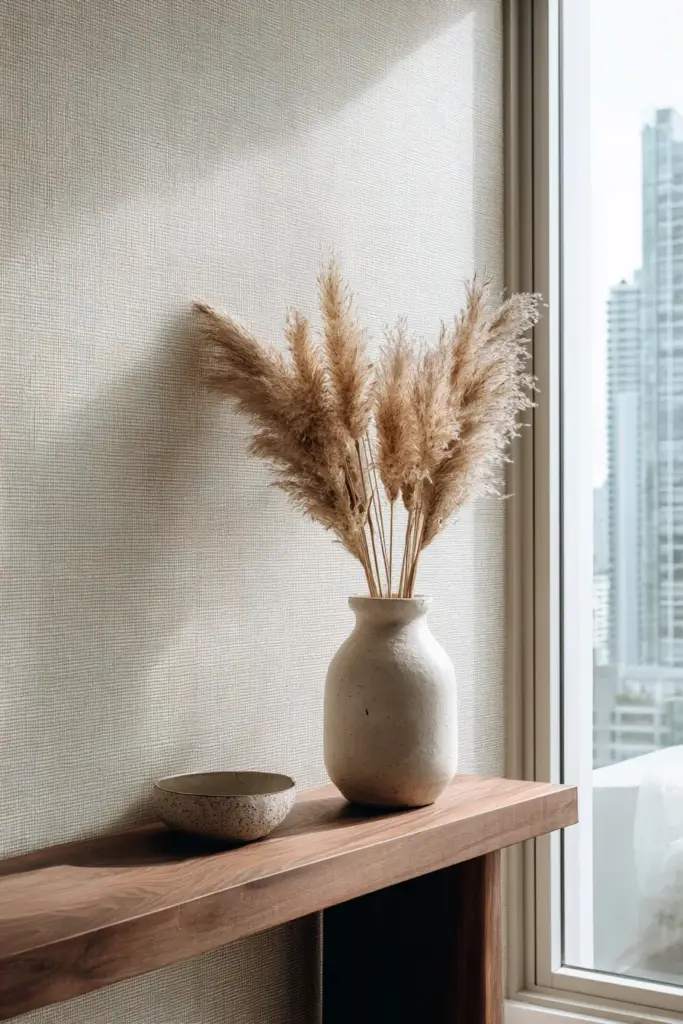
Removable wallpaper has revolutionized renter design. Look for peel-and-stick options in subtle textures—grasscloth patterns, soft linen weaves, or delicate wood grain. In the Philippines, brands on Lazada offer budget-friendly rolls starting around ₱800-₱1,500 per panel. Apply them to a single accent wall behind your sofa or media console for depth without commitment.
If wallpaper feels too bold, use large-scale art or tapestries hung with Command hooks. A single oversized piece in charcoal ink strokes or abstract natural forms can anchor your neutral palette. Frame it in light oak or ash wood for that signature Japandi warmth.
Textiles That Transform
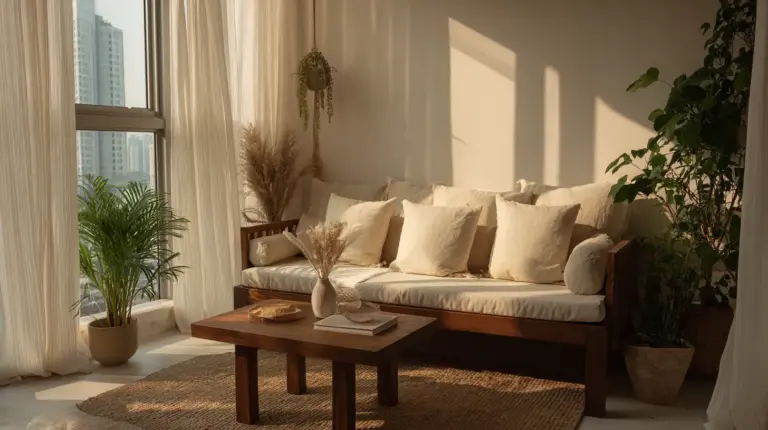
Textiles are your secret weapon for softening harsh walls. Drape a linen throw in oatmeal or sage over your sofa. Layer a jute rug beneath a secondhand coffee table (IKEA hack alert: refinish a thrifted LACK table with wood stain for instant natural wood appeal).
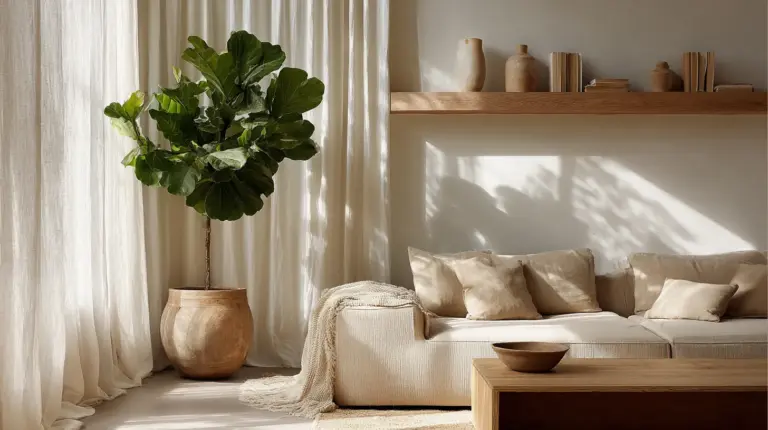
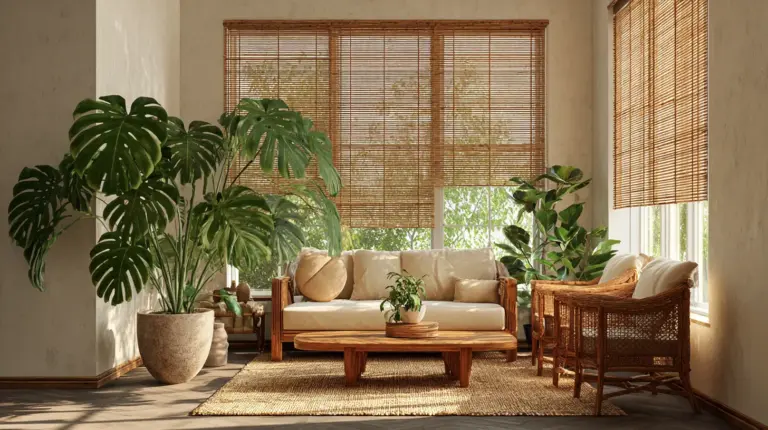
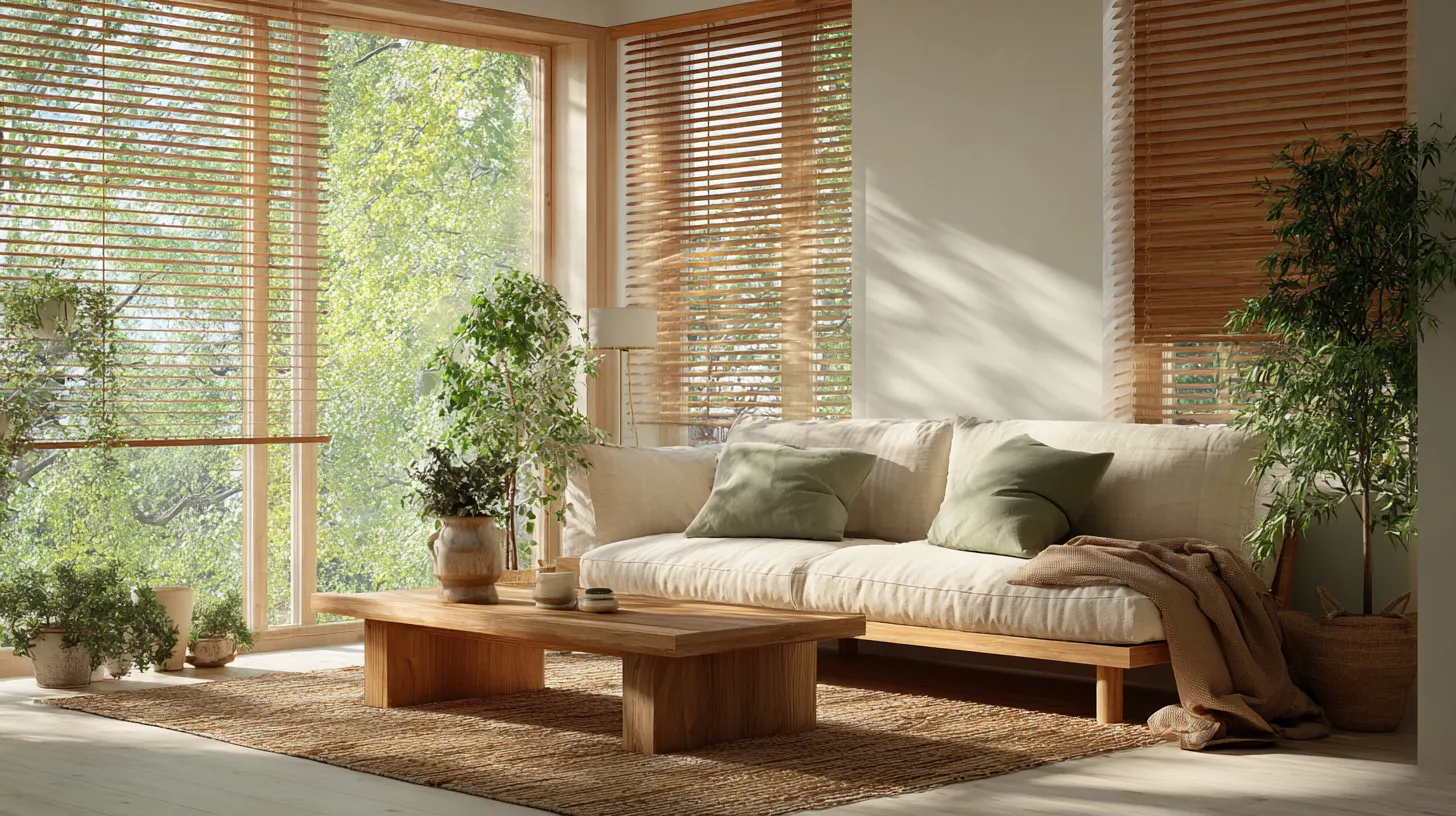
Curtains matter more than you think. Swap heavy drapes for bamboo shades or sheer linen panels hung on tension rods—no drilling required. Solar fairy lights woven through the rod add warm lighting for evening ambiance, and they’re battery-powered for outlet-free walls.
For small Philippine apartments, consider washable linen slipcovers for existing furniture. They hide mismatched pieces, protect against pets or kids, and come in every neutral shade imaginable. Plus, they’re machine-washable—a renter’s dream.
Furniture That Flexes: Multifunctional and Modular
In tight rental spaces, every piece must work twice as hard. A sofa that converts to a guest bed. A coffee table that lifts to dining height. Storage ottomans that double as seating.
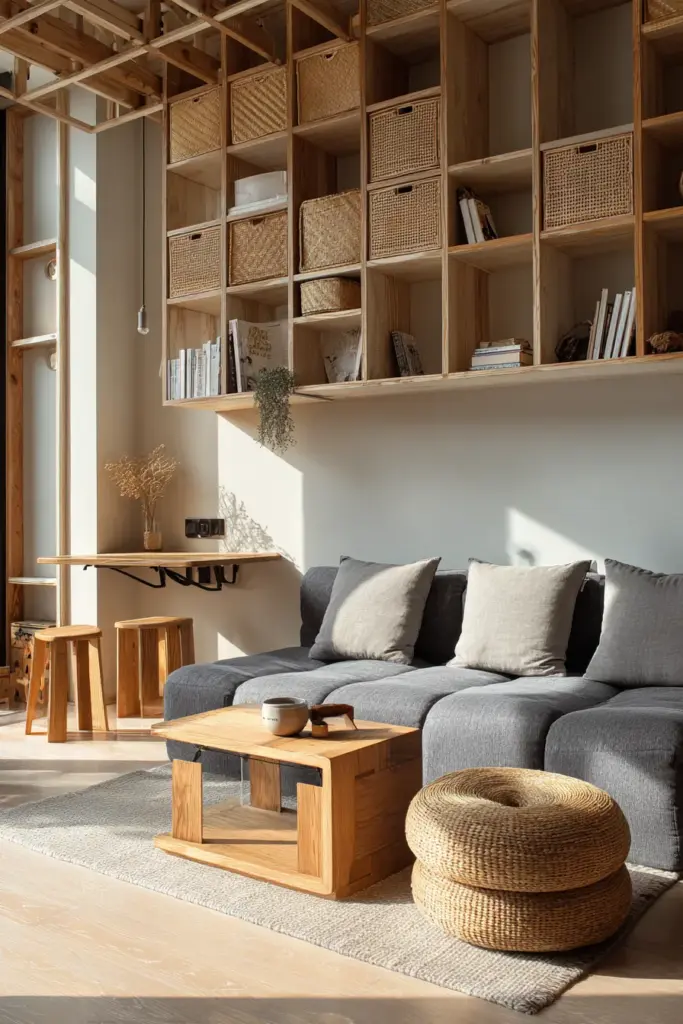
Low-profile sofas define Japandi living rooms, but they’re also practical for small spaces. A Japanese-style futon or a sleek platform sofa in charcoal linen keeps sightlines open. Look for modular options where sections can be rearranged—crucial when you’re moving every year or two.
For dining, skip the bulky table. Wall-mounted foldable tables (secured with heavy-duty Command strips or tension mounts) drop down when needed and disappear when not. Pair with stackable stools in natural wood that tuck under or serve as occasional side tables.
Budget Breakdown: Philippine Renter’s Shopping List
Here’s where Japandi meets real-world budgets. You don’t need to spend ₱50,000 to achieve this look.
| Item | Affordable Source | Price Range (PHP) |
|---|---|---|
| Rattan side table | Shopee/Lazada local sellers | ₱800-₱2,000 |
| Modular floor cushions | Mandaue Foam, SM Home | ₱1,500-₱3,500 |
| Bamboo ladder shelf (no-drill) | Wilcon, Ace Hardware | ₱2,500-₱4,000 |
| Linen curtain panels | H&M Home, Miniso | ₱600-₱1,200 per panel |
| Removable wallpaper | Lazada (local brands) | ₱800-₱1,500 per panel |
| Low coffee table (upcycled) | FB Marketplace, Carousell | ₱1,000-₱3,000 |
| LED strip lights (peel-and-stick) | Hardware stores, online | ₱300-₱800 |
Total estimated range: ₱12,000-₱25,000 for a complete living room transformation. Spread purchases over 2-3 months, or hunt secondhand for 30-40% savings.
Lighting Hacks: No Outlets, No Problem
Japandi spaces glow rather than glare. Harsh overhead fluorescents? Cover them with a paper lantern shade (Command hooks hold the cord, no hardwiring needed).
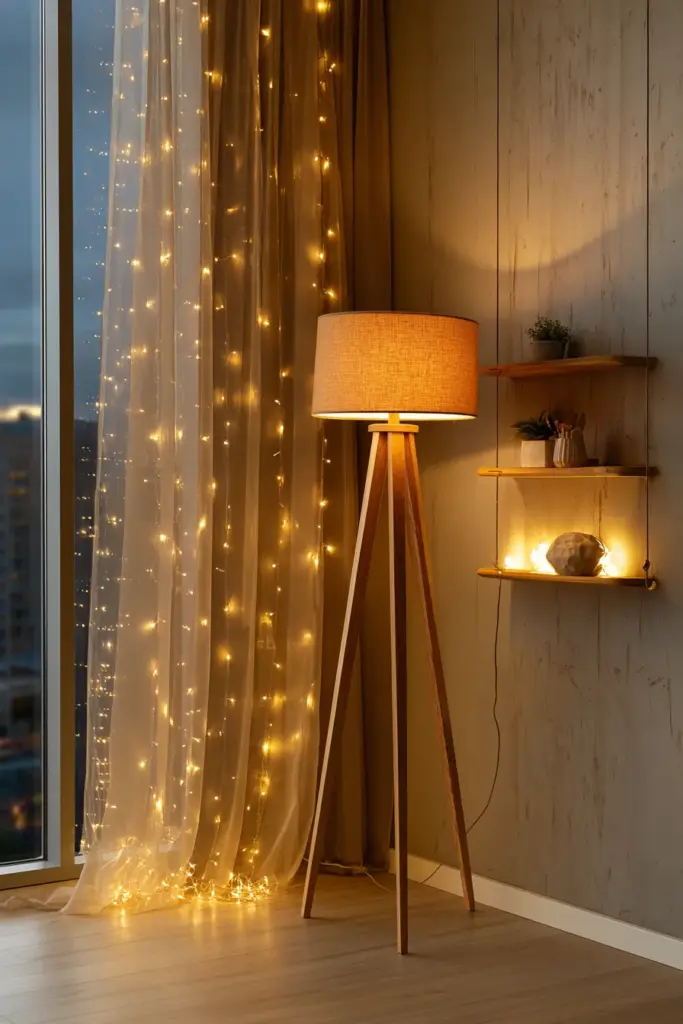
Warm lighting is non-negotiable. Battery-operated LED strips tucked behind furniture or under shelves create ambient wash without visible wires. Solar-powered fairy lights draped in corners or across windows add soft twinkle—they charge during the day and illuminate at night.
For renters without ceiling fixture access, invest in a quality floor lamp with dimmer capability. Look for natural wood tripods or paper shades that diffuse light gently. Position it behind your sofa to cast warm, indirect glow across the room.
Candle Ritual
Nothing says Japandi like the flicker of candlelight. Stock soy candles in ceramic holders—neutral tones, no scent, or subtle hinoki or green tea fragrances. Place them on trays with river stones or driftwood for an intentional vignette. It’s lighting and décor in one.
Greenery and Natural Elements
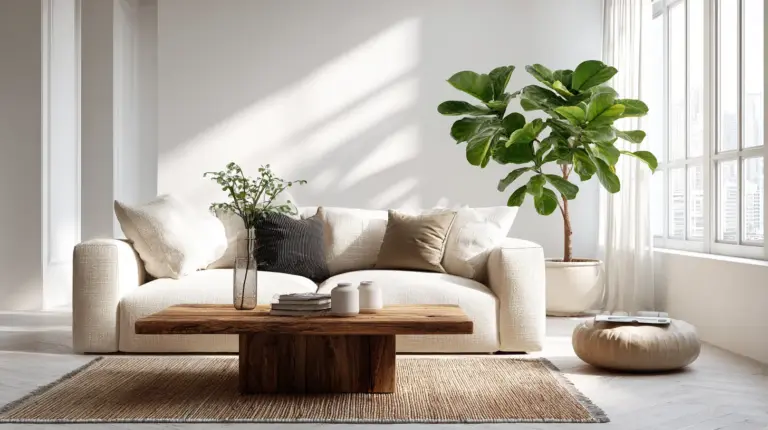
Houseplants greenery breathe life into Japandi spaces, but renters need low-maintenance options. Snake plants, pothos, and ZZ plants thrive on neglect and purify air. For smaller apartments, a single sculptural fiddle leaf fig or a bonsai plant becomes a living focal point.
If you’re pet-friendly or lack natural light, embrace faux plants. Modern artificial greenery is surprisingly realistic—look for ones with varied leaf textures in neutral pots (ceramic, concrete, or bamboo).
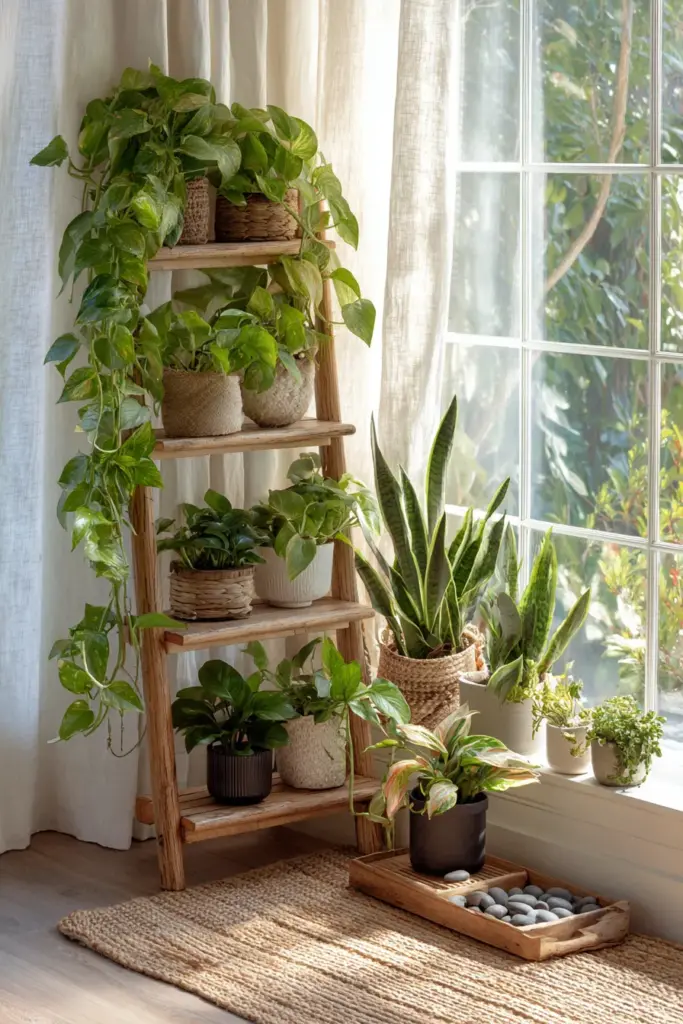
Create a plant corner using a bamboo ladder shelf (no drilling—it leans against the wall). Stagger plants at different heights with books, stones, and small trays. Add a small water feature or Zen sand garden for sensory calm.
Bringing the Outdoors In
Japandi celebrates natural materials: wood, bamboo, stone, linen. Even if your apartment has synthetic finishes, you can layer these textures.
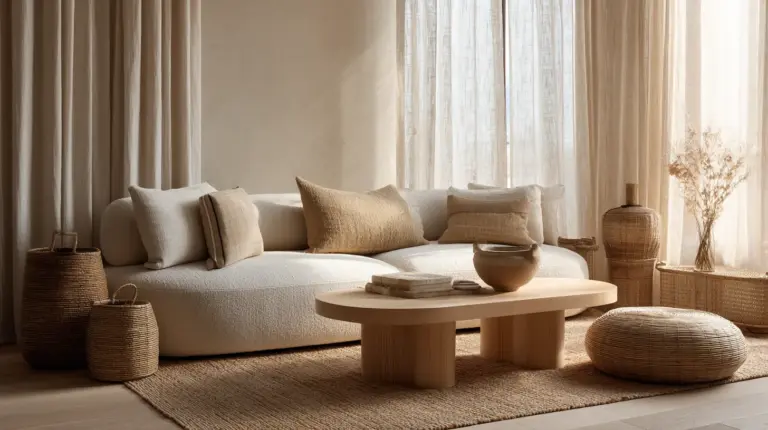
A jute rug grounds the seating area. Bamboo blinds filter light. A driftwood branch in a ceramic vase becomes sculptural art. Smooth river stones in a wooden tray anchor your coffee table. These elements cost little but transform the feeling of a space from generic rental to curated sanctuary.
Storage Solutions That Don’t Damage Walls
Clutter is Japandi’s enemy, but renters often lack built-in storage. The solution? Vertical storage that doesn’t require drilling.
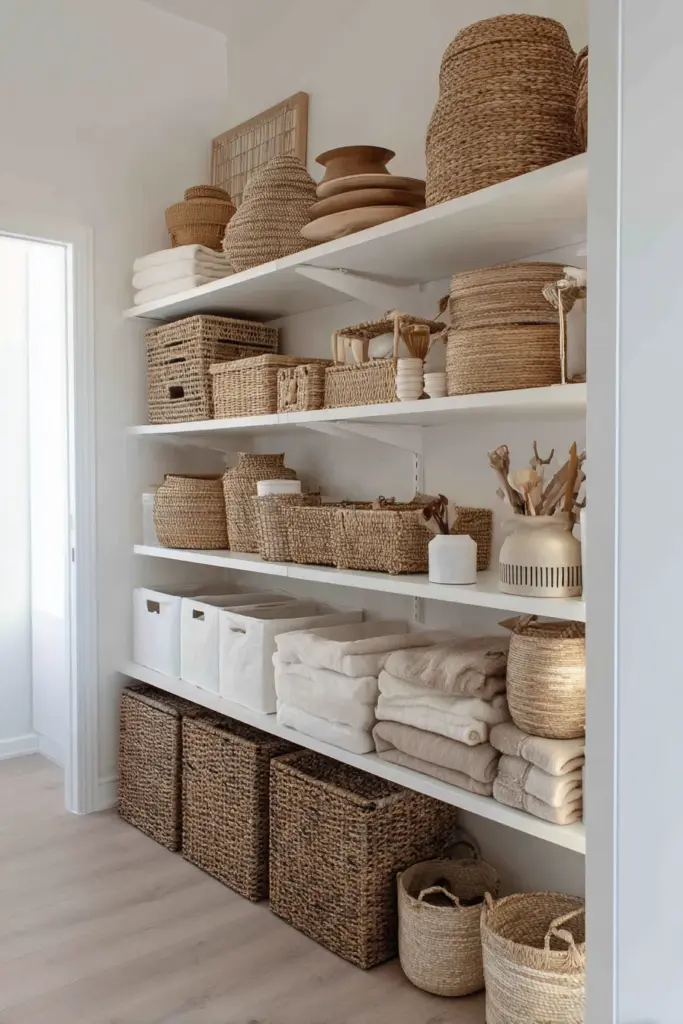
Tension rod shelving systems fit between floor and ceiling, holding adjustable shelves. Fill them with woven baskets (rattan, seagrass) for hidden storage. Label-free and beautiful, they hold everything from throws to books to plants.
Command hooks have evolved. Heavy-duty versions hold up to 7kg—enough for floating shelves (use multiple hooks spaced evenly). Display minimal décor: a single ceramic bowl, three books, a small succulent. The key is negative space—let the shelf breathe.
For media, choose a low-profile console on hairpin legs. Open shelving beneath keeps it airy, while baskets or linen bins hide cables and remotes. In the Philippines, upcycled pallet wood consoles are abundant and affordable—sand, stain, and add wheels for mobility.
Multifunctional Storage Ideas
In 20-30 square meter apartments, furniture must hide things. Ottoman storage benches in natural linen line windows or foot-of-sofa. Sofa beds with built-in drawers are investment pieces that earn their space. Wall-mounted coat racks (Command strips or over-door hooks) prevent floor clutter.
Think vertical: tall, narrow bookcases instead of wide, bulky ones. Choose furniture with exposed legs to maintain visual flow—low-profile pieces that don’t block light.
Pet and Kid-Proofing Your Japandi Space
Renters with pets or children face unique challenges. Japandi’s light neutrals and natural materials seem fragile, but they’re adaptable.
Washable everything is key. Slipcover your sofa in pre-washed linen (gets softer with each wash). Choose rugs that can be machine-washed or easily spot-cleaned. Skip silk pillows for cotton or hemp blends.
For pets, low-maintenance faux plants replace toxic varieties like lilies or philodendrons. Opt for sturdy ceramics over delicate glass. Create pet zones with woven baskets for toys, keeping clutter contained but accessible.
Child-Safe Japandi
Round-edged furniture prevents injuries. Wall-mounted shelves start at heights kids can’t reach (remember: tension rods and Command strips). Storage bins with lids (bamboo or fabric) hide toys quickly for that “adults are coming over” reset.
Choose performance fabrics that look natural but repel stains—many contemporary linen blends are treated for durability. And embrace wabi-sabi: a small scuff on a rattan table tells the story of life lived, not a design failure.
Sustainability Swaps for Eco-Conscious Renters
Japandi’s roots honor nature, making sustainability a natural fit. In the Philippines, upcycled pallet wood is abundant—craft coffee tables, shelves, or even bed frames for a fraction of new furniture costs.
Secondhand IKEA hacks dominate rental spaces. Buy used pieces on Carousell or Facebook Marketplace, then refinish with wood stain or swap hardware. A ₱500 LACK table becomes a ₱3,000 “designer” piece with an afternoon and ₱200 in supplies.
Thrift vintage ceramics, glassware, and textiles from ukay-ukay shops. That hand-thrown mug or linen tablecloth carries history—true wabi-sabi. Plus, you’re diverting waste from landfills.
Green Material Choices
Bamboo grows rapidly and regenerates—choose bamboo blinds, furniture, and accessories. Hemp and linen are biodegradable; jute rugs decompose naturally. When you eventually move, these materials can be composted or donated guilt-free.
Avoid fast furniture made from particleboard. Invest in solid wood or metal pieces you’ll take from rental to rental. Quality over quantity isn’t just aesthetic—it’s environmental.
Seasonal Refresh: Keeping Japandi Flexible
One joy of renter-friendly design is easy adaptation. As seasons shift—or as your lease nears its end—Japandi pieces move with you.
Summer refresh: Swap heavier throws for gauzy linen. Replace warm amber lighting with cooler white LEDs. Add tropical greenery like monstera or bird of paradise (rent-friendly in large pots that can move).
Rainy season coziness: Layer wool blankets in charcoal or camel. Light candles more frequently. Swap lightweight curtains for bamboo blinds that block humidity but let light filter.
Moving Day Strategy
Tag furniture and décor by room, keeping modular pieces disassembled. Tension rods and Command hooks remove cleanly—follow package instructions, using a hairdryer to warm adhesive before peeling. Store removable wallpaper carefully; quality brands can be reused once.
Japandi’s minimalism means you’re not drowning in décor when packing. Each piece was chosen intentionally, so nothing feels expendable—and nothing is too precious to transport.
Japandi Renter’s Checklist
Before you start shopping or rearranging, use this checklist to ensure every decision aligns with renter-friendly Japandi principles:
Foundation:
- Neutral palette (warm beiges, soft grays, muted greens, natural wood tones)
- Low-profile, modular furniture that disassembles easily
- Natural materials: bamboo, rattan, linen, jute, wood, stone
- Minimal clutter—every item has purpose
No-Drill Solutions:
- Removable wallpaper or large-scale art with Command hooks
- Tension rods for curtains, shelves, or room dividers
- Battery-operated or solar LED lighting
- Furniture on legs (no wall mounting required)
Multifunctional Pieces:
- Sofa bed or convertible seating
- Storage ottomans and benches
- Wall-mounted foldable tables
- Stackable or nesting tables and stools
Textiles and Softness:
- Washable linen slipcovers and throws
- Jute or washable rugs
- Bamboo or linen curtain panels
- Layered cushions in natural fabrics
Greenery and Natural Elements:
- Low-maintenance or faux plants
- Bamboo ladder or tension-rod plant shelves
- Natural décor: driftwood, river stones, ceramic vessels
Lighting:
- Warm-toned LED strips (peel-and-stick)
- Floor lamps with dimmers
- Solar fairy lights for accent glow
- Candles in neutral holders
Storage:
- Vertical shelving (tension or freestanding)
- Woven baskets (rattan, seagrass, bamboo)
- Low-profile consoles with open shelving
- Hidden storage in furniture
Budget and Sourcing (Philippines):
- Shopee/Lazada for rattan, bamboo, textiles
- Secondhand platforms: Carousell, Facebook Marketplace
- Upcycled materials: pallet wood, thrifted IKEA
- Local hardware stores for lighting, mounting solutions
Pet/Kid-Friendly:
- Washable fabrics and slipcovers
- Non-toxic faux plants or pet-safe varieties
- Rounded furniture edges
- Stain-resistant textiles
Sustainability:
- Buy secondhand or upcycled where possible
- Choose natural, biodegradable materials
- Invest in quality pieces you’ll keep long-term
- Avoid fast furniture
Embracing Wabi-Sabi in Your Rental
Renters often apologize for their spaces. The walls are bland. The floors are scratched. The kitchen is outdated. But wabi-sabi—the Japanese philosophy of finding beauty in imperfection—reframes these “flaws” as features.
That crack in the concrete floor? It tells a story. The uneven plaster? Texture you didn’t have to add. Japandi asks you to stop fighting your rental’s quirks and instead design around them with intention.
Place a low bench beneath the awkward window. Hang a single piece of art that draws the eye away from the dated outlet. Use plants to soften hard edges. You’re not covering imperfections—you’re integrating them into a narrative of calm, real, lived-in beauty.
The Art of Doing Less
Western design often encourages filling space. Japandi does the opposite. An empty corner isn’t unfinished—it’s breathing room. A shelf with three objects isn’t sparse—it’s curated.
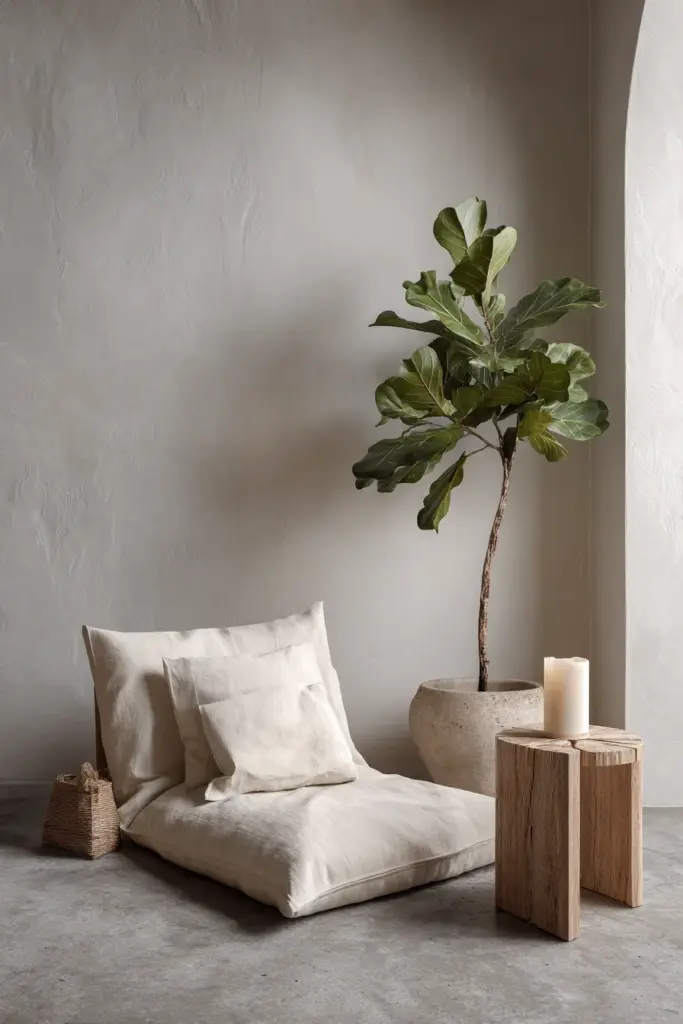
For renters, this is liberating. You don’t need to “complete” the room. You need to create pockets of peace. A reading nook with one chair, one lamp, one plant. A meditation corner with a floor cushion and a candle. These small sanctuaries matter more than a fully furnished showroom.
Conclusion: Your Sanctuary, Your Terms
Transforming a rental into a Japandi haven isn’t about fighting the limitations of lease agreements. It’s about working with them—choosing pieces that move with you, designing spaces that honor both Japanese simplicity and Scandinavian warmth, and remembering that beauty doesn’t require permanence.
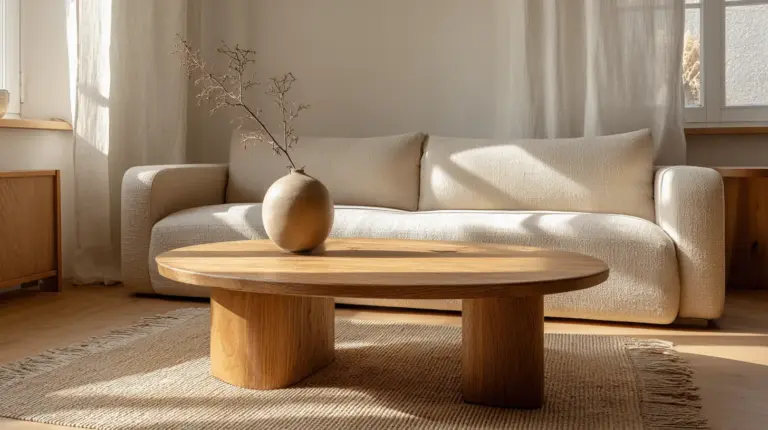
Your living room can be a place where light pools on natural wood, where the scent of linen and hinoki candles mingles, where you sink into a low sofa after a long day and feel the quiet settle around you. All of this, without a single nail hole. All of this, within a renter’s budget and reality.
Start small. One jute rug. One bamboo shade. One intentional corner. Let your space evolve as you do, knowing that when you eventually move, every piece comes with you—and the next apartment becomes another canvas for calm.
Because Japandi isn’t about the walls. It’s about the life you build within them.
Frequently Asked Questions
What is Japandi style in a living room for renters?
Japandi blends Japanese minimalism with Scandinavian coziness, emphasizing natural materials, neutral palettes, and functional design. For renters, it focuses on no-drill solutions like removable wallpaper, modular furniture, and tension-rod shelving—creating a serene aesthetic without permanent changes. The style thrives on wabi-sabi imperfection and multifunctional pieces ideal for small apartments.
How can renters achieve Japandi aesthetic without permanent changes?
Use peel-and-stick wallpaper, Command hooks for art and shelves, and tension rods for curtains or plant displays. Choose freestanding furniture on legs (low-profile sofas, bamboo ladder shelves) and battery-operated lighting. Layer textiles like linen throws, jute rugs, and washable slipcovers to soften spaces. Every element should be removable and transportable when your lease ends.
What are affordable Japandi furniture options for apartments in the Philippines?
Shop Shopee and Lazada for rattan tables (₱800-₱2,000), bamboo shelves (₱2,500-₱4,000), and modular floor cushions (₱1,500-₱3,500). Hunt secondhand on Carousell or Facebook Marketplace for solid wood pieces you can refinish. Upcycle pallet wood into coffee tables or consoles for under ₱2,000. Prioritize multifunctional items like sofa beds or storage ottomans.
What are Japandi living room ideas for small rental spaces?
Maximize vertical storage with tension-rod shelving and wall-mounted foldables. Choose low-profile furniture that keeps sightlines open—platform sofas, nesting tables, stackable stools. Use mirrors to reflect light and create depth. Keep a neutral palette with warm wood tones, and limit décor to essential pieces: one large plant, a jute rug, linen curtains. Let negative space be part of the design.
How do I add Japandi lighting and textiles without drilling?
Install peel-and-stick LED strips behind furniture for ambient glow. Use solar-powered fairy lights on tension-rod curtains. Place battery-operated floor lamps with dimmer switches for adjustable warmth. For textiles, drape linen throws over sofas, layer washable rugs, and hang bamboo shades on tension rods. Add candles in ceramic holders for natural, flickering light—no wiring needed.