
Table of Contents
There’s something quietly magical about walking into a room that breathes. Where every piece feels intentional, yet effortless. Where the walls don’t shout—they whisper stories of simplicity and warmth.
That’s the essence of Japandi living room art. It’s not just decoration—it’s an invitation to slow down, to notice the play of shadow on paper, the grain of wood beneath your fingertips. It’s where Japanese minimalism embraces Scandinavian coziness, creating spaces that feel both serene and lived-in.
In our tropical corner of Naic, Calabarzon, where humidity dances with sunlight and nature spills through every window, Japandi art becomes something even more special. It adapts. It breathes with our climate, our materials, our way of living.
Let me guide you through creating a living room where art doesn’t just hang—it belongs.
What Is Japandi Style? The Philosophy Behind the Beauty
Japandi isn’t just minimalism with a softer edge. It’s a thoughtful fusion of two design philosophies that share a deep respect for nature, craftsmanship, and intentional living.
Japanese design brings wabi-sabi—the art of finding beauty in imperfection, in the weathered and worn. Scandinavian design offers hygge—that untranslatable coziness that makes a house feel like home. Together, they create spaces that are clean without being cold, simple without being stark.
The palette is earth itself: warm beiges, soft clay tones, muted sage greens, gentle grays. Natural materials reign—bamboo, rattan, rice paper, FSC-certified woods. Every element serves a purpose, yet nothing feels utilitarian.
Japandi vs. Pure Minimalism: The Warmth Factor
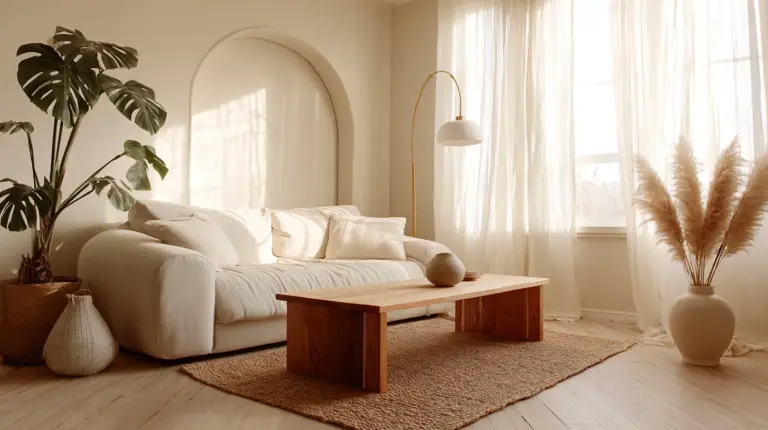
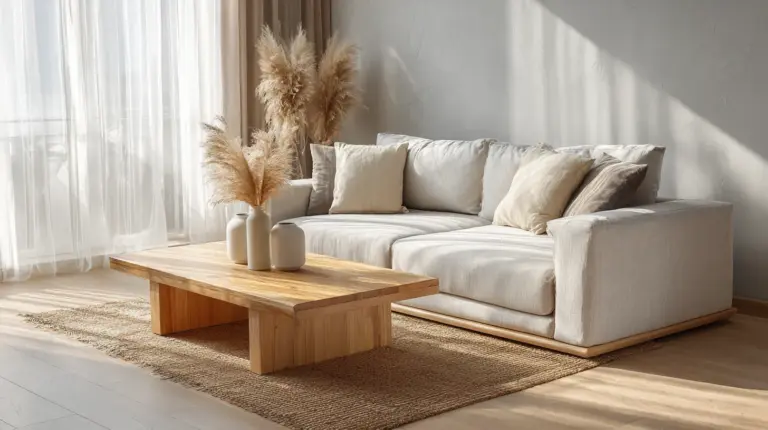
Where stark minimalism can feel austere, Japandi wraps you in texture. Think boucle cushions against a linen sofa, a chunky jute rug underfoot, washi paper casting diffused light. It’s minimalism that invites you to stay, to curl up with tea and a book as afternoon light pools on wooden floors.
The Art of Japandi Wall Art: Finding Your Living Room’s Voice
Your walls are the canvas where this philosophy comes alive. Japandi living room art isn’t about filling space—it’s about creating breathing room for your eyes and soul to rest.
Nature-Inspired Prints: Bringing the Outside In
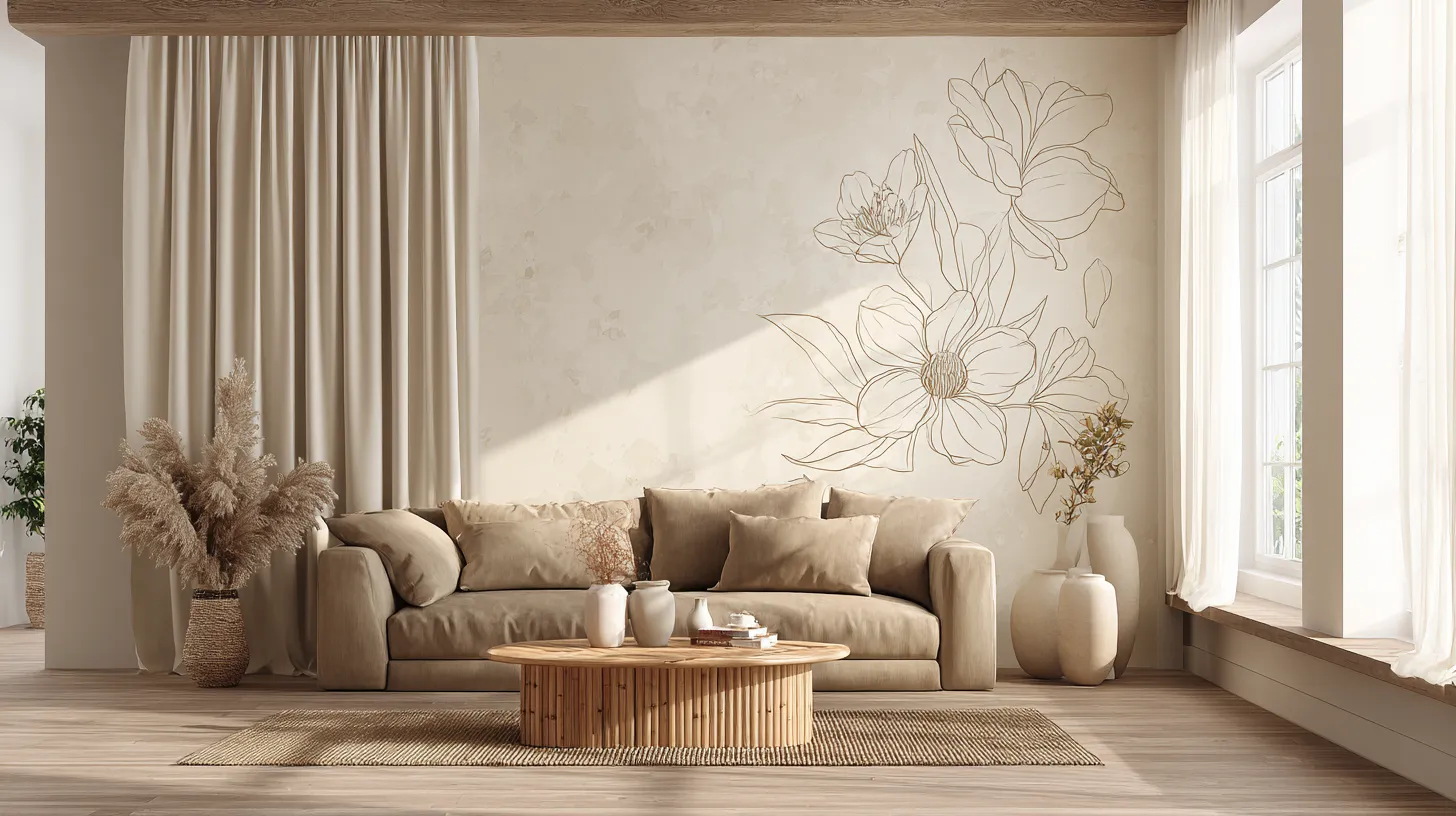
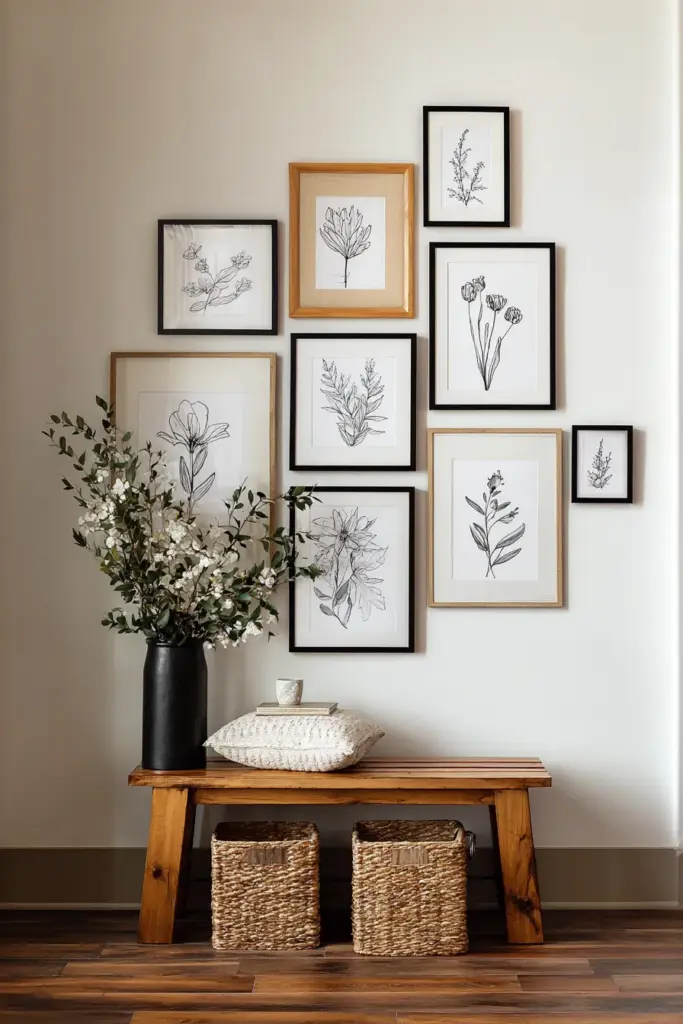
Botanical line drawings are the heartbeat of Japandi art. A single monstera leaf rendered in charcoal. Cherry blossoms floating across rice paper. Koi fish circling in minimalist ink strokes. These pieces echo the natural world without overwhelming it.
In the Philippines, we’re blessed with inspiration everywhere. Consider commissioning local artists to capture native ferns, sampaguita blooms, or bamboo groves in that signature Japandi style—simple lines, muted earth tones, generous negative space.
Pro tip for our humid climate: Choose bamboo-framed pieces or rattan borders instead of traditional wood. They resist moisture beautifully while adding that organic texture Japandi craves.
Minimalist Abstract Art: The Poetry of Shapes
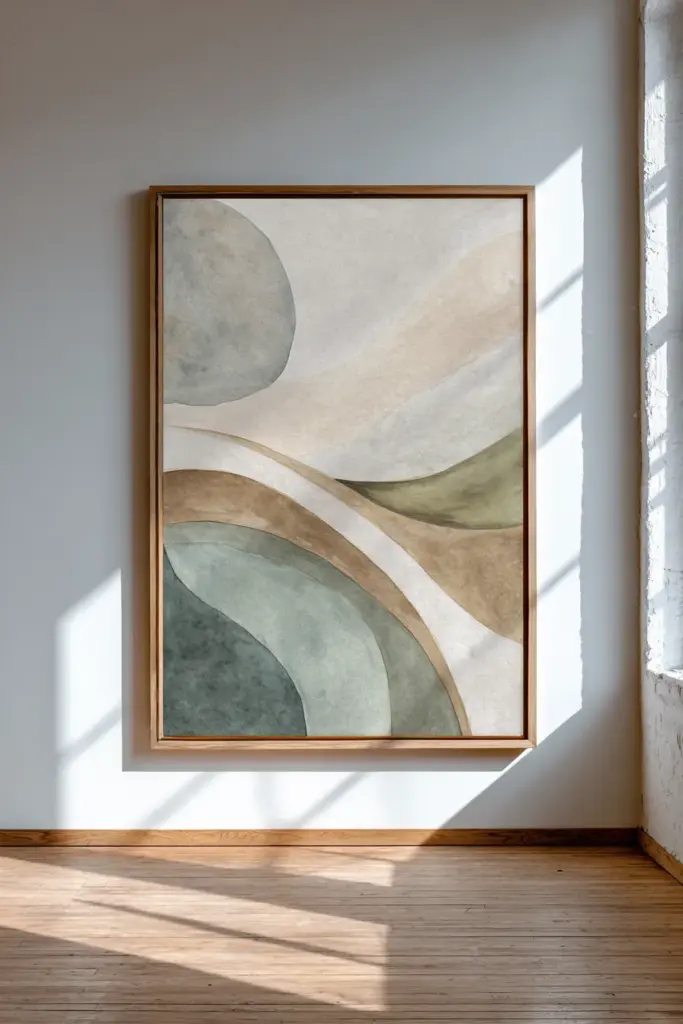
Soft geometric forms. Watercolor washes in sand and sage. Oversized canvases where negative space becomes the main character. Abstract Japandi art works because it suggests rather than declares.
Look for pieces with flowing, organic shapes—not harsh angles. Circles, gentle curves, horizon lines. Colors should feel like they were borrowed from a foggy morning or a sun-bleached stone.
Texture as Art: Beyond the Frame
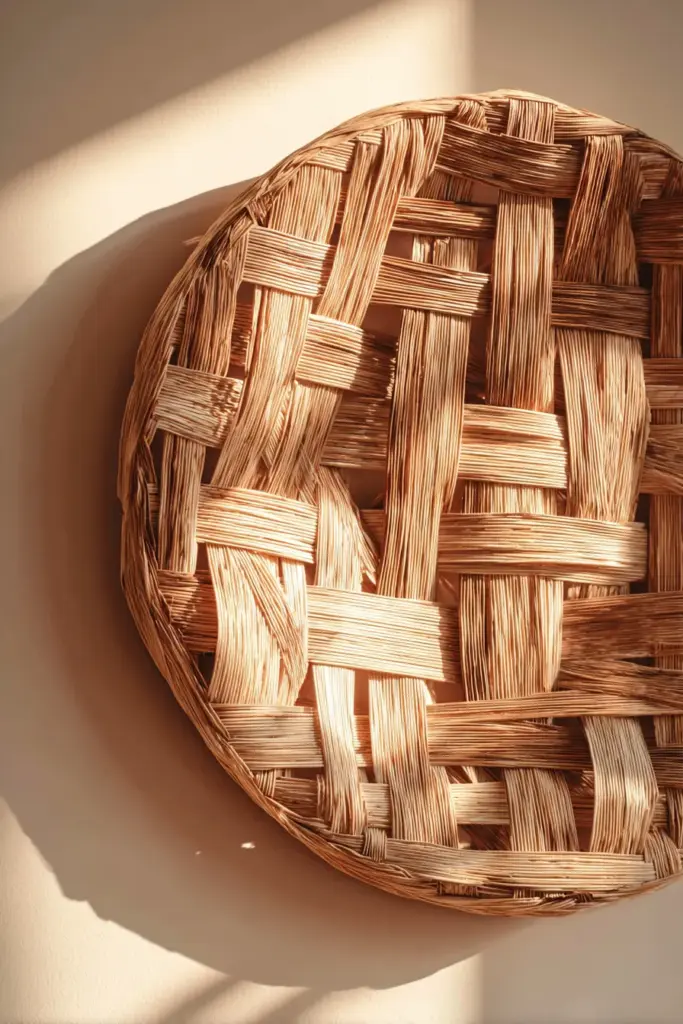
Here’s where Japandi gets tactile. Woven wall hangings in abaca fiber (hello, local sourcing!). Macramé panels in undyed cotton. Three-dimensional wooden sculptures that cast beautiful shadows as daylight shifts.
These textural pieces are perfect for our tropical setting—they’re naturally breathable, and Filipino artisans create stunning versions using indigenous materials at accessible price points.
Sizing and Placement: The Mathematics of Balance
Even beautiful art fails if it’s hung awkwardly. Japandi design follows gentle rules that create visual harmony.
The Two-Thirds Rule
Your statement piece should span roughly two-thirds of your sofa width. For a standard 180cm sofa, that’s a 120cm wide canvas or gallery wall arrangement. This creates proportion without overwhelming.
Hang it 8-10 inches above your furniture—close enough to feel connected, high enough to breathe. In Japandi spaces, art and furniture have a conversation, not a confrontation.
Gallery Wall Asymmetry: Organized Chaos
Unlike grid-perfect gallery walls, Japandi arrangements embrace gentle asymmetry. Start with your largest piece slightly off-center. Let smaller frames orbit around it like satellites, with varying spacing that feels organic.
Layout tip: Use paper templates on the floor first. Photograph from above. This saves nail holes and heartache.
| Room Size | Recommended Art Size | Ideal Pieces |
|---|---|---|
| Small (12-15 sqm) | 60-90cm width | 1-2 statement pieces |
| Medium (16-25 sqm) | 100-150cm width | 3-5 curated pieces |
| Large (26+ sqm) | 150-200cm+ width | Gallery wall or oversized single piece |
Creating Focal Points Without Clutter
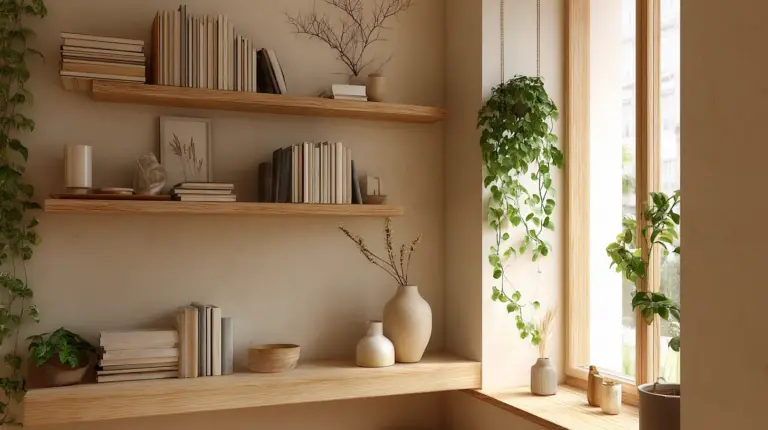
In Japandi living rooms, less truly is more. Choose one hero wall—usually behind your sofa or facing the entrance. Let other walls rest, interrupted only by a floating shelf with a single ceramic vessel or a slim wooden sculpture.
This restraint makes your chosen art sing. It also prevents visual fatigue in our already lush, vibrant tropical environment.
Color Palettes That Calm: Choosing Your Japandi Tones
The Japandi color story is whispered, not shouted. Think of colors as feelings rather than hues.
Earth’s Neutral Embrace
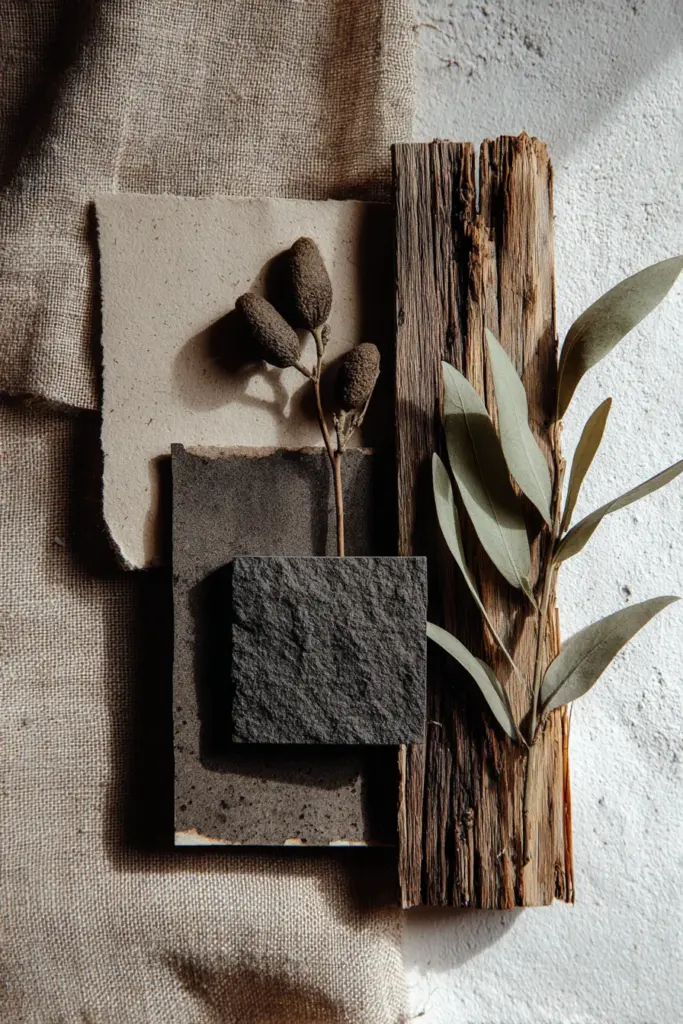
- Warm beiges and taupes: Like sun-warmed linen
- Soft clay and terracotta: Grounding without heaviness
- Gentle sage and moss: Nature’s quiet greens
- Charcoal and ink: For depth and definition
These colors work brilliantly in Philippine homes because they contrast beautifully with our tropical light—bright but not glaring, calm but not cold.
Accent Colors: The Subtle Surprise
Japandi allows for whispers of color. A burnt sienna detail in a print. Dusty blue in a ceramic accent. But these are like spices—essential in tiny amounts, overwhelming in excess.
For tropical adaptation: Consider incorporating muted versions of Filipino sunset colors—soft coral, weathered gold, faded indigo. They add warmth without breaking the aesthetic.
Sustainable and Budget-Friendly Japandi Art Ideas
You don’t need a designer budget to capture Japandi soul. In fact, some of the most beautiful pieces come from mindful DIY and local sourcing.
DIY Upcycling: Thrift Store Treasures
Visit local thrift shops for wooden frames under ₱200. Sand them lightly, leave them natural or stain with diluted coffee for that weathered look. Replace the contents with:
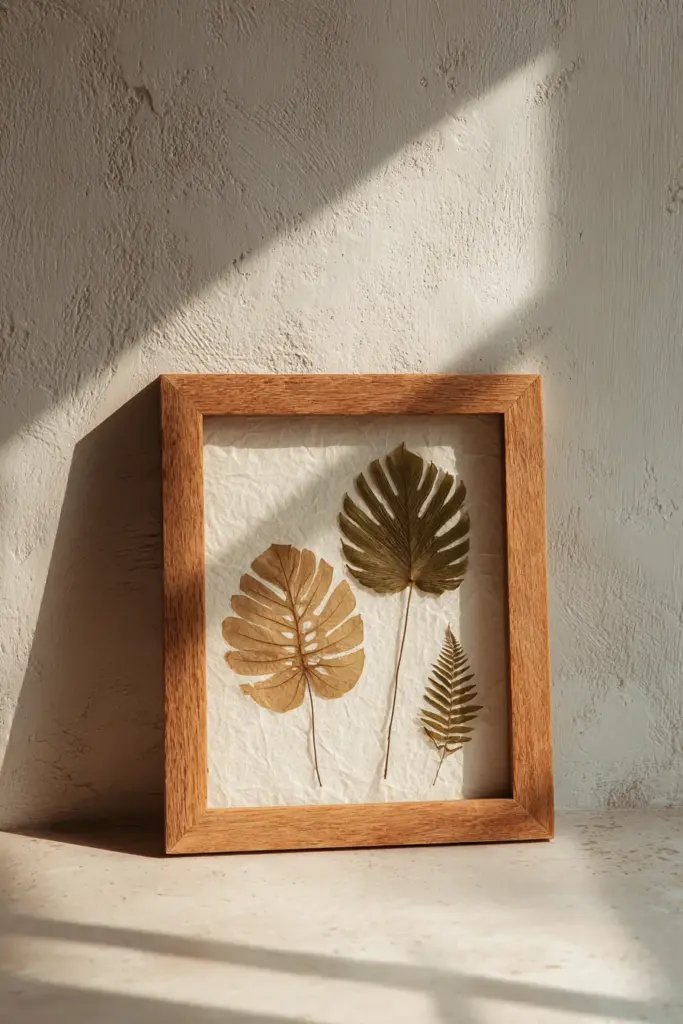
- Pressed tropical leaves between glass
- Hand-painted watercolor washes on textured paper
- Printed line drawings from free online sources
Rice paper magic: Purchase washi or Japanese rice paper online (₱150-300 per sheet). Layer it in frames for a luminous, diffused effect that captures light beautifully.
Local Artisan Sourcing
The Philippines is rich with craftspeople working in Japandi-friendly materials. Seek out:
- Abaca fiber weavings from Bicol or Mindanao artisans
- Rattan and bamboo wall sculptures from Bulacan makers
- Handmade paper art using local kogon grass or banana fiber
Supporting local doesn’t just save on shipping—it creates art with soul, made by hands that understand texture and tradition.
Digital Prints: Affordable Elegance
Print-on-demand services offer Japandi-style art for ₱500-1,500 per A2 print. Look for Filipino sellers on platforms offering:
- Minimalist botanical line art
- Abstract watercolor landscapes
- Simple geometric compositions
Frame them yourself in bamboo or simple black frames to keep costs down while maintaining that elevated aesthetic.
Room-Specific Japandi Art Applications
Different living room layouts call for different approaches. Let’s adapt Japandi principles to real spaces.
Small Living Rooms: Maximizing Space and Light
In compact apartments (common in Metro Manila and growing Cavite areas), Japandi art becomes your spatial superpower. Large-scale, light-colored pieces with generous negative space actually make rooms feel bigger.
Choose one oversized botanical print (90-120cm) in pale tones. The large scale eliminates clutter while the light colors bounce brightness around. Avoid multiple small pieces—they fragment the space.
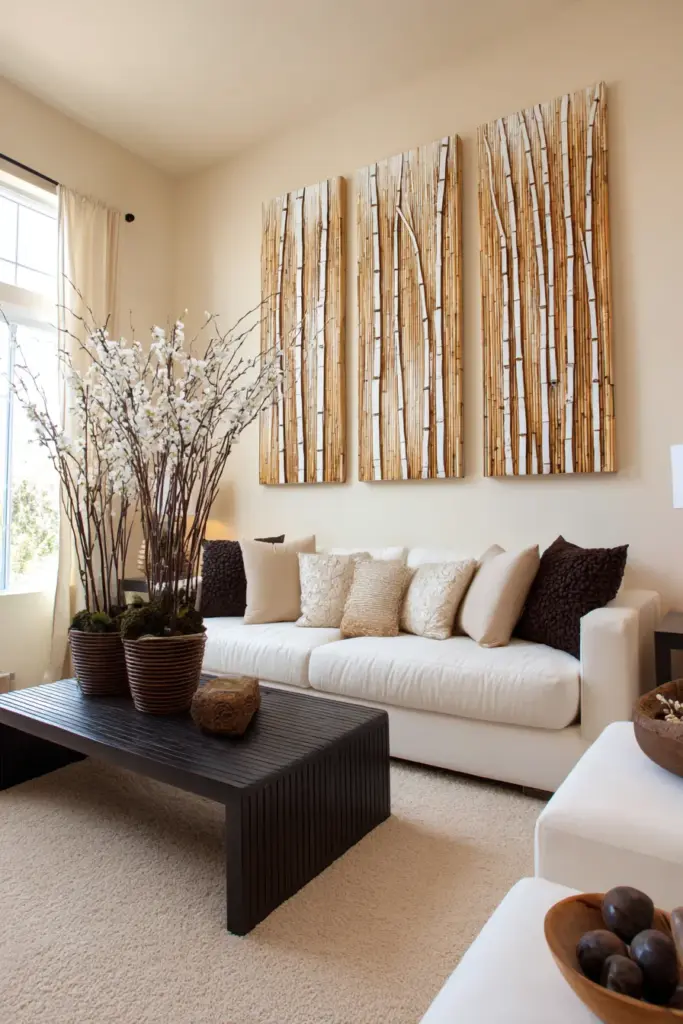
Vertical emphasis: In rooms with low ceilings, use tall, narrow art (like a vertical triptych of bamboo stalks) to draw the eye upward and create the illusion of height.
Open-Concept Spaces: Defining Zones
When your living area flows into dining or kitchen spaces, art helps create invisible boundaries. Place a substantial gallery wall behind your sofa to anchor the living zone without physical barriers.
Use similar color palettes across zones but vary the subjects—abstract in the living area, perhaps subtle food-themed botanical prints in the dining space.
Multi-Functional Living: Art That Works
In Filipino homes where the living room serves many purposes, consider art with dual functionality:
- Fabric wall hangings that also absorb sound during movie nights
- Magnetic-backed pieces that hide storage or electronics
- Shallow shadow boxes that frame objects while holding small items
The Technical Side: Materials for Tropical Climates
Our beautiful Philippine humidity requires smart material choices. Not all Japandi materials translate directly to tropical living.
Mold-Resistant Options
Skip: Untreated cotton canvas, wool textiles, unsealed wood in enclosed frames
Choose: Bamboo frames, rattan details, sealed prints behind glass, acrylic-mounted pieces, metal wall sculptures
Treatment tip: Wipe bamboo and rattan pieces monthly with diluted vinegar solution (1:4 ratio) to prevent mildew without harsh chemicals.
Sustainable Material Swaps
| Traditional Japandi Material | Tropical-Friendly Alternative |
|---|---|
| Wool wall hangings | Abaca or piña fiber weavings |
| Unsealed pine frames | Treated bamboo or narra wood |
| Paper prints without glass | Acrylic-mounted or laminated prints |
| Heavy textile art | Lightweight rattan or woven palm |
Styling Beyond the Walls: Creating Cohesion
Japandi living room art doesn’t exist in isolation. It converses with your furniture, lighting, and accessories.
Furniture Companions
Let your art set the tone, then echo it subtly. If your main piece features warm beiges, consider a low-profile linen sofa in complementary taupe. Botanical prints pair beautifully with wooden coffee tables in light oak or ash.
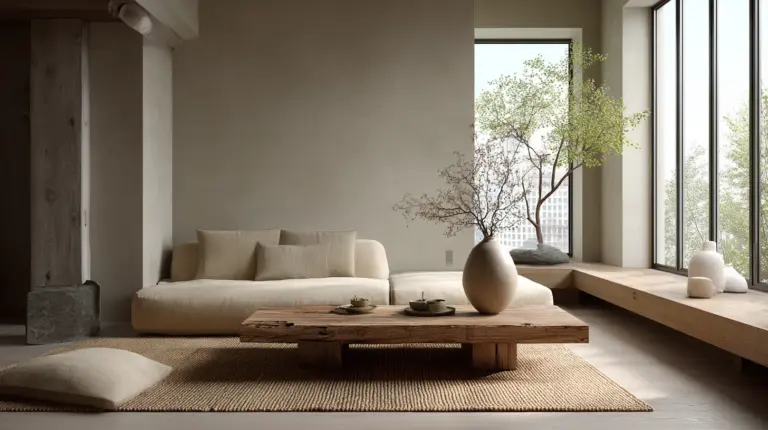
Keep furniture lines clean and low—traditional Japanese-inspired pieces sit closer to the ground, creating harmony with horizontal art arrangements.
Lighting That Honors Art
Natural light is your best gallery spotlight. Position key pieces where morning or afternoon sun can graze them—this creates depth and reveals texture.
For evening, use warm LED spotlights (2700-3000K) positioned 30 degrees from wall art to avoid glare. Paper lantern pendants cast beautiful diffused light that flatters Japandi tones.
The Supporting Cast: Ceramics and Greenery
A single bonsai on a floating shelf beside your art. A raku pottery vessel on the side table. These aren’t decorations—they’re punctuation marks in your design sentence.
Choose organic shapes in similar earth tones. If your art features circles, echo them with round ceramics. Angular prints pair beautifully with rectangular wooden boxes or stone vessels.
Feng Shui Meets Japandi: Energy Flow Considerations
While Japandi is rooted in Japanese and Scandinavian traditions, Filipino homes often consider energy flow. These philosophies actually complement beautifully.
Placement for Positive Energy
Behind the sofa: Landscape art (real or abstract) provides symbolic support and stability—important in feng shui.
Across from the entrance: What you see first sets the home’s intention. Choose uplifting, light-filled pieces—perhaps a soft sunrise palette or ascending botanical forms.
Avoid: Sharp, downward-pointing shapes or turbulent abstract pieces above seating areas. They can create subconscious unease.
The Balance of Elements
Japandi naturally honors feng shui’s five elements:
- Wood: Bamboo frames, botanical subjects
- Earth: Clay-toned palettes, stone in mixed media
- Metal: Minimalist metal frames, wire sculptures
- Water: Flowing abstract forms, blue-gray accents
- Fire: Sparse use of warm terracotta tones
Your Japandi Living Room Art Checklist
Before you commit to pieces, use this guide to ensure cohesion:
- Color harmony: Does the art palette contain 3-5 colors max, all in muted, natural tones?
- Scale appropriateness: Is the main piece roughly 2/3 the width of your largest furniture?
- Material suitability: Are frames and materials climate-appropriate for Philippine humidity?
- Negative space: Does each piece have breathing room, or is your wall crowded?
- Functional beauty: Does the art serve your space—calming, inspiring, or creating focus?
- Budget alignment: Have you explored DIY, local artisans, and secondhand options?
- Personal resonance: Most importantly, does it make you pause and breathe?
A Closing Breath: Making It Yours
At the end of the day, Japandi living room art isn’t about following rules perfectly. It’s about creating a space where you can exhale.
Where the textures invite touch. Where the colors calm your racing mind after humid, chaotic days. Where every piece—whether a ₱300 thrift frame filled with pressed leaves or a commissioned piece from a Batangas artisan—tells a story about what matters to you.
In our corner of the Philippines, we have an advantage. We live surrounded by the natural materials Japandi celebrates—bamboo forests, skilled weavers, timber that ages beautifully in our climate. We understand texture and light because they’re woven into our daily lives.
Your living room is waiting. Start with one piece that makes your heart quiet. Build slowly from there. Let negative space teach you as much as the art itself.
Welcome home.
Frequently Asked Questions
What is Japandi style in simple terms?
Japandi blends Japanese minimalism with Scandinavian warmth, creating spaces that are clean yet cozy. It uses natural materials, neutral earth tones, and functional beauty. Unlike stark minimalism, Japandi adds texture through organic elements like bamboo, linen, and handcrafted pieces, making rooms feel lived-in and peaceful.
What kind of wall art works best in Japandi living rooms?
Minimalist botanical prints, abstract watercolors in earth tones, simple line drawings, and textured fiber art excel in Japandi spaces. Choose pieces with generous negative space, soft neutrals (beige, sage, clay, charcoal), and nature-inspired subjects. Oversized single pieces often work better than multiple small frames for creating calm focal points.
Can Japandi style work in small Philippine apartments?
Absolutely. Japandi’s clean lines and emphasis on negative space actually make small rooms feel larger. Use one large, light-colored art piece instead of multiple small ones. Choose moisture-resistant materials like bamboo or sealed prints. Low-profile furniture and vertical art arrangements maximize the sense of space in compact living areas.
Is Japandi expensive to achieve on a budget?
Not at all. DIY options like upcycled thrift frames with rice paper, pressed tropical leaves, or printed line drawings cost under ₱500. Source locally made abaca fiber art or bamboo pieces from Philippine artisans for authentic materials at lower prices. Digital prints (₱500-1,500) in simple frames create elegant Japandi looks affordably.
How do I adapt Japandi art for tropical humidity?
Choose bamboo or treated wood frames instead of unsealed materials. Use glass-protected or acrylic-mounted prints rather than exposed canvas. Opt for naturally breathable materials like rattan wall sculptures or woven palm fiber art. Wipe bamboo pieces monthly with diluted vinegar solution to prevent mold while maintaining their natural beauty.