
Table of Contents
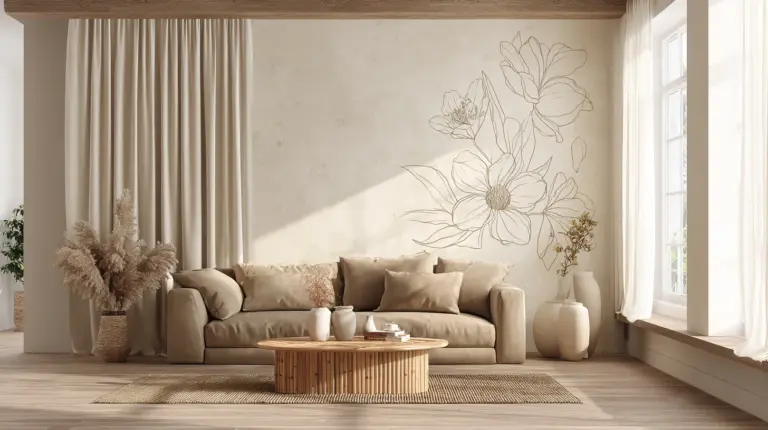
There’s something quietly magnetic about a Japandi living room. It doesn’t shout or demand attention—it whispers warmth through blonde wood grains, invites touch with nubby linen, and holds space for both minimalism and soul. It’s the marriage of Japanese wabi-sabi and Scandinavian hygge, where imperfection becomes beauty and function feels like poetry.
But here’s the truth: you don’t need a designer budget to bring this serene aesthetic into your home. Whether you’re working with ₱10,000 or ₱50,000, the principles remain the same—natural materials, intentional restraint, and layers of quiet texture.
This guide will walk you through creating a Japandi living room that feels both elevated and accessible. From thrift store transformations to smart furniture investments, we’ll explore how to curate a space that breathes calm without emptying your wallet. Because beauty, at its core, is about thoughtfulness—not price tags.
Understanding Japandi Style: Where Minimalism Meets Warmth
Japandi isn’t just a design trend—it’s a philosophy of living. It takes the clean lines and functionality of Scandinavian design and softens them with the organic imperfection of Japanese aesthetics. Think fewer pieces, but each one meaningful. Neutral palettes punctuated by natural wood tones. Spaces that feel uncluttered yet deeply comforting.
The color story is earthy and restrained: warm whites, beiges, soft taupes, charcoal grays, and the occasional black accent. Wood appears in its honest form—oak, ash, teak—left natural or lightly oiled to show grain and character. Textiles add warmth: jute rugs underfoot, linen cushions that wrinkle beautifully, cotton throws that invite afternoon naps.
What makes Japandi budget-friendly is its inherent restraint. You’re not filling every surface or corner. You’re selecting carefully, which means spending mindfully on pieces that truly matter.
Setting Your Japandi Budget: Three Tiers That Work
Budget Tier 1: ₱10,000–₱20,000 (Starter Serenity)
This is your foundation budget—perfect for renters or first-time decorators. Focus on one statement piece (a quality sofa or low coffee table) and build around it with thrifted and DIY elements.
What to prioritize:
- One anchor furniture piece (secondhand oak coffee table or simple linen sofa cover)
- Basic neutral textiles (jute rug from Divisoria, linen-look cushion covers from online shops)
- DIY wall art or floating shelves made from reclaimed wood
Budget Tier 2: ₱25,000–₱50,000 (Thoughtful Curation)
Here you can invest in a few quality pieces while mixing in affordable finds. This budget allows for a cohesive look with better materials and fewer compromises.
What to prioritize:
- Mid-range sofa in neutral fabric or affordable Japanese-inspired futon seating
- Solid wood coffee table (Ikea hacks or local carpenter collaborations)
- Quality lighting (paper pendant lamp, bamboo floor lamp)
- Textile layers (organic cotton throws, larger area rug)
Budget Tier 3: ₱60,000+ (Elevated Essentials)
This tier lets you invest in longevity—pieces that will age beautifully and carry you through years of living. Think heirloom-quality wood furniture and artisan ceramics.
What to prioritize:
- Investment sofa in natural linen or quality cotton blend
- Handcrafted wood furniture from local artisans
- Designer lighting pieces or authentic Japanese shoji-inspired screens
- Curated art and ceramics that tell a story
Smart Shopping: Where to Find Budget Japandi Pieces in the Philippines
Local Markets and Thrift Finds
Divisoria and Dapitan Arcade offer surprising gems—rattan baskets, ceramic planters, and wooden trays that fit perfectly into Japandi aesthetics. Visit early morning for the best selection, and don’t be afraid to negotiate.
Ukay-ukay stores in Baguio, Cubao, and Marikina often stock vintage wooden furniture, linen textiles, and minimalist décor. Look for solid wood pieces you can sand and refinish, or neutral-toned ceramics that just need a good cleaning.
Facebook Marketplace and Carousell are goldmines for secondhand Scandinavian-style furniture. Search terms like “minimalist sofa,” “wooden coffee table,” or “neutral furniture” often yield pieces from IKEA, SM Home, or local brands at 40-60% off retail.
Affordable Philippine Retailers
SM Home and Our Home carry budget-friendly basics—neutral cushions (₱299-₱599), jute rugs (₱1,500-₱3,000), and simple wooden shelving that can anchor a Japandi space.
Wilcon Depot offers affordable wood finishes, low-VOC paints in warm neutrals, and bamboo blinds that filter light beautifully—key for achieving that soft, diffused Scandinavian glow.
Online shops on Shopee and Lazada stock Japandi dupes: linen-look cushion covers (₱150-₱300), rattan storage baskets (₱200-₱800), and minimalist vases (₱100-₱400). Search “muji style,” “wabi sabi décor,” or “Scandinavian home.”
International Budget Options (With Shipping Considerations)
IKEA remains a reliable source—their MUJI-inspired collections like Lisabo tables and Stocksund sofas ship to the Philippines through freight forwarders. Factor in ₱3,000-₱8,000 shipping but quality often justifies the cost.
Structube and Wayfair dupes on AliExpress offer affordable alternatives to West Elm’s Harmony line. Look for pieces with solid wood legs, neutral upholstery, and clean lines.
Furniture Fundamentals: The Big Investments Worth Making
The Japandi Sofa: Low, Linear, Lived-In
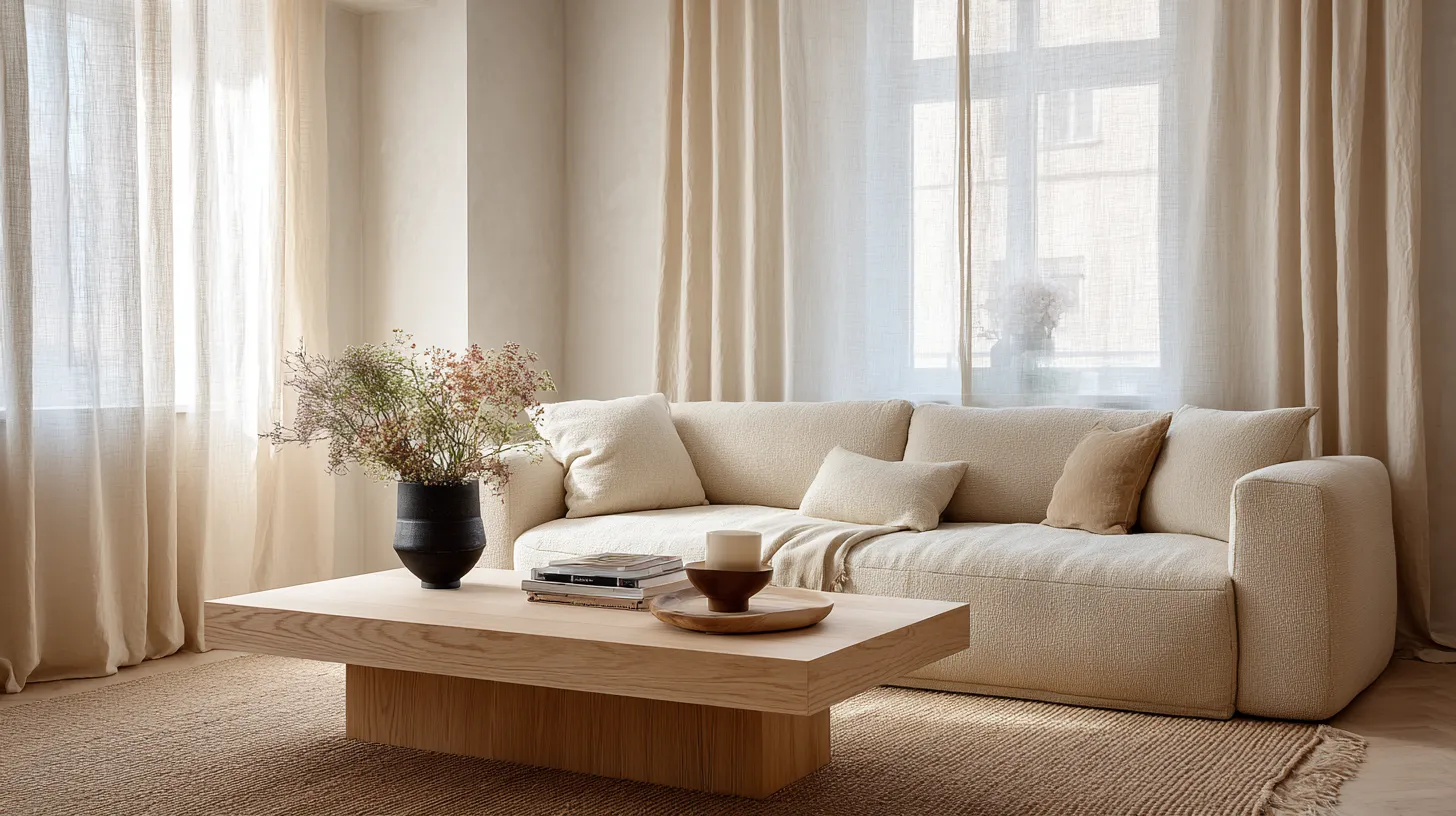
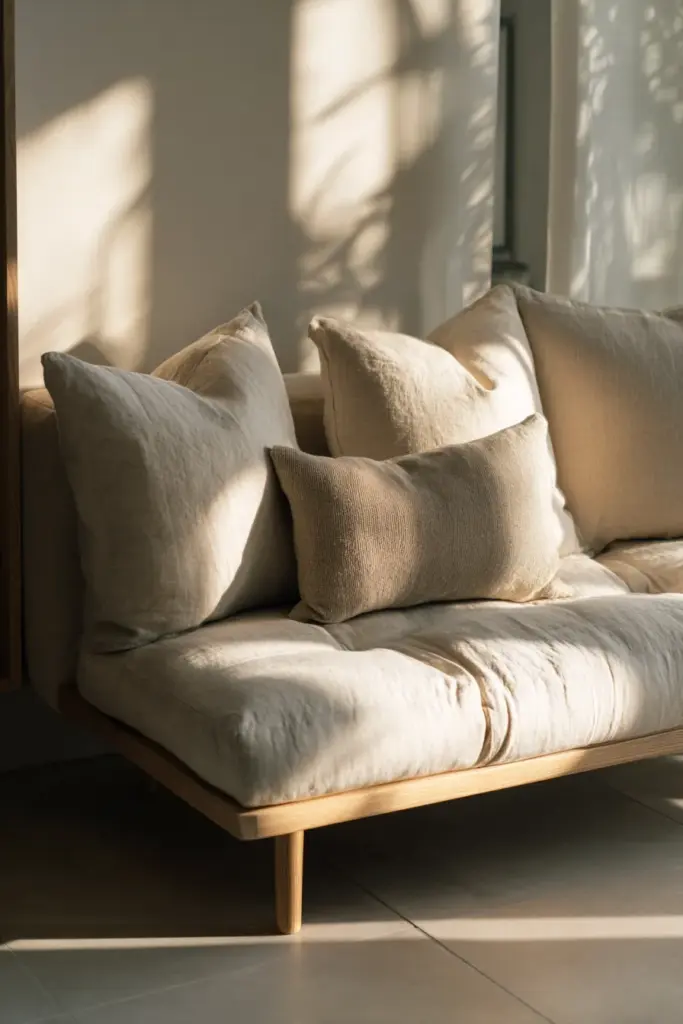
Your sofa is the room’s anchor—choose wisely. Look for low profiles (legs under 6 inches high), clean lines, and natural fabrics like cotton, linen, or linen-cotton blends. Beige, oatmeal, warm gray, and soft charcoal work beautifully.
Budget hack: Buy a simple neutral sofa frame (₱15,000-₱25,000 from Mandaue Foam or SM Furniture) and upgrade with a custom slipcover in natural linen (local seamstresses charge ₱3,000-₱5,000). Slipcovers are washable, changeable, and instantly elevate the look.
Thrift transformation: Sand down a dated wooden sofa frame, apply natural tung oil, and reupholster seat cushions with foam and neutral fabric. Total cost: ₱5,000-₱8,000 versus ₱40,000 new.
Coffee Tables: The Art of Natural Wood
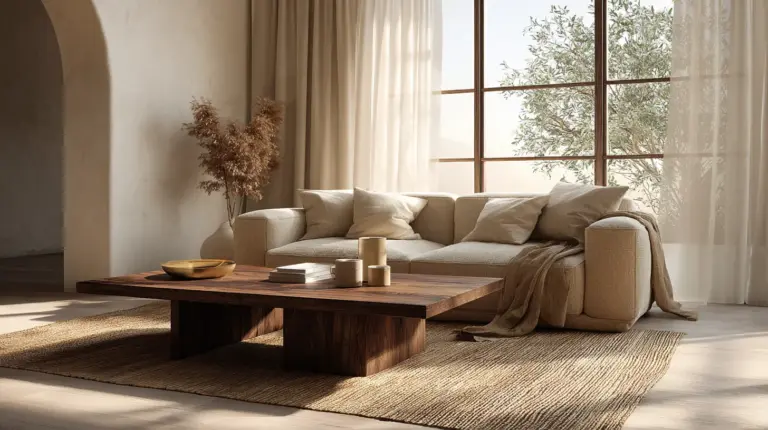
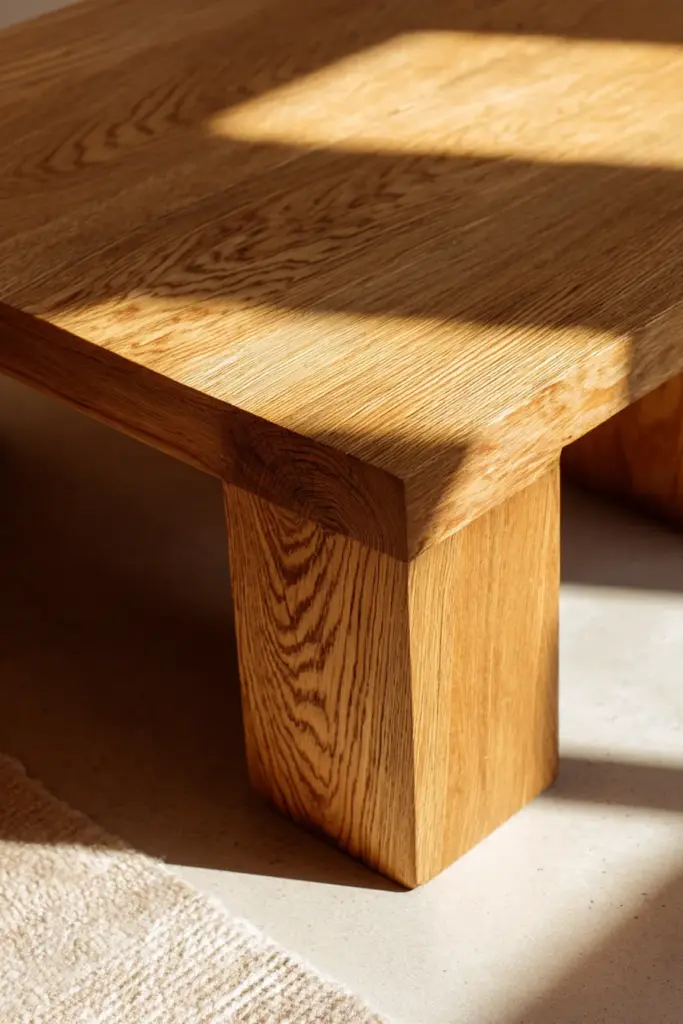
Japandi coffee tables sit low to the ground, celebrate wood grain, and often feature simple geometric shapes. Avoid glass tops and overly ornate designs—think clean rectangles, rounded edges, organic asymmetry.
DIY option: Source reclaimed wood planks from construction sites or pallets (free to ₱500), sand smooth, treat with natural wood oil, and mount on simple hairpin legs (₱800-₱1,500 online). Total project: ₱1,500-₱2,500.
Affordable buys: IKEA’s Stockholm coffee table (around ₱12,000 with shipping) or local carpenter-made pieces from Marikina (₱8,000-₱15,000 for solid narra or acacia).
Storage Solutions: Hidden but Handsome
Japandi thrives on clean surfaces, which means storage must be both functional and beautiful. Look for pieces that blend into the aesthetic rather than announcing themselves.
Rattan and woven baskets (₱300-₱1,200 from Dapitan or Cartimar) tuck under coffee tables or beside sofas, holding throws, magazines, or remotes. Their natural texture adds warmth while hiding clutter.
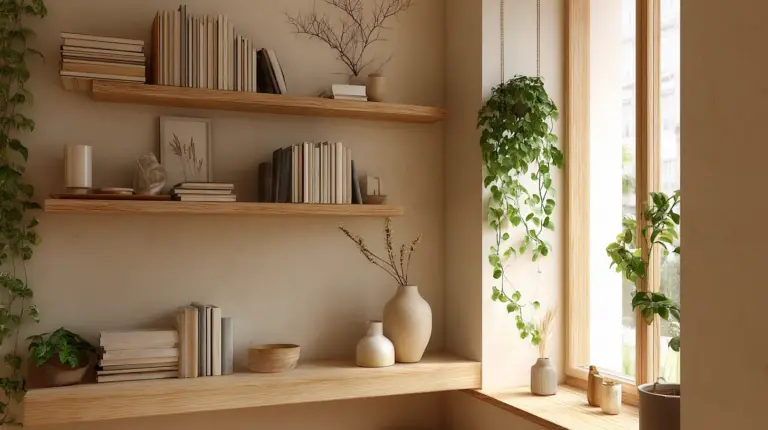
Low wooden sideboards or floating shelves in light oak or ash (₱5,000-₱12,000 from local carpenters) provide display space for ceramics and books while maintaining clean lines.
Textiles and Layers: Where Comfort Lives
Rugs: Foundation of Warmth
A jute or sisal rug grounds the room and adds essential texture. These natural fiber rugs are budget-friendly (₱2,000-₱6,000 for 5×7 feet) and fit perfectly into Japandi’s organic palette.
Maintenance for Philippine humidity: Vacuum weekly and air out monthly in direct sunlight to prevent mildew. Spot-clean spills immediately with mild soap and water, then dry thoroughly with a fan.
Layering tip: Place a smaller cotton or wool rug in neutral tones (cream, soft gray) atop the jute base for added softness and visual interest—₱1,500-₱3,000 for accent rugs online.
Cushions and Throws: Soft Invitations to Linger
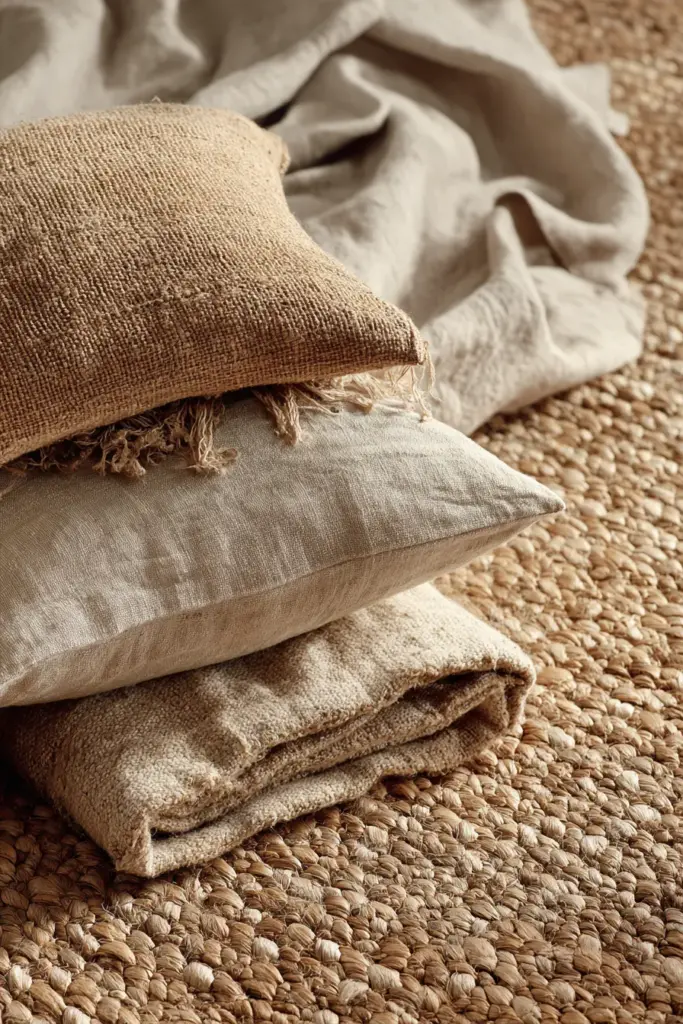
Linen and cotton are your best friends here—they wrinkle beautifully, soften with washing, and age with grace. Stick to warm neutrals: oatmeal, sand, warm gray, muted olive, soft terracotta.
Budget finds: Linen-look cushion covers from Shopee (₱150-₱300 each) paired with affordable inserts create a high-end look. Buy 4-6 in varying shades of the same color family for cohesion.
Thrift hack: Visit fabric stores in Divisoria for Japanese cotton or linen remnants (₱200-₱400 per meter), then sew simple envelope-back covers yourself or hire a seamstress (₱100-₱150 per cushion).
Cotton waffle-weave throws (₱800-₱1,500) or chunky knit blankets in cream or beige drape over sofa arms, inviting touch and adding layered texture.
Lighting: The Soul of Japandi Spaces
Natural Light: Your Free Luxury
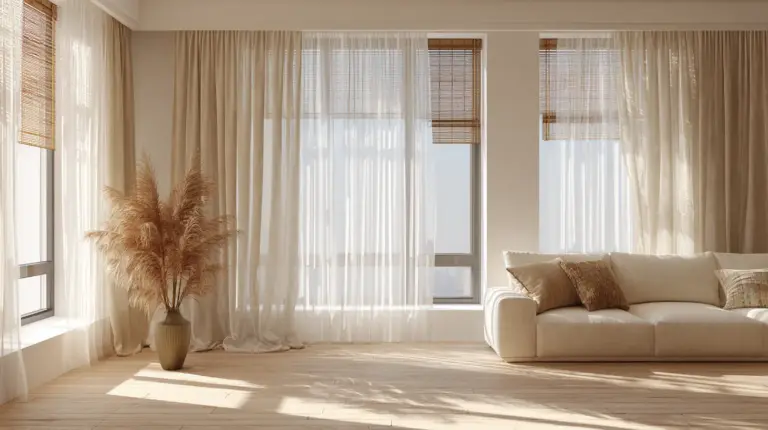
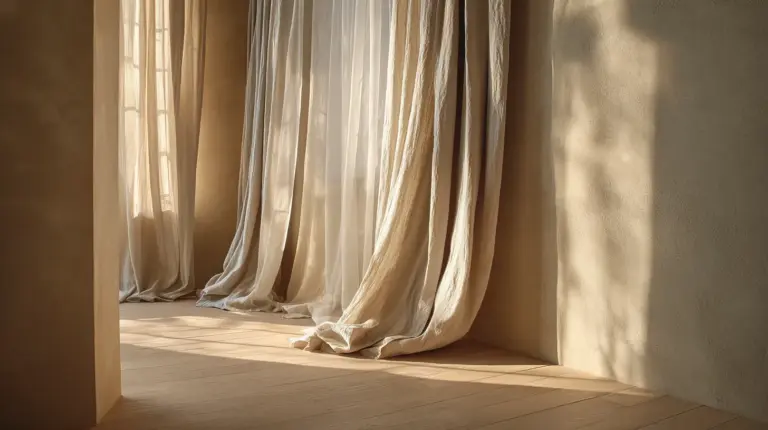
Maximize daylight first—it’s the most authentic Scandinavian element and costs nothing. Replace heavy curtains with sheer linen panels (₱800-₱1,500 per panel) that filter harsh Philippine sun into soft, diffused light.
Bamboo blinds (₱1,200-₱3,000 from Wilcon or Ace Hardware) offer adjustable light control while maintaining the natural material palette. Their horizontal lines echo Japandi’s clean geometry.
Ambient Lighting: Warm and Intentional
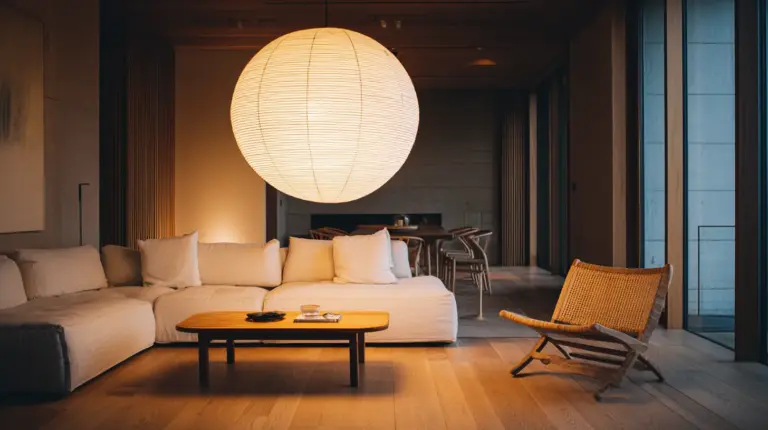
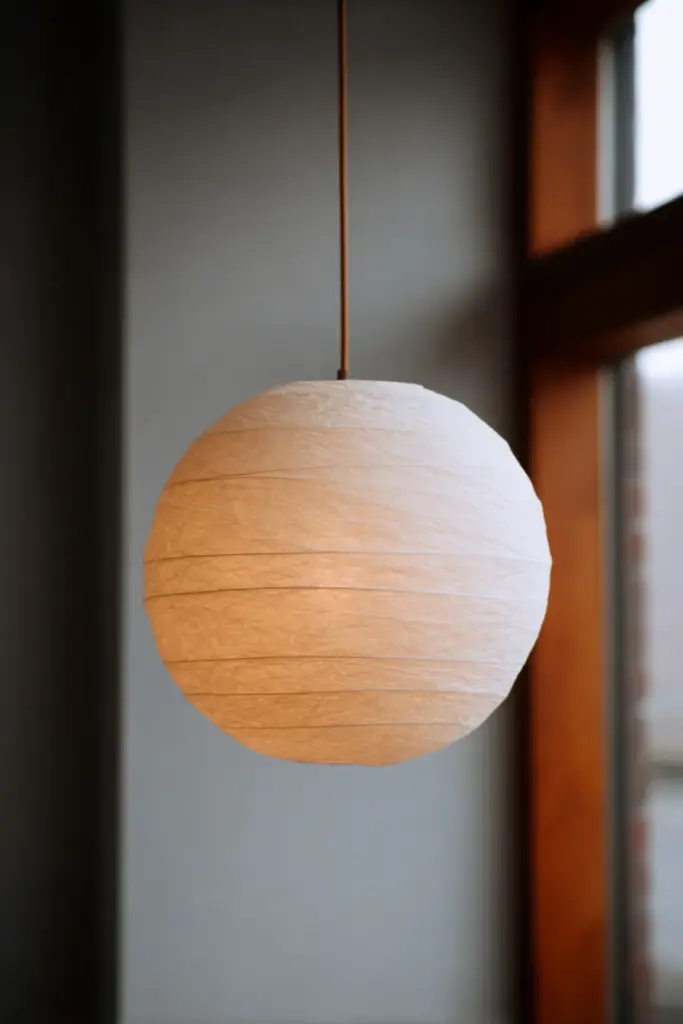
Paper pendant lamps (₱800-₱2,500 from IKEA’s Regolit or similar designs on Shopee) cast gentle light and create striking sculptural moments. Hang at varying heights for visual rhythm.
Floor lamps in natural materials—bamboo, light wood, or matte black metal with linen shades—provide task lighting while reinforcing the aesthetic (₱2,500-₱6,000 locally or online).
LED warm white bulbs (2700-3000K) are non-negotiable—cool white destroys Japandi’s warmth. Replace all bulbs throughout the room for cohesive glow (₱200-₱400 per quality LED bulb).
Accent Lighting: The Magic Hours
String lights or LED strips behind floating shelves create soft backlighting that mimics Scandinavian twilight. Choose warm white only (₱300-₱800 for 5-meter strips).
Candles in ceramic holders or simple glass votives add hygge—the Danish concept of cozy contentment—for minimal cost (₱50-₱200 per candle at grocery stores or Miniso).
Color Palette: The Art of Neutral Restraint
Japandi’s palette is deliberately quiet, allowing materials and textures to speak. Your walls should breathe—think warm white, soft beige, or the lightest gray with beige undertones.
Paint recommendations for Philippine homes: Boysen’s Chalk Luxe in “White Sand” or “Urban Chic,” or Davies’ TimeLessence in “Oyster White” provide the perfect warm neutral base (₱1,200-₱2,000 per gallon).
Accent colors appear sparingly: charcoal gray in throw pillows, muted olive in a single plant, soft terracotta in a handmade ceramic piece. The rule is 80% neutrals, 15% natural wood tones, 5% muted accent.
Black as punctuation: Use matte black sparingly—in metal lamp bases, picture frames, or a single vase—to anchor the lighter palette and add subtle contrast.
DIY Projects: Hands-On Beauty on a Budget
Upcycled Wood Coffee Table
Materials needed: Wooden pallet or reclaimed planks, sandpaper (₱150-₱300), natural tung oil or Danish oil (₱400-₱800), hairpin legs (₱800-₱1,500).
Steps: Disassemble pallet carefully, select best planks, sand thoroughly until smooth, arrange in desired configuration, secure with wood glue and screws from underneath, apply 2-3 coats of oil, attach legs. Total cost: ₱1,500-₱3,000. Time: 6-8 hours across 2 days.
Linen Cushion Covers
Materials needed: 2 meters natural linen or cotton (₱400-₱800), basic sewing supplies, cushion inserts (₱150-₱250 each).
Steps: Cut fabric into 18×18 inch squares (or your preferred size), hem edges, create envelope-back closure, press seams. Total cost per cushion: ₱200-₱350. Time: 1 hour per cover.
Floating Wooden Shelves
Materials needed: Solid wood planks cut to size (₱300-₱600 per shelf), floating shelf brackets (₱200-₱400 per shelf), sandpaper, wood oil.
Steps: Sand planks smooth, drill holes for brackets following package instructions, oil wood thoroughly, mount brackets to wall studs using level, slide shelves onto brackets. Total cost per shelf: ₱500-₱1,000. Time: 2-3 hours.
Gallery Wall with Minimalist Prints
Materials needed: Neutral-toned abstract art prints downloaded from free sites like Unsplash (free), simple wooden or black frames (₱200-₱500 each from SM or IKEA).
Steps: Print on matte photo paper at local print shops (₱50-₱150 per print), frame, arrange on floor first to find pleasing composition, hang using command strips or nails. Total cost for 4-6 prints: ₱1,200-₱3,500. Time: 2-3 hours.
Plants and Natural Elements: Life in the Living Room
The Right Plants for Japandi Spaces
Choose plants with clean silhouettes and minimal fuss—sculptural rather than busy. Snake plants (₱150-₱500), ZZ plants (₱200-₱600), and fiddle leaf figs (₱800-₱2,000) offer strong forms that complement minimalist spaces.
Kokedama (moss ball planters, ₱300-₱800 DIY or ₱500-₱1,200 premade) add Japanese influence while doubling as living sculpture.
Display in simple ceramic pots—matte white, beige, or natural terracotta without patterns (₱150-₱600 each from garden centers or Cartimar).
Branches, Stones, and Organic Moments
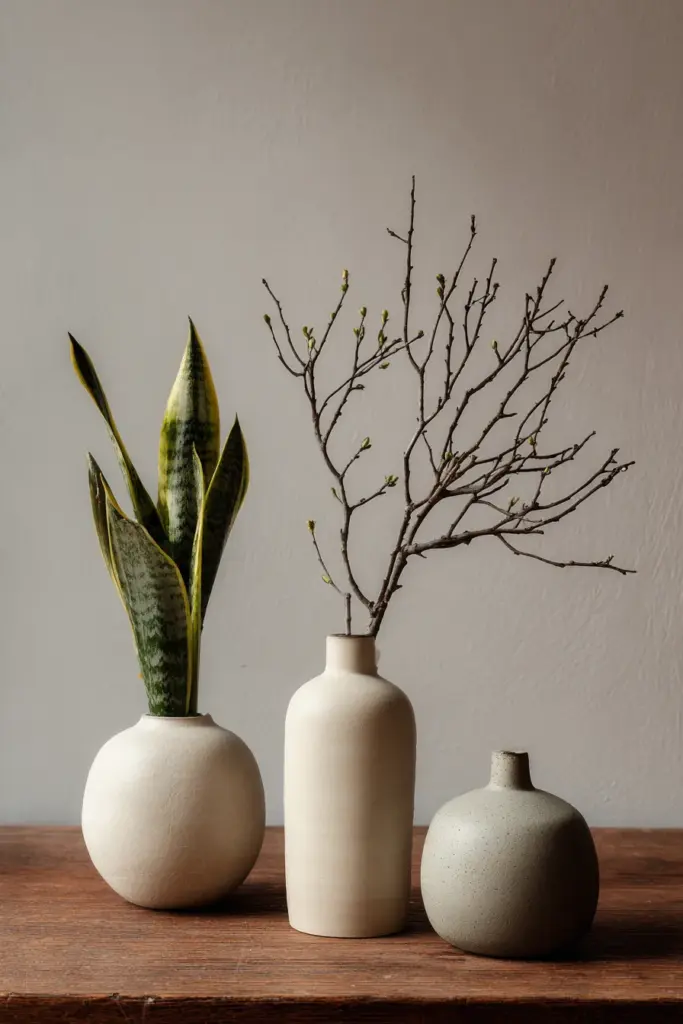
Forage locally for decorative elements: interesting branches, smooth river stones, driftwood. Arrange in tall ceramic vases or shallow bowls for instant wabi-sabi elegance—cost is just your time.
Ikebana-inspired arrangements using seasonal branches (from your backyard or ₱100-₱200 at flower markets) in simple vases create focal points that change with the seasons.
Small Space Japandi: Maximizing Calm in Compact Living
Multifunctional Furniture is Your Friend
In small Philippine condos or apartments, every piece must earn its place. Look for coffee tables with hidden storage (₱4,000-₱8,000), sofa beds in neutral fabrics (₱15,000-₱30,000), or nesting side tables that tuck away when not needed (₱2,000-₱4,000).
Wall-mounted drop-leaf tables serve as dining spots or work surfaces that fold flat (₱3,000-₱6,000 from local carpenters or IKEA).
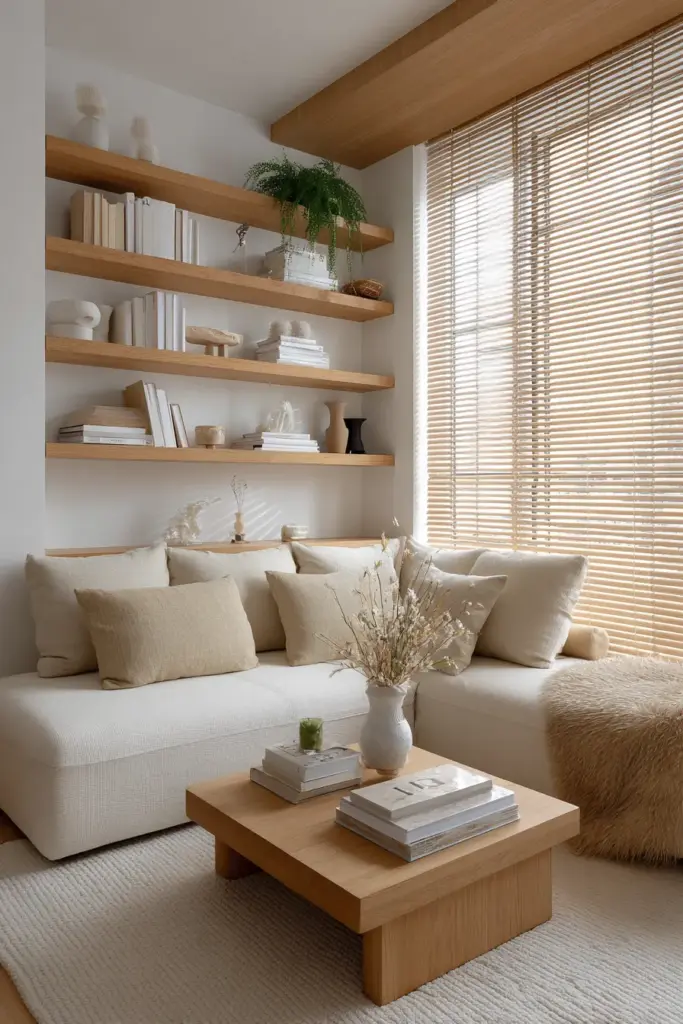
Low Furniture Creates Visual Space
Keep seating and tables low to the ground—this Japanese principle makes ceilings feel higher and rooms more spacious. Floor cushions (₱800-₱1,500) provide flexible seating that stores easily.
Mirrors for Borrowed Light
A large rectangular mirror in simple wood or black frame (₱2,000-₱5,000) positioned opposite a window doubles natural light and creates the illusion of space—essential in darker Philippine interiors.
Maintenance and Longevity: Caring for Your Japandi Home
Protecting Wood in Humid Climates
Philippine humidity threatens wood furniture. Combat this by:
- Running dehumidifiers during rainy season (₱3,000-₱8,000 investment, worth it)
- Wiping down wood weekly with barely-damp cloth
- Reapplying natural oil treatments every 6-12 months (₱400-₱800 per treatment)
- Avoiding direct sunlight that fades and dries wood
Refreshing Textiles Seasonally
Natural fiber rugs need quarterly deep cleans—take outside, beat dust free, spot-clean stains, air in direct sun to prevent mildew. Rotate rugs every 6 months to prevent uneven wear.
Wash linen and cotton cushion covers monthly in cold water with gentle detergent—they’ll soften and wrinkle beautifully over time, which is precisely the point.
One-Year Refresh Checklist
After a year in your Japandi living room, refresh these elements:
- Replace any yellowed paper lamp shades (₱300-₱800)
- Touch up paint on walls in high-traffic areas
- Trim or replace struggling plants
- Add one new ceramic piece or textile in current season’s palette
- Rotate artwork or photography
- Deep clean upholstery with upholstery cleaner (₱300-₱500)
Your Japandi Journey: Key Takeaways
- Start with neutrals: Warm whites, beiges, and soft grays form your foundation—these never go wrong
- Invest in one anchor piece: Let a quality sofa or coffee table lead the way, build around it gradually
- Mix high and low: Pair thrifted finds with one or two investment pieces for authentic, lived-in style
- Natural materials over synthetic: Choose wood, linen, cotton, jute—they age beautifully and feel better
- Less is genuinely more: Resist filling every corner; empty space is part of the design
- Lighting transforms everything: Warm bulbs, natural light, and layered lighting matter more than you think
- DIY adds soul: Handmade pieces tell your story and save significant money
- Shop local first: Support Philippine artisans, thrift stores, and carpenters before international shipping
- Plan for humidity: Protect materials properly in tropical climates for longevity
- Trust the process: Japandi spaces evolve slowly—don’t rush to completion, enjoy the curation
Conclusion: Making Space for What Matters
Creating a Japandi living room on a budget isn’t about deprivation—it’s about intention. It’s choosing the linen cushion that invites afternoon reading over the trendy pattern that won’t age well. It’s sanding down a secondhand table yourself because the process connects you to the piece. It’s understanding that the best rooms aren’t finished in a weekend shopping spree—they unfold over time, layer by layer, choice by choice.
Your living room should feel like a deep breath—steady, centering, yours. The beauty of Japandi is that it honors both restraint and warmth, both simplicity and soul. You don’t need a designer budget to create that feeling. You need thoughtfulness, patience, and perhaps a little bit of hand-sanded wood grain under your fingertips.
Start small. Begin with one corner, one piece, one afternoon of editing what you already own. Let your space breathe. Let it hold both emptiness and comfort. Let it be a place where you can simply be.
That’s Japandi. That’s home.
Frequently Asked Questions
What is the best budget to start a Japandi living room in the Philippines?
You can begin transforming your space with as little as ₱10,000-₱15,000 by focusing on key textiles (jute rug, linen cushions), DIY projects (floating shelves, refinished thrift finds), and one quality anchor piece. Prioritize natural materials over quantity, and shop local markets like Divisoria and Cartimar for affordable rattan baskets, ceramic planters, and neutral accessories that fit the aesthetic beautifully.
Where can I find affordable Japandi furniture in the Philippines?
Start with SM Home and Our Home for budget basics (₱300-₱3,000), then explore Facebook Marketplace and Carousell for secondhand pieces at 40-60% off retail. Local carpenters in Marikina create custom solid wood furniture (₱8,000-₱15,000) for less than branded alternatives. For international options, IKEA ships through freight forwarders—factor ₱3,000-₱8,000 shipping costs but quality often justifies the investment for anchor pieces.
How do I maintain wood furniture in humid Philippine climate?
Protect wood by running dehumidifiers during rainy season, wiping surfaces weekly with barely-damp cloths, and reapplying natural oil treatments (tung oil or Danish oil) every 6-12 months. Avoid placing furniture in direct sunlight which dries and fades wood. For jute rugs, vacuum weekly and air in direct sun quarterly to prevent mildew—rotate every 6 months for even wear.
Can I achieve Japandi style in a small condo or apartment?
Absolutely. Small spaces actually suit Japandi principles perfectly—choose low-profile furniture that makes ceilings feel higher, invest in multifunctional pieces (coffee tables with storage, sofa beds, nesting tables), and use large mirrors to double natural light. Floor cushions (₱800-₱1,500) provide flexible seating that stores easily, while wall-mounted drop-leaf tables fold flat when not needed. Keep the palette neutral and clutter-free for maximum visual space.
What are easy DIY Japandi projects for beginners?
Start with an upcycled pallet coffee table (₱1,500-₱3,000 total: sand planks, oil wood, add hairpin legs), sew simple linen cushion covers (₱200-₱350 each using natural fabric from Divisoria), or create floating wooden shelves (₱500-₱1,000 per shelf with reclaimed wood and brackets). A minimalist gallery wall using free Unsplash prints in simple frames costs ₱1,200-₱3,500 for 4-6 pieces—all these projects take 1-8 hours and add authentic, handmade character to your space.