
Table of Contents
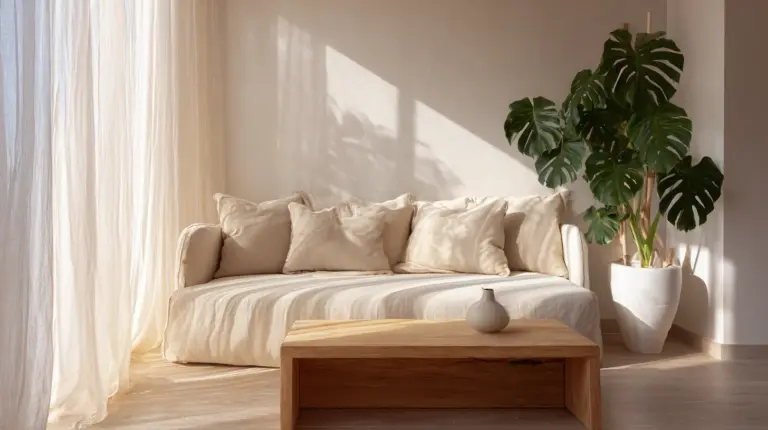
There’s something magical about the way light moves through a room when the window treatments are just right. Not too heavy, not too bare—just enough to filter the morning sun into something soft and golden.
Japandi window treatments understand this balance instinctively. They merge the warmth of Scandinavian hygge with the mindful simplicity of Japanese wabi-sabi, creating spaces that breathe with natural light and quiet intention.
In your living room, where life unfolds in layers of conversation and stillness, your windows deserve more than an afterthought. They frame your world, control your light, and set the tone for everything that happens within those walls.
Let’s explore how to dress your windows with the calm sophistication that defines Japandi design—practical, beautiful, and deeply rooted in nature.
Understanding Japandi Window Treatment Philosophy
The Marriage of Two Design Traditions
Japandi window treatments aren’t about following rigid rules. They’re about honoring light the way both Japanese and Scandinavian cultures do—as something sacred, something that shapes our days and our moods.
Japanese design teaches us ma, the beauty of negative space. Scandinavian design reminds us that natural light is a luxury in itself, especially during long winters. Together, they create window solutions that maximize daylight while maintaining privacy and serenity.
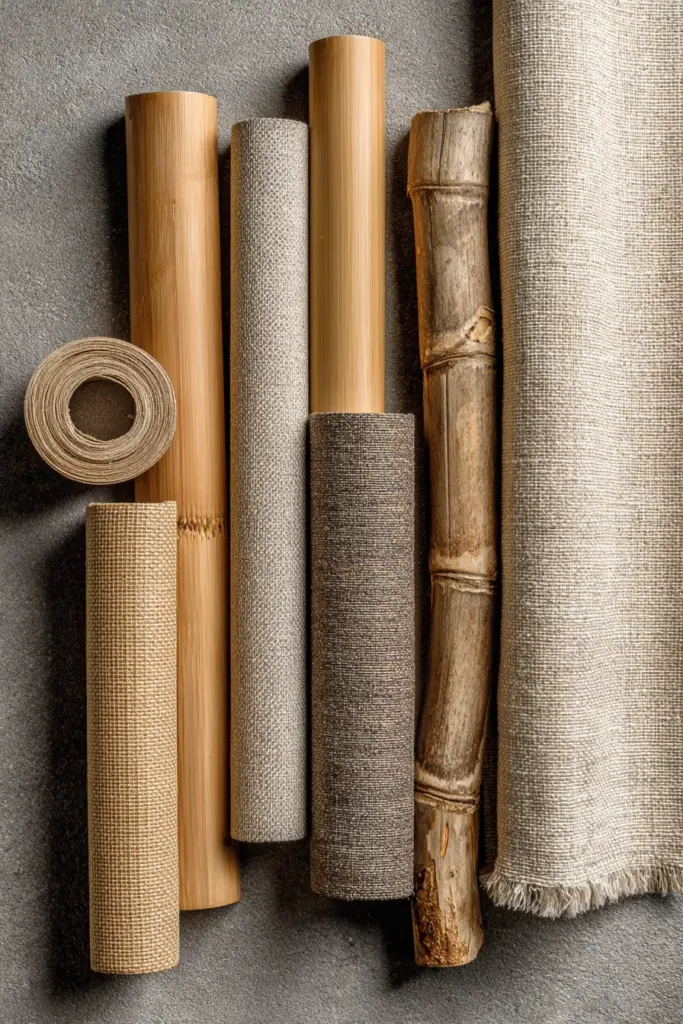
Think of your window treatments as breathable layers, not barriers. Linen that moves with the breeze. Bamboo that casts gentle shadows. Materials that feel alive rather than manufactured.
Core Principles to Guide Your Choices
Minimalism with warmth defines every decision. Your treatments should simplify the view while adding textural richness—a contradiction that somehow works beautifully.
Choose natural over synthetic. Neutral over bold. Functional over purely decorative. These aren’t limitations; they’re guardrails that lead to timeless elegance.
The wabi-sabi principle embraces imperfection: linen that wrinkles naturally, wood that shows its grain, handwoven textures that reveal the maker’s hand. This is beauty that deepens with age rather than fighting it.
Best Materials for Japandi Living Room Window Treatments
Linen: The Japandi Essential
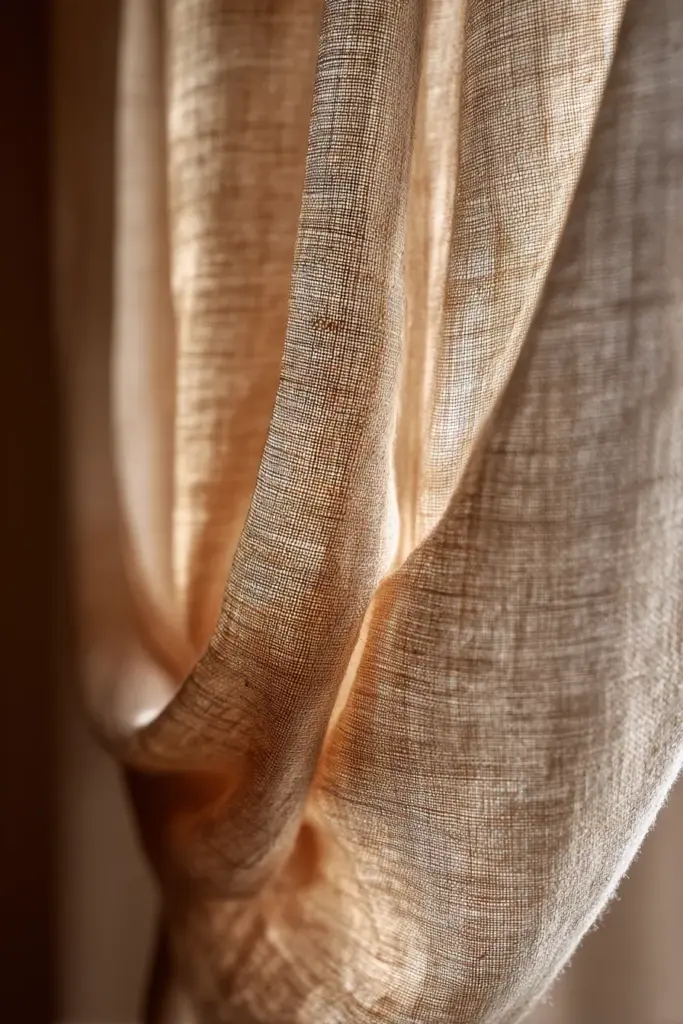
Linen curtains are the heartbeat of Japandi window dressing. They filter light without blocking it completely, creating that soft, diffused glow that makes everything look better—including you.
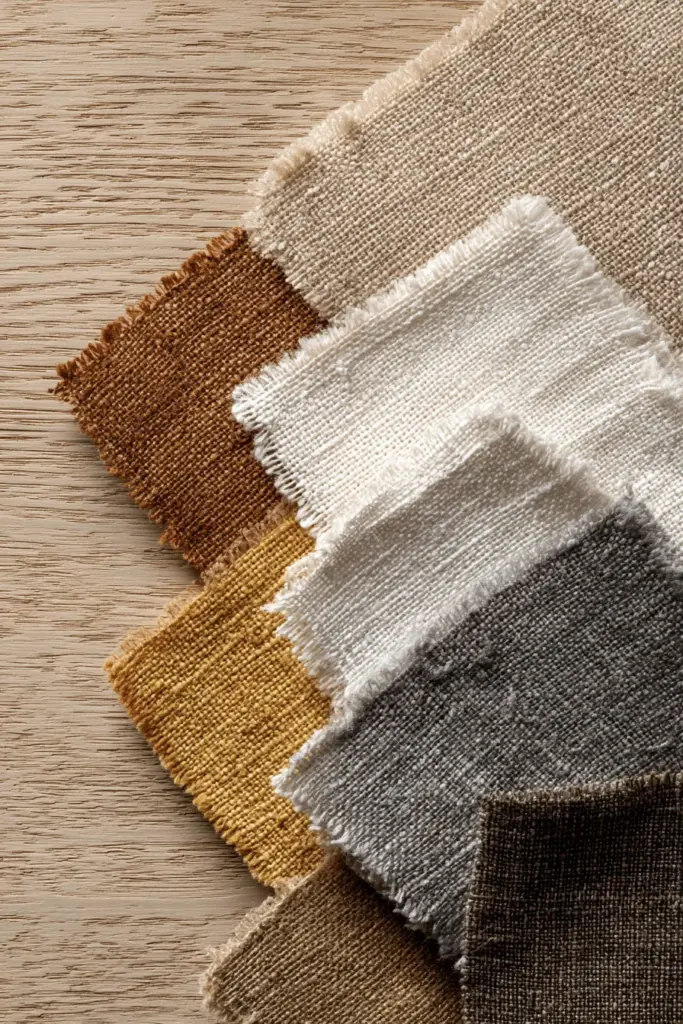
The fabric’s natural slub texture adds visual interest without pattern or color. In shades of undyed flax, warm beige, soft taupe, or cloudy gray, linen feels both luxurious and effortlessly casual.
For tropical climates like Quezon City, linen’s breathability becomes even more valuable. It allows air circulation while providing privacy—essential when windows stay open for cross-ventilation during humid months.
Cotton and Blends for Practical Elegance
Pure cotton offers a crisper drape than linen, with similar light-filtering qualities. Cotton-linen blends combine linen’s texture with cotton’s durability and easier maintenance—a smart choice for high-use living rooms.
Look for slub cotton or raw cotton weaves that maintain that handcrafted, organic feel. Avoid overly processed finishes that make fabric look too polished or synthetic.
Unbleached cotton carries a gentle cream tone that warms any room. It’s also often more budget-friendly than pure linen, with prices in Philippine markets ranging from ₱500-800 per meter for quality fabric.
Natural Wood Elements
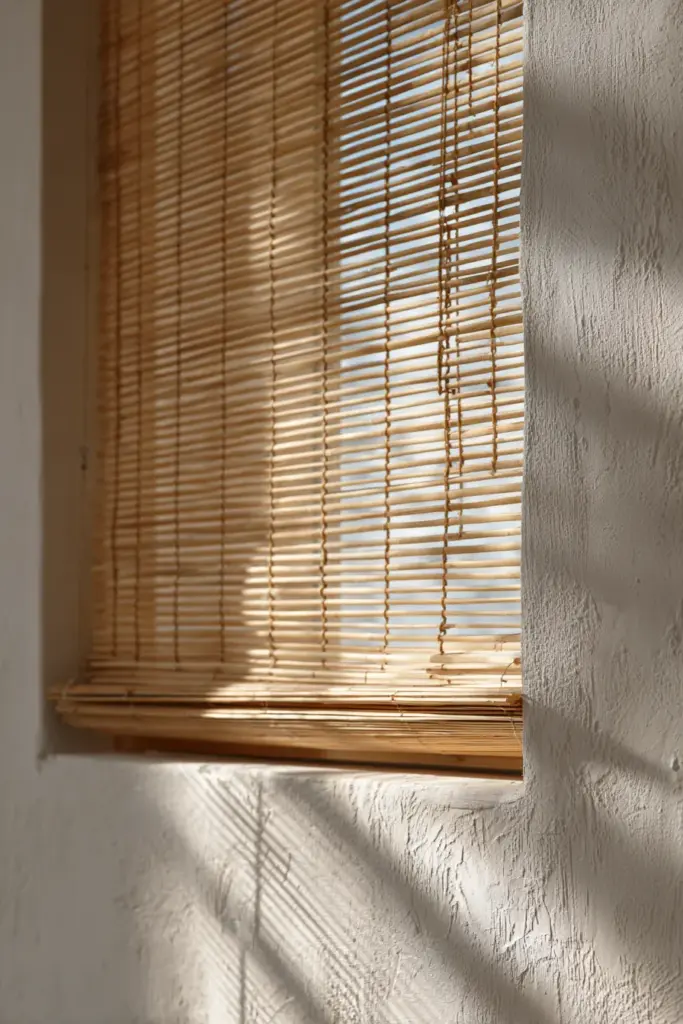
Bamboo blinds bring Japanese aesthetics directly into your space. The horizontal lines create calm, the natural material adds warmth, and the light control is surprisingly sophisticated.
Plantation shutters in light woods like ash or pine offer Scandinavian simplicity with excellent functionality. They’re an investment—but one that pays dividends in light control, privacy, and timeless style.
Wooden venetian blinds split the difference between full shutters and fabric treatments. Choose wider slats (50mm) in pale wood tones for a more contemporary Japandi feel than traditional narrow blinds.
Types of Japandi Window Treatments for Living Rooms
Sheer Curtains: Maximizing Natural Light
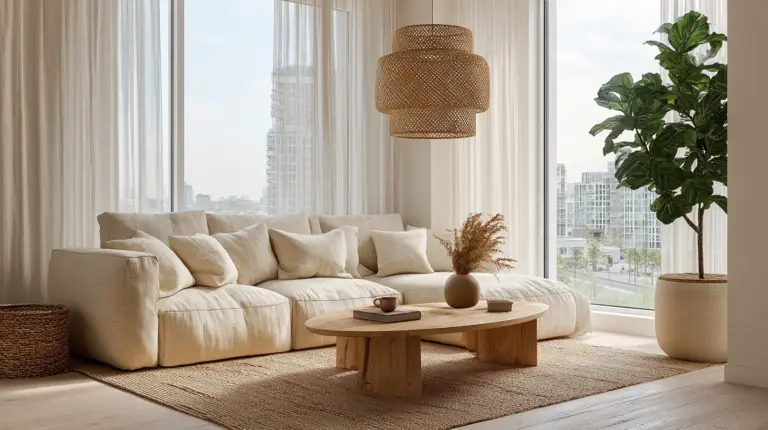
Sheer linen or cotton curtains are perfect for living rooms where natural light is your most valuable asset. They provide privacy without the cave-like feeling of heavy drapes.
Layer sheers in slightly different tones—perhaps a warm white underneath and natural linen on top—for added dimension without fuss. This creates depth while maintaining the minimalist aesthetic.
In bright tropical settings, sheers alone might let in too much heat. Consider pairing them with roller blinds in matching neutral tones for flexible light control throughout the day.
Roller Blinds: Clean Lines and Function
Roller blinds embody Japandi principles perfectly: clean, uncluttered, functional. Choose natural linen-look fabrics or textured weaves rather than plain polyester.
Light-filtering rollers in warm neutrals provide daytime privacy while maintaining that connection to the outside world. For media rooms or afternoon naps, add blockout rollers in the same color family.
The beauty of quality roller blinds is their near-invisibility when raised. Your windows remain unobstructed, the architecture speaks, and the view takes center stage—pure ma.
Pleated Blinds: Subtle Texture
Pleated blinds offer texture through structure rather than pattern. The gentle folds catch light and shadow, creating visual interest that changes throughout the day.
Choose pleats in natural fabrics like cotton or linen rather than synthetic materials. The way these materials respond to humidity and light feels more organic, more honest.
For living rooms with multiple windows, pleated blinds create consistency without monotony. Each window becomes part of a unified whole while maintaining individual character.
Roman Shades: Soft Structure
Roman shades bring fabric’s softness with blinds’ clean functionality. When lowered, they’re smooth panels of texture. When raised, they fold into soft horizontal bands.
Select Roman shades in heavyweight linen or cotton for a look that’s tailored but never stiff. Avoid busy fold patterns—simple, relaxed folds honor the Japandi aesthetic better than precise pleats.
These work beautifully in living rooms with architectural windows you want to highlight rather than hide. The treatment frames the window rather than competing with it.
Layering Window Treatments the Japandi Way
The Art of Thoughtful Layering
Layering isn’t about excess—it’s about options. Sheer curtains paired with roller blinds give you flexibility: full light, filtered light, privacy, or complete darkness as your day demands.
Start with your functional layer (rollers or blinds for light control), then add your aesthetic layer (linen curtains for texture and warmth). Each serves a purpose; nothing is purely decorative.
In humid climates, ensure your layers don’t trap moisture. Leave space between treatments for air circulation, and choose materials that handle humidity gracefully—natural fibers over synthetics.
Practical Layering Combinations
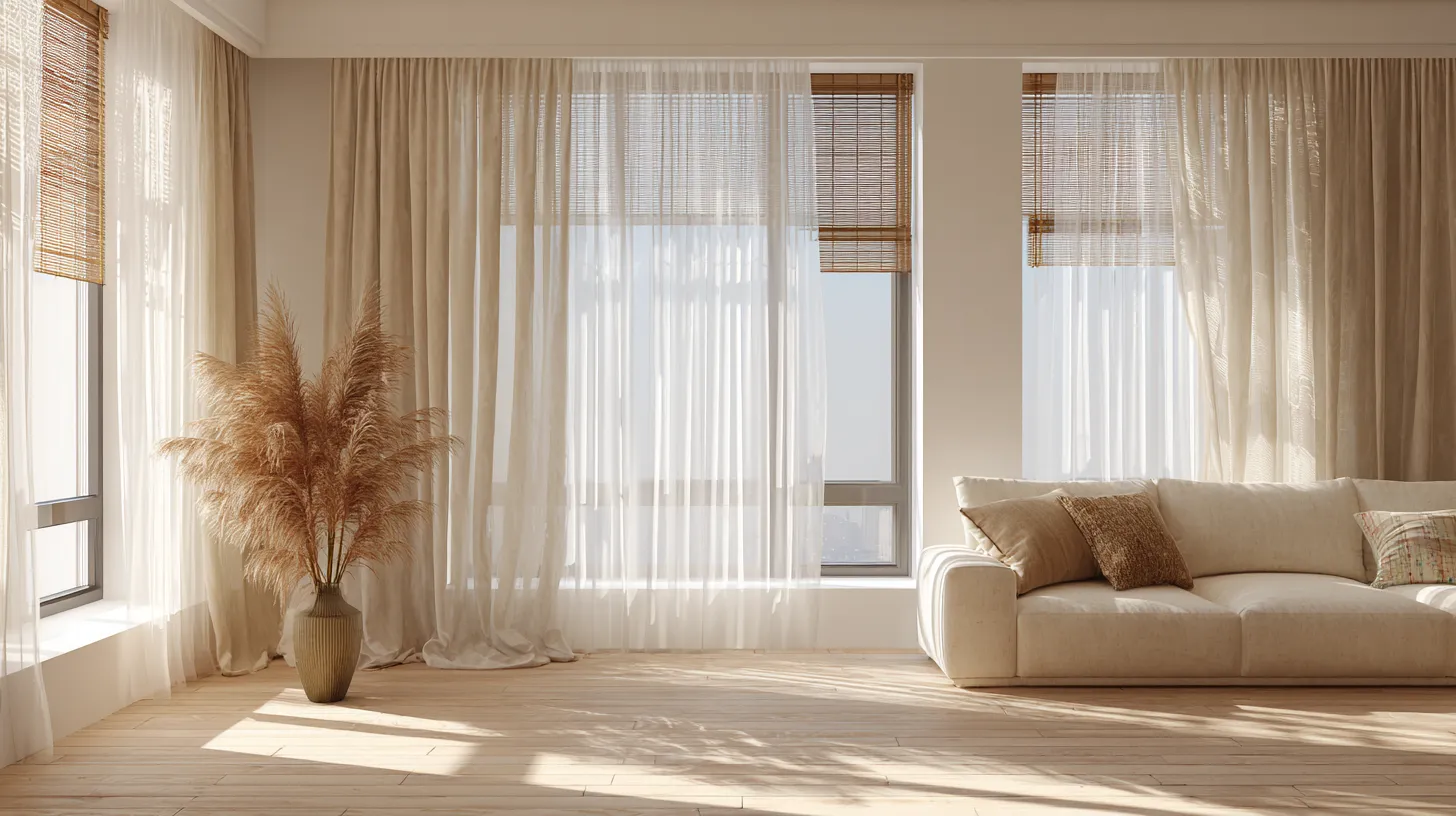
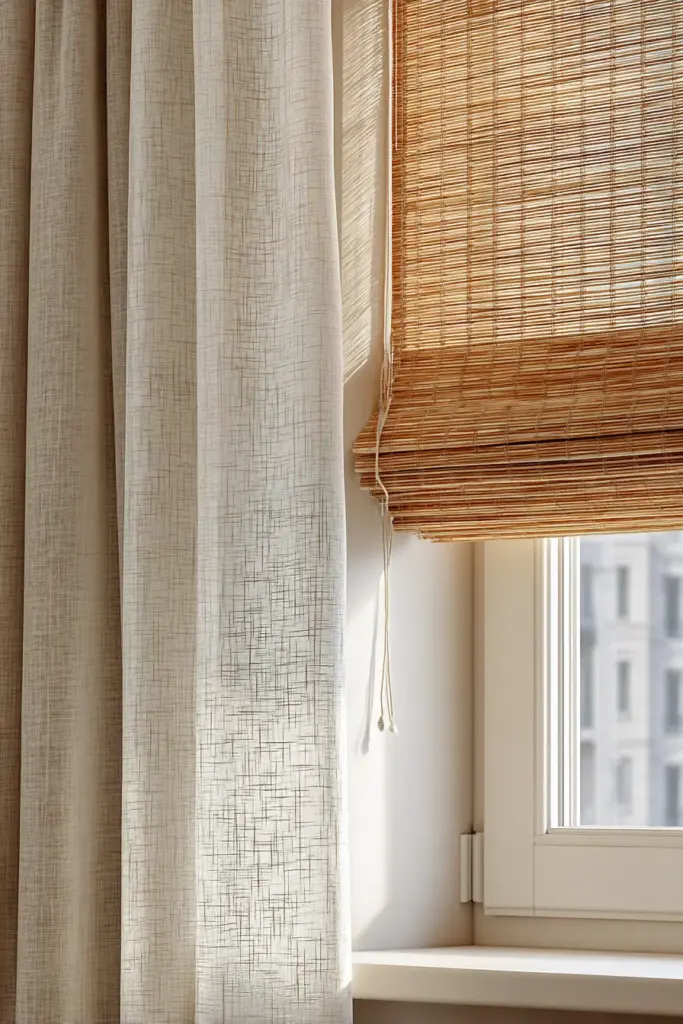
For maximum light: Sheer linen curtains + light-filtering bamboo blinds
For versatility: Natural roller blinds + relaxed linen drapes
For privacy without darkness: Pleated blinds + semi-sheer cotton panels
The key is keeping the color palette tight. Variations of the same neutral tone create depth without visual clutter.
Layer textures, not colors. Smooth bamboo with slubbed linen. Crisp cotton with rough-hewn wood. Let the materials themselves create interest.
Color Palette for Japandi Window Treatments
Neutral Foundation
Your window treatments set the tone for your entire living room. Start with nature’s own palette: warm whites, soft beiges, gentle taupes, cloudy grays.
These aren’t boring—they’re calming. They let your furniture speak, your art breathe, and your light dance across the room throughout the day.
Undyed linen carries a beautiful natural variation from ivory to warm flax. This subtle color shift feels organic, like sunlight moving across sand.
Introducing Subtle Warmth
While pure white feels crisp and Scandinavian, warm neutrals bring in Japanese sensibility. Think of clay, of unglazed pottery, of weathered wood—colors that carry warmth without brightness.
Greige (that perfect gray-beige hybrid) works beautifully in Japandi spaces. It’s neutral enough to disappear but warm enough to feel welcoming.
For those wanting just a whisper of color, consider the palest sage, softest charcoal, or barely-there taupe. These near-neutrals maintain serenity while adding personality.
What to Avoid
Skip pure black (too harsh), bright white (too clinical), and any bold or saturated colors. Japandi is about receding into calm, not making statements.
Avoid patterns beyond the natural texture of your chosen material. No geometric prints, no florals, no stripes. The weave of the fabric is pattern enough.
Metallic finishes, glossy surfaces, and artificial sheens all fight against the natural, matte aesthetic Japandi embodies.
Installation Tips for Renters and Budget-Conscious Decorators
No-Drill Solutions
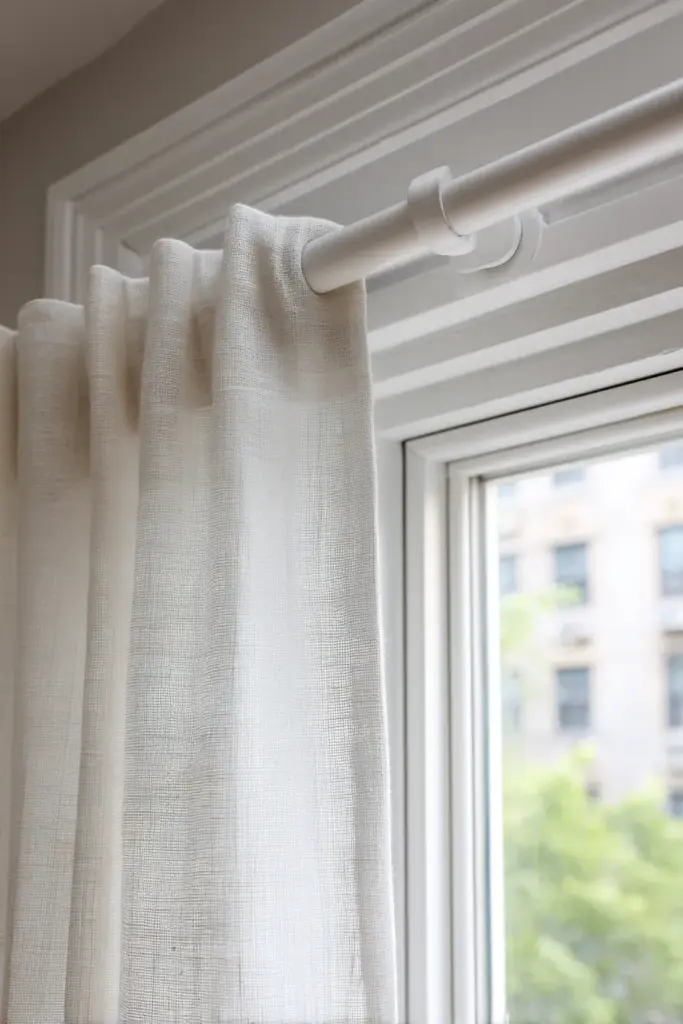
Tension rods are your secret weapon. Modern tension rods can hold lightweight linen curtains beautifully without damaging walls—perfect for rentals.
Command hooks rated for appropriate weight can support light roller blinds or bamboo shades. Test them first, and always follow weight limits carefully.
Freestanding room dividers with sheer linen panels can function as movable window treatments in studio apartments or open-plan spaces. They add privacy without permanent installation.
DIY Japandi Window Treatments
Transform affordable linen sheets or tablecloths into curtain panels. Hem them simply, add clip rings, and you have custom curtains for a fraction of retail cost.
Visit Divisoria or local fabric markets for unbleached linen or cotton at ₱400-600 per meter. A simple rod-pocket curtain requires minimal sewing skills—or pay a local seamstress ₱200-300 for finishing.
Bamboo placemats can be joined to create small window panels or valances. This DIY approach adds handcrafted character while staying budget-friendly.
Installation for Optimal Function
Hang curtains high and wide—mount rods closer to the ceiling and extend them beyond the window frame. This makes windows appear larger and rooms feel taller.
For roller blinds or Roman shades, inside-mount creates the cleanest look for modern windows. Outside-mount works better for older windows or when you want to hide imperfections.
In tropical settings, ensure treatments can be easily adjusted throughout the day as sun angles change. Full-length curtains with tiebacks offer flexibility that fixed treatments don’t.
Sustainability in Japandi Window Treatments
Choosing Eco-Conscious Materials
Hemp fabric offers even more durability than linen with similar aesthetic qualities. It’s naturally antimicrobial and becomes softer with washing—perfect for humid climates.
Bamboo blinds made from sustainably harvested bamboo have minimal environmental impact. The material grows rapidly, requires no pesticides, and processes with less water than cotton.
Recycled polyester blends are emerging in 2026 as credible sustainable options. Look for those blended with natural fibers rather than pure synthetics to maintain the Japandi aesthetic.
Longevity Over Trends
The most sustainable choice is buying quality once rather than replacing cheap treatments repeatedly. Well-made linen curtains will outlive you; fast-fashion curtains might not outlive the season.
Choose neutral colors that won’t feel dated. Classic materials that improve with age. Hardware that’s built to last rather than designed to be replaced.
This aligns perfectly with wabi-sabi philosophy—embracing the patina of age, the softness that comes from washing, the gentle fading that proves something has been loved and used.
Local and Ethical Sourcing
Support local textile makers when possible. Philippine-woven fabrics bring unique texture while reducing carbon footprint from shipping.
Look for certifications like OEKO-TEX for fabrics, ensuring they’re free from harmful chemicals. This matters especially for window treatments that filter your indoor air.
Consider the full lifecycle: Can these materials be composted or recycled when they finally wear out? Natural, undyed fabrics return to earth; synthetic blends become landfill.
Maintenance and Care
Keeping Linen Beautiful
Linen actually improves with washing—it becomes softer and more lustrous. Wash in cool water, air dry (or tumble on low), and embrace the wrinkles.
Those natural wrinkles are part of linen’s charm. If you prefer a crisper look, iron while slightly damp or use a steamer. But consider letting linen be itself.
For curtains too large to machine wash, vacuum regularly with an upholstery attachment. Once or twice yearly, take them down for professional cleaning or gentle hand washing.
Caring for Natural Blinds
Bamboo and wood blinds need regular dusting. A microfiber cloth or soft brush attachment prevents dust buildup that dulls their natural beauty.
In humid environments, ensure wood treatments are properly sealed to prevent warping. Open blinds fully occasionally to allow air circulation behind them.
Avoid harsh chemical cleaners. A barely damp cloth with mild soap is sufficient for most cleaning needs. Natural materials deserve natural care.
Seasonal Adjustments
In tropical climates, rotate heavier and lighter treatments seasonally if you have that option. Lighter sheers during hot months, layered treatments when you need occasional warmth.
Check hardware regularly—humidity can affect tension, brackets can loosen. A quick tighten now prevents larger issues later.
Consider storing one layer during seasons when you don’t need it. This extends the life of all your treatments and keeps them fresh.
Common Mistakes to Avoid
Over-Complicating Simplicity
More isn’t better in Japandi design. Avoid the temptation to add valances, tassels, tiebacks with ornate hardware, or elaborate heading styles.
Let your treatments be simple panels or clean blinds. The beauty is in the material and the light it creates, not in decorative excess.
If something feels too fancy or too designed, it probably is. Trust your instinct for simplicity.
Choosing Price Over Quality
A cheap linen-look polyester curtain will never have the drape, texture, or light-filtering qualities of actual linen. It’s worth saving for the real thing.
Poorly made bamboo blinds can warp, crack, or fade quickly. Mid-range quality from reputable makers outlasts and outperforms budget options dramatically.
Sometimes waiting and saving for the right treatment serves you better than buying something “good enough” immediately.
Ignoring Your Space’s Specific Needs
Don’t copy Instagram images without considering your actual windows, light, and climate. A window facing morning sun needs different treatment than one facing afternoon heat.
In the Philippines, UV protection matters. Choose treatments that filter harmful rays while maintaining views and natural light.
Consider your neighbors, your privacy needs, your furniture’s sun exposure. Practical considerations always trump aesthetic ideals in functional design.
Japandi Window Treatment Checklist
Before making your final decisions, run through these essentials:
- Material authenticity: Is it genuinely natural fiber or just “natural-look”?
- Color harmony: Does it blend with your neutral palette?
- Light control flexibility: Can you adjust it throughout the day?
- Installation feasibility: Do you have the mounting options you need?
- Budget alignment: Real linen or quality cotton blend within reach?
- Climate suitability: Will it handle your humidity and sun exposure?
- Maintenance reality: Can you actually care for this material properly?
- Longevity: Will this still feel right in five years?
- Hardware simplicity: Are rods and brackets minimal and functional?
- Layering options: If needed, can you add another treatment later?
Bringing It All Together
Your living room windows are more than openings in walls. They’re your connection to the world outside, your source of that precious natural light that makes everything worthwhile.
Japandi window treatments honor this connection. They don’t hide it or fuss with it—they frame it beautifully and simply, letting light and view take center stage while providing the control and privacy modern living requires.
The linen curtain that pools slightly on your floor, catching afternoon light. The bamboo blind that casts delicate shadows across your wall. These aren’t just functional items—they’re daily moments of beauty.
Choose materials that feel good in your hands. Select colors that make your heart quiet. Install treatments that serve your real life, not some imagined perfect one. This is how spaces become homes.
When you get it right, you won’t notice your window treatments at all. You’ll just notice that your living room feels somehow more peaceful, more connected, more completely itself. And that’s exactly the point.
Frequently Asked Questions
What is Japandi style for window treatments?
Japandi window treatments blend Japanese minimalism with Scandinavian warmth, focusing on natural materials like linen and bamboo in neutral tones. They prioritize functionality and simplicity while maximizing natural light through sheer or light-filtering fabrics that create serene, uncluttered spaces.
What are the best curtains for a Japandi living room?
Sheer or semi-sheer linen curtains in natural tones like beige, taupe, warm white, or soft gray work best. Cotton-linen blends offer similar aesthetics with easier care. Choose relaxed, unpretentious styles without elaborate headings or embellishments—simple rod-pocket or tab-top panels honor the Japandi philosophy beautifully.
How do I choose Japandi blinds for my living room?
Select roller blinds in natural linen-look fabrics, bamboo blinds for textural warmth, or wooden venetian blinds in light woods. Prioritize natural materials over synthetics, neutral colors over patterns, and clean lines over decorative details. Consider light-filtering options that maintain your connection to the outdoors while providing privacy.
Are sheer curtains good for Japandi design?
Absolutely. Sheer curtains embody Japandi’s love of natural light and airy spaces. They provide privacy without heaviness, create soft filtered light that enhances wabi-sabi aesthetics, and work beautifully alone or layered with blinds for flexible light control throughout the day.
Can I create Japandi window treatments on a budget?
Yes, through DIY approaches like upcycling linen sheets into curtain panels, shopping local fabric markets for natural textiles at ₱400-600 per meter, using tension rods for no-drill installations, or choosing bamboo blinds which offer authentic materials at accessible prices. Focus on natural materials and simplicity over expensive custom treatments.