
Table of Contents
There’s something magical about the moment you enter a room and feel seen by the light. Not overwhelmed, not forgotten—just held in a soft, intentional glow that whispers rather than shouts.
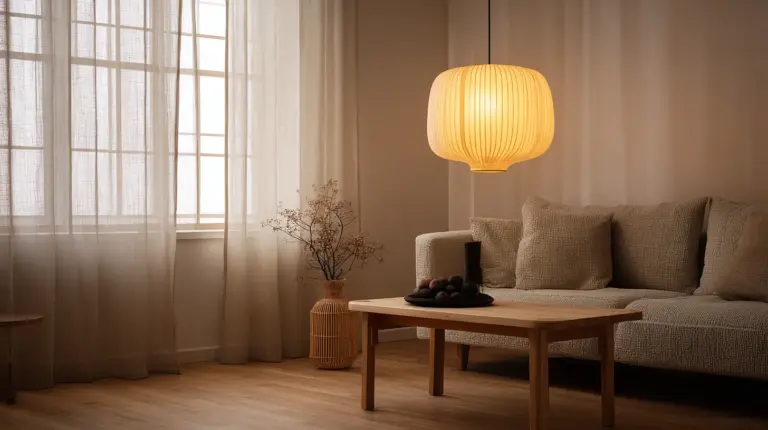
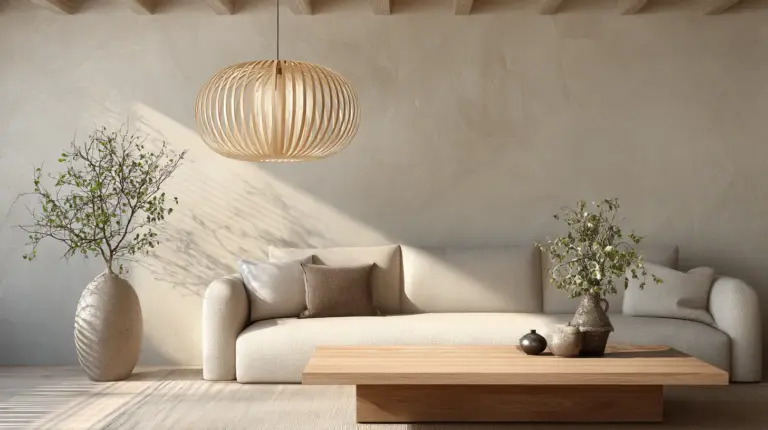
Statement lighting in a Japandi living room does exactly this. It becomes the quiet centerpiece, the sculptural pause that draws your eye without demanding attention. Think natural wood pendants casting dappled shadows, or a hand-woven rattan fixture glowing like a captured sunset above your coffee table.
This is where Japanese wabi-sabi—the beauty of imperfection—meets Scandinavian hygge, that cocoon-like comfort we all crave. The result? Lighting that feels both elevated and effortless, purposeful yet serene.
Let’s explore how to choose statement pieces that transform your living room into a sanctuary of light and calm.
Understanding Japandi Lighting Philosophy
Japandi design doesn’t believe in excess. Every element serves a purpose, and your statement lighting should embody this principle while still making your heart skip a beat.
The philosophy centers on organic shapes, natural materials, and diffused light—nothing harsh, nothing artificial. Instead of chrome or glass alone, you’ll find bamboo ribs, blackened steel frames, and paper shades that soften LED bulbs into something that feels almost candlelit.
Layered lighting schemes are essential here. Your statement pendant might anchor the room, but it works in harmony with floor lamps tucked beside reading chairs and ambient wall sconces that wash texture across plaster walls. Think of it as a conversation between light sources, each one playing its part without competing.
Choosing Your Statement Piece: Materials That Matter
Natural Wood Fixtures
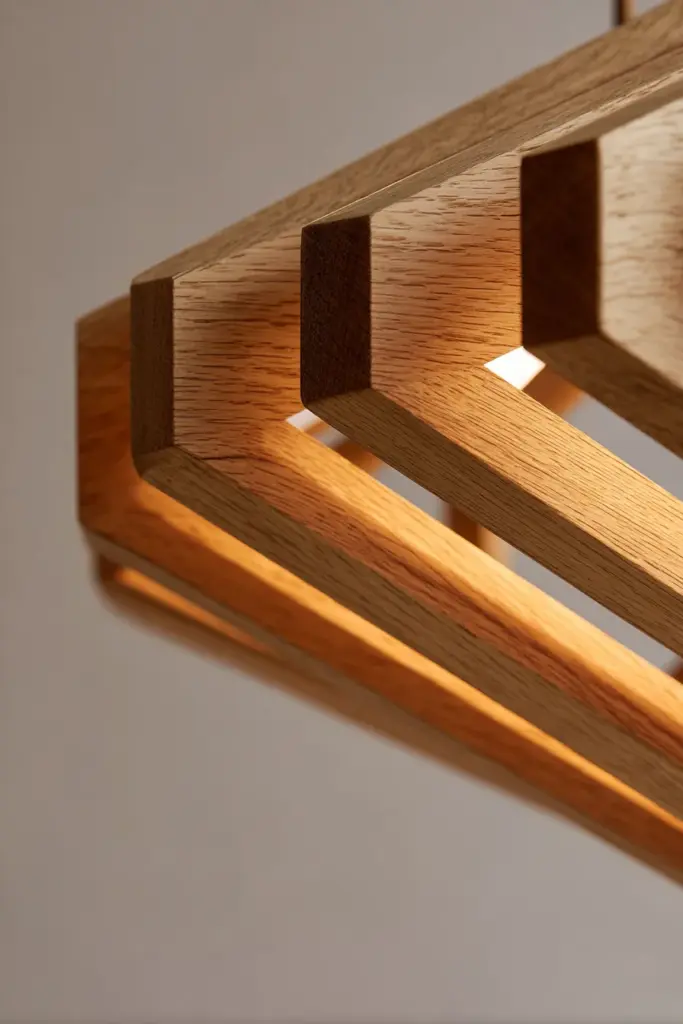
Wood brings instant warmth to any space, and in Japandi design, it’s often the hero material. Look for pendants crafted from light oak, walnut, or bamboo—woods with visible grain that celebrate their origin rather than hiding it.
A sculptural wooden chandelier with clean geometric lines can hover above your seating area like a piece of functional art. The wood diffuses light beautifully, creating patterns on your ceiling that shift throughout the day as natural light changes.
For smaller living rooms, consider a single statement pendant in a dome or lantern shape. The key is choosing pieces where you can see the craftsmanship—hand-turned spindles, dovetail joints, or the gentle curve of steam-bent wood.
Rattan and Woven Textures
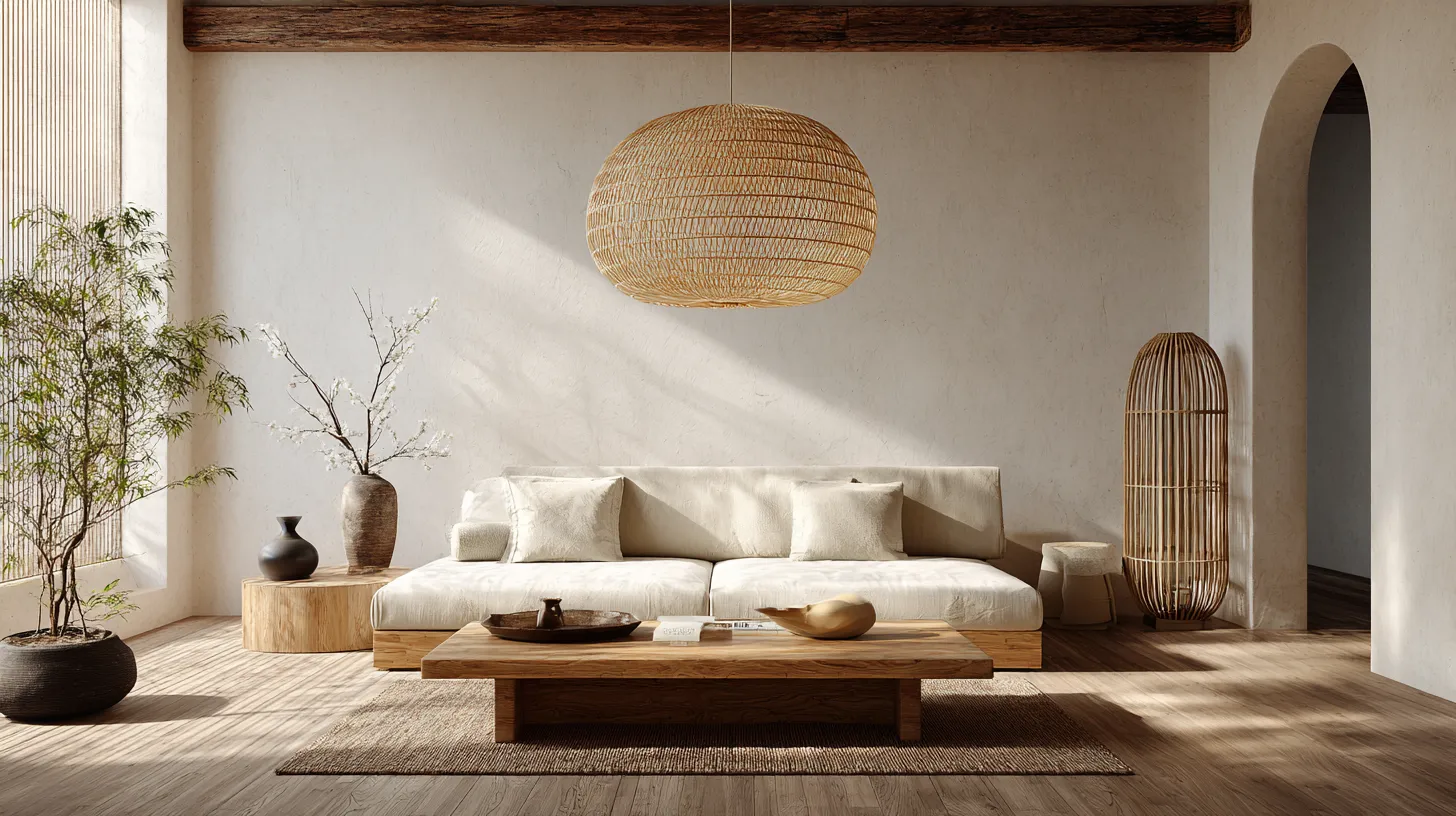
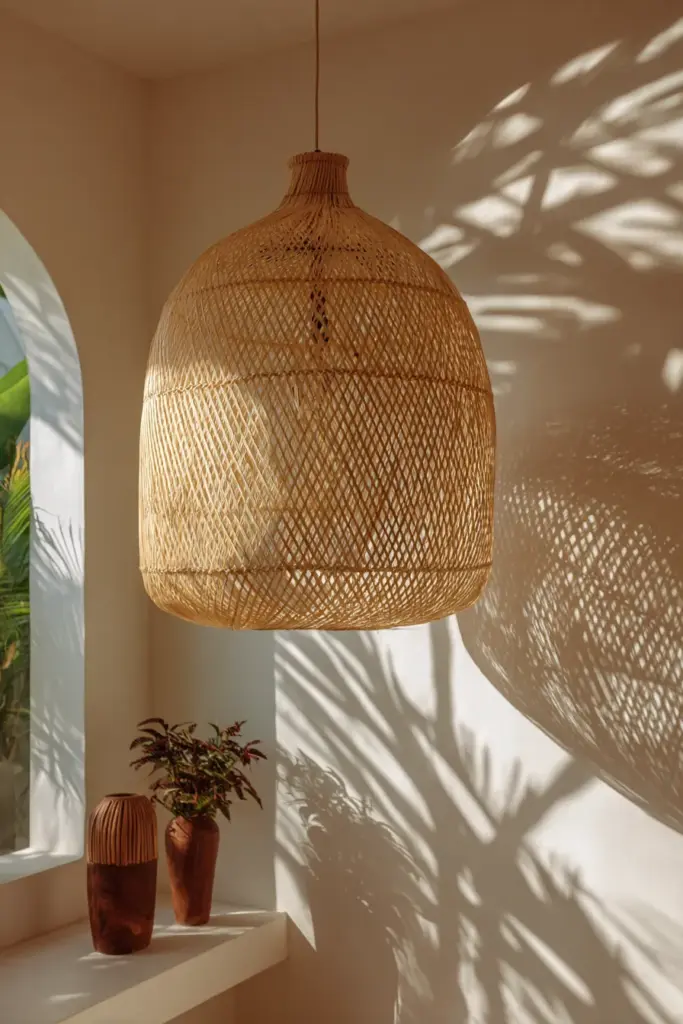
Rattan fixtures capture light like nothing else. Their woven patterns create a dance of shadow and illumination that feels alive, almost breathing with the space.
These pieces work particularly well in humid climates like Manila, where natural fibers feel appropriate and cooling. A large rattan pendant—perhaps 24 to 30 inches in diameter—can define your living room without overwhelming it, especially when paired with neutral furniture and plenty of breathing room.
Look for tight weaves for more focused light, or loose, airy patterns if you want drama and shadow play across your walls.
Minimalist Metal and Paper Combinations
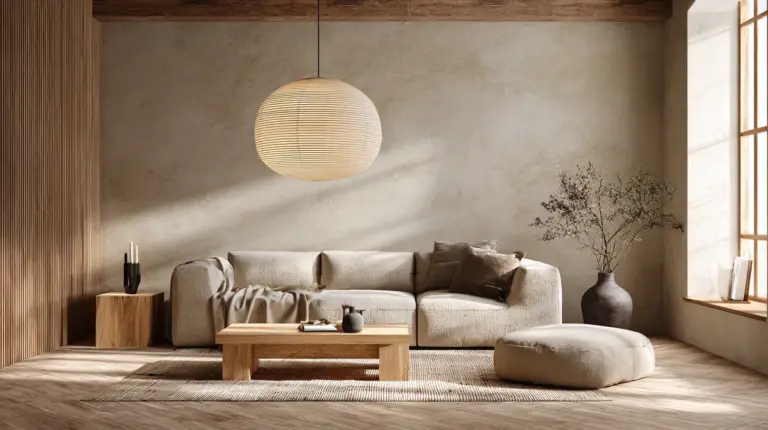
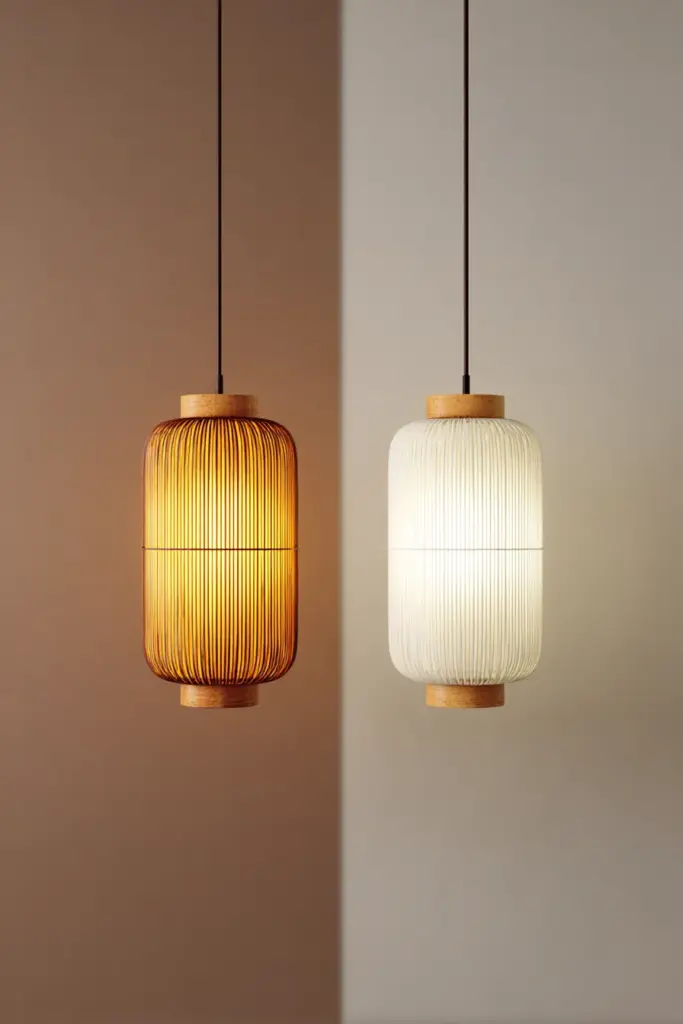
Japanese paper lanterns meet Scandinavian steel in fixtures that feel both ancient and contemporary. Think matte black frames cradling rice paper or linen shades that transform harsh LED light into something soft and welcoming.
These hybrid pieces often feature adjustable heights or modular designs, letting you customize the fixture to your ceiling height and room proportions. They’re perfect for renters who want impact without permanent installation.
The Science of Warmth: Color Temperature and Bulb Selection
Not all light is created equal, and in Japandi spaces, warm color temperature is non-negotiable.
Aim for bulbs rated at 2700K to 3000K—this is the range that mimics candlelight and sunset, creating that cozy, enveloping feeling essential to both Japanese and Scandinavian design. Anything cooler (4000K and above) will feel clinical and undermine the natural, organic aesthetic you’re building.
| Bulb Type | Color Temp | Best For | Lifespan | Energy Use |
|---|---|---|---|---|
| Warm LED | 2700K | Ambient glow, relaxation | 15,000+ hours | Very low |
| Soft White LED | 3000K | Balanced warmth, task areas | 15,000+ hours | Very low |
| Halogen | 2900K | Wabi-sabi glow, dimming | 2,000 hours | Moderate |
| Incandescent | 2700K | Vintage warmth (rare use) | 1,000 hours | High |
LEDs are your friend here—energy-efficient, long-lasting, and increasingly sophisticated in their ability to render warm tones authentically. Look for high CRI (Color Rendering Index) ratings above 90 to ensure your natural materials look true and rich, not washed out.
Smart Lighting for Modern Japandi Spaces
Consider circadian-rhythm LEDs that shift color temperature throughout the day, mimicking natural light patterns. These 2026-forward options support your body’s natural rhythms while maintaining aesthetic integrity—warmer in evening, slightly cooler during productive afternoon hours.
Many statement fixtures now accommodate smart bulbs with built-in speakers or voice control, blending technology seamlessly into minimalist design without visible wires or gadgets disrupting your calm.
Placement and Proportion: Making Your Statement Count
Above the Coffee Table
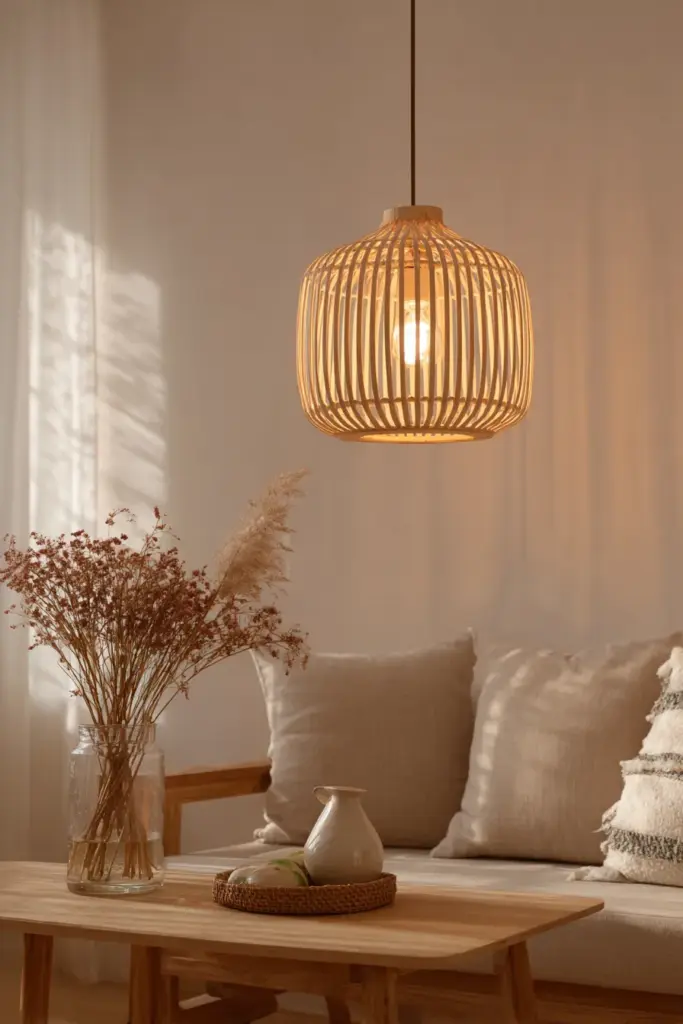
This is classic territory for Japandi statement lighting. A pendant should hang 28 to 34 inches above your coffee table surface—low enough to create intimacy, high enough that it doesn’t obstruct sightlines.
For standard 8-foot ceilings common in Manila apartments, choose fixtures between 12 to 18 inches in height. Higher ceilings can accommodate more dramatic pieces, but always maintain visual balance with your furniture scale.
The fixture diameter should be roughly two-thirds the width of your coffee table for ideal proportion. A 48-inch table pairs beautifully with a 30-inch pendant.
Layering with Floor and Wall Lighting
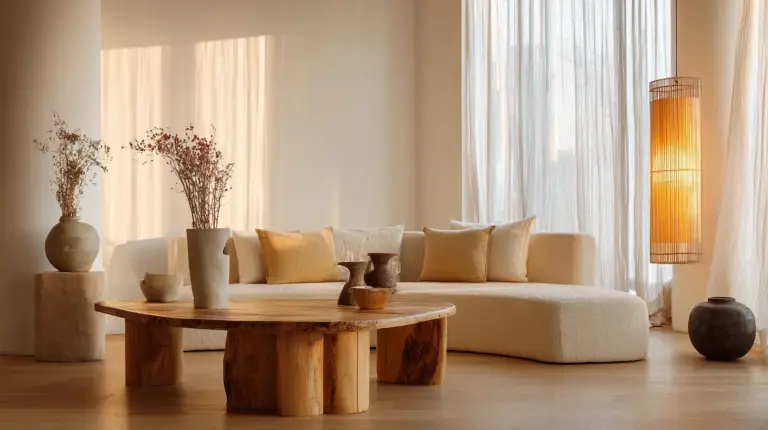
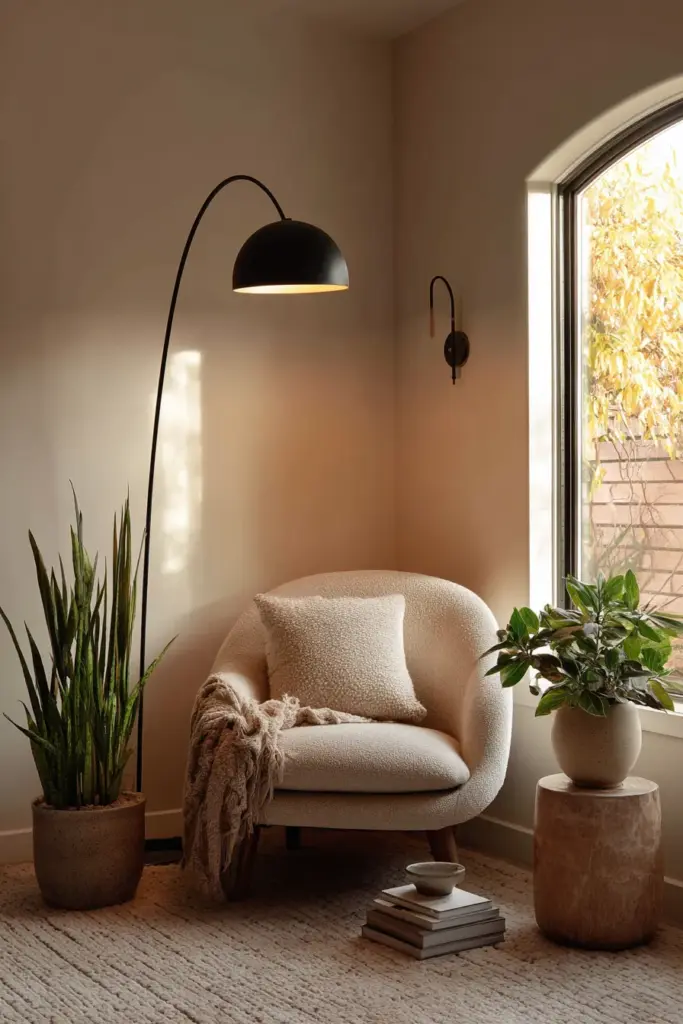
Your statement piece sets the tone, but layered lighting brings depth and functionality. Place a minimalist floor lamp—perhaps an arched design in matte black or natural wood—beside your reading chair to create a secondary glow.
Wall sconces flanking a media console or artwork add ambient layers that let you dim the overhead statement piece during movie nights while maintaining gentle illumination. Choose sconces with linen or paper shades that echo your pendant’s materials.
Dimmer switches are essential. Install them for every light source in your Japandi living room—they give you complete control over mood and energy use, letting you shift from bright and focused to soft and meditative with a single touch.
Budget-Conscious Statement Lighting Solutions
Under $200 Options
Statement lighting doesn’t require luxury pricing. Retailers increasingly offer Japandi-inspired fixtures that deliver authentic style at accessible price points.
Look for bamboo pendants from sustainable suppliers, often available between $120 to $180. Handwoven rattan shades from Filipino artisans provide authentic craftsmanship at $150 to $200, supporting local makers while achieving the aesthetic you want.
DIY enthusiasts can create custom statement pieces using natural linen over wire frames, or repurpose vintage Japanese lanterns with modern LED conversion kits for under $100 total.
Luxury Investment Pieces
If budget allows, invest in handcrafted fixtures from established designers working in traditional Japanese or Scandinavian methods. These pieces—often $500 to $2,000—become heirlooms, their quality and timeless design outlasting trends.
Look for FSC-certified woods, low-VOC finishes, and artisan signatures. These aren’t just light fixtures; they’re sculptural centerpieces that appreciate in value and story as your home evolves.
Renter-Friendly Installation Tips for Manila Apartments
Many Manila renters face restrictions on ceiling modifications, but statement lighting remains achievable with smart workarounds.
Plug-in pendant kits with fabric-covered cords and ceiling hooks require no hardwiring—simply drape and style the cord as a design element rather than hiding it. Choose cords in neutral linen or black to complement Japandi aesthetics.
Swag hooks installed into ceiling joists (or using heavy-duty adhesive hooks rated for fixture weight) let you hang pendants without electrical work. Consult your landlord about small pilot holes for hooks—most approve when you agree to patch upon moving.
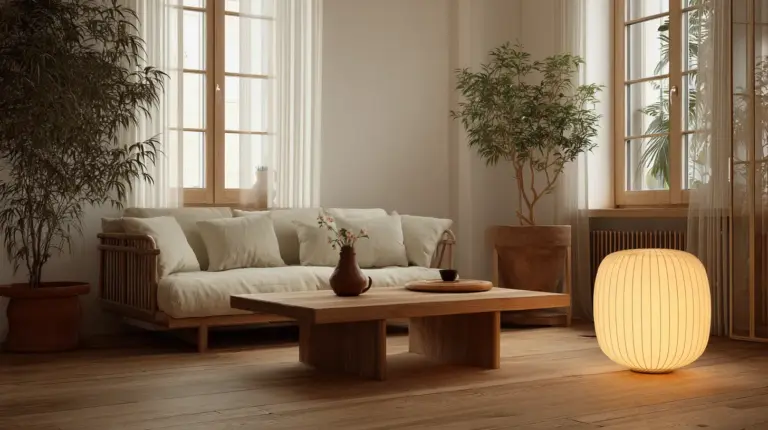
For true statement impact without ceiling access, invest in oversized floor lamps or tall arc lamps that create the visual presence of a pendant without installation needs.
Pairing Lighting with Biophilic Elements
Japandi design thrives when natural elements layer together. Combine your statement lighting with plant-lighting strategies that enhance both aesthetics and air quality.
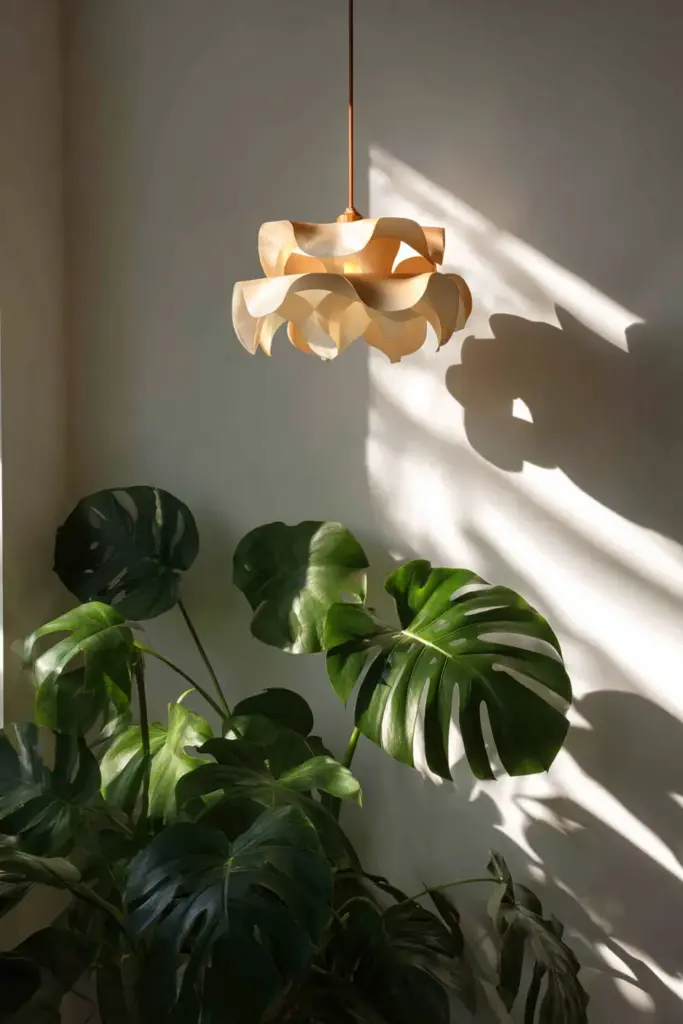
Position pendant lights to spotlight your fiddle leaf fig or monstera, creating dramatic shadows against white walls during evening hours. The interplay between organic fixtures and living greenery amplifies the biophilic design principles central to Japandi philosophy.
Consider fixtures with built-in grow light options—subtle full-spectrum LEDs hidden within natural wood or rattan structures keep your plants thriving while maintaining design cohesion.
Common Mistakes to Avoid
Cool-Toned LEDs
This is the fastest way to undermine your Japandi living room. Cool white or daylight bulbs (5000K+) create a sterile hospital feel that clashes with natural materials and the warm sanctuary you’re building.
Always test bulb temperature before committing to a fixture. Many retailers offer return-friendly bulb packs—buy 2700K and 3000K options to see which feels right in your specific space.
Oversized Fixtures in Small Spaces
Statement doesn’t mean massive. In compact Manila apartments, a 36-inch pendant can overwhelm rather than enhance. Choose fixtures proportional to your room dimensions—generally 12 to 20 inches in diameter for rooms under 150 square feet.
Multiple smaller statement pieces often work better than one oversized fixture in tight quarters. Three small pendants hung at varying heights create visual interest without dominating.
Ignoring Natural Light Patterns
Your statement lighting should complement, not compete with, natural light. Observe how daylight moves through your living room before placement—you want your fixture to enhance golden hour glow, not create harsh contrasts.
Position pendants where they’ll catch and reflect morning or afternoon sun, creating layered luminosity throughout the day.
Seasonal Updates for Freshness
Japandi design celebrates subtle shifts with the seasons, and your lighting can participate without major overhauls.
Swap bulbs to slightly warmer temperatures (2500K) in winter months for extra coziness, returning to 2700K in summer. Change linen shades from natural to deeper charcoal tones as autumn arrives, or add subtle string lights around natural wood beams during holiday seasons.
These micro-adjustments keep your space feeling current and responsive to Manila’s tropical rhythms—brighter during rainy season, softer during dry months when natural light is abundant.
Sustainability Metrics That Matter
Choose fixtures crafted from FSC-certified woods that verify sustainable forestry practices. Look for manufacturers transparent about their supply chains and carbon footprints.
Low-VOC finishes protect indoor air quality—especially important in humid Manila climates where off-gassing can accelerate. Many contemporary Japandi fixture makers now publish sustainability reports; prioritize these conscious brands.
LED bulbs reduce energy consumption by up to 80% compared to incandescent options, with lifespans exceeding 15,000 hours. This means less waste, lower electricity bills, and fewer ladder trips to replace bulbs—a triple win for sustainable living.
Quick Checklist: Choosing Your Perfect Statement Light
- Material: Natural wood, rattan, bamboo, or linen/paper with minimal metal
- Color temperature: 2700K to 3000K warm white bulbs
- Size: Proportional to table/room (12-30 inches diameter typical)
- Height: 28-34 inches above coffee table or seating surface
- Finish: Matte, natural, or hand-rubbed oils—no high gloss
- Dimmer: Always include dimmer capability for mood control
- Installation: Renter-friendly options if needed (plug-in, swag)
- Sustainability: FSC-certified, low-VOC, LED-compatible
- Budget: $120-200 entry level, $500+ investment pieces
- Layering: Plan for floor lamps and wall sconces to support
Conclusion: Light as a Love Letter
Your Japandi living room statement lighting is more than illumination—it’s an invitation. An invitation to slow down, to notice shadow and texture, to feel held by warmth even on the longest days.
When you choose fixtures that honor natural materials and embrace imperfection, you’re not just decorating. You’re creating a space where light becomes poetry, where every evening glow feels like coming home to yourself.
Let your statement piece be the quiet heartbeat of your living room. The gentle reminder that beauty doesn’t shout—it glows, steadily and true.
Frequently Asked Questions
What type of lighting is best for Japandi living rooms?
Layered lighting schemes work best, combining a sculptural statement pendant (often in wood or rattan) with ambient floor lamps and wall sconces. Use warm LED bulbs at 2700K temperature to create the serene, cocoon-like atmosphere central to Japandi design. Dimmer switches on all sources give you complete control over mood.
How do I choose statement lighting for small Manila apartments?
For spaces under 150 square feet, select fixtures between 12 to 18 inches in diameter to avoid overwhelming the room. Renter-friendly plug-in pendant kits work beautifully without hardwiring. Choose light-colored materials like bamboo or natural rattan that won’t visually shrink your space, and always include dimming capability for flexibility.
What’s the difference between 2700K and 3000K bulbs for Japandi style?
2700K creates a warmer, more amber glow similar to candlelight—ideal for evening relaxation and intimate gatherings. 3000K offers slightly crisper light while remaining warm, better for daytime task areas or reading zones. Most Japandi purists prefer 2700K for statement living room fixtures, but both temperatures work within the aesthetic if you maintain consistency across all light sources.
Can I use smart bulbs in natural Japandi fixtures?
Absolutely. Many circadian-rhythm smart LEDs now offer 2700K warmth with programmable dimming and color-shift capabilities that support natural body rhythms. Look for bulbs compatible with your fixture’s socket size, and choose models without visible tech elements (like camera bulbs) that disrupt minimalist aesthetics. Some statement fixtures now integrate speakers while maintaining clean natural wood exteriors.
How do I maintain rattan and wood lighting fixtures in humid climates?
Dust weekly with a soft microfiber cloth to prevent buildup in woven areas. For wood fixtures, apply food-grade mineral oil or beeswax polish every 3-4 months to protect against humidity damage. Keep fixtures at least 6 inches from AC vents to prevent cracking from temperature fluctuations. Rattan benefits from occasional misting during particularly dry seasons to maintain flexibility and prevent brittleness.