
Table of Contents
There’s something about a rug that changes everything. It softens footsteps, frames a room, and invites you to linger just a little longer. In small living rooms, where every choice matters, a Japandi rug becomes more than décor—it’s the quiet anchor that holds your space together.
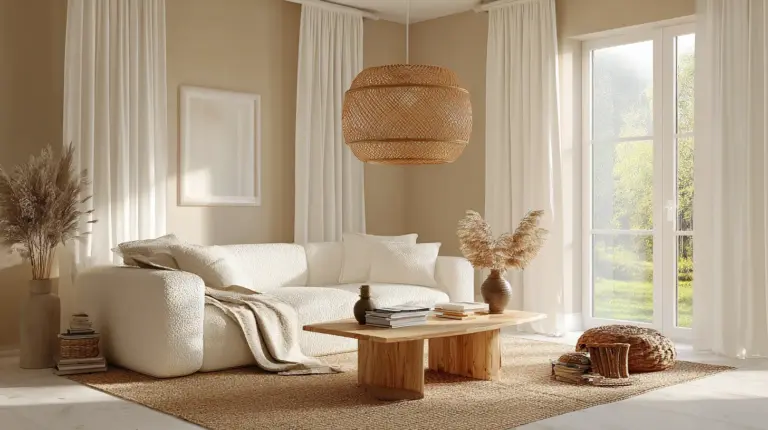
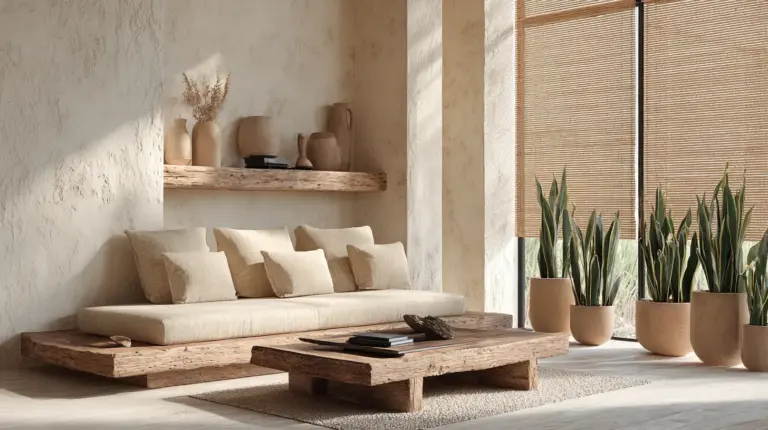
Japandi style marries Japanese minimalism with Scandinavian warmth, creating interiors that breathe. Clean lines meet organic textures. Neutral palettes embrace natural light. And in compact homes, this philosophy shines brightest when grounded by the right rug.
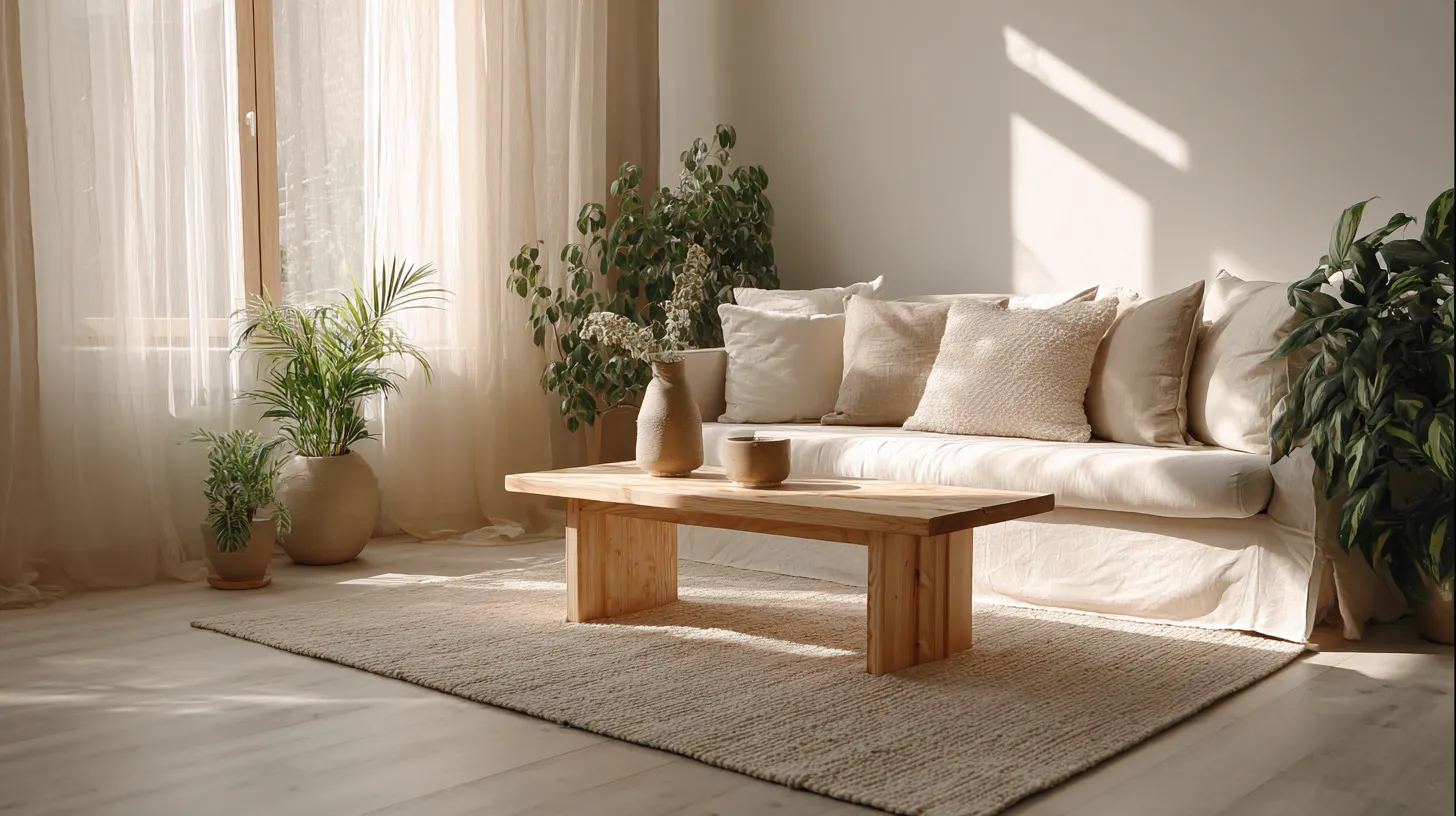
The beauty of a small Japandi living room rug lies in its restraint. No bold patterns fighting for attention, no excess that crowds your sightlines. Just honest materials, thoughtful placement, and a foundation that makes your room feel both larger and more intentional.
Let’s explore how to choose, style, and care for these gentle workhorses of modern design.
What Makes a Rug “Japandi”?
Japandi isn’t just an aesthetic—it’s a feeling. These rugs embody wabi-sabi (the beauty of imperfection) and hygge (cozy contentment) in equal measure.
Natural Materials That Ground Your Space
Wool, jute, sisal, cotton—Japandi rugs celebrate fibers that come from the earth. Hand-tufted New Zealand wool feels cloud-soft underfoot while staying resilient through daily life. Jute brings texture and breathability, perfect for humid climates like the Philippines where mold resistance matters.
These materials age gracefully. A wool rug develops character over time, its fibers forming a lived-in patina that synthetic options can never replicate.

Colors That Whisper, Never Shout
Think beige, cream, sage green, warm gray, soft brown. Japandi palettes mirror nature—driftwood, river stones, morning fog, unbleached linen. These aren’t colors that demand attention; they create calm backdrops that let your furniture and art breathe.
In small rooms, this neutrality is strategic. Light tones reflect natural light, making compact spaces feel airier and more expansive.
Minimalist Patterns and Organic Shapes
Japandi rugs favor simplicity. Clean geometric lines, subtle tonal variations, or organic irregular shapes that mimic natural forms. You might find a rug with gentle stripes or an asymmetric border, but never busy florals or ornate medallions.
This restraint serves small spaces beautifully. Your eye travels smoothly across the floor instead of stopping at visual clutter.
Why Size Matters in Small Living Rooms
Choosing the wrong rug size is like wearing shoes that don’t fit—everything feels off. In compact spaces, precision makes the difference between cozy and cramped.
The 5×7 Rule for Petite Rooms
For a typical 10×12 foot living room, a 5×7 foot rug hits the sweet spot. It anchors your seating area without creeping under every wall. Leave 12-18 inches of bare floor around the perimeter—this breathing room actually makes your space feel larger.
A 4×6 foot rug works for studio apartments or conversation nooks where you’re just grounding a loveseat and coffee table. Smaller than that risks looking like a bath mat.
Furniture Placement: The Front-Leg Method
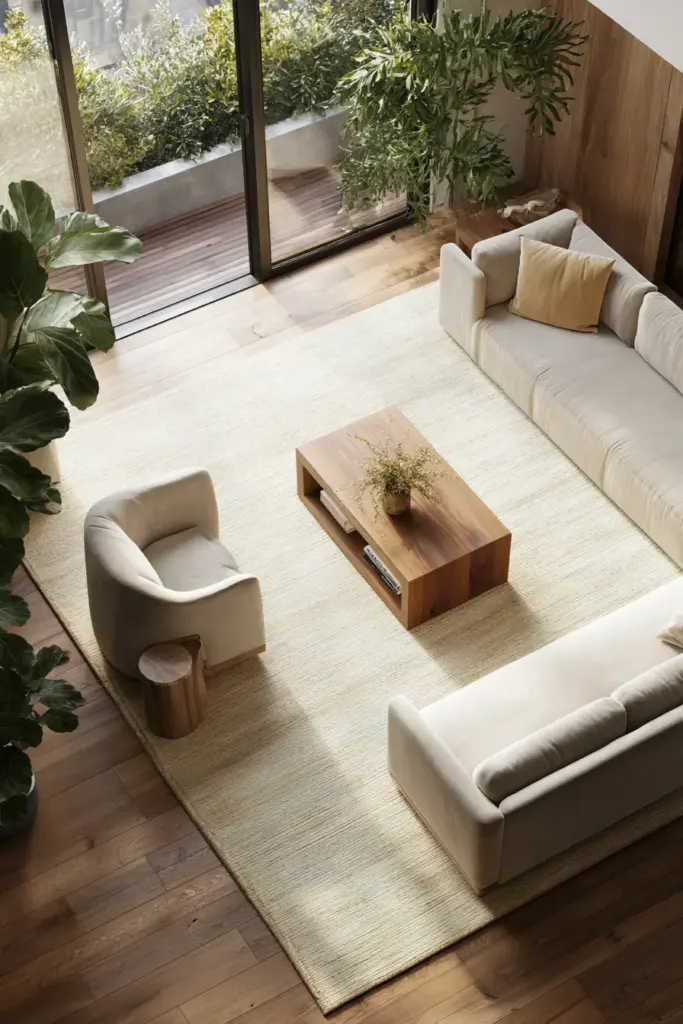
Here’s the secret: your rug should catch the front legs of your sofa and chairs, not swallow entire pieces. This creates visual cohesion while keeping the rug’s footprint manageable.
Your coffee table sits completely on the rug, becoming the natural gathering point. Side tables can straddle the edge or stay off entirely—flexibility keeps the arrangement from feeling rigid.
When to Go Long and Narrow
In rectangular rooms or awkward layouts, consider a runner (2.5×8 feet or 3×10 feet). These elongated rugs guide the eye lengthwise, creating an illusion of expanded space. Perfect for defining pathways or anchoring TV consoles in tight quarters.
Choosing the Right Rug for Your Small Space
Not all Japandi rugs suit every situation. Match your selection to how you actually live.
High-Traffic Durability
Do kids chase each other through your living room? Does foot traffic flow from kitchen to balcony through this space? Choose low-pile wool or flatweave jute. These handle wear beautifully while maintaining that minimalist aesthetic.
Hand-tufted wool rugs (look for 100% New Zealand wool) resist matting and recover their shape after compression. Jute’s tight weave hides dirt and stands up to daily shuffling.
Budget-Friendly Options Without Compromise
You don’t need PHP 20,000 to achieve Japandi calm. Scour Shopee and Lazada for imported cotton-blend rugs in neutral tones—many Philippine sellers offer 4×6 foot options under PHP 5,000. Look for “minimalist beige rug” or “neutral Scandinavian rug” in searches.
Local weaving communities also create beautiful handmade pieces from abaca and pandan. These sustainable alternatives add authentic texture while supporting Filipino artisans.
Climate Considerations for Philippine Homes
Humidity is real. In tropical environments, natural fiber rugs need air circulation to prevent mold. Jute naturally resists moisture better than wool, making it ideal for non-air-conditioned spaces.
Avoid thick, plush piles that trap dampness. Opt for flatweaves or low-pile constructions that dry quickly and allow air to move underneath. Use breathable rug pads—never rubber-backed options that seal moisture against your floor.
Styling Your Small Japandi Rug
Placement transforms a beautiful rug from an object into an experience.
Centering Under the Coffee Table
The coffee table is your anchor point. Center your rug beneath it, ensuring the table sits fully on the textile with at least 12 inches of rug extending beyond on all sides. This creates a defined “conversation zone” that feels intentional.
When friends gather, everyone’s feet rest on the same surface—an unconscious signal that invites relaxation and connection.
Layering for Depth and Texture
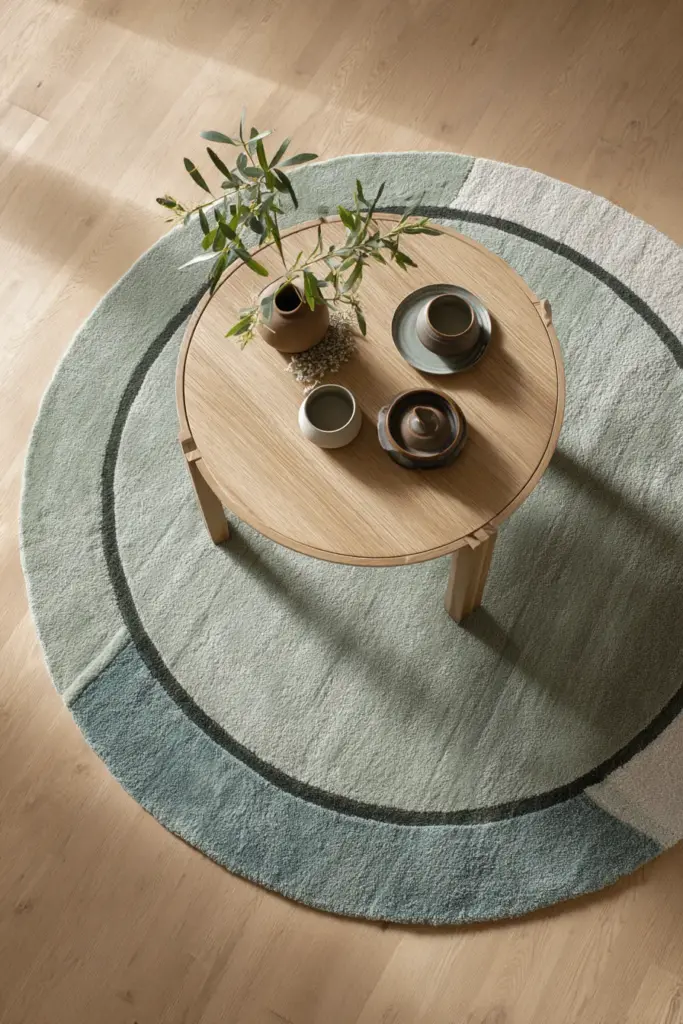
In very small rooms, try layering a smaller accent rug (3×5 feet) over a larger neutral flatweave. This adds visual interest without overwhelming your square footage. A cream jute base with a sage green geometric accent creates dimension that feels curated, not cluttered.
Layering also protects investment pieces. The top rug absorbs daily wear while the bottom layer extends the life of both.
Creating Optical Illusions
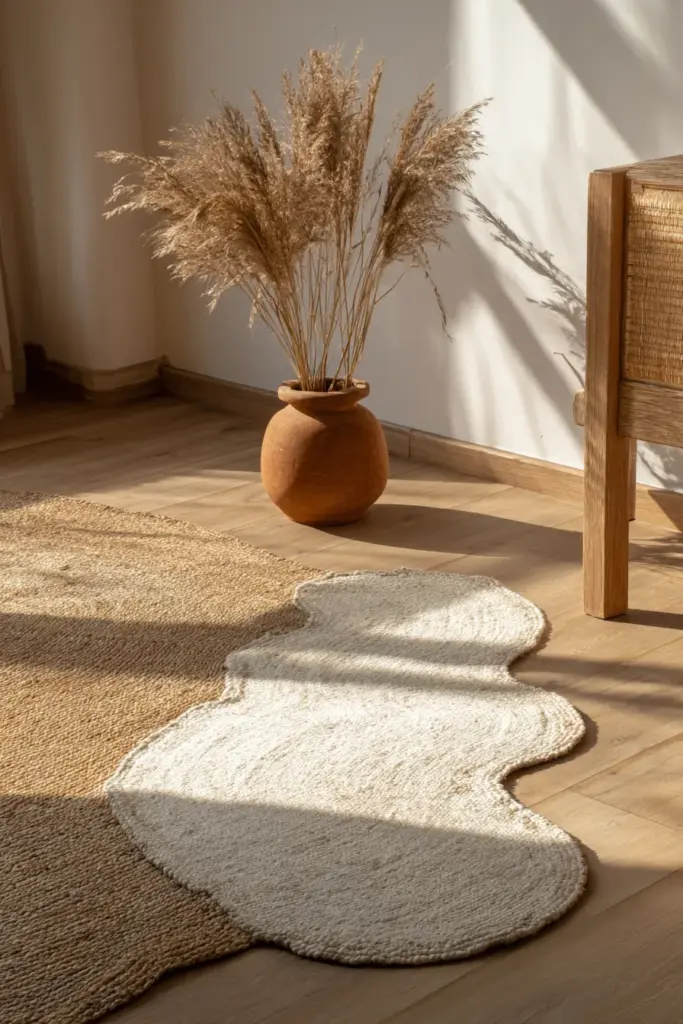
Horizontal stripes elongate narrow rooms. Light colors reflect sunshine and make ceilings feel higher. An organic, asymmetric rug shape breaks up boxy room geometry, adding flow where architecture feels rigid.
If your room is square, avoid square rugs—they emphasize the shape you’re trying to soften. Choose rectangular rugs to introduce pleasing proportions.
Rug Size & Room Layout Quick Reference
| Room Size | Ideal Rug Size | Furniture Arrangement | Visual Effect |
|---|---|---|---|
| 8×10 ft | 4×6 ft | Front legs only on rug | Cozy, defined seating |
| 10×12 ft | 5×7 ft | Front legs + coffee table | Balanced, spacious feel |
| 12×14 ft | 6×9 ft | Most furniture on rug | Expansive, cohesive |
| Narrow/Rectangular | 2.5×8 ft runner | Along pathway or sofa | Elongated, guided flow |
Material Comparison for Small Japandi Rugs
| Material | Texture | Durability | Best For | Maintenance | Price Range (PHP) |
|---|---|---|---|---|---|
| Wool | Soft, plush | High | High-traffic, families | Vacuum weekly, spot clean | 8,000–25,000 |
| Jute | Coarse, natural | Medium-High | Humid climates, casual spaces | Shake out, no water | 3,000–12,000 |
| Cotton | Smooth, flat | Medium | Renters, budget-conscious | Machine washable (small sizes) | 2,500–8,000 |
| Sisal | Rough, organic | High | Minimalist, texture lovers | Vacuum, dry clean only | 5,000–15,000 |
| Cotton-Blend | Variable | Medium | DIY, temporary staging | Vacuum, spot treat | 2,000–6,000 |
Caring for Your Japandi Rug
Natural materials require respect, not complicated rituals.
Weekly Maintenance
Vacuum on low suction without the beater bar—aggressive brushing damages natural fibers. For jute and sisal, shake outside or use a carpet sweeper to lift dirt from the weave.
Rotate your rug every three months to even out wear patterns and sun exposure. This simple habit can double a rug’s lifespan.
Spot Cleaning Spills
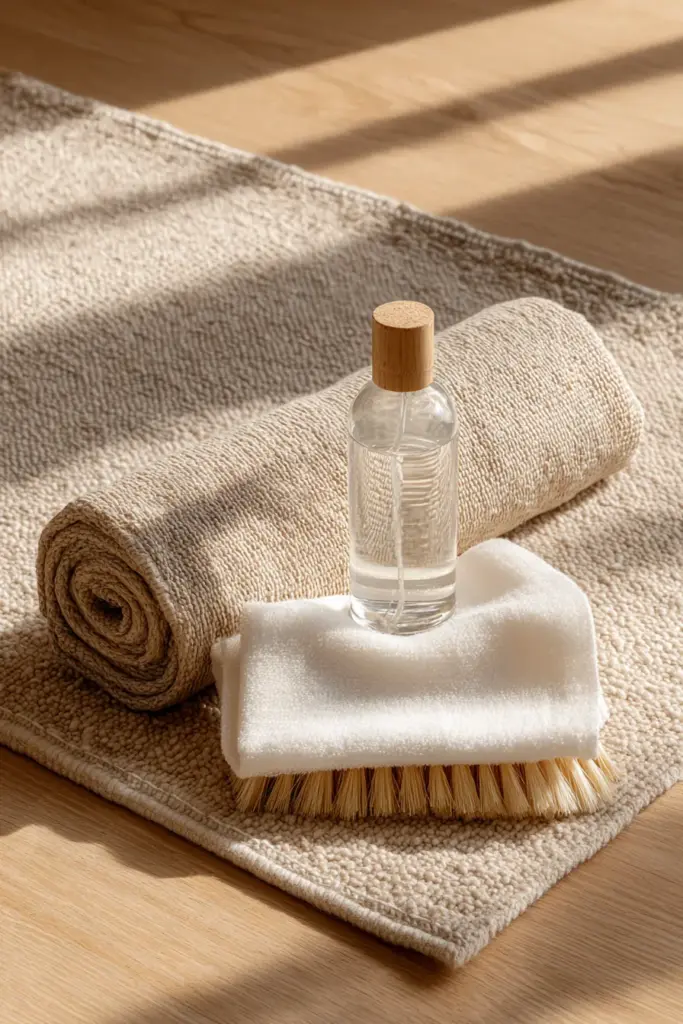
Blot immediately—never rub. Use a clean white cloth and cold water for most spills. For wool, a tiny drop of pH-neutral detergent works; rinse thoroughly and air dry flat.
Jute hates water. If you spill on jute, blot dry immediately and use a dry cleaning powder designed for natural fibers.
Professional Care
Deep clean wool rugs professionally once a year, especially in homes with pets or allergies. Jute and sisal shouldn’t be wet-cleaned—seek specialists who use dry extraction methods.
Between cleanings, sun your rug outdoors on dry mornings. UV light naturally sanitizes and refreshes fibers while preventing musty odors in humid climates.
Renter-Friendly Rug Care
Use non-slip rug pads that don’t damage floors. Silicone or felt pads work beautifully under small rugs, preventing shifting without adhesives. These also create air space that prevents moisture buildup—crucial for Philippine rentals without climate control.
When you move, roll your rug around a tube (not folded) to prevent creases. Store in a breathable fabric cover, never plastic, which traps humidity.
Sustainable and Local Sourcing
Japandi philosophy embraces sustainability—not as a trend, but as responsibility.
Eco-Certifications to Seek
Look for GOTS-certified organic wool, which guarantees ethical animal treatment and chemical-free processing. Hand-tufted rugs use less energy than machine-made alternatives and support traditional craftsmanship.
Natural dyes from plants create soft, varied tones that synthetic colors can’t match. These age more beautifully, developing subtle patina rather than harsh fading.
Supporting Filipino Artisans
Philippine weavers work with abaca, pandan, and native grasses to create flatweave rugs with incredible texture. These pieces bring authentic local character while aligning perfectly with Japandi’s natural material ethos.
Check community cooperatives or fair-trade marketplaces. You’ll pay comparable prices to imports while ensuring your money supports families rather than factories.
Upcycled and DIY Options
Old cotton rugs can be overdyed in natural tea or coffee baths to achieve Japandi neutrals. Large linen fabrics can be bound into custom-sized area rugs for temporary solutions or rental situations.
These projects aren’t just budget-smart—they embody mottainai, the Japanese concept of honoring resources by wasting nothing.
Addressing Common Concerns
Do Small Japandi Rugs Make Rooms Feel Bigger?
Yes, when sized correctly. A rug that’s too small creates visual fragmentation, making spaces feel choppy. A properly proportioned rug (5×7 for a 10×12 room) unifies your furniture grouping, creating one cohesive zone instead of scattered elements.
Light-colored rugs reflect sunshine, brightening small rooms and creating an airy feeling. Dark rugs can work, but they absorb light and require excellent natural illumination to avoid making spaces feel cave-like.
What If I Have Pets or Kids?
Choose low-pile wool or flatweave jute. These resist staining better than plush options and hide paw prints beautifully. Wool naturally repels liquids briefly, giving you precious seconds to blot spills before they set.
Non-slip rug pads prevent bunching—critical when toddlers are running or pets are playing. This safety feature also protects your floors from scratching.
Can I Mix Japandi Rugs with Other Styles?
Absolutely. Japandi’s neutral foundation plays well with bohemian textures, modern metallics, or traditional wood furniture. The key is maintaining the calm color palette—your rug shouldn’t compete visually with louder elements.
A beige Japandi rug grounds eclectic spaces beautifully, letting statement pieces shine without creating chaos.
How Do I Match Colors to My Existing Palette?
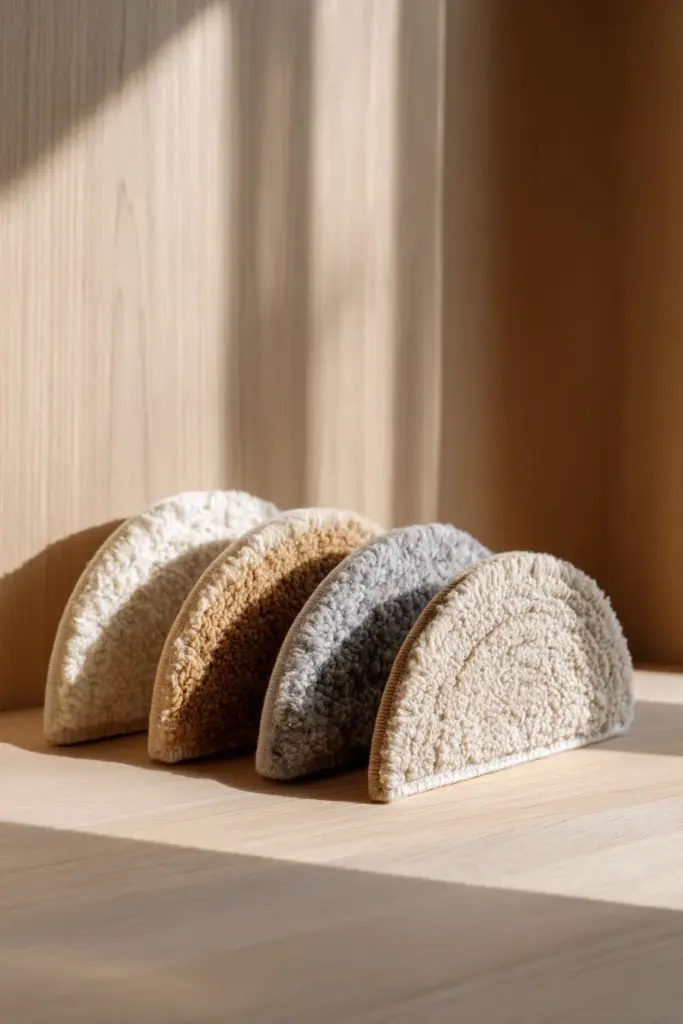
Bring paint swatches or fabric samples when shopping. Japandi rugs in cream, beige, or warm gray complement most palettes. Sage green adds subtle color while maintaining serenity.
Avoid stark white rugs in small high-traffic areas—they show every mark. Off-white or oatmeal tones feel just as light without the maintenance stress.
The Soul of Small Space Living
A well-chosen rug doesn’t just fill floor space—it completes the feeling you’re creating. In compact homes where every element works harder, that soft landing beneath your feet becomes essential.
Japandi rugs understand this. They don’t demand attention or claim too much real estate. They simply exist as beautiful, functional foundations that make your small living room feel like home.
When you walk barefoot across natural fibers warmed by afternoon light, when friends gather on a surface that invites them to stay, when your space feels calm despite its size—that’s when you know you’ve chosen right.
The rug was never about covering floor. It was always about creating ground.
Quick Checklist: Choosing Your Perfect Small Japandi Rug
- Measure your space – 5×7 ft for 10×12 ft rooms, leaving 12-18″ perimeter
- Select natural materials – Wool for softness, jute for humid climates
- Choose neutral tones – Beige, cream, sage, warm gray, soft brown
- Ensure durability – Low-pile or flatweave for high-traffic areas
- Plan furniture placement – Front legs on rug, coffee table fully on surface
- Consider climate – Jute for humidity resistance, breathable construction
- Check your budget – Quality options exist from PHP 2,500–25,000
- Use proper padding – Non-slip, breathable, floor-safe materials
- Commit to care – Weekly vacuuming, immediate spill blotting, annual professional cleaning
- Think sustainability – GOTS wool, local artisan pieces, natural dyes
Frequently Asked Questions
What size rug is best for a small Japandi living room?
A 5×7 foot rug works perfectly for most small living rooms (10×12 feet). This size anchors your seating area while leaving breathing room around the perimeter, which actually makes your space feel larger. For studio apartments, consider a 4×6 foot option.
u003cstrongu003eAre Japandi rugs suitable for homes with pets and children?u003c/strongu003e
Yes, especially low-pile wool or flatweave jute rugs. Wool naturally repels liquids temporarily and resists staining, while jute’s tight weave hides dirt and pet hair. Use non-slip pads underneath to prevent bunching during play or foot traffic.
How do I prevent mold on rugs in humid Philippine climates?
Choose breathable materials like jute or low-pile flatweave construction. Use breathable rug pads (never rubber-backed), ensure air circulation underneath, and rotate your rug quarterly. Sun it outdoors on dry mornings to naturally sanitize and prevent musty odors.
Can I find affordable Japandi rugs locally in the Philippines?
Absolutely. Check Shopee and Lazada for imported options under PHP 5,000. Explore local weaving communities for handmade abaca or pandan rugs that align with Japandi’s natural aesthetic while supporting Filipino artisans. Cotton-blend minimalist rugs often start around PHP 2,500.
How do I clean a wool Japandi rug without damaging it?
Vacuum weekly on low suction without the beater bar. For spills, blot immediately with a clean white cloth and cold water—never rub. Use a tiny amount of pH-neutral detergent if needed, rinse thoroughly, and air dry flat. Professional deep cleaning once yearly keeps wool rugs looking fresh.