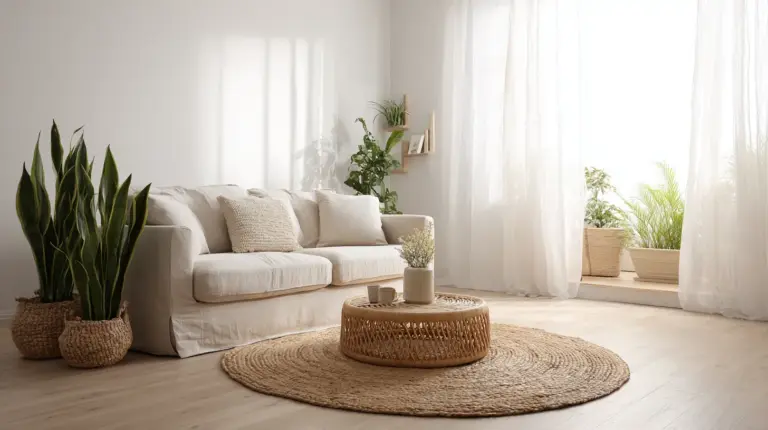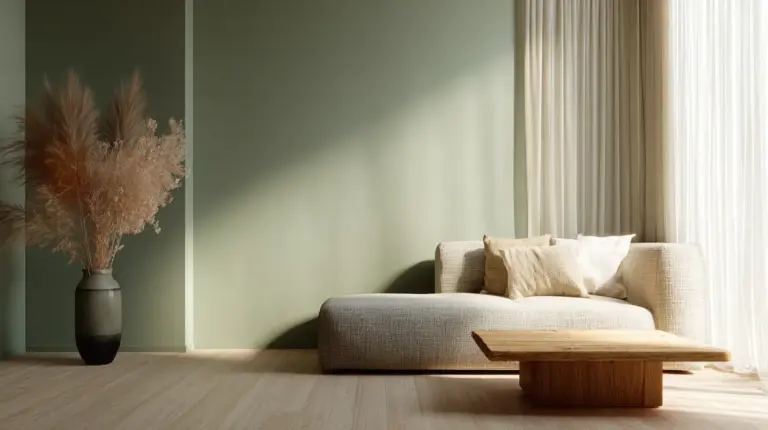

Table of Contents
The wall stares back at you. Blank. Waiting. In a small living room, that empty space isn’t just a design choice—it’s a missed opportunity to anchor your entire room in beauty and intention.
Japandi living room art is more than decoration. It’s the visual breath your space takes between furniture and function. It whispers rather than shouts, invites rather than demands.
In compact homes, where every square inch carries weight, the right art transforms walls into windows of calm. Think muted abstracts that make ceilings feel taller. Wabi-sabi prints that celebrate imperfection. Scandi-Japanese fusion pieces that balance minimalism with warmth.
This is where your small space becomes a sanctuary.
What Is Japandi Wall Art?
Japandi wall art merges Scandinavian minimalism with Japanese zen philosophy. The result? Pieces that feel effortlessly serene.
You’ll recognize it immediately: neutral color palettes in sage, sand, charcoal, and cream. Nature-inspired prints featuring delicate botanicals or abstract landscapes. Minimalist aesthetics that honor negative space as much as the subject itself.
The beauty lies in restraint. A single brushstroke matters. A muted palette soothes without overwhelming your compact room.
These aren’t loud statement pieces fighting for attention. They’re quiet companions that ground your space in intentional calm.
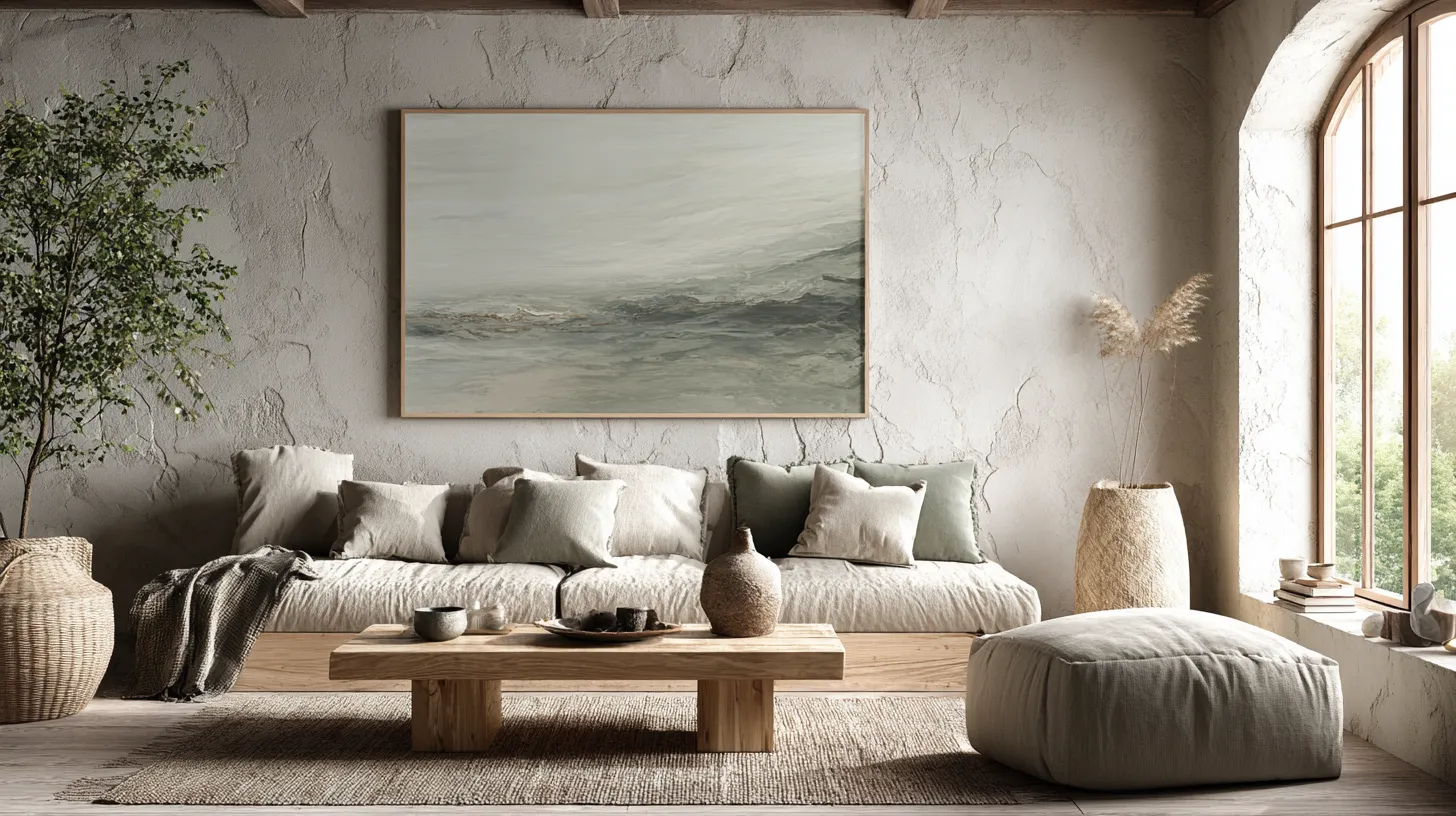
Why Art Matters in Small Japandi Living Rooms
In tight quarters, art becomes architecture. It draws the eye upward, making low ceilings feel expansive. It creates focal points that organize visual flow.
Without it, small rooms flatten. They lose dimension, depth, emotional resonance.
But the right piece—a vertical line drawing, perhaps, or an oversized abstract canvas—shifts everything. Suddenly your 10×12 living room breathes. Light moves differently. The space feels curated rather than cramped.
Art also anchors your color story. In Japandi design, where earthy palettes reign, a single sage green abstract can tie together your linen sofa, wood coffee table, and ceramic vases into one cohesive narrative.
What Kind of Art Goes with Japandi Style?
Nature-Inspired Prints
Think botanical line drawings. Watercolor landscapes in fog and mist. Abstract interpretations of bamboo, stones, river currents.
These pieces bring the outside in without literal representation. A single branch rendered in charcoal. Mountains suggested through layered gray washes.
Nature here is felt, not documented. It’s the essence of a forest walk distilled into paper and ink.
Neutral Abstract Art
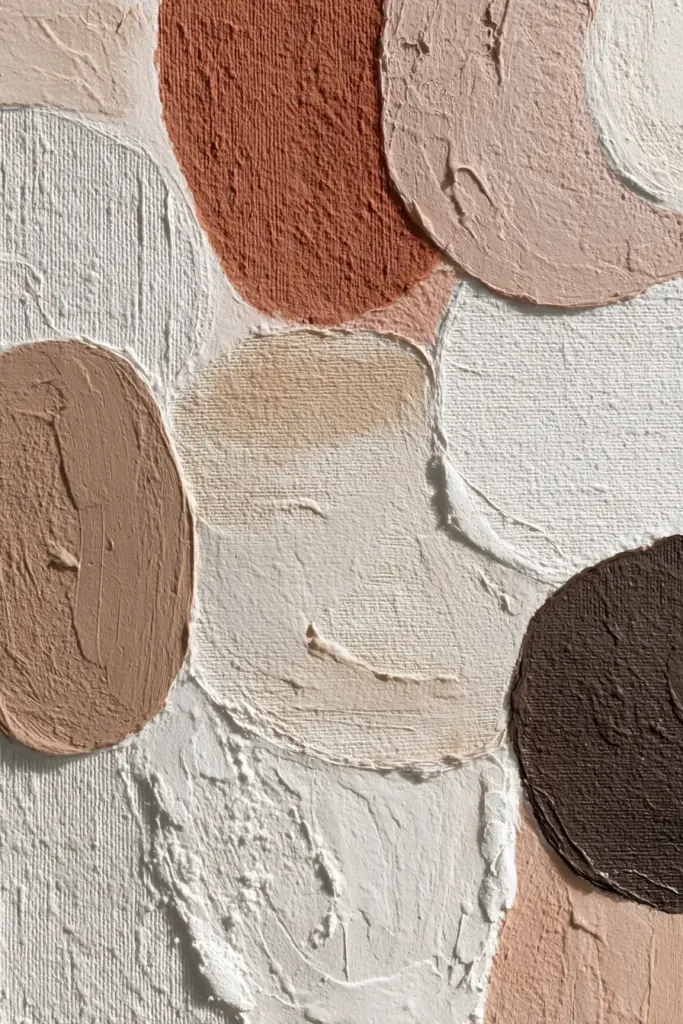
Abstracts in cream, beige, terracotta, and soft black dominate Japandi spaces. Look for organic shapes—circles that suggest stones, horizontal lines like horizons, textures resembling handmade paper.
These works complement rather than compete. They fill wall space with visual interest while maintaining the serene atmosphere Japandi rooms require.
Muted colors prevent sensory overload in small footprints. Your eye rests instead of races.
Wabi-Sabi Art Imperfections
Wabi-sabi celebrates the beauty of age, wear, asymmetry. Choose prints that show visible brushstrokes, irregular edges, faded pigments.
A ceramic vessel with a crack. Weathered wood textures. Hand-torn paper collages in neutral tones.
These imperfections make your space feel lived-in, human, warm—essential in minimalist rooms that can otherwise feel sterile.
Black and White Art
Monochrome pieces offer maximum impact with minimal color disruption. Japanese calligraphy prints, Scandinavian geometric patterns, ink wash paintings.
In small living rooms, black and white creates sophistication without visual weight. It pairs seamlessly with natural wood tones and light textiles.
Consider a balanced composition—a central dark element surrounded by white space—to anchor your room without closing it in.
Low-Profile Canvas Small Japandi
Thin, frameless canvases maintain wall flow. They don’t protrude or cast shadows that make rooms feel smaller.
Look for gallery-wrapped canvases where the image continues around edges. No bulky frames needed. Just clean lines meeting clean walls.
This approach keeps your sight lines uninterrupted, crucial when square footage is limited.
How to Decorate a Small Japandi Living Room with Art
Create Vertical Visual Flow
Hang art higher than standard height. Draw eyes upward with vertical compositions—stacked smaller prints, tall narrow canvases, botanical prints of tall grasses.
This illusion technique makes ceilings feel taller, rooms more spacious. Your compact living room suddenly gains breathing room.
Avoid wide horizontal pieces that emphasize wall width and make spaces feel squatter.
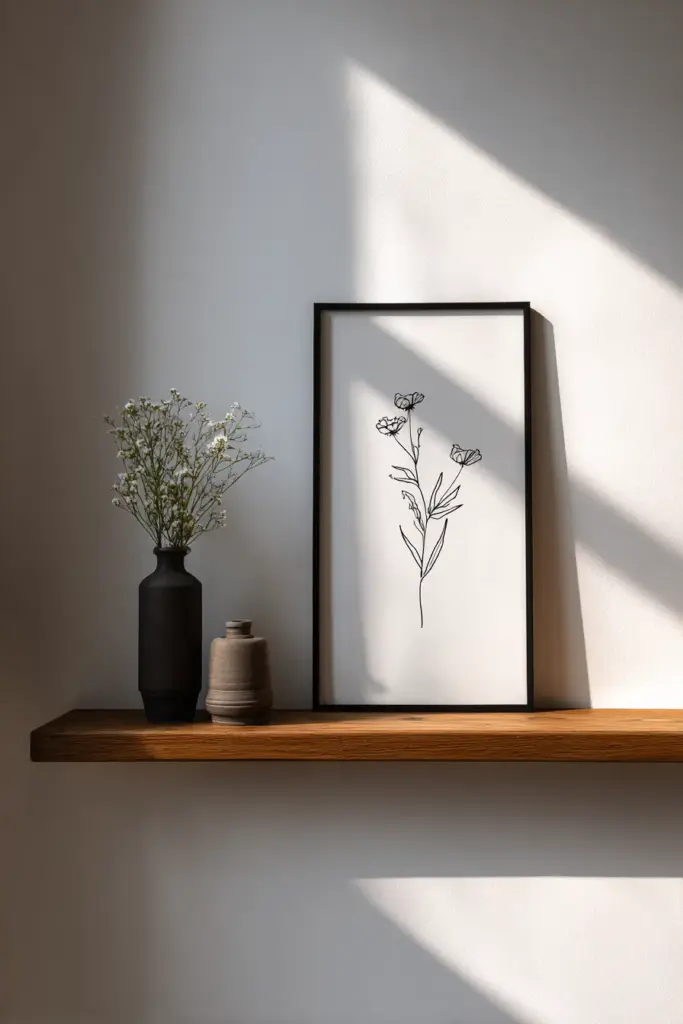
Use Multifunctional Art Solutions
Floating shelves that display art while hiding storage. Picture ledges you can swap seasonally. Hinged frames that conceal wall-mounted charging stations.
In small Japandi spaces, beauty must multitask. Art shouldn’t just decorate—it should earn its place.
Consider modular gallery walls where pieces can be rearranged as your needs shift. Flexibility matters in compact homes.
Embrace Oversized Abstract Prints
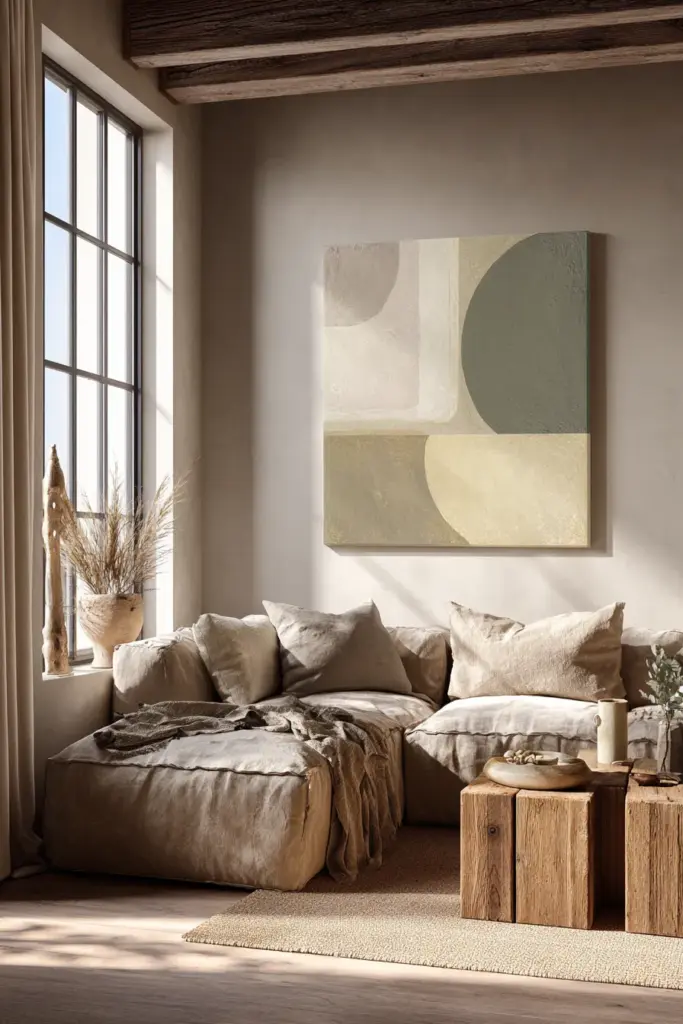
Counterintuitive but effective: one large piece instead of multiple small ones. A 36×48 abstract in muted tones creates focus without clutter.
Small art in small rooms often reads as cluttered. But an oversized canvas? It becomes a window, a meditation point, a room anchor.
Choose low-contrast abstracts so the scale feels expansive rather than overwhelming.
Integrate Lighting with Art
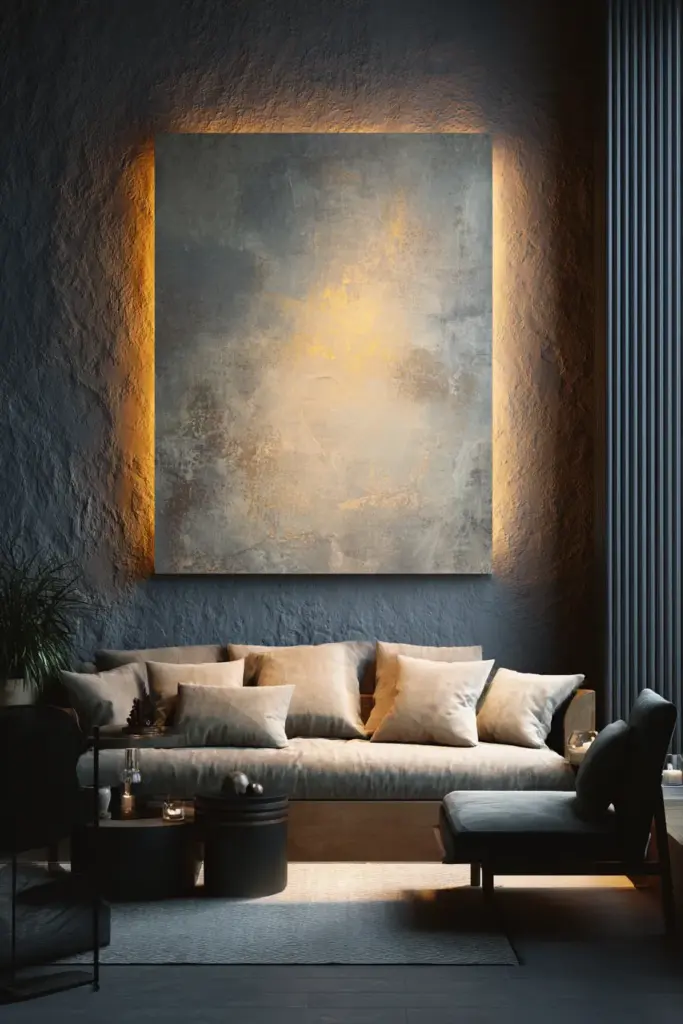
Backlit art adds dimension without floor lamps that steal precious square footage. LED strips behind canvases create soft glows that make rooms feel larger.
Picture lights cast focused illumination, turning art into evening focal points. This layered lighting approach is essential in compact Japandi design.
Natural light shifts how art reads throughout the day. Position pieces where morning sun or afternoon glow enhances their texture and tone.
Strategic Placement for Small Spaces
Above the Sofa: Your primary focal point. Use one statement piece or a tight gallery wall (no more than 3-4 pieces).
Opposite the Entry: First impression when entering. Make it serene and welcoming—a neutral landscape or abstract.
Corner Walls: Often forgotten. Vertical art here draws attention to underused space and balances the room.
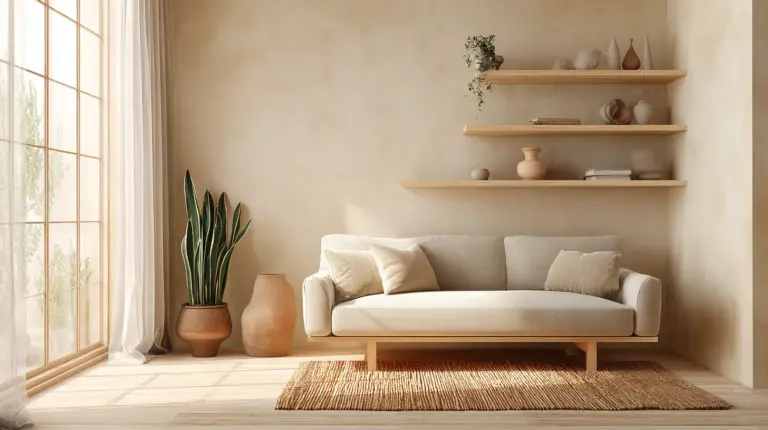
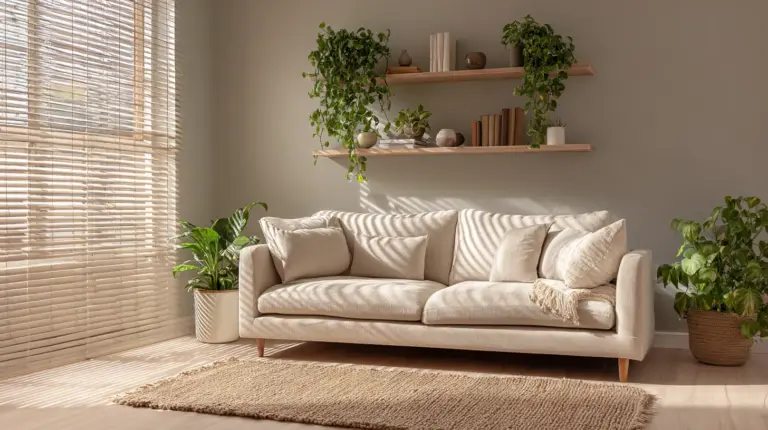
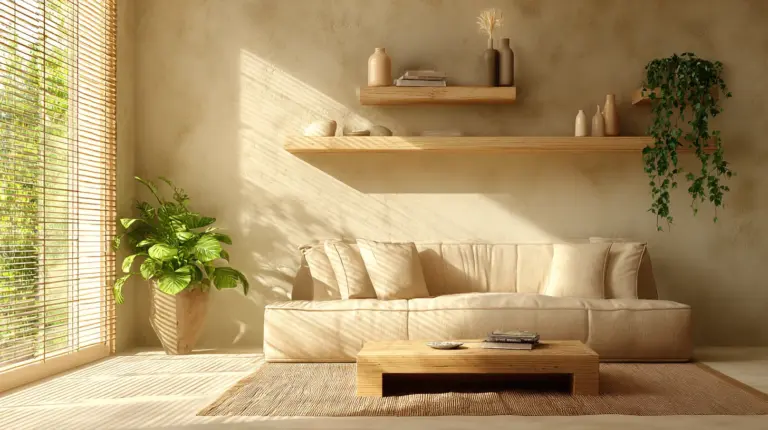
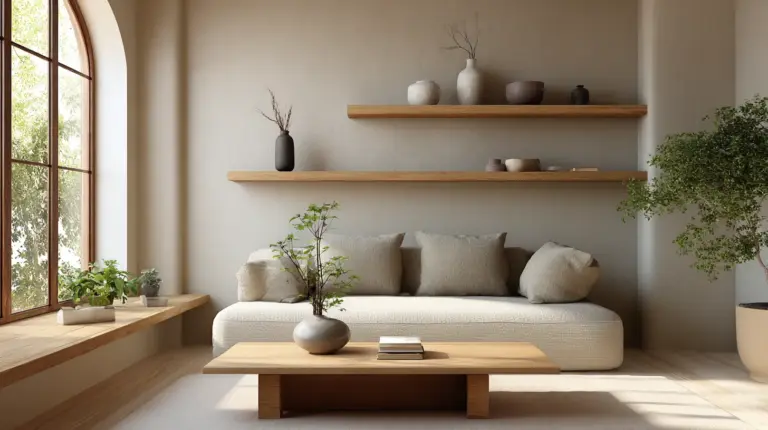
Floating Shelves: Mix small framed prints with pottery, books, plants. Art becomes part of a larger vignette.
Budget Japandi Art Ideas for Small Living Rooms
Printable Neutral Abstracts
Digital downloads from Etsy or independent artists cost under $10. Print at home or through affordable print shops.
Frame them in simple light wood or black frames. Instant Japandi aesthetic for minimal investment.
Swap prints seasonally to refresh your space without new purchases. Digital files mean endless reuse.
Upcycled Wood Frames
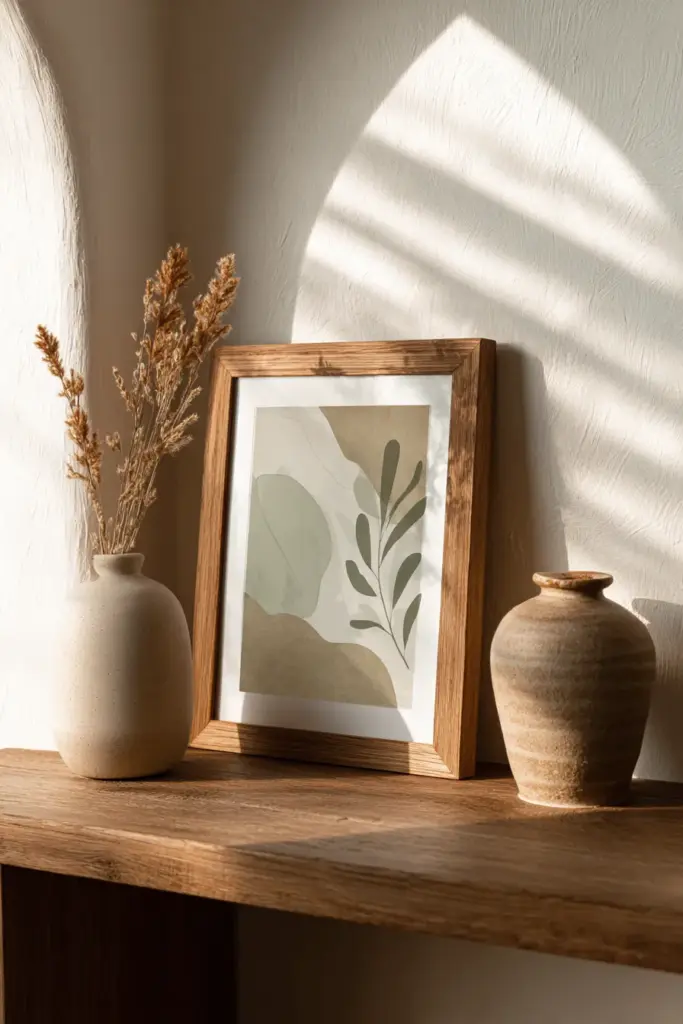
Thrift store frames get new life with light sanding and natural wood stain. Pair with free printable botanicals or your own photography.
The imperfect finish? That’s wabi-sabi in action. Embrace the worn edges and slight color variations.
This DIY approach adds authentic character while keeping budgets tight.
Renter-Friendly Hanging Solutions
Command strips hold up to 16 pounds without wall damage. Perfect for apartments where holes are forbidden.
Picture hanging strips, adhesive hooks, tension rods between walls—all solutions that protect your deposit while displaying art beautifully.
Lean larger pieces on mantels or console tables for a casual, layered look that requires zero wall commitment.
Affordable Sources Under $50
- Etsy: Search “Japandi art print” for thousands of downloadable options
- Society6: Curated minimalist artists, frequent sales
- Minted: Independent designers, quality prints
- Local art markets: Support emerging artists while finding unique pieces
Quality doesn’t require luxury pricing. Thoughtful curation matters more than price tags.
Color Psychology for Compact Japandi Spaces
Sage Green Accents
Soft, muted greens bring calm without overwhelming. They ground small spaces in nature while maintaining airiness.
Use sage in abstract backgrounds or botanical prints. It pairs beautifully with natural wood and cream textiles.
This color suggests growth, renewal, peace—essential feelings in compact urban living.
Warm Neutrals vs. Cool Neutrals
Beige, sand, terracotta add warmth. They make small rooms feel cozy rather than cold.
Gray, charcoal, slate create sophistication and make spaces feel slightly larger through visual recession.
Balance both for dimensional warmth. Warm abstract with cool frame. Gray walls with sandy botanical print.
Strategic Color Placement
Use darker tones low (near furniture) and lighter tones high (near ceiling). This gradient pulls eyes upward and expands perceived height.
Monochrome art on colored walls, or colorful art on white walls—never both saturated. In small spaces, restraint prevents sensory chaos.
Small Space Japandi Art Styling Table
| Challenge | Art Solution | Why It Works |
|---|---|---|
| Low ceilings | Vertical line drawings, tall botanical prints | Draws eyes upward, creates height illusion |
| Dark room | Light abstracts with white space, backlit art | Reflects light, brightens without windows |
| Narrow walls | Single oversized piece instead of gallery wall | Simplifies sight lines, feels intentional |
| Rental restrictions | Leaning art, command strips, picture ledges | No holes needed, damage-free |
| Limited budget | Printable downloads, DIY frames, thrift finds | Professional look under $50 total |
| Visual clutter | Monochrome art, minimalist abstracts | Calms space, provides visual rest |
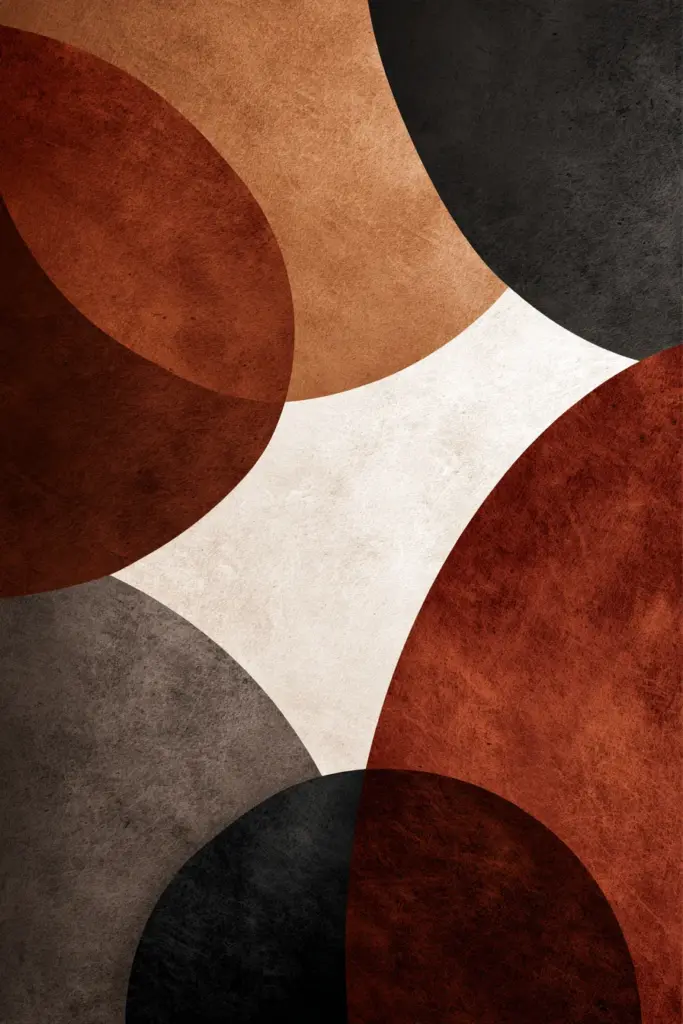
2026 Trends: Curved Abstract Art in Japandi Rooms
Soft curves are replacing hard geometric shapes. Think rounded organic forms that mimic stones, clouds, pottery.
These curves feel inherently calming. They soften angular furniture and architectural lines common in small apartments.
Look for abstract paintings with flowing, asymmetrical shapes in terracotta, cream, and charcoal. They bring contemporary freshness to traditional Japandi principles.
Arched art—pieces with rounded tops—create architectural interest without actual construction. Perfect for renters wanting built-in character.
What Art for Tiny Japandi Living Room? (Voice Search Optimized)
For truly tiny spaces under 100 square feet, less is exponentially more.
One statement piece: 24×36 or larger, muted abstract or nature-inspired
Medium: Canvas over glass to reduce reflective glare
Placement: Centered on the longest wall, eye-level when seated
Frame: Frameless or thin natural wood, nothing chunky
Colors: Maximum two colors plus neutrals
Avoid gallery walls. Avoid busy patterns. Avoid multiple focal points.
Simplicity expands. Clutter contracts. Let your single perfect piece breathe.
Art and Furniture Harmony in Small Japandi Spaces
Your art should conversation with your cozy furniture, not compete.
Low-profile sofas in linen or cotton pair with horizontal abstracts. Mid-century modern chairs need vertical balance from tall prints. Natural wood coffee tables want earthy tones in your wall art.
Consider scale relationships. A delicate line drawing feels lost above a chunky sectional. An oversized abstract overwhelms a minimal loveseat.
Test before committing. Cut paper to size, tape it on walls, live with it for days. See how light changes it, how it feels mornings versus evenings.
Key Takeaways: Small Japandi Living Room Art Essentials
- Prioritize vertical compositions to make ceilings feel taller and rooms more expansive
- Choose neutral palettes—sage, sand, charcoal, cream—that soothe without overwhelming
- Embrace wabi-sabi imperfections for warmth and authentic character
- Use one oversized piece rather than multiple small artworks in very compact spaces
- Integrate lighting through backlit canvases or picture lights for dimension
- Explore budget options like printable abstracts, DIY frames, and renter-friendly hanging
- Balance warm and cool neutrals for dimensional depth
- Select nature-inspired or abstract themes that align with Japandi zen philosophy
- Consider multifunctional solutions like floating shelves combining art and storage
- Update with curved organic shapes for contemporary 2026 Japandi trends
Creating Your Calm
The wall no longer stares back empty.
Now it holds a piece of morning mist. A suggestion of stones arranged by water. The memory of a forest walk rendered in charcoal and cream.
Your small Japandi living room has found its breath. The art doesn’t shout for attention—it invites you to pause, to sit, to simply be in the space you’ve created.
This is how compact homes become sanctuaries. Not through excess, but through intention. Not through volume, but through voice.
Let your walls speak softly. Let them whisper of calm, of nature, of imperfect beauty. Let them remind you that small spaces, thoughtfully adorned, can hold infinite peace.
Frequently Asked Questions
What is the best size art for a small Japandi living room?
For walls 8-10 feet wide, choose 24×36 to 30×40 inch pieces. Larger rooms can handle 36×48 or bigger. In very tight spaces under 100 square feet, one statement piece beats multiple small prints. Vertical orientations work best to create height illusion.
How can I create a Japandi living room on a budget?
Start with printable art downloads under $10 from Etsy, print at local shops, and frame with thrifted wood frames. Use command strips for renter-friendly hanging. Shop Society6 sales for affordable minimalist prints. DIY options like upcycled frames and your own nature photography keep costs minimal while maintaining authentic Japandi aesthetics.
What colors are best for Japandi living room art?
Neutral palettes dominate: sage green, sand, beige, cream, charcoal, soft black, terracotta. Monochrome black and white works beautifully. Avoid bright colors or high contrast. Muted earth tones prevent visual overwhelm in small spaces while maintaining the serene, nature-connected atmosphere essential to Japandi design.
Can I use gallery walls in small Japandi living rooms?
Yes, but with restraint. Limit to 3-4 pieces maximum in tight arrangements—no scattered layouts. Keep frames uniform (all natural wood or all black). Use identical mats and spacing for cohesion. Better option for very small rooms: skip gallery walls entirely and choose one oversized statement piece for cleaner sight lines.
What is wabi-sabi art and why does it fit Japandi style?
Wabi-sabi celebrates imperfection, age, and natural wear—asymmetrical shapes, visible brushstrokes, weathered textures, irregular edges. It adds warmth and humanity to minimalist Japandi spaces that might otherwise feel too sterile. This Japanese philosophy values authentic beauty over manufactured perfection, making art feel lived-in and emotionally resonant in compact, functional homes.