
Table of Contents
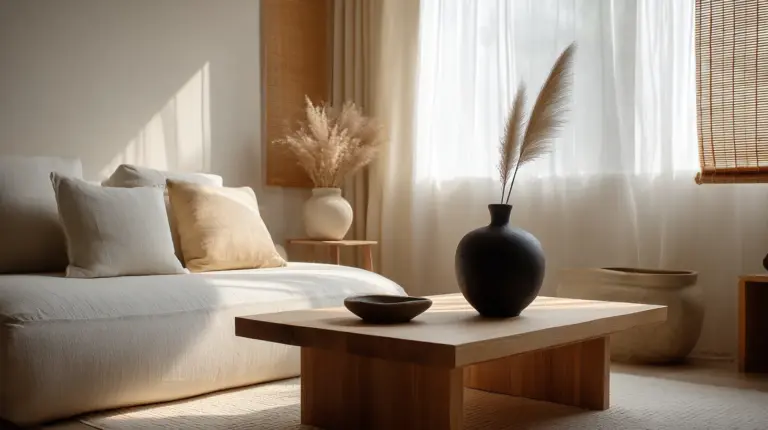
There’s something deeply restorative about walking into a room that breathes with you. A space where every object has purpose, where light pools softly on natural textures, and where the air itself feels intentional. This is the promise of Japandi design in small living rooms—not just beauty, but true wellbeing.
For those of us living in compact homes, the idea of serenity can feel like a luxury reserved for sprawling spaces. But Japandi teaches us otherwise. By weaving Japanese minimalism with Scandinavian warmth, this design philosophy transforms even the smallest living room into a sanctuary that actively nurtures mental health.
The magic isn’t in grand gestures. It’s in the weight of linen against your skin, the way morning light catches a ceramic vase, the quiet confidence of a room that knows exactly what it needs—and nothing more.
Let’s explore how to craft a small Japandi living room that doesn’t just look peaceful, but feels like home for your nervous system.
The Psychology Behind Japandi Wellbeing
Why Minimalism Heals Small Spaces
When you remove visual clutter, you remove mental noise. Studies show that biophilic elements and decluttered environments can reduce stress by up to 20%, creating measurable shifts in cortisol levels. In a small living room, every surface matters—and Japandi’s “less but better” philosophy prevents sensory overwhelm.
Think of your space as a container for calm. Japanese wabi-sabi embraces imperfection and authenticity, while Scandinavian hygge wraps you in cozy simplicity. Together, they create what psychologists call “restorative environments”—spaces where your mind can truly rest.
The negative space isn’t empty. It’s breathing room for your thoughts.
The Science of Natural Materials
Our brains evolved in nature, not in synthetic environments. When you introduce wood grain, stone textures, or linen fibers into your small living room, you’re speaking your nervous system’s native language. Research on biophilic design confirms that natural materials lower heart rate and improve focus.
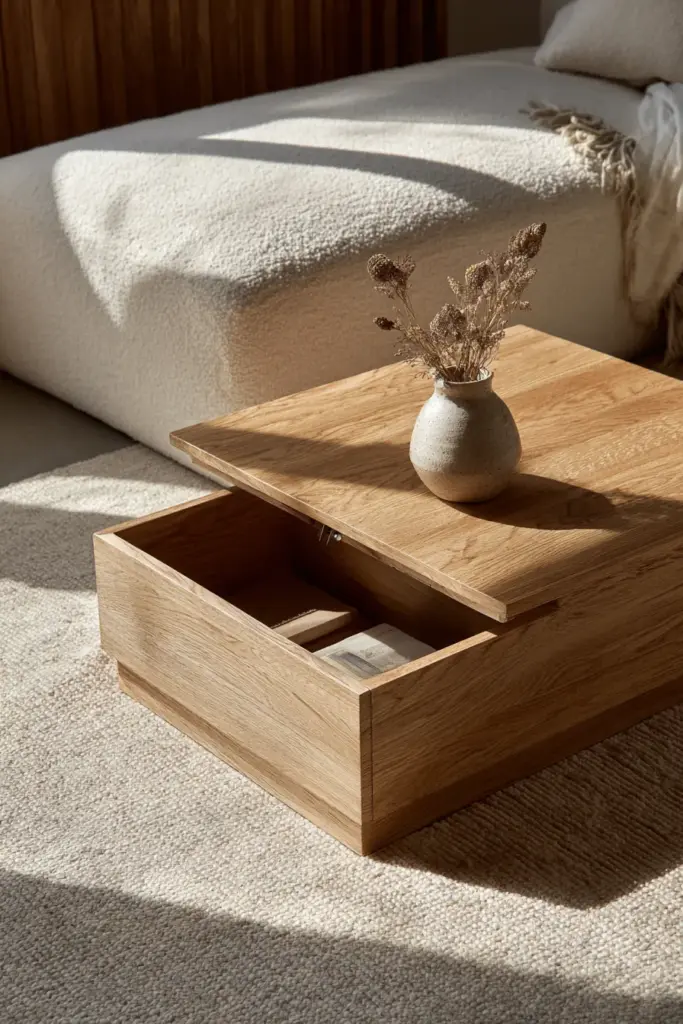
In Japandi spaces, a single oak coffee table or handwoven cotton throw becomes more than décor. These elements ground you, quite literally connecting you to earth’s rhythms even when you’re three floors up in a Manila apartment.
Designing Your Calm: Essential Japandi Elements for Small Living Rooms
The Foundation: Neutral Palettes That Soothe
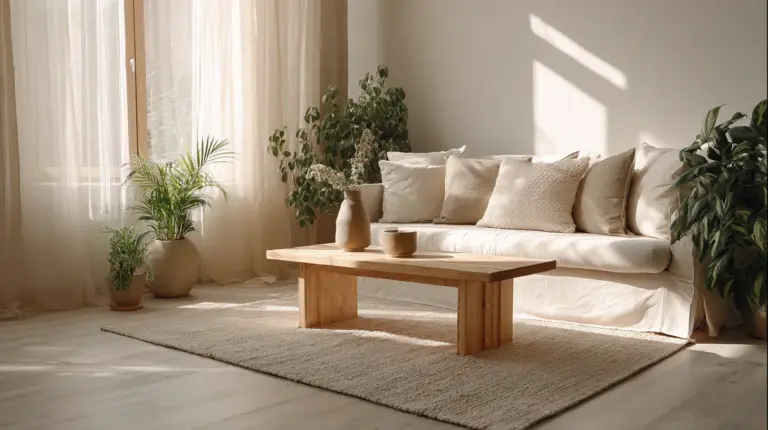
Start with colors that whisper rather than shout. Soft whites, warm grays, sandy beiges, and muted earth tones create the visual equivalent of a deep breath. These neutral colors reflect natural light beautifully—crucial in small spaces where every lumen counts.
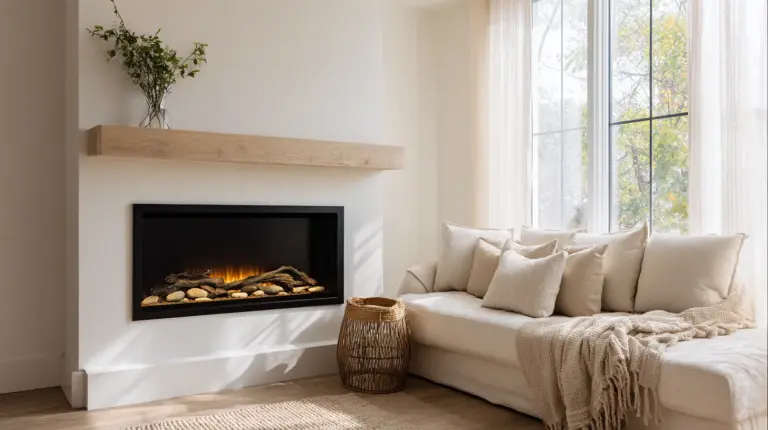
Add depth through tone-on-tone layering. A cream sofa against off-white walls, accented with taupe cushions and a charcoal throw. This subtle variation prevents blandness while maintaining that signature Japandi serenity.
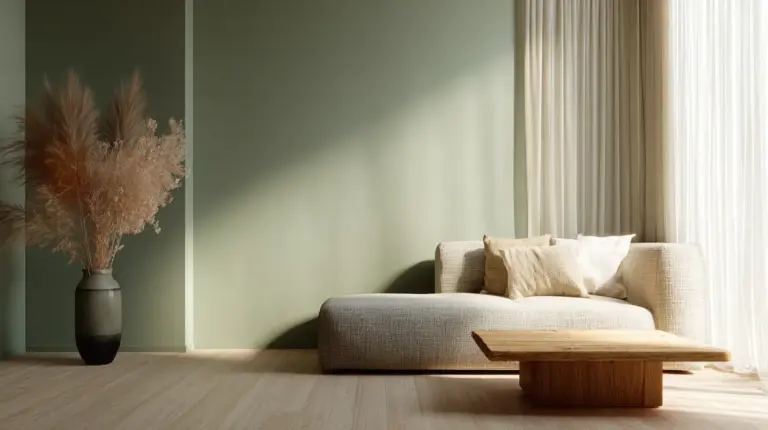
Accent sparingly with muted greens or dusty blues—colors borrowed from moss and distant mountains.

Lighting: Soft Radiance Over Harsh Brightness
Harsh overhead lighting triggers stress responses. Japandi living rooms embrace adaptive lighting—layered sources that mimic natural daylight cycles. In small spaces, this approach is transformative.
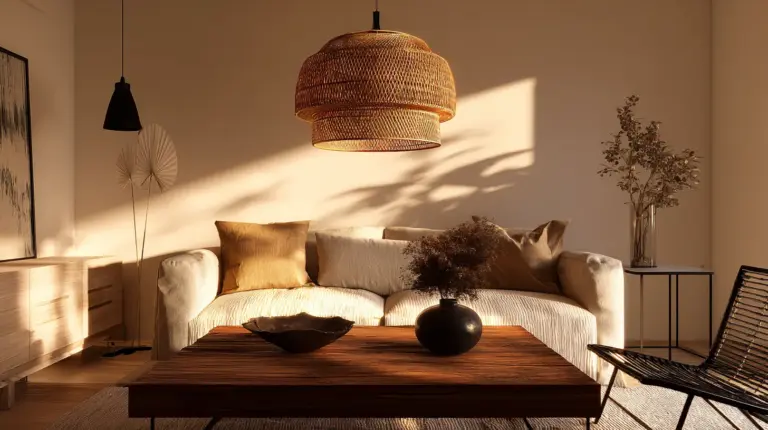
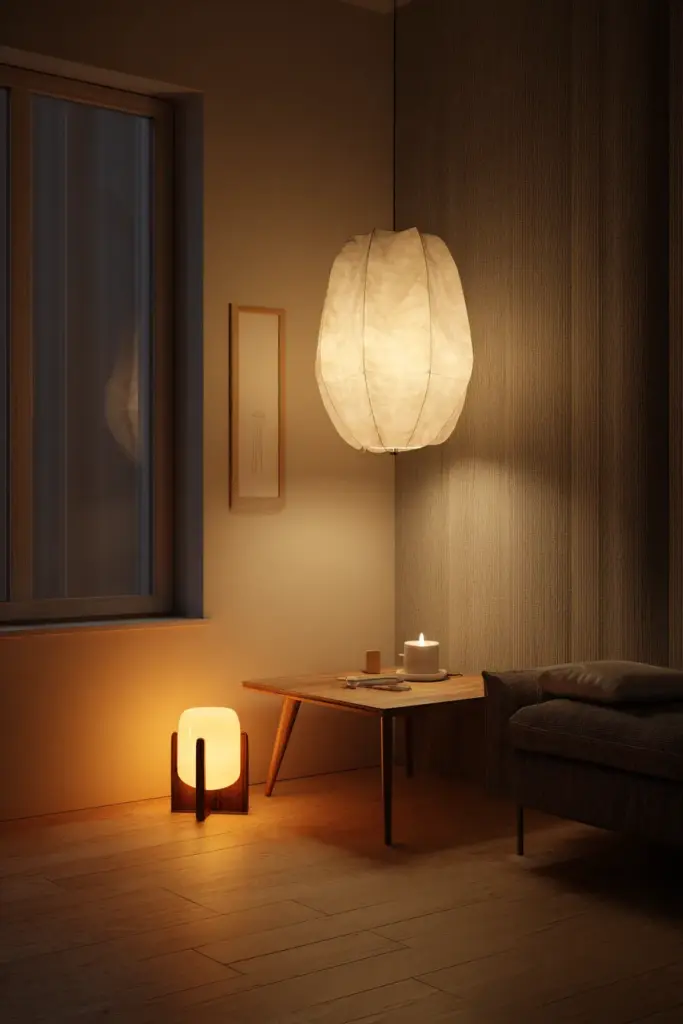
Position a paper pendant lamp or wooden fixture as your primary light source. Add warm LED floor lamps in corners to eliminate shadows. Place candles on low surfaces for evening rituals. The goal is ambient glow, not interrogation-room brightness.
Consider dimmers for all light sources. Being able to adjust intensity throughout the day supports your circadian rhythm and creates different moods for work, relaxation, and meditation.
Multifunctional Furniture for Peace and Practicality
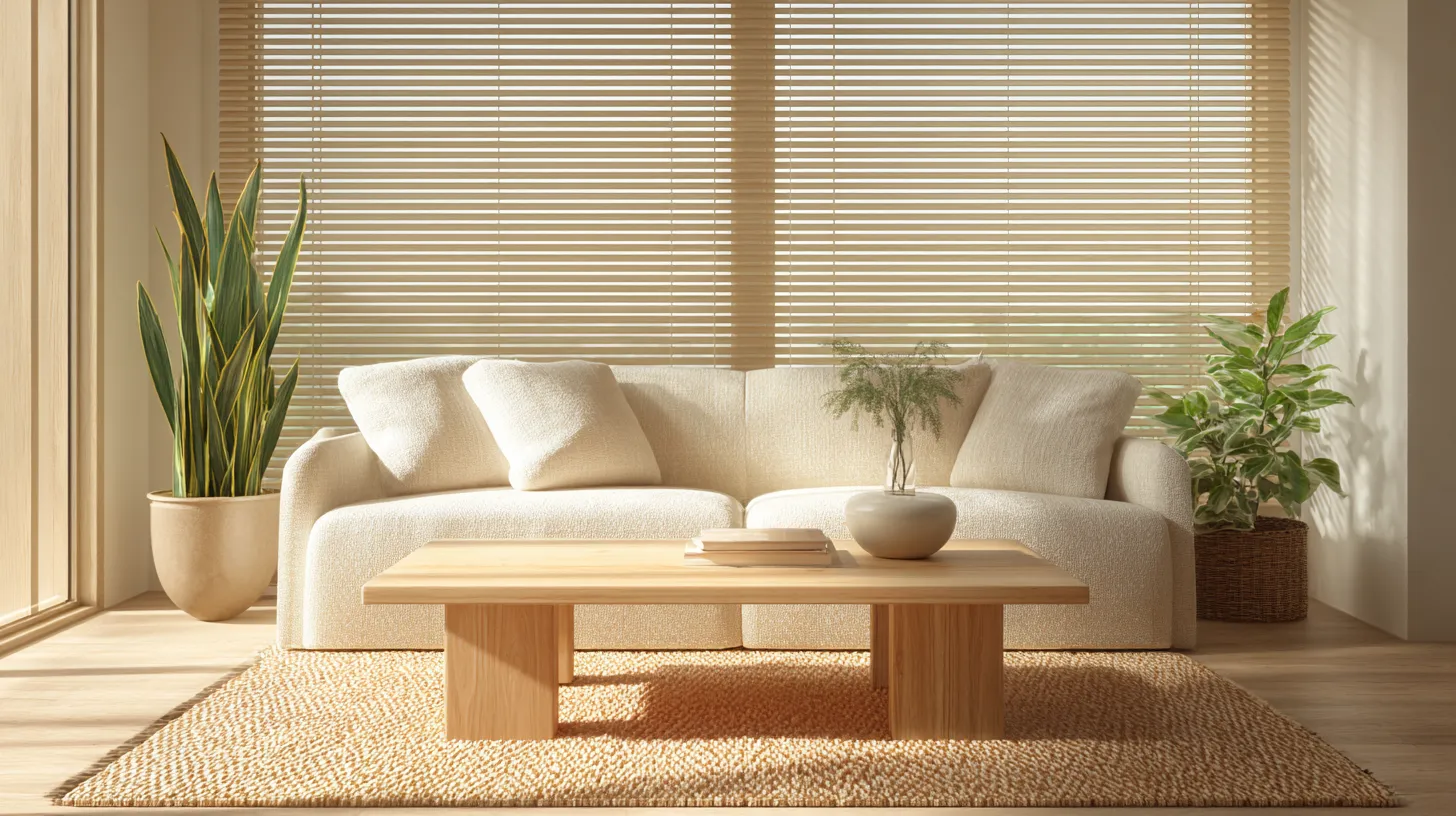
In compact living rooms, furniture must earn its place. Choose pieces that serve multiple purposes without sacrificing beauty. A low-profile sofa with hidden storage. A coffee table that lifts to dining height. Nesting side tables that tuck away when not needed.
Look for clean lines and organic shapes—furniture that feels sculptural rather than bulky. Japanese-inspired pieces often sit closer to the ground, which paradoxically makes small rooms feel more spacious by drawing the eye horizontally.
Budget-conscious options: IKEA Manila offers minimalist pieces starting around PHP 3,000. For authentic craftsmanship, explore local furniture makers who work with sustainably sourced Philippine hardwoods—expect PHP 10,000-50,000 for statement pieces that last decades.
Textures That Ground and Comfort
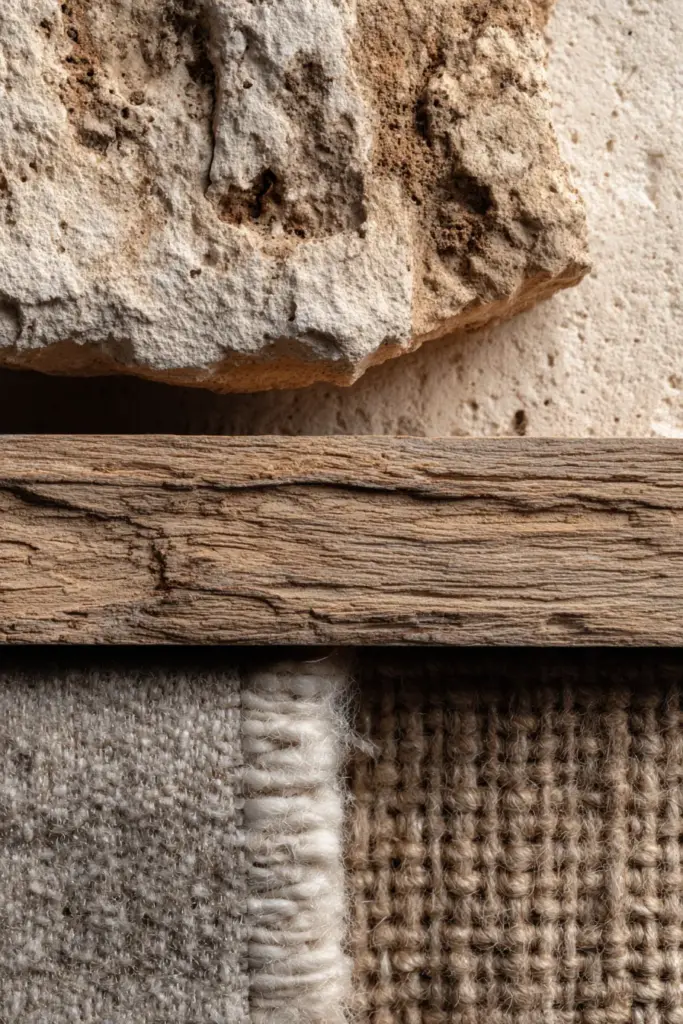
Japandi thrives on tactile contrast. Smooth ceramic against rough-hewn wood. Cool stone beside warm wool. These juxtapositions keep your space interesting without visual chaos.
Layer your textiles thoughtfully. A chunky knit throw over linen cushions. A jute rug under bare feet. Bamboo blinds filtering afternoon sun. Each texture should invite touch and add depth to your neutral palette.
In humid Manila climates, choose breathable natural fibers like cotton, linen, and bamboo that resist moisture and maintain that fresh, airy feeling central to wellbeing.
Biophilic Design: Bringing Life Into Small Spaces
Air-Purifying Plants for Health and Harmony
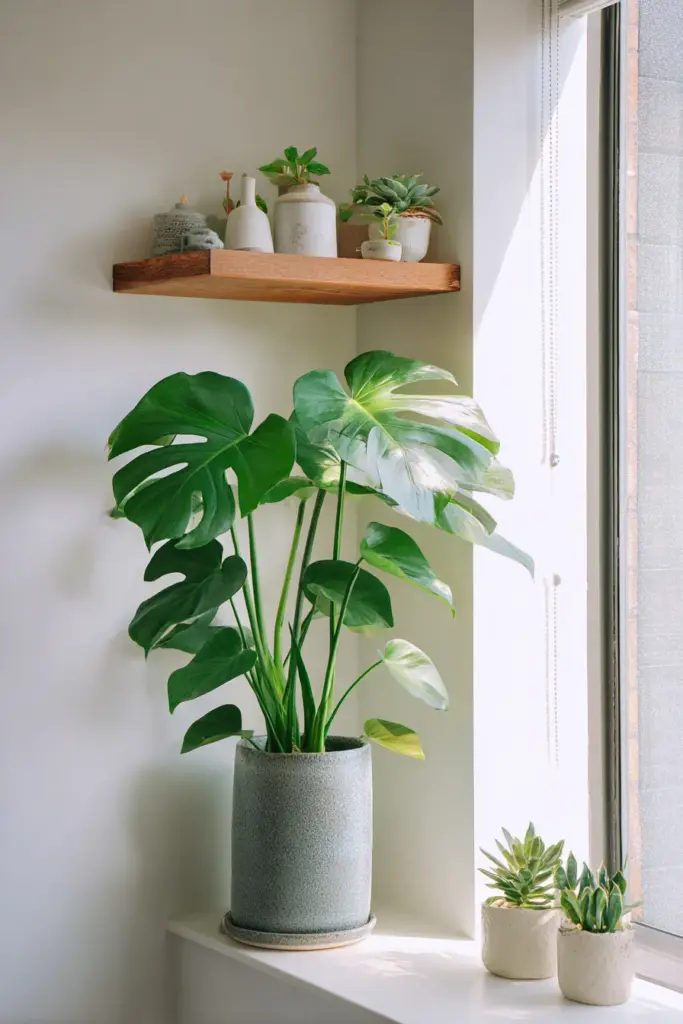
Plants aren’t decoration—they’re living air filters that reduce CO2, increase oxygen, and boost mood. For small Japandi living rooms, choose sculptural specimens that double as art. Sansevieria thrives on neglect and filters toxins. Monstera adds organic drama without overwhelming. Small potted succulents cluster beautifully on windowsills.
Place plants at varying heights to create visual flow. A tall fiddle-leaf fig in one corner, trailing pothos on a shelf, desktop ferns catching morning light. This layering mimics forest environments our brains instinctively recognize as safe.
Pro tip: In compact spaces, vertical gardens maximize greenery without sacrificing floor space. Peel-and-stick planters work perfectly for renters.
Natural Light Maximization
Light is the most powerful—and free—design tool you have. Remove heavy curtains in favor of sheer linen panels or bamboo shades that filter rather than block. Position mirrors opposite windows to bounce light deeper into your room.
Keep window areas clear of furniture clutter. Let light travel unobstructed, creating that signature Japandi brightness that feels like perpetual morning.
On dark days or evenings, supplement with warm-toned lighting (2700-3000K) that mimics sunset rather than sterile office fluorescents.
Organic Shapes and Mindful Decluttering
Straight lines create order; curves create comfort. Introduce rounded elements through ceramic vases, oval mirrors, or an arched floor lamp. These organic shapes soften minimalism’s sometimes stark geometry.
Decluttering isn’t about owning nothing—it’s about keeping only what serves your wellbeing. Apply the wabi-sabi principle: Does this object have function, beauty, or deep personal meaning? If not, let it go with gratitude.
Use closed storage to hide necessities. Open shelving should display only carefully curated items—a ceramic bowl, a small plant, a favorite book—each with breathing room around it.
Creating Zones for Rest and Reflection
Reading Nooks in Unexpected Corners
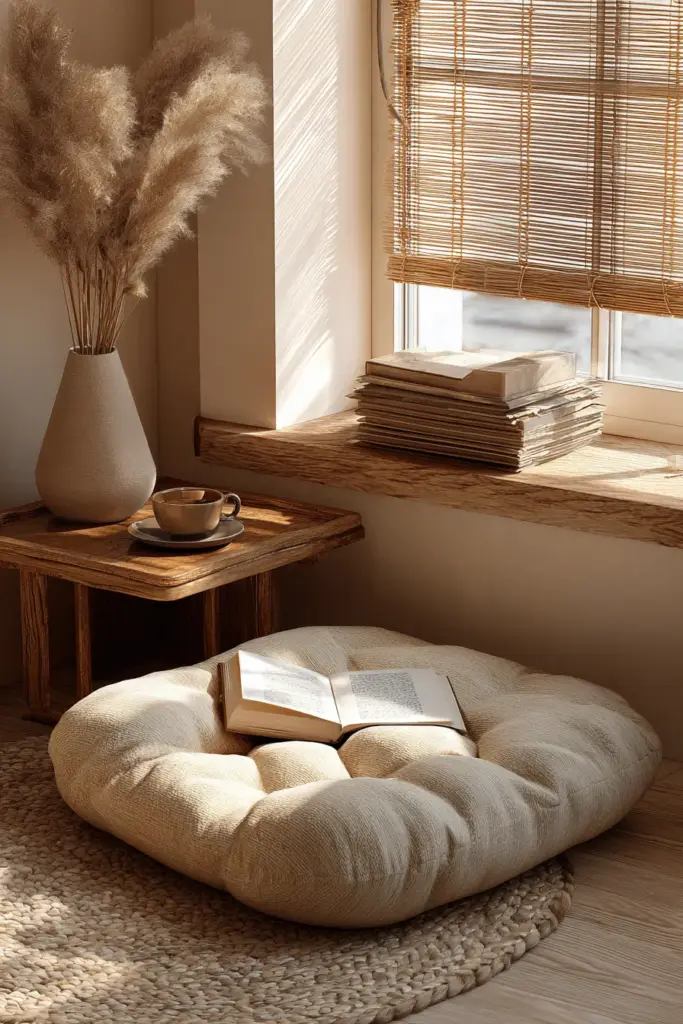
Even the smallest living room can harbor a meditation spot or reading nook. A floor cushion near a window. A low chair with a side table for tea. A corner stack of books topped with a small lamp.
These micro-zones signal to your brain: this is where I slow down. The physical act of moving to your reading nook creates psychological separation from work or household tasks.
Add a small aromatherapy diffuser here with calming scents like hinoki cypress or yuzu—subtle Japanese fragrances that enhance without overpowering.
Low Seating and Grounded Living
Japanese floor cushions and Scandinavian poufs encourage what designers call “grounded living.” Sitting closer to the floor shifts perspective, making rooms feel taller and more open. It’s also deeply calming—something about lowering your center of gravity eases anxiety.
Mix floor seating with conventional furniture for flexibility. Guests who prefer chairs have options; you can sprawl on cushions with tea and contemplation.
Sustainable Choices for Long-Term Wellbeing
Low-VOC Paints and Non-Toxic Materials
Your living room shouldn’t outgas toxins. Choose paints with low or zero volatile organic compounds (VOCs)—they’re widely available in Manila and dramatically improve indoor air quality. The fewer chemicals in your space, the better you breathe and sleep.
Extend this principle to furniture. Solid wood over particle board. Natural latex cushions over foam. Cotton upholstery over synthetic blends. These choices cost more upfront but prevent long-term health issues and last significantly longer.
Upcycling and Local Craftsmanship
Sustainability and wellbeing intertwine. Knowing your coffee table came from reclaimed wood or was handcrafted by a local artisan adds emotional value—another layer of wabi-sabi authenticity.
Scout secondhand shops and online marketplaces for vintage Scandinavian pieces or Japanese ceramics. A 1970s teak chair refinished is both budget-friendly and beautifully unique.
Support Philippine furniture makers who source responsibly. Your money flows into community rather than corporate supply chains—an ethical choice that feels as good as the furniture looks.
Small Space Hacks for Japandi Living Rooms
| Challenge | Japandi Solution | Estimated Cost (PHP) |
|---|---|---|
| Limited storage | Wall-mounted shelves + hidden compartments | 2,000-8,000 |
| Dark space | Mirrors + layered lighting | 3,000-15,000 |
| Low ceilings | Low-profile furniture + vertical elements | 5,000-25,000 |
| Rental restrictions | Peel-and-stick solutions + movable pieces | 1,500-10,000 |
| Budget constraints | Mix IKEA basics + one statement piece | 15,000-40,000 |
Renter-Friendly Transformations
You don’t need to own walls to make them beautiful. Peel-and-stick wood panels add warmth without damage. Removable wallpaper in soft textures creates accent walls. Command hooks hold lightweight shelves for plants and décor.
Focus investment on movable elements: rugs, lighting, furniture, textiles. These travel with you and continually improve your wellbeing regardless of address.
The 10-Square-Meter Living Room Layout
For truly compact spaces (common in urban Philippines), every centimeter counts. Float your sofa away from walls to create circulation space—counterintuitively, this makes rooms feel larger. Choose a round or oval coffee table to improve flow and prevent shin bruises.
Install floating shelves at eye level for storage without floor footprint. Use the vertical space above doorways and windows. Think layers, not sprawl.
Mindfulness Practices Enhanced by Japandi Design
Morning and Evening Rituals
Your Japandi living room should support daily rituals that ground your mental health. Morning meditation on your floor cushion. Evening tea from your favorite ceramic cup. Weekend reading in that corner where light gathers.
The consistency of these practices—supported by a space designed for calm—creates what psychologists call “habit stacking.” Your environment becomes a wellbeing partner.
Design specific cues: a dedicated spot for your meditation cushion, a tray already set with tea essentials, a throw blanket draped just so for evening reading. Remove friction from healthy habits.
Seasonal Adjustments for Continued Freshness
Japandi embraces change. Swap lightweight cotton throws for chunky knits as Manila’s cooler months arrive. Rotate plants seasonally. Adjust your lighting as daylight shifts. These small updates prevent stagnation and mirror nature’s rhythms.
This seasonal mindfulness keeps your space—and your relationship to it—alive and intentional.
Your Japandi Living Room Wellbeing Checklist
Before we close, here’s your roadmap to transformation:
- Color palette: Neutral base (whites, grays, beiges) with one or two muted accent colors
- Lighting: Layered sources at multiple heights; all warm-toned; dimmers installed
- Furniture: Multifunctional pieces; clean lines; low profile; natural materials only
- Textiles: Three contrasting textures minimum; all natural fibers; washable
- Plants: Three to five air-purifying specimens at varied heights
- Storage: Closed solutions for clutter; open shelves display only curated items
- Air quality: Low-VOC paints; natural materials; plants; regular ventilation
- Personal zones: At least one dedicated spot for rest, reading, or meditation
- Sustainability: Minimum one secondhand or local artisan piece; no fast furniture
- Mindfulness elements: Tea corner, meditation cushion, or aromatherapy station
Breathing Room for Your Soul
Creating a small Japandi living room isn’t about following trends. It’s about designing for your actual life—the one where you come home tired and need walls that welcome rather than overwhelm. Where you seek peace in the morning and comfort at night.
This is design as self-care. Every carefully chosen element, every empty space you resist filling, every natural texture you introduce—these are acts of kindness toward your future self.
Your small living room can hold so much: stillness and conversation, solitude and connection, simplicity and profound beauty. Japandi shows you how to curate these seemingly opposite forces into harmony.
Start small. Choose one corner. Add light, texture, a plant. Notice how you breathe differently there. That’s your wellbeing speaking. Listen, and build outward from that feeling.
Your sanctuary awaits—not someday, not in a bigger home. Right here, in this small living room that’s about to become so much more.
Frequently Asked Questions
What is Japandi style and how does it promote wellbeing in small living rooms?
Japandi blends Japanese minimalism with Scandinavian coziness, creating spaces that reduce visual clutter while maximizing comfort. In small living rooms, this approach prevents sensory overwhelm—a major stress trigger—by using neutral colors, natural materials, and negative space. The result is a room that calms your nervous system rather than stimulating it, promoting measurable reductions in anxiety and improvements in focus.
How to create a calming small Japandi living room layout?
Start by floating your main seating away from walls to improve flow, then add low-profile multifunctional furniture with clean lines. Layer your lighting at three heights (ceiling, floor, table) with warm tones, and incorporate three to five plants at varying elevations. Designate one corner for meditation or reading, keep 30-40% of surfaces clear to maintain negative space, and use closed storage to hide clutter while displaying only meaningful objects.
What colors and materials enhance wellbeing in Japandi small spaces?
Stick to a neutral foundation—soft whites, warm grays, sandy beiges—with one or two muted accent colors like sage green or dusty blue. For materials, prioritize natural options: light woods (oak, ash, bamboo), linen and cotton textiles, ceramic and stone accents, and jute or wool rugs. These earth-derived elements have been proven to lower heart rate and cortisol levels compared to synthetic alternatives, creating genuine physiological calm.
What plants or biophilic elements boost relaxation in small Japandi living rooms?
Choose air-purifying plants that offer sculptural beauty: sansevieria (low-maintenance, filters toxins), monstera (dramatic leaves, humidity-loving), pothos (trailing greenery for shelves), and small succulents for windowsills. Position plants at multiple heights to mimic forest layers. Complement with natural light maximization through sheer curtains, strategically placed mirrors, and keeping window areas unobstructed. Add organic shapes through rounded ceramics or curved furniture to soften minimalist lines.
How does Japandi design reduce stress and improve mental health in compact homes?
Japandi creates what environmental psychologists call u0022restorative environmentsu0022—spaces where your brain can recover from cognitive fatigue. By combining decluttering (which reduces cortisol), natural materials (which trigger parasympathetic relaxation), biophilic elements (which lower heart rate), and intentional negative space (which prevents overwhelm), Japandi design supports your nervous system holistically. In compact homes where you can’t escape to other rooms, having one truly calming living room becomes essential for daily mental reset.