
Table of Contents
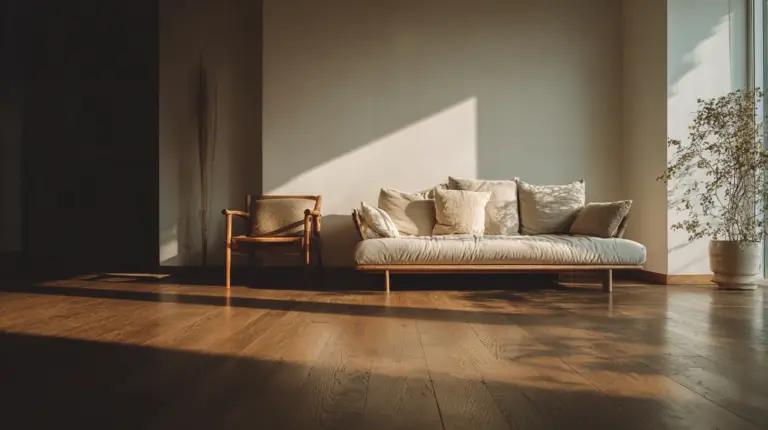
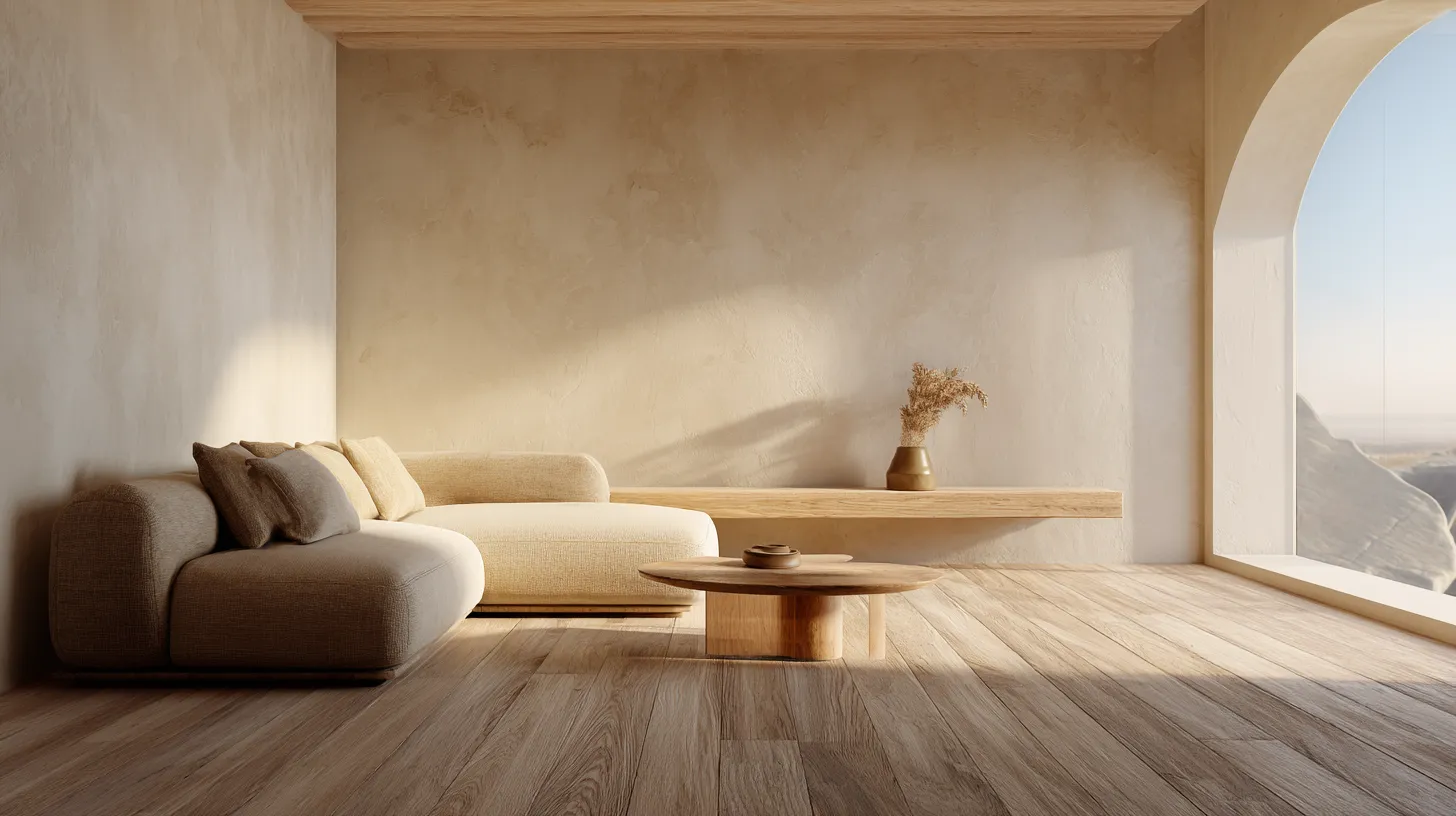
There is a particular kind of quiet that settles over a well-designed Japandi living room. It isn’t emptiness — it’s intention. The walls breathe. The furniture sits close to the ground. And beneath everything, the floor tells a story in grain and shadow, in warmth and restraint.
That story begins with your choice of wood flooring finish. More than color or species, the finish determines how light moves through your space, how the room feels underfoot, and whether your home exhales or holds its breath.
At ERYLIN, we believe the floor is the soul of any room. In Japandi design — where Japanese wabi-sabi meets Scandinavian hygge — the right wood finish doesn’t just look beautiful. It feels like belonging.
Let this guide be your calm companion as you choose the finish that grounds your space with honest, organic elegance.
What Makes a Wood Finish “Japandi”?
Japandi living rooms are defined by restraint, warmth, and deep respect for natural materials. A finish that aligns with this aesthetic does several things at once.
It lets the wood be wood. Visible grain, gentle variation in tone, the quiet imperfection of organic material — these are not flaws to hide but stories to honor. A Japandi finish reveals rather than conceals.
It avoids excess shine. High-gloss finishes can feel cold, reflective, and visually busy — everything Japandi is not. The aesthetic calls for surfaces that absorb light softly, like a stone warmed by afternoon sun.
The Three Core Finish Types for Japandi Flooring
Understanding the main finish categories helps you make a confident, lasting choice.
Matte Oil Finish
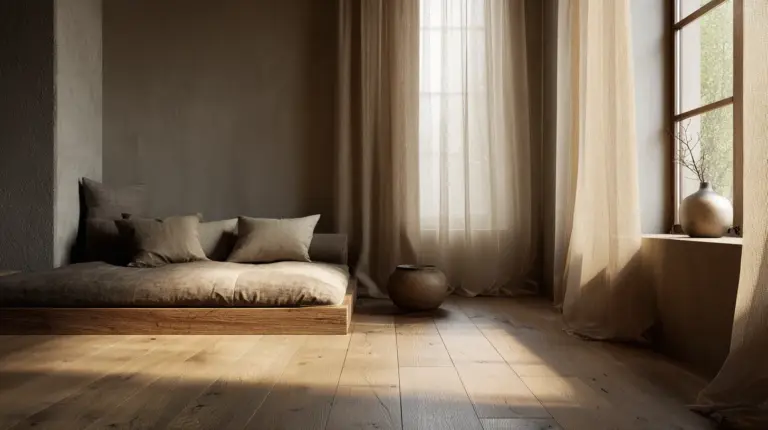
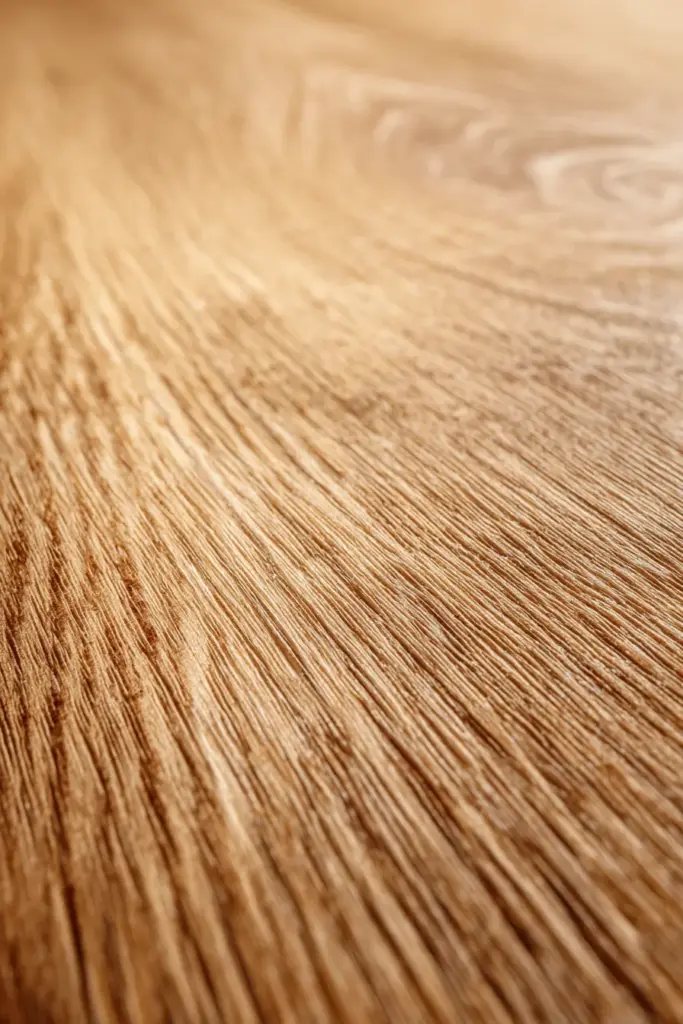
This is the quintessential Japandi finish. A matte oil penetrates the wood fiber rather than sitting on top, creating a surface that feels alive — slightly velvety, warm to the touch. Oak with a matte oil finish, for example, looks like it has always been there, like it grew from the floor itself.
Matte oils also make maintenance intuitive. Spot-treat scratches with a small amount of matching oil and the repair disappears. For households with pets or children, this forgiving quality is invaluable.
Hard Wax Oil Finish
A step up in durability, hard wax oil blends natural oils with waxes to create a low-sheen surface with excellent resistance to moisture and daily wear. It preserves the natural color and grain of the wood while offering a subtle protection that matte oils alone cannot match.
This finish is particularly well-suited to the Manila climate, where humidity fluctuates and floors need resilience as much as beauty.
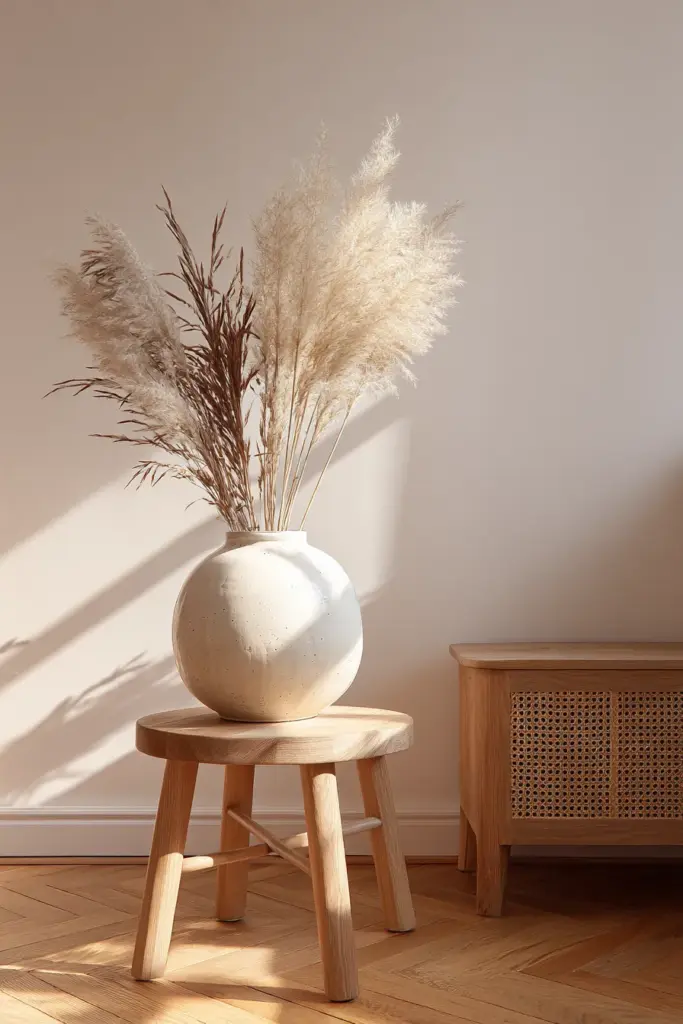
Wire-Brushed or Lightly Distressed Finish
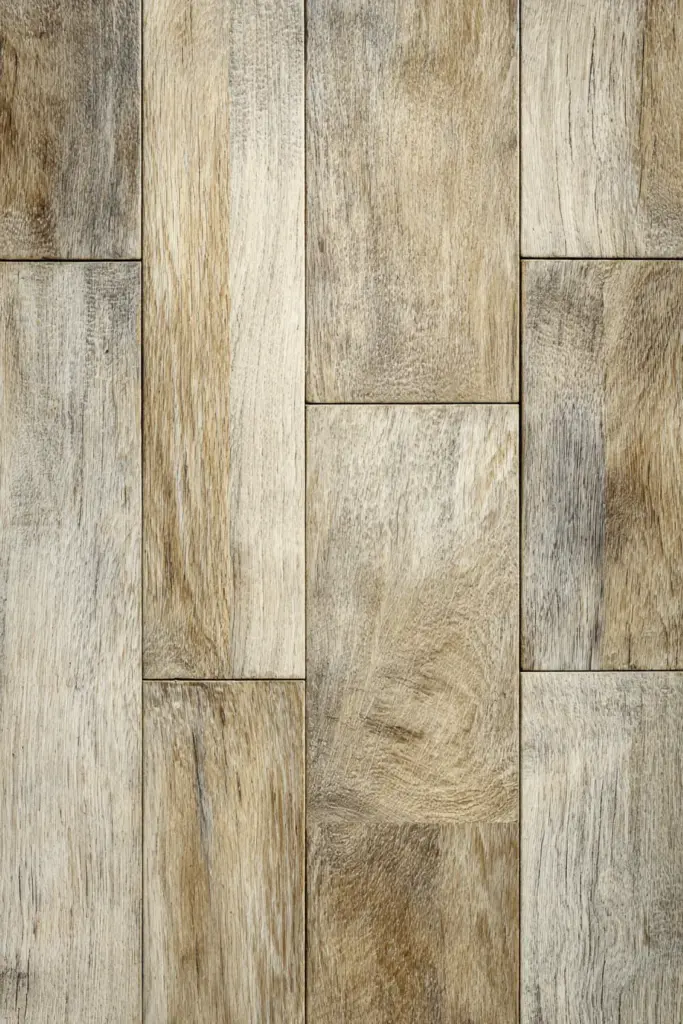
For those drawn to the wabi-sabi side of Japandi — the beauty of impermanence — a wire-brushed finish adds gentle texture to the wood surface by removing softer grain fibers. The result is a floor that feels aged and storied, as if it carries memory.
Pair this with light ash or whitened oak for a driftwood quality that makes small living rooms feel airy and expansive.
Best Wood Species for a Japandi Living Room
The finish and the species work together. Choosing the wrong pairing can flatten the effect you’re aiming for.
| Wood Species | Tone | Best Finish | Japandi Quality |
|---|---|---|---|
| White Oak | Warm honey to golden | Matte oil, hard wax | Classic, versatile, timeless |
| Ash | Pale cream to light tan | Wire-brushed, matte oil | Light, airy, Scandinavian lean |
| Walnut | Deep warm brown | Matte oil, natural satin | Grounded, sophisticated, Japanese lean |
| Bamboo | Light gold to caramel | Factory-applied matte | Sustainable, modern, sleek |
| Reclaimed Wood | Variable | Hard wax oil | Wabi-sabi, textured, soulful |
A Note on Dark Wood in Japandi
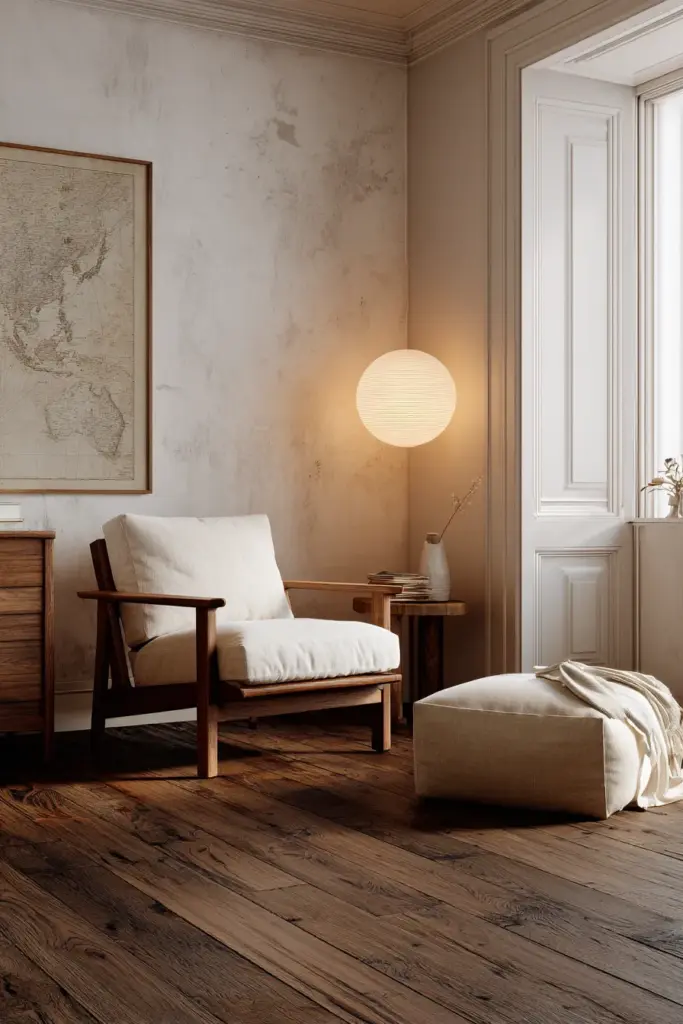
Many people ask: Can I use dark wood in a Japandi living room? The answer is yes — with balance. Walnut flooring anchors a space beautifully when paired with white walls, natural linen textiles, and light furniture in pale oak or rattan. The contrast creates visual depth without heaviness. Just avoid finishing dark wood with any gloss — a matte oil on walnut reads as earth, not luxury hotel.
Philippine-Sourced Alternatives
If you’re designing in the Philippines, consider locally available options that offer both sustainability and humidity resistance. Narra, the national tree, has a warm reddish-amber tone and excellent durability — finished with a matte hard wax oil, it creates a stunning Japandi-adjacent look with local soul. Yakal offers similar durability for high-traffic areas.
Engineered oak planks with matte finishes, sourced from Manila suppliers, typically run PHP 2,000–5,000 per square meter — a worthy investment for a floor that will outlast trends by decades.
How to Choose the Right Sheen Level
The sheen of your finish is the single most impactful decision you’ll make. Think of it as the mood dial of your floor.
Matte (0–15% gloss): The Japandi standard. Calm, organic, forgiving of dust and light scratches. Ideal for living rooms with natural lighting.
Satin (25–40% gloss): A gentle compromise. Slightly more reflective, easier to clean, still warm. Works well in rooms with limited natural light where you want the floor to catch and bounce what’s available.
Semi-gloss or Gloss (50%+): Not recommended for Japandi spaces. These finishes can make a room feel clinical or overly formal — at odds with the cozy warmth the aesthetic seeks.
Sensory Design: Light, Texture, and the Living Room Floor
A Japandi floor doesn’t exist in isolation. It breathes with everything around it.
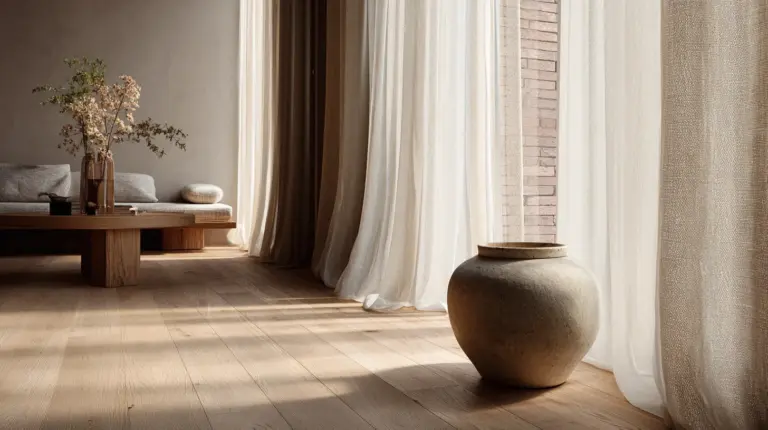
Morning light on a matte oak floor — the grain catches the angle and glows like amber. In the evening, the same floor reads softer, deeper, more intimate. This responsiveness to light is one of the great pleasures of a well-chosen natural finish.
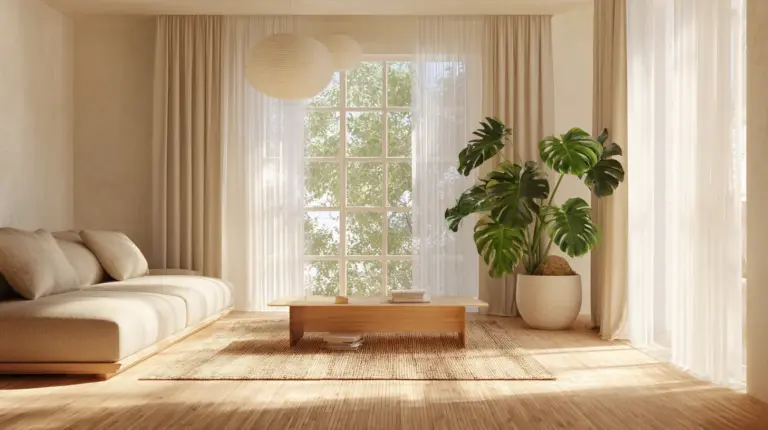
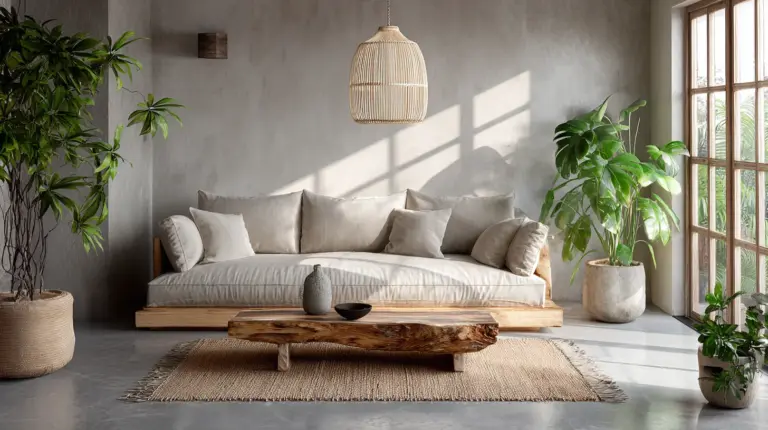
Layering a low-pile wool rug in cream, sage, or oatmeal over your wood floor grounds the seating area while softening acoustics. The interplay of materials — rough-smooth, warm-cool — is precisely the textural poetry that defines Japandi living.
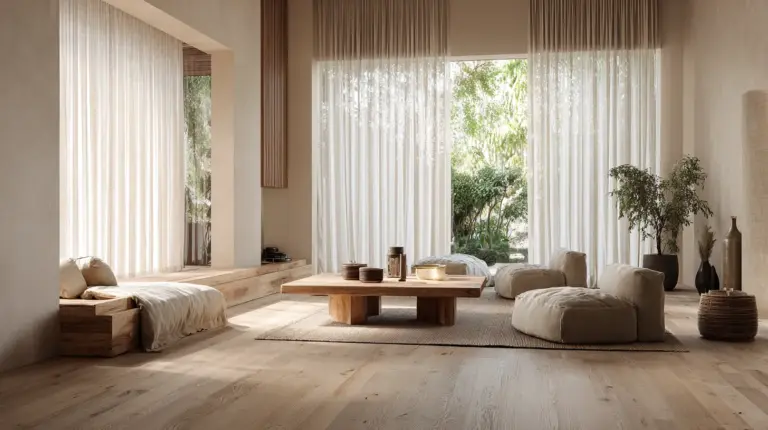
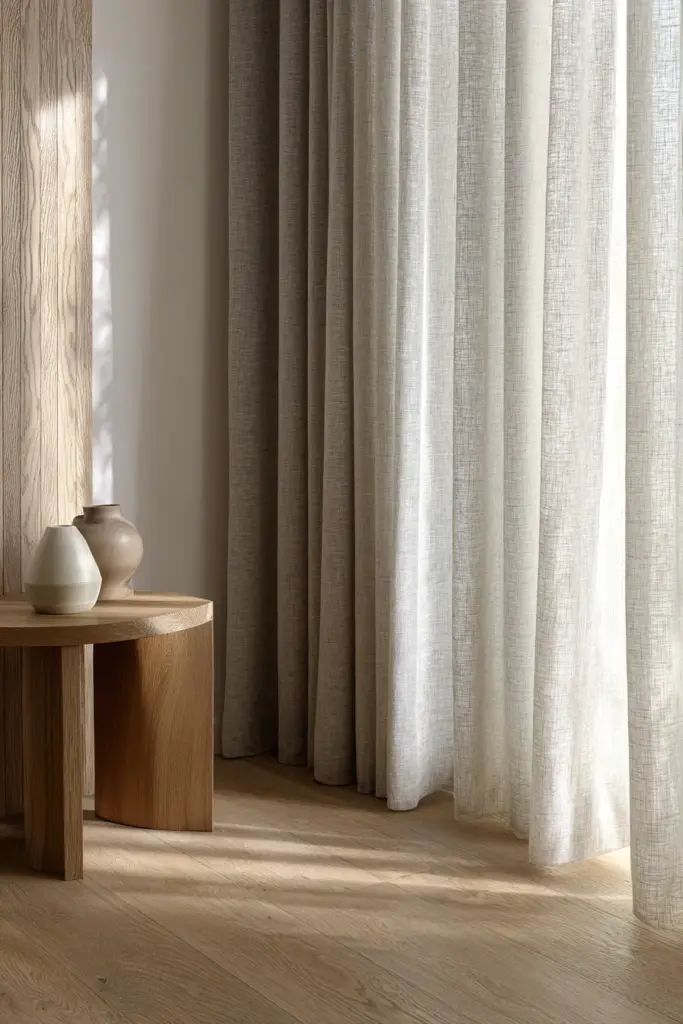
For cozy furniture pairings, choose pieces that sit close to the floor: low sofas in natural linen, solid wood coffee tables with visible joinery, paper lanterns that cast pools of warm light rather than flooding the room with brightness.
Consider layered lighting ideas — floor lamps with washi paper shades, recessed warm LEDs along the perimeter — to let your floor’s finish shift mood from midday to midnight.
VOC-Free and Sustainable Finishes: Health Meets Integrity
A living room is where life happens. You breathe deeply here, rest here, gather here. The finish on your floor should not compromise the air you share with people you love.
VOC-free (Volatile Organic Compound-free) finishes are now widely available and perform as well as — or better than — traditional solvent-based coatings. Look for finishes certified by GREENGUARD Gold or labeled Zero-VOC for genuine air quality safety in small living spaces.
Natural oil and hard wax oil finishes are inherently low-VOC, making them the most aligned choice for Japandi’s values of health, honesty, and sustainability.
When sourcing wood itself, look for FSC (Forest Stewardship Council) or PEFC certification — these ensure your floor comes from responsibly managed forests. In 2026, these certifications are increasingly available from suppliers across Southeast Asia, including the Philippines.
DIY Application: Achieving a Matte Oil Finish at Home
If your existing wood floor needs a Japandi refresh, a DIY matte oil or wax application can transform it without full replacement.
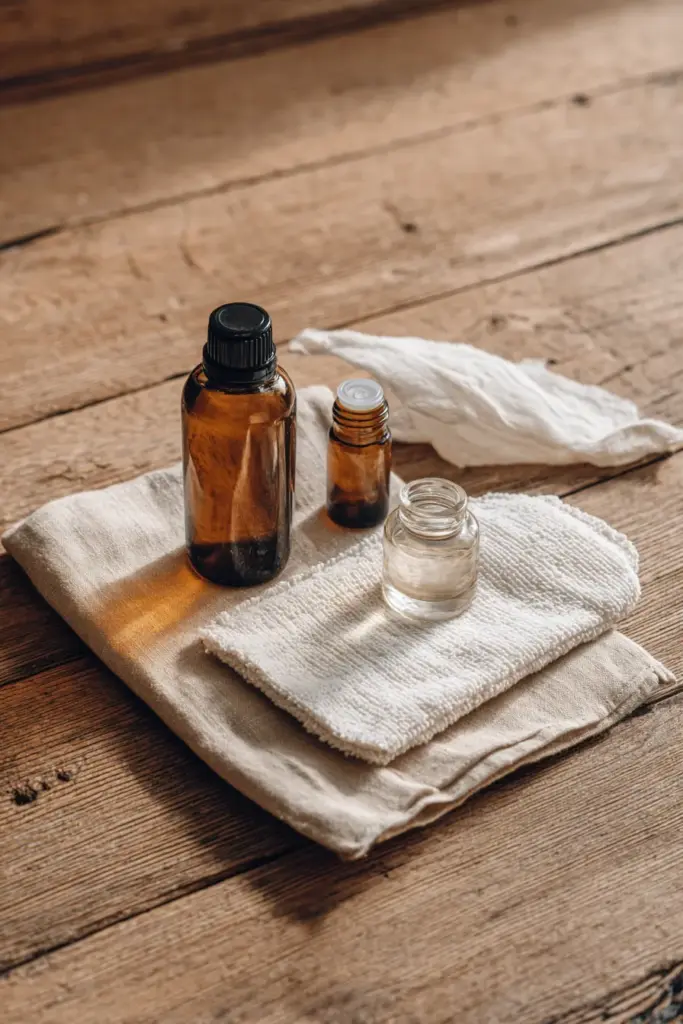
What you’ll need: Fine-grit sandpaper (120–180 grit), a natural-bristle applicator pad, VOC-free matte wood oil (brands like Rubio Monocoat or local equivalents), clean rags, and patience.
The process:
- Sand lightly with the grain to open the wood pores and remove old finish residue.
- Apply a thin, even coat of matte oil with the applicator pad, working in the direction of the grain.
- Let penetrate for 15–20 minutes, then buff off excess with a clean cloth.
- Allow 24–48 hours of cure time before replacing furniture.
The result: a floor that looks curated but feels lived-in — the Japandi dream in its most tactile form.
Maintaining Your Japandi Floor: Simplicity as Practice
Caring for a Japandi floor is, fittingly, a simple ritual. Matte and hard wax oil finishes need no special products — a slightly damp cloth or a pH-neutral floor cleaner is all that’s required for daily cleaning.
Avoid steam mops, which can warp and swell natural wood. In humid climates, consider an app-controlled humidity sensor to monitor your home’s moisture levels and protect your investment year-round. The ideal indoor humidity for wood flooring is 40–60%.
Scratches on oiled floors can be spot-treated with matching oil and buffed in. Over time, this ease of repair means your floor ages gracefully — gaining character rather than showing damage.
Quick Checklist: Japandi Wood Flooring Finish Essentials
- Choose matte or hard wax oil for the most authentic Japandi feel
- Select light woods (oak, ash, bamboo) for an airy, Scandinavian-leaning look
- Use walnut with matte finish for a Japanese-inspired, grounded warmth
- Avoid high-gloss finishes — they conflict with Japandi’s calm aesthetic
- Look for VOC-free, FSC-certified products for health and sustainability
- Layer wool rugs to add texture and define seating areas
- Consider local woods (narra, yakal in PH) for humidity resistance and authenticity
- Monitor indoor humidity at 40–60% to protect your floors long-term
- Budget PHP 2,000–5,000 per sqm for quality engineered oak with matte finish
- Explore wire-brushed or distressed finishes for a wabi-sabi, reclaimed aesthetic
Conclusion
A Japandi living room invites you to slow down, to notice, to feel the weight of a quiet afternoon. Your floor is where that invitation begins — in the grain of the wood, the softness of a matte finish, the way your bare feet remember the warmth of natural material.
Choose your finish with care. Let it be honest, let it be beautiful, let it last. And in that lasting, let it become part of your home’s story — told not in words, but in the quiet language of wood and light.
Welcome home.
FAQs: Japandi Living Room Wood Flooring Finish
What is the best wood finish for Japandi living room flooring?
A matte oil or hard wax oil finish is the best choice for Japandi living rooms. These finishes preserve the natural grain and warmth of the wood while delivering a low-sheen look that aligns with the aesthetic’s emphasis on calm minimalism. They’re also forgiving of everyday wear and easy to maintain.
What type of flooring is best for Japandi style?
Light natural woods like white oak, ash, and bamboo are the top choices for Japandi flooring. These species offer warm, organic tones that complement the neutral palette of the style. For a more Japanese-leaning look, walnut with a matte finish adds depth and grounding warmth.
What wood is used in Japandi design?
Japandi interiors commonly feature oak, ash, walnut, and bamboo. In the Philippines, narra and yakal offer locally sourced, humidity-resistant alternatives with a warm amber tone that pairs beautifully with Japandi’s neutral palette.
Does matte finish hide pet scratches?
Yes — one of the practical advantages of matte oil finishes is that they don’t highlight surface marks the way gloss finishes do. Light scratches are far less visible on a matte surface, and can often be spot-repaired with a small amount of matching oil, making it an excellent choice for pet-friendly homes.
Can I use dark wood in a Japandi living room?
Absolutely. Dark woods like walnut can be used in Japandi spaces when balanced with lighter elements — pale walls, natural linen textiles, and light-toned furniture. The key is keeping the finish matte to avoid a heavy or formal feeling, and allowing the contrast to create visual depth rather than dominance.