
Table of Contents
There’s something quietly powerful about stepping onto a smooth concrete floor in the morning. The cool surface grounds you. The light catches its subtle variations—matte, polished, or softly textured—and suddenly, the room feels both expansive and intimate.
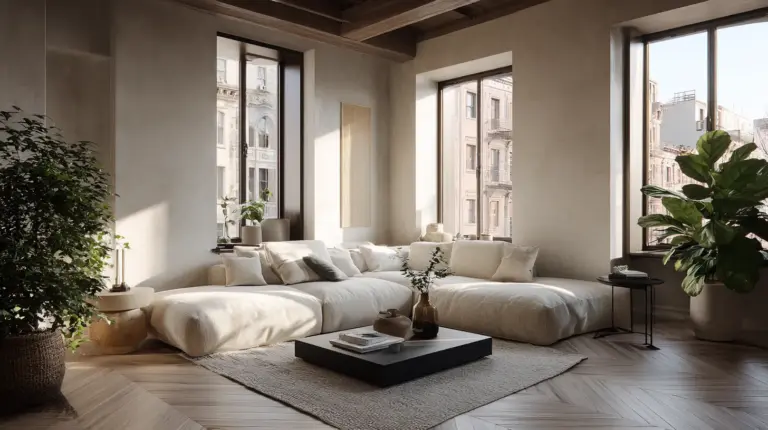
In Japandi design, concrete flooring isn’t just a practical choice. It’s a philosophical one. It bridges the minimalist precision of Japanese aesthetics with the cozy, lived-in warmth of Scandinavian hygge. The result? A living room that breathes, that feels uncluttered yet inviting, modern yet timeless.
If you’ve been wondering whether concrete belongs in your Japandi living room—or how to make it feel less industrial and more home—this guide is for you. We’ll walk through textures, finishes, styling secrets, and the small details that transform raw material into something deeply beautiful.
Let’s begin where your feet meet the floor.
Why Concrete Flooring Works in Japandi Living Rooms
Concrete embodies the Japandi philosophy: wabi-sabi (embracing imperfection) meets lagom (balanced simplicity). Its raw, honest texture aligns with natural materials like wood, linen, and stone—all Japandi staples. Unlike glossy tiles or busy patterns, concrete recedes visually, letting furniture, light, and intentional décor take center stage.
It’s also remarkably versatile. Polished concrete reflects natural light in small spaces, making 20–40 sqm living rooms feel airier. Stamped or distressed finishes add organic variation without overwhelming the eye. And in humid climates like Manila, sealed concrete resists moisture better than hardwood, requiring less maintenance over time.
But perhaps the most compelling reason? Concrete ages gracefully. Small cracks, subtle patina, the way sunlight pools differently each season—these aren’t flaws. They’re stories your floor tells as your home evolves.
Types of Concrete Finishes for Japandi Aesthetics
Polished Concrete
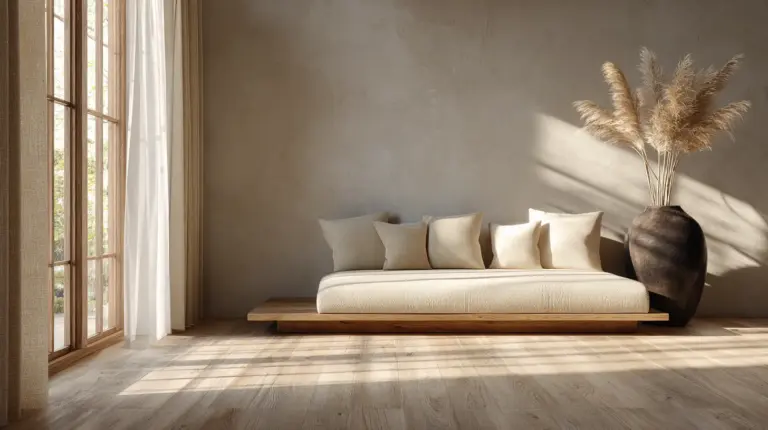
This is the most popular choice for modern Japandi living rooms. Mechanically ground and sealed, polished concrete has a soft, matte-to-satin sheen that catches light without glare. It feels sophisticated yet understated—perfect for pairing with low-profile sofas and minimalist furniture.
Best for: Small spaces craving light reflection. Rooms with large windows. Homes prioritizing easy cleaning.
Stamped Concrete
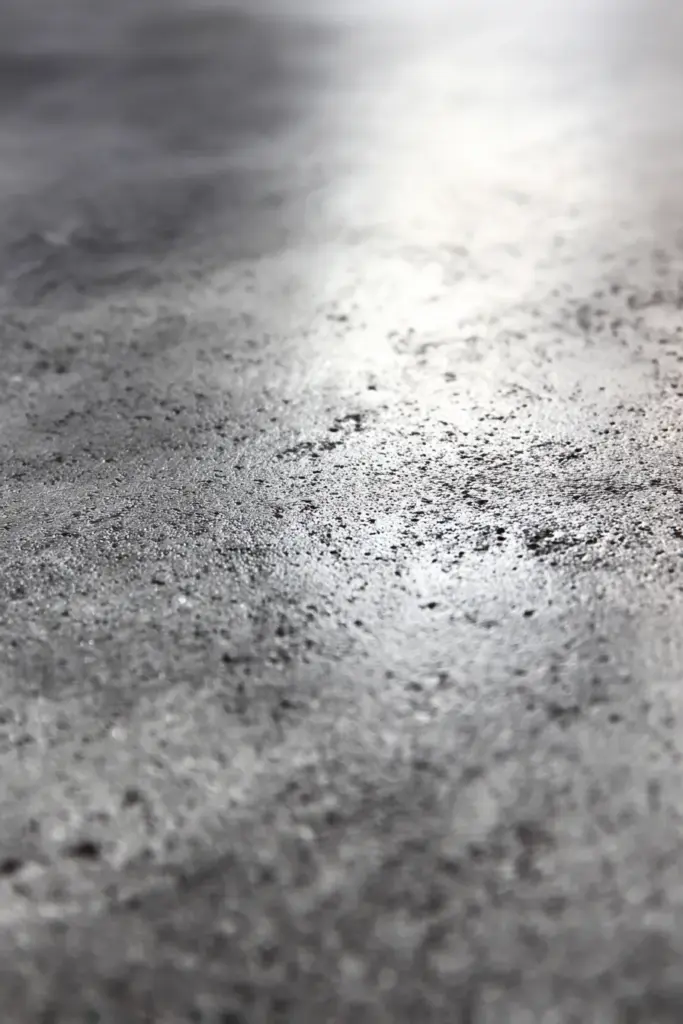
For those wanting subtle texture, stamped concrete mimics natural stone or wood grain while retaining concrete’s durability. Choose light grey or warm taupe tones to avoid industrial coldness. The texture adds depth without competing with Japandi’s clean lines.
Best for: Open-plan living areas. Spaces blending indoor-outdoor flow. Homeowners seeking organic imperfection.
Raw or Distressed Concrete
Hand-cast or lightly distressed concrete embraces wabi-sabi fully. Expect slight irregularities, micro-cracks, and an earthy, lived-in feel. Pair with wooden accents and handwoven rugs to soften the raw edge.
Best for: Industrial-leaning Japandi styles. Loft apartments. Confident minimalists who love authentic materials.
Terrazzo-Concrete Hybrids
A 2026 trend blending sustainability and visual interest, terrazzo-concrete incorporates recycled aggregates (glass, stone chips) into the mix. The result is a speckled, artisanal finish that feels both modern and rooted in craft tradition.
Best for: Eco-conscious homeowners. Living rooms needing subtle pattern without busyness. Spaces connecting to kitchen or dining areas.
Styling Concrete Floors in Japandi Living Rooms
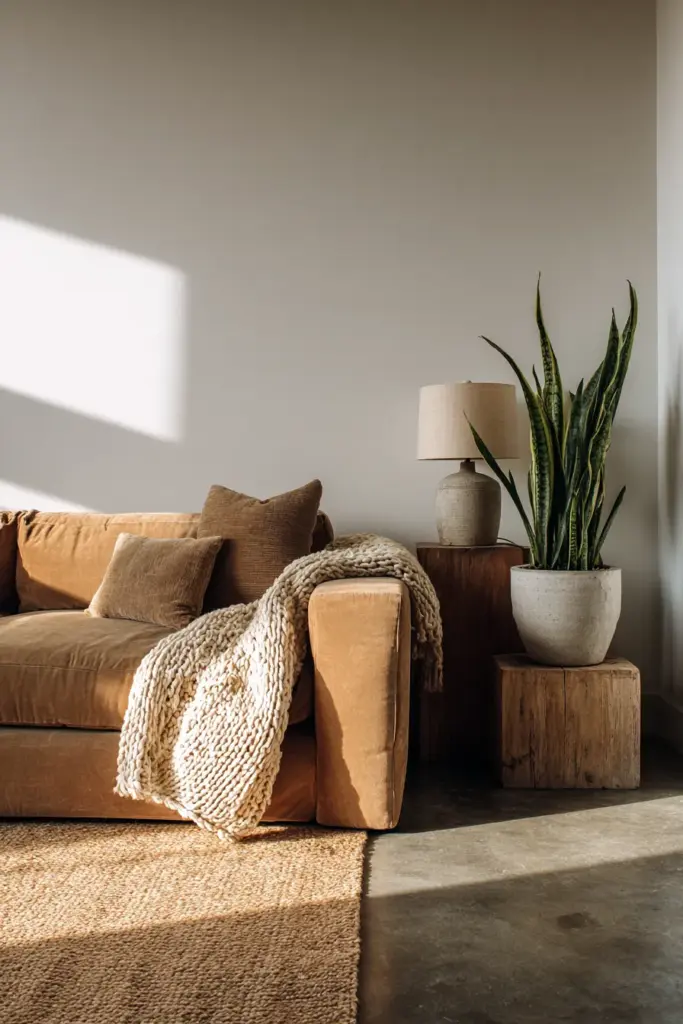
Start with Warm Neutrals
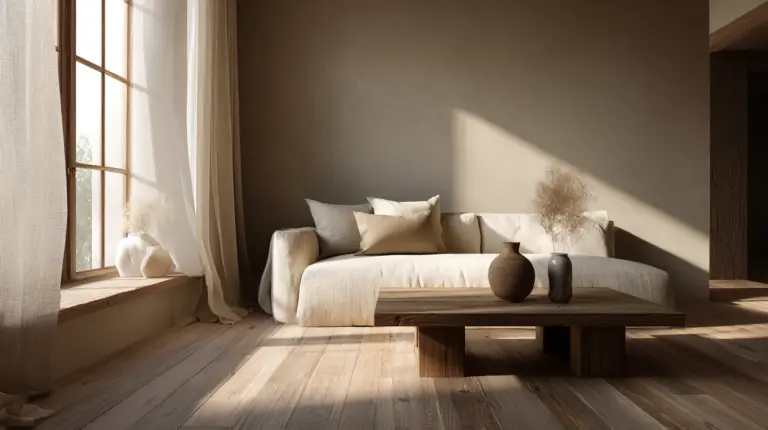
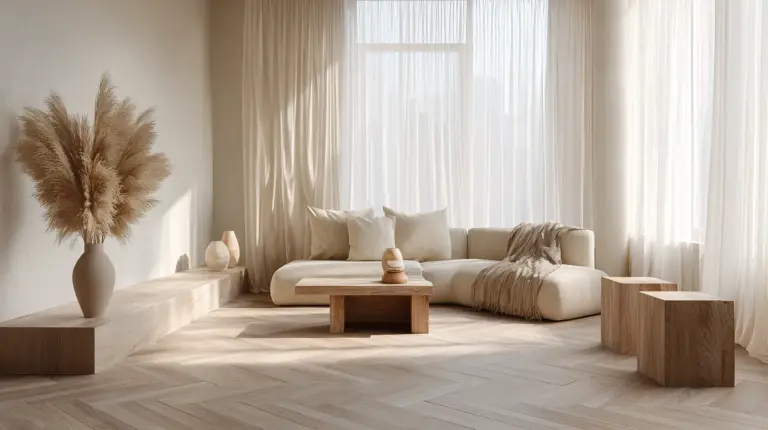
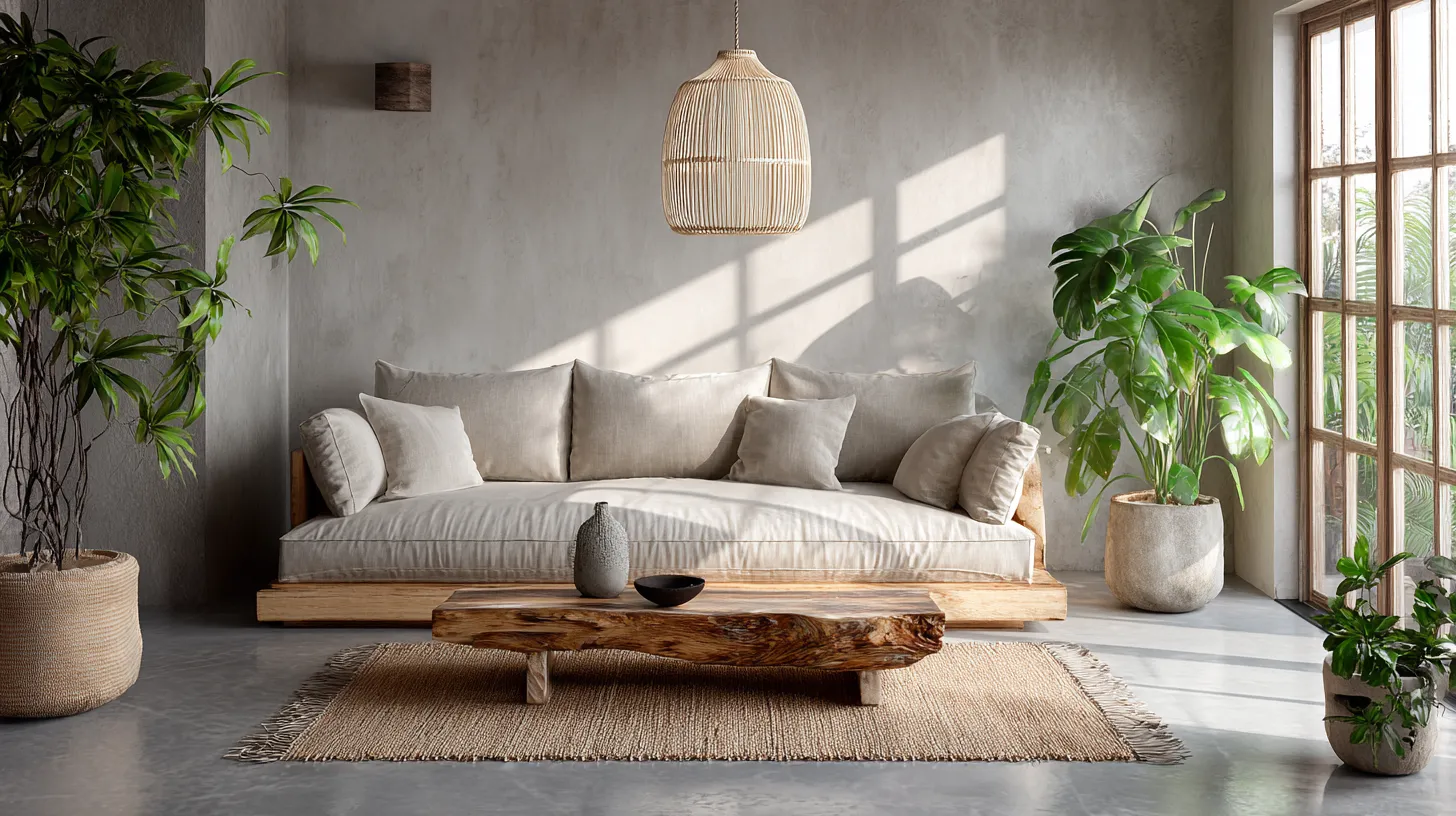
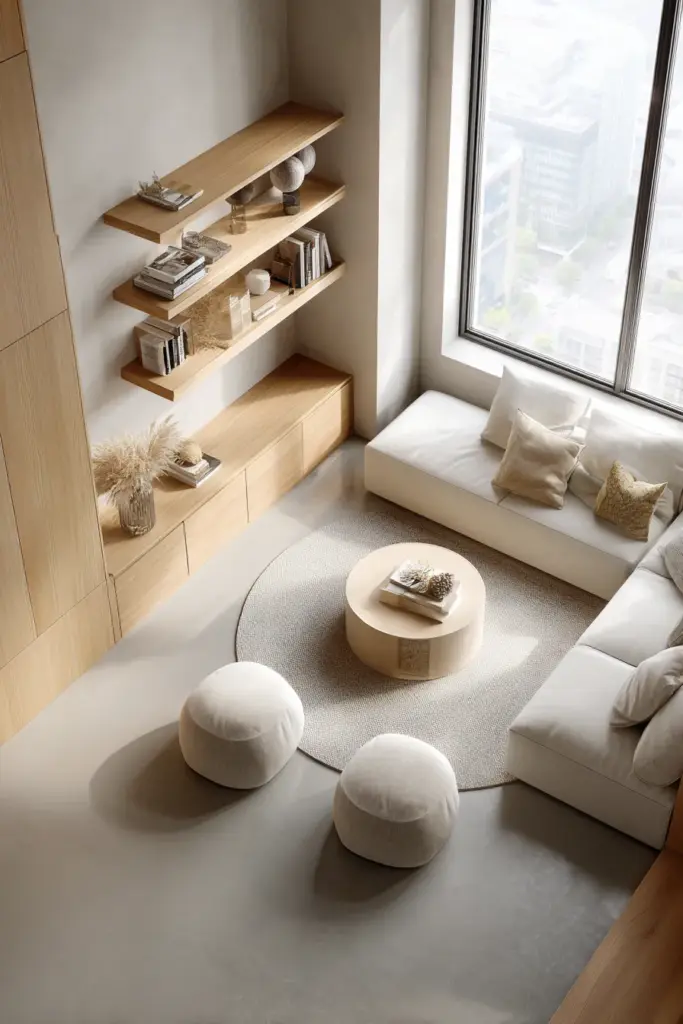
Concrete’s cool grey tones need balance. Layer in warm neutrals—beige, oat, soft taupe, muted terracotta. A low-profile linen sofa in camel or cream instantly softens the space. Add wool or jute rugs in natural fibers to zone seating areas and provide tactile warmth underfoot.
Think of your palette as earth and stone. Concrete is the stone; everything else brings the earth.
Anchor with Natural Rugs
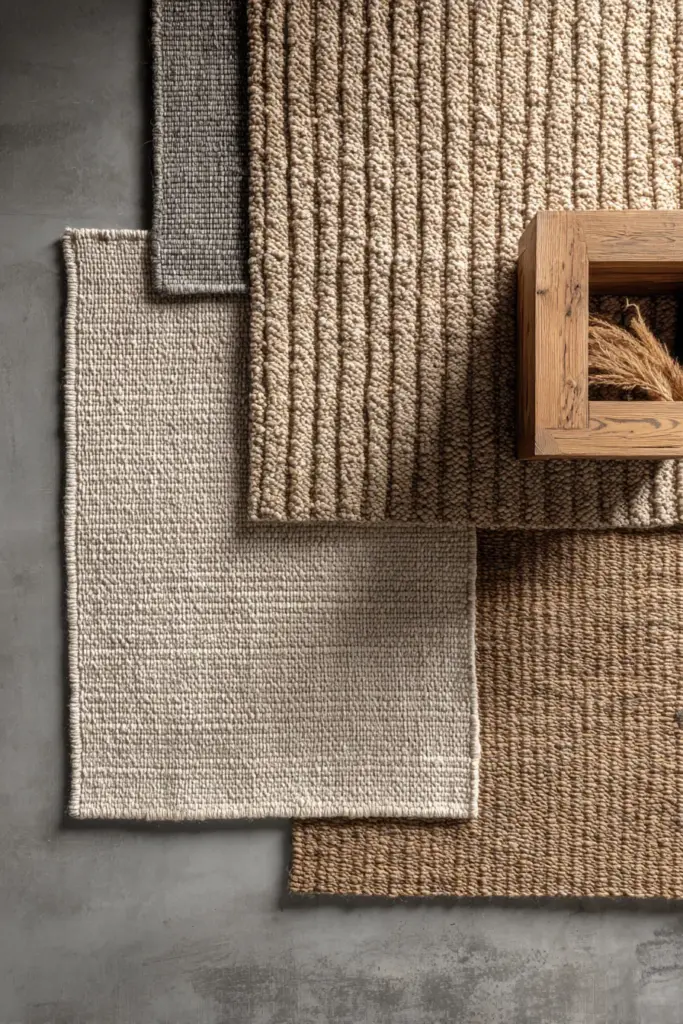
Rugs are non-negotiable over concrete in Japandi living rooms. They define conversation areas, add acoustic softening, and prevent the floor from feeling cold (literally and visually). Choose:
- Jute or sisal rugs for organic texture
- Wool flatweaves in ivory, grey, or charcoal
- Vintage-inspired runners with subtle geometric patterns
- Layered rugs (small sheepskin over large jute) for depth
In Manila’s climate, opt for breathable materials that won’t trap moisture. Brands like IKEA, SM Home, and local weavers offer affordable, sustainable options starting around ₱3,000–₱8,000.
Let Light Dance on the Surface
Concrete’s beauty shifts with light. Position your sofa to face windows, allowing natural light to graze the floor at angles. In evenings, layer ambient lighting—paper pendant lamps, ceramic table lamps, linear floor lights—to create soft pools of illumination.
Avoid harsh overhead lighting. Instead, think layered glow: task lighting for reading corners, accent lighting on plants, candlelight for hygge moments.
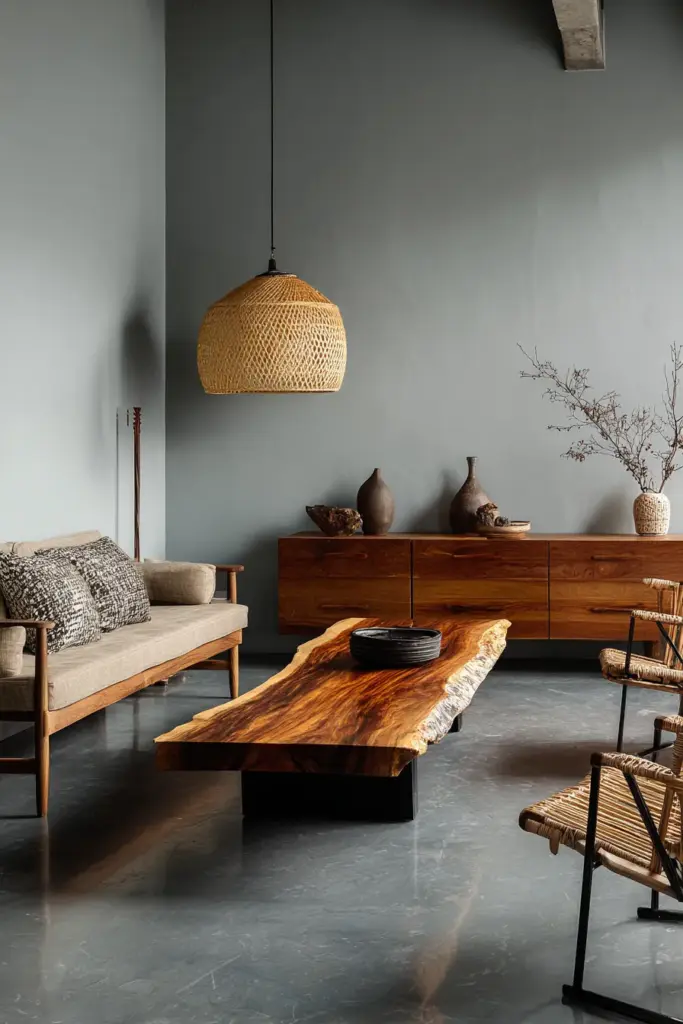
Integrate Wood and Woven Textures
Concrete craves warmth. Introduce:
- Wooden coffee tables with live edges or clean-lined teak
- Bamboo sideboards or low-profile media consoles
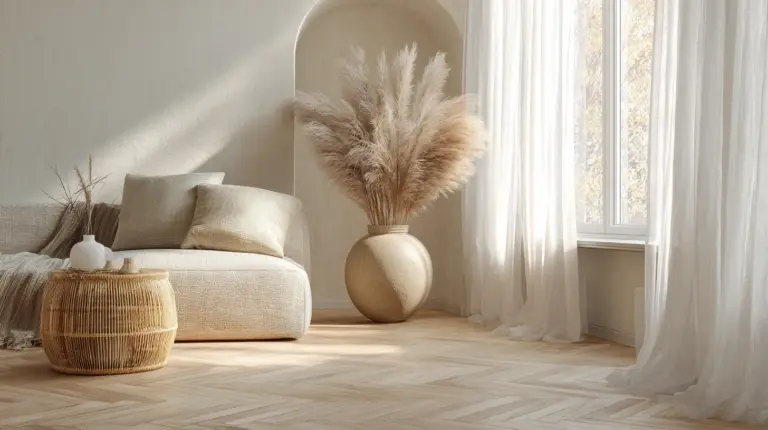
- Rattan accent chairs or woven pendant lights
- Wooden picture frames and shelving in oak or walnut
These natural materials create dialogue with concrete rather than competing. They whisper where concrete speaks quietly.
Add Living Elements
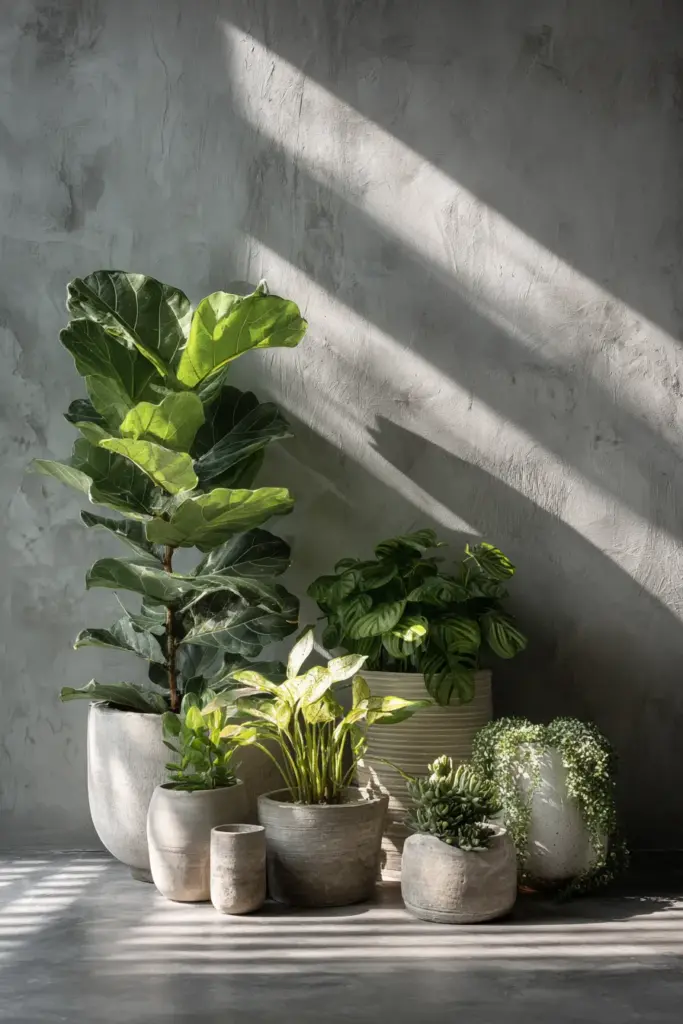
Plants breathe life into concrete’s stillness. Choose sculptural varieties in concrete or ceramic pots:
- Snake plants for vertical interest
- Fiddle leaf figs for softness
- Succulents in clusters on concrete side tables
- Trailing pothos on floating shelves
Plants also improve air quality and bring seasonal change into minimalist spaces—a Japandi essential.
Pros and Cons of Concrete Flooring in Japandi Living Rooms
| Pros | Cons |
|---|---|
| Durability: Lasts 50+ years with proper sealing | Cold underfoot: Requires rugs or heated underfloor systems |
| Low maintenance: pH-neutral soap and water for cleaning | Hard surface: Less forgiving on dropped items or elderly residents |
| Light reflection: Expands small spaces visually | Initial cost: Professional install runs ₱400–₱750/sqft in Manila |
| Eco-friendly: Low VOC emissions; uses recycled aggregates | Crack risk: Requires proper substrate and humidity control in PH climate |
| Timeless aesthetic: Ages gracefully; never looks dated | DIY difficulty: Polishing requires specialized tools and skill |
Verdict: Concrete suits Japandi living rooms prioritizing minimalism, sustainability, and long-term value. It demands intentional styling but rewards with unmatched character.
Practical Guide: Installing and Maintaining Concrete Floors
Budget Breakdown (Manila, 2026)
- DIY polished concrete: ₱150–₱350/sqft (materials only; requires grinder rental)
- Professional install: ₱400–₱750/sqft (includes grinding, sealing, labor)
- Stamped/terrazzo upgrade: Add ₱100–₱200/sqft
- Heated underfloor system: ₱800–₱1,200/sqft (luxury option for year-round comfort)
Affordable rug brands: IKEA (₱2,000–₱6,000), SM Home (₱1,500–₱5,000), Mandaue Foam (₱3,000–₱8,000), local Pampanga weavers (custom jute, ₱4,000+).
Step-by-Step Sealing Guide
- Prep the surface: Clean thoroughly; patch cracks with epoxy filler.
- Choose sealer: Matte penetrating sealer for Japandi (avoids glossy industrial look).
- Apply evenly: Two coats with 4–6 hour drying time between.
- Cure fully: Wait 48–72 hours before placing furniture.
- Maintain annually: Reapply sealer every 2–3 years for humidity resistance.
Cleaning and Maintenance
- Daily: Sweep or vacuum with soft brush attachment.
- Weekly: Mop with pH-neutral cleaner (avoid acidic or oil-based products).
- Monthly: Check for cracks; fill immediately to prevent moisture seepage.
- Humidity tip: Run dehumidifiers during rainy season in Manila to prevent efflorescence (white salt deposits).
Small Space Hacks
Concrete can make tiny living rooms feel larger with these tricks:
- Reflective sealers: Choose light grey concrete with satin finish to bounce light.
- Multifunctional furniture: Ottoman-rugs with hidden storage zone seating without clutter.
- Vertical focus: Low-profile furniture keeps sightlines open; hang plants to draw eyes upward.
- Monochromatic palette: Stick to 2–3 colors max to avoid visual fragmentation.
Pairing Concrete with Japandi Lighting and Décor
Lighting Over Concrete
Concrete’s reflective qualities shift based on your light sources. Here’s how to enhance the interplay:
- Pendant lamps: Paper lanterns or ceramic shades diffuse light softly over concrete’s surface.
- Floor lamps: Linear designs in matte black or brass warm corners without harsh shadows.
- Candlelight: Cluster pillar candles on concrete coffee tables for evening hygge.
Avoid cool-toned LEDs. Opt for warm white (2700–3000K) to counterbalance concrete’s inherent coolness.
Multifunctional Furniture
Japandi thrives on less but better. Choose pieces that serve multiple purposes:
- Concrete-top coffee tables with wooden bases (storage underneath)
- Low-profile sofas with built-in side tables
- Floating shelves in light wood to display ceramics and books
- Poufs that double as footrests and extra seating
Each piece should feel intentional, not accidental.
Textiles and Softness
Combat concrete’s hardness with abundant softness:
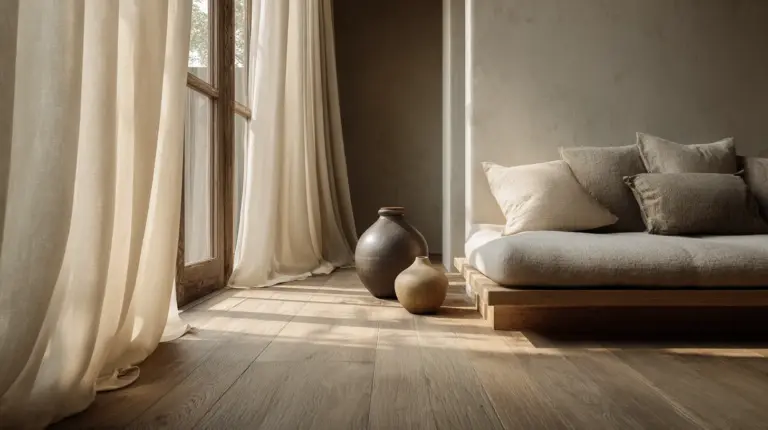
- Linen curtains in ivory or light grey
- Chunky knit throws in cream or charcoal
- Velvet or bouclé accent pillows
- Sheepskin chair drapes
These layers invite touch, warmth, and human presence into minimalist rooms.
Sustainability and 2026 Trends
Why Concrete Is Eco-Friendly
Contrary to perception, concrete can be sustainable:
- Low VOC emissions: No off-gassing like vinyl or laminate.
- Recycled content: Modern mixes use recycled aggregates (glass, stone, slag).
- Longevity: 50+ year lifespan means less frequent replacement waste.
- Local sourcing: Philippine cement reduces carbon footprint vs. imported materials.
Carbon tip: Ask contractors about fly ash or slag substitutes (reduce cement content by 30–50%).
2026 Design Trends
- Heated concrete floors: Radiant systems provide hygge warmth; ideal for air-conditioned Manila homes.
- Terrazzo-concrete hybrids: Artisanal, sustainable, visually unique.
- AR visualization tools: Apps let you preview concrete finishes in your space before committing.
- Biophilic integration: Concrete paired with living walls or moss art for nature-indoors balance.
Key Takeaways: Concrete in Japandi Living Rooms
- Choose finishes wisely: Polished for light, stamped for texture, raw for wabi-sabi.
- Layer warmth: Rugs, wood, textiles, and plants soften concrete’s coolness.
- Seal properly: Protects against humidity and stains; maintain every 2–3 years.
- Budget smart: DIY saves money but requires skill; professional install ensures longevity.
- Small spaces benefit: Light reflection expands 20–40 sqm rooms visually.
- Sustainability counts: Concrete’s low VOC and recycled options align with eco-conscious Japandi values.
Conclusion: Where Ground Meets Soul
Your living room floor is more than a surface. It’s the foundation your life unfolds upon—the place where morning coffee pools into afternoon sunlight, where children play, where friends gather, where you finally exhale at day’s end.
Concrete, in its honest simplicity, holds all of this without pretense. It doesn’t demand attention. It doesn’t compete. It simply is, steadfast and serene, letting your life—your warmth, your light, your intentional choices—shine.
In Japandi design, that’s the quiet magic: less structure, more soul. Less striving, more being.
So go ahead. Feel the coolness underfoot. Notice the light shifting. Let the imperfections speak. Your concrete floor isn’t just holding up your furniture—it’s holding space for your most beautiful, everyday moments.
FAQs
What is the best flooring for a Japandi living room?
Natural wood, bamboo, and concrete are top choices. Concrete excels in humid climates like Manila due to moisture resistance and low maintenance. It complements Japandi’s minimalist aesthetic with its neutral tones and timeless appeal. Pair with natural rugs and wooden furniture for warmth.
Does Japandi style use concrete floors?
Absolutely. Concrete aligns with Japandi’s philosophy of blending Japanese minimalism and Scandinavian coziness. Its raw, honest texture embodies wabi-sabi (embracing imperfection) while providing a neutral canvas for natural materials like wood, linen, and stone. Sealed concrete works beautifully in open-plan living rooms.
How do I style concrete floors in a Japandi living room?
Start with warm neutral rugs (jute, wool) to soften the floor. Add low-profile furniture in natural materials—teak coffee tables, linen sofas, rattan chairs. Layer ambient lighting (paper pendants, ceramic lamps) and introduce plants in concrete pots. Keep colors muted: beige, grey, oat, soft terracotta.
What are the pros and cons of concrete flooring in Japandi living rooms?
Pros: Durable (50+ years), low maintenance, light-reflective, eco-friendly, and ages gracefully. Cons: Cold underfoot (needs rugs or heating), hard surface, higher initial cost, and crack risk in humid climates. Sealing and proper substrate prep mitigate most downsides. Overall, concrete suits minimalist, long-term design goals.
Can concrete floors work in small Japandi living spaces?
Yes! Polished concrete with reflective sealers bounces natural light, making 20–40 sqm rooms feel larger. Use multifunctional furniture (ottomans with storage, floating shelves) to avoid clutter. Stick to a monochromatic palette and low-profile pieces to maintain open sightlines. Add one large rug to zone seating without fragmenting space visually.