
Table of Contents
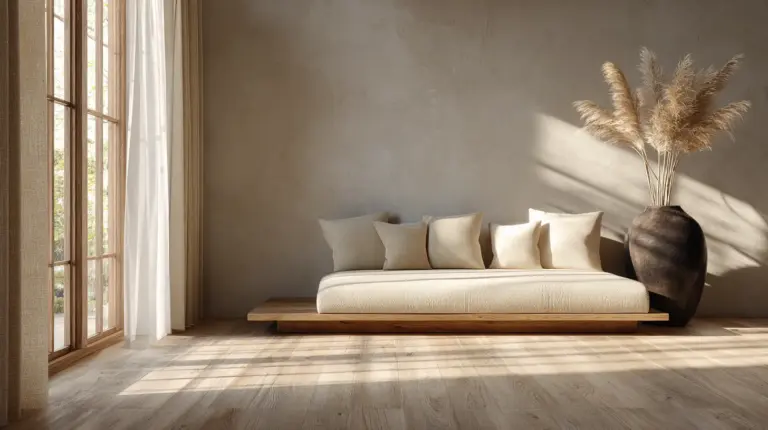
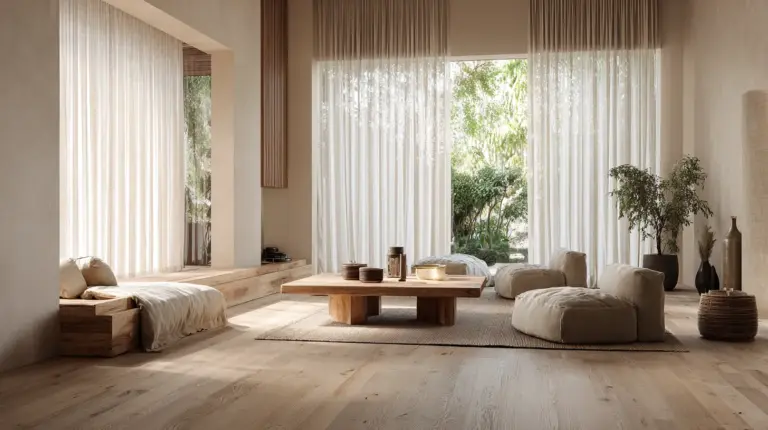
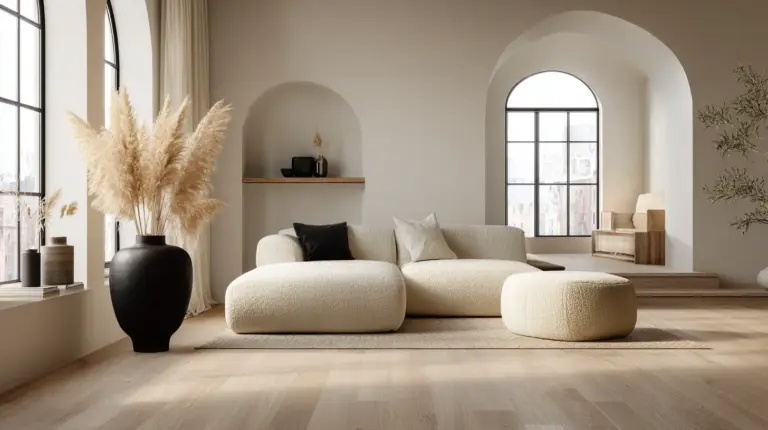
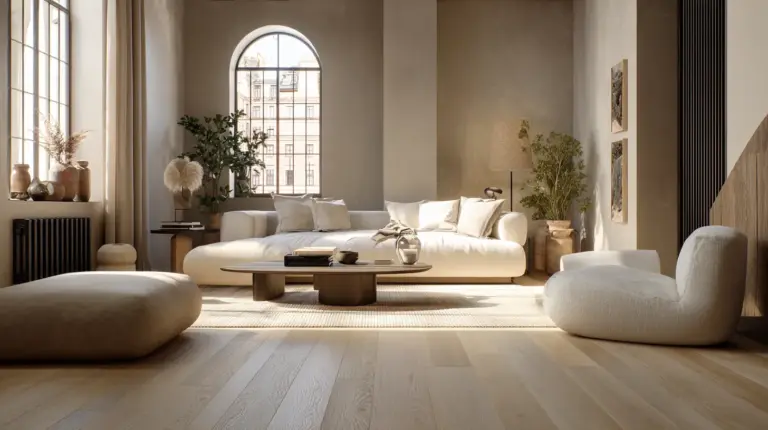
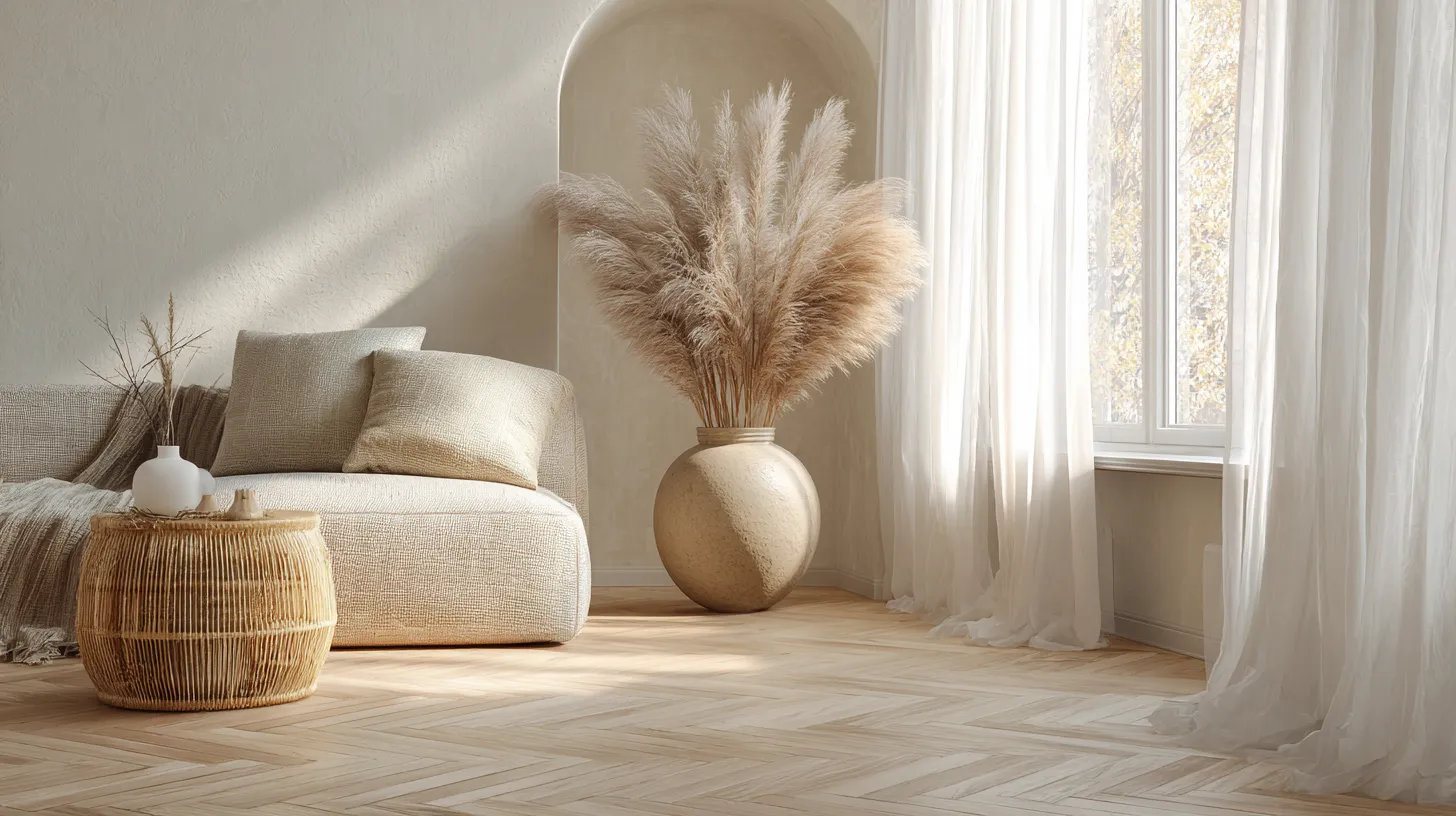
There is something profoundly grounding about the floor beneath your feet. It sets the emotional temperature of an entire room before a single piece of furniture is arranged, before a single candle is lit. In Japandi design — that beautiful marriage of Japanese wabi-sabi and Scandinavian hygge — the floor isn’t just a surface. It’s a foundation for stillness.
If you’ve been drawn to the Japandi aesthetic, you already know the pull of it: soft neutrals, honest materials, the quiet luxury of a room that asks nothing of you except to breathe. But choosing the right flooring can feel overwhelming, especially when so many options promise the look without always delivering the feel.
At ERYLIN, we believe good design should be felt, not just seen. So we’ve put together this warm, practical guide to the best Japandi living room flooring alternatives — from the whisper of natural wood to the cool confidence of polished concrete — so you can find what truly speaks to your space.
Whether you’re working with a compact apartment in the city or a sun-drenched home with an open floor plan, the right floor will anchor everything beautifully.
What Makes a Floor Truly Japandi?
Before we explore your options, let’s talk about what Japandi flooring actually feels like. Run your hand across the surface in your mind. Does it have a slight grain? A matte finish that doesn’t grab the light too aggressively? Does it come in a tone somewhere between warm sand and pale driftwood?
Japandi flooring follows a few quiet rules. It tends toward light, neutral tones — soft tans, warm greys, creamy whites, and gentle beiges. It prefers natural or nature-inspired materials that carry texture without drama. And it almost always wears a matte or low-sheen finish, because Japandi spaces don’t shout — they whisper.
The aesthetic also embraces imperfection. A floor with a subtle knot, a gentle variation in grain, or a slightly uneven surface is not a flaw in this world — it’s wabi-sabi. It’s the beauty of the real.
Top Japandi Living Room Flooring Alternatives
1. Light Oak and Ash Wood Flooring — The Classic Choice
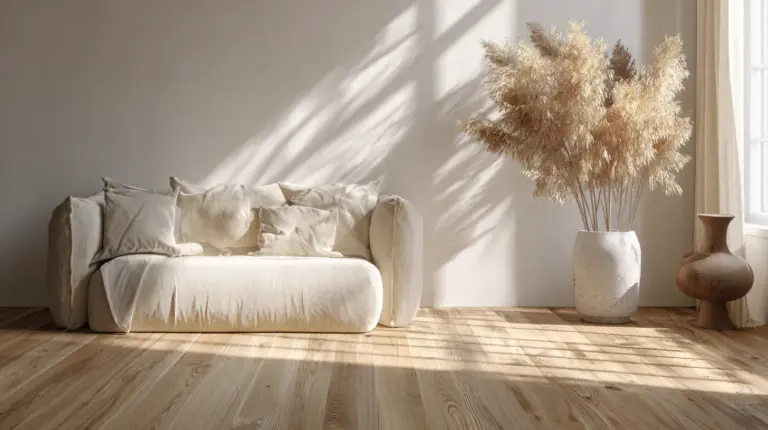
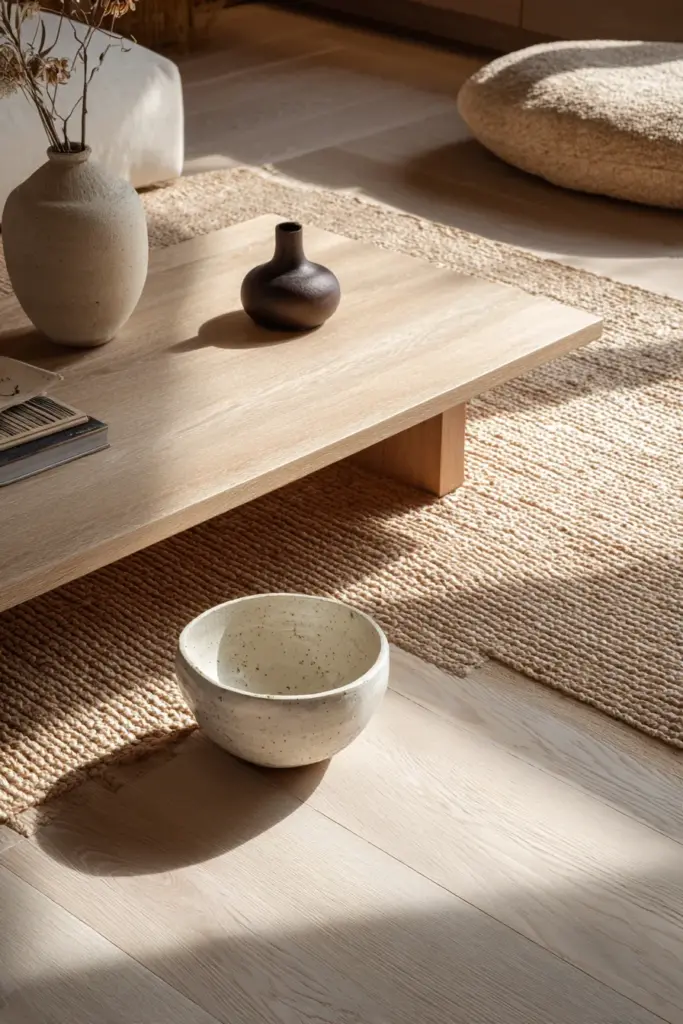
There’s a reason natural wood flooring is the most beloved choice for Japandi interiors. Oak and ash in their lighter tones carry warmth and structure simultaneously — they feel both rooted and airy.
Light oak flooring has a gentle golden undertone that softens a room without making it feel heavy. Ash wood, with its straighter grain and slightly cooler tone, leans more Nordic — crisp, clean, and breathable. Both woods pair beautifully with linen cushions, rattan furniture, and the soft glow of pendant lighting.
What to Look For in a Japandi Wood Floor
- Finish: Always choose matte or satin over high-gloss. High-gloss finishes look modern, not mindful.
- Width: Wide planks (5 inches and above) create a sense of expansiveness — ideal for smaller living rooms that need to breathe.
- Color tone: Look for tones in the blonde-to-honey range, avoiding anything too orange or too dark.
Engineered Hardwood as an Alternative
Solid hardwood is stunning, but engineered hardwood deserves your attention. It has a real wood veneer over a plywood base, which makes it more dimensionally stable in humid climates. If you’re based in a tropical region like the Philippines, where heat and humidity are constant companions, engineered hardwood is often the smarter, longer-lasting choice.
2. Bamboo Flooring — Sustainable Japandi Soulfulness
Bamboo is not technically wood, but it behaves like wood, looks like wood, and in many ways feels more intentional than wood — because it grows back in five years instead of fifty.
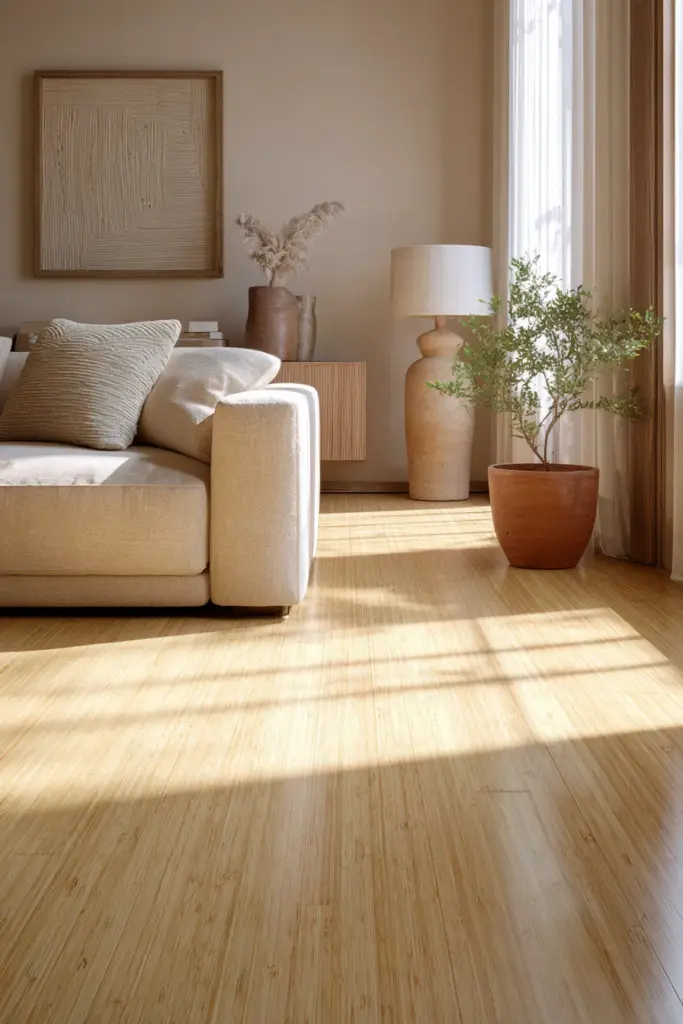
Bamboo flooring is a natural fit for Japandi spaces. Its long, linear grain is quiet and repetitive in the most meditative way. In its natural or “blonde” tone, it glows gently under morning light. Strand-woven bamboo is particularly durable, making it a strong candidate for high-traffic living rooms.
From a sustainability standpoint, bamboo earns its place beautifully. Look for FSC-certified bamboo to ensure it was harvested responsibly. This is one of those choices where doing the right thing for the environment and doing the right thing for your home happen to be exactly the same thing.
Pair bamboo flooring with a low-profile sofa in natural linen, a cozy knit throw, and a ceramic table lamp for a living room that feels genuinely alive.
3. Cork Flooring — The Quiet Underdog
Cork is perhaps the most underrated flooring option for Japandi spaces, and we think it deserves a moment.
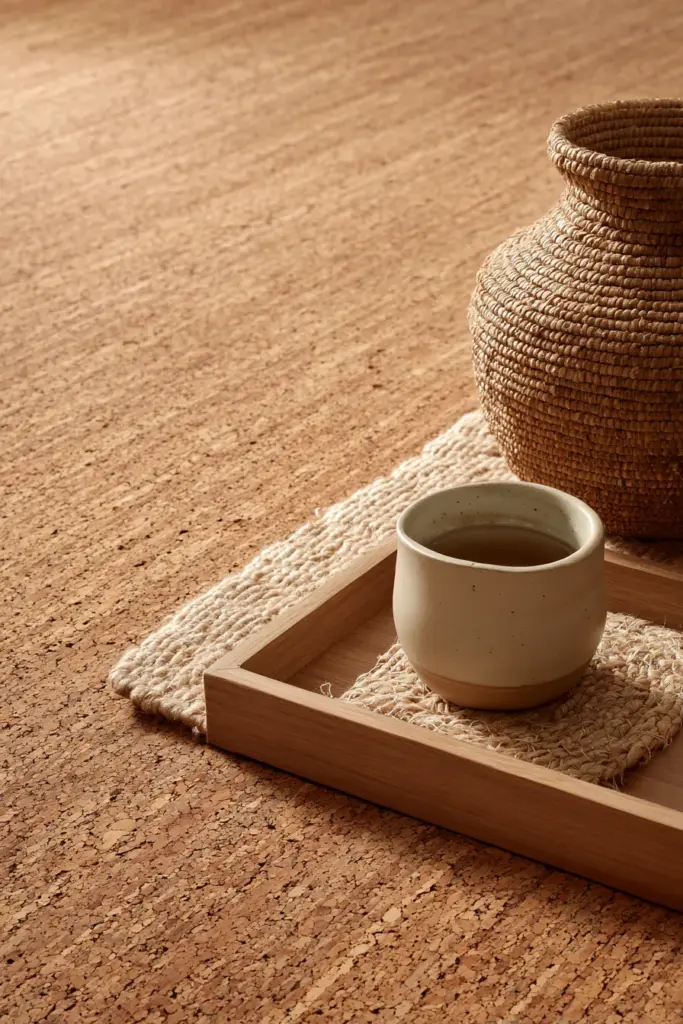
Harvested from the bark of cork oak trees without harming the tree itself, cork is as sustainable as it gets. It’s soft underfoot — genuinely, noticeably soft — which makes it a dream for bare feet on slow Sunday mornings. It’s also a natural sound absorber, reducing echo in open-plan living rooms by a significant margin.
Cork flooring comes in beautiful earth tones: warm tawny browns, pale tans, and muted ochres. It has a natural texture that photographs beautifully and feels even better. The only caveat is that cork can be susceptible to deep scratches and prolonged moisture exposure, so it’s best paired with good area rugs in heavy furniture zones.
| Flooring Type | Noise Reduction | Comfort Underfoot | Eco-Friendly | Humidity Resistance |
|---|---|---|---|---|
| Cork | ★★★★★ | ★★★★★ | ★★★★★ | ★★★☆☆ |
| Bamboo | ★★★☆☆ | ★★★☆☆ | ★★★★★ | ★★★☆☆ |
| Light Oak Wood | ★★★☆☆ | ★★★★☆ | ★★★☆☆ | ★★☆☆☆ |
| Vinyl Plank | ★★★☆☆ | ★★★☆☆ | ★★☆☆☆ | ★★★★★ |
| Concrete | ★★☆☆☆ | ★★☆☆☆ | ★★★☆☆ | ★★★★★ |
4. Luxury Vinyl Plank (LVP) — The Practical Dreamer’s Floor
Let’s be honest: not every Japandi living room has an unlimited budget, and not every home has ideal conditions for natural wood. That’s where luxury vinyl plank (LVP) flooring earns its place — not as a compromise, but as a genuinely clever choice.
Modern LVP has come a long way. Today’s options feature realistic wood-grain textures, embossed surfaces that mimic the tactile quality of real wood, and matte finishes that photograph beautifully. They’re 100% waterproof, making them ideal for homes in humid climates or households with children and pets.
Budget Considerations
LVP is also one of the most accessible flooring options at multiple price points. In the Philippines, for example, you can find quality LVP starting under PHP 500 per square meter for entry-level options, while premium waterproof vinyl planks with deeper embossing and longer warranties run around PHP 1,000–1,500/sqm. Compare this to bamboo flooring at PHP 2,000+/sqm and solid hardwood at PHP 3,000–5,000+/sqm, and the math becomes much easier.
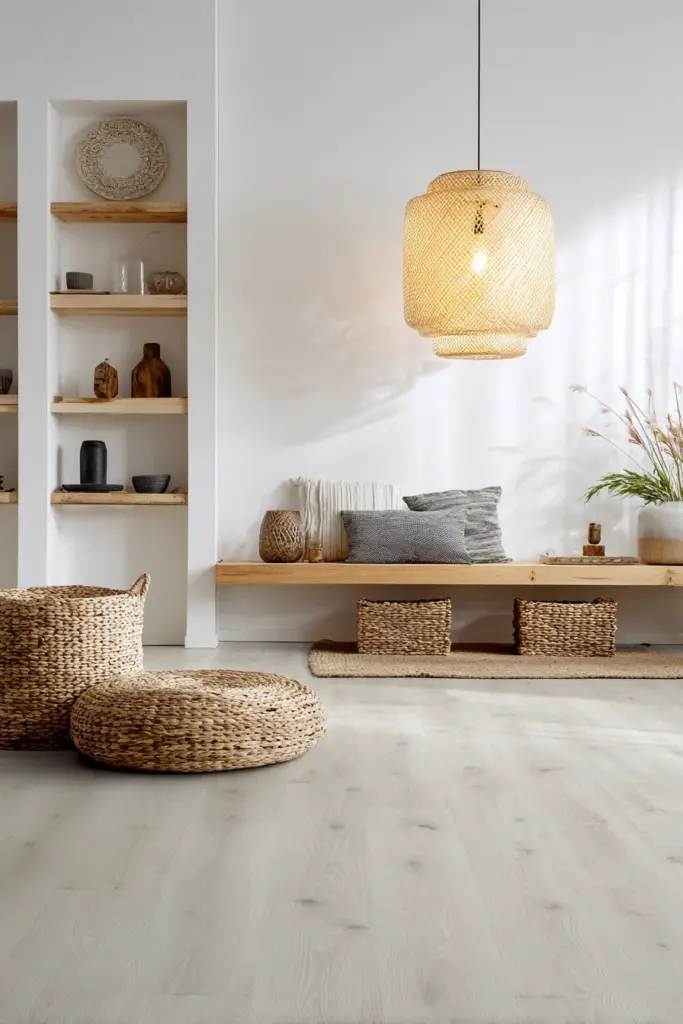
For a Japandi look on a budget, pair light grey or blonde LVP with white walls, natural woven baskets, and warm pendant lighting ideas that cast a honey-toned glow in the evenings.
5. Polished Concrete — The Minimalist’s Canvas
Concrete might seem like the least cozy option on this list, but in the right hands, it is breathtaking.
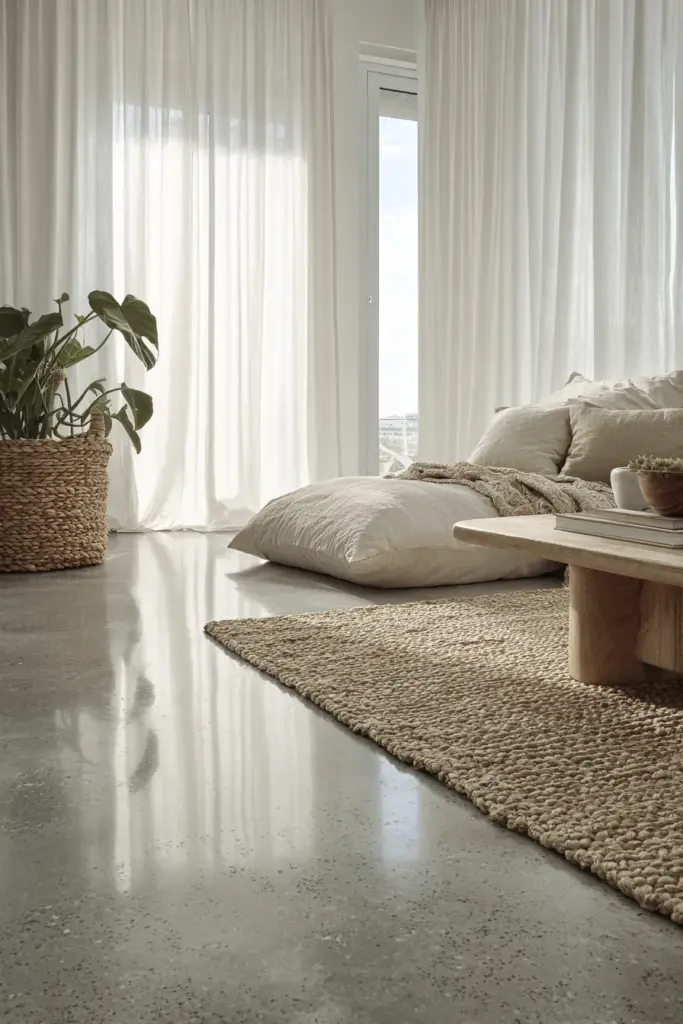
Polished concrete flooring has a cool, smooth confidence that anchors a Japandi living room with quiet authority. Its grey tones naturally harmonize with the warm-cool duality of Japandi palettes. And when light falls across it — especially natural morning light — it has an almost liquid quality that is genuinely beautiful.
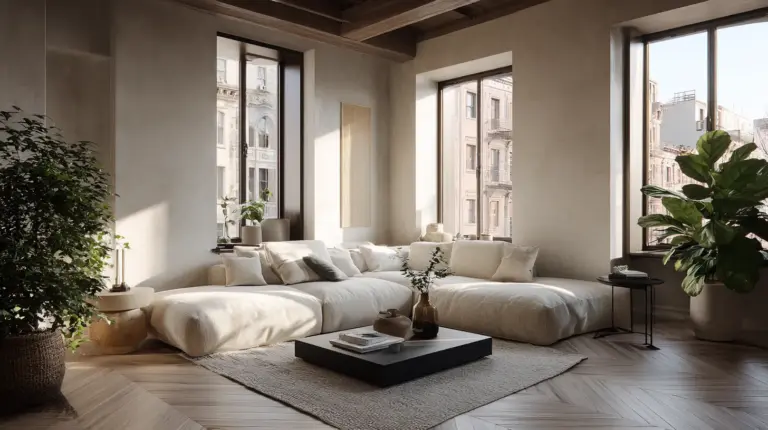
The key to making concrete feel warm rather than cold lies in what surrounds it. Layer in natural textures: a chunky jute rug, a low wooden coffee table, linen curtains that puddle softly at the floor. Add underfloor heating — a growing trend in 2026 Japandi interiors — and concrete becomes one of the most comfortable surfaces imaginable on a cool evening.
Concrete does require proper sealing to prevent staining and cracking, especially in tropical climates. But properly maintained, it can last decades without losing its quiet elegance.
6. Natural Stone and Stone-Look Tiles — Grounded and Timeless
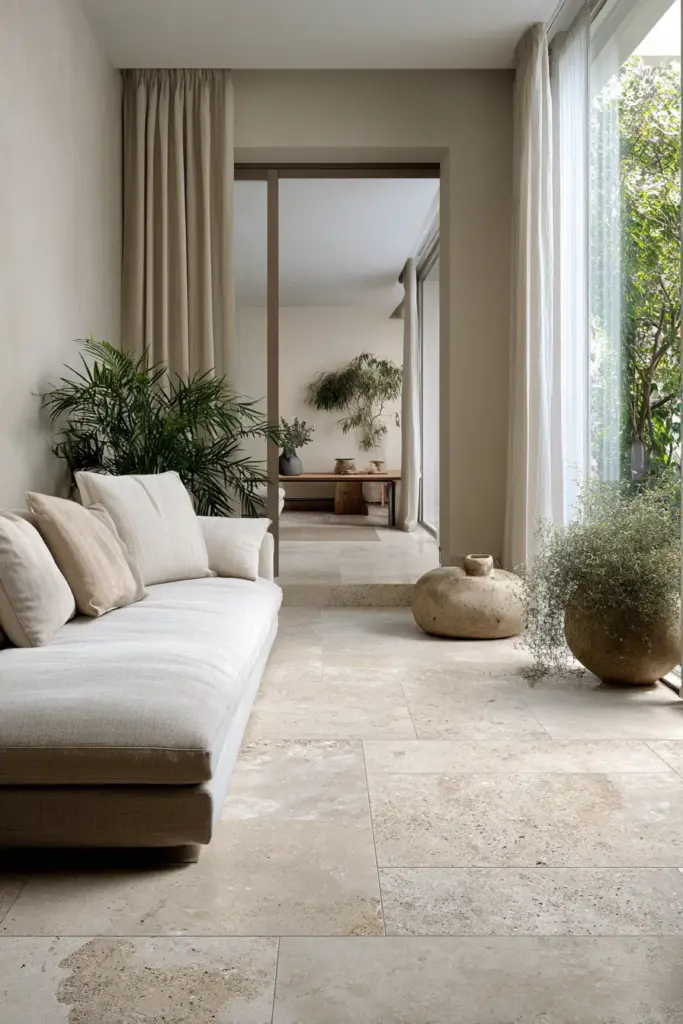
Stone carries with it something ancient and trustworthy. Natural stone flooring — limestone, sandstone, travertine — in pale, warm tones fits seamlessly into the Japandi vocabulary. Its texture is gentle, its colors are drawn from the earth, and it brings an undeniable permanence to a space.
Stone-look porcelain tiles are a practical and cost-effective alternative, offering the visual weight of real stone with far less maintenance and greater resistance to moisture. Look for large-format tiles (60x60cm or larger) in ivory, warm grey, or soft taupe for the most cohesive Japandi effect. Large formats reduce grout lines, which means a cleaner, more seamless floor — exactly what Japandi minimalism calls for.
Key Checklist: Choosing Your Japandi Flooring
Before you commit, run through these essentials:
- Tone: Does it fall in the neutral spectrum — light greys, warm tans, blonde tones, creamy whites?
- Finish: Is it matte or low-sheen? (Avoid high-gloss finishes.)
- Texture: Does it have a natural grain, slight embossing, or organic variation?
- Climate suitability: If you live in a humid region, is it moisture-resistant or sealed properly?
- Budget alignment: Does it fit your per-square-meter budget without sacrificing the feel you want?
- Sustainability: Is it FSC-certified, recycled, or low-VOC?
- Lifestyle fit: Do you have children, pets, or heavy foot traffic to consider?
- Underfloor heating compatibility: If you’re planning heated floors, confirm your flooring is compatible.
A Note on Small Space Japandi Flooring
In a compact living room, your flooring choice has an outsized effect on how spacious the room feels. Here are a few principles that help:
Go light. Pale floors visually expand a small room by reflecting rather than absorbing light. A dark floor in a small space can feel cave-like.
Go wide. Wide-plank flooring — whether real wood, engineered, or vinyl — runs the eye along its length, making a room feel longer and more expansive.
Go seamless. Minimize visual interruptions. Large-format tiles, continuous plank flooring, and avoiding too many area rugs in tight spaces will keep the floor from feeling cluttered.
Consider your rug placement. In small Japandi living rooms, a single well-placed natural fiber rug — jute, sisal, or a muted cotton weave — can define the seating area beautifully without breaking up the floor.
Conclusion — The Floor is Just the Beginning
Choosing your Japandi living room floor is one of the most intimate design decisions you’ll make. It’s the surface your bare feet will know on quiet mornings. It’s the canvas that makes your furniture sing and your light fall beautifully. It deserves your full attention — and your full trust in what feels right.
At ERYLIN, we believe that the most beautiful homes are built from honest choices: materials that feel true, colors that breathe, spaces that restore. Whatever floor you choose, let it be one that brings you a little closer to that feeling of calm you’re looking for.
The right foundation changes everything. Start there.
Frequently Asked Questions
What is the best flooring for a Japandi living room?
Light oak, ash, or maple hardwood flooring is considered ideal for Japandi spaces. Their warm-neutral tones and natural grain align perfectly with the Japandi philosophy of organic beauty. Engineered hardwood or luxury vinyl plank in similar tones are excellent alternatives for humidity-prone or budget-conscious homes.
What flooring goes with Japandi style?
Japandi style works best with flooring in light, neutral earth tones — think pale tans, warm greys, blonde woods, and soft ivories. The finish should always be matte or low-sheen, and the material should feel honest and natural or convincingly so. Avoid anything too shiny, too dark, or too patterned.
Is bamboo flooring good for Japandi?
Yes — bamboo flooring is an excellent choice for Japandi interiors. It’s sustainable, visually quiet, and its long linear grain complements the minimalist aesthetic beautifully. Strand-woven bamboo is particularly durable and suitable for high-traffic living areas. Look for FSC-certified options for the best environmental credentials.
What color floor is Japandi?
Japandi floors typically sit in the neutral earth tone spectrum: warm tans, blonde to honey wood tones, soft warm greys, and creamy off-whites. The palette avoids extremes — neither too dark nor stark white — in favor of tones that feel calming, grounded, and natural.
Can you use concrete flooring in a Japandi living room?
Absolutely. Polished or microcement concrete flooring is a beautiful choice for Japandi spaces, particularly in larger, more minimal rooms. Its cool grey tones bring balance to warmer furnishings, and its seamless surface is inherently calm. Pair with underfloor heating, natural textiles, and warm-toned lighting to soften its edge and make the space genuinely livable.