
Table of Contents
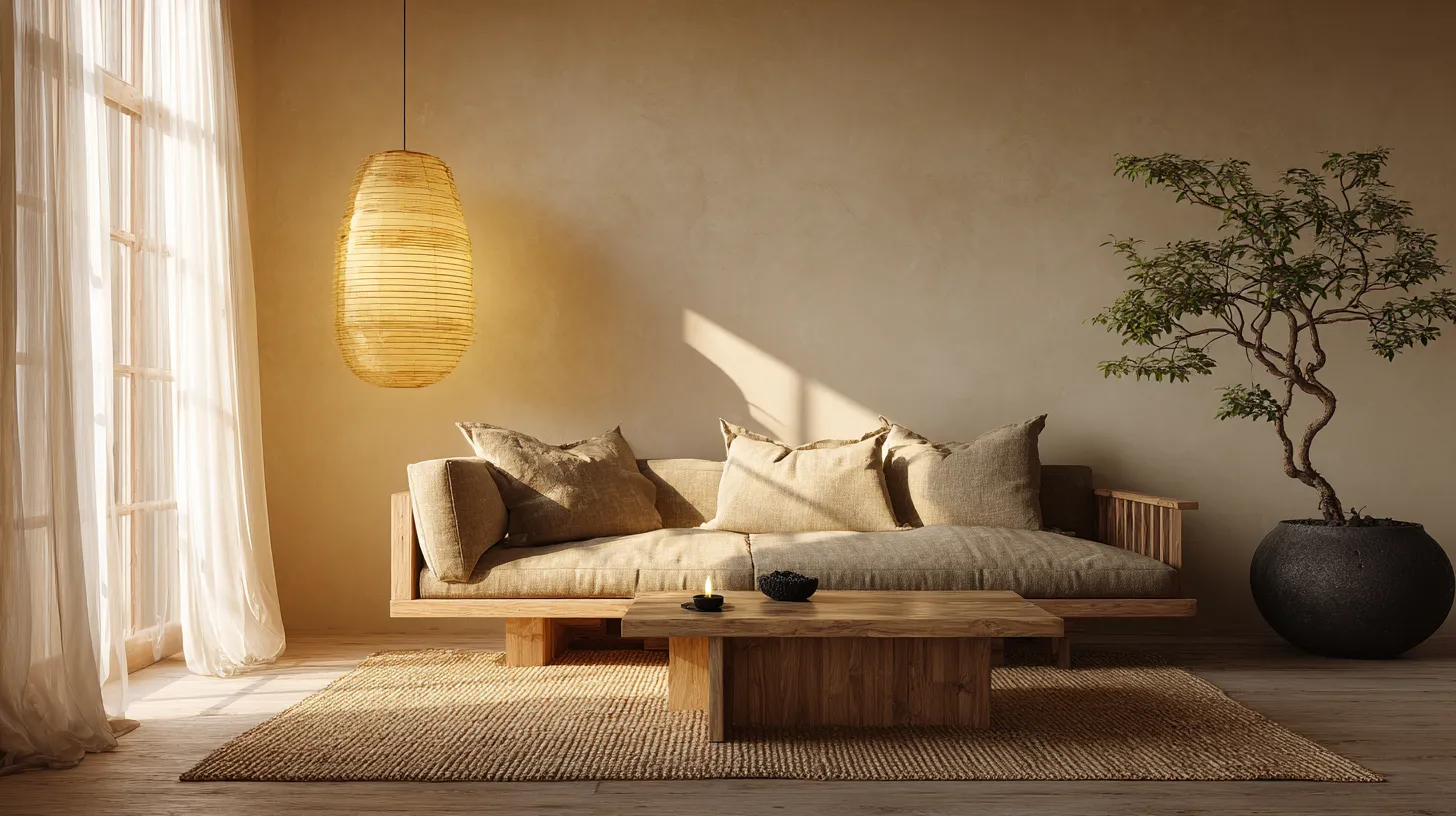
There is a certain kind of room that makes you exhale the moment you step inside. The light is soft. The air feels unhurried. Every surface invites your hands — a linen cushion here, a smooth oak edge there. That room has a name, and it lives at the beautiful crossing of Japanese minimalism and Scandinavian warmth: Japandi.
At ERYLIN, we believe your living room should feel like a gentle conversation, not a showroom. Cozy Japandi is not about stripping everything away until the room feels hollow. It is about choosing with intention — keeping only what nourishes the senses and releasing everything that creates noise.
This guide walks you through every essential element of a cozy Japandi living room, from the exact materials and lighting temperatures to the small rituals that turn a styled space into a lived-in one.
Whether you are starting from scratch or simply longing to soften a room that already leans minimal, you are in the right place.
What Is a Cozy Japandi Living Room?
Cozy Japandi is not the same as standard Japandi. Standard Japandi can tip cold — too much white, too many bare surfaces, too much restraint. Cozy Japandi adds intimacy back in. It is minimalist, yes, but it is also warm, tactile, and quietly inviting.
Think of it as the difference between a room you photograph and a room you want to curl up in. The philosophy draws from wabi-sabi — the Japanese acceptance of imperfection and transience — and hygge, the Scandinavian art of cultivating comfort and togetherness. Together, they create a design language that is both serene and deeply human.
If your room feels sterile, you have gone too far toward one pole. If it feels cluttered, you have gone too far toward the other. The cozy Japandi sweet spot lives in the middle: layered but uncluttered, minimal but never cold.
Essential Cozy Japandi Living Room Elements
1. A Neutral, Warm-Leaning Color Palette
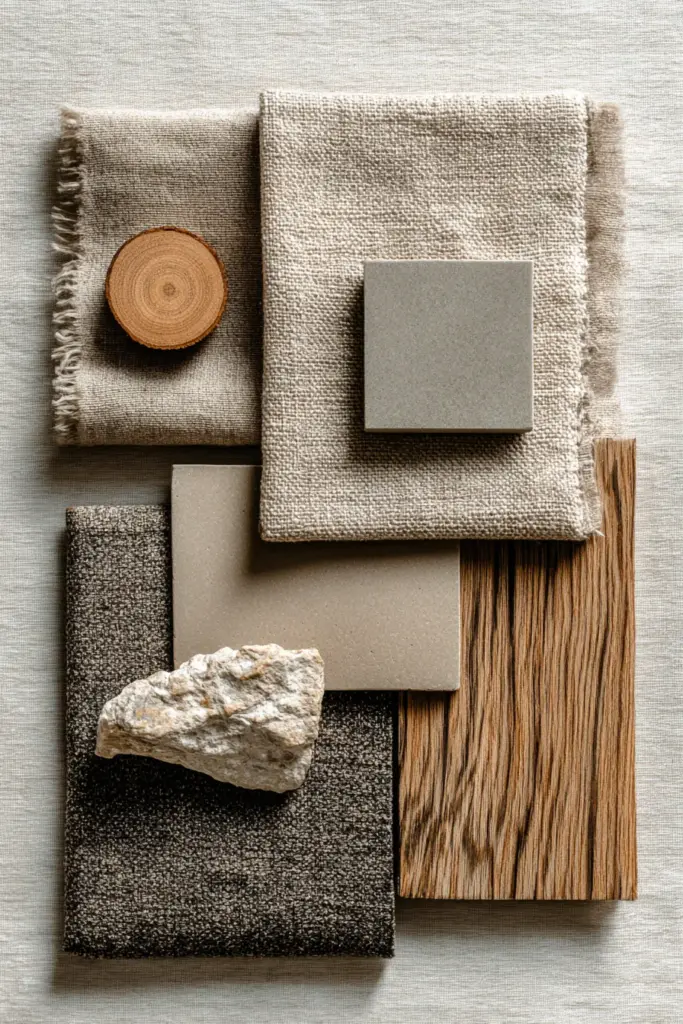
The palette is your foundation, and in cozy Japandi, warmth always takes precedence over stark white. Reach for warm beige (#F5F0E6), soft taupe (#D8C8C0), and muted warm gray (#B0A8A0). These are not trendy tones — they are timeless, and they photograph beautifully in both morning and candlelight.
Layer these hues across walls, upholstery, and accessories so the room reads as one cohesive, enveloping tone. Earthy accents — terracotta, deep moss, warm charcoal — can appear in small doses through cushions or ceramics without disrupting the calm.
Avoid cool whites, bright grays, or high-contrast black-and-white combinations. They introduce visual tension that quietly works against the cozy atmosphere you are building.
2. Low-Profile, Grounded Furniture
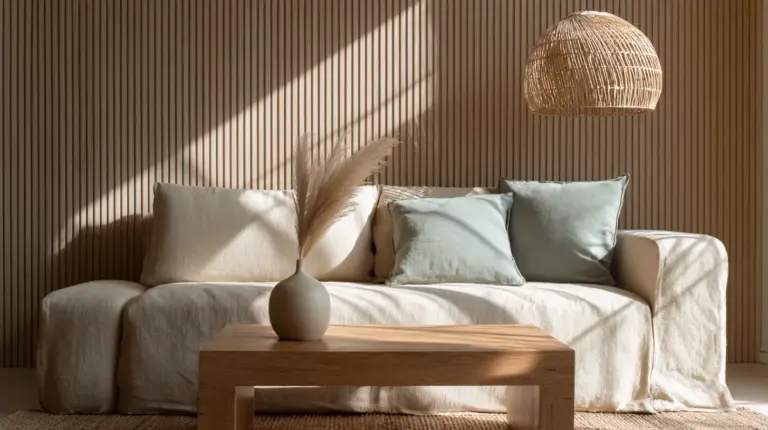
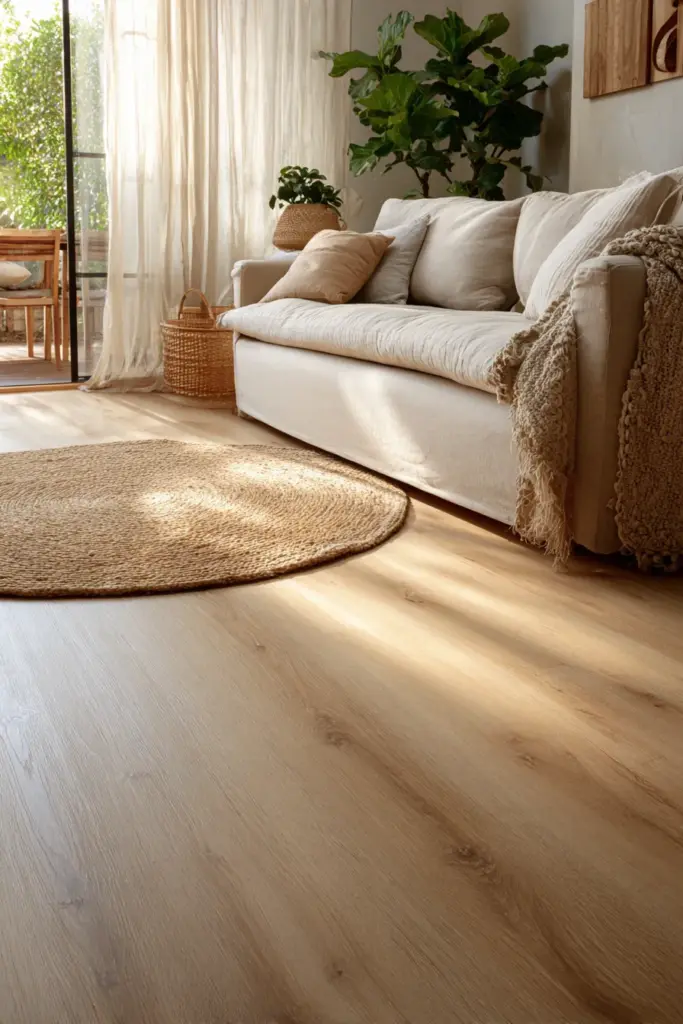
One of the most distinctive — and most cozy — elements of Japandi living rooms is furniture that sits close to the floor. A sofa with a seat height under 40 cm draws the eye downward, lowering the visual center of gravity and creating an immediate sense of shelter and enclosure.
Look for clean-lined frames in oiled oak, pale ash, or matte walnut. The wood finish matters enormously: oiled or lightly sanded wood feels warm and honest under your fingers, while high-gloss lacquer can feel synthetic and cold. Pair your low sofa with a floor-hugging coffee table — ideally in natural rattan, light stone, or the same wood tones as your seating.
If your living room is small — under 20 m² — resist the urge to fill it with multiple seating pieces. Instead, choose one low sofa + one floor cushion or accent chair, and let generous floor space breathe. Negative space is not emptiness in Japandi; it is rest for the eyes.
3. Layered Warm Lighting
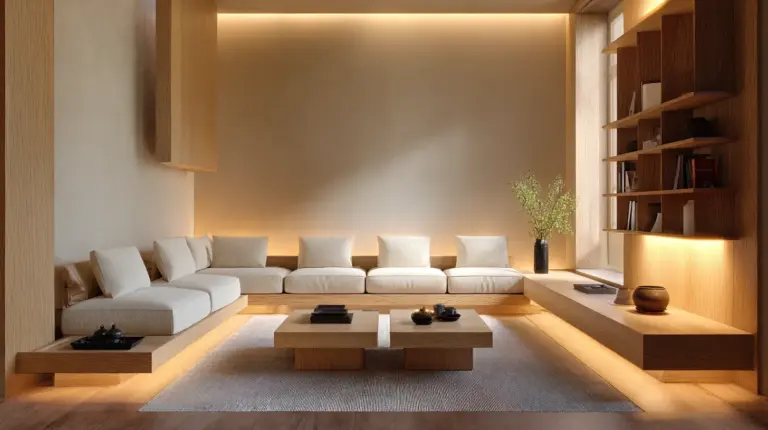
Lighting is the element most people get wrong, and it is the one that makes or breaks a cozy atmosphere. In a cozy Japandi living room, the rule is simple: no single overhead light source. Overhead lighting alone creates a flat, institutional feel. Instead, you layer.
Aim for 3 to 5 warm light sources at varying heights throughout the room. The target color temperature is 2700K to 3000K — this is the golden range that mimics the softness of late afternoon sun or candlelight. Reserve cooler temperatures (up to 4000K) only near natural light sources like large windows.
A Day-to-Night Lighting Guide
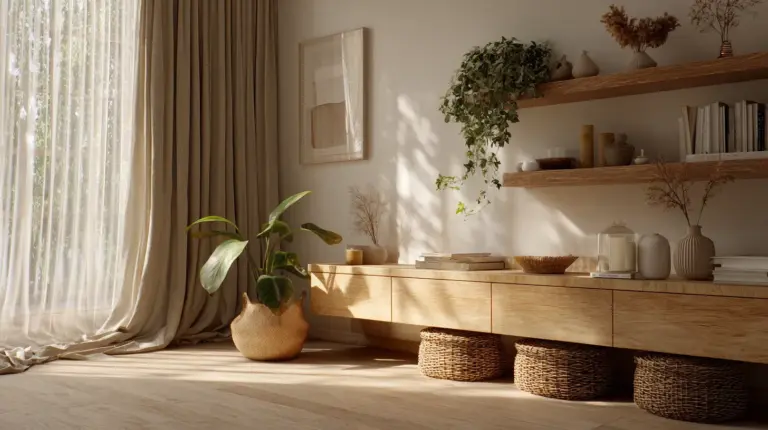
During the day: Pull back sheer linen curtains and let natural light wash the room. Keep one table lamp switched off as a sculptural element — a paper lantern, a woven rattan shade, a slim ceramic base.
In the evening: Switch off overhead lights entirely. Turn on a low floor lamp in one corner, one or two table lamps on side surfaces, and consider a small candle or LED candlelight near the coffee table. This creates what designers call a cocoon effect — the room visually narrows and deepens, and the space feels half its size in the most beautiful way.
4. Tactile, Natural Textiles
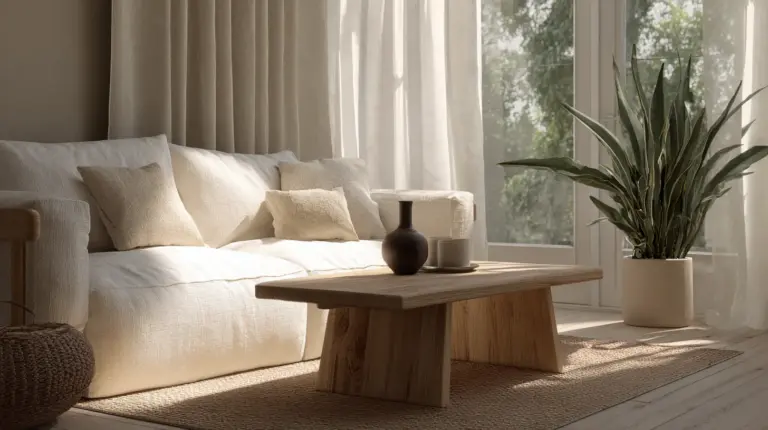
Cozy is something you feel as much as you see. In Japandi interiors, textiles are the primary sensory language of warmth. This is where you can be generous — within reason.
A practical guide for layering textiles:
| Element | Material | Feeling |
|---|---|---|
| Sofa throw | Chunky wool or knitted cotton | Heavy, enveloping |
| Cushions | Stone-washed linen or brushed cotton | Soft, lived-in |
| Rug | Medium-pile jute or wool blend | Grounding, textural |
| Curtains | Unlined linen or cotton gauze | Light, flowing |
| Floor mat | Natural cotton weave or tatami-inspired | Humble, earthy |
The cozy textile formula: aim for 3 to 5 soft elements in a standard living room. More than five can tip into visual noise; fewer than three leaves the room feeling under-furnished and cold.
For material choice: linen is the most Japandi-appropriate fabric — it wrinkles beautifully, breathes well, and ages with grace. Wool adds winter weight and a slight sensory contrast. Cotton gauze is perfect for curtains where you want filtered light rather than full blackout.

5. Natural Materials Throughout
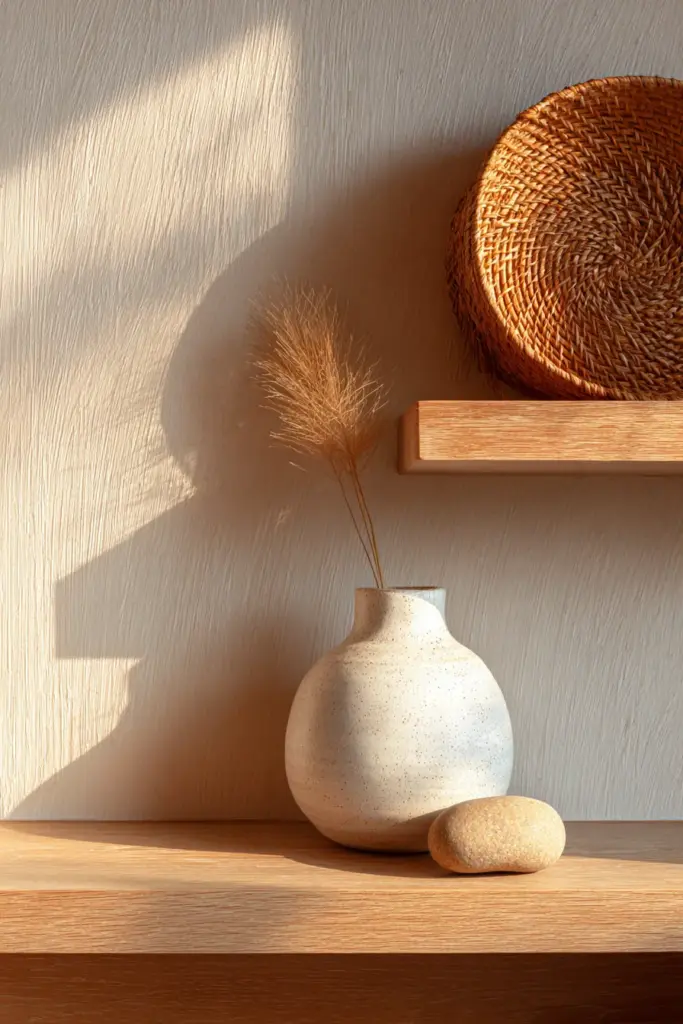
Japandi is grounded in a love for materials that come from the earth and age honestly. Wood, rattan, bamboo, stone, and clay are your primary toolkit. These materials do something extraordinary in an interior: they absorb sound, soften light, and give the room a quiet, organic energy that synthetic materials simply cannot replicate.
Wood introduces warmth; rattan introduces lightness; stone introduces permanence. When you place a handthrown ceramic bowl on a pale oak shelf, you are not just decorating — you are creating a small story about intention and beauty.
Consider the sensory layering of materials, not just the visual: a woven jute rug softens footsteps and reduces echo. Heavy linen curtains absorb sound from the street. A thick wool throw on a sofa makes sitting down feel like an event. Your cozy Japandi living room should sound quiet as well as look quiet.
6. Biophilic Touches: Plants and Greenery
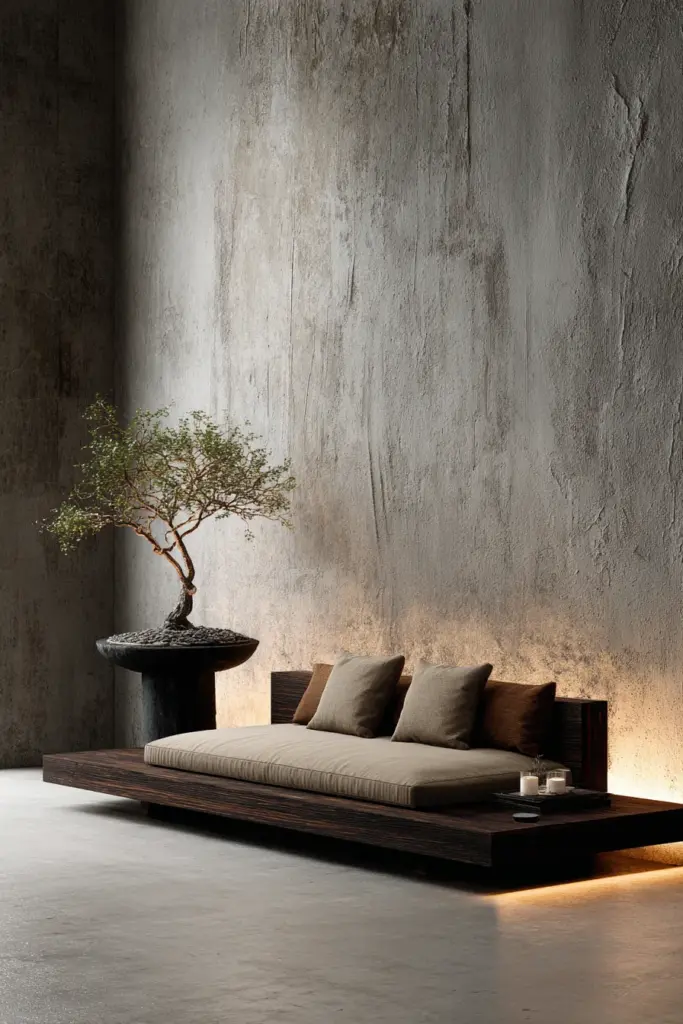
Nature is not optional in Japandi — it is structural. A single well-chosen plant brings a living, breathing softness that no styling trick can replicate. The key word is well-chosen: one statement plant with beautiful form rather than a shelf crowded with small pots.
Ideal Japandi plant choices include:
- A sculptural bonsai on a low wooden stand
- A tall, slender fiddle-leaf fig or olive tree in a matte ceramic pot
- A single trailing pothos in a handmade hanging planter
- Low moss or stone compositions on a shelf or windowsill
Keep the pots in earthy, matte tones — warm terracotta, natural stone gray, unglazed cream. Avoid bright or patterned containers that distract from the plant’s natural beauty.
7. Intentional, Curated Decor
In a cozy Japandi living room, every object earns its place. The goal is not a bare room — it is a room where nothing is arbitrary. Each piece should carry either beauty or meaning, and ideally both.
A practical decor ceiling for a 20–25 m² living room: 5 to 8 curated items maximum. This might be a small ceramic vase, a single art piece, a handmade tray, two or three books with beautiful spines, and one candle holder. These items, arranged with breathing room between them, feel intentional rather than accumulative.
The “cozy mistakes” to avoid:
- Too many warm-toned candles clustered together (creates a shrine-like feel rather than warmth)
- Over-layered rugs and throws that read as clutter rather than texture
- Decorative items that serve no function and collect visual dust
- Ignoring ergonomics — a low sofa that is beautiful but uncomfortable will never feel cozy; test seat depth and back support before committing
How to Make a Japandi Living Room Feel Cozy (Step-by-Step)
Creating a cozy Japandi living room is a process of addition and subtraction happening simultaneously. Here is a simple four-step framework:
Step 1 — Ground the room. Choose your palette, your rug, and your primary seating. These three elements carry 70% of the room’s atmosphere.
Step 2 — Layer your light. Audit your light sources. Remove overhead lights from your nightly routine and build a layered lamp plan with 3 to 5 warm-toned sources.
Step 3 — Add texture in threes. Introduce textiles gradually — cushions first, then a throw, then curtains. Step back after each addition and ask whether the room still feels calm.
Step 4 — Edit with care. Every item you consider adding should earn its place. If you can remove it and the room feels better, it was not needed.
Small-Space Cozy Japandi Setup
Small living rooms under 20 m² are actually ideal for Japandi — the philosophy of restraint works in harmony with limited square footage. The key is choosing fewer, better elements rather than scaling everything down proportionally.
A small-room cozy Japandi formula:
- One low-profile sofa with a seat depth of at least 60 cm for genuine comfort
- One reading or relaxation corner — a single armchair or floor cushion with a small side table sized for a book and a cup of tea
- One warm floor lamp in a corner to anchor the space
- One medium-scale rug that defines the seating area without crowding the walls
- Two to three plants maximum — one statement, one smaller
Keep walls light and clear. Use vertical shelving sparingly, and keep it edited to five or fewer items per shelf. Let the floor speak.
Your Cozy Japandi Checklist
- Warm neutral palette anchored in beige, taupe, or warm gray
- Low-profile furniture with oiled or matte wood finishes
- 3 to 5 warm light sources at 2700K–3000K; no reliance on single overhead lighting
- 3 to 5 textile elements: rug, cushions, throw, curtains, mat
- Natural materials throughout: wood, rattan, stone, clay, linen
- One to two statement plants in matte, earthy pots
- 5 to 8 curated decor items maximum in a standard living room
- Seating that is both beautiful and ergonomically comfortable
- Day-to-night lighting plan for morning naturalness and evening cocoon warmth
A Closing Thought from ERYLIN
Cozy is not a look. It is a feeling that a room offers you when you walk through the door. A cozy Japandi living room says: you are welcome here. Set down your phone. Breathe. Stay awhile.
Every choice you make — the weight of the linen, the temperature of the light, the height of the sofa — is a small act of care. For yourself, for the people who share your home, for the quiet moments that make ordinary evenings feel like something worth remembering.
That is what ERYLIN believes design is for.
FAQs
What is a cozy Japandi living room?
A cozy Japandi living room blends Japanese minimalism and Scandinavian warmth into a space that feels calm, tactile, and genuinely inviting. It goes beyond standard Japandi by prioritizing sensory comfort — layered lighting, natural textiles, and grounded furniture — so the room never feels sterile or cold.
What colors work best for a cozy Japandi living room?
Warm neutrals are the backbone of cozy Japandi: think warm beige (#F5F0E6), soft taupe (#D8C8C0), and muted warm gray (#B0A8A0). Small earthy accents in terracotta or deep moss add depth without disrupting the overall serenity.
What kind of lighting works best in a Japandi living room?
Layer 3 to 5 warm light sources at 2700K–3000K color temperature — floor lamps, table lamps, and small accent lights. Avoid relying on a single overhead light, which creates a flat, uninviting atmosphere. In the evening, switch to lamps only to create a cocoon-like warmth.
Is Japandi suitable for small living rooms?
Absolutely. Japandi’s philosophy of restraint pairs beautifully with small spaces. Focus on one low sofa, one warm floor lamp, a medium-scale rug, and two to three plants. The discipline of choosing fewer, better elements actually makes a small room feel more spacious and more cozy simultaneously.
How much decor is too much in a Japandi living room?
In a standard 20–25 m² living room, aim for no more than 5 to 8 curated decor items. The goal is not emptiness — it is intentionality. Every object should be there because it brings beauty, meaning, or function, never simply to fill a surface.