
Table of Contents
By ERYLIN — Your guide to calm, soulful, and beautiful living spaces.
There is a particular kind of stillness that comes from a well-designed room. The light falls just right. The textures feel intentional. Everything seems to say: this space was made for living in, deeply and slowly.
Two design philosophies have been drawing people toward that feeling more than ever — Japandi and Scandinavian design. At first glance, they look like cousins: light woods, clean lines, a love of natural materials. But spend a little more time with each, and you begin to sense their very different souls.
This guide is for anyone standing at the crossroads, wondering which direction to go. Whether you are furnishing a small apartment or reimagining an entire home, understanding the differences between Japandi and Scandinavian design will help you make choices that feel truly yours.
Let’s walk through it together — slowly, the way good design deserves.
The Philosophy Behind Each Style
Scandinavian Design: Warmth, Function, and the Art of Hygge
Scandinavian design grew from necessity. In Nordic countries where winters are long and light is scarce, the home became a sanctuary — a place to gather, to rest, to feel held. This gave birth to hygge (pronounced “hoo-gah”), the Danish and Norwegian concept of cozy togetherness.
Functionality is the backbone of Scandi design. Every piece of furniture earns its place by being useful, accessible, and welcoming. There is a democratic spirit to it — beauty should not be a luxury, it should be everyday.
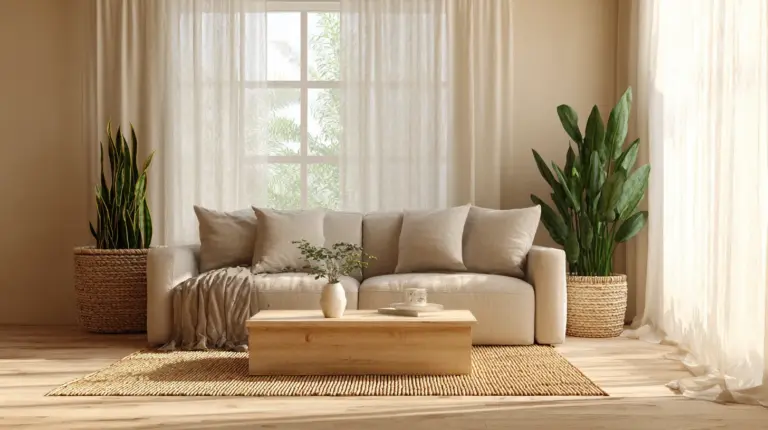
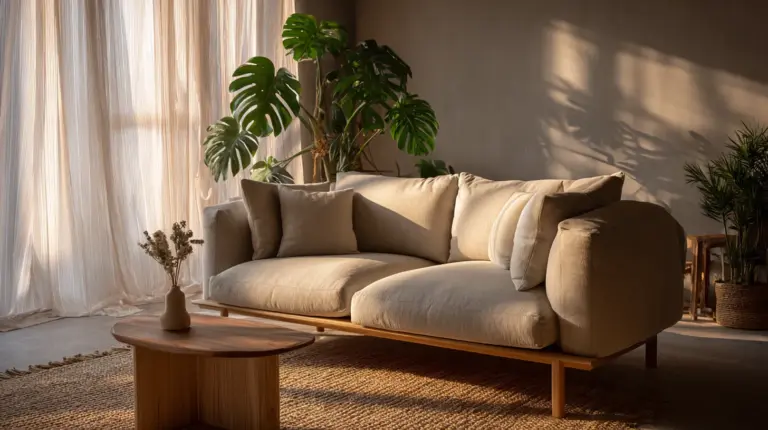
The aesthetic leans toward lightness and brightness. Pale birch wood, white walls, soft wool throws, and candles that flicker against long evenings. It invites you to stay, to get comfortable, to pour another cup of tea.
Japandi Design: Wabi-Sabi, Zen, and the Beauty of Imperfection
Japandi is a fusion of Japanese and Scandinavian sensibilities, and it carries a deeper philosophical weight. At its heart is the Japanese concept of wabi-sabi — finding beauty in imperfection, transience, and the quiet dignity of natural things.
Where Scandinavian design says make it cozy, Japandi says make it intentional. Every object is chosen with restraint. Every surface carries meaning. There is a meditative quality to a Japandi room — it feels considered, even a little austere, but never cold.
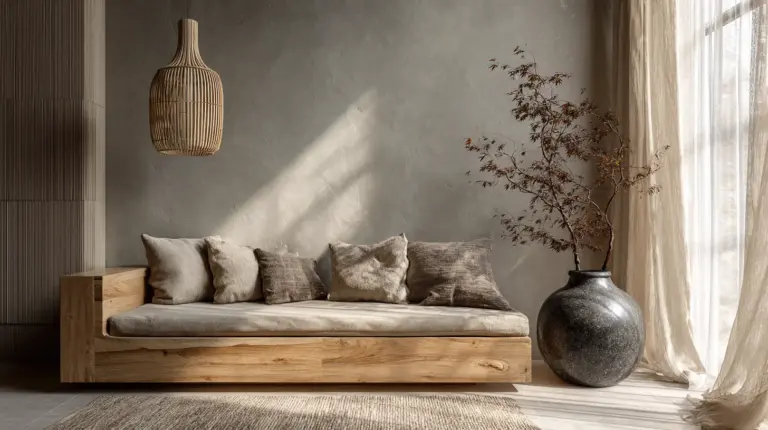
The Japanese influence introduces darker, moodier tones — charcoal, deep forest green, aged cedar — balanced by the Nordic love of warmth. The result is something profoundly grounding. A room that does not shout but hums quietly.
Color Palette: Bright & Breezy vs. Deep & Earthy
This is perhaps the most immediately visible difference between the two styles.
Scandinavian Color Story
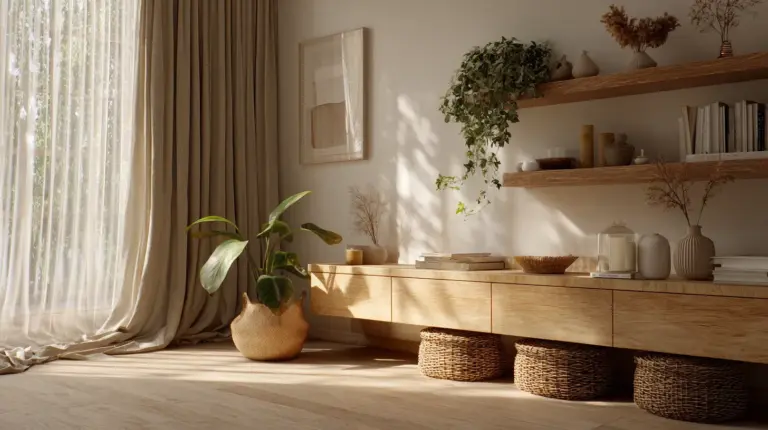
Scandi interiors favor a light, airy palette. Think crisp whites, soft grays, pale blush tones, and the natural color of unfinished or lightly oiled birch. The goal is to maximize the sense of light — to make a room feel open, expansive, and gently luminous.
Accents tend to be muted but cheerful: dusty blue, sage green, terracotta introduced carefully through textiles and ceramics. The overall mood is fresh and approachable, like early morning light through linen curtains.
Japandi Color Story
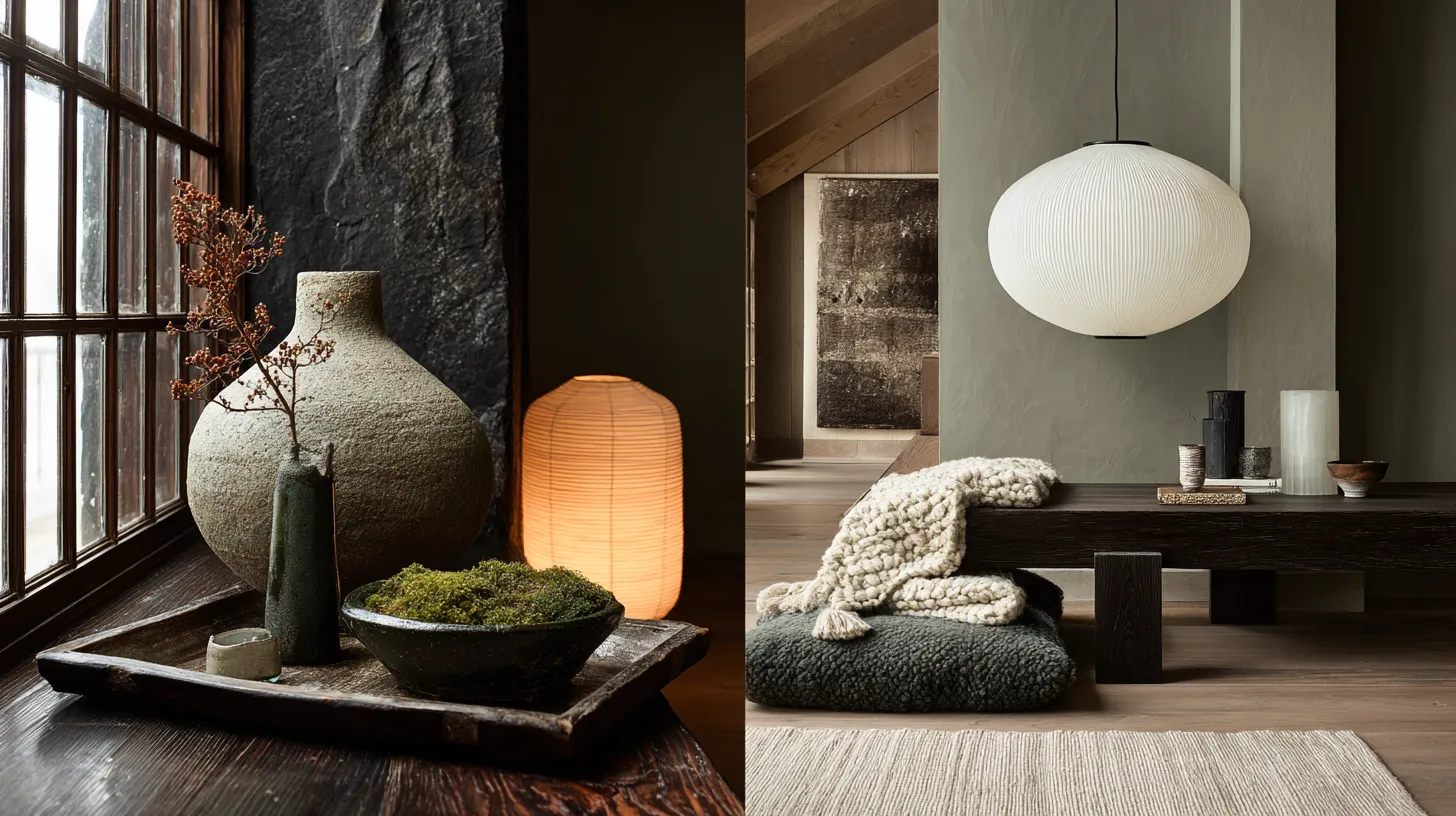
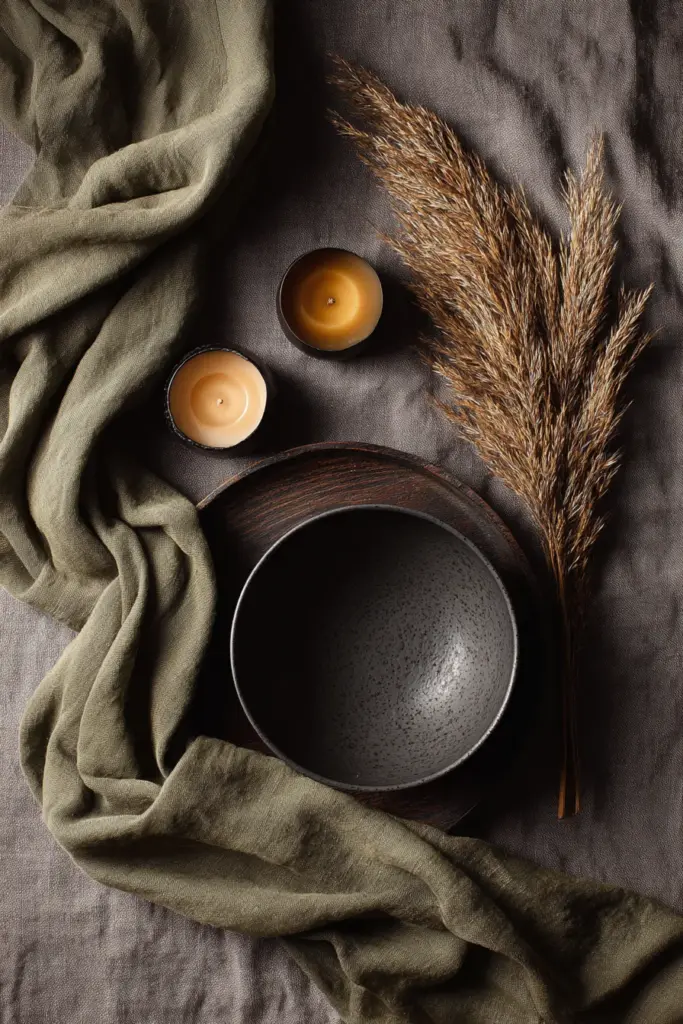
Japandi draws from the earth and the forest floor. Warm greiges, charcoal grays, deep taupes, and moss tones form the foundation. Darker wood tones like walnut and smoked oak ground the space.
The palette is restrained but rich. It does not try to brighten — it tries to deepen. Living with Japandi colors is like watching fog lift slowly off a mountain. There is beauty in the subtlety.
| Feature | Scandinavian | Japandi |
|---|---|---|
| Base colors | White, light gray, pale blush | Warm beige, charcoal, deep taupe |
| Wood tones | Light birch, pale ash | Dark walnut, smoked oak, aged cedar |
| Accent colors | Dusty blue, sage, soft terracotta | Moss green, rust, muted black |
| Overall mood | Bright, airy, fresh | Grounded, moody, serene |
Materials and Textures
Both styles celebrate natural materials — but their relationship with texture differs meaningfully.
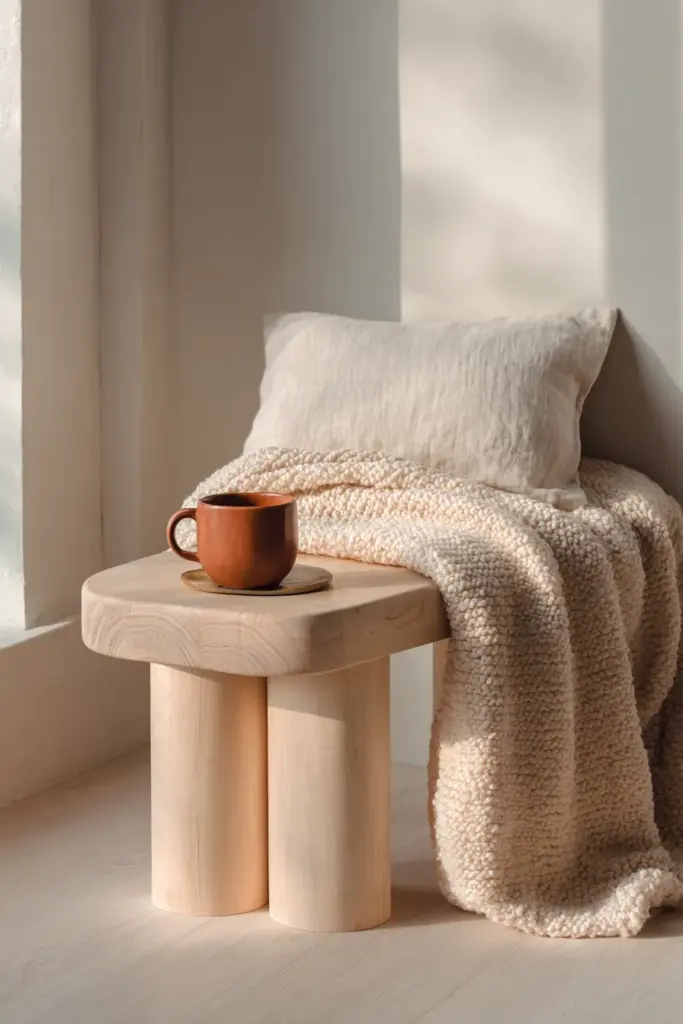
Scandinavian Textures: Soft, Touchable, Layered
In a Scandi home, you want to reach out and touch things. Chunky knit throws, sheepskin rugs, linen cushions, smooth ceramic mugs still warm from the kiln. Texture here is about sensory comfort — the feeling of being wrapped up against the cold.
Wool, cotton, linen, and pale wood dominate. Surfaces tend to be smooth or softly finished. The tactile experience is gentle and inviting.
Japandi Textures: Raw, Refined, Purposeful
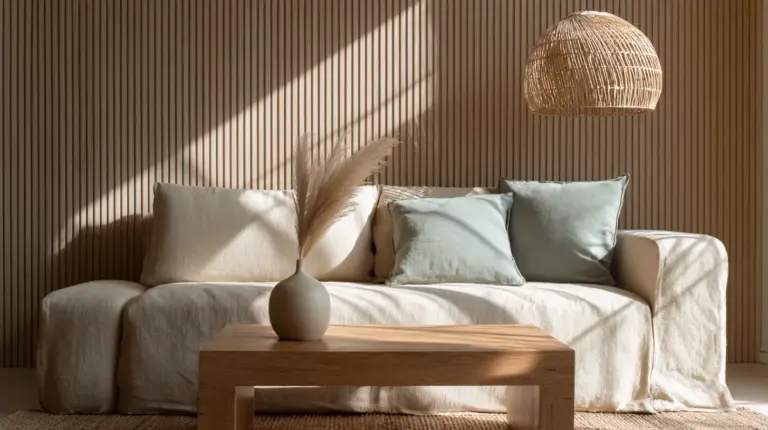
Japandi textures carry a different intention. Here, the rawness of materials is celebrated. Handthrown pottery with uneven glazes. Rough-hewn stone. Bamboo with its natural grain exposed. Linen aged to a gentle softness.
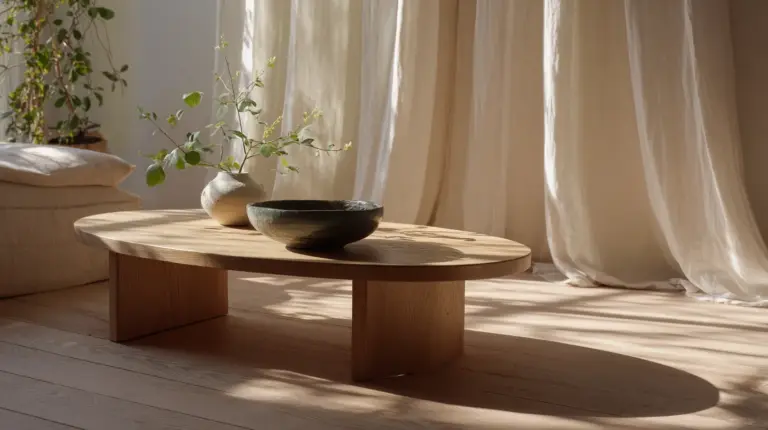
There is less layering and more stillness. A single beautiful ceramic bowl on an empty shelf says more than a cluster of objects. Texture in Japandi is never decorative for decoration’s sake — it is there because it is true.
Furniture: Cozy Comfort vs. Low and Considered
Scandinavian Furniture
Scandi furniture balances clean lines with genuine comfort. Sofas are soft and inviting. Dining chairs have cushioned seats. The design is functional-first but never clinical — there is always warmth in the curves, in the natural wood grain, in the upholstery.
Furniture sits at a conventional height. It feels accessible, easy, domestic in the best way. You could imagine a family around it.
Japandi Furniture
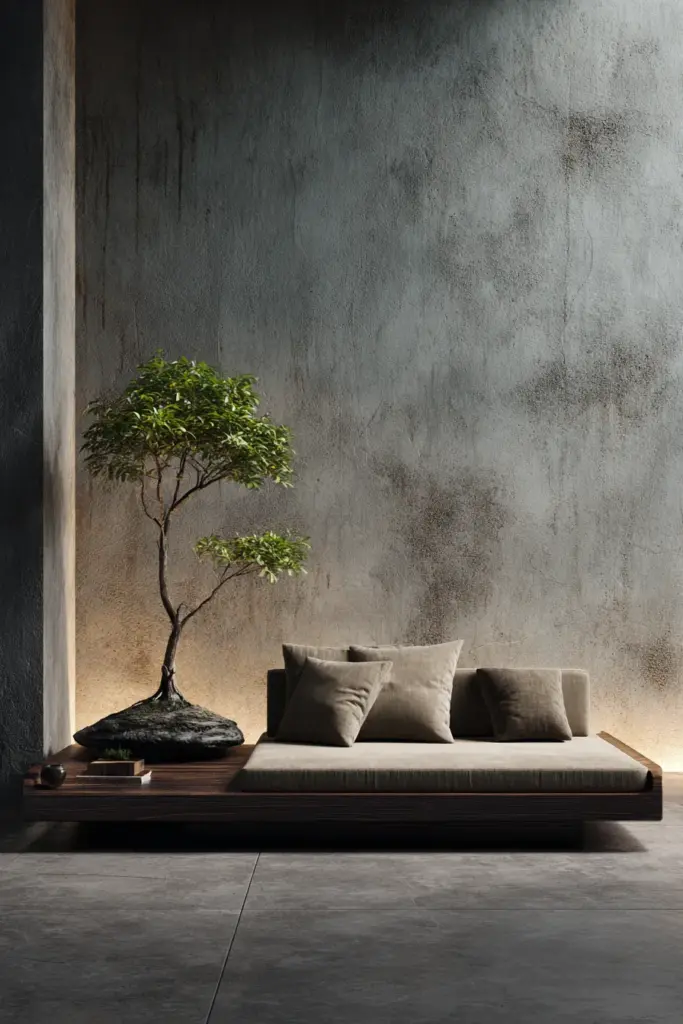
Japandi furniture sits closer to the ground, honoring the Japanese tradition of low living — tatami rooms, floor seating, the feeling of being settled into a space rather than perched above it. This creates an immediate sense of calm and centeredness.
Pieces tend to be simpler and more architectural. A platform bed in dark oak. A low coffee table in black walnut with hairpin legs. Joinery details — the way two pieces of wood meet — become a quiet design feature. Less cushioning, more structure.
Lighting: Daylight-Chasing vs. Warm Layering
Scandinavian Lighting
Because natural light is precious in Nordic winters, Scandi interiors are designed to chase and amplify daylight. Large windows left unobstructed. Mirrors placed to bounce light around a room. White walls that glow with whatever sun is available.
Artificial lighting leans toward daylight-toned LEDs in the daytime and warm candlelight in the evenings. Pendant lights are often simple, graphic, and sculptural — think Archimedean spirals in matte black or frosted glass globes.
Japandi Lighting
Japandi takes a more layered, intimate approach. Warm-toned LEDs and paper lanterns create a diffused, golden quality of light — the kind that makes everything look like dusk. Shadows are not avoided; they are welcomed as part of the atmosphere.
Washi paper pendant lights, understated floor lamps, and candles placed low to the ground create a sense of quiet ceremony. Light in a Japandi space is not practical — it is poetic.
Plants and Biophilic Elements
Both styles embrace nature, but with different intentions.
Scandinavian Plant Styling
Scandi interiors love a statement plant: the fiddle leaf fig in the corner, trailing pothos on a shelf, fresh eucalyptus in a simple vase. Plants are chosen for their visual impact and the life they bring to a bright interior.
Japandi Plant Styling
Japandi leans toward bonsai, moss gardens, and singular botanical gestures — one perfect branch in a tall ceramic vase, a small terrarium, carefully arranged dried grasses. The influence of ikebana (Japanese flower arranging) is felt: less is more, and every element is placed with intention.
Sustainability: A Shared Value, Different Approaches
Both design philosophies care deeply about sustainability, but approach it differently.
Scandinavian design has long championed FSC-certified birch and pine, responsibly sourced textiles, and furniture built to last generations. The ethos is democratic durability — quality for everyone.
Japandi adds a layer of wabi-sabi sustainability: embracing aged, repaired, and imperfect pieces. Bamboo (with its impressive carbon footprint), reclaimed wood, and natural clay are favored. Buying less but choosing more carefully is a core principle.
Japandi vs Scandinavian in Small Spaces
For those working with compact apartments — a reality for many urban homes — both styles adapt beautifully, but in different ways.
Scandinavian design opens small spaces up. Light walls, multifunctional furniture, and clever storage make rooms feel larger and more breathable.
Japandi design makes small spaces feel intentional. A low platform bed, a single low table that doubles as a desk, one considered piece of art. Less furniture overall, but each piece earning profound presence.
For humid climates or compact city living, Japandi’s minimal approach can actually reduce clutter and improve airflow — a practical as well as aesthetic benefit.
Quick Comparison: Japandi vs Scandinavian at a Glance
| Element | Scandinavian | Japandi |
|---|---|---|
| Philosophy | Hygge — cozy togetherness | Wabi-sabi — beauty in imperfection |
| Color palette | Light, airy, fresh whites | Deep earthy tones, warm darks |
| Furniture height | Standard, approachable | Low, grounded, considered |
| Textures | Soft, layered, tactile | Raw, restrained, purposeful |
| Lighting | Daylight-maximizing | Warm, layered, atmospheric |
| Plants | Statement, abundant | Singular, intentional |
| Mood | Warm, social, welcoming | Still, meditative, refined |
| Budget range | $4,000–$8,000 per room | $5,000–$10,000 per room |
Key Takeaways
- Scandinavian design prioritizes comfort, brightness, and functional warmth rooted in hygge.
- Japandi design blends Japanese wabi-sabi philosophy with Nordic minimalism for a deeper, moodier aesthetic.
- Scandi uses lighter woods and airier palettes; Japandi embraces darker tones and earthier hues.
- Japandi furniture sits closer to the floor; Scandi furniture is conventional in height but always inviting.
- Both styles celebrate natural materials and sustainability, with slightly different approaches.
- Lighting is a key differentiator: Scandi chases daylight, Japandi layers warm, intimate glow.
- For small spaces, Scandi opens rooms up; Japandi makes every object count.
- Both styles can be blended — many beautiful homes borrow from both, creating something uniquely personal.
Conclusion
Choosing between Japandi and Scandinavian design is not really about picking a winner. It is about listening to what your home — and your heart — is asking for.
Do you want to come home to brightness, softness, and the kind of warmth that wraps around you like a wool blanket? Lean Scandinavian.
Do you want to walk into a room that asks you to slow down, to breathe, to notice the grain of the wood and the quality of the quiet? Lean Japandi.
Or perhaps you want a little of both — the hygge warmth and the wabi-sabi stillness, layered together into something that is entirely your own. That is where the most beautiful homes often live.
At ERYLIN, we believe your space should tell your story. Not a trend, not a rulebook — a feeling. We hope this guide gives you the clarity and the courage to design with intention, and with love.
Beautifully, always.
— ERYLIN
Frequently Asked Questions
What is the main difference between Japandi and Scandinavian design?
The core difference lies in philosophy and palette. Scandinavian design is rooted in hygge — cozy, light, functional warmth. Japandi blends that Nordic sensibility with Japanese wabi-sabi, producing a deeper, moodier, and more meditative aesthetic with darker tones and lower furniture.
Can I mix Japandi and Scandinavian styles in the same room?
Absolutely — and many beautiful interiors do exactly this. A Scandi light palette paired with Japandi low furniture and wabi-sabi ceramics creates a hybrid warmth that feels deeply personal and layered. Start with a neutral base and add elements from each style deliberately.
Which style works better for small spaces?
Both adapt well to compact rooms. Scandinavian design uses light colors and multifunctional furniture to make spaces feel larger. Japandi’s minimal approach — fewer but more considered pieces — reduces visual clutter and creates a sense of intentional calm even in tight spaces.
Is Japandi more expensive than Scandinavian design?
Japandi tends to run slightly higher, with room budgets ranging from approximately $5,000–$10,000 compared to Scandinavian’s $4,000–$8,000. This reflects the investment in handcrafted, artisanal pieces and darker, premium wood tones. However, both styles reward buying less but better over time.
Which style suits a warm or humid climate better?
Japandi’s emphasis on natural materials like bamboo, clay, and linen — along with its minimal furniture approach — tends to suit warm and humid climates well. Fewer soft furnishings mean better airflow, and the earthy palette complements tropical light beautifully. That said, both styles can be adapted with the right material choices.